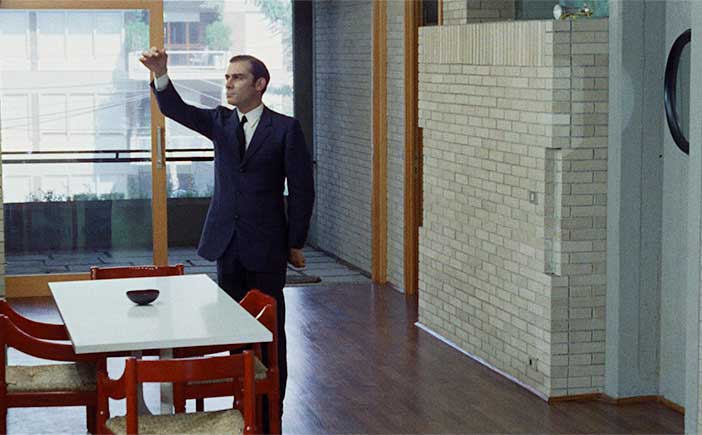
Gian Maria Volontè stars as a man seemingly above the law in Elio Petri’s 1970 Italian absurdist farce
INVESTIGATION OF A CITIZEN ABOVE SUSPICION (INDAGINE SU UN CITTADINO AL DI SOPRA DI OGNI SOSPETTO) (Elio Petri, 1970)
Anthology Film Archives
32 Second Ave. at Second St.
Sunday, September 15, 9:00, and Friday, September 27, 9:00
Series runs September 12-30
212-505-5181
www.anthologyfilmarchives.org
 As Investigation of a Citizen Above Suspicion begins, a man (Gian Maria Volontè) kills a woman (Florinda Bolkan) in the midst of some rather kinky sex. The man then goes out of his way to leave behind evidence tying him to the brutal crime, including making sure he is spotted as he exits the woman’s building complex. It is soon revealed that he is the former head of homicide in Rome who has just been promoted to chief of political intelligence, his victim a married lover of his who enjoyed acting out real murder cases with him. “How will you kill me this time?” she asks in a flashback, not knowing where their games will ultimately lead. For the rest of Elio Petri’s (A Quiet Place in the Country) absurdist farce, the man practically dares his colleagues to catch him as he continues to build a case against himself and rails against criminal and political terrorists and subversives in neo-fascist romps, filmed in daring close-up, that emphasize the importance of keeping the masses repressed. Shot in broad colors and featuring a playful score by Ennio Morricone, Investigation of a Citizen Above Suspicion is an enticing police procedural — in which the culprit is the man in charge of the case — as well as a satiric look at the state of Italian politics in 1970, as social unrest and sexual freedom grew throughout Europe and America. “Repressing all those evils is to cure them,” the man declares in a fiery speech to his department. Volontè (A Fistful of Dollars, For a Few Dollars More) clearly has a ball as a man who either wants to be caught or is out to prove that he is indeed above the law, Petri carefully keeping his motive ambiguous in this wonderful black comedy.
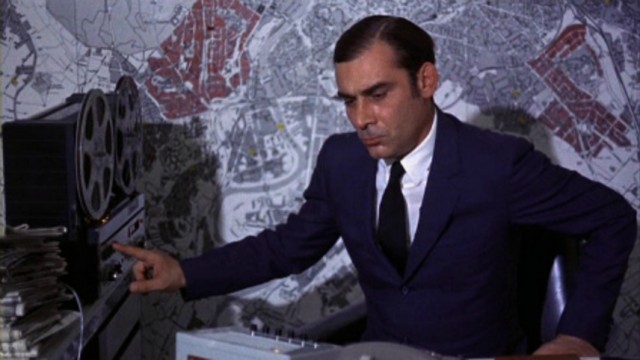
John Zorn chose INVESTIGATION OF A CITIZEN ABOVE SUSPICION for series because of its playful Ennio Morricone score
Winner of the Oscar for Best Foreign Language Film and the Grand Prize at Cannes, Investigation of a Citizen Above Suspicion is screening September 15 and 27 as part of the Anthology Film Archives series “John Zorn Selects,” comprising a dozen works chosen by the master experimental musician and Anthology composer-in-residence on the occasion of his sixtieth birthday, focusing on the soundtracks. “Morricone has written so many dynamic and brilliant scores in his huge career (often for Leone) but few have had as original and striking an orchestration as this one,” Zorn explains about Investigation. “The jew’s harp takes a major role here, adding, as so often is the case with Ennio’s scores, a feeling of irony and commentary on the sardonic vibe and black humor of the story. After recording The Big Gundown, my Morricone tribute album, Walter Hill called me in to score one of his Hollywood films. What he wanted was IRONY – which he asked for a bit too often in the form of Cyro Baptista’s cuica ‘laughing’ at the onscreen action. I couldn’t do it then and I can’t do it now. I have no idea why people think they hear ‘irony’ or ‘sarcasm’ in my work. There is NONE and never has been. My score was junked and saved me from being offered further work in the Hollywood dream factory.” The festival runs through September 30 and includes such other films as Roy William Neill’s Frankenstein Meets the Wolf Man, Roman Polanski’s Chinatown, Sidney J. Furie’s The Ipcress File, and Irving Lerner’s Murder by Contact. From September 20 to 28, Anthology will present “A Pocketful of Firecrackers: The Film Scores of John Zorn,” consisting of such films as Marc Levin’s Protocols of Zion, Michael Glawogger’s Workingman’s Death, and Joseph Dorman’s Sholom Aleichem: Laughing in the Darkness, but the real highlight are two nights of Zorn performing live to short films.
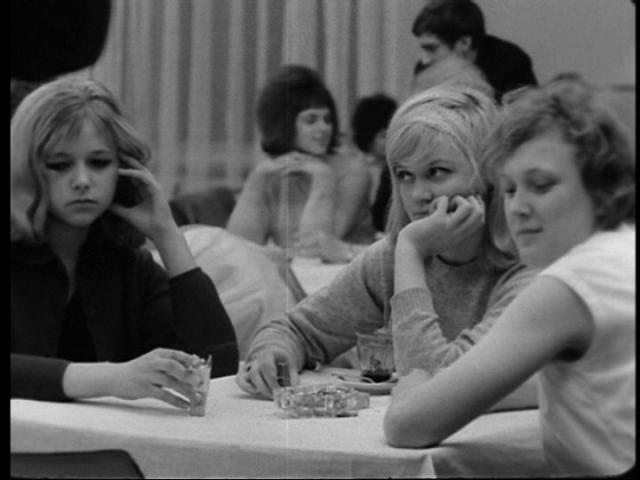
 Released a few years before the Summer of Love and Prague Spring, Miloš Forman’s Loves of a Blonde is a very funny romantic black comedy that also has a lot to say about women’s burgeoning sexual freedom. The delightful Hanu Brejchovou stars as Andula, a young factory worker whose sexual liberation is ahead of its time in an old-fashioned small town. When a trainload of military reservists arrives, most of the single women do their best to attract the uniformed men at a big party, but Andula is more interested in pianist Milda (Vladimíra Pucholta). In a scene for the ages, three men try to pick up Andula and her two friends, with hysterical results. Later, when Andula visits Milda in Prague, she meets the piano player’s parents (Milada Jezková and Josef Sebánek), who are a droll riot. A Czech New Wave classic that evokes Godard and Truffaut, Loves of a Blonde, which was nominated for an Oscar for Best Foreign Language Film, caused a sensation when it played the New York Film Festival and introduced Forman (One Flew Over the Cuckoo’s Nest, Amadeus) to the world. Notably, assistant director and cowriter Ivan Passer, who also worked with Forman on the Oscar-nominated The Firemen’s Ball, defected to America following Prague Spring and went on to make such films as Born to Win and Cutter’s Way. Loves of a Blonde is screening July 16 as part of the FIAF CinémaTuesdays series “Highlights of Cannes Film Festival with Gilles Jacob,” comprising works chosen by festival president Jacob in honor of the glamorous event’s sixty-fifth anniversary, and the one and only Forman himself will be at Florence Gould Hall to introduce the 7:30 show. [ed note: Unfortunately, Forman has had to cancel his appearance.] The series continues July 23 with Luis Buñuel’s Viridiana before concluding July 30 with Robert Bresson’s Pickpocket.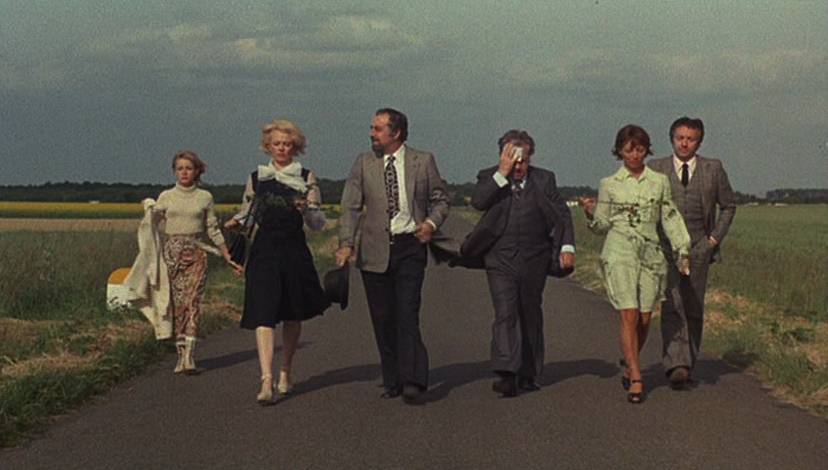
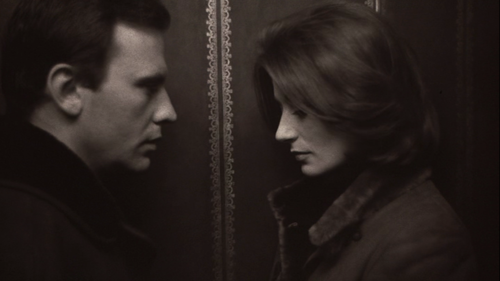
 Winner of both the Oscar for Best Foreign Language Film and the Palme d’Or at Cannes, Claude Lelouch’s A Man and a Woman is one of the most popular, and most unusual, romantic love stories ever put on film. Oscar-nominated Anouk Aimée stars as Anne Gauthier and Jean-Louis Trintignant as Jean-Louis Duroc, two people who each has a child in a boarding school in Deauville. Anne, a former actress, and Jean-Louis, a successful racecar driver, seem to hit it off immediately, but they both have pasts that haunt them and threaten any kind of relationship. Shot in three weeks with a handheld camera by Lelouch, who earned nods for Best Director and Best Screenplay (with Pierre Uytterhoeven), A Man and a Woman is a tour-de-force of filmmaking, going from the modern day to the past via a series of flashbacks that at first alternate between color and black-and-white, then shift hues in curious, indeterminate ways. Much of the film takes place in cars, either as Jean-Louis races around a track or the protagonists sit in his red Mustang convertible and talk about their lives, their hopes, their fears. The heat they generate is palpable, making their reluctance to just fall madly, deeply in love that much more heart-wrenching, all set to a memorable soundtrack by Francis Lai. Lelouch, Trintignant, and Aimée revisited the story in 1986 with A Man and a Woman: 20 Years Later, without the same impact and success. A new print of the original will be shown on October 15 at the Academy Theater as part of MoMA’s annual “To Serve and Project” film preservation festival, in conjunction with the Motion Picture Academy of Arts and Sciences’ monthly “Monday Nights with Oscar” programming and will be introduced by Aimée, who has appeared in several recent films following a seven-year hiatus. The MoMA series, cocurated by J. Hoberman, continues through November 12 with such films as Jacques Demy’s Lola, Andy Warhol’s San Diego Surf, Raoul Walsh’s Wild Girl, and the director’s cut of Roberto Rossellini’s General della Rovere.