
Federico Fellini directs two actors in Block-notes di un regista (Felllini: A Director’s Notebook)
FEDERICO FELLINI
MoMA Film, Museum of Modern Art
The Debra and Leon Black Family Film Center
11 West 53rd St. between Fifth & Sixth Aves.
Through January 12
212-708-9400
www.moma.org
Italian auteur Federico Fellini gave the world a view of society and the human condition like no other filmmaker. A former caricaturist, joke writer, and journalist, Fellini made twenty-four films before passing away in 1993 at the age of seventy-three. MoMA is celebrating his wide-ranging and incredibly influential legacy by screening every one of his works as a director (earning four Oscars in the process), from 1950’s Luci del varietà (Variety Lights) to 1990’s La voce della luna (The Voice of the Moon), in 4K restorations. In between are such classic, unique works as La Strada (The Road), Amarcord, La Dolce Vita, Le notti di Cabiria (Nights of Cabiria), Roma (Fellini’s Roma), Giulietta degli spiriti (Juliet of the Spirits), Otto e mezzo (8½), and La città delle donne (City of Women), among many others that helped redefine cinematic storytelling by breaking all the rules. Below are only a few favorites being shown in this complete retrospective.
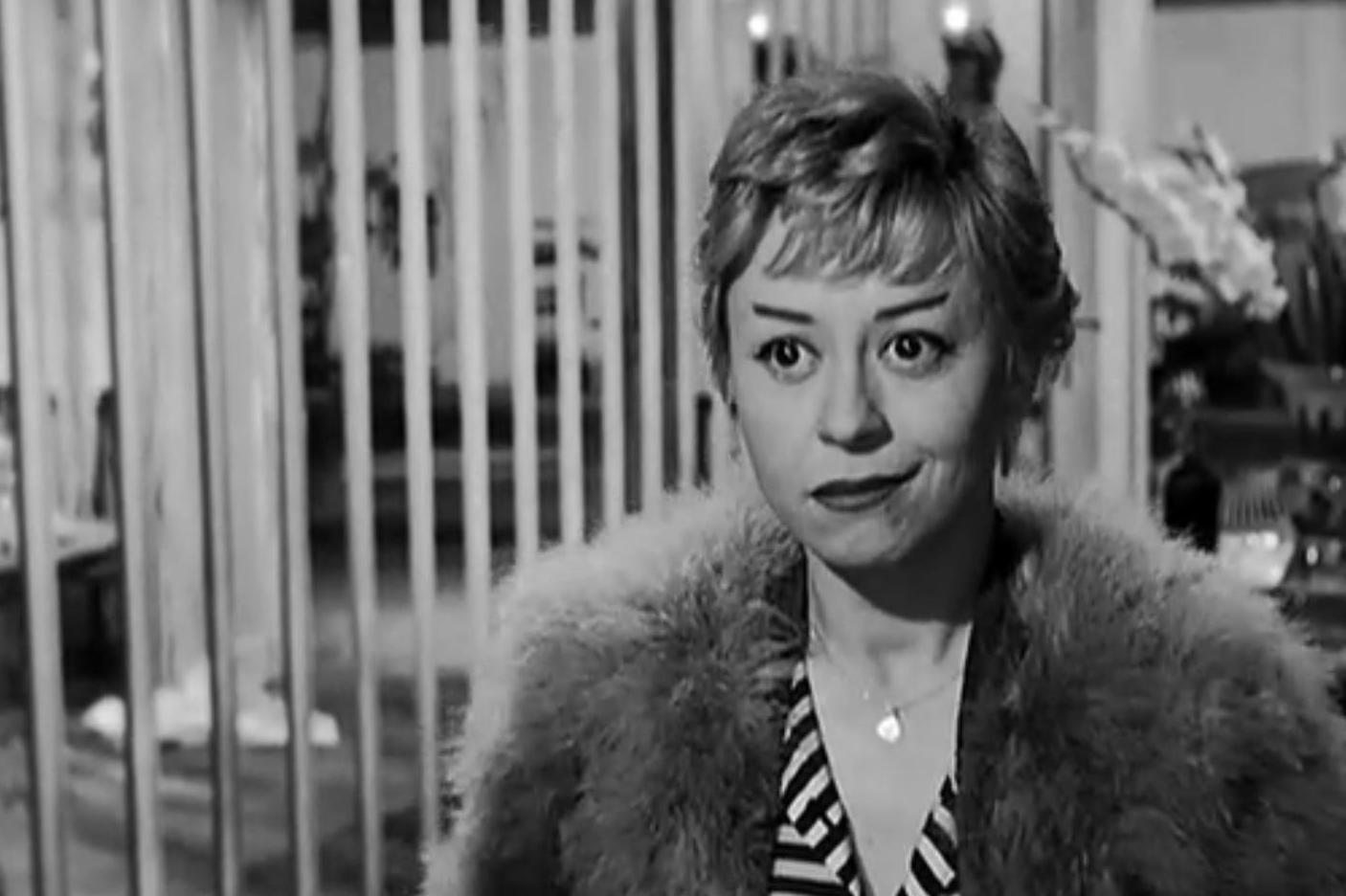
Giulietta Masina is unforgettable in Fellini masterpiece Nights of Cabiria
NIGHTS OF CABIRIA (LE NOTTI DI CABIRIA) (Federico Fellini, 1957)
MoMA Film
Monday, December 6, 7:00
www.moma.org
Giulietta Masina was named Best Actress at Cannes for her unforgettable portrayal of a far-too-trusting street prostitute in Nights of Cabiria. Directed by her husband, Federico Fellini, produced by Dino De Laurentiis, and written in collaboration with Pier Paolo Pasolini, the film, Fellini’s second to win the Oscar for Best Foreign Language Film (after La Strada), opens with Cabiria taking a romantic stroll by the river with her boyfriend, Giorgio (Franco Fabrizi), who suddenly snatches her purse and pushes her into the water, running off as she nearly drowns. Such is life for Cabiria, whose sweet, naive nature can turn foul tempered in an instant.
Over the course of the next few days, she gets picked up by movie star Alberto Lazzari (Amedeo Nazzari), goes on a religious pilgrimage with fellow prostitutes Wanda (Franca Marzi) and Rosy (Loretta Capitoli), gets hypnotized by a magician (Ennio Girolami), and falls in love with a tender stranger named Oscar (François Périer). But nothing ever goes quite as expected for Cabiria, who continues to search for the bright side even in the direst of circumstances. Masina is a delight in the film, whether yelling at a neighbor, dancing the mambo with Alberto, or looking to confess her sins, her facial expressions a work of art in themselves, ranging from sly smiles and innocent glances to nasty smirks and angry stares.
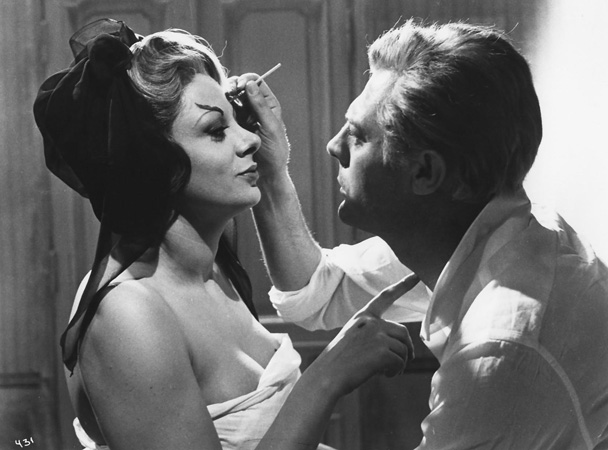
Guido Anselmi (Marcello Mastroianni) is in a bit of a personal and professional crisis in Fellini masterpiece 8½
8½ (Federico Fellini, 1963)
MoMA Film
Friday, December 10, 7:00
www.moma.org
“Your eminence, I am not happy,” Guido (Marcello Mastroianni) tells the cardinal (Tito Masini) halfway through Federico Fellini’s self-reflexive masterpiece 8½. “Why should you be happy?” the cardinal responds. “That is not your task in life. Who said we were put on this earth to be happy?” Well, film makes people happy, and it’s because of works such as 8½. Fellini’s Oscar-winning eighth-and-a-half movie is a sensational self-examination of film and fame, a hysterically funny, surreal story of a famous Italian auteur who finds his life and career in need of a major overhaul. Mastroianni is magnificent as Guido Anselmi, a man in a personal and professional crisis who has gone to a healing spa for some much-needed relaxation, but he doesn’t get any as he is continually harassed by producers, screenwriters, would-be actresses, and various other oddball hangers-on. He also has to deal both with his mistress, Carla (Sandra Milo), who is quite a handful, as well as his wife, Luisa (Anouk Aimée), who is losing patience with his lies.
Trapped in a strange world of his own creation, Guido has dreams where he flies over claustrophobic traffic and makes out with his dead mother, and his next film involves a spaceship; it doesn’t take a psychiatrist to figure out the many inner demons that are haunting him. Marvelously shot by Gianni Di Venanzo in black-and-white, scored with a vast sense of humor by Nino Rota, and featuring some of the most amazing hats ever seen on film — costume designer Piero Gherardi won an Oscar for all the great dresses and chapeaux — 8½ is an endlessly fascinating and wildly entertaining exploration of the creative process and the bizarre world of filmmaking itself. And after seeing 8½, you’ll appreciate Woody Allen’s 1980 homage, Stardust Memories, a whole lot more.
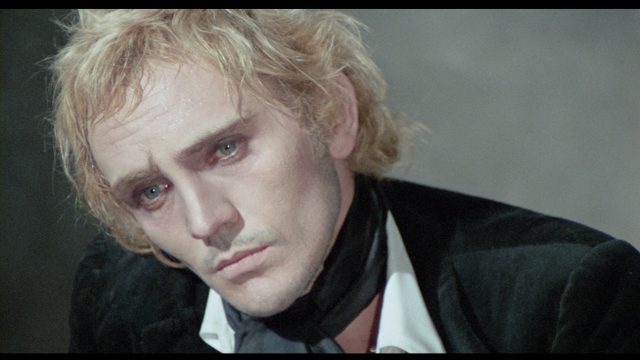
Terence Stamp is an alcoholic, fast-fading Shakespearean star in Federico Fellini’s Toby Dammit
SPIRITS OF THE DEAD: TOBY DAMMIT (Federico Fellini, 1968)
MoMA Film
Wednesday, December 8, 7:00, & Tuesday, December 21, 4:00
www.moma.org
MoMA is presenting all three of Federico Fellini’s shorter works: Agenzia matrimoniale (A Marriage Agency) was part of the 1953 omnibus L’amore in città (Love in the City), which also includes films by Carlo Lizzani, Michelangelo Antonioni, Dino Risi, Francesco Maselli and Cesare Zavattini, and Alberto Lattuada, while the 1969 documentary Block-notes di un regista (Felllini: A Director’s Notebook) was made for NBC television, about an uncompleted project. Toby Dammit concludes the Edgar Allan Poe anthology Spirits of the Dead, following Roger Vadim’s Metzengerstein, starring Jane Fonda and Peter Fonda, and Louis Malle’s William Wilson, with Alain Delon and his doppelgänger.
Adapted by Fellini and Bernardino Zapponi from Poe’s “Never Bet the Devil Your Head: A Tale with a Moral,” Toby Dammit is fiercely unpredictable, evoking La Dolce Vita and 8½ as British actor Toby Dammit (Terence Stamp) is lured to Rome to make a movie in exchange for a Ferrari. Amid bizarre interview segments, an absurdist awards ceremony, and meetings with his overbearing producers, Toby is haunted by a girl with a white ball (Marina Yaru). Toby Dammit is screening with 1962’s Le tentazioni del dottor Antonio (The Temptations of Doctor Antonio), featuring Anita Ekberg in a film dealing with sexual repression.
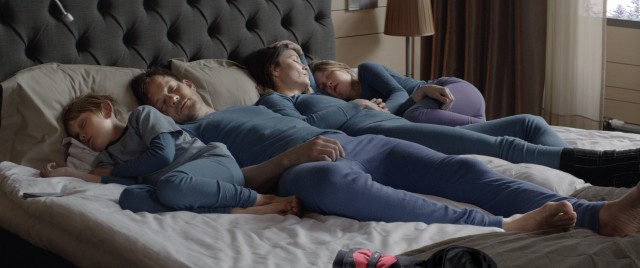
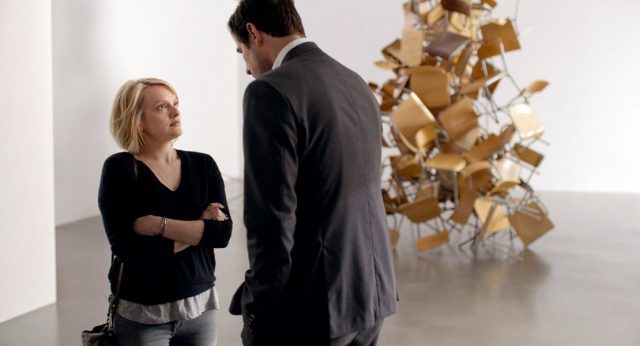
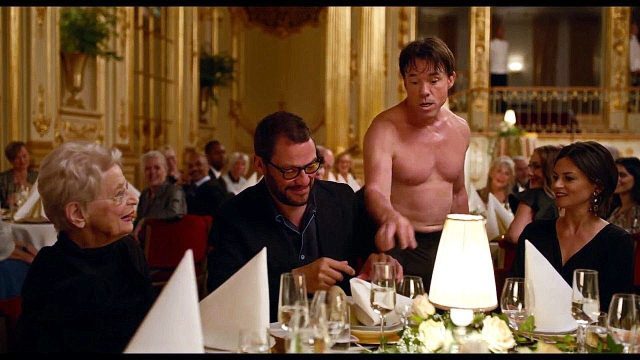
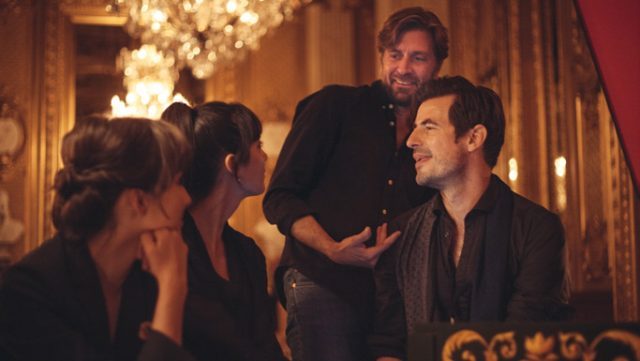
 After three skiing films and two documentaries, Swedish writer-director Ruben Östlund experienced near-instant success with his fiction work, which has included five features and two shorts since 2004, earning him numerous international awards. Scandinavia House will be honoring the Styrsö native on February 20 with a double feature of his two latest gems, Force Majeure, which was shortlisted for a Best Foreign Language Film Oscar, and The Square, which is competing for the award at this year’s Oscars. Östlund will be at the Park Ave. cultural institution for a Q&A following The Square, which won the coveted Palme d’Or at Cannes. First up at 4:00 is Force Majeure, one of the best films you’ll ever hear. Not that Fredrik Wenzel’s photography of a lovely Savoie ski resort and Ola Fløttum’s bold, classical-based score aren’t stunning in their own right, but Kjetil Mørk, Rune Van Deurs, and Jesper Miller’s sound design makes every boot crunching on the snow, every buzzing electric toothbrush, every ski lift going up a mountain, every explosion setting off a controlled avalanche a character unto itself, heightening the tension (and black comedy) of this dark satire about a family dealing with a crisis. On the first day of their five-day French Alps vacation, workaholic Tomas (Johannes Bah Kuhnke) and his wife, Ebba (Lisa Loven Kongsli), are enjoying lunch on an outdoor veranda with their small children, Harry (Vincent Wettergren) and Vera (Clara Wettergren), when a potential tragedy comes barreling at them, but in the heat of the moment, while Ebba instantly seeks to protect the kids, Tomas runs for his life, leaving his family behind. After the event, which was not as bad as anticipated, the relationship among the four of them has forever changed, especially because Tomas will not own up to what happened. Even Harry and Vera (who are brother and sister in real life) know something went wrong that afternoon and are now terrified that their parents will divorce. But with Tomas unwilling to talk about his flight response, Ebba starts sharing the story with other couples, including their hirsute friend Mats (Kristofer Hivju) and his young girlfriend, Fanni (Fanni Metelius), who are soon arguing in private about what they would do in a similar situation.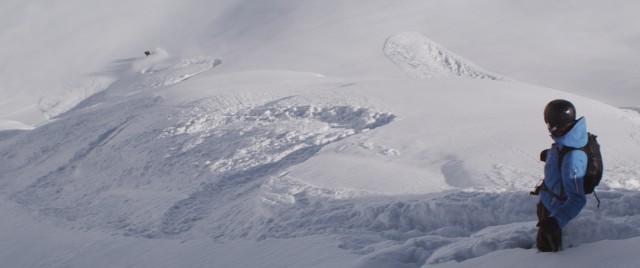
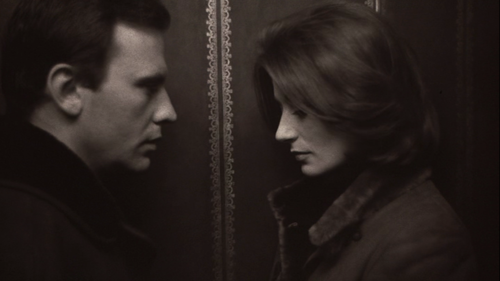
 Winner of both the Oscar for Best Foreign Language Film and the Palme d’Or at Cannes, Claude Lelouch’s A Man and a Woman is one of the most popular, and most unusual, romantic love stories ever put on film. FIAF is celebrating the work’s fiftieth anniversary by screening a newly restored version on March 28 as part of the
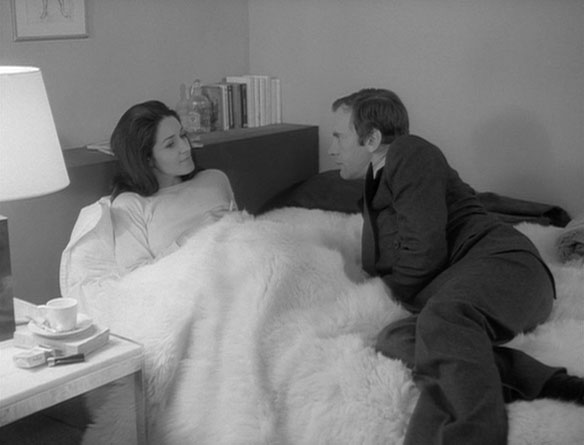
 Nominated for the Palme d’Or and a Best Foreign Language Film Oscar, My Night at Maud’s, Éric Rohmer’s fourth entry in his Six Moral Tales series (Claire’s Knee, Love in the Afternoon), continues the French director’s fascinating exploration of love, marriage, and tangled relationships. Three years removed from playing the romantic racecar driver Jean-Louis in Claude Lelouch’s A Man and a Woman, Jean-Louis Trintignant again stars as a man named Jean-Louis, this time a single thirty-four-year-old Michelin engineer living a relatively solitary life in the French suburb of Clermont. A devout Catholic, he is developing an obsession with a fellow churchgoer, the blonde, beautiful Françoise (Marie-Christine Barrault), about whom he knows practically nothing. After bumping into an old school friend, Vidal (Antoine Vitez), the two men delve into deep discussions of religion, Marxism, Pascal, mathematics, Jansenism, and women. Vidal then invites Jean-Louis to the home of his girlfriend, Maud (Françoise Fabian), a divorced single mother with open thoughts about sexuality, responsibility, and morality that intrigue Jean-Louis, for whom respectability and appearance are so important. The conversation turns to such topics as hypocrisy, grace, infidelity, and principles, but Maud eventually tires of such talk. “Dialectic does nothing for me,” she says shortly after explaining that she always sleeps in the nude. Later, when Jean-Louis and Maud are alone, she tells him, “You’re both a shamefaced Christian and a shamefaced Don Juan.” Soon a clearly conflicted Jean-Louis is involved in several love triangles that are far beyond his understanding, so he again seeks solace in church. My Night at Maud’s is a classic French tale, with characters spouting off philosophically while smoking cigarettes, drinking wine and other cocktails, and getting naked. Shot in black-and-white by Néstor Almendros, the film roams from midnight mass to a single woman’s bed and back to church, as Jean-Louis, played with expert concern by Trintignant, is forced to examine his own deep desires and how they relate to his spirituality. Fabian (Belle de Jour, The Letter) is outstanding as Maud, whose freedom titillates and confuses Jean-Louis. One of Rohmer’s best, most accomplished works despite its haughty intellectualism, My Night at Maud’s is screening May 14-16 at 1:30 as part of MoMA’s ongoing series “An Auteurist History of Film,” which continues May 21-23 with Robert Altman’s McCabe and Mrs. Miller and May 28-30 with Rainer Werner Fassbinder’s Merchant of the Four Seasons.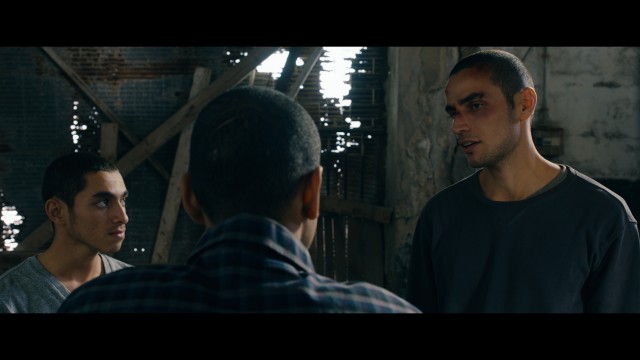
 Nazareth-born Palestinian director Hany Abu-Assad explores friendship, trust, and young love in occupied Palestine in the taut thriller Omar, the second of his films to be nominated for an Oscar for Best Foreign Language Film, following 2005’s Paradise Now. Lee Strasberg Institute graduate Adam Bakri makes an impactful film debut as the title character, a serious young man who works in a pita-making shop and climbs over the separation wall every day to meet with his childhood friends Tarek (Eyad Hourani) and Amjad (Samer Bisharat), who are planning on taking action as freedom fighters. Omar also secretly sees Tarek’s sister, Nadja (Leem Lubany), but they are worried about what Tarek might do if he finds out about their burgeoning romance. Shortly after the three friends assassinate an Israeli soldier, Omar is captured and tortured as Agent Rami (Waleed F. Zuaiter) tries to get him to divulge the name of the shooter. But Omar refuses to collaborate until Rami gives him no choice, and even then he thinks he can beat the system. Winner of the Special Jury Prize at the Un Certain Regard section at Cannes, Omar is a tense, powerful tale that doesn’t overplay the political battle between Israel and Palestine (although it’s rather unkind to the Israeli police), instead concentrating on how the seemingly impossible situation affects four young people, all portrayed by first-time actors who show much promise, particularly Bakri, who has a compelling physical presence, and sixteen-year-old Lubany, who has a tender face and mesmerizing eyes. Zuaiter, a Palestinian American who has appeared in numerous English-language films and stage productions and is one of Omar’s producers, plays Agent Rami with a mysterious calm reminiscent of Mandy Patinkin’s Saul Berenson on Homeland, a show in which Zuaiter played terrorist Afsai Hamid in one episode. Regardless of where you stand on the Israel-Palestine conflict in the West Bank, it’s difficult not to get caught up in Abu-Assad’s intricate story.