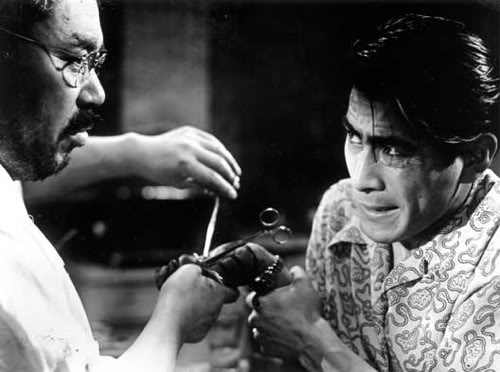
Takashi Shimura and Toshiro Mifune star in Kurosawa noir DRUNKEN ANGEL
DRUNKEN ANGEL (Akira Kurosawa, 1948)
Film Forum
209 West Houston St.
Saturday, January 23, 1:30, 3:30, 5:40, 7:50, 9:50
212-727-8110
www.filmforum.org
 The first film that Kurosawa had total control over, DRUNKEN ANGEL tells the story of a young Yakuza member, Matsunaga (Toshiro Mifune), who shows up late one night at the office of the neighborhood doctor, Sanada (Takashi Shimura), to have a bullet removed from his hand. Sanada, an expert on tuberculosis, immediately diagnoses Matsunaga with the disease, but the gangster is too proud to admit there is anything wrong with him. Sanada sees a lot of himself in the young man, remembering a time when his life was full of choices — he could have been a gangster or a successful big-city doctor. When Okada (Reisaburo Yamamoto) returns from prison, searching for Sanada’s nurse, Miyo (Chieko Nakakita), the film turns into a classic noir, with marvelous touches of German expressionism thrown in. We deducted a quarter star for the terrible incidental music that lapses into melodramatic mush. The screening is part of Film Forum’s Kurosawa Festival, which runs through February 18.
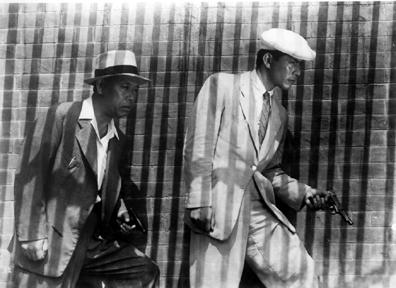
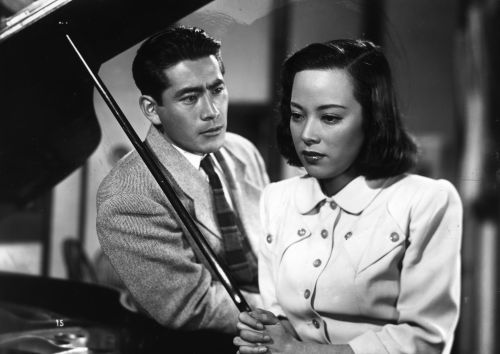
 When two famous people are caught together at a hotel in the mountains, a scandal breaks out as a lurid gossip magazine prints their picture and makes up a sordid romance that is not true. With their reputations tainted, they consider suing the publication, but they run into problems with their ragtag lawyer, who has a bit of a gambling problem. Akira Kurosawa regular Toshirô Mifune stars as Ichiro Aoye, a well-known painter who likes smoking pipes and riding his flashy motorcycle. Yoshiko Yamaguchi is Miyaka Saijo, a timid pop singer who is terrified of the unwanted publicity. And Takashi Shimura is Hiruta, the struggling lawyer devoted to his young daughter, who is dying of TB. The first half of the movie is involving right from the roaring opening-titles sequence, with good characterization and an alluring story line. Unfortunately, the film bogs down in the second half, especially during the hard-to-believe courtroom scenes, the only ones of Kurosawa’s career. And the Christmas bit is tired and cliché-ridden, even if might have been unique at the time for a film made in postwar Japan. But Kurosawa’s attack on the media is still valid today, even if he did fill it with sappy melodrama.