this week in theater

THE GERSHWINS’ PORGY AND BESS: THE BROADWAY MUSICAL

Audra McDonald and Norm Lewis deliver terrific performances in memorable new version of PORGY AND BESS (photo by Michael J. Lutch)

Richard Rodgers Theatre
226 West 46th St. between Seventh & Eighth Aves.
Tickets: $40-$145
877-250-2929
www.porgyandbessonbroadway.com

Forget the controversy; the new Broadway production of the Gershwins’ Porgy and Bess — the full title of which is actually now The Gershwins’ Porgy and Bess — is one for the ages. Based on the DuBose Heyward 1925 novel Porgy, the show has been undergoing constant change since its debut in 1935, facing cries of racism, plot and music tinkering, and other criticisms as it went from opera to musical theater to film and television. But pay no attention to all the naysayers who are furious that alterations have been made yet again; the current production of Porgy and Bess, which opened January 12 at the Richard Rodgers Theatre, is a wonderful evening of outstanding theater that hopefully enjoys a much-deserved long run. Adapted by award-winning playwright Suzan-Lori Parks and composer Diedre L. Murray at the behest of the Gershwin estate, the A.R.T. production stars Norm Lewis and Audra McDonald as the ill-fated titular characters, he a poor cripple, she married to the strong-armed town bully, Crown (Philip Boykin). They live on South Carolina’s dilapidated Catfish Row, a poverty-stricken wharf area where the close-knit residents can’t even afford to bury their dead. After Crown kills Robbins (Nathaniel Stampley), the brute takes off, leaving Bess behind. With her husband gone, Bess moves in with Porgy, an older, wise man who needs to walk with a cane, dragging his feet horribly as he moves around. The townspeople might have no money, but temptation is always in their midst, in the form of slick city gambler and drug dealer Sporting Life (David Alan Grier). As Porgy and Bess grow closer and closer, situations both within and beyond their control threaten to tear them apart forever.

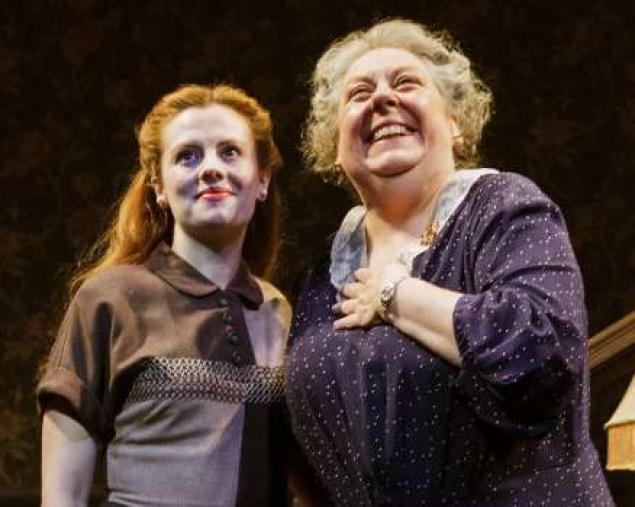
NaTasha Yvette Williams and David Alan Grier offer solid support in stellar PORGY AND BESS (photo by Michael J. Lutch)

With music by George Gershwin and lyrics by DuBose and Dorothy Heyward and Ira Gershwin, Porgy and Bess is chock-full of memorable songs, from “Summertime,” “I Got Plenty of Nothing,” and “Bess, You Is My Woman Now” to “It Ain’t Necessarily So,” “I Loves You, Porgy,” and “I’m on My Way,” delivered by a stellar cast headed by beautiful performances by the two leads, four-time Tony winner McDonald, whose operatic voice soars, and Lewis, whose dulcet tones rumble through the soul. The pair makes the iconic roles — previously played by such duos as Todd Duncan and Anne Brown on Broadway in 1935, Louis Armstrong and Ella Fitzgerald on a 1948 record, William Warfield and Leontyne Price in a 1952 touring company, Harry Belafonte and Lena Horne on a 1959 album, Dorothy Dandridge and Sidney Poitier in Otto Preminger’s 1959 movie, Simon Estes and Grace Bumbry at the Met in 1985, and Clarke Peters and Nicola Hughes in Trevor Nunn’s 2006 adaptation — their own, energizing the theater for a mesmerizing two and a half hours. Diane Paulus directs the show with just the right mix of humor and heartbreak, enhanced by Ronald K. Brown’s exciting, fast-paced choreography. Controversy? What controversy? This is a don’t-miss Porgy and Bess, making a very memorable and welcome return to Broadway.

ON A CLEAR DAY YOU CAN SEE FOREVER

Jessie Mueller and Harry Connick, Jr., star in Broadway reincarnation of ON A CLEAR DAY

St. James Theatre
246 West 44th St. between Broadway & Eighth Aves.
Tickets: $35 – $162
www.onacleardaybroadway.com

Falling firmly into the “What in the world were they thinking?” category, Michael Mayer’s reincarnation of the middling 1965 Burton Lane and Alan Jay Lerner Broadway musical On a Clear Day You Can See Forever is a convoluted mess, one that clearly should not have been brought back to life. Previously nominated for a Tony for his performance in The Pajama Game, Harry Connick, Jr. is all stiff shoulders as Dr. Mark Bruckner, a psychiatrist detailing a bizarre case at a 1974 industry convention. Bruckner addresses the audience directly, describing his unorthodox treatment of a young, gay florist, David Gamble (a rather limp David Turner), who came to him requesting hypnosis to help him stop smoking. But while the subject is under, Dr. Bruckner, who has not gotten over the death of his wife several years before, falls in love with 1940s chanteuse Melinda Wells (the dazzling Jessie Mueller), whom he believes to be David’s previous incarnation. As the doctor romances Melinda, David begins to wonder if Bruckner is falling in love with him, Dr. Bruckner’s colleagues at the institute, including Dr. Sharone Stein (Kerry O’Malley), who believes she is the right one for him, start thinking he might be going off the deep end, and the audience is left to consider just how this “revival” made it back to Broadway for another life. With a book by Peter Parnell adapted from the original, which starred Tony nominees John Cullum and Barbara Harris and featured Harris playing Daisy Gamble and an eighteenth-century Melinda Wells, this new version is more confusing than ever, adding songs from the 1970 Vincente Minnelli film that paired Yves Montand and Barbra Streisand as well as from Lane and Lerner’s 1951 MGM musical, Royal Wedding, performed by Mueller in the 1940s scenes. While Mueller is a standout belting away at such numbers as “Open Your Eyes” and “Too Late Now,” the rest of the production falls flat, with uninspired choreography by Joann M. Hunter, silly optical designs by Christine Jones, and a plot that can’t decide whether it’s serious or camp. This is one Clear Day that is overcast and gray.

STICK FLY

The LeVay clan has gathered for what will become a very stormy weekend on Martha’s Vineyard in STICK FLY

Cort Theatre
138 West 48th St. between Sixth & Seventh Aves.
Through February 28, $35 – $131.50
www.stickflybroadway.com

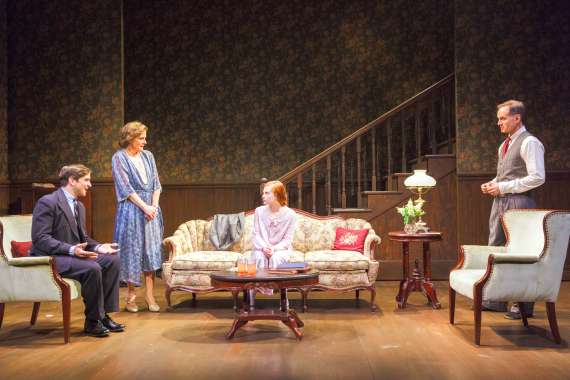
Race and class collide in both familiar and unique ways in Lydia R. Diamond’s emotionally charged dysfunctional family drama, Stick Fly. The LeVays are gathering for their annual weekend on Martha’s Vineyard, but things are a little different this year. Younger son Kent (Psych’s Dulé Hill) is bringing his fiancée, Taylor (Cold Case’s Tracie Thoms), the daughter of a prestigious and respected cultural intellectual, to meet the clan, and eldest son Flip (Mekhi Phifer in his Broadway debut) will be introducing his new girlfriend, Kimber (Rosie Benton), a well-off white woman who works with troubled inner-city youth. Meanwhile, stubborn patriarch Joe (Tony and Obie winner Ruben Santiago-Hudson), a prominent neurosurgeon, has arrived without his wife, claiming she will be coming later. In addition, the LeVays’ longtime maid, Miss Ellie, is seriously ill and has sent her daughter, Cheryl (Ruined’s Condola Rashad), to take care of everyone in her stead. Joe is clearly proud of Flip, a successful plastic surgeon, but he is disappointed in Kent, whom Taylor, an entomologist, calls Spoon and Joe considers a failed ne’er-do-well even when he tells everyone that his first novel is going to be published by a major house. As Taylor and Kimber do battle over the rich and the poor, the self-centered Flip tries to hide a previous dalliance with Taylor. But in the middle of it all is Cheryl, an intelligent, prideful young woman who understands a lot more than she lets on but is about to get the shock of her life.

Joe LeVay (Ruben Santiago-Hudson) discusses insects and more with Taylor (Tracie Thoms) in insightful new Broadway drama

Produced and composed by Alicia Keys and directed by Kenny Leon, who is also currently helming Samuel L. Jackson and Angela Bassett in The Mountaintop, Stick Fly is an involving drama with sharp dialogue, an incisive sense of humor, and a solid cast. Detroit native Diamond, a Steppenwolf veteran making her Broadway debut, has written a compelling tale that flirts with clichés but usually manages to skirt just around them. David Gallo’s inventive set features a carefully sliced wall that allows the kitchen to be seen through the living room, cutting through works of art (by the likes of Romare Bearden and Jean-Michel Basquiat) in a way that echoes the cross-cultural arguments that continue among the characters. Rashad, the daughter of actress Phyllis Rashad and former NFL wide receiver and broadcaster Ahmad Rashad, is particularly effective as Cheryl, who sees through a lot of the LeVay facade as she goes about her menial duties, being treated differently by everyone in the house, a dramatic device that helps to define the inherent biases in each of the characters. “Racism, discrimination, whatever,” Kimber says at one point. “You can’t imply that it exists. It’s like we’re supposed to have come so far that it’s taboo to suggest we have any further to go.” Stick Fly offers a fascinating counterpart to Jon Robin Baitz’s Other Desert Cities, which is currently running at the Booth Theatre. While the former tells the story of a Huxtable-like wealthy black family meeting on the Vineyard, the latter focuses on a rich white family gathering together in Palm Springs, each group dealing with long-simmering insecurities, a book written by one of the adult children, and a not necessarily well-hidden (to the audience) secret that explodes in the second act. But each play handles their situations differently, especially at the very end. Seen together, they offer intriguing insight into the state of the American family, and perhaps not coincidentally they are two of the best plays on Broadway right now.

BONNIE & CLYDE: THE MUSICAL

Bonnie & Clyde pull into Broadway in new musical (AP Photo/Jeffrey Richards Associates, Nathan Johnson)

Schoenfeld Theatre
236 West 45th St. between Seventh & Eighth Aves.
Tickets: $66.50 – $226.50
www.bonnieandclydebroadway.com

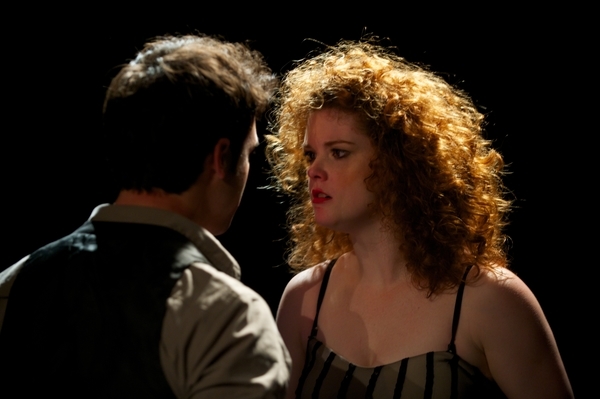
Products of poverty-stricken depression-era America, Bonnie Elizabeth Parker and Clyde Chestnut Barrow both dreamed of a better life: Bonnie wanted to be a Hollywood movie star like Clara Bow, while Clyde wanted to be a famous gangster like Al Capone. Their love story is at the heart of the new Broadway musical Bonnie & Clyde, which enters with guns blazing but leaves firing a series of blanks. The show opens with a blood-spattered Bonnie and Clyde front and center, lying dead in their machine-gun-riddled car, real headlines of their demise projected on the wooden-slat backdrop. The story then goes back to their childhood, with young Bonnie (Kelsey Fowler) singing of making it in Tinseltown (“Picture Show”) and young Clyde (Talon Ackerman) predicting his daring future (“The World Will Remember Me”). Soon nineteen-year-old Bonnie (Laura Osnes) is slinging hash in a local diner, while twenty-year-old Clyde (Jeremy Jordan) has escaped from yet another prison stay and is on the run. They fall instantly and madly in love, Bonnie reading Clyde her poetry on a starry night. Joined by Clyde’s brother, Buck (Claybourne Elder), and his Bible-thumping wife, Blanche (Melissa van der Schyff), they hit the road, becoming folk heroes as they rob banks, sign autographs, and are chased by the cops, leaving a bloody path behind them. “Freedom is something I gotta steal,” Clyde declares.

Laura Osnes and Jeremy Jordan are the best things about misguided BONNIE & CLYDE (AP Photo/Jeffrey Richards Associates, Nathan Johnson)

Osnes (Grease, Anything Goes) and Jordan (Newsies, West Side Story) will inevitably be compared to Faye Dunaway and Warren Beatty from Arthur Penn’s iconic 1967 film, which is unfair and does them a disservice, as they each deliver strong, sexy performances even as the material soars downhill faster than Clyde can drive. Book writer Ivan Menchell’s (The Cemetery Club) story is choppy and disjointed, with far too many throwaway scenes and filler (including Clyde and Buck singing about driving and a preacher and his congregation proclaiming that “God’s Arms Are Always Open”), Jeff Calhoun’s (Newsies) direction and choreography are uninspired, except for the appearance of cool classic cars, Don Black’s (Sunset Boulevard, numerous James Bond themes) lyrics are trite and stale, and Frank Wildhorn’s (Jekyll & Hyde, The Scarlet Pimpernel) score flirts with Americana roots music, blues, country, and folk in the first act but doesn’t even try in the second, instead turning to overly standard and unsatisfying Broadway pabulum. The musical is supplemented with projections of actual photos, newspaper articles, mug shots, and other paraphernalia as it seeks to tell the true story of these two antiheroes, wisely choosing not to be a musical version of the movie, but it lacks the power and pace of the film, becoming a rambling tale that is determined to fill two and a half hours no matter what. They would have done better throwing away the boring, unnecessary subplots and filler and just followed Bonnie and Clyde themselves, leaving Osnes and Jordan center stage, where they belong.

CHINGLISH

Vice Minister Xi Yan (Jennifer Lim) and sign maker Daniel Cavanaugh (Gary Wilmes) talk business and more in CHINGLISH

Longacre Theatre
220 West 48th St. between Broadway & Eighth Ave.
$31.50 – $126.50
www.chinglishbroadway.com

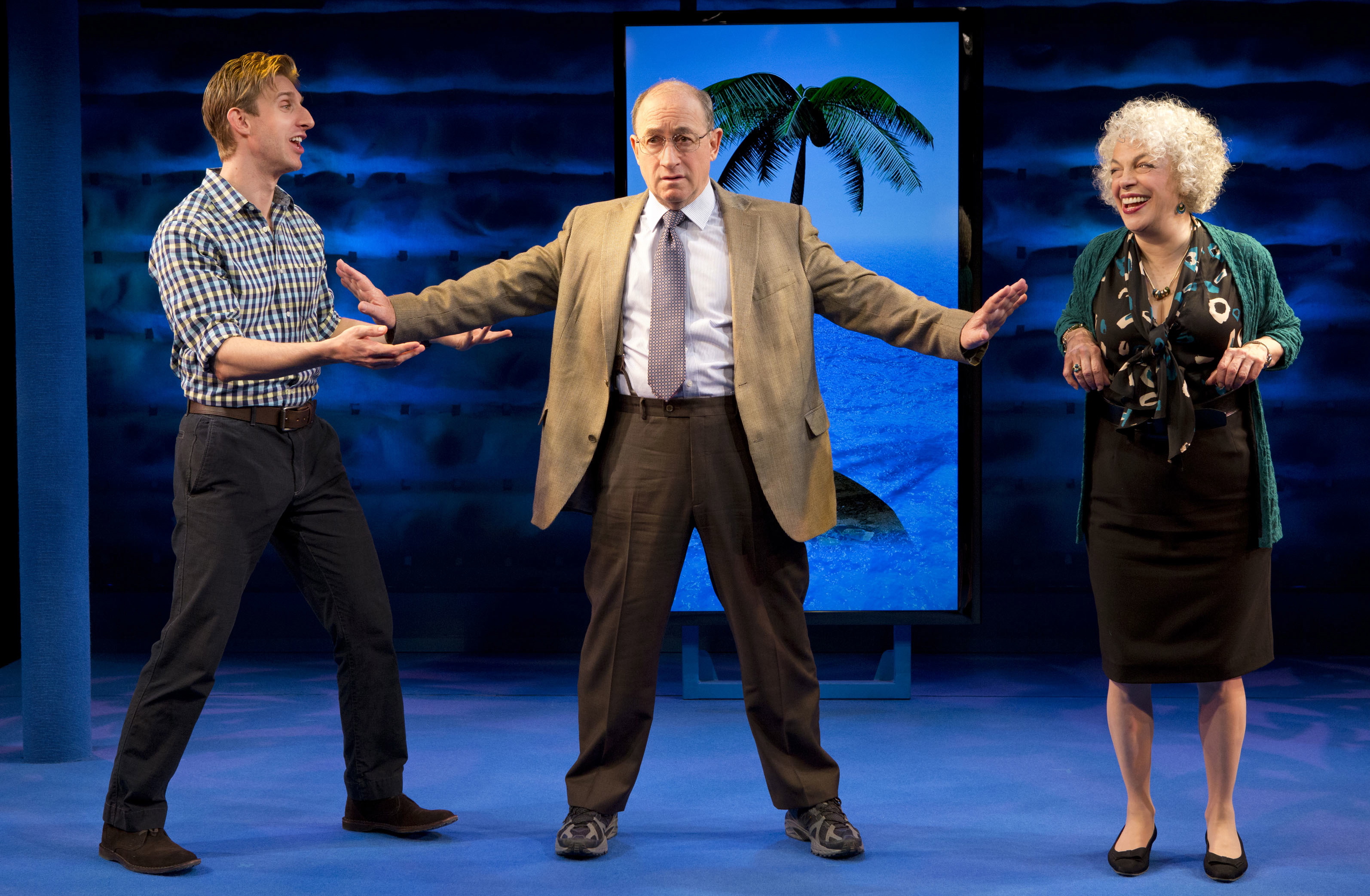
The current signage on Broadway is packed with some pretty major star power, with such names as Samuel L. Jackson, Kim Cattrall, Hugh Jackman, Stockard Channing, Alan Rickman, Marlo Thomas, Daniel Radcliffe, Angela Bassett, Harry Connick Jr., and others adorning various theater marquees. But don’t let that steer you away from a charming little show at the Longacre that might not feature big Hollywood names but still serves up quite a tasty treat. In Chinglish, Gary Wilmes stars as Daniel Cavanaugh, an American businessman who comes to the relatively small city of Guiyang, China — home to a mere four million people — to convince them that his Ohio company should make all the signs for their new state-of-the-art cultural center. With the help of British consultant Peter Timms (Stephen Pucci), Cavanaugh meets with the somewhat goofy Minister Cai (Larry Lei Zhang), who seems interested, but Vice Minister Xi Yan (Jennifer Lim) is far more dubious of hiring Ohio Signage. But soon the tables are turned, and Daniel finds himself joining forces with Xi — in more ways than one — as secrets are revealed about all four major characters and relationships are severely tested. Written by David Henry Hwang (M. Butterfly) and directed by Leigh Silverman (Well), Chinglish is a sweet romantic comedy about communication, in both the boardroom and the bedroom. Setting China’s economic boom against America’s continuing collapse, Hwang and Silverman focus on how language and meaning can bring people together or tear them apart. The play is filled with jokes about Chinese signs and bad translations, but at its heart it’s about honesty and being “a good man,” as Xi says to Daniel. David Korins’s scenic design keeps things moving wonderfully, as rotating sets circle in and out of one another, offering cute vignettes that make clever use of every moment. Chinglish, produced by the team behind August: Osage County, is more chef’s special than combination plate, a timely and funny look at how people communicate in the modern age.

PRIVATE LIVES

Paul Gross and Kim Cattrall are the latest pair to take on the roles of Elyot and Amanda in Noël Coward’s PRIVATE LIVES (photo by Cylla von Tiedemann)

Music Box Theatre
239 West 45th St. between Broadway & Eighth Aves.
Through February 5, $46.50 – $176.50
www.privatelivesbroadway.com

Following in the footsteps of such Broadway duos as Alan Rickman and Lindsay Duncan (2002), Simon Jones and Joan Collins (1992), Richard Burton and Elizabeth Taylor (1983), and Brian Bedford and Tammy Grimes (1969) — as well as the 1931 cinematic pairing of Robert Montgomery and Norma Shearer — Due South’s Paul Gross and Sex and the City’s Kim Cattrall are now taking on the roles of Elyot and Amanda in Noël Coward’s 1930 battle of the sexes, Private Lives, which opened November 17 at the Music Box Theatre. On a hotel terrace in Deauville, newlyweds Elyot and the younger, somewhat naive Sybil (Anna Madeley) can’t stop talking about his ex-wife, Amanda, who, it turns out, is in the next room, celebrating her marriage to the older and stuffy Victor (Simon Paisley Day), unable to stop talking about her ex-husband. While their initial impulses are to run away, it is clear that Elyot and Amanda belong together — or at least deserve each other — and soon they are flitting off to Paris, hiding away in Amanda’s Art Deco love nest. But in director Richard Eyre’s (Mary Poppins on Broadway, the film Notes on a Scandal) new production, the heat generated in the first act dissipates in the second, as the idea of Elyot and Amanda in love is more electric and exciting than their actual coupling, which quickly becomes tiresome to watch, the earlier promised spark reduced to an occasional flicker. It’s a combination of both a dated script, which includes lighthearted talk of men hitting women, and a lack of physical chemistry between the two leads. Individually, Gross and Cattrall turn in more than respectable performances, but they fizzle in the middle of the play.

Fortunately, things turn around in the third and final act when the slapstick level rises with the return of Sybil and Victor and all heck breaks loose. The show does feature several minor distractions that get in the way: In the first act, David Howe’s lighting of Gross and Madeley on the right side of the stage casts shadows on the left side that sometimes makes it look as if a character is about to enter (when they’re not), and in the second act, a tattoo is evident on one of Gross’s ankles, which does not fit with his character. (There wasn’t much that could have been done about the dead goldfish floating on top of the three-part fishtank, and it certainly wasn’t the production’s fault that an older gentleman in the orchestra continually let out deep throat rumblings that echoed throughout the theater during the entire two-hour-plus show.) Despite the shortcomings of the second act, the current version of this classic comedy of manners — which in 1930 made its London debut with Coward himself as Elyot, Adrianne Allen as Sybil, Gertrude Lawrence as Amanda, and Laurence Olivier as Victor — is a pleasurable and enjoyable experience, if not quite the success it could have been.

BURNING

Andrew Garman, Evan Johnson, Danny Mastrogiorgio become an unusual family in BURNING (photo by Monique Carbon)

The Acorn Theatre at Theatre Row
410 West 42nd St. between Ninth & Tenth Aves.
Through December 17, $61.25
212-560-2183
www.thenewgroup.org
www.theatrerow.org

During intermission of the New Group’s Burning, which kicks off their 2011-12 season at the Acorn Theatre at Theatre Row, we discussed whether we thought Thomas Bradshaw’s multistory show was a bedroom farce, a sly send-up of theatrical conventions, a black comedy, a campy examination of love and sex, a self-reflexive absurdist narrative, a meditation on art and death, or a serious melodrama about different kinds of family. After the second act, we came to the conclusion that unfortunately, it is all of those things, and none of them, two and a half hours that cause nervous giggles, blank stares, and looks of confusion and disbelief. On a set divided into three sections — a bed, a living room with a couch, and a small table surrounded by a few chairs — three interconnecting stories evolve. In the early 1980s, Broadway producer Simon (Danny Mastrogiorgio) and his partner, stage star Jack (Andrew Garman), take in Chris (Evan Johnson), a fourteen-year-old wannabe actor whose mother has just OD’d. Simon and Jack are trying to get playwright Donald (Adam Trese) to turn his play about child sex trafficking into a one-man vehicle for Jack; meanwhile, all three men are interested in more than Chris’s woeful acting talent. In modern day, African-American painter Peter (Stephen Tyrone Williams) is preparing to head to Berlin for a solo show, not knowing that one of the gallery workers, neo-Nazi Michael (Drew Hildebrand), thinks he is a white artist who must certainly be a true believer. While Peter and his wife, Josephine (Larisa Polonsky), are going to have a baby, Michael is taking care of his half-sister, Katrin (Reyna de Courcy), who is confined to a wheelchair as the result of a car accident that claimed the lives of their parents a year earlier. And Peter’s young cousin, Franklin (Vladimir Versailles), needs money so he can give a proper burial to his recently deceased mother.

Bradshaw (Southern Promises, The Bereaved) goes all over the place with Burning, taking on the AIDS crisis, the neo-Nazi skinhead movement, drugs, pederasty, racism, prostitution, incest, and more, featuring a multitude of extremely graphic sex scenes that are at times funny, erotic, shocking, and heart-wrenching but eventually become overwhelming and boring. It’s as if Bradshaw had so much to say that he decided to put it all in one play instead of two or three, leaving director Scott Elliott, the founding artistic director of the New Group, with the impossible job of making it all come together. Burning has its moments, but not nearly enough of them, and the conclusion is hard to swallow, resulting in a lukewarm show with lofty ambitions that are always just out of reach.