this week in theater

BROADWAY WEEK 2013

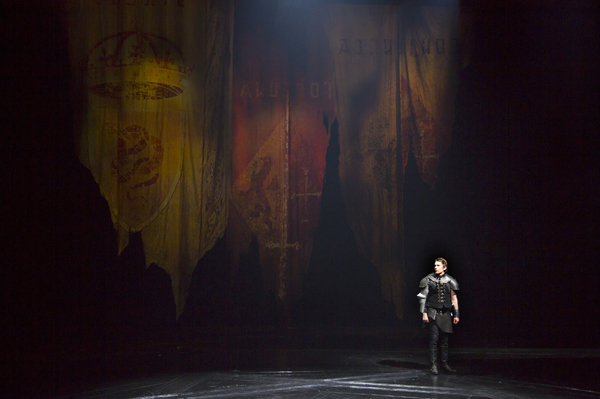
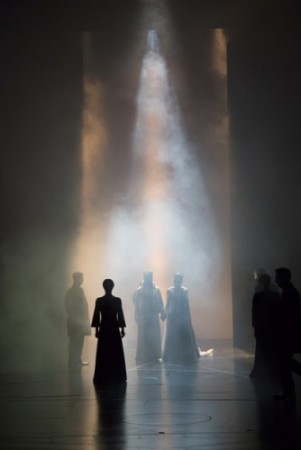
New production of ROMEO AND JULIET, starring Orlando Bloom and Condola Rashad, is one of nineteen Broadway shows offering two-for-one tickets September 2-15

New production of ROMEO AND JULIET, starring Orlando Bloom and Condola Rashad, is one of nineteen Broadway shows offering two-for-one tickets September 2-15

Multiple venues
September 2-15, buy one, get one free
www.nycgo.com/broadwayweek

After the long, hot summer, the Great White Way looks to keep fans filling seats during the annual Broadway Week discount, when tickets for nineteen shows are available for half price for performances September 2-15. You can buy one ticket and get one free for such newer productions, some still in previews, as Big Fish, First Date, Forever Tango, The Glass Menagerie (with Cherry Jones and Zachary Quinto), Romeo and Juliet (with Orlando Bloom and Condola Rashad), and Soul Doctor as well as such mainstays as Chicago, Jersey Boys, The Lion King, Rock of Ages, Wicked, The Phantom of the Opera, and Mamma Mia! Also available are seats to Once, The Trip to Bountiful, Rodgers & Hammerstein’s Cinderella, Newsies, Annie, and Spider-Man: Turn Off the Dark. Quantities are limited, so you have to act fast.

AWAKE AND SING!

AWAKE AND SING!

Ralph (Jon Norman Schneider), Uncle Morty (Andrew Ramcharan Guilarte), and Grandpa Jacob (Alok Tewari) face a series of crises in all-Asian revival of Clifford Odets’s AWAKE AND SING! (photo by William P. Steele)

Walkerspace
46 Walker St.
Tuesday – Sunday, through September 8, $25
866-811-4111
www.naatco.org

It’s been fifty years since writer and director Clifford Odets died of stomach cancer at the age of fifty-seven, and it is thrilling to see his work currently undergoing a kind of renaissance. Late last year, a seventy-fifth anniversary production of Golden Boy opened on Broadway and was nominated for a Tony, and this past spring brought the first Broadway revival of the 1949 Hollywood drama The Big Knife. But the National Asian American Theatre Co. (NAATCO) takes a somewhat different approach in its wonderfully small-scale, deeply intimate version of Odets’s first, and one of his best, plays, Awake and Sing! Written for Odets’s Group Theatre in 1935, the play follows the exploits of the Berger family, who live together in a cramped Bronx apartment. It’s 1933, and the Great Depression is continuing to take its toll. The household is run by domineering mother Bessie (NAATCO cofounder and artistic producing director Mia Katigbak), who is married to the meek and often clueless Myron (Henry Yuk). Son Ralph (Jon Norman Schneider) has no career direction and a girlfriend his mother disapproves of, while daughter Hennie (Teresa Avia Lim) has just gotten knocked up, with the man who did it out of the picture. While Bessie tries to orchestrate and control everyone’s lives, her father, Jacob (Alok Tewari), spouts Marxist doctrine and her well-dressed brother, Morty (Andrew Ramcharan Guilarte), waxes poetic about success in business. Also hanging around is Moe Axelrod (Sanjit De Silva), a street-smart character who offers his own take on the future.

Bessie Berger (Mia Katigback) will do whatever it takes to protect the honor of her family in NAATCO revival of Clifford Odets’s first play (photo by William P. Steele)

Bessie Berger (Mia Katigback) will do whatever it takes to protect the honor of her family in NAATCO revival of Clifford Odets’s first play (photo by William P. Steele)

As opposed to its two big-time Broadway productions — Awake and Sing! premiered on the Great White Way in 1935, directed by Harold Clurman and starring Luther Adler, Stella Adler, Morris Carnovsky, John Garfield, and Sanford Meisner, while the Tony-winning 2006 revival was directed by Bartlett Sher and featured Ben Gazzara, Zoe Wanamaker, Mark Ruffalo, Lauren Ambrose, and Pablo Schreiber — NAATCO’s three-act production takes place in the reconfigured Walkerspace theater in SoHo, where Anshuman Bhatia’s set design consists of a dining-room table, a couch, and some chairs in a narrow rectangular center area, with the fifty-member audience seated in two rows on the longer sides, making them feel like part of the family. The all-Asian cast gives splendid performances as the Jewish clan, a conceit that lends additional insight into the general themes of poverty, class, and pride, resulting in a more universal scope. Katigbak is particularly effective as the manipulative mother, while De Silva stands out as Axelrod, a voice of reason amid the escalating chaos. Directed by Shakespearean Stephen Fried, the play benefits strongly from the intense eye contact the characters make with one another, something that gets lost on larger stages but is powerful and dramatic here. The Bergers might not find that the streets of America are paved with gold, but this production of Awake and Sing! is very rich indeed.

HARBOR

(photo by Carol Rosegg)

Erin Cummings, Randy Harrison, Paul Anthony Stewart, and Alexis Molnar contemplate family in HARBOR (photo by Carol Rosegg)

Primary Stages at 59E59 Theaters
59 East 59th St. between Park & Madison Aves.
Tuesday – Sunday through September 8, $70
212-279-4200
www.59e59.org

After having written and/or cowritten the book and/or lyrics to the movie-based Broadway musicals Elf and The Wedding Singer, Chad Beguelin gets a lot more serious and literary-minded in the workmanlike dysfunctional family drama Harbor. Referencing Edith Wharton, Marcel Proust, Virginia Woolf, and, both directly and indirectly and most influentially, Tennessee Williams, Beguelin creates a plodding narrative in this contemporary tale about parents and children. Erin Cummings, in her New York stage debut, stars as Donna Adams, a low-rent singer living out of a van with her smart but weird teenage daughter, Lottie (Alexis Molnar). The two pay a surprise visit to Donna’s younger brother, Kevin (Queer as Folk’s Randy Harrison), who lives in a well-decorated home in Sag Harbor with his husband, architect Ted (Paul Anthony Stewart). At first, wannabe writer Kevin can’t wait to get rid of his manipulative, conniving sister, but as an overnight turns into a longer stay, the four characters are forced to look deep inside themselves to figure out just what it is that they want and need out of their less-than-perfect lives. Like the travel pamphlet Kevin is writing about Sag Harbor, Beguelin (Judas & Me) merely skims the surface of this drawn-out story of the sins of the father (and mother). Although the cast is fine, the individual relationships never quite come together, and the protagonist, Donna, is too unlikable from the very start. Beguelin and director Mark Lamos (A. R. Gurney’s Black Tie, Indian Blood, Buffalo Gal) never find a smooth rhythm, with plot points jumping around too much. And although the Playbill says that “the play takes place over several weeks,” it actually goes on for several months, which gets confusing (but that misstatement is obviously not the fault of the writer, director, or cast). This Harbor ends up having too much sag and not enough lift.

SPEAKEASY DOLLHOUSE

(photo © Margee Challa, 2012)

Immersive production re-creates shady tale in 1930s New York City (photo © Margee Challa, 2012)

102 Norfolk St.
First monthly Saturday and Monday, September 7 – December 14, $55 general admission, $145 VIP
800-838-3006
www.speakeasydollhouse.com

New York has gone crazy for immersive theatrical productions recently, as the audience interacts with the actors in various ways in such hit shows as Sleep No More at the McKittrick Hotel and Natasha, Pierre & the Great Comet of 1812 at the temporary Klub Kazino. Things go even further in Speakeasy Dollhouse, a flashy, lurid tale of murder and deception taking place in a series of rooms in an underground location on Norfolk St. Once you purchase your tickets — which just jumped from $30/$55 to $55/$145 — you start receiving e-mails from Cynthia von Buhler detailing the real-life murder of her grandfather Frank Spano and its cover-up, which reached all the way inside Tammany Hall. “My grandmother died in the 1980s and I never knew my grandfather,” one von Buhler missive explains. “He was mysteriously killed in 1935. He died on the very same day my mother was born. She told us that he was shot and nobody knew why. It was a secret. They boarded up the club and bakery after that.” Speakeasy Dollhouse re-creates that time period, acting out the events that led to the shooting, based on both facts and supposition, as von Buhler seeks to uncover the truth. Attendees are given a password and asked to dress in Prohibition-era costumes, which is a good idea, as the vast majority of people do so. Upon entering the nightclub, each person receives a piece of paper from the Fortune Teller (Jordana Rollerdazzler) giving them a specific role to carry out. For the next few hours, the cast, crew, and audience mingle as they travel from room to room and various plot elements are revealed, from an autopsy and a secret lovers tryst to back-room machinations and a card game.

Evidence is presented as SPEAKEASY DOLLHOUSE seeks to find answers to real-life murder (photo © Margee Challa, 2012)

Evidence is presented as SPEAKEASY DOLLHOUSE seeks to find answers to real-life murder (photo © Margee Challa, 2012)

The story revolves around the killing of club owner Frank Spano (Russell Farhang) by barber John Guerrieri (Silent James), which soon involves such figures as Detective Thomas Crane (Justin Moore), mobster Dutch Schultz (Travis Moore), Tammany Hall party boss Jimmy Hines (Charley Layton), and Magistrate Hulon Capshaw (Scott Southard). To further the atmosphere, there are a series of live performances by burlesque singers and dancers and the Howard Fishman Quartet. Meanwhile, a cash bar serves drinks and a bakery offers cannoli and other pastries. Originally planned as a one-time-only presentation, Speakeasy Dollhouse is now playing the first Saturday and Monday of each month through December, with each show centering on a different theme investigating the possible motive behind the killing; on October 26, there will be a special Halloween performance only for people who have previously attended a show, complete with zombies, werewolves, vampires, and unicorns. The production captures the feel of 1930s New York City, but the allowance of photography detracts a bit from the overall experience; the producers might want to have pictures spread all over social media, but there weren’t really many iPhones back in those days. Still, the more you immerse yourself in Speakeasy Dollhouse, the more fun you’re going to have. And there’s a whole lot of fun to be had as von Buhler, who appears as herself, keeps trying to get to the bottom of what happened to her family.

SOUL DOCTOR: JOURNEY OF A ROCK STAR RABBI

Shlomo Carlebach (Eric Anderson) and Nina Simone (Amber Iman) develop an unusual friendship in SOUL DOCTOR (photo by Carol Rosegg)

Shlomo Carlebach (Eric Anderson) and Nina Simone (Amber Iman) develop an unusual friendship in SOUL DOCTOR (photo by Carol Rosegg)

Circle in the Square Theatre
1633 Broadway at 50th St.
Tuesday – Sunday through October 13, $39 – $135
www.souldoctorbroadway.com

The new Broadway musical Soul Doctor follows the unusual relationship between a gentle, soft-spoken Orthodox rabbi and a vivacious chanteuse who wind up having a lot more in common that either would ever think. Eric Anderson stars as Shlomo Carlebach, the real-life Singing Rabbi whose family left Nazi-occupied Vienna when he was a boy, making a new life in New York City. While trying to find his place in America, Carlebach meets singer and activist Nina Simone (Amber Iman), and the two develop a long-term friendship, becoming each other’s muse. As Simone goes on to become the High Priestess of Soul, Carlebach turns away from the rigid rules of his Orthodox background, which severely disappoints his rabbi father (Jamie Jackson), his worried mother (Jacqueline Antaramian), and his devout brother (Ryan Strand), who has fallen under the influence of Lubavitcher Rebbe Menachem Schneerson (Jackson). But soon Carlebach, the King of Kosher Music, has a hit record, is playing in nightclubs, and forms his own, unique temple, the House of Love and Prayer, in hippie-era San Francisco. But he’s constantly trying to prove to himself and his family that what he is doing matters, that it is all part of the expansion of the Jewish faith.

The King of Kosher Music preaches love and peace in San Francisco temple (photo by Carol Rosegg)

The King of Kosher Music preaches love and peace in San Francisco temple (photo by Carol Rosegg)

Anderson, who left the Kinky Boots ensemble to reprise the role of Carlebach, which earned him a Drama Desk nomination for last year’s presentation at New York Theatre Workshop, brings a sweet innocence to the mild-mannered Rock Star Rabbi, displaying the kind of charm that established Carlebach’s success and reputation. And Iman is a force as Simone, dominating the stage with her bold, brash style. The book, by director Daniel S. Wise, glosses over too many details, including Carlebach’s relationship with follower Ruth (Zarah Mahler), and just skips over others, leaving too many unexplained holes, and Carlebach’s never-ending battle with his childhood teacher and later cantor, Reb Pinchas (Ron Orbach), who he calls the “holy heckler,” grows repetitive and tiresome. The script is filled with such platitudes as Carlebach telling Pinchas, “If I had two hearts, I could use one to love and one to hate. But I only have one heart, so . . . I use it to love!” Despite less-than-inspiring choreography by former Cedar Lake artistic director Benoit-Swan Pouffer, the musical numbers, from the Carlebach tunes (“Rosh Hashanah Rock,” “Ki Va Moed,” “Yerushalyim,” “Am Yisrael Chai”) to new songs with lyrics by David Schechter, are mostly a lot of fun, with the exuberant cast, dressed in Maggie Morgan’s period costumes, often running up and down the aisles. Mahler turns in a strong solo near the end, “I Was a Sparrow,” that will have audiences wondering why she wasn’t featured more. Although you don’t have to be Jewish to enjoy the show, those who attend High Holiday services will be thrilled to hear many familiar liturgical melodies that were written by Carlebach. But Soul Doctor does more than merely preach to the converted, instead exploring a fascinating figure in American folk music.

YOUNG JEAN LEE’S WE’RE GONNA DIE

Young Jean Lee faces her fear of performing and people’s fear of death in WE’RE GONNA DIE (photo by Blaine Davis)

Young Jean Lee faces her fear of performing and people’s fear of death in WE’RE GONNA DIE (photo by Blaine Davis)

Claire Tow Theater
LCT3/Lincoln Center Theater
150 West 65th St.
Through August 17, $20
www.lct.org
www.youngjeanlee.org

Seeking to comfort instead of confront the audience — a departure from her usual practice — experimental writer and director Young Jean Lee investigates such themes as loneliness, romance, family, aging, and death in her eloquent, sparkling musical show We’re Gonna Die. When challenged by avant-garde theater collective 13P to do the craziest thing she could think of, the Brooklyn-based Lee decided to star in a new play, facing her own deep-set fear of performing. The woman behind such innovative productions as Lear, The Shipment, and Untitled Feminist Show came up with We’re Gonna Die, a song cycle in which she presents a series of monologues followed by related musical numbers played with her band, Future Wife. Delivered plainly by Lee at the front and center of the stage, the stories are organized like a chronological narrative of her life, told in the first person, beginning with her childhood and moving through to the current day. Although the confessional tales, which cleverly explore terrible, painful, heartbreaking events and memories, are all true, the only one that actually happened to Lee directly is the long, powerful story about her father’s battle with cancer; the others were shared with her by friends.

Young Jean Lee

Young Jean Lee and Future Wife go nuts at the end of dazzling WE’RE GONNA DIE (photo by Blaine Davis)

Such songs as “Lullaby for the Miserable,” “Comfort for the Lonely,” and “When You Get Old” incorporate various indie-pop melodies, featuring Mike Hanf and Benedict Kupstas on guitars and keyboards, Andrew Hoepfner on bass, and Booker Stardrum on drums. One of Lee’s central themes is that bad things can happen to good people and that we are all basically the same. “Who do you think you are / to be immune from tragedy? / What makes you special / that you should go unscathed?” she sings in “Horrible Things.” The show, which debuted at Joe’s Pub in April 2011, opened the new Claire Tow Theater at Lincoln Center last year, and now is kicking off LCT3’s second season, comes to a rousing conclusion with “I’m Gonna Die,” as the band rocks out before performing a riotous dance number with Lee, choreographed by Faye Driscoll, and getting the audience to sing along, everyone staring death in the face together. “I’m gonna die / I’m gonna die someday / Then I’ll be gone / and it’ll be okay,” Lee repeats over and over. Directed by Big Dance Theater’s Paul Lazar, We’re Gonna Die is an absolutely thrilling and involving sixty minutes from an immensely creative and talented artist who is special indeed, no matter what she claims onstage. (Lee and Future Wife have also just released a CD of We’re Gonna Die that includes the songs from the show but with the monologues spoken by an all-star lineup of guests that includes David Byrne, Laurie Anderson, Colin Stetson, Kathleen Hanna, Drew Daniel, Sarah Neufeld, and Martin Schmidt.)

SHAKESPEARE IN THE PARK: LOVE’S LABOUR’S LOST

(photo by Joan Marcus)

The BLOODY BLOODY ANDREW JACKSON team of Michael Friedman and Alex Timbers team up to reimagine Shakespeare’s LOVE’S LABOUR’S LOST at the Delacorte (photo by Joan Marcus)

Central Park
Delacorte Theater
Through August 18, free, 8:30
shakespeareinthepark.org

Michael Friedman and Alex Timbers give the Bard the Bloody Bloody Andrew Jackson treatment in the Public Theater’s new Shakespeare in the Park production of Love’s Labour’s Lost. The anything and everything goes kitchen-sink musical is set in the modern day, as four college buds — the King (Daniel Breaker), Berowne (Colin Donnell), Longaville (Bryce Pinkham), and Dumaine (Lucas Near-Verbrugghe) — come together for their fifth reunion, agreeing to lock away their beer, bong, and condoms and dedicate the next three years to their studies. But their plan is sorely tested when a quartet of beautiful babes — Princess (Patti Murin), Rosaline (Maria Thayer), Maria (Kimiko Glenn), and Katherine (Audrey Lynn Weston) — shows up, with the Princess, who has had a previous fling with the King, claiming he owes her money. A wild and wacky battle of the sexes ensues as the men and women can’t seem to stay away from one another. Meanwhile, a bombastic Spanish royal, Armado (Caesar Samayoa), has the hots for barmaid Jaquenetta (Rebecca Naomi Jones); Costard (Charlie Pollock), a Matthew McConaughey-like surfer dude, misdelivers a pair of important messages; and professors Holofernes (Rachel Dratch) and Nathaniel (Jeff Hiller), along with Dull (Kevin del Aguila), a cop on a Segway, provide absurdist comic relief.

(photo by Joan Marcus)

LOVE’S LABOUR’S LOST continues at the Delacorte through August 18 (photo by Joan Marcus)

Love’s Labour’s Lost is a whole lot of good-time fun, even if it gets overly repetitive and is all over the place. Friedman’s score, which ranges from straight-up Broadway-type standards to riotous riffs on A Chorus Line (in a nod to Joe Papp), boy-band ballads, Grease, and girl-group pop, are well crafted but too often self-referential, repeatedly mentioning the music and lyrics of the songs themselves and adding inside jokes over and over again. Director Timbers, who helmed the masterful Here Lies Love at the Public, also adapted the book, which occasionally gets a little shaky as he tries for too much; while some set pieces are triumphant, others fall flat, although he very cleverly works in some Shakespeare sonnets in the love letters the protagonists compose. Jones (Passing Strange) is dazzling as Jaquenetta, performing the show’s best song, the noir “Love’s a Gun,” with Murin (Lysistrata Jones), Thayer (Necessary Targets), and Donnell (Anything Goes) standing out among the rest of the cast, which also features Bloody Bloody Andrew Jackson vets Near-Verbrugghe, Pinkham, bandleader Justin Levine, and Jeff Hiller as Nathaniel; the inspired choreography is by Jacksonian Danny Mefford. Despite its many missteps, Love’s Labour’s Lost goes a long way in further establishing Shakespeare in the Park returnee Friedman (Romeo and Juliet, The Seagull, Cymbeline) and Timbers (Peter and the Starcatcher, A Very Merry Unauthorized Children’s Scientology Pageant) as the future of American musical theater. Don’t forget that in addition to waiting on line at the Delacorte to get free tickets, you can also enter the daily virtual ticketing lottery online here. And to get in the mood, you can sample some of the songs here.