this week in theater

QUEER NEW YORK INTERNATIONAL ARTS FESTIVAL

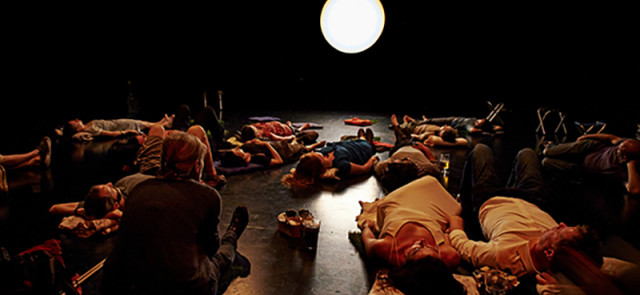
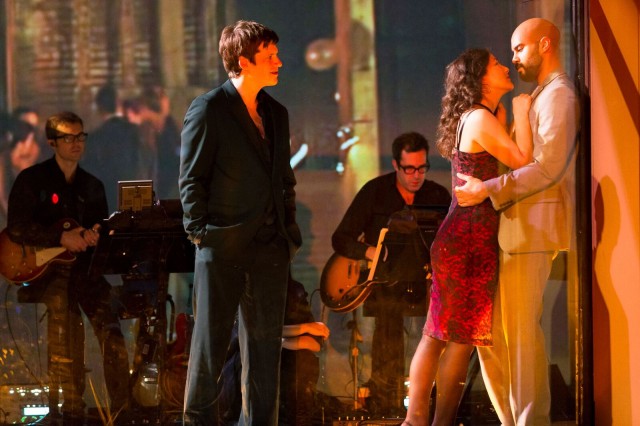
Social Health Performance Club will explore the framing of work as queer at the fourth annual Queer New York International Arts Festival (photo by Laura Bleür )

Social Health Performance Club will explore the framing of work as queer at the fourth annual Queer New York International Arts Festival (photo by Laura Bleür)

Abrons Arts Center (unless otherwise noted)
466 Grand St. at Pitt St.
September 16-26, $15-$25
212-598-0400
www.queerny.org

Curated and produced by Queer Zagreb founder Zvonimir Dobrović, the fourth annual Queer New York International Arts Festival consists of more than a dozen performances in multiple venues over eleven days. The program, which expands the idea of just what queer art is and can be, begins on September 16 with the legendary Annie Sprinkle and Beth Stephens leading an EcoSex Walking Tour of Central Park ($25, 3:00), focusing on SexEcology and including a water toast, Ecosexercises, a search for the E-spot, and other sex and environmental issues. Sprinkle and Stephens will then head over to festival hub Abrons Arts Center to present the New York City premiere of their 2014 film, Goodbye Gauley Mountain: An Ecosexual Love Story ($25, 8:00). Bulgarian artist Ivo Dimchev returns to QNYIAF with two shows, the interactive Facebook Theater (9/17, suggested donation $25, 8:00), in which the audience creates the text, and the concert 15 songs from my shows (9/18, suggested donation $25, 8:00). On September 19, John Moletress pays tribute to Derek Jarman with the multimedia one-man piece Jarman (all this maddening beauty) ($15, 8:00), while on September 20, Max Steele explores power and gender in the solo cabaret show The Good Daughter ($20, 8:00). One of the festival highlights should be the world premiere of Bruno Isaković’s Disclosures (9/22-26, suggested donation $20), in which people are invited to expose themselves both through words and the removal of clothing. Also on the bill are the Social Health Performance Club, Joshua Monten’s Doggy Style, Mmakgosi Kgabi’s Shades of a Queen, Kaia Gilje and Lorene Bouboushian’s Know What Smokes, Mehdi-Georges Lahlou’s Stupidité contrôleé or jump jump baby jump jump at the Merton D. Simpson Gallery, and Michael Breslin’s Kiss me just once more at Dixon Place.

LOAD OUT!

Load OUT!

Arts and cultural organizations can donate and acquire costumes, props, furniture, and more at Load OUT!

11 East Third St.
Saturday, September 12, free for artists and students, $5 for general public, 11:00 am – 2:00 pm
www.fabnyc.org

The biannual Load OUT!, which has been “helping artists recycle together since 2011,” is hosting its fall 2015 event on September 12, sponsored by Fourth Arts Block, which is dedicated to helping develop the East Fourth St. Cultural District that includes numerous small theaters and nonprofits. On September 10 and 11, arts and cultural institutions are invited to donate, by appointment only, their gently used costumes, props, furniture, and office equipment so they can be reused by other arts organizations and individuals, instead of just going into Dumpsters as garbage. This creative repurposing saves companies money while also cutting down on waste. Admission is free for artists and art students and five bucks for the general public.

INGRID BERGMAN AT BAM / THE INGRID BERGMAN TRIBUTE

BAM celebration of Ingrid Bergman centennial kicks off with theatrical presentation featuring Isabelle Rossellini and Jeremy Irons

BAM celebration of Ingrid Bergman centennial kicks off with theatrical presentation featuring Isabelle Rossellini and Jeremy Irons

BAM Howard Gilman Opera House, BAMcinématek: BAM Rose Cinemas
30 Lafayette Ave. between Ashland Pl. & St. Felix St.
Tribute: Saturday, September 12, $35-$85, 8:00
Film festival: September 13-29
718-636-4100
www.bam.org/theater
www.bam.org/film

Following hot on the heels of MoMA’s Centennial Celebration of Ingrid Bergman, honoring the one hundredth anniversary of the actress’s birth on August 29, BAM joins the party with two special programs. The festivities begin on September 12 with “The Ingrid Bergman Tribute,” a multimedia theatrical staging in the Howard Gilman Opera House created and written by Ludovica Damiani and Guido Torlonia in collaboration with Isabella Rossellini, one of Bergman’s three daughters. The presentation, directed by Torlonia (Handmade Cinema), will feature Rossellini and Jeremy Irons performing material based on interviews, unpublished letters, and Rossellini’s own memories and will also include home videos and unreleased film clips. Damiani has previously staged tributes to such cinema giants as Luchino Visconti and Federico Fellini. The one-night-only event will be followed by the film series “Ingrid Bergman at BAM,” a fourteen-movie, seventeen-day festival that includes some of the works shown at MoMA in addition to other classics and lesser-known fare. One of the greatest films ever made, Casablanca, starts things off on September 13; the festival also includes such gems as Anastasia, Notorious, Europa ’51, Gaslight, Spellbound, and Murder on the Orient Express as well as Gustaf Molander’s A Woman’s Face, Per Lindberg’s June Night, Vincente Minnelli’s A Matter of Time with Liza Minnelli and Charles Boyer, and Lewis Milestone’s Arch of Triumph with Boyer and Charles Laughton. Bergman, who was nominated for seven Oscars, winning three, while also capturing a Tony for Joan of Lorraine and two Emmys, for Startime and A Woman Called Golda, died of breast cancer on her sixty-seventh birthday in 1982.

SENSE OF AN ENDING

(photo by Carol Rosegg)

A journalist (Joshua David Robinson) seeks the truth about a horrific massacre from Sister Justina (Heather Alicia Simms) in SENSE OF AN ENDING (photo by Carol Rosegg)

59E59 Theaters
59 East 59th St. between Madison & Park Aves.
Through September 6, $18
www.59e59.org

Ken Urban paints a searing, intimate portrait of the Rwandan genocide and the concept of forgiveness in the gripping and powerful Sense of an Ending. It’s Easter weekend in 1999, and two Hutu nuns, the younger Sister Alice (Dana Marie Ingraham) and the older Sister Justina (Heather Alicia Simms), sit in a Kigali prison waiting to be tried in a Belgian court for crimes against humanity. Attempting to resurrect his career after a plagiarism scandal, New York Times journalist Charles (Joshua David Robinson) arrives to do a story on the nuns, initially determined to prove their innocence, unable to believe that the two religious women could have taken part in a horrific massacre at their church. But as Charles speaks with the nuns, a Rwandan Patriotic Front corporal named Paul (Hubert Point-Du Jour), and Dusabi (Danyon Davis), a bitter Tutsi who claims to have survived the brutal, cold-blooded murders, he learns more than he bargained for. “There isn’t a famine, war zone, atrocity I haven’t seen,” Charles tells Paul, who responds, “You’ve never seen anything like what’s behind this door,” referring to the entrance of the church, which hovers over the play like a doorway to hell.

An RPF corporal (Hubert Point-Du Jour) watches over two nuns and a journalist in play about Rwandan genocide (photo by Carol Rosegg)

An RPF corporal (Hubert Point-Du Jour) watches over two nuns and a journalist in play about Rwandan genocide (photo by Carol Rosegg)

Winner of the L. Arnold Weissberger Playwriting Award for Best New American Play, Sense of an Ending takes place in a tiny black-box theater where the audience sits in two rows on three sides of the stage, which contains three benches. Scene changes are indicated by small shifts in sound and lighting, although some of the sound effects are hard to make out; at one point, background noise sounded like it could have been coming from one of the other theaters at 59E59. Director Adam Fitzgerald (Methtacular!, Urban’s The Awake) maintains a tense, threatening undercurrent throughout the play’s ninety minutes, although Urban (The Happy Sad, The Correspondent) ties it all up a little too neatly in the end. The acting is uniformly strong, led by a particularly moving performance by Point-Du Jour (A Beautiful Day in November on the Banks of the Greatest of the Great Lakes, The Model Apartment) as Paul, a straightforward Tutsi soldier who shows unexpected depth. At its heart, Sense of an Ending, which debuted at London’s Theatre503 in May with a different director and cast, is about truth, forgiveness, and faith, reminiscent of Nicholas Wright’s A Human Being Died That Night, which ran at BAM this past spring and examined the case of South African mass murderer Eugene de Kock. “All I want is the truth,” Charles says to Dusabi, who replies, “You have come to the wrong place, my friend, if you are looking for truth.” Sense of an Ending continues through September 6; the September 3 show will be followed by the talk-back “Moving Forward: Rwanda and Its Citizens, Post-Genocide” with Jesse Hawkes, executive director of Global Youth Connect, and Rwandan genocide survivor and human rights activist Jacqueline Murekatete.

A DELICATE SHIP

(photo © 2015 Jenny Anderson)

Nate (Nick Westrate), Sarah (Miriam Silverman), and Sam (Matt Dellapina) look to the past, present, and future in Sarah Ziegler’s A DELICATE SHIP (photo © 2015 Jenny Anderson)

The Playwrights Realm
Peter Jay Sharp Theater
416 West 42nd St. between Ninth & Tenth Aves.
Daily through February 21, $10-$35
www.playwrightsrealm.org

Lovers Sarah (Miriam Silverman) and Sam (Matt Dellapina), a couple for just less than a year, are having a pleasant little Christmas Eve in Brooklyn until the incendiary Nate (Nick Westrate) unexpectedly knocks on Sarah’s door, bringing a whirlwind of snark and cynicism with him. Nate is Sarah’s best friend since childhood, but she has conveniently avoided telling Sam about him and their regular conversations. It’s not so much that she’s hiding Nate from Sam; she just doesn’t know what to do about him. Nate is a sarcastic, malicious thirtysomething who says exactly what’s on his mind, no matter how hurtful it can be — or maybe precisely because of how nasty it is. He sees Sam as a threat to his special, unusual relationship with Sarah, and he lets him know that right from the start. “Where are you coming from?” Sam asks. Nate sneeringly replies, “In what sense? Physically? Intellectually? Emotionally?” Sarah adds, as an excuse, “Sorry — he’s crazy,” to which Nate chimes in, “Only for you.” Sarah is a social worker, but she cannot rein in Nate’s lack of social skills; he wants to exist in a world where there is only Sarah and Nate, as if no one else matters, especially Sam, a genuine, nice guy who lets slip that he wants to marry Sarah, which really sets Nate off, and he begins insulting Sam every chance he gets, mining the past to try to prove that Sam will never know and understand Sarah as only he can. Nate jumps all over Sam, a paralegal, amateur philosopher, and singer-songwriter, but Sam is soon giving as good as he gets as the three become immersed in a compelling and involving tug of war over life and death, loneliness and romance, children and parents.

Sarah (Miriam Silverman) and Sam (Matt Dellapina) try to survive a crazy Christmas Eve in A DELICATE SHIP (photo © 2015 Jenny Anderson)

Sarah (Miriam Silverman) and Sam (Matt Dellapina) try to survive a crazy Christmas Eve in A DELICATE SHIP (photo © 2015 Jenny Anderson)

An Alumni Production from the Playwrights Realm, which presented Ziegler’s Dov and Ali in 2009, A Delicate Ship is a tense and fascinating exploration of childhood innocence and the supposed experience that comes with maturity, of the things that change, and the things that don’t. “I don’t actually see why anyone would want to be anything but a child,” Nate says. “It’s not a theory. It’s a statement about life. That the primary joys we experience are as children.” Sarah answers, “I don’t agree.” But Nate is resolute, telling her, “Because agreeing would be admitting your life is getting gradually but steadily worse and that’s an existential predicament you do not wish to acknowledge.” Nate might be a noxious, mean-spirited asshole, but he also makes some insightful points, along with plenty of inciteful ones. Ziegler, whose Photograph 51 is currently playing in London with Nicole Kidman, writes with a sharp love of language and a poetic rhythm that is utterly captivating. Throughout the play, characters turn to the audience and share their thoughts and memories, scenes from the past and hints at the future, while the other characters watch and sometimes even comment. Director Margot Bordelon captains this delicate ship with a sure hand, balancing Sam’s low-key nature with Nate’s unpredictable bravado, navigating steadily through choppy emotional waters. Reid Thompson’s living-room set, which features a Christmas tree, a door standing by itself, and a stone path where Nate sometimes treads, feels real in more ways than one, the smell of evergreen wafting through the air. The cast is superb, their movements across the stage beautifully choreographed, particularly Drama Desk Award winner Westrate’s Nate, who just can’t keep still, like an overactive child. Ziegler (The Minotaur, BFF) was inspired by Pieter Bruegel the Elder’s “Landscape with the Fall of Icarus” as well as W. H. Auden’s poem about that work, “Musée des Beaux Arts,” both of which can be seen right outside the theater. Auden writes, “In Bruegel’s Icarus, for instance: how everything turns away / Quite leisurely from the disaster; the ploughman may / Have heard the splash, the forsaken cry, / But for him it was not an important failure; the sun shone / As it had to on the white legs disappearing into the green / Water, and the expensive delicate ship that must have seen / Something amazing, a boy falling out of the sky, / Had somewhere to get to and sailed calmly on.” Icarus tried to fly to the sun, but his wax wings melted and he fell into the sea. Ziegler’s A Delicate Ship has lofty goals itself, but it soars, never melting, a poetic, unrelenting journey into the heart and soul of what makes us who we are, who we want to be, and who we never will be.

LOVE & MONEY

(photo © 2015 Joan Marcus)

Cornelia Cunningham (Maureen Anderman) reads a surprising letter in A. R. Gurney’s LOVE & MONEY (photo © 2015 Joan Marcus)

The Pershing Square Signature Center
The Alice Griffin Jewel Box Theatre
480 West 42nd St. between Tenth & Eleventh Aves.
Tuesday – Sunday through June 28, $25-$55
212-244-7529
www.signaturetheatre.org

A. R. (Pete) Gurney says farewell to WASP culture in the disappointing Love & Money, the third and final work in his Signature Theatre residency that began with revivals of The Wayside Motor Inn and What I Did Last Summer. The octogenarian Gurney, whose Love Letters had an unfortunately abbreviated run on Broadway last year and whose Sylvia is coming to the Great White Way this fall, visits familiar territory in the ever-so-slight Love & Money, a drab seventy-five-minute look into wealth, legacy, and the irrelevance of the Social Register. Gurney veteran Maureen Anderman (Ancestral Voices, Later Life) stars as Cornelia Cunningham, an erudite aging woman who has decided to donate the majority of her impressive fortune to various charities, which does not make her grandchildren very happy, nor her lawyer, Harvey Abel (Joe Paulik), a stuffed shirt with no sense of humor. “And your specialty is difficult old ladies?” Cornelia asks. “My specialty is Trusts and Estates,” he says, to which she responds, “I once knew a lawyer whose specialty was Murders and Impositions.” Harvey has come to Cornelia’s swanky Upper East Side brownstone to warn Cornelia that a man is falsely claiming to be the love child of her late daughter and is after her money, but when Walker “Scott” Williams (Gabriel Brown) arrives, he instantly charms Cornelia with his detailed story as he attempts to worm his way into her life. The “Is he or isn’t he” plot line is straight out of John Guare’s Six Degrees of Separation, and just because Gurney refences that play in this one, that’s no excuse him for treading on old ground. He also adds a peripheral character, Juilliard student Jessica Worth (Kahyun Kim), as a forced way to inject some Cole Porter tunes into the play, as well as a love interest for Scott that strains credulity. It all leads to a grand finale that is surprisingly amateurish for such a well-respected playwright, a silly love letter to the theater that falls completely flat.

(photo © 2015 Joan Marcus)

Jessica (Kahyun Kim) and Cornelia (Maureen Anderman) have fun with a player piano in new A. R. Gurney play at the Signature (photo © 2015 Joan Marcus)

Longtime Gurney director Mark Lamos (Our Country’s Good, Seascape) does what he can with the musty tale, and Anderman is wonderfully classy in a role she clearly enjoys playing, an engaging woman who declares, “I’ve committed the major crime of having too much money.” Pamela Dunlap (Yerma, The Musical Comedy Murders of 1940) adds some humor as Cornelia’s astute, cynical maid, and Michael Yeargan’s library set is lovely, but Brown (The Mystery of Love & Sex, The City of Conversation) overdoes the smarm as the ambitious Scott, who is looking to break out of his mundane life. Gurney pays tribute to his hometown of Buffalo, name-checks his earlier hits The Cocktail Hour and The Dining Room, shares his thoughts on Charles Dickens and F. Scott Fitzgerald, and injects too much Porter as he points out again and again that money can be a curse and that WASP culture is dying. But as Cornelia repeatedly says, “Whatevah.”

DROP DEAD PERFECT

(photo by John Quilty)

Idris Seabright (Everett Quinton) is visited by her hot and sexy long-lost nephew, Ricky Ricardo (Jason Cruz), in DROP DEAD PERFECT (photo by John Quilty)

Theatre at St. Clement’s
423 West 46th St. between Ninth & Tenth Aves.
Wednesday – Monday through October 11, $69
845-786-2873
www.dropdeadperfect.com

Back for a return engagement following a run last summer at the Theatre at St. Clement’s (after originating in 2013 at Penguin Rep in Stony Point), Drop Dead Perfect is an over-the-top campy melodrama that is too clever for its own good, trying too hard to be too many things when a clearer focus would have sufficed. Which is not to say it isn’t worth seeing, primarily for the performances of Ridiculous Theatrical Company veteran Everett Quinton and Jason Edward Cook as sisters who evoke the battling siblings played by Joan Crawford and Bette Davis in What Ever Happened to Baby Jane? as if directed by Douglas Sirk. In a cottage in the Florida Keys in 1952, drama queen Idris Seabright (Quinton) cares for her plants, doesn’t care much for her dog, Teddy, and keeps making changes to her will, confusing her lawyer, Phineas Fenn (Timothy C. Goodwin), who hangs around the Seabright home because he’s got the hots for Idris’s blonde bombshell of a sis, Vivien (Cook). When young Cuban hunk Ricardo (Jason Cruz) arrives, claiming to be Idris’s long-lost nephew, the intrigue ratchets up in a flurry of love, lust, greed, treachery, deception, incest, and double and triple entendres. The script, written by the pseudonymous Erasmus Fenn, explains, “Playful abandon is what is important within the framework of a B Grade TV melodrama,” but unfortunately, too much of Drop Dead Perfect feels like “a B Grade TV melodrama” itself, even with tongue, and other body parts, firmly placed in cheek. (This raunchy comedy is most definitely not for kids.)

Jason Edward Cook and Everett Quinton star as battling sisters in campy noir farce (photo by John Quilty)

Jason Edward Cook and Everett Quinton star as battling sisters in campy noir farce (photo by John Quilty)

Directed by Joe Brancato (The Devil’s Music: The Life & Blues of Bessie Smith) with a nonstop bravado, Drop Dead Perfect mixes Alfred Hitchcock Presents and Key Largo with Roger Corman’s A Bucket of Blood and lots of I Love Lucy; there are endless references to Lucy, Ricky Ricardo, and Fred and Ethel (Mae Potter) Mertz that are funny at first before growing stale and tiresome. James J. Fenton’s sitcomlike set is cozy, Charlotte Palmer-Lane’s costumes are spot-on, and William Neal’s score is appropriately exaggerated, as are the phallic sculptures that Vivien makes in order to win a scholarship. (She titles one of them “Life in Hard Times.”) It’s always a thrill to see Obie and Drama Desk Award winner Quinton (The Mystery of Irma Vep, A Tale of Two Cities), who does some fab scenery chewing, matched bite for bite by Cook (Grinch, The Underclassman), but Cruz can’t quite keep up, his hot Latino gestures overblown. “Not since Jane Austen or Harlequin have we seen such a tale,” Goodwin says as his character’s son, who serves as narrator. It’s just that kind of bluster that prevents Drop Dead Perfect from sustaining itself for the full ninety minutes, trying to be more than it is. Sometimes a little subtlety is more than welcome.