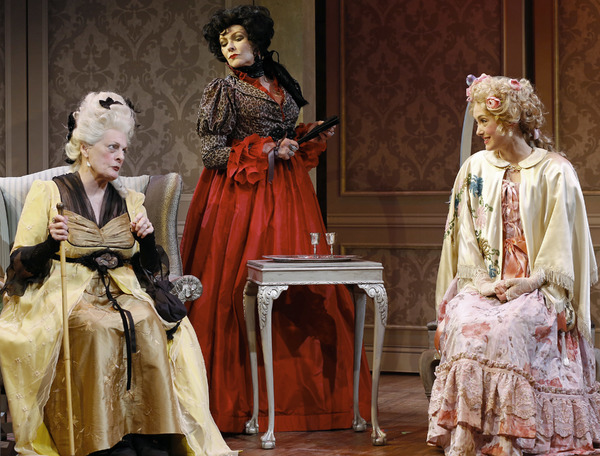
Mrs. Candour (Dana Ivey), Lady Sneerwell (Frances Barber), and Lady Teazle (Helen Cespedes) take part in idle chatter in Richard Brinsley Sheridan’s THE SCHOOL FOR SCANDAL
Red Bull Theater at the Lucille Lortel Theater
121 Christopher St. between Bleecker & Hudson Sts.
Tuesday – Sunday through May 8, $80-$100
212-352-3101 www.redbulltheater.com
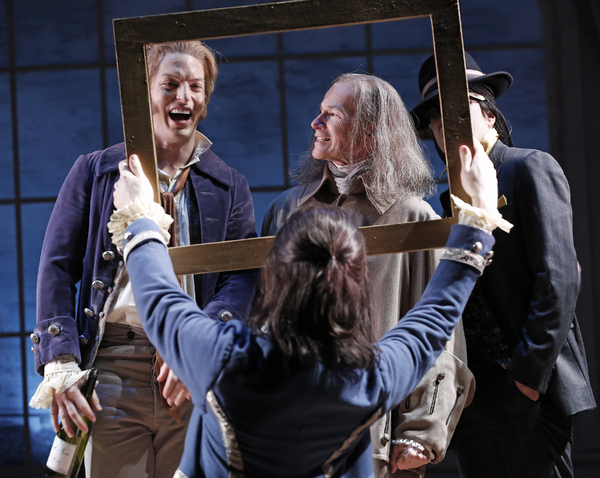
Red Bull Theater’s wonderfully playful adaptation of Richard Brinsley Sheridan’s classic 1777 farce, The School for Scandal, offers a master’s course on the subject of malicious idle chatter. The headmistress of this unofficial institution is Lady Sneerwell (Frances Barber), a wealthy widow with an ax to grind. “I am no hypocrite to deny the satisfaction I reap from the success of my efforts,” she tells her vitriolic star pupil, gossip columnist Snake (Jacob Dresch), continuing, “Wounded myself, in the early part of my life by the envenomed tongue of slander, I confess I have since known no pleasure equal to the reducing others to the level of my own injured reputation.” Joined by single heiress Maria (Nadine Malouf) and aristocratic gadfly Joseph Surface (Christian Conn), the group discusses the nature of gossip. “For my part, I confess, madam, wit loses its respect with me, when I see it in company with malice. What do you think, Mr. Surface?” the prim and proper Maria asks, to which Joseph replies, “Certainly, madam. To smile at the jest which plants a thorn in another’s breast is to become a principal in the mischief.” Lady Sneerwell chimes in, “Pshaw, there’s no possibility of being witty without a little ill nature. The malice of a good thing is the barb that makes it stick. What’s your opinion, Mr. Surface?” Joseph again shares his barbed judgment, explaining, “To be sure, madam, that conversation where the spirit of raillery is suppressed will ever appear tedious and insipid.” But the gossip they spread is anything but good-natured teasing, carefully aimed at directly affecting its targets. Referring to the never-seen Mrs. Clackit, Snake boasts, “To my knowledge, she has been the cause of six matches being broken off and three sons being disinherited, of four forced elopements, as many coerced confessions, and two divorces.” One of their current targets is Sir Peter Teazle (Mark Linn-Baker), an older city knight and avowed bachelor who has married the much younger Lady Teazle (Helen Cespedes), who is happily going through his money while flirting with Joseph, who prefers Sir Peter’s ward, Maria, who has a hankering for Joseph’s younger brother, Charles (Christian DeMarais), who is drinking away his fortune. The silly dandy and ersatz poet Sir Benjamin Backbite (Ryan Garbayo) also has his heart set on Maria. The Surface brothers have been receiving funds from their uncle, Sir Oliver (Henry Stram), who has been traveling the world for sixteen years but at last returns, deciding to test his nephews’ loyalty by appearing in disguise to determine whether they are still worthy of his financial support. And ruling over it all is the master gossip herself, Mrs. Candour (Dana Ivey), who declares without a hint of irony, “Tale-bearers are just as bad as the tale-makers — but what’s to be done, as I said before — how will you prevent people from talking?”
Charles (Christian DeMarais) and his disguised uncle, Sir Oliver (Henry Stram), frame their immediate future in THE SCHOOL FOR SCANDAL
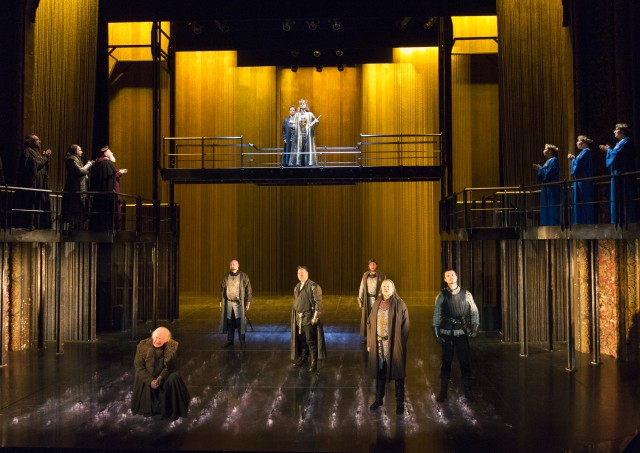
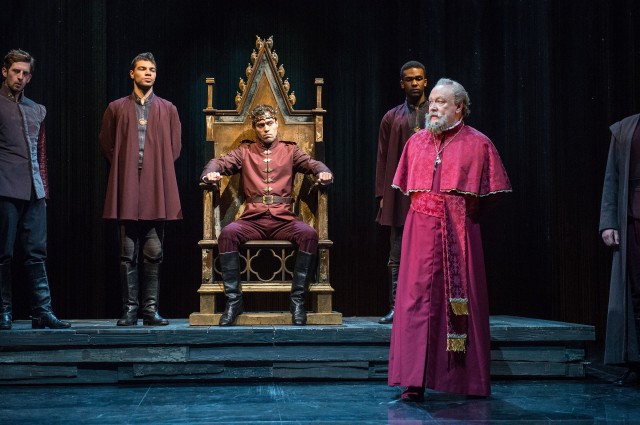
In his directorial debut, Marc Vietor assuredly guides all the delicious madness, but he has to play second fiddle to Andrea Lauer’s sensational period costumes and Charles G. LaPointe’s outrageous wig and hair design; Dresch’s green reptilian getup as Snake is worth the price of admission alone, as is the way he marvelously squirms and slithers onstage, and Ivey’s wig is like a character unto itself. The excellent cast has tons of fun on Anna Louizos’s set, which folds into drawing rooms in various residences. Ivey and Barber are particularly adroit at chomping on the scenery and spitting out their wickedly delicious calumny. Several characters present asides directly to the audience, which works for the most part except for Stram, whose attempts are hard to understand. The Dublin-born Sheridan, who wrote such other plays as The Rivals, A Trip to Scarborough, and Pizarro and was also a politician who served in the British Parliament for more than three decades, doesn’t hold anything back in this consistently engaging satirical comedy of manners, beginning with the names of the characters themselves; in addition to Candour, Snake, Sneerwell, Backbite, Surface, and Teazle, there are Crabtree, Midas, Bumper, and Careless onstage as well as references to Prim, Brittle, Clackit, Knuckle, Kumquat, and Gadabout. In his diary entry for December 17, 1813, Lord Byron wrote, “Lord Holland told me a curious piece of sentimentality in Sheridan. The other night we were all delivering our respective and various opinions on him and other hommes marquans and mine was this: — ‘Whatever Sheridan has done or chosen to do has been, par excellence, always the best of its kind. He has written the best comedy (School for Scandal), the best opera (The Duenna — in my mind, far before that St. Giles’s lampoon, the Beggars’ Opera), the best farce (The Critic — it is only too good for an after-piece), and the best address (Monologue on Garrick); and, to crown all, delivered the very best oration (the famous Begum Speech) ever conceived or heard in this country.” It is with no mere prattle that I say that Red Bull Theater has done us all a service by resurrecting this play that is nearly as old as our country, which itself has never stopped loving and spreading gossip, which can now go viral over the internet in the matter of minutes. “There’s no stopping people’s tongues,” Mrs. Candour says. “The license of invention some people take is monstrous indeed,” Joseph adds. Thank goodness those sentiments are true, for they result in such a rich and savory treat as The School for Scandal.
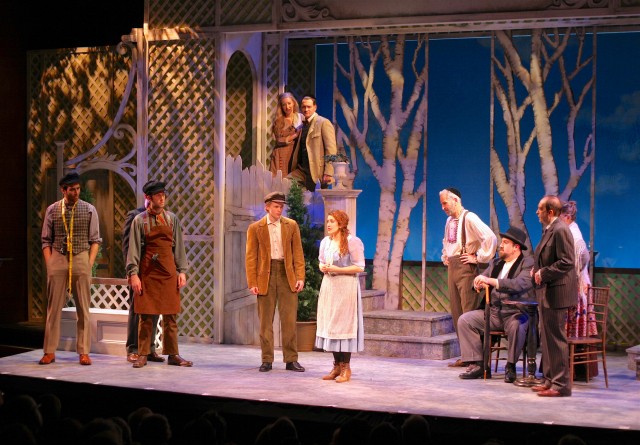
MCNY event will go behind the scenes of the making of classic Yiddish musical THE GOLDEN BRIDE (photo by Ben Moody Cameron Johnson)
Museum of the City of New York
1220 Fifth Avenue at 103rd St.
Wednesday, May 4, $25, 6:30
212-534-1672 www.mcny.org nytf.org
This past December, we raved about National Yiddish Theatre Folksbiene’s utterly delightful revival of the long-lost 1923 operetta The Golden Bride (“Di Goldnene Kale”) at the company’s new home at the Museum of Jewish Heritage. The production is back by popular demand this summer, running July 4 through August 28. You can get a behind-the-scenes sneak peek at the show on May 4 when the Museum of the City of New York presents “Vintage Theater on a Modern Stage: The Golden Bride,” being held in conjunction with the exhibition “New York’s Yiddish Theater: From the Bowery to Broadway,” which continues through July 31. The event features a discussion with musical archaeologist Michael Ochs, codirectors Bryna Wasserman and Motl Didner, musical director Zalmen Mlotek, costume designer Izzy Fields, and NYTF executive producer Chris Massimine as well as select songs performed by Rachel Policar, who stars as Goldele, Glenn Seven Allen (Jerome), Jillian Gottlieb (Khanele), and other cast members, followed by an exhibition viewing and reception. The Golden Bride has many similarities to Fidder on the Roof, which is currently playing at the Broadway Theatre; in a fun coincidence, both shows have been nominated for Outstanding Revival of a Musical by the Drama Desk. In addition, Wasserman and Didner are up for Outstanding Director, battling it out against Spring Awakening’s Michael Arden, The Color Purple’s John Doyle, American Psycho’s Rupert Goold, and Fiddler’s Bartlett Sher. (On June 19, MJH is hosting a Fiddler on the Roof sing-along, consisting of a screening of the Oscar-winning 1971 film and appearances by members of the current Broadway cast; attendees are encouraged to come dressed as their favorite character.) If you register for “Vintage Theater on a Modern Stage: The Golden Bride,” you will also receive a free ticket to a preview of The Golden Bride.
Walter Kerr Theatre
219 West 48th St. between Broadway & Eighth Ave.
Tuesday – Sunday through July 17, $42-$228.60 www.thecrucibleonbroadway.com
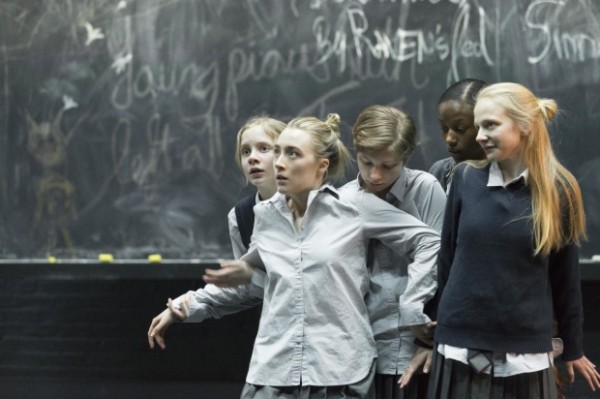
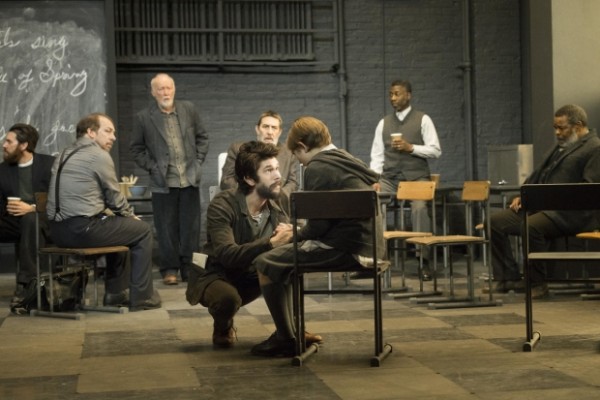
Director-of-the-moment Ivo van Hove follows up his riveting version of Arthur Miller’s A View from the Bridge with a strange, powerful, problematic take on Miller’s Tony-winning 1953 play, The Crucible. Part of the centennial celebration of Miller’s birth that also included last year’s production of Incident at Vichy at the Signature, The Crucible explores the 1692 Salem witch trials through a context informed by the communist witch hunt of the House Un-American Activities Committee led by Senator Joseph McCarthy in the 1940s and ’50s. Miller based the play on actual events recorded in the seventeenth century, although he changed many of the details of the real-life characters. In Salem, Betty Parris (Elizabeth Teeter) is in a catatonic state following an evening that might have involved magic and witchcraft in the woods with her friends Abigail Williams (Saoirse Ronan), Susanna Walcott (Ashlei Sharpe Chestnut), Mercy Lewis (Erin Wilhelmi), and Mary Warren (Tavi Gevinson). “There be no unnatural cause here,” claims Reverend Samuel Parris (Jason Butler Harner), the local priest and Betty’s uncle, who does not want to believe that this was the devil’s work. He sends for Reverend John Hale (Bill Camp) to back him up. “A precaution only,” Parris says. “He has much experience in all demonic arts.” However, wealthy landowner Thomas Putnam (Thomas Jay Ryan) and his wife, Anna (Tina Benko), who have lost seven babies, are sure that “vengeful spirits” are at work and insist that Parris investigate it as such. Meanwhile, town curmudgeon Giles Corey (Jim Norton) thinks that the Putnams are merely after his land, while Corey’s friend, John Proctor (Ben Whishaw), gets caught in the maelstrom of accusation and emotion, as the otherwise steadfast gentleman may or may not have had an affair with Abigail, his former maid, who was let go by his wife, Elizabeth (Sophie Okonedo). And many eyes turn toward Tituba (Jenny Jules), Parris’s slave from Barbados. “You are God’s instrument put in our hands to discover the Devil’s agents among us,” Hale tells her. When the judge, Deputy Governor Danforth (Ciarán Hinds), arrives, he’s sure that evil is at hand, boasting that four hundred witches are in jail because of him, seventy-two condemned to hang. Even as evidence comes out that supports that there was no witchcraft, Danforth remains determined to force people to name names so he can have them arrested and hanged. “There is a prodigious guilt in the country,” he boldly declares. “Reproach me not with the fear in the country; there is fear in the country because there is a moving plot to topple Christ in the country!”
Belgian director van Hove is often hit-or-miss with his shows, which in the last few years in New York City have included David Bowie and Enda Walsh’s Lazarus, adaptations of Ingmar Bergman’s Antigone. While A View from the Bridge was innovative and dynamic, Antigone was confusing and surprisingly lifeless; The Crucible falls somewhere in between. The set, by longtime van Hove collaborator Jan Versweyveld, is head-scratchingly odd, an old schoolroom with twentieth-century overhead lighting and a blackboard on which Tal Yarden’s abstract images are projected at one point. Wojciech Dziedzic’s costumes also mix the seventeenth century with the modern era; if the goal is to relate the witch trials to what is going on in the world today, it doesn’t quite work, since those elements are already part of Miller’s words and don’t benefit from such further obscuration. Philip Glass’s music is pleasurable but unnecessary, and the acting is inconsistent; while Ronan (Brooklyn, The Seagull), Camp (Death of a Salesman, Homebody/Kabul), Norton (The Mystery of Edwin Drood, The Seafarer), and Gevinson (This Is Our Youth, Enough Said) excel in their roles, Whishaw (His Dark Materials, In the Heart of the Sea) is rather static, Michael Braun (War Horse, Bad Guys) as Danforth’s right-hand man, Ezekiel Cheever, is too one-note, and Hinds (Cat on a Hot Tin Roof, Closer) seems lost at times, courtesy of Steven Hoggett’s crowded movement, often speaking with his back or side to the audience, making it hard to hear what he is saying. Fifty-three years after its Broadway debut, in a Tony-winning production starring E. G. Marshall, Beatrice Straight, and Arthur Kennedy, and fourteen years after its Tony-nominated 2002 Broadway revival with Laura Linney, Liam Neeson, and Kristen Bell, The Crucible feels today most relevant in its depiction of the religious nature of evil, with fundamentalists around the world responsible for so much violence and hatred and America in a constant debate over church versus state. Van Hove’s staging muddies various themes, resulting in a somewhat lukewarm rendering of a heated tale.
Workspace Artist-in-Residence Tamar Ettun rehearses at LMCC’s Studios at 28 Liberty (photo by Jonathan Patkowski for LMCC)
Who: Sarah Anderson, Mirene Arsanios, Chloë Bass, Jesse Bonnell, Esteban Cabeza De Baca, Glendaliz Camacho, Adriane Connerton, Nick Doyle, Tamar Ettun, Joel W. Fisher, Nadja Frank, Susan Karwoska, Amy Khoshbin, Lisa Ko, Courtney Krantz, Tora Lopez, Melanie McLain, Rangi McNeil, Irini Miga, Trokon Nagbe, Meredith Nickie, New Saloon, Christina Olivares, Piehole, Ronny Quevedo, Maria Rapoport, Keisha Scarville, Pascual Sisto, Stacy Spence, Yuliya Tsukerman, Jessica Vaughn What:LMCC Open Studios Where: LMCC’s Studios at 28 Liberty, 28 Liberty St. between Pine, Liberty, Nassau, & William Sts. When: Friday, April 29, 6:00–9:00, and Saturday, April 30, 1:00–6:00 (Open Texts 6:00–8:00), free with advance RSVP Why: The Lower Manhattan Cultural Council, which “empowers artists by providing them with networks, resources, and support, to create vibrant, sustainable communities in Lower Manhattan and beyond,” is kicking off its annual Open Studios by welcoming visitors on Friday night, April 29, and Saturday afternoon and evening, April 30, to wander through its Financial District space and check out works-in-progress by thirty-one artists artists who have been busy since September immersed in paintings, sketches, photographs, sculptures, videos, poetry, dances, plays, and more. The event is free with advance RSVP; the studios will close Saturday at 6:00 for two hours of spoken-word performances. The Open Studios program continues through October with presentations at 28 Liberty and 125 Maiden Lane and on Governors Island with such performers and choreographers as Okwui Okpokwasili, the Czechoslovak-American Marionette Theatre, Faye Driscoll, Netta Yerushalmy, Amber Hawk Swanson, Ephrat Asherie, Jodi Melnick, and YACKEZ (Larissa and Jon Velez-Jackson).
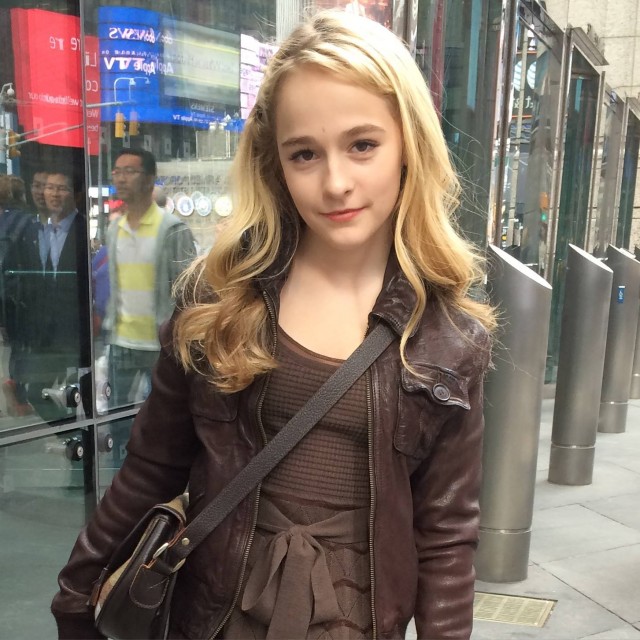
Actress, singer, and dancer Sophia Anne Caruso is taking New York City by storm (photo courtesy Sophia Anne Caruso)
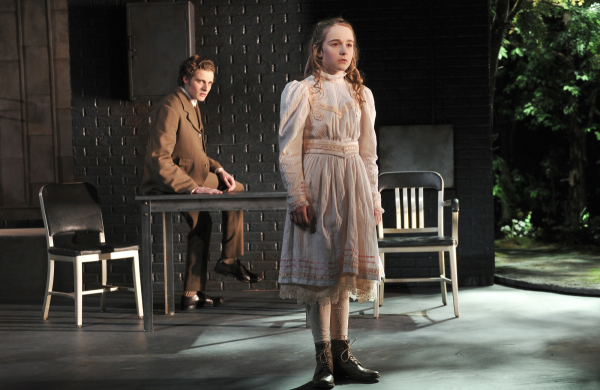
Multidimensional actress Sophia Anne Caruso might be just fourteen years old, but she already displays the confidence and demeanor of a seasoned pro — which she essentially is, having acted professionally nonstop for the last five years. Born and raised in Spokane and now living with her parents in New Jersey, Caruso came to New York for a project when she was eleven and decided to stay. In her brief but busy career, she has played Helen Keller in The Miracle Worker, in a production directed by Patty Duke, who originated the role on Broadway in 1959; starred as Birgitta in NBC’s The Sound of Music Live! opposite Carrie Underwood, Christian Borle, and Audra McDonald; appeared at the Kennedy Center with Boyd Gaines, Rebecca Luker, and Tiler Peck in the Susan Stroman-directed Little Dancer a musical about Edgar Degas and Marie van Goethem, the ballerina who posed for his famous “Little Dancer Aged Fourteen” painting; and played AnnaSophia Robb’s little sister in the Lifetime movie Jack of the Red Hearts.
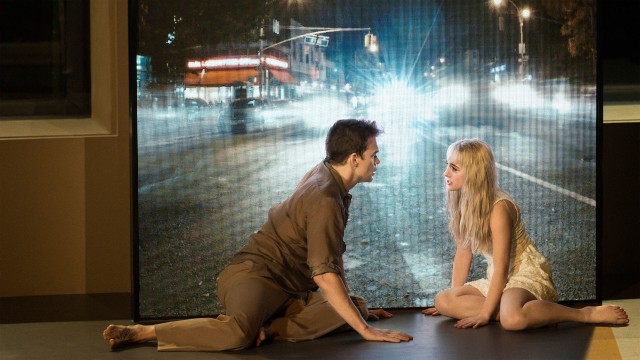
Here in New York City, she earned a Lucille Lortel nomination as Best Featured Actress in a Play for her performance as a young virtual reality fantasy figure for men in The Nether and a Lortel nod for Outstanding Lead Actress in a Musical and an Outer Critics Circle nomination for Outstanding Featured Actress in a Musical for Lazarus, playing the Girl in the New York Theatre Workshop world premiere by David Bowie and Enda Walsh, directed by Ivo van Hove. Currently she is on Broadway in a show that cannot be named, as a surprise character not listed in the Playbill and which cannot be mentioned in reviews. Sophia also just teamed with opera singer, ballet dancer, photographer, and musician Kenneth Edwards on a cover of Fleetwood Mac’s “The Chain” in the Elizabeth Street Garden. Homeschooled by her parents, Sophia likes ghost stories, has never been to a concert, and is hypercritical of herself, intent on mastering her craft. She is also charming, thoughtfully positive, and wise beyond her years; as she notes, “I was a morbid little child.” On a recent early weekday evening shortly before her call time, Sophia and I met in a Theater District hotel lounge and talked about vintage clothing, cast albums, stalkers, the freedom her parents give her, and how much she loves what she does.
twi-ny: You were born and raised in Spokane, Washington. Are you still partly based there?
Sophia Anne Caruso: My dad moved out here. He was still living in Spokane in our old house, but he finally sold it and moved here.
twi-ny: That must be great.
SAC: It’s a relief to have everyone together again. Long distance was hard for us, especially for me and my dad, because I’m a daddy’s girl.
twi-ny: What did you think of New York City when you first got here?
SAC: In Spokane, I got bored all the time, and it didn’t quite feel like home. But when I came here, I wasn’t scared, I wasn’t overwhelmed; it felt like home. Broadway, the theater area — the first show that I saw, when I was nine, was Billy Elliot, and I fell in love with theater. That’s when I knew, I want to move to New York and be on Broadway.
twi-ny: Around that time, in Seattle, you played Helen Keller in The Miracle Worker, directed by Patty Duke, who just passed away. What did you learn from her?
SAC: She gave me my very first real acting job; that’s when I fell in love with acting and I knew that I wanted to be an actress. Acting is my favorite thing to do, and she helped me realize that. She mentored me a little bit; at the time, I didn’t understand why she was sometimes harsh on me, but now, as an older me, I’m looking back, I’m thinking, that’s why. She taught me that I have to stay consistent, that when you’re doing a professional job, it’s to the centimeter. You have to be exact; it has to be perfect. She taught me that it’s not all fun and games, although a lot of it is. But it’s also my job.
twi-ny: Not to concentrate too much on death, but you were also in Lazarus, and while you were in the midst of the run, David Bowie died. What was that experience like?
SAC: I got to work with him directly; he came into rehearsals often, he gave me notes, we talked. I like to say that I knew him and that I collaborated with him, for sure. I was not aware of his illness; none of the cast was. His death came as a very big surprise to us, and the hard part, but also the good part, of the day after was that we were all together. We were recording our cast album, which was hard because our voices were in shock because of crying and the strain, but being there was bonding. Nothing would have been worse than staying home alone during that day, but we decided to do the cast album. We listened to the recording, and I think that there’s something so special about it.
Sophia Anne Caruso earned several award nominations for her role in LAZARUS opposite Michael C. Hall (photo by Jan Versweyveld)
twi-ny: In the show you sing “No Plan” and “Life on Mars.”
SAC: It’s an honor to sing his music. I’ve always been inspired by his music, and I’ve always loved it. My mom owned vintage stores, and she always had funky seventies stuff. She was always playing Bowie.
twi-ny: Your parents are clearly bringing you up with a certain amount of freedom to develop your own identity.
SAC: Yes, my family is sort of exceptional. My mom is not religious; she’s very free, she likes to travel. My dad is on the more right-wing side, but he has given me freedom to choose what I want, who hasn’t ever pushed me to go towards religion or anything else. They’ve really let me become who I am, who I want to be. They have let me have a lot of freedom, with my choices and my style. Like, I love vintage fashion, and maybe I don’t choose the most attractive clothes or what they would consider appropriate, but it’s me, and it’s what I love, and they support me. It’s a hard business to get through, and they have been there through everything. Nothing is better than having parents like that.
twi-ny: Regarding your choices, your last three plays in New York City were The Nether, about virtual reality and child abuse; Lazarus, in which you play a very complicated character who is no mere child; and now you’re on Broadway in a heavy play that we cannot mention by name because you play a surprise character. What draws you to those roles? And why do your parents let you do them? A lot of parents would say, “Uh-uh, no way.”
SAC: I personally think blondes make the best victims, in my opinion. [laughs] I have sort of become the go-to girl for those things, so they come to me. I chose to do The Nether because I think it’s a very important topic. I didn’t just do it because it’s edgy. I love that it was edgy and that it was out there, but what was most important to me was getting that message out there. If you look around [referring to other people in the lounge], he’s on a computer, he’s on his phone. There was this revealing moment: I was on the train, underground, and nobody was on their phone. We came aboveground, got service, and everybody got their phone out, and I was, like, “Oh my God, what has this world come to?” And that is what made me leap at The Nether. I was, like, I gotta do this show now.
twi-ny: You also played a scary part on Celebrity Ghost Stories.
SAC: I loved doing that! I thought it was so fun. They put me in these sort of seventies clothes, and they had this old haunted house in this very old neighborhood, and that was really fun for me. I try not to let the work affect me; I don’t think it does. I have a certain anxiety about it. Like with The Nether, a question that I ask myself now is, Did that inspire people to act those things, or did that prevent things? And that’s something that scares me as I get older; I think I didn’t have that problem as much when I was younger.
SAC: Both. I’ve had stalkers after The Sound of Music Live!, because that was very big, and I had a couple of strange stalkers after The Nether, but I ignore it. I just don’t respond to anything creepy and delete it immediately.
twi-ny: Does it affect your decision in what plays to do?
SAC: No, it doesn’t. That’s something that comes with being an actor or somebody who’s in the public eye. People become obsessed with your image, not who you are.
twi-ny: Did it scare you when it first happened?
SAC: I was never a sheltered kid, so it absolutely scared me a little bit. Because sheltered kids, they don’t know what happens, they don’t understand how bad the world is, and I always knew those things; my parents have always informed me on things. I watched the news as a kid, and I was never stupid; I knew how serious stalkers could be. And I now have people who protect me from that.
twi-ny: How does it feel to be making your Broadway debut in a show where you’re not in the main Playbill and you’re not allowed to be mentioned in reviews?
SAC: Does it bug me?
twi-ny: Right. You can’t tell people what you’re doing.
SAC: It doesn’t bother me. I’m part of creating a great piece of art, and that’s all that really matters to me. And the fact that I get to go out on the stage and do something, that I’m in the theater. It’s just when I’m not in the theater that I’m miserable. When I’m not working, I’m miserable. But I’m honored to be working with fantastic actors. All that really matters to me is I’m part of telling an important story.
twi-ny: You posted a very interesting picture on Instagram recently in which you’re holding up a bunch of very adult plays that you were getting ready to read, including Equus, This Is Our Youth, and Killer Joe, and you even mentioned in the comments that Sarah Kane is your favorite playwright. Obviously, you’re drawn to this type of material.
SAC: Yes, I am drawn to it. People say that I have a dark sense of humor and I have deep thoughts, and I do, but I like to challenge my mind too. So Sarah Kane is something . . . At first, it takes me a minute to wrap my mind around it. When I finish reading the play, it’s one of those things where it makes me think as an actor. So I like to read those plays because I think it helps make me become a better actor. I don’t ever use them for auditions, but I do a couple of Sarah Kane monologues. . . . . For me, at least, I go to the theater to feel, not to be entertained all the time.
twi-ny: You did Little Dancer, about Degas, at the Kennedy Center. Did you become interested in his work at all, or is that separate?
SAC: When I was doing it, in the rehearsal room we always had prints of his pictures on the wall, and it really inspired the piece. There would be certain moments in the show where there would be a beat in the music and [director Susan Stroman] would say, “Hit the Degas pose.” So we would look at the dancers [in the paintings] and we would make that exact pose.
twi-ny: You’re fourteen, and you’ve already worked with Audra McDonald, Carrie Underwood, Michael C. Hall, Bernadette Peters, Famke Janssen, David Bowie, Susan Stroman, Ivo van Hove, Karen Ziemba, John Oliver, Anne Kauffman; that’s a pretty impressive list for anyone, but especially for a young teenager.
SAC: Age is just a number. I don’t really see myself as my age. I feel very special to have worked with them, but I think of them as equals; I don’t think of them as stars. I think of them as brilliant minds and things, but I don’t think much of it, to be frank, and I try not to make too much of it because then I psyche myself out and get all weird about it, and I get anxious when I’m around someone like that.
twi-ny: You can’t be a fan; you’re a colleague.
SAC: Yeah. That’s the thing that was hard for me with Michael Hall. I was such a fan, ’cause I watched his work on Dexter and Six Feet Under and I loved that stuff. I had so many questions to ask him, and I was ready to talk, because he inspires me as an actor, but I had to not picture him as Dexter anymore; I had to picture him as [his Lazarus character] Thomas Newton and Michael, my friend. I mean, that wasn’t really a struggle, but it was interesting to navigate through that.
twi-ny: What is it like working with van Hove?
SAC: One of my very favorite directors. He taught me this thing that I’ve used from then on, which was, the first day, you go in memorized. It’s so smart, too. Because then you can just focus on the acting and what you want to do. You don’t have to worry about holding a paper or looking down at your notes on the paper. That was one of my bad habits. [In the past] I would have all my notes on the paper and I would look at them. Between every scene I would be like, I have to remember this, I have to remember that. But on the first day of rehearsals [for Lazarus], I had my notes on all my papers, and Ivo goes, “You don’t need this,” and I never got my papers back.
twi-ny: He took them away from you?
SAC: Yeah. I got rid of the papers and he let my instincts fly and that was it.
twi-ny: What else is coming up?
SAC: I’m scheduled to do Runaways by Elizabeth Swados for Encores. I actually was looking through records today and I found this vinyl of the original cast album and I was like, “I need this!”
David Tennant wears the crown in RSC production of RICHARD II at BAM (photo by Richard Termine)
Brooklyn Academy of Music
BAM Harvey Theater
651 Fulton St. Richard II: April 26 & 29 Henry V: April 24 & 28
Cycle continues through May 1, $30-$200
718-636-4100 www.bam.org
Marathons and binge-watching are nothing new to the Royal Shakespeare Company, incorporated in 1875 as the Shakespeare Memorial Theatre. In 2011, the RSC presented five shows at the Park Avenue Armory, part of the Lincoln Center Festival (Julius Caesar, As You Like It, King Lear, Romeo and Juliet, and The Winter’s Tale). The RSC has now taken over the BAM Harvey Theater in Fort Greene, where it is honoring the four hundredth anniversary of the death of the Bard with the four history plays that make up the Henriad, the continuing tales of the House of Lancaster. “King and Country: Shakespeare’s Great Cycle of Kings” begins with Richard II, featuring a fabulous David Tennant in the title role, portraying the dandy king with a bittersweet bisexual abandon and more than a touch of Jesus. The Duke of Gloucester is dead, and Henry Bolingbroke (Jasper Britton), Richard’s cousin, accuses Thomas Mowbray, the Duke of Norfolk (Christopher Middleton), of treason and murder. An almost-duel, exile, return, and revolt ensue, as Henry plots to take back the throne that he believes belongs to him, while Richard becomes obsessed with battling Ireland. Directed, as all four shows are, by Gregory Doran on a spare stage designed by Stephen Brimson Lewis, Richard II, which is told completely in verse, boasts particularly fine performances by Julian Glover as John of Gaunt, Oliver Ford Davies as the Duke of York, and Nicholas Gerard-Martin as Bagot, in addition to Britton, Middleton, and Tennant, the last following a long line of actors playing Richard II onstage (the play has never been made into a film), including John Gielgud, Paul Scofield, Derek Jacobi, Kevin Spacey, Mark Rylance, and Eddie Redmayne. Tennant (Doctor Who, Broadchurch, Jennifer Jones), who played the title character in Doran’s 2008 staging of Hamlet with Patrick Stewart as his father, is utterly charming as the frolicking king, his every step a delight even as everything starts falling apart around him. Above the audience stage right, trumpeters Chris Seddon, Andrew Stone-Fewings, and James Stretton announce scenes, while at stage left sopranos Charlotte Ashley, Helena Raeburn, and Alexandra Saunders sing as a chorus. (The music is by Paul Englishby.) The ending sets up the next two shows, Henry IV, Part I and Henry IV, Part II, with Britton again playing the ascendant ruler.
The Henriad concludes with Henry V, as Alex Hassell, who played Prince Hal in both parts of Henry IV, does a stern turn as the king, who is determined to take over France, regardless of what the Archbishop of Canterbury (Jim Hooper) and others might say. Meanwhile, the daffy dauphin (Robert Gilbert) essentially dares Henry to bring it on, even as King Charles VI (Simon Thorp) and Queen Isobel (Jane Lapotaire) of France consider other options, as does their daughter, the princess Katherine (Jennifer Kirby). Joining the fray on Henry’s side are Bardolph (Joshua Richards), Nym (Middleton), Pistol (Antony Byrne), and Mistress Quickly (Sarah Parks), who are renewing their purpose in life now that their leader, Sir John Falstaff, has died. It all comes to a head at the epic Battle of Agincourt, staged in marvelous minimalism by Doran. “We few, we happy few, we band of brothers; / For he to-day that sheds his blood with me / Shall be my brother,” Henry declares in the famous St. Crispin’s Day speech. As in Richard II, projections give depth and atmosphere to the surroundings, along with live music, and the acting is impeccable, with Hassell adding his name to a regal roster of Henrys that boasts Ralph Richardson, Laurence Olivier, Richard Burton, Ian Holm, Timothy Dalton, Kenneth Branagh, Tom Hiddleston, and Jude Law. Davies nearly steals the show as the self-aware chorus, a narrator in modern dress who introduces scenes, entering and leaving the drama, watching events unfold while giving such explanations as “Piece out our imperfections with your thoughts; / Into a thousand parts divide on man, / And make imaginary puissance; / Think when we talk of horses, that you see them / Printing their proud hoofs i’ the receiving earth; / For ’tis your thoughts that now must deck our kings, / Carry them here and there; jumping o’er times, / Turning the accomplishment of many years / Into an hour-glass: for the which supply, / Admit me Chorus to this history; / Who prologue-like your humble patience pray, / Gently to hear, kindly to judge, our play.” We can indeed judge the play kindly, bringing the Henriad to a memorable conclusion. All four works have at least two more performances each at BAM, where you can also see the exhibition “King and Country: Treasures from the Folger,” consisting of rare paper artifacts from the Folger Shakespeare Library in Washington, DC.
Inspired by the story of the Jena Six, BLOOD AT THE ROOT examines racial injustice in twenty-first-century America (photo courtesy Penn State Centre Stage)
BLOOD AT THE ROOT
National Black Theatre
2031 Fifth Ave. between 125th & 126th Sts.
Previews April 20-22, $15; April 23 – May 8, $25; May 9-15, $35
212-722-3800 www.nationalblacktheatre.org
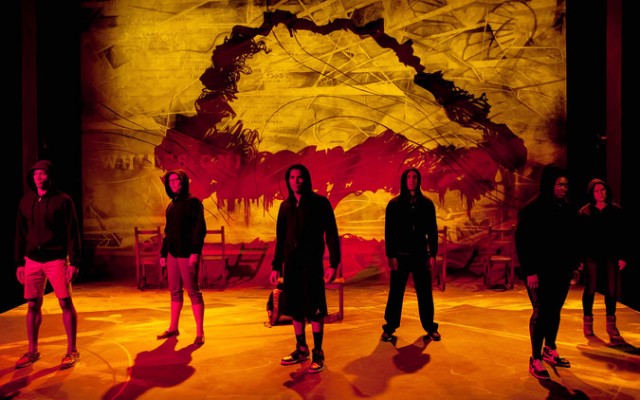
In 2006, six black students at Jena High School in Central Louisiana were arrested after a fight with a white student, shortly after nooses were hung from a tree in the school courtyard, leading to a nationwide discussion of racial injustice in America. Inspired by the events surrounding the Jena Six, playwright Dominique Morisseau wrote Blood at the Root, which will make its New York City premiere at the National Black Theatre in Harlem from April 20 to May 15. The play, which incorporates music, dance, and poetry, is directed by Steve Broadnax and features Stori Ayers, Brandon Carter, Allison Jaye, Tyler Reilly, Kenzie Ross, and Christian Thompson. Morisseau, who is also an actress, has previously written Sunset Baby, Follow Me to Nellie’s, and the “Detroit Projects” trilogy, which consists of Detroit ’67, Paradise Blue, and Skeleton Crew, which returns to the Atlantic next month.
TICKET GIVEAWAY: Blood at the Root begins previews April 20 and opens April 23 at the National Black Theatre, and twi-ny has three pairs of tickets to give away for free. Just send your name, daytime phone number, and favorite play that addresses racism to contest@twi-ny.com by Thursday, April 20, at 3:00 to be eligible. All entrants must be twenty-one years of age or older; three winners will be selected at random.