this week in theater

FREE SUMMER EVENTS JULY 15-22

come out and play

The free summer arts & culture season is under way, with dance, theater, music, art, film, and other special outdoor programs all across the city. Every week we will be recommending a handful of events. Keep watching twi-ny for more detailed highlights as well.

Sunday, July 15
Harlem Meer Performance Festival: Keith “the Captain” Gamble and the NU Gypsies, Charles A. Dana Discovery Center, Central Park, 2:00

Monday, July 16
Piano in Bryant Park: Daryl Sherman, July 16-20, Bryant Park, 12:30

Tuesday, July 17
High Line Art: Kerry Tribe Artist Talk, panel discussion with Kerry Tribe, moderated by Melanie Kress and Ana Traverso-Krejcarek, about Tribe’s Exquisite Corpse film, the High Line at Fourteenth St., 7:00

Black Mother will be shown in Socrates Sculpture Park on July 19

Black Mother will be shown in Socrates Sculpture Park on July 19

Wednesday, July 18
Outdoor Cinema: Black Mother (Khalik Allah, 2018) and Symphony of a Sad Sea (Carlos Morales Mancilla, 2018), Socrates Sculpture Park, with live performance at 7:00, film at sunset

Thursday, July 19
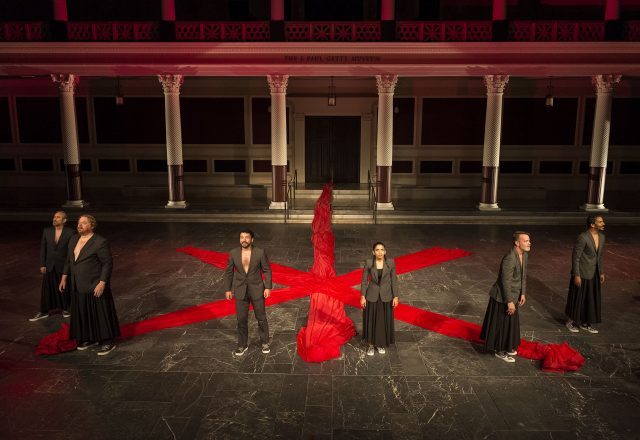
Shakespeare in the Parking Lot: Hamlet, starring Jane Bradley and directed by Karla Hendrick, Clemente Parking Lot, 114 Norfolk St., July 19-21 & 26-28, 6:30

Piano in Bryant Park continues weekdays at 12:30

Piano in Bryant Park continues weekdays at 12:30

Friday, July 20
BRIC Celebrate Brooklyn! Festival: Anoushka Shankar, Land of Gold, My Brightest Diamond, Prospect Park Bandshell, 7:30

Saturday, July 21
Come Out & Play, Manhattan Bridge Archway Plaza, DUMBO, family-friendly activities 1:00 – 5:00, adult games 7:00 – 10:00

Sunday, July 22
SummerStage: Ginuwine, the Ladies of Pink Diamonds, and DJ Stacks, Corporal Thompson Park, Staten Island, 5:00

MARY PAGE MARLOWE

(photo by Joan Marcus)

Twelve-year-old Mary Page (Mia Sinclair Jenness) looks up to her mother (Grace Gummer) in extraordinary Tracy Letts play (photo by Joan Marcus)

2econd Stage Theater
Tony Kiser Theater
305 West 43rd St. between Eighth & Ninth Aves.
Tuesday – Sunday through August 19, $30-$89
2st.com/shows

“I am unexceptional,” the title character tells her shrink in Mary Page Marlowe, Pulitzer Prize winner Tracy Letts’s exceptional play, which opened tonight at 2econd Stage’s Tony Kiser Theater. The best play I’ve ever seen about the life and times of a woman written by a man, Mary Page Marlowe follows the protagonist, born in 1946, through eleven nonchronological stages of her rather ordinary existence, portrayed by six terrifically talented actresses and one doll (as the infant). Each scene reveals small but significant details about the character as she goes about her days as a daughter, a wife, a mother, a patient, an employee, and a retiree, trying to find her identity as her relationships — and her name — change. Whether she ever finds her true self — if there even is such a thing — is the question of the play. Mary Page is wonderfully performed by Mia Sinclair Jenness at twelve, Emma Geer at nineteen, Tatiana Maslany (in her New York stage debut) at twenty-seven and thirty-six, Susan Pourfar at forty and forty-four, Kellie Overbey at fifty, and Blair Brown at fifty-nine, sixty-three, and sixty-nine. The nonlinear time shifts are indicated primarily by the character’s clothing (the simple but effective costumes are by Kaye Voyce) and hairstyle as such basic props as beds, tables, couches, and chairs slide on and off Laura Jellinek’s intimate two-level set, making it clear this is about one woman’s interior and exterior changes, not about a changing America.

(photo by Joan Marcus)

Fifty-nine-year-old Mary Page (Blair Brown) gets some bad news as Ray (Brian Kerwin) looks on in masterful production at 2econd Stage (photo by Joan Marcus)

From childhood to senior citizenship, Mary Page faces illness, divorce, alcoholism, infidelity, displacement, and more, all with the same attitude, as if various key moments in her life are no different from the rest of her days; sometimes the choices aren’t hers, but even when they are, she is often a spectator, much like the audience. “What do you want?” her teenage daughter, Wendy (Kayli Carter), asks at a Denny’s as her younger brother, Louis (Ryan Foust), plays with a map. “Why can’t you just say what you want?” Wendy repeats when her mother avoids the question. Throughout the ninety-minute intermissionless play, Mary Page says “I don’t know” two dozen times, although she also does provide some answers. When her shrink (Marcia DeBonis) asks her why she hasn’t brought up what she believes to be a certain important issue previously, Mary Page says, “Because it’s not relevant, that’s what I’m telling you, it feels like a different person who was going through that,” eliciting a laugh from the audience since each Mary Page is played by a different actress. She then adds, “I still live life even when you’re not watching me,” as if reminding the audience that there is even more to Mary Page than what is revealed onstage, just as there is more to any woman we see in real life. But even when she does — or doesn’t — take action for her own benefit, she shows a resilience to persist, a well-earned survival instinct that keeps her going despite what are sometimes formidable odds.

(photo by Joan Marcus)

Thirty-six-year-old Mary Page (Tatiana Maslany) faces off against her shrink (Marcia DeBonis) in dazzling New York premiere (photo by Joan Marcus)

Letts (August: Osage County, Superior Donuts) and director Lila Neugebauer, who has excelled helming such ensemble pieces as The Antipodes, Everybody, The Wolves, and The Wayside Motor Inn, do a beautiful job moving from scene to scene; even though events happen out of order, Mary Page is in a constant state of progression. We might not ever see them together (at least not until the curtain call), but the six amazing women who play Mary Page flow into one another seamlessly, helping make her one person with many distinct aspects. The large cast also includes Grace Gummer as Mary Page’s mother and Nick Dillenburg as her father; Audrey Corsa and Tess Frazer as her high school friends, Connie and Lorna; David Aaron Baker and Brian Kerwin as significant others Ray and Andy; Maria Elena Ramirez as her nurse; Gary Wilmes as one of her lovers; and Elliot Villar as her dry cleaner, who wraps everything up as they talk about fixing a quilt in which “different women would sew the different panels and then stitch them all together,” just as Letts, Neugebauer, and the cast have so remarkably done in this extraordinary work.

PASS OVER

(photo by Jeremy Daniel)

Kitch (Namir Smallwood) and Mister (Gabriel Ebert) wonder what’s next in Antoinette Nwandu’s Pass Over (photo by Jeremy Daniel)

Claire Tow Theater
LCT3/Lincoln Center Theater
150 West 65th St.
Through July 22, $30
www.lct.org

Antoinette Nwandu takes a hard look at who we are as a nation through the eyes of a pair of young, disenfranchised black men in the searing Pass Over, continuing at Lincoln Center’s Claire Tow Theater through July 22. As you enter the small, intimate venue, the main characters are already onstage, one sleeping under a lamp post, the other walking back and forth across a long, angled street curb, occasionally stopping and staring out suspiciously, as if expecting trouble, from racial profiling to blatant discrimination and bigotry. The former is Moses (Jon Michael Hill), a stern, angry man with “plans to rise up to my full potential,” while the latter is Kitch (Namir Smallwood), a naive, less ambitious guy. They call each other by the n-word so often that it is meant to make the mostly white audience feel uncomfortable; in fact, to further that feeling, one reason the two-act, eighty-five-minute show has no intermission is that “if Moses and Kitch cannot leave, neither can you,” Nwandu writes in the script. The two men often talk of getting out, their conversations punctuated by abrupt lighting shifts as they raise their hands in the air, as if suddenly facing the police, or the “po-pos.”

Their space is soon invaded by Mister (Gabriel Ebert), a privileged version of Little Red Riding Hood; Mister is a tall Caucasian man dressed in an all-white suit, with white shoes and a white hat and carrying a picnic basket. He says he got lost on the way to his mother’s house and offers to share his food with them in exchange for their allowing him to sit down and rest his “weak arches.” While Kitch is aching to dig in to the grub, Moses wants no part of Mister, suspicious of his motives and why he’s there. Although they speak a very different language — Mister talks formally and says things like “gosh golly gee” and “salutations,” in blunt contrast to the street poetry of Kitch and Moses — they quickly begin discussing police treatment of blacks, hunger, and the n-word. “Gosh / you really like that word. . . . I mean / every sentence / my n-word this / my n-word that,” Mister says. “Maaaaaan / quit actin’ like / yo ass ain’t sed dat shit,” Kitch argues, but Mister insists he has never used the term. “If they don’t / bess believe / dey want to,” Moses says about white men who claim they don’t say it. A few minutes later, Mister departs, and a uniformed white cop, Ossifer (Ebert), shows up, immediately threatening Moses and Kitch. “Talk shit / like they got power / ain’t got no power / cept dat gun / dat fuckin badge,” Moses says after the policeman has left. They then go to sleep, hoping that the next day will be better. It’s not.

(photo by Jeremy Daniel)

Trouble awaits Kitch (Namir Smallwood) and Moses (Jon Michael Hill) in Pass Over (photo by Jeremy Daniel)

Waiting for Godot meets the biblical story of the Exodus from Egypt in Pass Over, a dark, twenty-first-century fable of the state of race relations in America today — and how much things haven’t changed since before the Civil War. In the script, Nwandu refers to Moses as a slave driver and God’s chosen leader, Kitch as a slave and one of God’s chosen, Mister as a plantation owner and pharaoh’s son, and Ossifer as a patroller and a soldier in pharaoh’s army; she also notes that the play takes place in the present as well as 1855 and the thirteenth century BCE, on a ghetto street, on a plantation, and in Egypt, expanding the timelessness of the central narrative. However, the characters, Wilson Chin’s set, and Sarafina Bush’s costumes never switch eras, equating the perpetual nature of racism and slavery through the ages. Tony nominee Hill (Superior Donuts, The Unmentionables) and Smallwood (Pipeline, Buzzer) sizzle as updated versions of Beckett’s Vladimir and Estragon, waiting and hoping for a promised land that appears to be far beyond their reach, while Tony and Obie winner Ebert (Matilda the Musical, 4000 Miles) attacks his two roles with relish. The play, which premiered last year at Steppenwolf and was filmed by Spike Lee, is boldly honest, both funny and frightening. When Mister tells Moses and Kitch, “If i were in your shoes / gosh / i’d be terrified,” he’s speaking for everyone in the audience. Taymor (Esai’s Table, Nwandu’s Flat Sam), whose aunt is Emmy and two-time Tony winner Julie Taymor, directs with a sure hand, letting the subject matter take shape before it all shatters. Pass Over ushers in a fresh, vibrant voice in Nwandu, who includes a shock ending to make sure we get her devastating message.

GIRLS & BOYS

(photo by Marc Brenner)

Carey Mulligan gives a tour-de-force performance in Dennis Kelly play (photo by Marc Brenner)

Minetta Lane Theatre
18 Minetta Lane between Sixth Ave. and Macdougal St.
Tuesday – Sunday through July 22, $57-$97
girlsandboystheplay.com
libertytheatresusa.com

Carey Mulligan is brilliant as a wife and mother telling the gripping story of her family in Dennis Kelly’s engrossing one-woman show, Girls & Boys, which has been extended at the Minetta Lane through July 22. The play unfolds in a series of “chats” in which Mulligan, as the unnamed woman, speaks directly to the audience, interrupted by scenes in which she interacts with her two unseen children, Leanne and Danny. Mulligan speaks to the audience from a shallow, confined area at the front of the stage; the scenes with the children take place when the back wall opens up onto an idyllic kitchen/living room, a large space with objects arranged as if in a Morandi painting, all bathed in a soft robin’s-egg-blue evoking fantasy and memory. (The set is by Es Devlin, with lighting by Oliver Fenwick.) Recounting a brief period in her youth when she went wild with men and drugs, the woman recalls the turning point in her life, a drunken night with her flatmate in which they continued having sex after she threw up. “I remember thinking, ‘If he doesn’t come soon, he’s going to fuck me right into that puddle of puke,’” she says. “Let me tell you something — when a sentence like that appears in your life, you know it’s time to start looking at your choices.” Her tale continues as she relates meeting in an airport queue the man she would eventually marry, and she later describes how she got a job “as a development executive’s assistant’s . . . executive assistant” in a documentary filmmaking company. In between discussing belief, violence, and truth, she plays with, scolds, and shares tender moments with Leanne and Danny. But as her career takes off, her husband’s, selling antique wardrobes, starts experiencing problems that affect their marriage.

(photo by Marc Brenner)

A woman (Carey Mulligan) plays with her unseen children in Girls & Boys (photo by Marc Brenner)

Tony winner Kelly (Matilda the Musical, Taking Care of Baby) and Olivier-winning director Lyndsey Turner (Machinal, Chimerica) expertly pace the Royal Theatre production, carefully revealing key bits of plot before a critical moment occurs about two-thirds of the way through, setting up the shocking finale. Oscar and Tony nominee Mulligan (Skylight, An Education) is extraordinary as the woman; as the tension builds over the course of 105 intermissionless minutes, she holds her body ever tighter, barely moving as she gets to the hardest parts of her tale. But through it all, the woman refuses to condemn the human race for the problems she experiences. “I think a lot about violence,” she explains. “Not because I want to or anything. I just think it’s such a fundamental part of our species that how can you understand us without understanding it?” She adds, “And please don’t misunderstand, I’m not negative about . . . us — I think we’re incredible. The things we’ve done. The things we do. I mean if I collapse right here, tonight — you’ll all look after me. You will. You will do that.” At the end of the play, you will want to look after the woman, but of course you can’t; such is the cathartic nature of high-quality, powerful theater. But her story is likely to stay in your mind and heart for a long, long time. (Girls & Boys is the second one-person show produced by Audible at the Minetta Lane Theatre, following David Cale’s Harry Clarke, which starred Billy Crudup. Both plays are available as audiobooks; you can listen to a sample of the former here.)

SKINTIGHT

(photo by Joan Marcus 2018)

Benjamin Cullen (Eli Gelb), Jodi Isaac (Idina Menzel), and Trey (Will Brittain) don’t exactly get comfortable with one another in Skintight (photo by Joan Marcus 2018)

Laura Pels Theatre
Harold and Miriam Steinberg Center for Theatre
111 West 46th St. between Sixth & Seventh Aves.
Tuesday – Sunday through August 26, $119
212-719-1300
www.roundabouttheatre.org

Joshua Harmon’s fourth play is another clever and insightful, if occasionally repetitive and overwrought, drama of family relationships. In Bad Jews, a trio of siblings squabble over a treasured heirloom. In Significant Other, a gay man can’t find love while his girlfriends each get married. And in Admissions, privilege and merit come to the fore when students at a boarding school apply to college. In Skintight, making its world premiere at the Roundabout’s Laura Pels Theatre, Harmon delves into sex, love, aging, and lust in a dysfunctional Jewish clan. Tony winner Idina Menzel stars as Jodi Isaac, a mother and lawyer facing a midlife crisis when her husband, Greg, leaves her for a much younger woman. In desperate need of unconditional support, she pays an unannounced visit to her father, Elliot (Jack Wetherall), a wealthy clothing entrepreneur who is about to turn seventy and hates surprises. “While Greg and I were at that resort, like, not to be graphic, Daddy, but while we were having like the best sex of our lives, our adult lives, this person was getting her diaper changed, because she didn’t yet possess the motor skills to wipe her own ass,” Jodi says. But that doesn’t exactly gain Elliot’s sympathies; not only is he not exactly a warm and fuzzy father and grandfather, but he’s living with twenty-year-old stud Trey (Will Brittain), with whom he rides motorcycles and goes out to nightclubs. “There has got to be more to life than sex with a hot young thing,” Jodi adds, not seeing the comparison. When her self-involved gay twenty-year-old son, Benji (Eli Gelb), who’s been studying abroad in Budapest, arrives, Elliot worries that he might be interested in Trey. The tension mounts as the birthday dinner approaches and nobody is really listening to what anyone else is saying.

(photo by Joan Marcus 2018)

A dysfunctional family looks back at its past in latest Joshua Harmon play (photo by Joan Marcus 2018)

Harmon fills Skintight with plentiful one-liners and keen observations — “It’s not an achievement, to not die,” Jack tells his daughter about not wanting to make a big deal of his milestone birthday — and three-time Obie-winning director Daniel Aukin (Bad Jews, Admissions, 4000 Miles) guides the characters with an assured hand as they make their way through Lauren Helpern’s appropriately cold, ritzy set, an austere, silver-gray Horatio St. living room and staircase. But it’s difficult to accept Jack and Jodi as father and daughter; they lack that necessary connection that would add potency to their pithy disagreements. And Trey is so over the top, particularly when he walks around in a jockstrap, that he feels like he’s from a different play, reminiscent of Cowboy in The Boys in the Band. In a rare nonmusical stage appearance, Tony winner Menzel (Rent, Wicked), whose family is Jewish and emigrated from Eastern Europe, does well as the constantly complaining Jodi, Wetherall (The Elephant Man, Tamara) is cool and calm as the Calvin Klein-like Elliot, and Gelb (How My Grandparents Fell in Love, The Twenty-Seventh Man) is delicious as Ben, a queer studies major who, when discussing seeing Michelangelo’s “David” in Florence, explains, “They come from all over the world to see a statue a gay guy made of a nice Jewish boy. Makes you think the world isn’t such a bad place after all.” The play also features Stephen Carrasco as Jeff and Cynthia Mace as Orsolya, Elliot’s comic-relief-supplying housekeeping staff. In Skintight, Harmon delves into the nature of superficiality but doesn’t dig quite deep enough, although he still comes up with another entertaining night at the theater, showing again that a world with playwrights such as him isn’t such a bad place after all.

DAVID BOWIE IS

Heroes contact sheet, 1977 (photograph by Masayoshi Sukita. © Sukita/The David Bowie Archive)

Heroes contact sheet, 1977 (photograph by Masayoshi Sukita. © Sukita/The David Bowie Archive)

Brooklyn Museum
200 Eastern Parkway at Washington St.
Morris A. and Meyer Schapiro Wing and Iris and B. Gerald Cantor Gallery, fifth floor
Daily through July 15, $20-$35
212-864-5400
www.brooklynmuseum.org

Any major career survey of gender-bending, genre-redefining, multidisciplinary, intergalactic superstar David Bowie must be innovative, unique, cutting-edge, and unusual, for nothing less would do justice to the man born David Jones in Brixton in 1947. The Brooklyn Museum’s “David Bowie is,” the most successful exhibition in the institution’s history, is just that, an illuminating exploration of the actor, musician, singer-songwriter, fashion icon, painter, video artist, husband, father, and more. Given unprecedented access to Bowie’s personal archive, the wide-ranging, highly ambitious, immersive multimedia presentation collects hundreds of items, from sketches of his parents to his baby pictures, from handwritten lyric sheets to books that influenced him, from posters of his early bands to drawings of his costumes and sets for live performances, among a multitude of other memorabilia and paraphernalia. One section is devoted to a single song, “Space Oddity,” with video, photographs, screenprints, album artwork, music sheets, related toys, and more, another looks at his various stage personas (the Thin White Duke, Ziggy Stardust, Hamlet), and another explores his work in film and theater, including Labyrinth, The Man Who Fell to Earth, The Elephant Man, The Last Temptation of Christ, Basquiat, and The Image. A five-minute clip from the 1969 promotional film Love You till Tuesday features “The Mask (A Mime),” in which Bowie performs as a mime.

Original lyrics for “Ziggy Stardust,” by David Bowie, 1972. Courtesy of The David Bowie Archive. Image © Victoria and Albert Museum

Original lyrics for “Ziggy Stardust,” by David Bowie, 1972 (Courtesy of The David Bowie Archive. Image © Victoria and Albert Museum)

Organized by the Victoria and Albert Museum in London, the show gets everything right that MoMA’s 2015 disaster, “Björk,” got wrong. Purchasing timed tickets in advance, visitors traverse the exhibition at their own pace and in whatever order they would like, wearing headphones that, in a move of genius, react to where they are physically. Thus, when you’re in front of a video screen depicting Bowie performing “The Man Who Sold the World” on Saturday Night Live, that is what you are hearing. Turn around and take a few steps in any direction and the audio will switch to whatever you are now looking at, whether it’s an interview with designer Kansai Yamamoto, Bowie’s preparations for the never-made Diamond Dogs film, or a small room dedicated to his final record, Blackstar. There is something to experience in almost every nook and cranny, so sometimes it is fun to let the audio guide you, attracted by what you hear instead of what you see.

David Bowie with William Burroughs, February 1974. Photograph by Terry O'Neill with color by David Bowie. Courtesy of The David Bowie Archive. Image © Victoria and Albert Museum

David Bowie with William Burroughs, February 1974 (Photograph by Terry O’Neill with color by David Bowie. Courtesy of The David Bowie Archive. Image © Victoria and Albert Museum)

Among the items to watch out for are a series of line drawings that serves as an artistic conversation between Bowie and Laurie Anderson; Guy Peellaert’s original painting for the Diamond Dogs album cover; the original lyrics to “Rebel, Rebel”; a Bowie painting of Iggy Pop in a Berlin landscape; a letter from Jim Henson to Bowie about Labyrinth; a John Lennon sketch (“For Video Dave . . .)”; Bowie’s script for the Lazarus musical; a Bowie doodle on a cigarette pack; a telefax from Elvis Presley; and Bowie’s charcoal drawing of his adopted home, New York City. The exhibition culminates in high style in a room blasting the original “Heroes” video and live footage of “Rebel, Rebel” from the Reality Tour and “Heroes” from the Concert for New York City, headphones off, everyone experiencing transcendence as one. “Though nothing, nothing will keep us together / We can beat them, forever and ever / Oh, we can be heroes just for one day,” Bowie declares, leaving behind a remarkable legacy that will continue to keep people together, believing that every one of us has the possibility of being a hero. On July 7 (exhibition ticket required, 8:00), Resonator Collective will perform a Bowie tribute, on July 14 ($16, 2:00), there will be a conversation between Daphne Brooks and Jack Halberstam about Bowie’s lasting influence, and on July 15 ($16, 2:00), the final day of the exhibit, the museum hosts the discussion “The Soulfulness of David Bowie” with Carlos Alomar, Robin Clark, and Christian John Wikane. After seeing the exhibit, you’ll have yet more ways to end the already tantalizing sentence fragment “David Bowie is . . .”

CONFLICT

(photo by Todd Cerveris)

A surprise guest (Jeremy Beck) in the middle of the night shocks Lord Bellingdon (Graeme Malcolm) and Major Sir Ronald Clive (Henry Clarke) in Conflict (photo by Todd Cerveris)

The Mint Theater
The Beckett Theatre at Theatre Row
410 West 42nd St. between Ninth & Tenth Aves.
Tuesday – Sunday through July 21, $65
minttheater.org
www.theatrerow.org

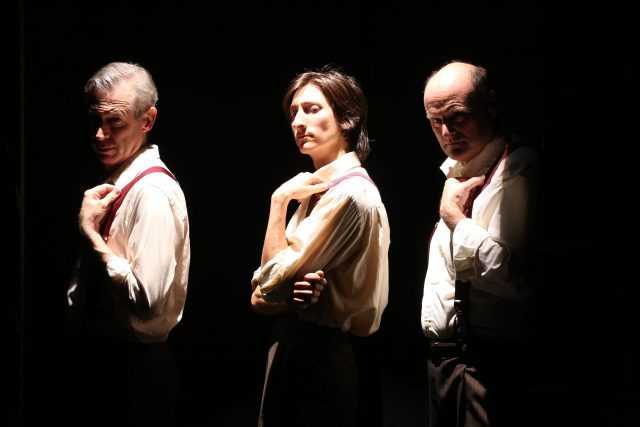
Ah, thank goodness for the Mint Theater Company. Amid all the world’s problems, the Mint has been a breath of a fresh air for more than two decades, offering exquisitely rendered productions of long-forgotten works by little-known playwrights under the leadership of producing artistic director Jonathan Bank. The troupe has now followed up its Drama Desk-nominated Hindle Wakes with the impeccably staged Conflict, an exceptional 1925 romantic political tale by British character actor, dramatist, and social reformer Miles Malleson, whose Yours Unfaithfully was given the superb Mint treatment last year. The play is set in 1920s London, where the upstart Labour Party is trying to make inroads against the Conservatives in the upcoming elections. Jessie Shelton stars as Lady Dare Bellingdon, a highly privileged young woman on the verge of becoming independent, a carefree spirit who abhors boredom and is determined to make her own choices instead of following convention and doing what is expected of her class and gender. Her stern father, the very wealthy Lord Bellingdon (Graeme Malcolm), approves of her relationship with Major Sir Ronald Clive, DSO (Henry Clarke), a straightforward, overly formal military hero who is running for Parliament and wants to marry Dare, who is not exactly ready to settle down yet.

(photo by Todd Cerveris)

Major Sir Ronald Clive (Jeremy Beck) has his heart set on Lady Dare Bellingdon (Jessie Shelton), but she is about to become woke in Mint production (photo by Todd Cerveris)

One evening they are interrupted by the appearance of Tom Smith (Jeremy Beck), a beggar with a rather pathetic tale to tell, one that Lord Bellingdon isn’t buying. “I don’t want to mock or sneer. It was wrong of me if I seemed to. I hope I’m not hard-hearted; but I’m hard-headed,” the rich man says. “I don’t believe a man falls through society — to the bottom, as you’ve done — without something in himself to drag him down.” Smith responds, “That’s a fine thing for a man to say who’s at the top. By God, it shows a complacency, a self-satisfaction, that’s almost splendid. You must be damn pleased with yourself.” Lord Bellingdon and Clive offer him food, whiskey, and cash and send him on his way, but they and Dare are surprised by what they see when he returns eighteen months later, with quite another tale to tell.

(photo by Todd Cerveris)

Lady Dare Bellingdon (Jessie Shelton) looks on as her father (Graeme Malcolm) can’t believe what he hears in Miles Malleson’s Conflict (photo by Todd Cerveris)

Directed with wit and verve by Jenn Thompson (Women without Men, Abundance), Conflict never descends into preachy pablum as it explores the socioeconomic and cultural differences among rich and poor, conservative and liberal, male and female in post-WWI England. Though written nearly a century ago — it was also adapted into the 1931 film The Woman Between — the play is very much of today as the personal gets very political, and the political gets very personal, especially as so many twenty-first-century Americans use party affiliation and faith (or lack thereof) in the current government to help determine their friends and lovers, on social media and in real life. As is Mint tradition, the set, by John McDermott, is utterly lovely, a fancy drawing room with a garden; a later scene in Smith’s hovel of a bedroom further differentiates the haves from the have-nots, as does Martha Hally’s costume finery. Beck (Hindle Wakes, The Cocktail Party) and Henry Clarke (Private Lives, Baskerville) excel as rivals in more ways than one, Malcolm (Equus, Mary Broome) plays Lord Bellingdon with delicious relish, his mustache and eyebrows practically a character unto themselves, while Jasmin Walker (Avenue Q, Only Children) makes the most of her small role as Mrs. Tremayne, a merry widow who encourages Dare to live her life the way she wants to, unbound by tradition. (The cast also features James Prendergast as Daniells, the Bellingdons’ much-put-upon butler, and Amelia White as Mrs. Robinson, Smith’s nosy landlady.)

“It’s not loving him I’m bothering about — it’s marrying him,” Dare tells Mrs. Tremayne about Clive. “I don’t want my marriage to be a sort of brown-paper parcel in which I wrap up my romance, and seal it and say ‘That’s that.’ . . . I want my marriage to be . . . something more.” A high-minded socialite and good-time girl slowly becoming woke, Lady Dare is portrayed magnificently by Shelton (Hadestown, The Skin of Our Teeth) with an intoxicating hope that life can get better, for everyone. Delivered by a company that needs to be on your radar if it isn’t already, Conflict is an elegant and precise work that demands, and is more than worthy of, close attention, filled with myriad small touches that almost pass you by as you get caught up in its all-too-relevant story of strange bedfellows indeed.