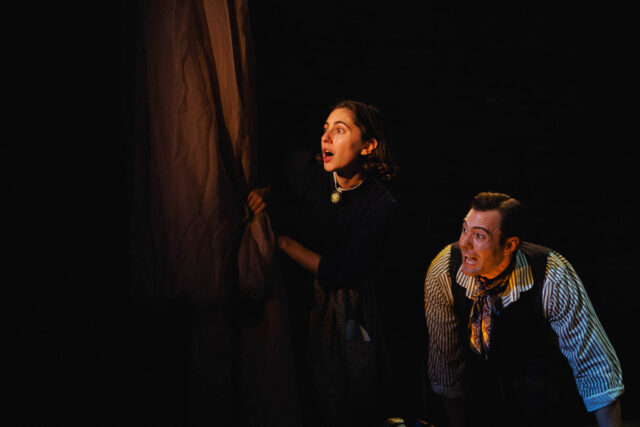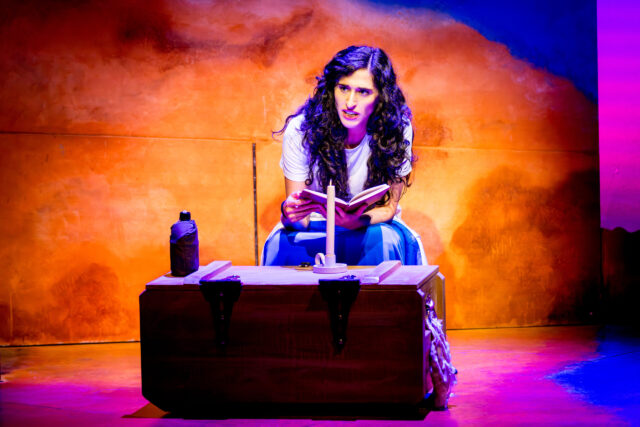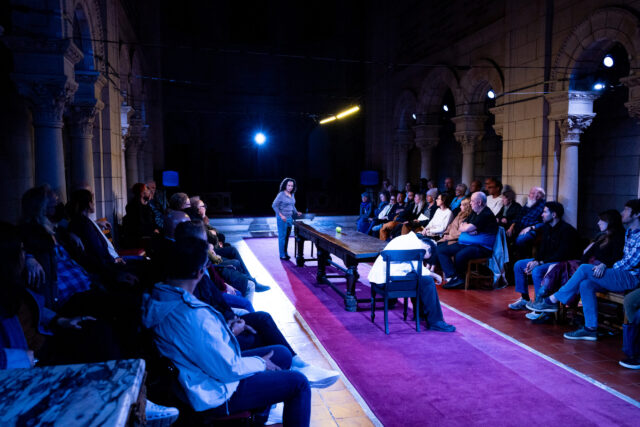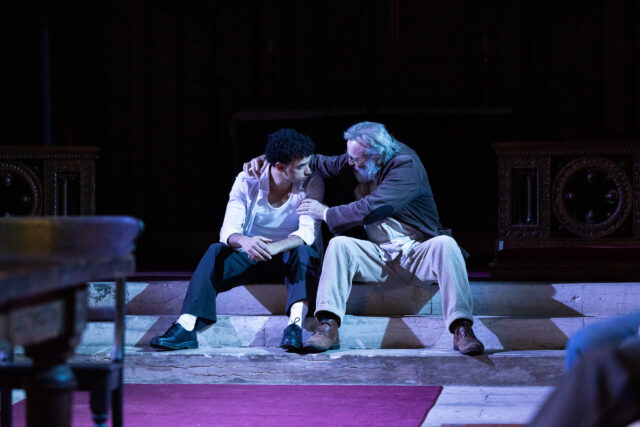
this week in theater

PERSEVERING FOR THE TRUTH: THEATER FESTIVAL HONORS VÁCLAV HAVEL

REHEARSAL FOR TRUTH INTERNATIONAL THEATER FESTIVAL: PERSEVERANCE
Bohemian National Hall (unless otherwise noted)
321 East 73rd St. between First & Second Aves.
May 26 – June 15, free – $15
rehearsalfortruth.org

Founded in 2017, Rehearsal for Truth is an annual festival that honors the legacy of Czech playwright, dissident, and president Václav Havel. Presented by the Václav Havel Center and the Bohemian Benevolent and Literary Association, This year’s iteration features theater, opera, music, poetry, and more from Czechia, Bulgaria, Belarus, Romania, Slovakia, Poland, Hungary, and other nations.

“Rehearsal for Truth is a rare opportunity to hear artistic voices from Central and Eastern Europe,” festival artistic director Edward Einhorn explained in a statement. “The theme of the 2025 edition is Perseverance. The worldwide turn towards autocracy and war is both current and historically familiar for the artists from this region, and their responses have a deep resonance now for Americans, as we experience our own crises. My hope is that the work presented in the festival can connect our experiences and help us guide us as we all try to persevere through difficult times.”

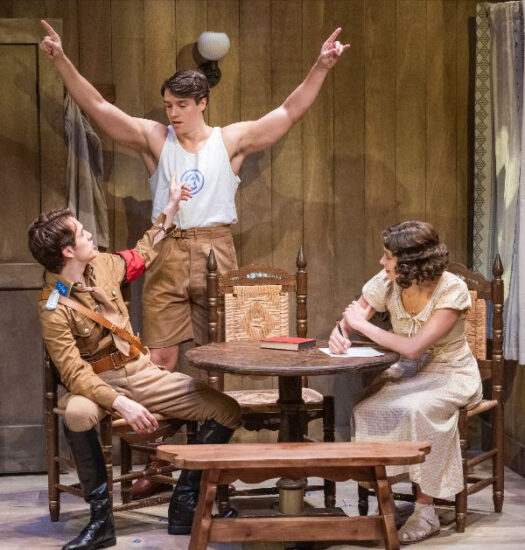
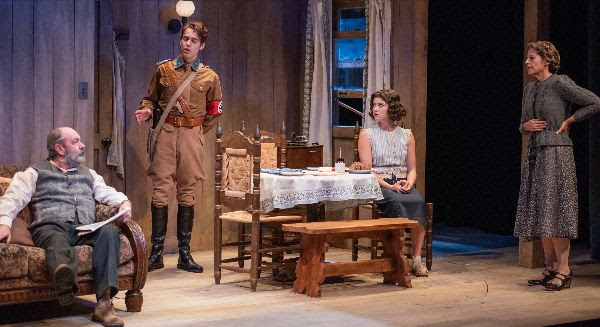
The centerpiece is the US premiere of Blood, Sweat, and Queers, a seventy-five-minute piece about intersex Czech track star Zdenek Koubek (1913–86) and fascism, coproduced by Einhorn’s Untitled Theater Company No. 61. Other highlights include Belarus Free Theatre’s King Stakh’s Wild Hunt, Alexander Manuiloff’s interactive The Decision, and an evening of music and poetry with Marketa Foukalova, Jan Zábrana, and Martin Brunner.

Havel (1936–2011) wrote such plays as The Garden Party and The Memorandum and such books as Living in Truth and Toward a Civil Society; he also wrote and directed the 2011 film Leaving. In a 1968 letter to Alexander Dubček, the first secretary of the Communist Party of Czechoslovakia, Havel explained, “Even a purely moral act that has no hope of any immediate and visible political effect can gradually and indirectly, over time, gain in political significance,” words to live by in today’s international maelstrom.

Tickets for most events are free (with a suggested donation of $10-$15) and require advance RSVP. Below is the full schedule.

Hura Collective’s Erben: Vlasy is part of Rehearsal for Truth festival honoring Václav Havel

Monday, May 26
through
Sunday, June 15

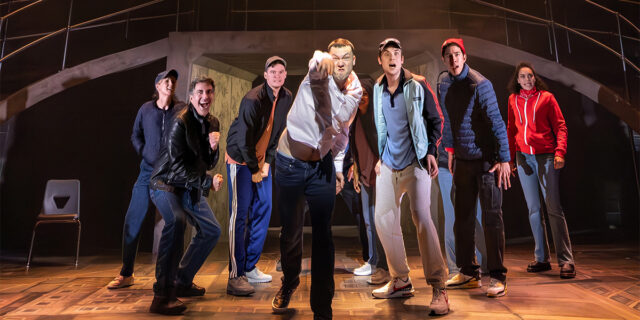
Blood, Sweat, and Queers, coproduced by Untitled Theater Company No. 61, by Tomas Dianiška, translated by Edward Einhorn and Katarina Vizina, directed by Edward Einhorn, starring Craig Anderson, Herschel Blatt, Jean Marie Keevins, Alyssa Simon, Katarina Vizina, and Hennessy Winkler, followed by a talk with Chris Harwood on May 26 and Michael Waters on May 30, $10-$20

Tuesday, May 27
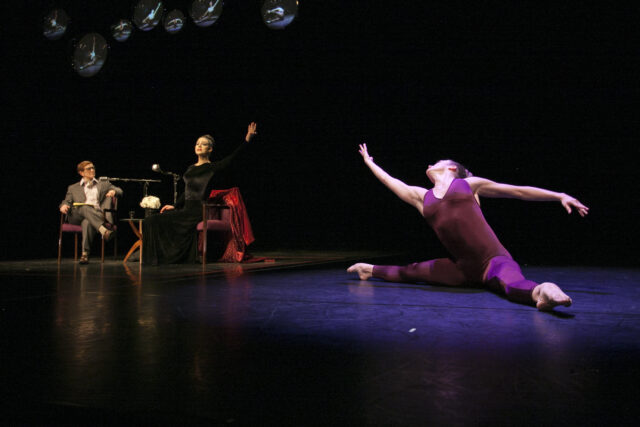
Marketa Foukalova, featuring vocalist Markéta Foukalová, with poems by Jan Zábrana and music by Martin Brunner, followed by a discussion with Chris Harwood, free ($15 suggested donation), 7:00

Thursday, May 29
The Decision, interactive theater created by Alexander Manuiloff, directed by Irina Kruzhilina, Bohemian National Hall, followed by a discussion with the author, free ($15 suggested donation), 7:00

Sunday, June 1
King Stakh’s Wild Hunt, by Belarus Free Theatre, from the book by Uladzimir Karatkievich, adapted by Nicolai Khalezin, with music by Olga Podgaiskaya, directed by Natalia Kaliada, free ($10 suggested donation), 2:00

Connection, solo livestream from Salzburg, created and performed by Maryna Yakubovich, followed by a discussion and reception, free ($15 suggested donation), 5:00 – 9:30

Wednesday, June 4
The Pit, written by Matei Visneic, directed by Ana Margineanu, starring Owen Campbell, Vas Eli, and Perri Yaniv, followed by a discussion with the artists, free ($15 suggested donation), 7:00

Friday, June 6
Staged Reading: Show Trial, about Czech politician and resistance leader Milada Horáková, written by Laura Zlatos, directed by Tom Costello, followed by a discussion with the author, $15, 7:00

Saturday, June 7
Furiozo: Man Looking for Trouble, created by Piotr Sikora, followed by a reception with the artist, free ($15 suggested donation), 7:00

Sunday, June 8
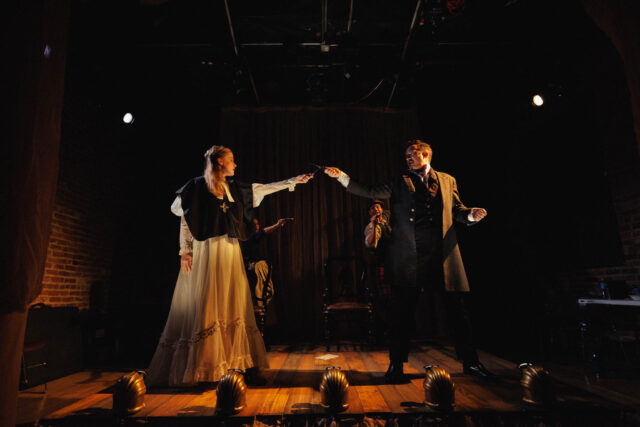
Erben: Vlasy, by Hura Collective, with direction, set, puppets, and music by Hza Bažant, starring Hza Bažant and Leona Bažant Telínová, followed by a demonstration of puppetry techniques and history, free ($15 suggested donation), 5:00 & 7:00

Stella Abel will perform Psyche June 12 & 13, in English then Hungarian

Wednesday, June 11
The Amateurs, written by Lenka Garajová, directed by Šimon Ferstl, starring Šimon Ferstl, Jakub Jablonský, Lenka Libjaková, Martin ISO Krajčír, Kriss Krimm, and Tomáš Pokorný, followed by a discussion with the artists, free ($15 suggested donation), 7:00

Thursday, June 12, in English, 7:00 & 9:00
and
Friday, June 13, in Hungarian, 7:00

Psyché: Writings of an Erstwhile Poetess, from poems by Sándor Weöres, translated by David Cseh, directed by Mark Tarnoki, performed by Stella Abel, the Hungarian House, 213 East 82nd St., free (donations encouraged)

Friday, June 13
Kafka’s Ape, adapted by Phala Ookeditse, performed by Tony Miyambo, Bohemian National Hall, followed by a discussion with the artists, free ($15 suggested donation), 7:00

[Mark Rifkin is a Brooklyn-born, Manhattan-based writer and editor; you can follow him on Substack here.]
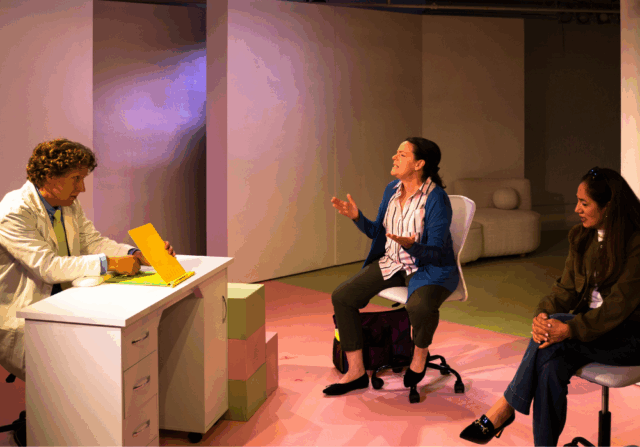
MUCH ADO ABOUT SOMETHING: FREE SUMMER NYC THEATER 2025

The free summer theater season kicked off this month with Molière in the Park’s The Imaginary Invalid (photo by Russ Rowland)

The Public Theater is back presenting Shakespeare in the Park at the Delacorte after a yearlong revitalization, but there are plenty more places to catch the Bard and others for free as well, listed below. Note that some productions strongly suggest advance RSVP and involve moving to multiple locations during the performance.

Through May 25
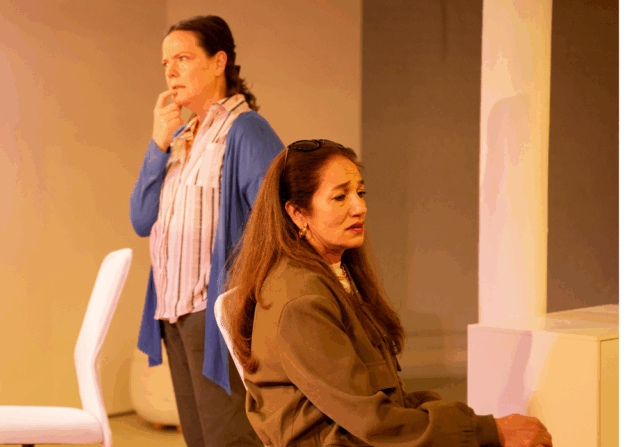
Molière in the Park: Molière’s The Imaginary Invalid, starring Tony nominee Sahr Ngaujah, the LeFrak Center at Lakeside, Prospect Park, free with RSVP, 3:00 or 7:30

Thursday, May 29
through
Sunday, June 22

Hudson Classical Theater Company: Julius Caesar, Soldiers’ and Sailors’ Monument, West Eighty-Ninth St. & Riverside Dr., Riverside Park, 6:30

Thursday, May 29
through
Sunday, June 29

The Public Theater’s Mobile Unit: Much Ado About Nothing, directed by Rebecca Martínez, with music and lyrics by Julián Mesri, Astor Plaza (May 29-31), the New York Public Library & Bryant Park (June 3-8), Wolfe’s Pond Park (June 11), J. Hood Wright Park (June 12-14), the Cathedral Church of St. John The Divine (June 15), Sunset Park (June 17-18), A.R.R.O.W. Field House (June 20), Queens Night Market (June 21), Roy Wilkins Park (June 22), Maria Hernandez Park (June 25), St. Mary’s Park (June 26), Travers Park (June 27), the Peninsula in Prospect Park (June 28-29)

Saturday, May 31
Barefoot Shakespeare Company: Unrehearsed! The Comedy of Errors, Summit Rock, Central Park, 5:30

Tuesday, June 3
through
Sunday, July 6

NY Classical: All’s Well That Ends Well, Central Park (June 3-22), Carl Schurz Park (June 24-29), Battery Park (July 1-6), free with RSVP, 7:00

Wednesday, June 4
through
Sunday, June 29

Smith Street Stage: Shakespeare in Carroll Park: Henry V, Carroll Park

Thursday, June 12
through
Sunday, June 22

Shakespeare Downtown: Tennessee Williams’s Tiger Tail, Castle Clinton, Battery Park, 6:30

Saturday, June 21
through
Sunday, July 20

Boomerang Theatre Company: Richard II, Central Park West & Sixty-Ninth St., Central Park, $1.70, 2:00

Thursday, June 26
through
Sunday, July 20

Hudson Classical Theater Company: Jane Austen’s Sense and Sensibility, Soldiers’ and Sailors’ Monument, West Eighty-Ninth St. & Riverside Dr., Riverside Park, 6:30

Saturday, July 5
through
Sunday, July 27

The Classical Theatre of Harlem: Memnon, by Will Power, starring Eric Berryman, Richard Rodgers Amphitheater, Marcus Garvey Park

Thursday, July 17
through
Saturday, August 2

Shakespeare in the Parking Lot: A Midsummer Night’s Dream, by the Drilling Company, Lower East Side Prep parking lot, 145 Stanton St. (entrance on Rivington between Norfolk & Suffolk)

Thursday, July 24
through
Sunday, August 17

Hudson Classical Theater Company: Henrik Ibsen’s The Lady from the Sea, Soldiers’ and Sailors’ Monument, West Eighty-Ninth St. & Riverside Dr., Riverside Park, 6:30

Tuesday, August 5
through
Saturday, August 23

Hip to Hip Theater: Hamlet and The Tempest, preceded by children’s workshop, nine locations

Thursday, August 7
through
Sunday, September 14

Shakespeare in the Park: Twelfth Night, starring Lupita Nyong’o, Sandra Oh, Daphne Rubin-Vega, Peter Dinklage, Khris Davis, Junior Nyong’o, Moses Sumney, b, and Jesse Tyler Ferguson, Delacorte Theater, Central Park, 8:00

Saturday, August 23
Barefoot Shakespeare Company: Unrehearsed! The Comedy of Errors, Summit Rock, Central Park, 4:00

Friday, August 29
through
Tuesday, September 2

Pericles: A Public Works Concert Experience, the Cathedral Church of St. John the Divine, music and lyrics by Troy Anthony, directed by Carl Cofield

[Mark Rifkin is a Brooklyn-born, Manhattan-based writer and editor; you can follow him on Substack here.]
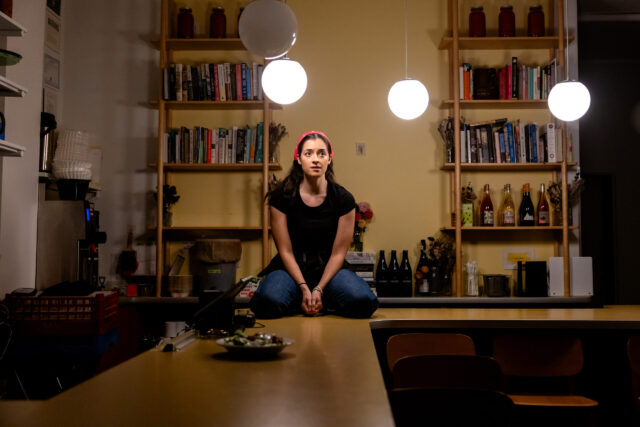
TALES OF BRAVE ULYSSES: CENSORSHIP ON TRIAL AT THE IRISH ARTS CENTER

The March of Time reenacts a critical censorship trial in The United States vs. Ulysses (photo by Nir Arieli)

THE UNITED STATES VS ULYSSES
Irish Arts Center
726 Eleventh Ave. between Fifty-First & Fifty-Second Sts.
Tuesday – Sunday through June 1, $26-$76
irishartscenter.org

James Joyce’s earth-shaking novel, Ulysses, used a unique stream-of-consciousness method to tell the Odyssey-inspired story of a day in the life of Leopold Bloom, Molly Bloom, and Stephen Dedalus in Dublin. Colin Murphy attempts to incorporate a similar technique in the North American premiere of Colin Murphy’s The United States vs. Ulysses, with decidedly mixed results.

Published in 1922, Ulysses was first serialized in 1918–20 and banned in the United States under the Comstock Act, which deemed it obscene. A dozen years later, Random House cofounder Bennett Cerf arranged with ACLU attorney Morris Ernst to have a copy of the book mailed to the publisher in New York, provoking its seizure at the border, which enabled them to mount a challenge to the ban. Their stunt led to United States v. One Book Called Ulysses, a test case in which they claimed freedom of speech and expression; the trial judge was John Munro Woolsey, with Sam Coleman representing the government. Joyce himself was not part of the case.

Murphy and director Conall Morrison center the play around a December 8, 1933, March of Time radio broadcast re-creating the trial as breaking news. The show has three interweaving sections, switching between the radio play, in which the performers are at a table, using sound effects and reading the dialogue; the trial itself; and a chapter of the book brought to life. Unfortunately, it leads to a choppy narrative flow and confusion about who is who at numerous points.

Mark Lambert is actor Scott from The March of Time, lawyer Ernst, and J. J. O’Molloy from Ulysses; Ross Gaynor is Art / Cerf, Coleman, and minister Alexander J. Dowie / Blazes Boylan; Ali White is Arlene / editor and publisher Margaret Anderson and Margaret Ernst / the voice of Ulysses; Morgan C Jones is Ray / Woolsey, Ezra Pound, and James Joyce / the judge; Clare Barrett is Charme / publisher Jane Heap and Nora Barnacle, Joyce’s wife / Molly Bloom, Gerty MacDowell, and Bella Cohen; and Jonathan White is the director and Leopold Bloom.

Liam Doona’s set features various chairs and tables that are moved around to indicate whether we are in the recording studio, the courtroom, or a scene from the novel; small changes in Catherine Fay’s costumes and John Comiskey’s lighting try to distinguish the characters, with limited success.

Historical drama includes a dream sequence that goes inside James Joyce’s Ulysses (photo by Nir Arieli)

One of the more intriguing scenes occurs when Margaret Anderson and Jane Heap, the publishers of The Little Review, the literary magazine that was serializing the novel, talk about censorship with Ezra Pound, getting into how absurd it all is.

Heap: This is the most beautiful thing we’ll ever have.
Anderson: It is a prose masterpiece. I glory in it!
Heap: We’ll print it if it’s the last effort of our lives.
Pound: We’ll be damn well suppressed again if we print Joyce’s text as it stands!
Anderson: We are committed to the free speech of our authors.
Pound: If our authors would speak just a little less freely, the Post Office might not feel so free to seize the damn magazine and burn it.
Heap: Mr. Joyce’s words are sacrosanct.
Pound: Joyce’s words are just as damn well flammable as any other words. What use is his genius on a bonfire?
Anderson: This obscenity law is unjust, Mr. Pound — we should campaign against it.
Pound: The law is grotesque, barbarous, ridiculous, risible, idiotic, monstrous, pestilent — but it could shut us down.
Voice of Time: So — without consulting Mr. Joyce – they agree among themselves to remove some of the phrases most likely to alarm the censors . . .
Anderson: Here’s one: “He felt heavy, full: then a gentle loosening of his bowels.”
Pound: God, the man is revolting.
Heap: “Loosening in his stomach”?
Anderson: How about his “belly”?
Heap: “Loosening in his belly” sounds silly.
Pound: We could just cut the mention of “bowels” — “He felt heavy, full: then a gentle loosening.”
Heap: That should do. What’s next?
Pound: Try this: “Now it could bear no more. Dead: an old woman’s: the grey sunken (coughs) of the world.”
Anderson: “The grey sunken belly of the world”?
Pound: Good!
Anderson: Next?

Rebecca West and Virginia Woolf disagree on the merits of Ulysses. English author Arnold Bennett declares, “Ulysses is more indecent, obscene, scatological, and licentious than the majority of professedly pornographical books . . . and I have read most of them.” Morris Ernst drops some F-bombs. Molly cries out “Yes!” over and over again like she’s having an orgasm every time the court considers allowing an excerpt from the “Nighttown” section of Ulysses to be read aloud. Some of those moments are funny; others feel out of place.

While there was a March of Time episode dedicated to the trial, no documentation has survived, so Murphy pieced it together using the court transcript, newspaper and magazine articles, and such sources as Declan Dunne’s Set at Random, but the varying elements never connect, ending up with a scattershot recounting that makes it hard for the audience to distinguish fictional exchanges from those based on the historical record.

The show is, sadly, still relevant today, as schools and stores ban so many books from their shelves. Perhaps the best reason to see The United States vs. Ulysses is that it will make you pick up that dusty copy of Ulysses you’ve been promising yourself for decades that you would finally read.

[Mark Rifkin is a Brooklyn-born, Manhattan-based writer and editor; you can follow him on Substack here.]
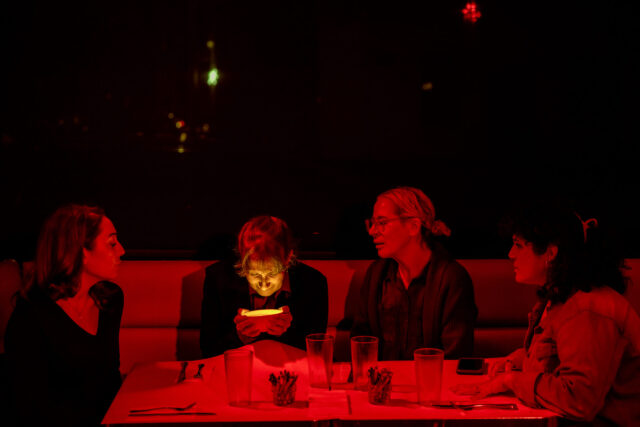
FLYING FREE: SEAGULL: TRUE STORY AT LA MAMA

Alexander Molochnikov’s Seagull: True Story keeps flapping its wings at La MaMa through June 1 (photo by Frederick Charles)

SEAGULL: TRUE STORY
La MaMa Experimental Theatre Club
The Ellen Stewart Theatre
66 East Fourth St. between Second Ave. & Bowery
Wednesday – Sunday through June 1, $40-$45
212-475-7710
www.lamama.org

In Anton Chekhov’s 1896 tragicomedy The Seagull, wannabe playwright and director Konstantin Gavrilovich Treplev says, “It’s not about old or new forms, but about the fact that what a person writes, not thinking about forms at all, they write because it flies freely from their soul!” The line is at the center of the world premiere of Alexander “Sasha” Molochnikov’s Seagull: True Story, continuing at La MaMa through June 1.

In 2022, Molochnikov was a successful Russian director who had staged works at the Moscow Art Theater and won the prestigious Golden Mask award for his production of The Seagull at the Bolshoi. He was starting to make a film when Russia began bombing Ukraine; he soon spoke out against the attack. He then found himself a target of Vladimir Putin’s administration and departed for America with not much more than the clothes on his back.

“The pressure on artists, comedians, and especially directors has been ruthless in Russia. As a result, a dozen or so of the most celebrated theater directors working in Moscow before the war have left the country,” he wrote in Rolling Stone in November 2022. “Now any performance has to be careful so as not to offend the Kremlin’s feelings. Those who were not ready to cave in and play that game chose to give up their opportunities, resources, stages, and salaries and run. They escaped Russia to foreign countries, counting only on their own talents and starting over from scratch. My case was the latest in a chain of attacks on the arts and free speech in Russia. . . . There is only one reason so many artists have left: It’s unsafe and dangerous to express a negative opinion of what Russian authorities call ‘a special operation’ and what the world calls an invasion.”

In Seagull: True Story, Molochnikov and writer Eli Rarey adapt Sasha’s real tale into a kind of theatrical fantasy rooted in Chekhov’s play, complete with a play-within-a-play, a love triangle, a complicated mother-son relationship, a gun, and discussions of form and freedom. Andrey Burkovskiy serves as the emcee for the evening, addressing the crowd directly while also playing several other key roles.

It’s February 2022, and young director Kon (Eric Tabach) is leading the rehearsal for his wildly inventive adaptation of The Seagull at the prestigious Moscow Art Theater, which was founded by Konstantin Stanislavski and Vladimir Nemirovich-Danchenko in 1898. The MC succinctly sums up Chekhov’s plot: “Basically nothing happens. Treplev is a director in love with Nina, an actress. His mom is an actress too. Nina is in love with someone else. She leaves, Treplev is sad, she comes back, Treplev is even more sad. His mom is a bitch. He shoots himself. That’s it.”

Kon’s mother, Olga (Zuzanna Szadkowski), is a famous Russian actress who is playing Arkadina. Ivan (Quentin Lee Moore) is Treplev, her hapless son who is in love with Nina, portrayed by Nico (Stella Baker). Poet and playwright Anton (Elan Zafir) is the dramaturg, while Yuri (Burkovskiy), the theater manager, keeps a close eye on everything. Alexander Shishkin’s set features two dressing tables on either side of the stage, in front of the red curtain, and a deep open space behind it where the rehearsals are held; many of the props involve creative uses of plastic, from flags to ocean waves to bedspreads.

In a rare compliment, Olga tells Kon, “If Chekhov were here today, he would be happy to see that his play lives on in your hands.”

However, once Russia starts bombing Ukraine, the actors start fighting — Ivan, defending the Kremlin, gets into it with Masha and Dmitri, who support Ukraine — and Yuri explains that the show can go on only if he agrees to make certain cuts, including the essential freedom dance, and signs a loyalty oath. But when Kon makes a private anti-Putin video that goes viral, he has to consider getting out of the country immediately, leaving his mother and his good friend Anton behind.

In the second act, Kon arrives virtually penniless in New York, with nowhere to live. He meets aspiring actress Nico (Stella Baker) on the subway and asks his mother’s old friend Barry (Burkovskiy), a producer, for help bringing his adaptation of The Seagull to the city.

“A love story! Just like in The Seagull. Incredible coincidence,” the MC declares. “Everything is going to be fantastic for Kon in America! . . . Right?”

Not necessarily.

Vladimir Putin (Andrey Burkovskiy) trots into Kon’s (Eric Tabach) nightmare in Seagull: True Story (photo by Frederick Charles)

A coproduction of Sofia Kapkov’s MART Foundation and Anne Hamburger’s En Garde Arts, Seagull: True Story is one of a number of recent shows from companies led by Russian or Ukrainian refugees, including Igor Golyak and Arlekin Players Theatre’s The Merchant of Venice and Our Class, Dmitry Krymov and Krimov Lab NYC’s Pushkin “Eugene Onegin” and Big Trip, and director Eduard Tolokonnikov and producer Polina Belkina’s encore engagement of Aleksandr Volodin’s Five Evenings.

The works bring an exhilarating aesthetic to independent New York City theater; Golyak and Krymov have brilliantly wild and unpredictable methods of storytelling where almost anything can happen, incorporating lunatic props and unique interactive elements. There’s a palpable sense of excitement to these productions in New York these days: Among the opening-night audience members ready for anything were Golyak, Krymov, American actor Gus Birney, Belgian actor and producer Ronald Guttman, and the Latvian-born Mikhail Baryshnikov, who defected from Russia to Canada in 1974 and became a US citizen in 1986.

The exuberant cast of Seagull: True Story sing, dance, and march while switching between the play and the play-within-the-play. Certain lines of dialogue are accompanied by winks and nods as they relate just as much to what is happening in the United States under the current administration as to the events occurring in Russia and Ukraine. The first act is sensational, a fast and furious celebration of the power of theater even under the most stressful and dangerous situations. The second act is decidedly slower and more didactic, with repetitive subplots as the focus narrows; it could use a bit more shaping.

(As a side note, I was also hoping to find out how to properly pronounce Moscow — is it Mos-cow like the animal or Mos-koh? I’ve always gone with the latter, since I once read that Walter Cronkite declared, “There is no cow in Moscow” — but different actors say it different ways, without any rhyme or reason that I could make out.)

At the beginning of the show, the MC says the word “fantastic” ten times, praising himself, the audience, and the play. He announces, “Don’t panic, you will be arrested only at the end of the show. No, no, I’m joking. Am I? Of course not. Everything is fantastic. Everyone is safe here.” Burkovskiy is fantastic in his multiple roles, his tongue firmly in his cheek as he offers his own spin on the MC from Cabaret. Zafir poignantly portrays the friendly and likable Anton, Baker excels as the ambitious and sexy Nico, and Tabach ably stands in for Molochnikov as he faces a frightening reality and has to start all over again.

“The world loves Russian theater. It has survived under Josef Stalin, Nikita Khrushchev, and Leonid Brezhnev. It will outlive Putin, too,” Molochnikov concludes in his Rolling Stone essay. “But the life we had before the war is over. Russian theater is universal. The pain in the works of Chekhov, Nikolai Gogol, Fyodor Dostoevsky, and Leo Tolstoy are understood and appreciated all over the world. I will work on my dramas, operas, and ballets abroad. ‘We will work,’ as Sonya says in Uncle Vanya. We will ‘look for new forms,’ as Treplev says in The Seagull. The theater will live on.”

Russia’s loss is New York City’s gain.

[Mark Rifkin is a Brooklyn-born, Manhattan-based writer and editor; you can follow him on Substack here.]
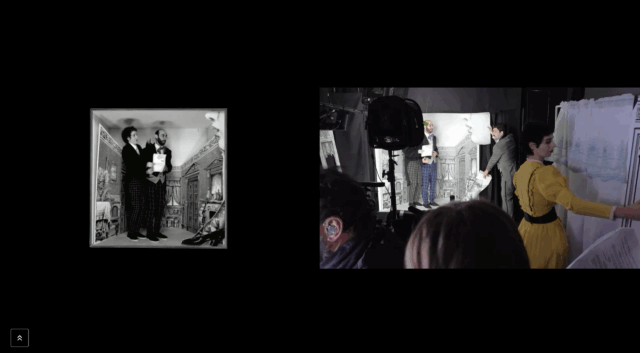
PAYING OFF DEBTS: JEN SILVERMAN REINVENTS STRINDBERG’S CREDITORS

Gustav (Liev Schreiber) is a master manipulator in Jen Silverman’s adaptation of August Strindberg’s Creditors(photo by Emilio Madrid)

CREDITORS
Audible’s Minetta Lane Theatre
18 Minetta Lane between Sixth Ave. and MacDougal St.
Through June 18, $35-$298.50
www.audible.com

“Would you rather be the parasite or the host?” Gustav (Liev Schreiber) asks Adi (Justice Smith) in Jen Silverman’s superb modernization of August Strindberg’s 1889 drama, Creditors. It’s a question that lies at the heart of the seldom-performed play, currently running in repertory through June 18 with Hannah Moscovitch’s Sexual Misconduct of the Middle Classes at Audible’s Minetta Lane Theatre, kicking off Together, a new company founded by Hugh Jackman and Sonia Friedman to “offer audiences a chance to experience theater in a fresh and engaging way.”

The ninety-minute play takes place at a seaside resort at an unidentified time, though before cell phones. Adi is there with his wife, Tekla (Maggie Siff), who is riding high on the success of her debut novel, a roman à clef about her first marriage. While she is off at readings, signings, and parties, the younger Adi is examining his career as an artist.

Brett J. Banakis and Christine Jones’s set features a small bar stage left, a comfortable chair and night table, a two-person couch, a fancy chaise longue, an old floor mirror against the bare brick back wall, and a glass door with a large white curtain stage right. When the show begins, Adi is in the parlor with an older, serious gentleman, Gustav (Liev Schreiber), who sips Scotch as they talk about art, love, and loyalty. Gustav looks and acts like a psychiatrist, asking penetrating questions that intrigue Adi — until Gustav, acting concerned about Tekla’s flirtatious behavior when she’s not with her husband, pounces.

Tekla (Maggie Siff) is caught between the past and the present in Together/Audible revival at Minetta Lane (photo by Emilio Madrid)

Gustav: You don’t get bored?
Adi: Oh, it’s impossible to get bored when you’re with her. You’ll see! I’m excited for you two to meet — she’s one of a kind.
Gustav: She must be. [lifts his glass] To young love!
Adi: I’ve loved your company this week. I mean what you were saying yesterday — about sculpture instead of painting, how sculpture is the only real way to grasp — I could feel my whole soul wake up.
Gustav: You don’t wonder who she’s with?
Adi: I’m sorry?
Gustav: When she’s out all night.
Adi: She’s giving a reading.
Gustav: Sure, but maybe there was a dinner before, or drinks after . . .
Adi: I’m not a jealous man.
Gustav: Maybe you should work on that.

Adi is like wet clay in Gustav’s formidable hands; as he manipulates Adi into questioning Tekla’s faithfulness and the control she has over him, it becomes apparent just who Gustav is: Tekla’s ex, the man she has written so vividly and openly about in her novel. However, Adi does not catch on, making him easy prey.

In the second scene, Adi confronts Tekla, who is shocked by his sudden change. She had been worried that she would end up losing Adi to a younger woman as his stature in the art world grew, but this is not the Adi she married. She wants to know who Adi has been talking to, sure that someone has put these ideas into his head. “You’re desperately loyal, Adi,” she tells him. “But where you are not loyal is to your own convictions. Your thoughts are so easily taken and shaped and handed back to you, and you accept them as if they’re still yours.”

In the third scene, Gustav reveals his devious scheme to Tekla and exposes himself like never before.

Adi (Justice Smith) is like a lump of clay in Creditors (photo by Emilio Madrid)

Creditors is seldom produced, and you’re likely to wonder why after seeing this excellent version. In 1977, the Public staged it with Rip Torn directing and playing Gustav to Geraldine Page’s Tekla and John Heard’s Adolf; Classic Stage presented it in 1992, with Caroline Lagerfelt, Nestor Serrano, and Zach Grenier, and Alan Rickman directed an adaptation in 2010 at BAM with Anna Chancellor, Owen Teale, and Tom Burke.

Creditors is not about money or finance; there is no talk of business deals. Instead, it’s about the physical, emotional, and psychological burdens that come with romantic relationships, male friendship, and artistic endeavors, particularly trust and jealousy.

In describing to Adi how Tekla might be unfaithful, Gustav says, “So then there’s the husband. The husband must be told — eventually, but not yet, after all he’s so far away! And yet . . . he’s right here. He takes on form and substance, the idea of him I mean, he enters every room you’re both in. He sits between you in a third empty chair, he eats the breakfast out of your bowl, he lies in the same bed the two of you now share. Oh, he doesn’t say anything, he doesn’t stop you. But he spreads poison. You owe him your happiness after all. Sooner or later, he’ll show up to collect the debt. And even if he never does, he’s still always there in the back of both of your minds.”

Later, Gustav explains to Tekla, “There is no out. Even if I weren’t here, Adi would live his life wondering if we still have an old debt between us, wondering if he can live with the uncertainty, wondering — is that my shadow, between you two? And these questions, Tekla. They will eat him like acid.”

The Swedish Strindberg, who was also a novelist and a painter, named the two male characters after Gustav II Adolf, the king who led Sweden during the Thirty Years’ War, a reference to the ongoing battle between men, in this case over a woman; Strindberg would shortly write the history play Gustaf Adolf. Meanwhile the female character is named for Saint Tekla, the virgin martyr and role model who fought off male aggression and preached chastity, honored by the church as “the glory of women and guide for the suffering, opening up the way through every torment.”

As he does with Sexual Misconduct of the Middle Classes, director Ian Rickson makes full use of the stage, the pace a kind of cat-and-mouse game among three complex characters. Mikaal Sulaiman’s sound design is highlighted by an undercurrent of drone music at key points, upping the suspense. Ásta Bennie Hostetter’s costumes firmly establish the trio, from the paint splatters on Adi’s pants to Gustav’s professorial demeanor and Tekla’s free spirit.

Silverman (Collective Rage: A Play in 5 Betties, Spain) has made several important cuts and changes to Strindberg’s original. There are no epileptic fits, Tekla drops a few F-bombs, and the ending is completely different, but Silverman’s dialogue is clear and concise for this moment in time. Smith (Yen, The Mother) portrays Adi with a tender sensitivity, suddenly unsure of the world that he is now a part of. Siff (Breaking the Story, Curse of the Starving Class) ably balances Tekla’s lust for life with an unexpected vulnerability. And Tony winner and nine-time Emmy nominee Schreiber (Doubt, Glengarry Glen Ross) is mesmerizing as Gustav, an intense operator who knows just what to say to get under everyone’s skin; I would be terrified to sit opposite him, afraid I would fall for his machinations. Schreiber is so good in the part that even when, in the second scene, he had to call out for the next line — quickly supplied by a stage manager — he handled it without breaking character or interrupting the flow, a sign of just how professional and talented he is.

Creditors and Sexual Misconduct of the Middle Classes get the Together/Audible collaboration to a flying start, led by a pair of marvel-ous superheroes (Jackman/Wolverine, Schreiber/Sabretooth) reveling in playing contemporary men, flaws and all.

[Mark Rifkin is a Brooklyn-born, Manhattan-based writer and editor; you can follow him on Substack here.]
THE TALES WE TELL: JODY OBERFELDER’S STORY TIME AT WEST PARK

Jody Oberfelder makes use of nearly every nook and crannie of the Center at West Park for Story Time (photo by twi-ny/mdr)

STORY TIME
The Center at West Park
165 West Eighty-Sixth St. at Amsterdam Ave.
Friday, May 16, and Saturday, May 17, $24–$30, 7:30
www.centeratwestpark.org
www.jodyoberfelder.com

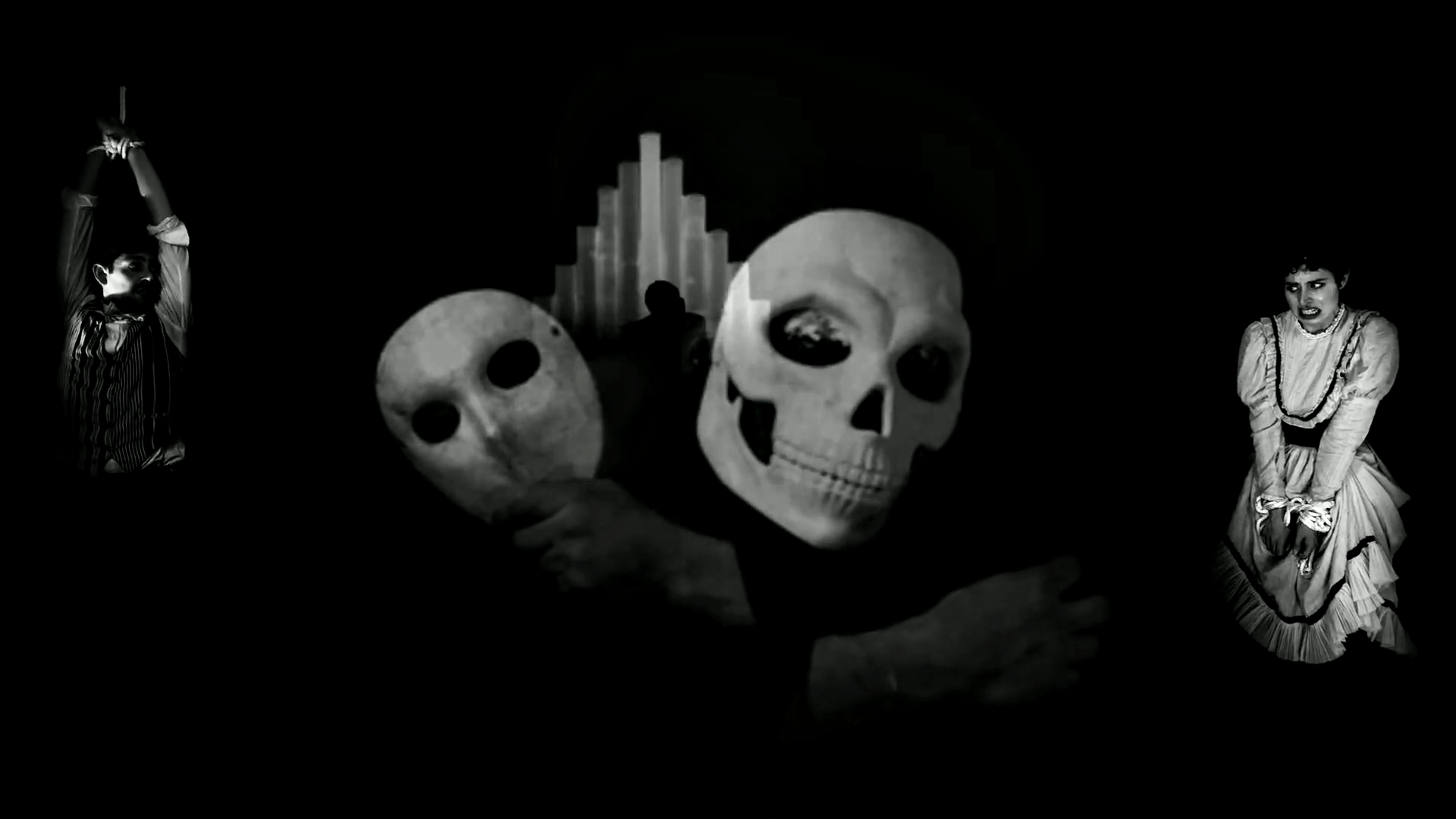
New York–based director, dancer, choreographer, and filmmaker Jody Oberfelder activates the endangered Center at West Park in the landmarked West Park Presbyterian Church with the inspiring, exhilarating Story Time, one of the best site-specific works of her long, distinguished career.

As the audience enters the soaring space, activity begins subtly, then with increasing urgency. Mariah Anton Arters, Caleb Patterson, and Andi Farley Shimota are at rest in niches on a windowsill but soon hop down and proceed amid the pews and columns with unbounded energy. Michael Greenberg walks slowly up and down the aisles perusing a red book, stopping to point out a line for audience members to read. A smiling Oberfelder approaches people, holding out an hourglass for them to ponder. Nyah Malone is spread across a piano, eventually sitting on the bench and playing a few notes. Shimota is in a back room, balancing apples and oranges until Caleb Patterson knocks over one of her cairns and runs away. Grace Bergere moves ever-so-carefully around the pews, magically spinning a red ball representing the globe.

The audience is encouraged to immerse themselves in the action, not just find a seat but wander around and engage with the performers (without obstructing them); for example, I tried to build a few fruit cairns myself but failed miserably. Be sure to check out Nick Cassway’s two wallpaper collages of the performers and Tine Kindermann’s stunning dioramas of fairy tale classics.

What follows are eighteen vignettes on a proscenium stage where the church altar would have been, in front of a large pipe organ. Gargoyles come to life as Bergere, who Oberfelder met when the singer was busking in Tompkins Square Park, sings her original composition “A Little Blood” on the lip of the stage. Greenberg and Arters become Merlin and Morgana, respectively, dancing to isomonstrosity’s “I Hope She Is Sleeping Well.” Shimota is a Hungarian princess and Patterson a potential suitor, interacting to Villa Delirium’s medieval-style folk ballad “Hungarian Countess” and the Parisian Marie Antoinette sex parable “Marie.”

Patterson and Shimota are tempted by Kindermann’s gingerbread cookies in a retelling of Hansel and Gretel while Kindermann sings live. Oberfelder dances with a broom, Greenberg mimics using a knife, Malone dangles a birdcage, and an apple entraps Patterson and Shimota. Bluebeard meets an ogre as Arters and Patterson perform a duet to Bergere’s “Billy,” with Bergere on harmonium and Kindermann on saw. Everyone comes together for a thrilling grand finale.

The ninety-minute Story Time boasts some of Oberfelder’s finest choreography, highlighted by breathtaking lifts and carries infused with an innate playfulness, incorporating a bevy of surprising objects and a charming scene involving small chairs and a table, with a few lovely nods to Pina Bausch. The vastly talented performers switch quickly between Katrin Schnabl’s costumes, which range from elegant dresses to a ratty hair shirt; Connor Sale’s lighting is soft and gentle.

Story Time is itself a fairy tale, an enchanting production that is part of the movement to protect and save the landmark church building while also investigating the stories we are told, and that we tell ourselves and each other, in this deeply divided time in America and around the world.

Near the conclusion, a musical interlude features Bergere on guitar as she and Kindermann sing lyrics by Oberfelder: “From the womb where they bled / In this place purple dread / But open your eyes, see / A pleasure awaits / Through myriad gates / The tail meets its head.”

Pleasures galore await all through the gates of the Center at West Park, which itself will hopefully have a happy ending.

[Mark Rifkin is a Brooklyn-born, Manhattan-based writer and editor; you can follow him on Substack here.]
COLLECTING AND CONNECTING MEMORIES: ED SCHMIDT’S EDWARD

Ed Schmidt’s Edward is an intimate and poetic tale of an ordinary man’s life (photo courtesy Ed Schmidt)

EDWARD
All Street Gallery
119 Hester St. between Forsyth & Eldridge Sts.
Through May 18
edschmidttheater.com
allstnyc.com

Ed Schmidt knows about endings. His 2010 solo show, My Last Play, was ostensibly his swan song, written two years after the death of his father and a transformative rereading of Our Town, concluding a twenty-year career that had also featured Mr. Rickey Calls a Meeting, The Last Supper, held in his Brooklyn kitchen, and the monthly variety show Dumbolio. Nevertheless, in 2015, Schmidt, at the time a professor and basketball coach at Trinity on the Upper West Side, wrote and performed the high school basketball drama Our Last Game, staged in an actual high school locker room.

Thankfully, Schmidt is back again with the superb Edward, the poetic, graceful, intimate tale of one Edward O’Connell, an unspectacular but respectable and enigmatic divorced father and educator. The hundred-minute play takes place at All Street Gallery on Hester St., with the audience of between twelve and eighteen people sitting around a long white table covered with twenty-seven objects and an empty box. Fortunate ticket holders are encouraged to arrive early and examine each piece, to pick them up and scrutinize them closely: A Brooks Robinson baseball glove. Four neckties. Mr. Potato Head. A copy of The Catcher in the Rye. A “Goose Girl” Hummel. An ashtray. A jazz CD. A postcard of a boy on a lake. A business card.

“Edward O’Connell died twelve years ago, at the age of seventy-three, and left behind this box, and all that it contained,” Schmidt, resembling a mild-mannered Kevin Costner and sounding like a toned-down Albert Brooks, begins. “With these twenty-seven objects, there are over ten octillion ways to tell Edward’s story. Ten octillion. That’s a one followed by twenty-eight zeroes. That’s the number of grains of sand on the Earth. Multiplied by the number of stars in the Milky Way. In other words, an unfathomable number. Tonight, we will tell one of those ten octillion versions.”

Wearing a dark suit and white shirt, Schmidt then serves as an Our Town–style Stage Manager, going through the objects in random order, each one a way into Edward’s life, directly or indirectly. He speaks in the third person although it feels like he’s channeling O’Connell, delving deep into his being. We learn about Edward’s wife, Angela, and their children and grandchildren; his love of the Celtics and Red Sox; his battles with department head Nona and headmaster Renée Marsh at his school, Enright Academy; his first car; his favorite word; the vacation when he thought his son had drowned; where he was at seminal moments in US history; his multiple regrets.

Many passages unfurl with a quiet majesty. “He likened her transformation to watching a sunset: you can sense a change coming — the air cools, the light fades, the sky pinkens, and then, all of a sudden, you realize, ‘It’s dark. When did that happen?’ Or perhaps the proper metaphor was a sunrise, and darkness slowly, suddenly turning to day,” he muses.

Others are experiences that everyone can relate to. “You know how, on every To Do List, there’s that one task that never gets done? It’s the one item that, for whatever mysterious reason, you can’t cross off, and it ends up getting transferred to the next list and the next and the next, and, in the end, you either complete the task or you just let it slip away and forget, but, in either case, your inability to follow through feels like a moral failure. Why did it take me so long to clean out the gutters? Or send that thank-you note? Or throw away that box of stuff in the attic? What is wrong with me?”

But each helps us learn who Edward O’Connell was and, in turn, who Ed Schmidt is — and who we are. As you walk around the table, examining the objects, several almost certainly will stand out to you personally, bringing up your own memories; for me, the baseball glove, The Catcher in the Rye, the small rock, and the Hummel figurine sent me back. The friend I attended with had actually completed the very jigsaw puzzle that was on the table. Schmidt’s writing is so evocative that the stories will also remind you of similar situations you got tangled up in as a child and an adult.

In Francesco Bonami’s newly updated semifictional Stuck: Maurizio Cattelan — The Unauthorized Autobiography, about the Italian artist and prankster, Bonami writes, “Here is my story of his story. You can believe it or not — it doesn’t matter, just as long as you enjoy it, that’s enough. If cultivating ‘doubt’ is essential to life . . . well, Maurizio Cattelan harvests doubts like nobody else.” Schmidt has accomplished a similar feat with Edward.

Spoiler alert: The next two paragraphs give information about the show that you might not want to know before seeing it but was a critical part of my connecting with the work. The objects are chosen one at a time by the audience, going around in a clockwise circle. I thought long and hard about the two that I selected, wanting to impress Schmidt, hoping they would lead to great anecdotes that I would feel partly responsible for, and imagining that I could have shared my own reminiscence about them.

It seems impossible for Schmidt to know O’Connell as well as he does, especially since Edward did not leave behind a memoir or journal. But as real as O’Connell’s life appears to be, did he even exist? Did Schmidt make it all up, or perhaps use elements from his own life in crafting the play? Going on an intense Google search, I found that there is very little on the internet about Schmidt, and there seems to be no Edward O’Connell who died in 2012 at the age of seventy-three. However, I did find facts about other Edward O’Connells and various Schmidts that pop up in Edward, from names to professions to family relationships. For example, Schmidt talks about a skiing accident that Edward’s brother, Steven, had. I discovered a Substack post by political pundit Steve Schmidt about a skiing accident as well as a news story about a man named Steve Schmit who survived a life-threatening skiing mishap. Coincidence? Maybe — but maybe not.

Spoilers over, it’s also clear that Schmidt has some prankster in him too, as well as a wicked sense of humor, which emerges in his official bio, where he calls himself a “Playwright, Performer, Director, Producer, Genius,” lists the many rejections his plays have received from “some of the most and least venerable theater companies in America,” and explains that “none of Mr. Schmidt’s work has been made possible, in part or in whole, by the generous support of the National Endowment for the Arts, the New York State Council on the Arts, or the New York City Department of Cultural Affairs, or of any corporate foundation or charitable institution, though it’s not for lack of trying.”

As Bonami posits about Cattelan, “It doesn’t matter, just as long as you enjoy it, that’s enough.” For one thoroughly enjoyable evening in a Lower East Side gallery, it was enough to believe in Edward O’Connell, to believe in Ed Schmidt, and just maybe to believe in oneself.

[Mark Rifkin is a Brooklyn-born, Manhattan-based writer and editor; you can follow him on Substack here.]