this week in theater

BAM NEXT WAVE FESTIVAL: THE BACCHAE

(photo by Craig Schwartz)

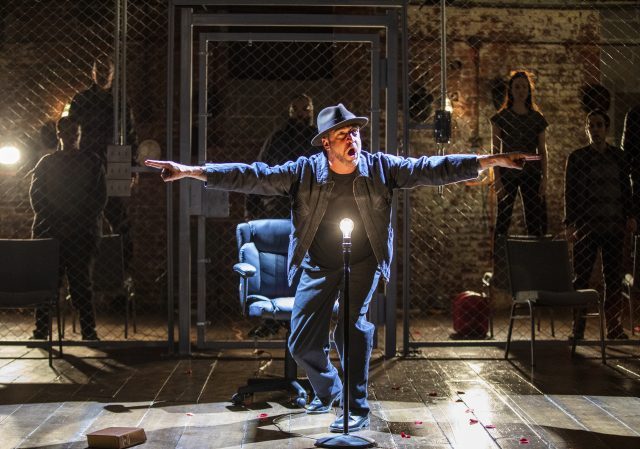
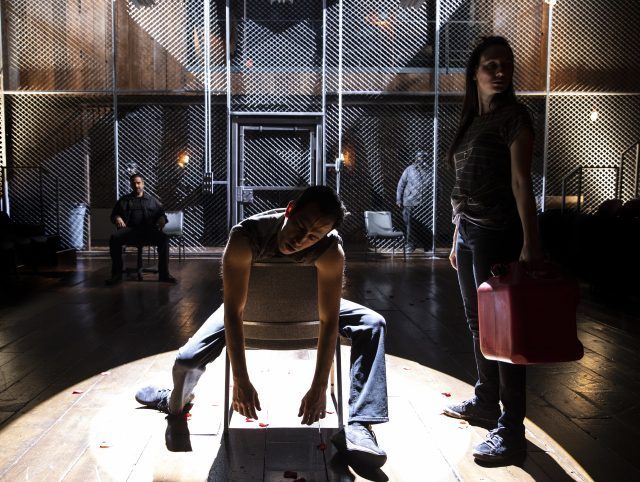
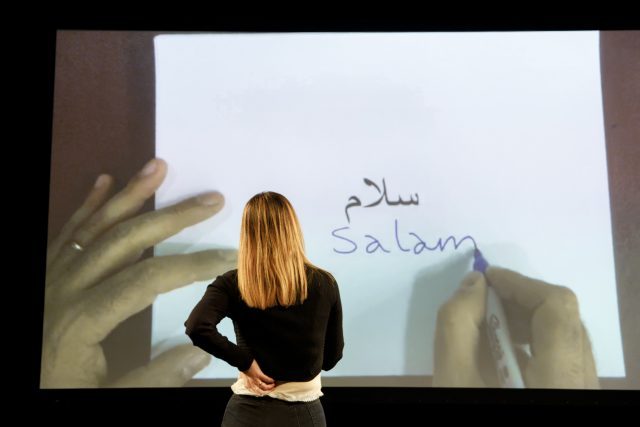
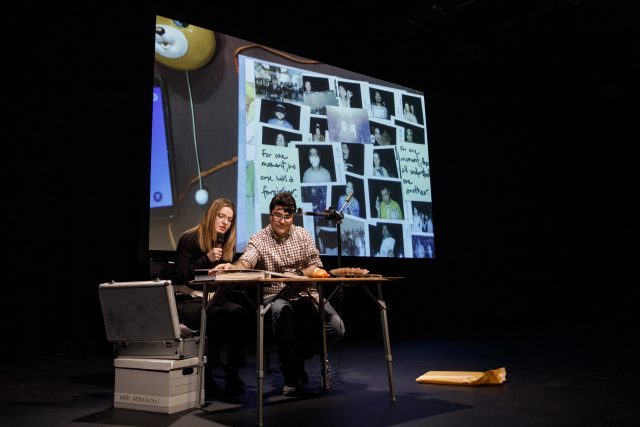
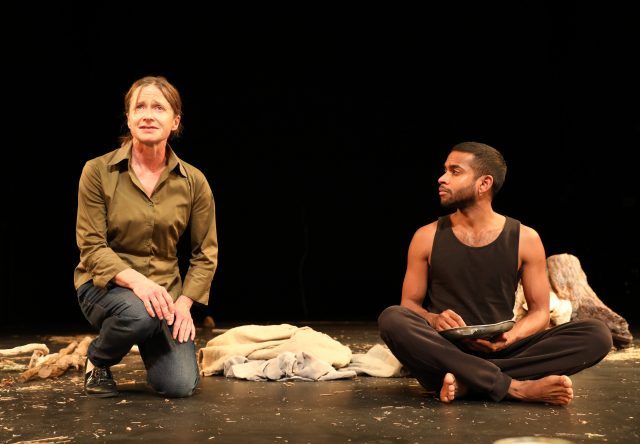
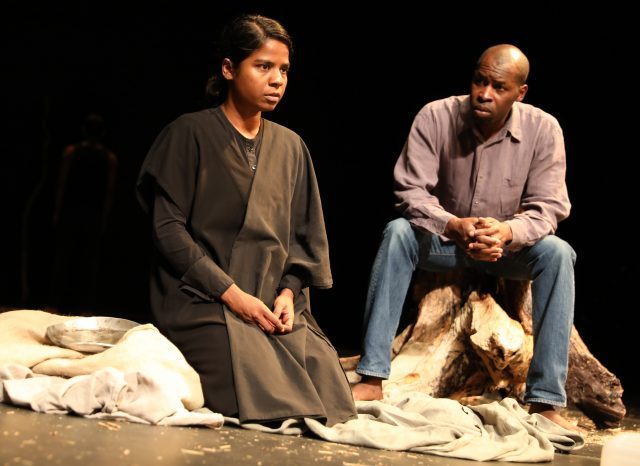
Anne Bogart and SITI Company relate Euripides’ The Bacchae to today’s sociopolitical ills in new interpretation (photo by Craig Schwartz)

THE BACCHAE
Brooklyn Academy of Music
BAM Harvey Theater
651 Fulton St. at Ashland Pl.
October 3-7, $40-$75
718-636-4100
www.bam.org

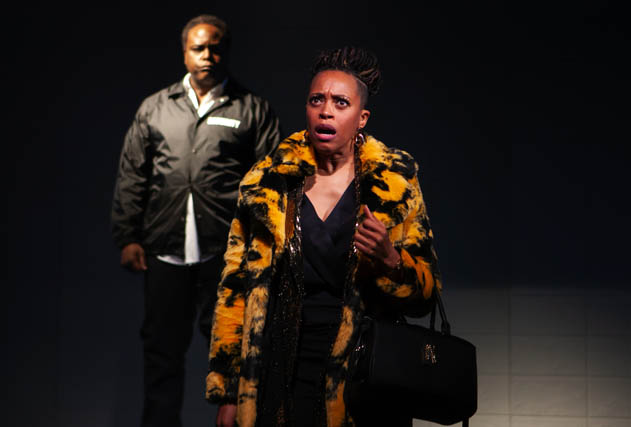
Anne Bogart and SITI Company return to BAM’s Next Wave Festival with their new interpretation of Euripides’ classic tale of gods and mortals, religion and the state, the earthly and the divine, The Bacchae. “More than any other play in Western civilization, Euripides’ is probably the one that most directly addresses the art of theater,” Bogart explains in a program note. “We are aware, for example, that we are looking at an actor or at a precisely lit staging and scenery, but at the same time we allow ourselves to enter into another world that is merely suggested by what is actually present.” The work, which premiered at the Getty Villa in California last month, is translated by Aaron Poochigian, with set and lighting by Brian H Scott, sound by Darron L West, and music composed by Erik Sanko. The cast features Ellen Lauren as Dionysus, Barney O’Hanlon as Tiresias, Stephen Duff Webber as Cadmus, Eric Berryman as Pentheus, and Akiko Aizawa as Agave. In conjunction with the show, the talk “Speaking Truth to Power: On Fear and Governance” will take place October 5 at the BAM Fisher’s Hillman Studio ($15, 6:00), with Anne Bogart and Monica Youn in conversation with Corey Robin, and BAM and the Mark Morris Dance Group are teaming up for “Introduction to Suzuki & Viewpoints,” a master class with SITI, on October 10 ($25, 12 noon) for theater artists, actors, dancers, performers, and directors.

COLLECTIVE RAGE: A PLAY IN 5 BETTIES

Betty 1 (Dana Delany) lets it all out in Collective Rage (photo by Joan Marcus)

Betty 1 (Dana Delany) lets it all out in Collective Rage (photo by Joan Marcus)

MCC Theater at the Lucille Lortel Theatre
121 Christopher St. between Bleecker & Hudson Sts.
Sunday – Friday through October 7, $49-$125
212-352-3101
www.mcctheater.org

For hundreds of years, the name “Betty” has been used to describe various types of women, from hot and stylish to relaxed and self-confident, from schoolteachers and the girl-next-door to wholesome and plain; it can also refer to a man who performs household duties, a gay man, and a light-skinned black man, according to Cassell’s Dictionary of Slang. The term has been linked to Betty Grable, Bettie Page, Betty Rubble from The Flintstones, Betty Cooper from the Archie comics, Betty Boop, and Betty Crocker and has been popularized in such films as Clueless and Encino Man. The word, with its wide range of meaning, can be a metaphor for the obscured individuality of women, one name covering the vast diversity and lack of sameness for a gender that has been treated as second-class citizens for millennia. But the second sex, as Simone de Beauvoir called women, has been fighting back in new ways in recent years, as depicted in Jen Silverman’s outrageously funny and perceptive play, Collective Rage: A Play in 5 Betties, an MCC production that continues at the Lucille Lortel through October 7. In the show, Silverman also reclaims the word “pussy,” which has multiple meanings too but has become a kind of feminist call to arms given its controversial usage by President Trump. The word appears about fifty times in the play, including in the subtitle: In Essence, a Queer and Occasionally Hazardous Exploration; Do You Remember When You Were in Middle School and You Read About Shackleton and How He Explored the Antarctic?; Imagine the Antarctic as a Pussy and It’s Sort of Like That.

Collective Rage features five characters from across the spectrum: Betty 1 (Dana Delany) is white and uptight, an erudite and elegant woman in a loveless marriage with the wealthy Richard; Betty 2 (Adina Verson) is white and unsophisticated, in a boring marriage with Charles; Betty 3 (Ana Villafañe) is a tough-talking bisexual Latinx who says what’s on her mind; Betty 4 (Lea DeLaria) is a heavily tattooed white butch lesbian who spends most of her time working on her truck and pining for Betty 3; and Betty 5 (Chaunté Wayans) is an African American boxing gym owner who self-identifies as a “gender-non-conforming masculine-presenting female-bodied individual.”

Five Betties gather together to stage their own play in biting work by Jen Silverman (photo by Joan Marcus)

Five Betties gather together to stage their own play in biting work by Jen Silverman (photo by Joan Marcus)

Betty 1 sets the tone in her opening monologue, in which she states after watching the news, “This world is terrible. This world is awful. / I am Very Very Concerned about the State of Things. / My husband Richard came home and I said to him RICHARD / I said RICHARD / I am Very Very Concerned About the State of Things. / My husband Richard is a calm person. / He is a logical and a rational person and He Wears a Suit. / And Richard said to me: BETTY / Richard said: BETTY / Richard said: Betty, Don’t Worry. / AND THAT DIDN’T MAKE ME FEEL BETTER.”

Each Betty busts female stereotypes; yet even as each is different, they all share a common loneliness, which is revealed at several women-only dinner parties. The intimate gatherings are not for men; in fact, the play itself was not written for the male gender, and in particular not straight white men. At one party, after Betty 3 raves about the first time she had sex with a woman, Betty 1 says, “That’s not good conversation for a dinner party.” Betty 3 says, “No?” Betties 1 and 2 answer in unison, “No.” Betty 3 asks, “How come?” Betty 1 says, “We don’t talk about sex at dinner parties.” Betty 3 responds, “What else you talk about?” Betty 2 replies, “We aren’t having sex, so we can’t talk about it.” Betty 3 offers, “Maybe you should start having it.” Betty 1 ends the discussion by saying, “We’re married.”

(photo by Joan Marcus)

Betty 5 (Chaunté Wayans) teaches Betty 1 (Dana Delany) how to fight back in Collective Rage (photo by Joan Marcus)

At another dinner party, Betty 3 gives Betty 2 and Betty 4 hand mirrors so they can look at their vaginas up close and personal. Betty 2 is terrified, claiming she has never done that before. “What if it’s ugly?” she says. “What if there’s teeth? What if it’s lopsided? What if it’s lumpy? Or flat? Or geometrically displeasing? Or what if I don’t have one at all and there’s just a small animal who lives there, like a lizard or a dwarf-hamster, and all I see are the gleam of its little eyes as it stares back up at me?” It’s a hysterically funny scene, but it also brilliantly depicts a woman’s fear of her sexuality and control of her own body. “Look at your pussy,” Betty 3 tells her. “Both eyes,” Betty 4 adds.

After Betty 3 goes to a play with a rich white woman — they see what she calls “Summer’s Midnight Dream” — Betty 3 decides to quit her job and stage her own piece of “Thea-tah”; entranced by the play-within-a-play narrative (of Shakespeare’s A Midsummer Night’s Dream,), she is going to do the same thing, a sly reference to Collective Rage, which now also has a similar structure. All five Betties become involved in the venture, for different reasons, furthering their relationships with one another and cleverly developing their individual characters as Silverman explores their innermost desires and their sense of self, as well as their thoughts on theater. “I think a lotta things that seem like art are maybe actually just about pussy. And then also, things that are mostly about pussy might actually be about art,” Betty 4 tells Betty 3, getting right to the point.

Collective Rage unfolds over ninety riotous yet poignant minutes, in chapters with such descriptive names as “Betty 2 Acts Out Her Feelings with a Puppet Because She Has No Real Friends,” “Betty 1 Has More Rage, and Does Something About It,” and “Betty 4 and 5 Work on Their Trucks and Talk About Relationships, Which Is Just Another Word for Pussy,” the titles projected above the stage. Dane Laffrey’s relatively spare set, just a few chairs and a desk, constantly surprises as items fall down through open grids in the ceiling, from truck engines and a punching bag to other key props, like gifts from heaven. (Kudos to prop master Joshua Yocom.) Director Mike Donahue (The Legend of Georgia McBride, Silverman’s The Moors) lets the women strut their stuff, and Delany (China Beach, Dinner with Friends), DeLaria (Orange Is the New Black, The Rocky Horror Show), Verson (Indecent, The Lucky Ones), Villafañe (On Your Feet, In the Heights), and Wayans (50 Shades of Black, Hollywood Misconceptions) don’t disappoint, shining a light on gender identity, sexuality, lust, love, societal expectations, and power in the twenty-first century. It’s about how to be a Betty, and how not to be a Betty, whatever that means. “I feel like things are changing,” Betty 4 says to Betty 5, who responds, “I hope so.” Betty 4 adds, “But everything was good the way it was. Wasn’t it?” Betty 5 replies, “Change is exciting.” And Betty 4 opines, “Change is sad. Change is things getting forgotten. Change is people getting left behind.” Exactly.

STARS IN THE NIGHT

(photo by Matt Pulliam)

The Man in the Orange Tie (Matt Brown) kicks off a unique adventure through DUMBO in Stars in the Night (photo by Matt Pulliam)

STARS IN THE NIGHT
Multiple locations in DUMBO
Tuesday – Sunday through October 13, $125, 7:00, 7:30, 8:00, 8:30
www.starsinthenight.net

Part of the fun of immersive theatrical productions is the opportunity to see unusual interior locations, from abandoned warehouses and hotels (Sleep No More, The Grand Paradise) and institutional facilities (Then She Fell) to navy yards (Doomocracy), churches (Beloved/Departed), and the otherwise off-limit areas of cultural institutions (Ghost Light, Hotel Savoy). But it’s always a bonus when an immersive show heads outdoors, offering another level of adventure; for example, The Great American Casket Company led the audience through Green-Wood Cemetery, while Empire Travel Agency took people four at a time through Lower Manhattan, including a subway trip and a car ride. The Firelight Collective’s dark and mysterious Stars in the Night combines the best of both types of immersive theater, shuttling up to twelve guests at a time through various indoor and outdoor spaces in DUMBO. It is a very adult story of separation and loss, of faded love and unfulfilled dreams, told in a time-twisting way that will have you attempting to decipher it all long after the one hundred minutes are up and you have been left on the street to your own devices.

(photo by Matt Pulliam)

Jennifer Sacks has something to say in Firelight Collective immersive production (photo by Matt Pulliam)

A treat for all five senses, Stars in the Night begins on a rooftop with a beautiful view of the Brooklyn and Manhattan Bridges. The Man in the Orange Tie (Matt Brown) shares his tale of woe, kicking you off on a journey where you will meet a series of people who sometimes interact directly with you, sometimes carry out actions that you merely observe. You pick up important details through song, telephone conversations, dance, food and drink, and even touch, though you don’t have to do anything you don’t want to. The narrative does not make it easy to figure who is who and when is when, so you need to pay close attention. The extremely talented cast consists of Brown, Allison Byrnes, Benjamin Chase, Davonna Dehay, David Haley, Hannah Broderick Kraft, William Nicol, Jennifer Sacks, and Firelight Collective founding member Deanna Noe; to tell you who they play would be giving too much away. Writer-directors Stephanie Feury and Nathan Keyes, the artistic directors of the troupe, keep up the pace throughout, dropping in plenty of clues along the way, leading to a powerful finale that is simply mesmerizing.

(photo by Matt Pulliam)

Deanna Noe brings mystery and eroticism to Stars in the Night in DUMBO (photo by Matt Pulliam)

One of the coolest conceits of Stars in the Night is the pause between every scene during which the audience is not sure who will arrive to take them to the next part of the expedition. For example, after the Man in the Orange Tie takes off, you’re left standing in Brooklyn Bridge Park, guessing which of the passersby might be your next guide. The Firelight Collective’s previous shows were all presented in Los Angeles, including Unexpected Winter, Nobody’s Darling, Echoes of Voices, Savage/Love, and the first iteration of Stars in the Night. Despite its West Coast history, the group has done a fine job sustaining a New York sensibility in this production, which takes several surprising twists and turns as characters examine their lives and don’t always like what they see. “I just kept thinking how I wanted to be free, free of the pain, free of everything,” Nicole says. She’ll break your heart.

I WAS MOST ALIVE WITH YOU

I Was Most Alive with You

A shadow cast signs the dialogue from the balcony in Craig Lucas’s I Was Most Alive with You (photo by Joan Marcus)

Playwrights Horizons
Mainstage Theater
416 West 42nd St. between Ninth & Tenth Aves.
Tuesday – Sunday through October 14, $59-$99
www.playwrightshorizons.org

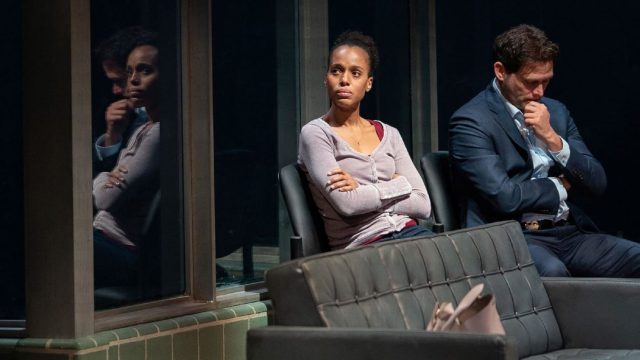
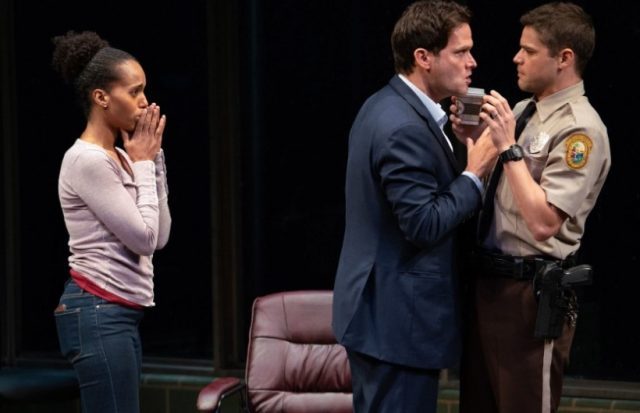
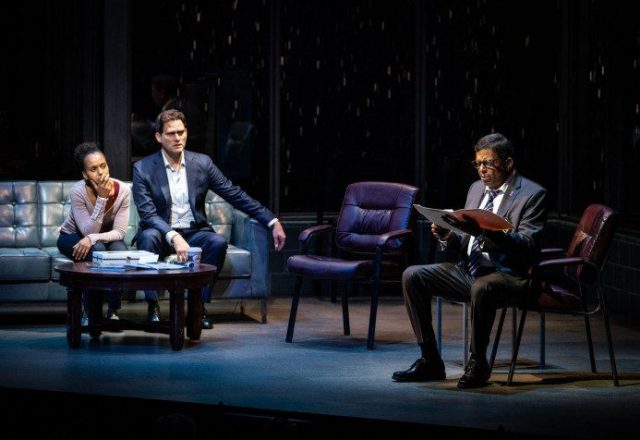
Craig Lucas’s I Was Most Alive with You serves up a Thanksgiving setting, but it’s not a genuine turkey. Rather, it’s a turducken of a play, an overwrought melodrama stuffed with everything but the kitchen sink, as troubles inside troubles inside yet more troubles pile onto the characters in this otherwise well-staged New York premiere. The show, which opened tonight at Playwrights Horizons, was inspired by real tragedies in Lucas’s life as well as the Book of Job. (Lucas also wrote the play specifically for deaf actor Russell Harvard after seeing him in the Paul Thomas Anderson film There Will Be Blood and Nina Raine’s off Broadway play Tribes.) The narrative unfolds in flashback; in California in March 2010, longtime TV writing partners Ash (Michael Gaston) and Astrid (Marianna Bassham) are trying to come up with ideas for their next collaboration, and they decide to tell the story of what happened the previous Thanksgiving, how an accident changed the lives and fortune of friends and family. A recovering alcoholic, the Jewish Ash has a strained relationship with his wife, Pleasant (Lisa Emery), who hopes he is having an affair with Astrid. Their son, Knox (Harvard), a deaf recovering alcoholic and drug addict, is in love with Farhad (Tad Cooley), an angry, hearing-impaired, drug-using Muslim. Ash’s mother, Carla (Lois Smith), a Jewish convert, has been battling cancer, attended to by Mariama (Gameela Wright), a nurse who became a Jehovah’s Witness while recovering from drug addiction and who has a son on death row. The cast is lost amid the narrative mess, overplaying underdeveloped characters we don’t care about, speaking in sermonettes and platitudes, many straight out of the recovery playbook. For example, at Thanksgiving dinner, Knox says he is grateful “for two, no, three things I used to think weren’t gifts at all: Deafness. . . . Being gay. . . . Addiction. . . . They are gifts. . . . Each brought me to great clarity.”

I Was Most Alive with You

A family faces a series of Job-like catastrophes in I Was Most Alive with You at Playwrights Horizons (photo by Joan Marcus)

The play examines how we communicate with one another — and how we don’t — in person, electronically, verbally, and nonverbally. Most of the characters are at least partially deaf, either involving the actual ability to hear or to listen to what people are telling them, and most also have at least some knowledge of sign language. (Sabrina Dennison serves as director of artistic sign language.) Words that are signed but not spoken are projected onto Arnulfo Maldonado’s effective, if workmanlike, set. Taking a page from Michael Arden’s outstanding Broadway revival of Spring Awakening with Deaf West Theatre, in which each speaking actor was shadowed by someone signing, in I Was Most Alive with You the shadows are on the second level, shadowing their characters from above. The shadow cast consists of Beth Applebaum (Astrid), Harold Foxx (Knox), Seth Gore (Ash), Amelia Hensley (Pleasant), Christina Marie (Carla), Anthony Natale (Farhad), and Alexandria Wailes (Mariama). Unfortunately, occasionally one of the shadows emits sounds while signing, which might be inevitable but is distracting. Two-time Tony nominee Lucas (Prelude to a Kiss, The Light in the Piazza) throws in so much dizzying conflict that director Tyne Rafaeli (The Rape of the Sabine Women, Actually) never has a chance to navigate through the confusion. Not even God would have made Job suffer through I Was Most Alive with You. Playwrights Horizons’ next production is the world premiere of Larissa FastHorse’s The Thanksgiving Play; hopefully turducken will not be on the menu.

TICKET GIVEAWAY: MY PARSIFAL CONDUCTOR

my parsifal conductor

MY PARSIFAL CONDUCTOR: A WAGNERIAN COMEDY
Marjorie S. Deane Little Theater at the West Side YMCA
10 West 64th Street
Tuesday – Sunday, September 25 – November 3, $67
866-811-4111
myparsifalconductor.com

The debates over whether German composer Richard Wagner was anti-Semitic have raged for more than a century, particularly since Adolf Hitler and the Nazis incorporated his music into their march for power. (Wagner died in 1883 at the age of sixty-nine.) One of his works that generates complaints of anti-Semitism is his final opera, 1880’s Parsifal, about the search for the Holy Grail. Writer, director, and producer Allan Leicht, who won a Daytime Emmy for Outstanding Writing for Ryan’s Hope and was nominated for a Primetime Emmy for the TV movie Adam, explores the topic in My Parsifal Conductor: A Wagnerian Comedy, which was inspired by the real-life situation in which King Ludwig II of Bavaria commanded that German Jew Hermann Levi, the son of a rabbi, will conduct the inaugural performance of Parsifal at the Bayreuth Festival in 1882. The cast features Eddie Korbich as Wagner, Claire Brownwell as Cosima, his wife, Geoffrey Cantor as Levi, Carlo Bosticco as King Ludwig II, Logan James Hall as Friedrich Nietzsche, Alison Cimmet as Dora, and Jazmin Gorsline as Carrie and Sophie. My Parsifal Conductor is directed by Robert Kalfin (Happy End, Yentl) and produced by Ted Snowdon (The Elephant Man, My Name Is Asher Lev).

The cast of My Parsifal Conductor (photo by Carol Rosegg)

The cast of My Parsifal Conductor readies for show about Wagner and anti-Semitism (photo by Carol Rosegg)

TICKET GIVEAWAY: My Parsifal Conductor runs September 25 through November 3 (with an October 11 opening) at the Marjorie S. Deane Little Theater at the West Side YMCA, and twi-ny has two pairs of tickets to give away for free. Just send your name, daytime phone number, and favorite play involving opera to contest@twi-ny.com by Friday, September 28, at 3:00 pm to be eligible. All entrants must be twenty-one years of age or older; two winners will be selected at random.

INTRACTABLE WOMAN: A THEATRICAL MEMO ON ANNA POLITKOVSKAYA

(photo © Julieta Cervantes)

Nicole Shalhoub, Nadine Malouf, and Stacey Yen portray Anna Politkovskaya and other characters in US premiere of Intractable Woman: A Theatrical Memo on Anna Politkovskaya (photo © Julieta Cervantes)

Performance Space New York
122CC Second Floor Theater
150 First Ave. at East Ninth St.
Tuesday – Sunday through October 14, $35-$45
212-352-3101
playco.org

Heroic Russian journalist and activist Anna Politkovskaya dedicated her life to reporting the truth about what was going on in Russia and in particular Chechnya. In writing Intractable Woman: A Theatrical Memo on Anna Politkovskaya, Italian playwright Stefano Massini explains, “I wrote this text to go against the plan of those that decided to silence and muffle her voice.” Translated into English by Paula Wing, the 2008 play is now being given its US premiere by PlayCo, opening tonight at the 122CC Second Floor Theater at Performance Space New York in the East Village. The eighty-minute work features a cast of three women, Nadine Malouf, Nicole Shalhoub, and Stacey Yen, dressed in the same black pants, white collared shirt, and black jacket as if they are state officials or investigators (the costume designer is Junghyun Georgia Lee), portraying multiple characters, including Politkovskaya and various subjects she interviewed. In the prologue, the three women directly address the audience, interchanging lines as they share something that senior Kremlin official Vladimir Surkov wrote in an internal memo. “Enemies of the state are divided into two categories: the kind you can reeducate and the intractables. Discussion is not possible with the second kind and this makes reeducation impossible. The State requires us to clear our territory of these intractables.” Politkovskaya was considered an intractable.

The show consists of nineteen episodes of Politkovskaya’s reporting, involving a decapitated head put on public display; a nineteen-year-old soldier suffering from hunger who enlisted in the military, where he kills Chechens in “human bundles”; the Beslan massacre; a typical journalist’s day in Grozny, where citizens “get used to the idea of death”; and Ramzan Kadyrov, the corrupt thirty-year-old prime minister of Chechnya, installed by his father. “I find the behavior of this journalist unacceptable,” he says a day after the interview is published. “Doesn’t she know it’s the interviewer’s job to make the interviewee look good? What right did she have to publish my responses exactly as I gave them? Clearly this woman doesn’t want to be one of us.”

(photo © Julieta Cervantes)

Stefano Massini’s Intractable Woman features fictionalized re-creations of Russian journalist and activist Anna Politkovskaya interviewing subjects (photo © Julieta Cervantes)

Indeed, Politkovskaya never wanted to be one of “them.” Instead, she fearlessly wrote about hate crimes, imprisonment and torture, widespread rape, mass graves, and other degradations of humanity, risking her job and her life with her husband and two children. Marsha Ginsberg’s pristine press-room set contains carefully arranged rows of red chairs facing a table with microphones. A portrait of Vladimir Putin hangs on a wall. One of the most frightening aspects of Intractable Woman — which marks Massini’s US debut, to be followed in March with The Lehman Trilogy at the Park Avenue Armory — is how Politkovskaya and other reporters are considered propagandists and enemies of the state, echoing President Trump’s views of the free press. “Journalists like you write lies,” a colonel in command of an airborne unit tells Politkovskaya. “What should I write?” she asks him. He replies, “That we’re fighting for the motherland. Against enemies of the people and traitors.”

(photo © Julieta Cervantes)

Stacey Yen, Nicole Shalhoub, and Nadine Malouf star in English-language adaptation of powerful political play (photo © Julieta Cervantes)

Director Lee Sunday Evans (Dance Nation, HOME) does a superb job preventing the play from becoming didactic, pedantic, or just plain boring; the dialogue interplay among the three equally excellent actresses, who move chairs around in various scenes, keeps things proceeding at a fluid pace. The text does not necessarily quote Politkovskaya exactly; Massini, a novelist and the artistic director of the Piccolo Teatro of Milano, rewrote her words for dramatic impact, although the facts themselves are true. After the show is over, a curtain is opened at the back of the stage and the audience is invited to look inside, at a shelf of such items as Politkovskaya’s books, family photographs, and, most tellingly, a picture of a room of the same red chairs used in the production, on each one a photo of a murdered Russian journalist. The lobby is filled with posters of quotes from Politkovskaya, along with photographs. “I never write commentary, or speculation, or opinions. I have always believed – and I continue to believe – that it is not up to us to make judgements,” she wrote. “I am a journalist, not a court of law or a magistrate. I limit myself to reporting the facts. The facts: As they stand, as they are. It seems like the easiest thing, but here it’s the most difficult. And it exacts the highest price.”

THE TRUE

(photo by Monique Carboni)

Michael McKean, Edie Falco, and Peter Scolari star in New Group world premiere at the Signature Center (photo by Monique Carboni)

The New Group at the Pershing Square Signature Center
The Alice Griffin Jewel Box Theatre
480 West 42nd St. between between Ninth & Tenth Aves.
Tuesday – Sunday through October 28, $30-$125
www.thenewgroup.org
www.signaturetheatre.org

Obie-winning playwright Sharr White and director Scott Elliott manage to make a story about the 1977 mayoral election in Albany, New York, tense and exciting in The True, a world premiere from the New Group that opened tonight at the Pershing Square Signature Center. A fictionalized version of real events, the vastly entertaining play opens as Erastus Corning II (Michael McKean), who has been mayor of the capital of New York State since 1941, is facing a serious challenge to his long reign following the death of Democratic party leader Dan O’Connell. State senator Howard C. Nolan (Glenn Fitzgerald) is taking on Corning, with the support of Charlie Ryan (John Pankow), who wants to be the new party boss. But tough-talking fixer Dorothea “Polly” Noonan (Edie Falco) isn’t about to let that happen. Noonan, a foul-mouthed firebrand, pulls a lot of strings behind the scenes, and her down-and-dirty, no-holds-barred style gets things done as her calm, easygoing husband, Peter (Peter Scolari), stays out of it all. “I don’t hate politics, by the way. I just want nothing to do with it,” he says, even when confronted with rumors that Erastus, who is married to the mysterious Betty (Tracy Shayne), and Polly are longtime lovers. Desperate for Erastus to beat Nolan, who is leading big in the polls, Polly taps young Bill McCormick (Austin Cauldwell) to be named committeeman and support Erastus within the party machine. “Fuck that fucking Charlie Ryan,” she says. But when Erastus starts questioning whether he still wants Polly on his team, she practically explodes, while also hurting inside, since she has devoted her life to him and the Democrats.

(photo by Monique Carboni)

Dorothea “Polly” Noonan (Edie Falco) has some harsh things to say to Howard C. Nolan (Glenn Fitzgerald) in The True (photo by Monique Carboni)

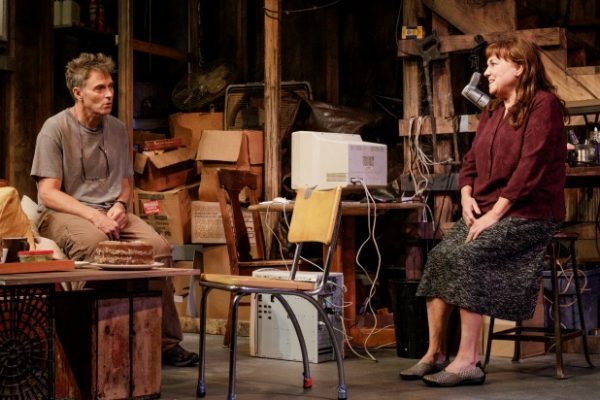
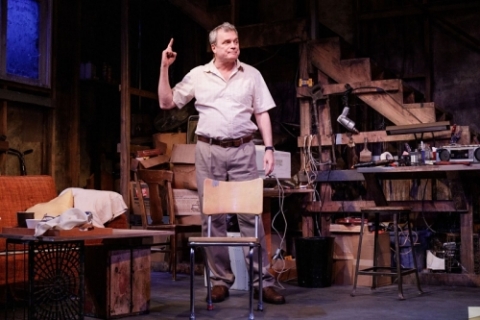
Falco (Frankie and Johnny in the Clair de Lune, Side Man) is exceptional as Noonan, a kind of cross between Carmela Soprano from The Sopranos and Jackie Peyton from Nurse Jackie, two roles that earned her Emmys. (In fact, much of the cast and creative team have major television ties: Scolari starred on Bosom Buddies, The Bob Newhart Show, and Girls, McKean was on Laverne & Shirley and SNL and is currently on Better Call Saul, Pankow is a veteran of Mad About You and The Days and Nights of Molly Dodd, and White is a writer and producer for The Affair and Sweetbitter.) Falco plays Noonan with a brawling charm, whether she’s sitting at her sewing machine making a culotte or going face-to-face with her political enemies. White (The Other Place, Annapurna) gets right to the heart of the matter, showing how politics has changed over the decades, implying why the Democrats have been losing power in recent years. “Regular people,” Noonan tells Erastus. “They don’t give a shit what you do behind closed doors so long as their lives are working. But their lives aren’t working anymore. Committeeman. Used to know every. Single. Voter. In his district. Every single one. That voter had a problem, they told the committeeman, the committeeman went to the ward leader, the ward leader either solved it? Or went to Dan. And you know what happened at the end of the day? . . . It got taken care of.” Brief but telling references to shifting demographics, race, and women in politics reveal much as Noonan also makes clear that women are not treated the same as men in the political arena. “What I do for Erastus is no different than what you did for Dan. And yet I’m ostracized for it,” she tells Ryan.

(photo by Monique Carboni)

Dorothea “Polly” Noonan (Edie Falco) has plans for Bill McCormick (Austin Cauldwell) as her husband (Peter Scolari) looks on (photo by Monique Carboni)

McKean (The Little Foxes, Accomplice) and Scolari (The Foreigner, Hairspray) are both terrific, portraying best friends who try to keep politics — and Polly — from tearing them apart. New Group artistic director Elliott (Evening at the Talk House, Mercury Fur) expertly balances the humor amid powerful dramatic moments, never letting things go awry on Derek McLane’s elegant set, where small changes make dramatic differences. And watch out for a surprise, hilarious late scene that brings the house down — something that does not appear in the script. Kudos are also due Falco’s hair stylist and costume designer Clint Ramos, who capture 1977 in fabulous ways. Noonan represents a different time in the treatment of women, both personally and professionally; she might cook and sew, but she also curses and never backs down from a challenge, particularly from a man. It’s fascinating to imagine what Noonan, who died in November 2003 at the age of eighty-eight, would think of what’s going on in the political arena today, in Albany and the country itself; she would certainly be proud of her granddaughter, New York senator Kirsten Gillibrand, who calls her “my greatest political hero” and is keeping her grandmother’s legacy alive.