this week in theater

CAREFULLY TAUGHT: UNDERSTANDING AND INTERRUPTING CYCLES OF OPPRESSION IN TODAY’S CULTURE

CBS Sunday Morning contributor Nancy Giles will host New Group Now panel

CBS News Sunday Morning contributor Nancy Giles will host New Group Now panel on May 20

Who: Alina Das, Tahir Carl Karmali, Dr. Kevin Leo Yabut Nadal, Nancy Giles
What: New Group Now public forum
Where: The Alice Griffin Jewel Box Theatre at the Pershing Square Signature Center, 480 West 42nd St. between between Ninth & Tenth Aves.
When: Monday, May 20, free with advance RSVP, 7:00
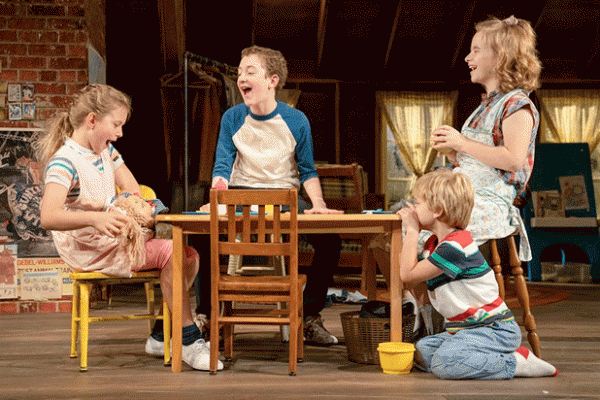
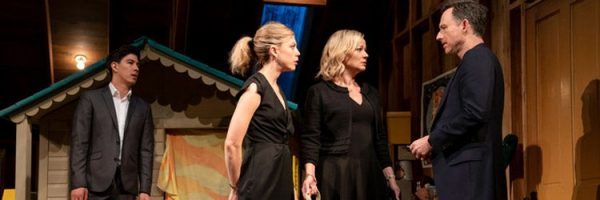
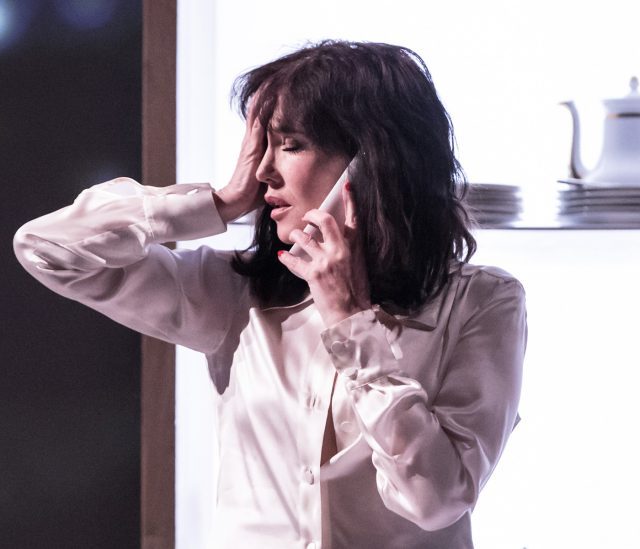
Why: In conjunction with Jesse Eisenberg’s latest play for the New Group, Happy Talk, which opens May 16 at the Signature Center with the stellar cast of Marin Ireland, Tedra Millan, Daniel Oreskes, Nico Santos, and Susan Sarandon, the theater company is hosting “Carefully Taught: Understanding and Interrupting Cycles of Oppression in Today’s Culture” on May 20 at 7:00. The free panel discussion explores the oppression experienced by exploited, vulnerable, and underrepresented people in America, specifically immigrants, refugees, and asylum seekers. (In the play, Ireland portrays an undocumented immigrant taking care of a sick elderly woman.) The talk features NYU School of Law professor Alina Davis, New York-based Kenyan visual artist Tahir Carl Karmali, and psychology professor Dr. Kevin Leo Yabut Nadal; writer, actress, and political pundit Nancy Giles moderates.

LOCKDOWN

(photo by Sandra Coudert)

C.O. McHenry (Eric Berryman) and Ernie (Zenzi Williams) wait for Wise (Keith Randolph Smith) in Lockdown (photo by Sandra Coudert)

Rattlestick Playwrights Theater
224 Waverly Pl. between Eleventh & Perry Sts.
Through May 19, $46-$61
866-811-4111
www.rattlestick.org

Cori Thomas’s Lockdown is a social justice story with a critical message that overwhelms the potent drama at its well-meaning heart, resulting in a didactic narrative that feels more educational than entertaining. The plot is torn from the headlines, evoking the current case of Judith Clark, a former Weather Underground activist who was convicted of murder in 1981 for her part in a robbery in which two security guards and two policemen were killed. Clark was sentenced to seventy-five years, but she turned her life around in prison and was released this month for good behavior, against loud and angry opposition. In Lockdown, which continues at Rattlestick through May 19, the longtime prisoner is the fictional James “Hakeem” Jamerson (Keith Randolph Smith), better known as Wise, who has been incarcerated for forty-six years, since the age of sixteen. Young writer Ernie Morris (Zenzi Williams) is volunteering at the prison and has been assigned to Wise, who is making the most of his time, earning a degree and mentoring fellow inmates. “I started a program in here to help the men understand that they don’t need to keep coming in and out and in and out of here. I’m trying to prevent as many as possible from becoming one more black man living they entire life in prison,” he tells Ernie.

Wise and Ernie meet regularly and form a bond, under the watchful eyes of C.O. McHenry (Eric Berryman), who makes sure that they follow the rules, commanding her, “Do not engage in any intimate form of physical contact with any of the inmates. Displays of affection are not allowed! For instance, hugging. Hugging will be cause for immediate termination of your volunteering activities. Overfamiliarity is not permitted. It will not be tolerated!” Meanwhile, Wise is having trouble getting through to young fellow prisoner Clue (Curt Morlaye), a rapper who believes the system is rigged. “Sitting here wishin i could climb this barb wire / Sippin on some pruno, maa-an, that shit is fire! / Scapin’ from living a life of non-sense / Life doing time now add up to no-sense / Doing time has got me feeling age-less / ’Cause in my head it’s all bout bein cage-less / Lil bro say he learnin from big bro / Pointing ya .38 aint the same thing though,” he rails.

(photo by Sandra Coudert)

Clue (Curt Morlaye) and Wise (Keith Randolph Smith) deal with life behind bars in world premiere at Rattlestick (photo by Sandra Coudert)

Thomas (Citizens Market, When January Feels Like Summer) and director Kent Gash (Barbecue, Langston in Harlem) wear their hearts on their sleeves as they push humane rehabilitation over inhumane incarceration and questionable parole regulations, never missing a chance to score political points that stop the action in its tracks. “Somebody should expose how unfair the process is,” Wise says about facing the parole board. “Writers always coming in here wanting to write about death row. How come nobody never want to write about somebody like me? I wish people on the outside could see us as individuals, ’cause then they might want to write about us.” Thomas was inspired to write the play after visiting San Quentin for a possible podcast and meeting an inmate named Lonnie Morris, an activist and role model who asked Thomas if she would help him with a play he was writing; Thomas quickly scrapped a play she was working on (about death row) and began Lockdown.

The talented cast of Berryman (The B-Side: Negro Folklore from Texas State Prisons, A Record Album Interpretation), Morlaye (Gotham, Blue Bloods), Smith (Jitney, Paradise Blue), and Williams (Henry V, School Girls; or, the Mean African Girls Play) is hampered by the play’s overstated and repetitive reform agenda. Thomas did extensive research in prisons, running all the scenes past incarcerated men and corrections officers, and it feels that way, as if any tension is a means to an end as opposed to an evolving, involving story as characters preach to the converted on Jason Sherwood’s effective, caged-in set. The message is also sent in the opening music, San Quentin inmate David Jassy’s “Freedom.” Each performance is followed by a community talkback, and the production has partnered with such organizations as Drama Club, the Fortune Society, NYC Together, Pen America, Project Liberation, and RTA (Rehabilitation Through the Arts). Lockdown has a lot of important things to say about how the system treats prisoners, particularly men of color, but it includes too many teaching moments instead of trusting the audience to get the point in a less dogmatic way.

ASHITA NO MA-JOE: ROCKY MACBETH

Shakespeare meets manga in Ashita no Ma-Joe: Rocky Macbeth at Japan Society (photo by Takashi Ikemura)

Shakespeare meets manga in the boxing ring in Ashita no Ma-Joe: Rocky Macbeth at Japan Society (photo © Takashi Ikemura)

Japan Society
333 East 47th St. at First Ave.
May 15-18, $28
212-715-1258
www.japansociety.org

Theater Company Kaimaku Pennant Race founder Yu Murai transforms Japan Society into a boxing arena in Ashita no Ma-Joe: Rocky Macbeth, running May 15-18. The sixty-minute show is a seriocomic mash-up of William Shakespeare’s Macbeth and the late 1960s manga Ashita no Joe (“Tomorrow’s Joe”), written by Ikki Kajiwara (Asao Takamori) and illustrated by Tetsuya Chiba and which was turned into several anime series and anime and live-action films. The title translates roughly to “Tomorrow No Witch,” referencing the witches of Macbeth as well as one of the play’s most famous monologues. The protagonist is Joe Yabuki, aka Rocky Macbeth, an ambitious troubled teen who finds success in the ring — and there will be an actual boxing ring onstage, with an audience of only sixty people sitting around it. The boxers wear funky-weird head-to-toe costumes over five rounds of battles as Macbeth seeks the crown, as king and champion.

(photo © Takashi Ikemura)

Ashita no Ma-Joe: Rocky Macbeth moves reimagined Shakespeare tale to a boxing ring (photo © Takashi Ikemura)

“We also have been believing in a false sense of security / that is nothing more than a prophecy. / The Birnam Wood has already started to move. / What will the witches whisper to us, / the people who have been pretending not to notice? / What will we whisper to the future Macbeths to come?” Yu Murai writes, fusing themes of postwar Japan with the 1960s counterculture, one of his specialties. (At the 2009 Fringe Festival, the company had fun with Romeo and Toilet, complete with toilet paper rolls and bathroom humor.) The cast features Takuro Takasaki, G. K. Masayuki, and Kazuma Takeo, with video design and operation by Kazuki Watanabe; opening night will be followed by a Meet-the-Artists reception. The presentation is being held in conjunction with the Japan Society exhibition “Radicalism in the Wilderness: Japanese Artists in the Global 1960s,” which continues through May 31; Ashita no Ma-Joe: Rocky Macbeth tickets get you half off gallery admission.

SOCRATES

(photo by Joan Marcus)

Michael Stuhlbarg is riveting as the title character in Tim Blake Nelson’s Socrates at the Public (photo by Joan Marcus)

Martinson Hall, the Public Theater
425 Lafayette St. at Astor Pl.
Tuesday through Sunday through June 2, $85-$150
212-539-8500
www.publictheater.org

Michael Stuhlbarg is rousingly gallant and stout as the title character in Tim Blake Nelson’s cogent but irritatingly long Socrates, which has been extended at the Public Theater’s Martinson Hall through June 2. The tale of the fate of one of the world’s most famous philosophers — who never wrote anything down, so all we know about him has come from the writings of others — is told in flashback via a pedantic, unnecessary frame story in which Plato (Teagle F. Bougere), a student of Socrates’s, is deciding whether he should become a boy’s (Niall Cunningham) teacher. The tall, blond boy is angry at Plato and what has been done to Socrates. “You’re an Athenian. The Athenians killed him. My question therefore implicates you, especially in the context of a democracy where leaders and their actions are promulgated as representing the people’s will,” the boy says. Plato acknowledges his responsibility, explaining, “In a sense I betrayed him more profoundly and lastingly than Athens did.”

(photo by Joan Marcus)

Crito (Robert Joy, center) is one of the writers whose dialogues form the basis of Socrates (photo by Joan Marcus)

Forget the bookended nonsense and instead revel in the bulk of the play, which really begins with a gathering in which Socrates, war hero Alcibiades (Austin Smith), playwright Aristophanes (Tom Nelis), doctor Eryximachus (David Aaron Baker), poet Agathon (Joe Tapper), writer Crito (Robert Joy), and others, dressed in period togas and robes designed by Catherine Zuber, are drinking heavily and regaling one another with tales of Socrates’s supposed love of good-looking boys and his general brilliance, both of which he adamantly denies. “You’ve taught an entire generation how to think!” Alcibiades exclaims, to which Socrates responds, “That’s simply not true!” Nelson soon jumps ahead to Socrates’s final days, as he’s arrested, facing a trial that could result in his execution. Like Sir Thomas More in A Man for All Seasons, Socrates refuses to bend his principles, spouting philosophy even as he denies his intelligence and ignores the pleas of his friends, colleagues, wife, Xanthippe (Miriam A. Hyman), and son to avoid the death penalty. “It would hardly become a man my age to resent his own end, don’t you think?” he says, arguing that there is only one outcome.

(photo by Joan Marcus)

The Athenians make their case against Socrates in Tim Blake Nelson world premiere at the Public Theater (photo by Joan Marcus)

His fellow philosophers attempt to convince him otherwise, resulting in fascinating debates about happiness, equality, knowledge, memory, and truth in which the Tony- and Obie-winning, bushy-bearded Stuhlbarg (A Serious Man, The Pillowman), looking like a cross between Mandy Patinkin and the hirsute David Letterman, expounds on democracy with an intense fury that relates to the current situation in America and around the globe. After one particularly astute declaration, an audience member, a well-regarded thespian himself, shouted out, “Right on!”

Nelson, an actor (The Ballad of Buster Scruggs; O Brother, Where Art Thou?), filmmaker (The Grey Zone, O), and playwright (Eye of God, Anadarko), and Tony-winning director Doug Hughes (Doubt, The Father) let things go on way too long; the play runs a mind-boggling 160 minutes (with intermission), and you might find yourself groaning during the coda as Plato and the boy can’t stop evaluating what we’ve just seen. But when Stuhlbarg is onstage, it is electrifying. Scott Pask’s immersive set features walls that extend throughout the theater covered in the hand-carved text of Pericles’s Funeral Oration in Ancient Greek: “We are unique in the way we regard anyone who takes no part in public affairs: We do not call that a quiet life, we call it a useless life.” (Pericles was the uncle of Alcibiades.) Socrates did not live a quiet, useless life, his legacy as relevant today as ever.

RICOCHET: ENTANGLED

(photo by Travis Emery Hackett)

The lives of Bradley (James Kautz) Greta (Naomi Lorrain) intersect after a tragedy in Entangled (photo by Travis Emery Hackett)

RICOCHET: AN AMORALISTS ANTHOLOGY ABOUT SURVIVING AN AMERICAN EPIDEMIC
Jeffrey and Paula Gural Theatre
A.R.T./New York Theatres
502 West 53rd St. between Tenth & Eleventh Aves.
Wednesday – Saturday through May 11, $20-$30, 7:30
amoralists.com

The Amoralists, one of the city’s most adventurous and exciting theatrical troupes, concludes its 2018-19 ’Wright Club season with the gripping Entangled. The ’Wright Club program consists of four new plays built around “one unifying event. Three distinct perspectives. No right answers.” The fictional event is a mass shooting in the Hayden Planetarium at the American Museum of Natural History; Entangled is the final installment of “Ricochet: An Amoralists Anthology about Surviving an American Epidemic,” which has previously been explored from different angles in Gabriel Jason Dean’s Triggered at the Cherry Lane Studio in August, directed by Kimille Howard; Charly Evon Simpson’s Stained at New Ohio Theatre in October, directed by Kate Moore Heaney; and James Anthony Tyler’s Armed at Teatro Latea at the Clemente in December, directed by Bianca LaVerne Jones. You do not have to have seen any of those plays, which all ran for three performances, to get caught up in the thrall of Entangled, a stellar collaboration between Simpson and Dean, directed by Moore Heaney, that plays for three weeks, through May 11 at A.R.T./New York Theatres.

(photo by Travis Emery Hackett)

Naomi Lorrain and James Kautz star in Amoralists’ conclusion to Ricochet (photo by Travis Emery Hackett)

In the two-character Entangled, Bradley (Amoralists founding artistic director James Kautz), a white man, is the older brother of the shooter, Little. Greta (Naomi Lorrain), a black woman, is the mother of one of the youngest victims, Astrid. The play unfolds in alternating monologues in which Bradley and Greta speak directly to the audience and dictate emails to each other, sent and unsent, as they search for answers, deal with the traumatic death of a loved one, and try to maintain relationships, although their situations are never made equal. “Dear Greta,” Bradley writes, “Although we’ve never met, we are forever linked by the senseless tragedy my little brother brought into our lives.” Greta, however, feels further violated by this additional unwanted intrusion. Wondering if Little is still connected to Astrid, she writes, “If he is haunting her in the afterlife / If your brother is haunting her in the afterlife / Are you haunting me in this life, Bradley? / Are you?” She later muses, “I wonder a lot about who thinks they must survive the trauma / And who thinks they must cause it in order to survive.” Greta’s dialogue is written by Simpson (Behind the Sheet, Jump), a black woman, and Bradley’s by Dean (Terminus, Qualities of Starlight), a white man. And yes, race does play a part in the proceedings, particularly when it comes to the media. (Dean has probed the aftermath of mass shootings before, including in Our New Town, a musical inspired by both the Newtown massacre and the classic American drama Our Town.)

(photo by Travis Emery Hackett)

The Amoralists’ Entangled immerses the audience in the cosmos (photo by Travis Emery Hackett)

Moore Heaney directs with a calm hand as the actors take turns center stage on a circular platform or pull up a chair on Andrew Diaz’s spare set, which also features a curved horizontal backdrop onto which Kate Freer projects images of the sky and clouds and the cosmos. The universe plays a central role in the play, from the planetarium where the shooting occurred to the name Astrid, as Simpson and Dean compare the Big Bang that created everything to the scourge of gun violence (perpetrated this time by a man known as Little), which wreaks destruction on individuals and society as a whole. It’s always a pleasure watching Kautz (Nibbler, Utility) onstage; he embodies a kind of everyman persona, and here he represents someone who could be any of us, desperate to find out what went so horribly wrong. Lorrain (Song for a Future Generation, Stained) is much more active and lively as she is suddenly thrust into the role of public figure. “After the first few days, people didn’t stop me in the street / I am not sure if that’s because they didn’t want to say anything to me / Didn’t want to intrude / Or maybe they just weren’t sure,” she says. “Just weren’t sure I was the one they saw on the news / I think it is more likely that they just forgot / Forgot how they knew me.” In today’s day and age, with so many mass shootings in America being detailed in the 24/7 news cycle and then disappearing into the maelstrom, it is much too easy to forget the names of the shooters, the victims, the heroes. But those with families involved are doomed to remember, reliving the horror over and over again.

INK

(photo © Joan Marcus 2019)

Editor Larry Lamb (Jonny Lee Miller) takes over Rupert Murdoch’s Sun in Ink (photo © Joan Marcus 2019)

Who: Bertie Carvel, Jonny Lee Miller, David Wilson Barnes, Bill Buell, Andrew Durand, Eden Marryshow, Colin McPhillamy, Erin Neufer, Kevin Pariseau, Rana Roy, Michael Siberry, Robert Stanton, and Tara Summers
What: Ink on Broadway
Where: Manhattan Theatre Club at the Samuel J. Friedman Theatre, 261 West 47th St. between Broadway & Eighth Aves.
When: Tuesday – Sunday through July 7, $79-$189
Why: At the beginning of James Graham’s Tony-nominated Ink, which takes place on Fleet Street in 1969–70, soon-to-be international media mogul Rupert Murdoch (Bertie Carvel) asks newspaper editor Larry Lamb (Jonny Lee Miller) what makes a good story. “Well, it’s the five ‘W’s, isn’t it,” he says, listing the first four — Who, What, Where, When — then hesitating before getting to the last one. “So what’s the fifth? The fifth ‘W’?” Murdoch implores. “Fifth ‘W’ I used to think was the most important, now I think it’s the least. Fifth ‘W’ is Why,” Lamb responds. Murdoch: “You think the least important question is ‘why’; I would have said that was the most important question.” Lamb: “Once you know ‘why’ something happened, the story’s over, it’s dead. Don’t answer why, a story can run and run, can run forever. And the other reason, actually, honestly, I think, is that there is no ‘Why?’ Most times. ‘Why’ suggests there’s a plan, that there is a point to things, when they happen and there’s not, there’s just not. Sometimes shit — just —happens. Only thing worth asking isn’t ‘why,’ it’s . . . ‘What next?’”

(photo © Joan Marcus 2019)

Larry Lamb (Jonny Lee Miller) and Rupert Murdoch (Bertie Carvel) check their progress in MTC newspaper tale (photo © Joan Marcus 2019)

Graham (Labour of Love, Privacy) and director Rupert Goold (King Charles III, American Psycho) follow that advice in the sparkling Manhattan Theatre Club presentation of the award-winning Almeida Theatre production, running at the Samuel J. Friedman Theatre through July 7. The play dives right into the Who, What, Where, and When as Murdoch decides to buy the failing Sun newspaper from the company that publishes the Mirror and hires exiled editor Lamb to run it. It’s thrilling to watch Lamb put together a ragtag staff, including news editor Brian McConnell (David Wilson Barnes), chief sub Ray Mills (Eden Marryshow), sports editor Frank Nicklin (Bill Buell), woman’s editor Joyce Hopkirk (Tara Summers), persnickety deputy editor Bernard Shrimsley (Robert Stanton), and novice photographer Beverley Goodway (Andrew Durand), as they attempt to not only put out a newspaper immediately but, within one year, surpass the Mirror in circulation, a ridiculously absurd proposition — but one that drives Lamb, Murdoch, and his devoted deputy chairman, Sir Alick McKay (Colin McPhillamy), who are willing to do just about whatever it takes to make it happen, much to the consternation of Mirror chairman Hugh Cudlipp (Michael Siberry) and editor Lee Howard (Marryshow), who worry about the integrity of their industry.

(photo © Joan Marcus 2019)

Rupert Murdoch (Bertie Carvel) checks in on the Sun in Tony-nominated Ink (photo © Joan Marcus 2019)

Two-time Olivier winner Goold adds glitter and flash to the proceedings, with the sexy Stephanie Rahn (Rana Roy) occasionally breaking out into song and dance with various characters, turning Bunny Christie’s multilevel, dark-gray, crowded stage into a hopping nightclub, with fun choreography by Lynne Page. Tony nominee Carvel (Matilda the Musical, The Hairy Ape), employing a slight hunch and an overly affected interpretation of Murdoch’s voice, and Miller (Elementary, Frankenstein), bold and forthright as Lamb, make a dynamic duo; even though we know how it’s all going to turn out — particularly how tabloids would present so-called news to the public — we root for them to succeed against the stodgy old guys who actually care about truth and quality. Jon Driscoll’s projections add color to the proceedings, primarily the familiar red of the Sun logo. The serious proceedings, the repercussions of which are still being felt today, with Murdoch’s ownership of such papers as the New York Post and such television stations as Fox News, President Trump’s favorite channel, are infused with a wickedly dry sense of humor; even the insert telling audience members to turn off their cellphones is like the front page of the Sun, blaring the headline: “Cellphone Humiliates Playgoer.”

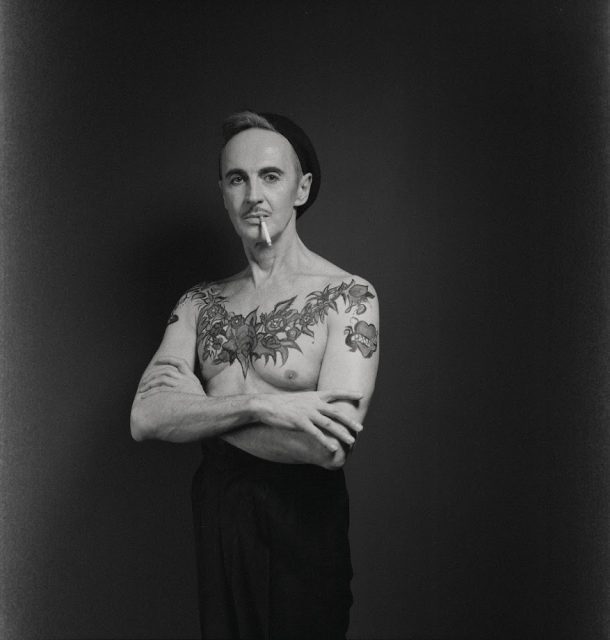
THE HEART (RÉPARER LES VIVANTS)

FIAF

Emmanuel Noblet adapted, directed, and stars in Réparer les vivants at FIAF (photo © Aglaé Bory)

French Institute Alliance Française, Florence Gould Hall
55 East 59th St. between Madison & Park Aves.
Wednesday, May 8, $40, 7:30
212-355-6160
fiaf.org

French actor Emmanuel Noblet will be at FIAF on May 8 for the US premiere of the one-night-only, three-hundredth performance of The Heart (Réparer les vivants), his solo show based on the 2013 novel by Maylis de Kerangal. Noblet, who has appeared in such films as The Conquest and Chic! and such series as Scalp and Act of Crime, adapted and directed the show, in collaboration with Benjamin Guillard. The story takes place over the course of one twenty-four-hour period as a nineteen-year-old surfer dies tragically and there’s a race against time to harvest his heart for an immediate organ donation. The ninety-minute Théâtre Montansier de Versailles coproduction features the voices of de Kerangal, Guillard, Alix Poisson, Vincent Garanger, Constance Dollé, Stéphane Facco, Évelyne Pelerin, Anthony Poupard, Olivier Saladin, and Hélène Viviès, with lighting and videography by Arno Veyrat, sound by Sébastien Trouvé, acoustics by Cristián Sotomayor, and medical imagery by Pierre-Yves Litzler.