this week in theater

LUCKY STAR (0.3)

Pioneers Go East Collective’s Lucky Star (0.3) takes place at Judson Memorial Church July 13-30

LUCKY STAR (0.3)
Judson Memorial Church
55 Washington Square South between Thompson & Sullivan Sts.
Tuesdays, Thursdays, and Fridays, July 13-30, free with RSVP, 8:00
www.judson.org
pioneersgoeast.org

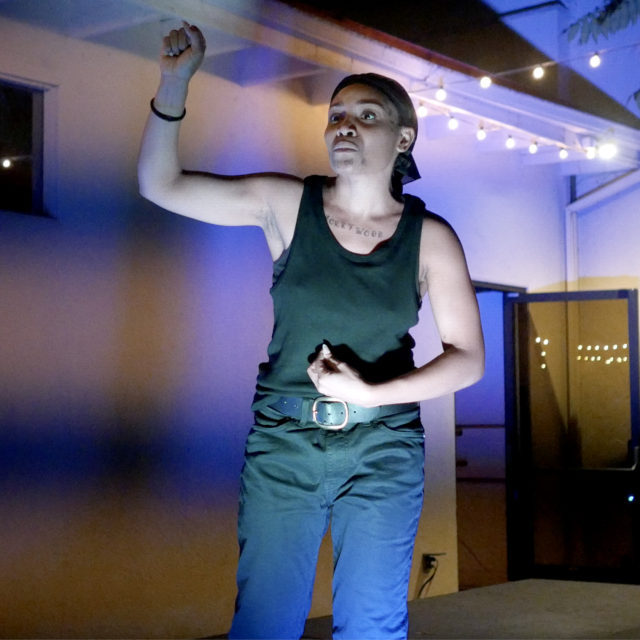
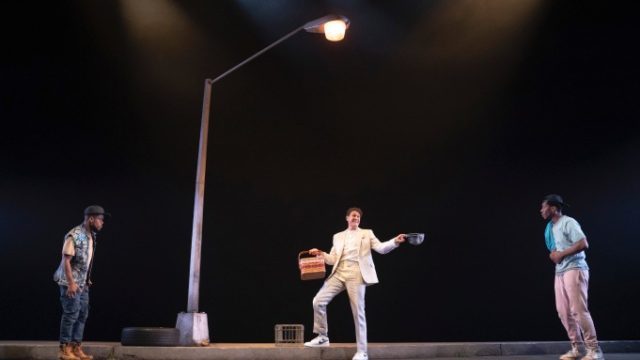
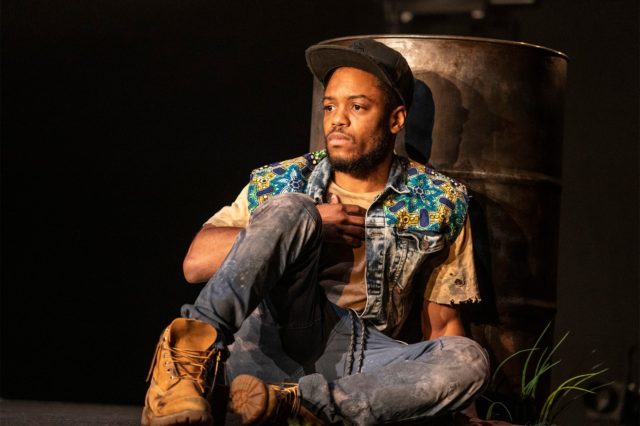
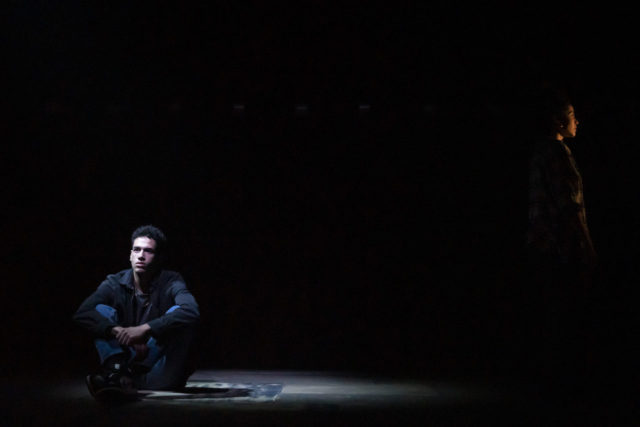
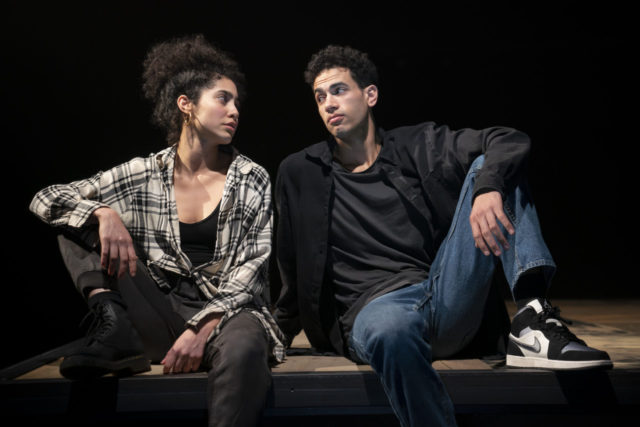
Pioneers Go East Collective honors the history of DIY queer artmaking at such famed New York City venues as La MaMa, Judson Memorial Church, and the Pyramid Club in Lucky Star (0.3), a free multidisciplinary performance installation taking place Tuesdays, Thursdays, and Fridays at 8:00 at Judson from July 13 to 30. Inspired by Club 57, which was recently highlighted in the documentary Kenny Scharf: When Worlds Collide, the in-person work consists of five episodes featuring dance/performance artists Shaina and Bryan Baira, Bree Breeden, Daniel Diaz, Beth Graczyk, and Joey Kipp and nightlife icon Agosto Machado. Lucky Star (0.3) was written by creative director Gian Marco Riccardo Lo Forte and production designer Philip Treviño, with choreography by Ori Flomin, film by Jon Burklund and video designer Kathleen Kelley, set design and fabrication by Mark Tambella, and sound by Marielle Iljazoski and Ryan William Downey.

Lucky Star was born by a desire to make art in a new time,” the collective said in a statement. “We pay homage to creators and legends whose trailblazing work has solidified ways for us to survive as artists reimagining our approach to sharing our work in the age of social media and instant gratification. We term the project a meta-creative journey inviting viewers to engage in an emergent process of collective liberation.” Inspired by Walt Whitman’s poem “Pioneers, O Pioneers!” (“O you youths, Western youths, / So impatient, full of action, full of manly pride and friendship, / Plain I see you Western youths, see you tramping with the foremost, / Pioneers! O pioneers!”), Pioneers Go East Collective was founded in 2010 to “empower a collective of thought-provoking, adventurous, and proud LGBTQ artists . . . dedicated to Latinx, BIPOC, and immigrant artists and teaching artists and their communities in all five boroughs, [exploring] stories of vulnerability and courage for social change.” Admission to Lucky Star (0.3) is free with advance RSVP.

SOCIAL DISTANCE HALL: ENEMY OF THE PEOPLE

Ann Dowd is mesmerizing in one-woman Enemy of the People at Park Ave. Armory (photo by Stephanie Berger)

ENEMY OF THE PEOPLE
Park Ave. Armory
643 Park Ave. at Sixty-Seventh St.
June 22 – July 9 (canceled)
www.armoryonpark.org

Water, water everywhere: It was an odd coincidence that on City of Water Day, July 10, when the Waterfront Alliance hosts special events to raise awareness about water and the environment, Park Avenue Armory announced the cancellation of its widely praised extended run of Robert Icke’s superb reimagining of Henrik Ibsen’s Enemy of the People — which deals with poisoned water. The ninety-minute one-woman show, scheduled to continue through August 8, was forced to halt because star Ann Dowd had to “address a pressing family matter.” In another odd coincidence, on City of Water Day, I was watching NYClassical’s adaptation of King Lear with Nahum Tate’s 1681 “happy ending” when a sudden, unexpected storm hit the shores of Manhattan and forced us to scurry home, missing the positive conclusion. (Dark clouds became visible on the horizon just as the storm scene began.)

Ibsen’s play about the conflict between public good and private conscience famously centers on water. Icke’s adaptation updates it to the modern-day fictional community of Weston Springs, which advertises, “Come for Mother Nature’s therapy; stay afterwards for some retail therapy. Weston Springs, renowned the world over as a wonder in a mountain paradise. Quench your thirst.” The action opens as Dr. Joan Stockman has discovered that there’s a dangerous amount of lead in the water, which people both bathe in and drink. She wants her brother, Peter, the mayor, to close the spa immediately and authorize an expensive, multiyear reconstruction, which Peter argues would devastate the town’s economic stability. Dr. Stockman takes her case to the people and the local newspaper, resulting in tense discussions and arguments about the role of government, free speech, and the value of human life itself.

Enemy of the People is beautifully staged by Icke on Hildegard Bechtler’s awe-inspiring set, consisting of long wooden walkways that Dowd traverses, stopping at certain points and delivering her monologues; the audience listens through headphones, although when the actress was closer to me, I took them off to hear her natural timbre. (The sound design is by Mikaal Sulaiman.) Dowd serves as omniscient narrator and voices such characters as Joan and Peter; Joan’s husband, Jeffrey Cooper; immigrant housekeeper Vidya; Artie Goldman, editor of the Weston Eagle; his deputy editor, Robin; Dr. Mona at the Weston Medical Centre; Lily, the mayor’s press secretary; and various other members of the community. In the middle of the set is a circular spinning table on which Dowd places miniature white buildings, calling to mind both a globe and the Wheel of Fortune. Cameras also follow Dowd, who can be seen on two large screens at opposite ends of the space; when she is portraying a conversation between two characters, two shots of her are visible, the camera cutting back and forth between them. (The projections and video are by Tal Yarden, with lighting by Natasha Chivers.)

Ann Dowd plays multiple characters in interactive Enemy of the People at Park Ave. Armory (photo by Stephanie Berger)

Enemy of the People could only happen at the armory, in its massive Wade Thompson Drill Hall, which has recently been home to Steven Hoggett, Christine Jones, and David Byrne’s SOCIAL! the social distance dance club, Laurie Anderson and Jason Moran’s Party in the Bardo, and Bill T. Jones’s Afterwardsness as the pandemic lockdown lifts. The limited audience, all of whom must be vaccinated, is seated in pods of two to five at socially distanced rectangular tables that are equipped with a small desktop monitor that plays a commercial, mimics the internet, and presents questions for each group to answer by pressing one of two buttons; the results affect which direction the narrative follows, so each show is different. (It also accounts for why there are Teleprompters on the floor scrolling the dialogue for Dowd to scan, since there are several possible variations that would be nearly impossible to memorize.)

The tables are situated on a giant map of Weston Springs, as if each pod is a house on a particular street. The audience is given sixty seconds to discuss each question among themselves and arrive at one answer; the queries range from the relatively innocuous choice between coffee or tea to the more serious decision whether to go public with Joan’s findings or proceed carefully to minimize panic.

Emmy winner Dowd (The Handmaid’s Tale, Night Is a Room) is hypnotic, evoking a kind of easygoing Our Town demeanor with occasional blasts of emotion as characters get angry. I got mad at myself whenever I started watching her onscreen, preferring to experience her in reality. Icke, who has previously put his imprimatur on Ibsen’s The Wild Duck and A Doll’s House, Chekhov’s Uncle Vanya and Ivanov, Aeschylus’s Oresteia, Shakespeare’s Hamlet, and Orwell’s 1984 on Broadway, has done a sublime job of translating a nineteenth-century story into the present, evoking not only the water crisis in Flint but how Americans talk to one another today, with partisan politics leading to fights over nearly every aspect of contemporary life and the very act of voting itself. It’s a sad tale, one that doesn’t appear to have any easy answers. It’s also sad that the show had to be canceled; whatever Dowd’s personal situation is, we wish her the best.

SLOPPY BONNIE: A ROADKILL MUSICAL (FOR THE MODERN CHICK!)

Jesus (James Rudolph II) and Bonnie (Amanda Disney) go for a drive in Sloppy Bonnie

SLOPPY BONNIE
No Puppet Co
Through July 15, $10
www.sloppybonnie.com

John Waters’s Serial Mom meets The Dukes of Hazzard in No Puppet Co.’s campy, devilishly sly Sloppy Bonnie: A Roadkill Musical (for the Modern Chick!), streaming through July 15. Yes, it can get overly silly and repetitive and feels stretched out at ninety minutes, but it’s also tons of fun. Filmed in front of a live audience on an outdoor stage at OZ Arts in Nashville in June, Sloppy Bonnie has been enhanced for online viewing with all-out-goofy cartoonish animation, from abstract shapes and handwritten text to such scenic elements as trees, chairs, doors, buildings, signs, animals, and car parts, as if someone was having a blast playing around with various Instagram stickers. (The illumination and design is by Phillip Frank.)

Amanda Disney stars as the title character, a southern gal in a denim skirt and checkered gingham shirt who is on the road in her 1972 pink Chevy Nova to see her fiancé, Jedidiah, a youth pastor in training at Camp New Life Bay on Shotgun Mountain. Her story is being told by Chauncy (Curtis Reed) and Dr. Rob (James Rudolph II), the hosts of Cosmic Country Radio. “Your Morning Moral this morning is the moral of the American Woman,” Dr. Rob announces. This American woman, a special ed teacher in Sulfur Springs, is hell-bent on getting what she wants, willing to use her feminine wiles as she travels through the south, meeting up with numerous dudes, some of whom, for one reason or another, end up dead. (All the minor characters are played by either Reed or Rudolph II.)

Among those Bonnie encounters are Chris and Bryan, who want to do more than just help fix her car when it breaks down; Trucker Joe, from whom she wrangles a ride; her friend Sissy; her estranged momma; high school choir leader Sondra and her bestie, Missy; Dandy the Lonesome Rodeo Clown; and Jesus. Each set piece features a song, with such titles as “You Might Call Me Basic,” “My Way or Bust,” “McNugget of Your Love,” and, perhaps most important, “Let’s Address the Nativity Chicken,” with the score paying tribute to Hank Williams, Kid Rock, Johnny Cash, and Charlie Daniels along the way.

Virtual edition of Sloppy Bonnie features fun visual tricks

“We set out on our journey / While the dew’s still on the grass,” Jesus and Bonnie sing in the duet “Jesus Riding Shotgun.” Jesus: “Bonnie tells her whole life story / Over half a tank of gas.” Bonnie: “Jesus reads aloud the names of all the little towns we pass / With his hand hung out his window / Lettin’ air blow through his nail hole.” As she gets closer to Jedidiah, leaving behind a trail of blood, she doesn’t necessarily come to some hard realizations about faith, family, and free will. She’s also searching to find out why she was cast as a chicken in the Nativity Manger Parade. “What exactly did a chicken have to do with sweet baby Jesus?” she asks. “I suppose there could always have been one in the barn where they had to sleep. But then why would the chicken be parading in with the wise men? Does chicken travel well? Why was there a nativity chicken? Why am I here, Mamma?” (The choreography and chicken movement is by Gabrielle Saliba.)

Directed by Leah Lowe and written by playwright Krista Knight and composer Barry Brinegar of No Puppet Co., who last summer presented the six-part virtual puppet play Crush, made in Knight and Brinegar’s home studio in the East Village, Sloppy Bonnie can, um, get a bit sloppy and the dialogue and lyrics are not exactly razor-sharp, but its DIY sensibility, the carnivalesque music, and the joy expressed every second by Disney, Reed, and Rudolph II are infectious. The show does comment on misogyny, sexism, marriage, motherhood, and feminine toxicity — 3D oval eggs appear often onscreen — so don’t let the message get lost in all the mayhem. And you get it all for a mere ten bucks.

WE’RE GONNA DIE

Regina Aquino stars in Round House Theatre’s virtual version of Young Jean Lee’s We’re Gonna Die

WE’RE GONNA DIE
Round House Theatre online
Available on demand through July 25, $32.50
www.roundhousetheatre.org

One of the last in-person plays I saw before the pandemic lockdown was Second Stage’s dynamic, ebullient version of Young Jean Lee’s We’re Gonna Die. Near the end, silver balloons bearing the name of the show were released from the ceiling of the Tony Kiser Theater, gently drifting down on the audience. I brought two home, and, remarkably, one of them is still partially filled, resting on top of a shelf where I see it every day. It is a symbol of the resilience of the human spirit, and of theater itself, which is on its way back after a difficult time.

Sixteen months later, Maryland’s Round House Theatre has mounted a more subdued but still powerful virtual version of the sixty-five-minute show, filmed live with a masked, limited, socially distanced audience and streaming through July 11. We’re Gonna Die consists of a series of first-person true stories and accompanying songs that look at how we approach and deal with impermanence. It was originally staged by Lee and her band, Future Wife, at Joe’s Pub in 2011 and then at Lincoln Center’s Clare Tow Theater in 2013. Raja Feather Kelly tore the roof off with his production at Second Stage, which took place in a hospital waiting room and featured a breakout performance by Janelle McDermoth.

At Round House, Regina Aquino stars as the narrator and singer, who relates the tales as if they all happened to her. (They were actually compiled from friends and relatives of Lee’s.) She runs up the steps, writhes across the floor, and jumps up and down on Paige Hathaway’s two-level set, which features bold colors and graphic symbols, with the musicians of the Chance Club each in their own large, homey cubicle: bassist Jason Wilson, keyboardist Laura Van Duzer, guitarist Matthew Schleigh, and drummer Manny Arciniega. The evening begins with an original composition by the Chance Club, “Wagons and Stars,” to set the mood, and then the show kicks off with the first of six vignettes that cover a wide spectrum of age and health, from the innocence of children to the isolation of growing old, exploring insomnia, the health-care system, family responsibilities, friendship, and generational angst, including “Lullaby for the Miserable,” “Comfort for the Lonely,” “When You Get Old,” and “Horrible Things.”

“I would have horrible nightmares and wake up with this feeling of dread that I was gonna die the exact way my father did,” Aquino says, talking about having trouble sleeping. “And if anyone tried to help me, I would just get angrier and angrier, and no one could do anything.” In the propulsive “I Still Have You,” she declares, “You still have me / I’m in your bed / I’ll hold your hand / until you’re dead / If I die first / you’ll be alone / but until then / you’ll have a home.”

Regina Aquino shares stories of loneliness and loss amid rocking songs in We’re Gonna Die

The show is fluidly directed and choreographed by Paige Hernandez, with cinematography by Maboud Ebrahimzadeh, costumes by Ivania Stack, sound by Mathew M. Nielson, and lighting by Harold F. Burgess II, making it a successful hybrid that is anchored by Aquino’s (The Events, Eureka Day) warm, intimate performance that will have you hanging on her every word.

In the grand finale, “I’m Gonna Die,” everyone joins in for a celebratory chorus that is filled with hope after a year in which more than six hundred thousand American died of Covid-19. The show has always had a positive outlook, but it hits a little deeper now. We all have developed a very different relationship with mortality, so don’t be surprised when you join in, with a smile on your face, as Aquino sings, “I’m gonna die / I’m gonna die someday / Then I’ll be gone / And it’ll be OK.”

In my March 2020 review of Kelly’s production at Second Stage, I wrote, “‘There’s a very good chance you’re not going to die,’ President Trump said when news about the coronavirus crisis was first spreading. While that might be true when it comes to Covid-19, it’s not true in general.” Indeed, what a year and a half it has been, as that balloon can attest.

The stream is available on demand through July 25; you can watch a panel discussion with Aquino, dramaturg Naysan Mojgani, and others here.

TINY HOUSE

Westport Country Playhouse’s virtual Tiny House is streaming through July 18

TINY HOUSE
Westport Country Playhouse
Through July 18, $25 per viewer, $100 per household
www.westportplayhouse.org

In Westport Country Playhouse’s virtual version of Michael Gotch’s first full-length play, Tiny House, Sam (Sara Bues), referring to her childhood, says, “I still hate fireworks.” Her mother, Billie (Elizabeth Heflin), asks, “You do?” Sam responds, “Yeah, they scare me. Like gunshots. Or someone jumping out and yelling boo! They don’t feel like a celebration. They feel like bad surprises.”

There are a lot of fireworks and bad surprises in store for the wisecracking Billie, the ultraserious Sam, Sam’s snarky husband, Nick (Denver Milord), and Billie’s second husband, the goofy but likable Larry (Lee E. Ernst), as the family comes together for the Fourth of July holiday at Sam and Nick’s new, and extremely small, eco-conscious house in the mountains. Billie is used to the finer things in life, which changed when her first husband was sent to prison; she also has very different political views than Nick does, leading to some vicious battles.

“Solar, bio-friendly, 100% recycled materials, tiny carbon footprint, completely self-sustaining. We’re like pioneers, I guess,” Nick explains. “My firm got Interior Design magazine up here after we finished the build, did a shoot; they’re going to follow the story for the first year or so. In installments.”

“Nice,” Larry says.

Nick adds, “Sam’s writing the copy for it —”

“—in monthly installments —” Sam cuts him off.

“Nice!” Larry repeats.

“— like a real-time journal,” Nick says.

“The Donner party kept a journal, too,” Billie snipes. “For a while.”

They are soon joined by neighbors Win (Stephen Pelinski) and Carol (Kathleen Pirkl-Tague), Renaissance Faire veterans who arrive in Medieval (and, later, Middle-Earth) costumes and make such pronouncements as “Hear ye! Hear ye! Kingdoms Major and Kingdoms Minor! Your Monarch
approacheth! Tremble and be amazed!” and “Zounds, he knows! / A fellow traveller!”

Meanwhile, another neighbor, Bernard (Hassan El-Amin), is a Keats-spouting, marmot-offering, well-armed survivalist who believes the end of the world is coming. “My sources are active. Triangulated and triple sourced,” he warns Nick and Sam, continuing, “Verifiable intel, not misdirection. Multiple potential flash points worldwide. Zero Hour feel to it.” Nick responds, “I don’t know, you know? Stuff I’m hearing just feels like garden-variety neo-Cold War saber rattling if you ask me.” As the fireworks approach, so does the sturm und drang as dark family truths emerge amid one key piece of advice for all to heed: “Don’t fuck with an elf.”

The show was originally workshopped with a different cast at Westport in 2018 and performed in January 2019 by the Resident Ensemble Players at the University of Delaware under the title Minor Fantastical Kingdoms, with that cast reuniting for this virtual edition, with playhouse artistic director Mark Lamos helming all three iterations. Part of Westport’s ninetieth anniversary virtual 2021 season, the one-hundred-minute Tiny House is tailor made for this moment in time as we emerge from lockdown, when we faced isolation and loneliness, unable to see friends and family for more than a year as we fought over politics and sought bits of joy in unexpected places.

Tiny House was filmed by Lacey Erb with the actors in different locations, performing in front of green screens, employing methods mastered by the Irish Rep; in fact, the digital design, which includes benches, chairs, and couches that make it appear that the actors are together in the same space and looking out at the forest and a vast mountain landscape, is by longtime Irish Rep designer Charlie Corcoran, based on Hugh Landwehr’s original set. Dan Scully served as editor, with costumes by Tricia Barsamian (Will and Carol’s getups are particularly fun and fanciful) and music and sound by Rob Milburn and Michael Bodeen.

The cast is highlighted by a wickedly delicious turn by Heflin (The Government Inspector, The Odd Couple), who never misses a beat as we learn more about her character’s situation, and Bues (Falling Away, The Sign in Sidney Brustein’s Window) as Billie’s daughter, who is having issues dealing with the sins of her parents. The show will be available on demand through July 18; you can check out a symposium about the work here, and there will be a talkback on July 12. Next up for Westport is John Patrick Shanley’s Doubt: A Parable in November.

GHOSTING: A PERFORMANCE ON SCREEN

Who: Anne O’Riordan
What: One-woman online play
Where: #IrishRepOnline
When: Through July 4, free with RSVP (suggested donation $25)
Why: The Irish Rep continues to be the most consistently innovative and creative company on the planet during the Covid-19 crisis with Anne O’Riordan and Jamie Beamish’s Ghosting, its latest “performance on screen.” The one-woman show debuted in London and made its Irish premiere at Theatre Royal in Waterford in 2019; O’Riordan returned to that stage in April 2020 for a livestreamed production that is now available on demand through July 4 via the Irish Rep, in conjunction with Throwin Shapes. O’Riordan plays Sí, a young Irish woman working in London when a strange visitor materializes in her apartment in the middle of the night. “I lie in bed and think. I know no one likes that these days but it’s ok to be on your own, with just your thoughts,” she tells us early on. “I like it. In the dark. No lights, no sound, no one to annoy me. You can lie there and hold your breath and wonder; is this it? Is this what it will be like to be dead? That’s all I was doing last night, the same thing I’ve done every night since I came to London five years ago. I was lying there awake, on my own. That’s fine sure. Who else do I want? Who else do I need? I don’t need anyone else in my life. I was thinking that exact thought last night when I realised that someone was in the bedroom with me.”

It turns out to be Mark Kelly, her onetime boyfriend who had ghosted her six years before, suddenly refusing to see her or speak with her, with no explanation. The next morning, Sí gets a text from her sister, Aisling, letting her know that Kelly died two days before. Sí says, “I feel a huge knot in my stomach. I don’t know why I’m even remotely bothered, sure he’s been dead to me for six years. He’s been blocked out of my mind for . . . well, until last night. When he . . .” At the spur of the moment, she decides to fly back home to attend the funeral, going back to her sister and father and hometown that she has been ghosting ever since she left for London. Once there, she learns more about her family and Kelly, complicating her situation and providing just as many questions as answers.

The seventy-five-minute play was written by O’Riordan and Beamish, who also serves as director, composer, and sound and projections designer, with lighting by Dermot Quinn and live video editing by Seán O’Sullivan. O’Riordan (Call the Midwife, Doctors) traverses the dark, empty set, the camera sometimes coming in for a close-up, then pulling back for a longer shot as if we’re sitting in the audience, which is empty. The projections take us from Sí’s office, the airport, and a smokey bar to a funeral home and the beach as Sí deals with a London colleague she calls Hobbit Tom; Laura, a high school acquaintance; the tall Lorcan, who works at the funeral parlor; and Mark’s mother, who has a surprising story to share. All the while, Sí considers whether she should see her father for the first time in what has been too long.

O’Riordan is mesmerizing as she examines her life not unlike how many of us have done over the last year and a half, as the coronavirus pandemic shuttered us in our homes, eliminated public gatherings, kept us far from loved ones, and was the cause of too many funerals. “We never really go away, do we?” the lonely Sí asks. “There’s always something left behind. Never mind them ghosts. I don’t believe in them anyway.” But with plays like Ghosting, we can still believe in the power of theater to help us face the world and get through the darkness.

IT’S ONLY A PLAY

A terrific cast yucks it up onstage in George Street Playhouse’s virtual version of Terrence McNally’s It’s Only a Play (cinematography by Michael Boylan)

IT’S ONLY A PLAY
George Street Playhouse online
Through July 4, $33
georgestreetplayhouse.org

“I’m struck by how laughter connects you with people. It’s almost impossible to maintain any kind of distance or any sense of social hierarchy when you’re just howling with laughter,” Monty Python cofounder John Cleese said in the 2001 BBC series The Human Face. There is no human reaction as infectious as laughing, particularly in a theater where strangers gather to be entertained; one’s enjoyment of a comedic movie or play often relies at least in part by the sounds of glee emerging from fellow audience members. So what to do during a pandemic lockdown, when connection with others in dark spaces is impossible? The George Street Playhouse has the answer in its hysterical virtual revival of Terrence McNally’s It’s Only a Play.

The New Jersey troupe, founded in 1974, previously moved into the home of board member Sharon Karmazin for a pair of excellent one-person shows, Theresa Rebeck’s Bad Dates, starring Andréa Burns primarily in a bedroom, and Becky Mode’s Fully Committed, with Maulik Pancholy portraying forty roles in the basement. That was followed by Nia Vardalos’s Tiny Beautiful Things, which featured four actors throughout Karmazin’s lake house in the Garden State. Now the company is back onstage with seven actors for its uproarious version of McNally’s 1982 farce, which made its Broadway debut in 2014 in director Jack O’Brien’s all-star iteration at the Gerald Schoenfeld Theatre. That production featured Nathan Lane, Megan Mullally, F. Murray Abraham, Stockard Channing, Matthew Broderick, Rupert Grint, and Micah Stock, which it helps to know as references abound in this one.

Laughter might be contagious, but even sitting alone at my computer, I was exuberantly howling at the two-hour show, surprising myself at how often I let out loud snickers, snorts, and guffaws at the merriment happening onstage at the New Brunswick Performing Arts Center. It’s Only a Play takes place at an opening-night party at the ritzy home of first-time Broadway producer Julia Budder (Christine Toy Johnson) as everyone awaits the reviews, primarily Ben Brantley’s assessment in the New York Times. Julia has put her money behind playwright Peter Austin’s (Andy Grotelueschen) The Golden Egg, which could be theater gold or lay a giant egg.

They are joined by the show’s prima donna, Virginia Noyes (Julie Halston), a fading actress who can’t get a job in Hollywood anymore; actor James Wicker (Zach Shaffer), the star of a successful if empty television sitcom Out on a Limb who is best friends with Austin but nonetheless passed on appearing in the new play, which was written for him; Sir Frank Finger (Greg Cuellar), an eccentric British director who is so sick and tired of being praised for everything he does that he’s hoping to finally have a turkey on his hands; brash critic Ira Drew (Triney Sandoval), who desperately wants to be part of the in crowd; and Gus P. Head (Doug Harris), a doofy wannabe “actor-slash-singer-slash-dancer-slash-comedian-slash-performance artist-slash-mime” who has just moved to New York City and is handling the coats for the evening. Rapid-fire hilarity ensues with harsh needling, heaps of insincerity and phoniness, and plenty of ego-driven inside jokes that had me rolling with laughter.

“I don’t have to call in again for another couple of hours,” Noyes, who is wearing a house arrest ankle bracelet, tells Wicker and Head. “For a while they had me checking in every fifteen minutes. What did they think I was going to do? Kill somebody else? It was an accident. It wasn’t like they were both my parents.”

Upon entering the bedroom, Austin declares, “All my life, I dreamed that they would yell, ‘Author, author’ when I walked into my opening-night party and they did, only it was for Tom Stoppard, who was right behind me.”

George Street Playhouse returns to its home in It’s Only a Play (cinematography by Michael Boylan)

On the phone complaining to his agent, Wicker says, “Thank God for my series or I might’ve had to tell Peter the truth about his godawful play. But do you think I got even so much as a mention in the program? I only created the lead in his one and only hit, and it’s as if I never existed. The egos in this business. I know they don’t close plays after one performance, but in this case they should make an exception. What’s the word for a mercy killing? Euthanasia. They do it for people; why not plays?”

The show is directed by Kevin Cahoon with a joyful franticness, with cinematography and editing by Michael Boylan that makes it feel more like a play than a film, although occasional close-ups look awkward. David L. Arsenault’s set is glamorous, with lovely costumes by Alejo Vietti. The bright lighting is by Alan C. Edwards, with sound and music by Ryan Rumery. The cast is outstanding, reveling in the nonstop barrage of McNally’s gorgeous words; four-time Drama Desk nominee Halston gloriously chews up everything in her path, while Tony nominee Grotelueschen has a glow in his eyes as he waxes poetic about theater with a capital T. Sandoval can barely contain himself as the bitter critic hobnobbing in the inner sanctums, while Harris excels as the star-struck greenhorn who has a penchant for using terms of endearment for people he doesn’t know. Shaffer has a ball with the bulk of the most acerbic lines, Cuellar digs into Finger’s oddities with verve, and Johnson is delightful as a naive but genuine producer who regularly bungles the English language.

The stream begins with a shot of a curtain descending on an empty stage as a gentle piano version of Irving Berlin’s “There’s No Business Like Show Business” plays, but the music soon swells with a full orchestra as the title and author name in ornate lettering take over the screen and the curtain rises, revealing the fab set while paying tribute to the beloved McNally (Master Class, Love! Valour! Compassion!), who died in March 2020 of Covid-19 at the age of eighty-one. “When I saw a marquee go dark tonight,” Austin later says, “I thought, ‘It’s important that those lights keep burning. New York without the theater is Newark.’” In this case, that’s an unfair knock against Newark, which is less than thirty miles from New Brunswick, where It’s Only a Play was filmed and George Street is based, but it does serve as a delicious amuse bouche as the lights return to Broadway this fall and we’ll once again be able to laugh with one another in person.