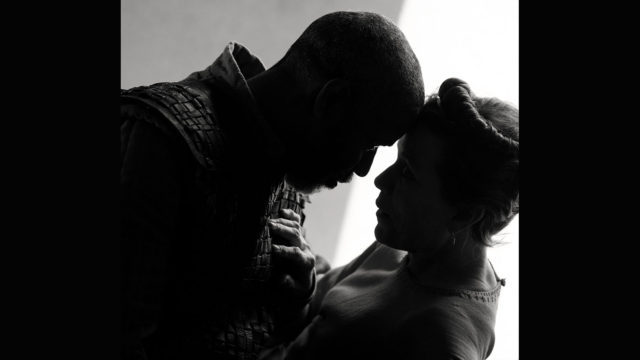
Denzel Washington and Frances McDormand star in Joel Coen’s NYFF59 opener, The Tragedy of Macbeth
FIFTY-NINTH NEW YORK FILM FESTIVAL
Film Society of Lincoln Center
Walter Reade Theater, Howard Gilman Theater, Francesca Beale Theater, Alice Tully Hall, Damrosch Park, and other venues
September 24 – October 10, $17-$25 www.filmlinc.org/nyff2021
For its fifty-ninth year, the New York Film Festival, running September 24 through October 10, returns in person, primarily at five venues at Lincoln Center but also with a handful of satellite screenings at Anthology Film Archives downtown, BAM Cinemas in Fort Greene, the Maysles Documentary Center in Harlem, and the Jacob Burns Film Center in Pleasantville.
The opening-night selection is the hotly anticipated The Tragedy of Macbeth, Joel Coen’s Shakespeare adaptation starring Denzel Washington and Frances McDormand as the ambitious couple seeking power at all costs. Jane Campion’s The Power of the Dog, a neo-Western based on a cult novel by Thomas Savage and with Kirsten Dunst, Jesse Plemons, and Benedict Cumberbatch, is the centerpiece choice. The closing-night selection is festival favorite Pedro Almodóvar’s Parallel Mothers, in which two women, played by Penélope Cruz and Milena Smit, meet in a maternity ward in a story about pain and trauma.
The main slate features a wide range of works from international directors; among the highlights are Mia Hansen-Løve’s Bergman Island, which takes place on Fårö, where Ingmar Bergman lived and worked; Gaspar Noé’s tender Vortex; Futura, an Italian omnibus by Pietro Marcello, Francesco Munzi, and Alice Rohrwacher; Paul Verhoeven’s Benedetta, about a real-life seventeenth-century nun; Radu Jude’s Golden Bear winner Bad Luck Banging or Loony Porn; Ryûsuke Hamaguchi’s Drive My Car, inspired by a Haruki Murakami short story; Rebecca Hall’s Passing, an adaptation of Nella Larsen’s 1929 Harlem Renaissance novel; Céline Sciamma’s Petite Maman, in which an eight-year-old girl deals with loss; Saul Williams and Anisia Uzeyman’s sci-fi punk musical Neptune Frost; and Hit the Road, the debut of Panah Panahi, son of fest fave Jafar Pahanhi.
Fans of Lou Reed can check out Todd Haynes’s new documentary, The Velvet Underground, about the revolutionary band, as well as Songs for Drella, Ed Lachman’s 1990 concert film of Reed and John Cale’s song cycle for Andy Warhol. Apichatpong Weerasethakul is back at the festival with Memoria, starring Tilda Swinton as an ex-pat botanist, and the short film Night Colonies, part of Currents Program 7: New Sensations. And unstoppable South Korean auteur Hong Sangsoo has a pair of Main Slate films, In Front of Your Face and Introduction.
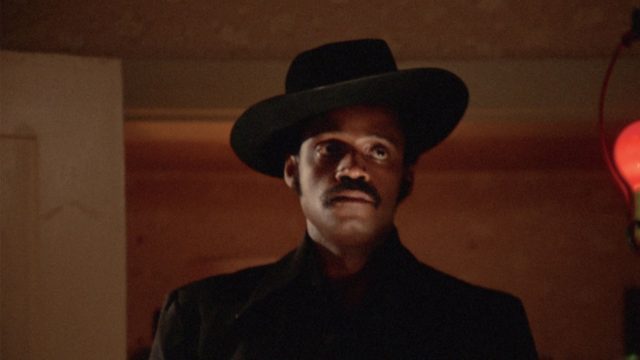
Melvin Van Peebles’s Sweet Sweetback’s Baadasssss Song is part of NYFF59 Revivals
Among the other works in the Currents section, focusing on socially relevant fiction and nonfiction films, are Wang Qiong’s All About My Sisters, Denis Côté’s Social Hygiene, Shengze Zhu’s A River Runs, Turns, Erases, Replaces, and Claire Simon’s I Want to Talk About Duras. Revivals include Joan Micklin Silver’s Hester Street, Lynne Ramsay’s Ratcatcher, Melvin Van Peebles’s Sweet Sweetback’s Baadasssss Song, Miklós Jancsó’s The Round-Up, Mira Nair’s Mississippi Masala, Wendell B. Harris Jr.’s Sundance winner Chameleon Street, Jack Hazan and David Mingay’s Rude Boy starring the Clash, and Christine Choy’s Who Killed Vincent Chin?
Denis Villeneuve’s Dune leads the Spotlight section, along with Marco Bellocchio’s Marx Can Wait, Maggie Gyllenhaal’s directorial debut The Lost Daughter, Wes Anderson’s The French Dispatch, and Mike Mills’s C’mon C’mon, with Joaquin Phoenix. And finally, NYFF59 pays tribute to the centenary of cofounder Amos Vogel’s birth with a seven-program Spotlight sidebar consisting of cutting-edge, avant-garde, experimental shorts and features Vogel brought to Cinema 16 from 1947 to 1963 and the New York Film Festival between 1963 and 1968.
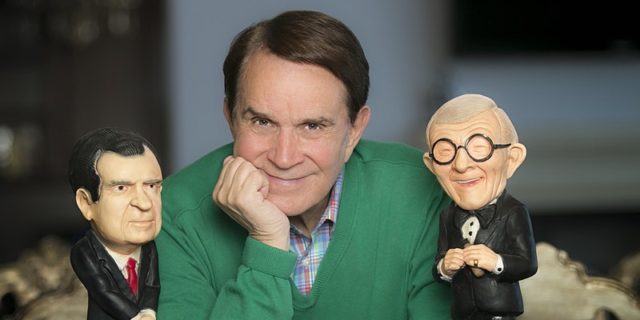
Rich Little will shares his impressions of his life and career in free National Arts Club talk
Who:Rich Little What: Livestreamed conversation Where:National Arts Club online When: Wednesday, September 15, free with RSVP, 6:00 Why: “How did I become an impersonator? Perhaps my mother was conceived by a Xerox machine!” Rich Little writes in his 2016 book, People I’ve Known and Been: Little by Little. In conjunction with the rerelease of the book and the November premiere of his new autobiographical one-man show, Rich Little Live, at the Laugh Factory at the Tropicana in Las Vegas, the Canadian-born comedian, who became a US citizen in 2010, will discuss his life and career in a livestreamed National Arts Club discussion on September 15 at 6:00. Little will talk about his many impressions, which famously include presidents (John F. Kennedy, Lyndon Johnson, Richard Nixon, Gerald Ford, Jimmy Carter, Ronald Reagan, Bill Clinton, both George Bushes, and Barack Obama), movie stars (Jimmy Stewart, Jack Lemmon, John Wayne, Humphrey Bogart, Arnold Schwarzenegger, Sylvester Stallone, Jack Nicholson, and Clint Eastwood), and pop-culture figures (George Burns, Paul Lynde, Kermit the Frog, Andy Rooney, and Dr. Phil); go behind the scenes of his recent off-Broadway debut playing Nixon in Trial on the Potomac: The Impeachment of Richard Nixon at Theatre at St. Clements; and share show business anecdotes. Admission is free with advance RSVP.
GREGG BORDOWITZ: I WANNA BE WELL
MoMA PS1
22-25 Jackson Ave., Queens
Virtual performance lectures September 17-19, free with advance RSVP
Exhibition continues Thursday – Monday through October 11, $5-$10 (free for NYC residents) www.moma.org www.greggbordowitz.com
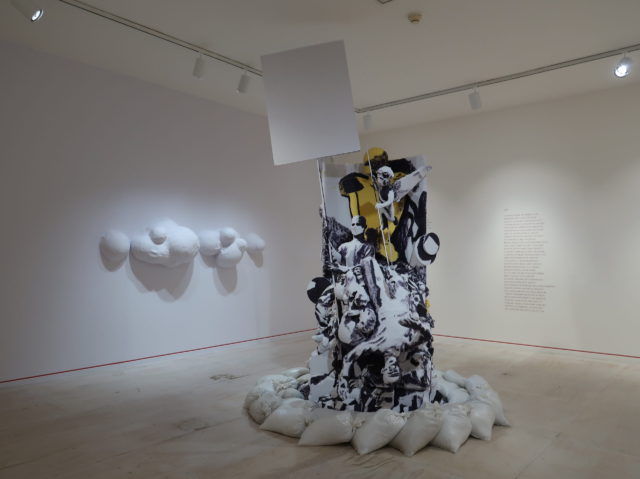
At the heart of the MoMA PS1 exhibition “Gregg Bordowitz: I Wanna Be Well” are two disparate images. On your way into the building itself and in the gallery, you will see a large banner declaring, “The AIDS Crisis Is Still Beginning.” Meanwhile, at the top of Bordowitz’s 2021 mixed-media sculpture Pestsäule (after Erwin Thorn), inspired by a seventeenth-century plague monument in Vienna as well as the murder of George Floyd, the AIDS epidemic, and the Covid-19 pandemic, is a blank protest sign, raised up by a man in a medical mask surrounded by a maelstrom of bodies, a murderous cherub, and sandbags on the floor, like a warped scene from Les Miz. “Hey Johnny, what are you rebelling against?” Mildred (Peggy Maley) asks Johnny (Marlon Brando) in the 1954 film The Wild One. “Whadda you got?” Johnny replies.
Born in Brooklyn in 1964 and raised in Queens — home base for the Ramones, whose 1977 song “I Wanna Be Well” from the Rocket to Russia album gives the exhibit its name — Bordowitz, who has been living with HIV/AIDS for more than three decades, was an early member of ACT UP (AIDS Coalition to Unleash Power), which was founded in 1987. He has been documenting his own life and the global AIDS crisis through film and video, poetry, sculpture, lectures, and poetry, much of which is on view at MoMA PS1 through October 11. His 2014 twenty-four-part poem Debris Fields lines the walls of the galleries, amid such works as self-portraits in mirror, Tom McKitterick’s black-and-white photographs of Bordowitz and others at AIDS protests in the late 1980s, the corner wall drawing and sculpture installation Kaisergruft (centered by the word Sympathy), and Drive, a repurposed vintage derby car stickered with Big Pharma logos.
The show also features several of Bordowitz’s films, including the 1993 autobiographical documentary Fast Trip, Long Drop, which deals with his contracting HIV, coming out to his parents, a friend getting breast cancer, and the tragic deaths of his grandparents; the 2001 documentary Habit, about the AIDS epidemic in South Africa; the five-minute The Fast That I Want video he made last year with Morgan Bassichis for his family’s virtual Yom Kippur; and the vastly entertaining Only Idiots Smile, a 2017 lecture commissioned for the New Museum presentation “Trigger: Gender as a Tool and a Weapon” and that, at only twenty-two minutes, is far too short as Bordowitz discusses his relationship with his father, Judaism, Eastern European men kissing on the lips, and homophobia.
You can see much more of Bordowitz this week when MoMA hosts several special events held in conjunction with “I Wanna Be Well.” On September 13 (and available on demand through September 27, for members only), “Modern Mondays: An Evening with Gregg Bordowitz and Jean Carlomusto” consists of a live discussion between the longtime friends, artists, collaborators, and activists, along with videos they made in the late 1980s for the Gay Men’s Health Crisis in New York City. From September 14 to 28, MoMA Film will stream Bordowitz’s 1996 reimagination of Nicolai Erdman’s 1932 long-banned play The Suicide, also for members only.
From September 17 to 19, Benyamin Zev’s Succos Spectacular! comprises a trio of livestreamed performances, free with advance RSVP, specifically taking place after Rosh Hashanah (the Jewish New Year), the ten Days of Awe (meditation and reflection), and Yom Kippur (the Day of Atonement) and before Sukkot (the Harvest Festival and the Feast of Tabernacles). The three shows — “The Rock Star” on Friday at 7:00, “The Rabbi” on Saturday at 7:00, and “The Comedian” on Sunday at 4:00 — feature Bordowitz as his alter ego, Benyamin Zev (his Hebrew name), a Jewish entertainer, stand-up comic, and tummler, hanging out in a Sukkah, joined by special guests and the klezmer ensemble Isle of Klezbos. “Any laughter is purely accidental,” Bordowitz says on the MoMA website. “My performances disturb, upset, and resist the pressures to conform and align genders and ethnicities within a fascist phantasy of American nationalism.” And finally, on October 2 at 5:00, in person and online, Bordowitz will launch his new book from Triple Canopy, Some Styles of Masculinity, at the Artbook @ MoMA PS1 Bookstore, where he will speak with poet, professor, and cultural theorist Fred Moten.
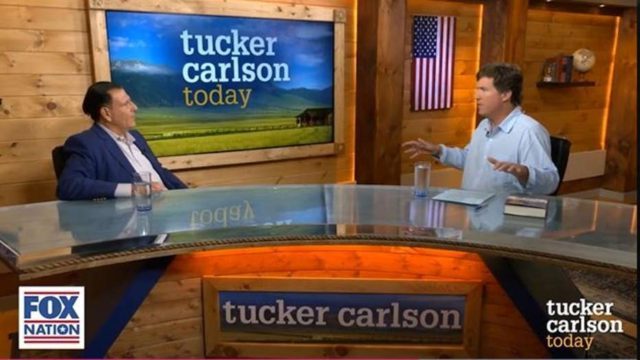
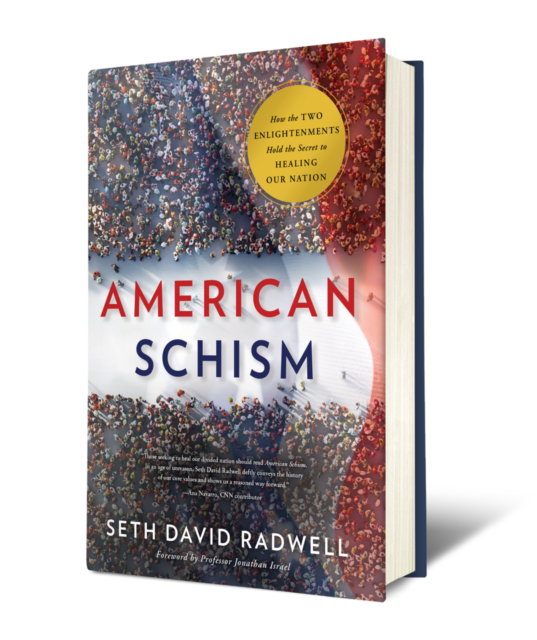
Seth David Radwell discusses American Schism with Tucker Carlson
AMERICAN SCHISM: HEALING A DIVIDED NATION
Smithsonian Associates lecture
Monday, September 13, $25, 6:45 www.si.edu americanschismbook.com
During the pandemic, I had a regular Zoom happy hour with a group of longtime friends going back to nursery school and grade school. Our politics were all similar, so we avoided fights about Trump, Fauci, the Supreme Court et al. One of our regulars was Seth David Radwell, who, following a successful business career that has included being the head of e-Scholastic and Bookspan and president and CEO of direct-to-consumer company Guthy-Renker, was so disturbed by the state of political discourse across the nation that he wrote a book about it.
American Schism: How the Two Enlightenments Hold the Secret to Healing Our Nation (Greenleaf, June 29, $25.95) examines our current partisan situation, and inability to talk to one another about virtually anything without it becoming political, through the lens of the two Enlightenments of the eighteenth century, the Radical and the Moderate. Radwell is on a furious book tour, making appearances on numerous podcasts and online interview shows. On September 13 at 6:45, he will deliver a lecture, “American Schism: Healing a Divided Nation,” as part of the Smithsonian Associates streaming series.
Radwell writes in the prologue of his book, “As I hunkered down at home to weather the global COVID-19 pandemic of 2020, I struggled to overcome the sense of shock at how suddenly and utterly our world had been turned upside down. But as I contemplated my state of mind, oscillating rapidly between depression, anxiety, and frustration, I sensed that well before the onslaught of the pandemic I had already fallen into a profound state of disillusionment. As the world came to a halt, the health crisis simply gave me the time and space to realize it. The root cause of this disillusionment was related to the shattering of an ideal image that I had, perhaps, clung on to for far too long.”
He continues, “How had it come to be that over the last four years my entire conception of the American credo had crumbled? My vision of America was firmly rooted in the ethos of both freedom and equality; my America was a place where everyone had a fair shot at building a rewarding and fulfilling life, where each individual could define their own idiosyncratic version of success, and where we collectively formed a country of shared values with mutual respect for individual differences. That vision felt unambiguously inconsistent with the America of 2020. Just how and when did my America disappear? Did my vision of America ever exist at all, or was it but a myth? If it did exist, how did it disintegrate so quickly in just a few years? Or was its ruin a slow process of decay that began undetected (by me) much earlier? I was determined to explore these questions, to understand the origins of my disillusionment.”
Radwell not only searches out the causes but provides answers for how we can move forward together. One of his themes is getting the two Americas to talk to each other in a reasonable manner. He brought this plan into reality recently when he sat down for a long-form interview on Tucker Carlson Today, for which some of his readers chastised him. “I received an onslaught of feedback related to my appearance on Tucker Carlson Daily on Fox Nation and the clip shown on his evening cable show,” he wrote in an email blast to his subscribers. “Some chided me for appearing on Fox since the station has a ‘track record of misinformation and propaganda masquerading as news,’ as one person wrote me. Others congratulated me for having the ‘courage’ to appear on such a venue.” The divide is everywhere.
Amid a flurry of interviews and his preparation for the Smithsonian lecture, Radwell took the time to answer questions about the Counter-Enlightenment, reason and unreason, top-down populism, Tucker Carlson, fine wine, and more.
twi-ny: You’ve been working on the book for several years; what effect did the pandemic lockdown have on your research and writing?
seth david radwell: It’s been about three years, although I had developed some of the ideas before that. I have been reading and researching the thesis actively starting in late 2018. I had much material in the form of notes up through 2019. But it was March 2020 when COVID first hit that I sat down and began writing every day in intense twelve-hour sessions. Since that time I have been working on it full-time.
twi-ny: In addition to discussing the two Enlightenments, you also delve into the Counter-Enlightenment, tracing it to the Second Great Awakening, the religious fervor of the first decades of the nineteenth century, as well as anti-elite and anti-intellectual sentiments. Would you characterize the American right’s embrace of Hungarian dictator Viktor Orbán, or Tucker Carlson’s recent encomium to the Taliban, as an expression of top-down populism (populist sentiments exploited by elite actors for their own ends), the Counter-Enlightenment, or something more ominous?
sdr: There is certainly a global trend toward autocracy characterized by “strongmen” who win some sort of election to gain legitimacy but then consolidate, usurp and abuse power, and begin curtailing the freedoms associated with an open liberal society. The American right has embraced this. One of the tools that most of these autocrats deploy, along with those associated with Trumpism, is the top-down populism described in the book.
At the same time, as I discuss in the book, populism is complex — there are many strains of it, often with both positive and negative characteristics. The top-down populism we are talking about here is an emotional appeal that plays on people’s fears of both the “other” (immigrants, African Americans, Latinos, etc.) as well as the elite establishment (who they perceive has ignored their concerns for too long). Autocratic politicians are hostile to elite institutions, and to expertise in general, and pronounce these feelings regularly to gain support and relate to their base. Because this later trend rejects expertise overall, it is also hostile to truth and data. That is the Counter-Enlightenment.
twi-ny: In the current political climate, do you have a recommendation for accommodating both Counter-Enlightenment forces as well as the Radical and Moderate Enlightenment thinkers, or must one be decisively excluded from power?
sdr: “Counter-Enlightenment forces” can be a confusing phrase. For example, most religious movements are based in faith and rely less on reason. So these are Counter-Enlightenment forces that are very much involved in the lives of most Americans. But our republic was founded on the premise that these domains should be kept outside the civic arena — with a firm separation of church from state. This has been frequently violated in our history — as one example, Billy Graham was quite close and influential to many presidents.
twi-ny: In researching and writing the book, did you reconsider a specific political belief you have held?
sdr: Yes, I had always considered myself fairly left leaning, but I began to appreciate aspects of conservative/libertarian philosophy more thoroughly.
twi-ny: How did your business experience help you when marketing the book?
sdr: Well, there is no question that my marketing expertise has played a role. But most ventures I led professionally (i.e., Proactiv) were multimillion-dollar brands with huge advertising budgets. My marketing of the book has been mostly guerrilla tactics and “hand selling” that I am doing personally as a labor of love.
twi-ny: As part of that hand selling, you’ve been interviewed on many podcasts, in lieu of in-person readings and signings. Were you a podcast listener prior to the pandemic? If so, what are some of your favorites?
sdr: Yes, I love podcasts, mostly of the NPR variety — I was a religious listener to Ezra Klein on VOX Media.
twi-ny: You recently appeared on Tucker Carlson Today and managed to have a productive and engaging discussion. What was that experience like?
sdr: He was extremely generous, thoughtful, and open to the ideas in the book. Quite a different persona than his cable “news” show at night.
twi-ny: Did meeting him in that way change any feelings you previously might have had about him?
sdr: He is very intelligent and deeply appreciative of the ideas in American Schism. His on-air celebrity status is an entirely different matter.
twi-ny: On September 13 at 6:45, you will be delivering the Smithsonian lecture “American Schism: Healing a Divided Nation.” What will you be concentrating on?
sdr: The session will summarize certain aspects of the book but will focus on the path forward out of this mess, delineating both structural changes and mindset changes that can begin the healing process.
twi-ny: Is America in as much trouble as it seems?
sdr: The fundamental change begins with taking back control of the debate from the extremes to the frustrated majority.
twi-ny: American Schism has been a great success, reaching #1 on Amazon. What were your initial goals in writing the book?
sdr: It has been doing well, but remember it has gone to #1 on Amazon in very niche categories, like rational philosophy and civics. In the broader areas such as comparative politics and political parties, it has often been a top-ten bestseller.
twi-ny: What’s your next step?
sdr: I would like to build a ground-up movement, which I call Fight Unreason with Reason, by sharing the ideas in the book with a larger audience. So I am hopeful the book will gain more momentum in the months forward. But we are off to a good start. My biggest hope is the viral marketing element — that readers who appreciate the ideas share them. For example, of the seventy-five reviews on Amazon, sixty-nine are five-star, so most readers like the book so far.
twi-ny: You’re a gourmand and wine connoisseur with a partner who knows his way around the kitchen. What is the latest amazing meal the two of you have had at home, and what wine did you have to go with it?
sdr: I am very lucky to have such an excellent cook as a partner. Tonight he is preparing roasted Cornish hens with braised vegetables. I will open a Grand Cru burgundy to pair, but I haven’t picked it yet.
twi-ny: You are also a big-time theater and opera fan. Have you been to any live indoor performances yet?
sdr: I have not yet been back to performances, with the exception of Tony Bennett and Lady Gaga at Radio City. I love opera and theater and I miss both terribly. But the positive is that without them, I have had more time to focus on the book.
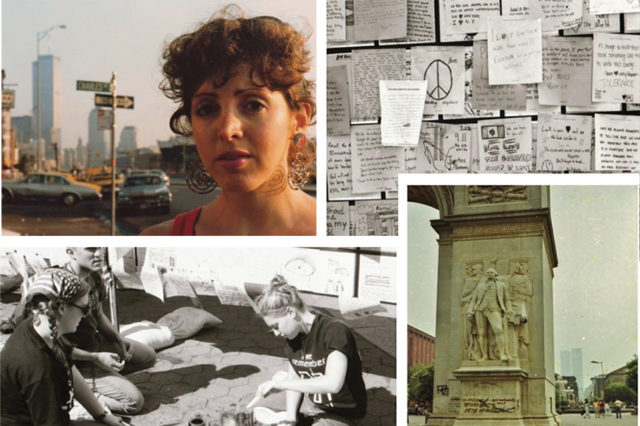
Eiko Otake returns to Belvedere Plaza in Battery Park City for twentieth anniversary of 9/11 (photo by William Johnston)
EIKO OTAKE: SLOW TURN
Belvedere Plaza, Battery Park City
Saturday, September 11, free with advance RSVP, 7:00 am & 6:00 pm lmcc.net www.eikootake.org
In 2000, Eiko & Koma were artists in residence on the ninety-second floor of the World Trade Center, in the North Tower. In July 2002, they presented Offering: A Ritual of Mourning in six city parks, starting at the Belvedere in Battery Park City, just west of where the towers stood. The meditation on loss ultimately toured the world. On September 11, Eiko Otake, who has been performing solo for several years, returns to the Belvedere for Slow Turn, consisting of movement, a monologue of personal memories of 9/11, and music by clarinetist and composer David Krakauer. Presented in partnership with NYU Skirball, the Battery Park City Authority, and the Lower Manhattan Cultural Council, Slow Turn takes place at 7:00 am, as the sun reaches the plaza, and again at 6:00 pm, as the sun sets over the Hudson River. Admission is free with advance RSVP.
BUGLISI DANCE THEATER: TABLE OF SILENCE PROJECT 9/11
Josie Robertson Plaza, Lincoln Center
65th St. between Broadway & Amsterdam Ave.
Friday, September 11, free, 8:00 am www.tableofsilence.org www.lincolncenter.org
Every September 11, there are many memorial programs held all over the city, paying tribute to those who were lost on that tragic day while also honoring New York’s endless resiliency. One of the most powerful is Buglisi Dance Theatre’s “Table of Silence Project,” a multicultural public performance ritual for peace, inaugurated in 2011, that annually features more than one hundred dancers on Josie Robertson Plaza at Lincoln Center. Because of the coronavirus crisis, it has been reimagined for the twentieth anniversary of the 9/11 attacks, as part of Lincoln Center’s “Restart Stages” programming. The event will begin with artistic director Jacqulyn Buglisi’s 2001 piece Requiem, her response to 9/11, with costume designer Elena Comendador transforming the original ten-foot-long red, gold, and green silk costumes into white and silver, representing ashes, purity, and sacredness.
Thirty-two dancers will gather around the Revson Fountain for Table of Silence Prologue, joined by bell master and principal dancer Terese Capucilli, electric violinist Daniel Bernard Roumain, and spoken-word artist Marc Bamuthi Joseph delivering “Awakening.” The performance will be livestreamed on Facebook and YouTube, and will also include the world premiere of Nel Shelby Productions’ short film Études II and the full 2019 performance of Table of Silence Project 9/11.
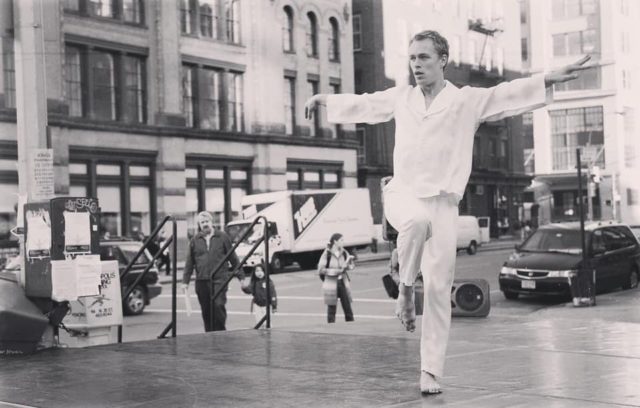
Tadej Brdnik will come out of retirement to honor the twentieth anniversary of 9/11 with Battery Dance (photo courtesy Battery Dance)
BATTERY DANCE MEMORIAL
Traffic island bordered by Varick and Franklin Sts. and West Broadway
Saturday, September 11, free, 8:46 am facebook.com/BatteryDance
On September 11, 2001, shortly after the towers fell, Tadej Brdnik of Tribeca-based Battery Dance performed a solo on the traffic island bordered by Varick and Franklin Sts. and West Broadway, accompanied by four musicians. For the twentieth anniversary of 9/11, Brdnik will come out of retirement, joined on the same location by company members Sarah Housepian, Jill Linkowski, and Vivake Khamsingsavath, who will direct the piece, set to a composition by violinist Yu-Wei Hsiao. There will be no speeches, no fanfare, just a peaceful memorial of movement and music, occurring at the exact moment the first tower was hit on that fateful day. “We welcome passersby, neighbors, and anyone who may feel inspired to join us as a way of marking this tragic, life-changing occasion with the beauty and solemnity of this performance,” Battery Dance founding artistic director Jonathan Hollander said in a statement.
New York City AIDS Memorial Park will honor twentieth anniversary of 9/11 with special gathering
A VILLAGE GATHERING: HONORING AND REMEMBERING 9/11
New York City AIDS Memorial Park
76 Greenwich Ave.
Saturday, September 11, free with advance RSVP, 5:00 villagepreservation.force.com
Art2Action, Greenwich House Music School, Rattlestick Playwrights Theater, and Village Preservation are joining forces on September 11 at 5:00 for a twentieth-anniversary remembrance at New York City AIDS Memorial Park, a safe space where people can participate in sharing stories, singing songs, and expressing themselves in other ways to honor those lost on 9/11 as well as celebrate the resiliency of the city.
Sun Ra is one of the free jazz pioneers featured in Fire Music (photo by Baron Wolman / courtesy of Submarine Deluxe)
FIRE MUSIC: THE STORY OF FREE JAZZ (Tom Surgal, 2018)
Film Forum
209 West Houston St.
Opens Friday, September 10
212-727-8110 filmforum.org www.firemusic.org
College is supposed to be a life-changing, career-defining experience. For me, there were two specific seminal moments, both of which took place in the classroom: discovering avant-garde film in a course taught by New York Film Festival cofounder Amos Vogel, author of Film as a Subversive Art, and being introduced to the free jazz movement, the radical response to bebop, in the History of American Music. Without those two flashpoints, it’s unlikely I would be writing a review of Tom Surgal’s Fire Music: The Story of Free Jazz all these years later.
Opening on September 10 at Film Forum, Fire Music takes a deep dive into free jazz, told with spectacular archival footage and old and new interviews with more than three dozen musicians who were part of the sonic upheaval, with famed jazz writer Gary Giddins adding further insight. Writer-director Surgal, who is also a drummer and percussionist, traces the development of free jazz chronologically, focusing on such groundbreaking figures as saxophonists Ornette Coleman, Eric Dolphy, John Coltrane, Albert Ayler, and Sam Rivers, pianist Cecil Taylor, and keyboardist and synth maestro Sun Ra. “It was terrifying for people,” Giddins says about the original reaction to free jazz, from audiences and musicians. “A lot of people were just, What the hell is this? This isn’t even music.”
There are snippets of live performances by Charlie Parker, Sun Ra Arkestra, Dolphy, Coltrane, Ayler, Max Roach, Don Cherry, Marion Brown, the Art Ensemble of Chicago, M’Boom, the Sam Rivers Trio, Globe Unity Orchestra, and others that set the right mood; this is not swing or bop but something wholly different — and dissonant — that requires an open mind and open ears, but it’s pure magic. “It was like a religion,” pianist Carla Bley remembers. Saxophonist John Tchicai explains, “Each individual could play in his own tempo or create melodies that were independent, in a way, from what the other players were playing. We had to break some boundary to be able to create something new.”
Surgal talks to the musicians about improvising without following standard chord progressions, the four-day October Revolution at the Cellar Café, trumpeter Bill Dixon starting the Jazz Composers’ Guild, pianist Muhal Richard Abrams cofounding the Association for the Advancement of Creative Musicians in Chicago, the formation of the Black Artists Group in St. Louis, the loft scene in New York City, the development of free jazz in New York, Los Angeles, the Midwest, and Europe, and the importance of the 1960 record Free Jazz by the Ornette Coleman Double Quartet, featuring Coleman, Cherry, Scott LaFaro, and Billy Higgins on the left channel and Dolphy, Freddie Hubbard, Charlie Haden, and Ed Blackwell on the right. Sadly, sixteen of the artists in the film have passed away since Surgal started the project; many others seen in clips died at an early age.
For these players, it was more than just fame and fortune; they were constantly called upon to defend free jazz itself. Taylor, who came out of the New England Conservatory, explains, “It seems to me what music is is everything that you do.” Pianist Misha Engelberg admits, “I am a complete fraud.” Meanwhile, Coleman trumpeter Bobby Bradford says of Ayler, “Here’s a saxophone player, man, that we all are thinking, we just broke the sound barrier — wow — and here’s a guy that’s gonna take us to another planet. Is that what we want to do?” As far as outer space is concerned, Sun Ra claims to be from Saturn.
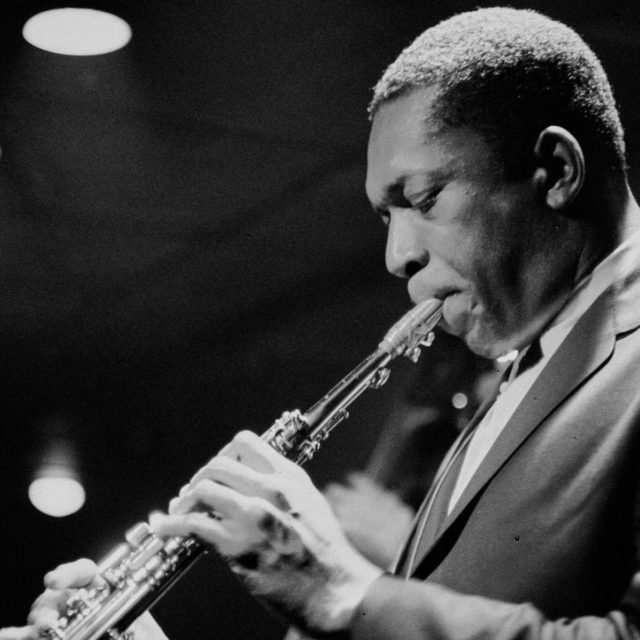
John Coltrane is highlighted as the spiritual father of the free jazz movement (photo by Lee Tanner / courtesy of Submarine Deluxe)
Among the others who chime in are saxophonists Gato Barbieri, John Gilmore, Marshall Allen, Anthony Braxton, Oliver Lake, Noah Howard, Prince Lasha, and Archie Shepp, trombonists Roswell Rudd and George Lewis, trumpeter Wadada Leo Smith, pianists Burton Greene and Dave Burrell, drummers Rashied Ali, Barry Altschul, Thurman Barker, Warren Smith, Han Bennink, and Günter “Baby” Sommer, and vibesmen Karl Berger and Gunter Hampel, each musician unique and cooler than cool as great clips and stories move and groove to their own offbeat, subversive cacophony, brought together in a furious improvisation by editor and cowriter John Northrop, with original music by Lin Culbertson. Producers on the film include such contemporary musicians as Thurston Moore, Nels Cline, and Jeff Tweedy.
Surgal made Fire Music because he felt that the free jazz movement is largely forgotten today; his documentary goes a long way in showing how shortsighted that is. You don’t have to be in college to love this incredible music, and the film itself, which is a crash course in an unforgettable sound like no other.
(Film Forum will host an in-person Q&A with Surgal, Moore, and Smith at the 7:00 show on September 10 and with Surgal, Barker, and jazz writer Clifford Allen at the 7:00 screening on September 11.)
STREB’s August performance at Jacob’s Pillow is streaming for free through September 16 (photos by Christopher Duggan and Jamie Kraus, courtesy of Jacob’s Pillow)
In July 2020, STREB Extreme Action shared Best Zoom Dance (with Martha Graham Dance Company) in twi-ny’s Pandemic Awards for Body Grammar, an inventive way to utilize dancers’ body parts to play with ideas of community and movement online, especially for a troupe used to working with unique action machines that often place the performers in physical danger. The Brooklyn-based company, founded in 1985 by Elizabeth Streb, maintained a continuous virtual presence during the lockdown, but you can now catch the troupe in person when they perform five outdoor shows September 17-19 at Manhattan West. (Admission is free with advance RSVP.)
The bill includes Molinette, in which three STREB action heroes have their feet affixed to a twenty-foot-high horizontal swivel pipe designed by Noe España, commissioned for the 2019 reopening of Théâtre du Châtelet in Paris; Add, a 1983 solo piece in which the dancer must stay within a cross taped to the floor; Plateshift, featuring six action heroes on a sprung floor that incorporates centrifugal force; and the world premiere of Kaleidoscope, in which eight action heroes are fastened to LERU (London Eye Rehearsal Unit), a solid steel circle that has them defying gravity, a STREB tradition.
To get in the mood, you must check out STREB’s return to Jacob’s Pillow last month after twenty years, streaming for free through September 16. The show consists of twelve repertory works from 1978 to 2006, performed on the outdoor Henry J. Leir Stage in front of a matinee audience by Jackie Carlson, Daniel Rysak, Tyler DuBoys, Justin Ross, Kairis Daniels, Luciany Germán, Leonardo Girón Torres, and associate artistic director Cassandre Joseph, wearing tight-fitting blue superhero costumes. The technical direction is by company emcee and DJ Zaire Baptiste, who knows how to rile up a crowd.
It shows the range of Streb’s choreography and her spirited use of existing and invented objects that often put the action heroes in danger, an astonishing melding of acrobatics, gymnastics, modern dance, and circuslike peril set to original music by technoaxe and compilations produced by Voodo Fé and Freshbeatz. Streb introduces each work with a quote from a review of the piece (from the Village Voice, the Washington Post, the Philadelphia Inquirer, the San Francisco Examiner, and the New York Times) and a snippet about where the idea originated.
It begins with 2006’s Tip, in which seven dancers move precariously on a tipping machine, a twelve-feet-in-diameter wheel cut in half, able to achieve complete verticality. Carlson twirls a wooden dowel like a baton in 1978’s Pole Vaults, Rysak brandishes a rope in 1983’s Whiplash, Carlson, Rysak, Daniels, and Germán toss around a heavy twelve-foot-long, three-inch-wide dowel in 1990’s Log, Daniels is trapped in a box modeled for Streb’s size in 1985’s Little Ease, Germán plays with a hula hoop in 1983’s Target, Joseph and Ross turn a long dowel into a third dancer in 1992’s Link, the troupe pays homage to the Three Stooges and Buster Keaton with a long dowel and a ramp with a cut-out window in 2002’s Buster, and the company does miraculous things with a pair of rectangular doorlike plywood slabs in 1984’s Surface.
There are also two brief pieces with no props, Ross honoring Merce Cunningham in 1978’s 7′ 43″ and DuBoys re-creating Streb’s 1983 solo, Add, which she remembers as being “the most painful two minutes of my life.” The show concludes in a big way with 2003’s breathtaking Air, in which all eight action heroes jump off a trampoline, landing on a large mat over and over again. As with so many of Streb’s works, you can’t help but wait for disaster to occur, but it never does, at least not in the numerous times I’ve been fortunate to see the endlessly brave and talented troupe perform, at such diverse locations as Park Ave. Armory, Gansevoort Plaza, and the World Financial Center as well as in the documentaries Born to Fly: Elizabeth Streb vs. Gravity and One Extraordinary Day. Be sure to stick around for the postshow talk with Streb, Joseph, and Baptiste, moderated by Pillow scholar-in-residence Maura Keefe.