this week in lectures, signings, panel discussions, workshops, and Q&As

DISPELLING MISTRESSES: ENDING A LOVE TRIANGLE THROUGH DIGNITY AND RESPECT

Elizabeth Lo is given remarkable access to a love triangle in award-winning documentary Mistress Dispeller

MISTRESS DISPELLER (Elizabeth Lo, 2024)
IFC Center
323 Sixth Ave. at West Third St.
Opens Wednesday, October 22
www.ifccenter.com

In her debut feature-length documentary, 2020’s Stray, Elizabeth Lo tracked a remarkable homeless canine named Keytin as the golden mutt lived a dog’s life on the streets of Istanbul, allowing Lo to capture his every move, telling the dog’s story from his perspective.

Lo has followed that up with Mistress Dispeller, in which the participants in a love triangle allow Lo to capture their every move, telling their story from each of their unique perspectives.

Taking inspiration from Chantal Akerman’s Jeanne Dielman, 23 Quai due Commerce, 1080 Bruxelles and Akira Kurosawa’s Rashomon, Lo’s film explores a relatively new “love industry” in China, mistress dispellers, who, for fees of tens of thousands of dollars and more, are hired by women who believe their husbands are having an affair; over the course of two or three months, the dispeller, using a false identity, ultimately convinces the mistress to end the illicit romance through a structured technique. They do so in a calm, unobtrusive way, treating all three parties with dignity and respect.

It took three years for Lo to find mistress dispeller Wang Zhenxi, then get permission to document one of her cases, in which Mrs. Li wants to end her husband’s affair with the younger Fei Fei. Wang poses as a cousin of Mr. Li’s who is interested in learning the married couple’s favorite pastime, badminton. Wang carefully orchestrates various meetings in which she spends time alone with the mistress, studies her motivations and emotions, and comes up with a plan. Lo’s mounted, still camera is in every room, every car — but not necessarily Lo, who sometimes leaves the camera recording as she exits the space, permitting her subjects to talk more openly without her watching. “I am just a vessel in their lives,” Wang says, and so is Lo. (Lo had previously interviewed Mrs. Li’s younger brother, who was a dispelled male mistress and recommends Wang in the film.)

Although it is made clear from the start that this is not some kind of game, there are winners and losers. “It’s just like a war. You either win or lose everything,” Wang explains. Fei Fei admits, “Winning or losing isn’t the question. Actually, neither is important to me anymore. Because there are many more important things than winning.” But later she states, “I can’t keep losing though, right? Everyone wants to win. Why can’t the winner be me?”

Lo directed, produced, and photographed the film in addition to writing and editing it with Charlotte Munch Bengtsen. She gives equal weight to Mr. Li, Mrs. Li, and Fei Fei while delving into Wang’s methods. Time and money is never discussed; instead, Lo focuses on the care Wang employs in her business, determined to achieve a satisfying result for all involved. The access Lo is supplied is astounding; of course, only Mrs. Li knows what’s happening at first, but soon Mr. Li understands as well, while Fei Fei discovers the deception only at the conclusion.

Lo does not seek to elicit any judgments, but she includes several scenes in which Mrs. Li and Fei Fei carefully tend to their personal style, taking care to dress well and get their hair done, while Mr. Li, the object of each woman’s affection, is not exactly a fashion plate or a great conversationalist. However, the film does not ask us to question the love — and we know from the start that Wang’s goal is to restore the marriage, with the mistress out of the picture.

In a program note, Fei Fei says, “I am willing to participate in filming because, considering the long river of life, this is a small part of it. But it’s also something that’s significant to me right now. I see this as a documentary of my life. It is also a portrait of love. From the beginning of our encounter, to the middle of the relationship, and the end, it’s all part of this process of love. . . . Love doesn’t disappear, it just diverts. It’s just a process of love moving around. It’s quite meaningful to make time to recall and witness the process for yourself — whether the path you take is right or not. . . . When others see this film, they might gain some insights from it.”

Meanwhile, Mrs. Li explains, “Teacher Wang taught me a lot. About love, and other things. She said, ‘Look, you are going through this, this difficulty, and we should film it, so more women, more people, can face their families and learn how to handle a situation like this. . . .’ I want more people to know that love doesn’t come easy, especially for people at our age. Don’t give up so easily.”

The film also touches on aspects of contemporary Chinese dating, from matchmaking seminars and fairs to online channels. Lo occasionally cuts away for drone shots of cities and mountainous landscapes, incorporating all of China into the narrative, merging the inner and outer worlds of the people and the country.

Mistress Dispeller opens October 22 at IFC Center, with Lo on hand for Q&As at the 6:35 screenings on Wednesday with Penny Lane and Thursday with Constance Wu; Lo and Wu will also deliver an extended introduction before the 9:00 show on Saturday.

[Mark Rifkin is a Brooklyn-born, Manhattan-based writer and editor; you can follow him on Substack here.]

ONSTAGE PARTY: TILER PECK AND FRIENDS AT CITY CENTER

Tiler Peck (left) will team up with Michelle Dorrance and others for “Turn It Out” at City Center (photo by Christopher Duggan)

TURN IT OUT WITH TILER PECK & FRIENDS
New York City Center
131 West 55th St. between Sixth & Seventh Aves.
October 16-19, $45-$125
www.nycitycenter.org

“I initially didn’t want to be a ballerina,” New York City Ballet principal dancer Tiler Peck tells Emma Memma in a recent Instagram post about her new children’s book, XO Ballerina Big Sis: Wisdom and Advice from the Heart (DK, October 21, $16.99). “I wanted to dance. I will say I love to dance. It’s just that I grew up in a studio where I tried all styles, and ballet was my least favorite.”

Thankfully, the Bakersfield-born Peck, who began her training at the age of two, followed her mother’s guidance and took the ballet route, entering the School of American Ballet when she was twelve and becoming an NYCB apprentice, a member of the corps de ballet, a soloist, and, in October 2009, at the age of twenty, a principal dancer. Peck has originated featured roles in such works as Kyle Abraham’s Love Letter (on shuffle), Benjamin Millepied’s Quasi una Fantasia, Angelin Preljocaj’s Spectral Evidence, and Alexei Ratmansky’s Pictures at an Exhibition.

During the pandemic lockdown, Peck expanded her horizons on Instagram, dancing with her father and her dog, giving lessons from her mother’s kitchen, and providing sunshine on dark days with her infectious enthusiasm.

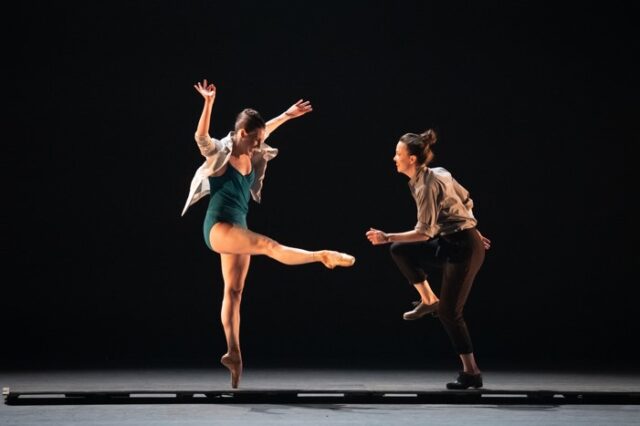
Peck is now curating a special program running October 16-19 at New York City Center, “Turn It Out with Tiler Peck & Friends,” where she will be joined by such dancers as India Bradley, Christopher Grant, Chun Wai Chan, Byron Tittle, Lex Ishimoto, Quinn Starner, Roman Mejia, and Mira Nadon, performing William Forsythe’s The Barre Project, Blake Works II, set to music by James Blake; Peck’s Thousandth Orange, with live music by Caroline Shaw; Alonzo King’s pas de deux Swift Arrow, with music by Jason Moran; and the new commission Time Spell, a collaboration with Michelle Dorrance and Jillian Meyers, set to music by Aaron Marcellus and Penelope Wendtlandt. There will be a community talkback after the October 17 show with Peck and her friends, most likely including her new husband, Mejia.

“It’s literally like a party onstage,” Peck says in the above video, a party you won’t want to miss.

[Mark Rifkin is a Brooklyn-born, Manhattan-based writer and editor; you can follow him on Substack here.]

MATURING ON FILM: A DIFFERENT COMING OF AGE AT METROGRAPH

THE COMING OF AGE
Metrograph
7 Ludlow St. between Canal & Hester Sts.
October 12 – November 2
metrograph.com

The Metrograph series “‘The Coming of Age” is not a collection of works about young people discovering themselves as they advance from puberty to adolescence to adulthood. Instead, it explores films about people growing old.

“We’re aging: Older adults are the fastest growing age demographic globally and expected to double in size in the US by 2060. And yet our film culture clings to youth,” series curator Sarah Friedland said in a statement. “‘The Coming of Age’ liberates the genre from the strictures of youth to present an anti-ageist portrait of growing older in global cinema, drawing on my film-viewing research to prepare for the making of my feature debut, Familiar Touch. Presenting films from the silent era up through our current moment of seismic demographic shift, ‘The Coming of Age’ bears the name of Simone de Beauvoir’s seminal 1970 feminist book on aging and borrows the genre as a frame for seeing and celebrating older adults in the fullness and complexity of themselves. What links each film in this series is not aging as a subject but the aging subject’s perspective, showing old age in the diversity of its experience: as a time for pleasure, poetry, resistance, and even revenge.”

Running October 12 through November 2, the series includes a wide range of international selections, from Lemohang Jeremiah Mosese’s This Is Not a Burial, It’s a Resurrection and Yasujirô Ozu’s Tokyo Story to F. W. Murnau’s The Last Laugh and “Choreographies of Aging,” consisting of shorts by such directors as Kevin Jerome Everson, Barbara Hammer, and Friedland, who will take part in a postscreening discussion with director Wen Hu after the October 18 presentation. She will also be on hand October 12 to introduce Familiar Touch with star Kathleen Chalfant and critic Amy Taubin at 5:00 and then introduce Vittorio De Sica’s Umberto D. at 7:30.

Below is a closer look at four of the films.
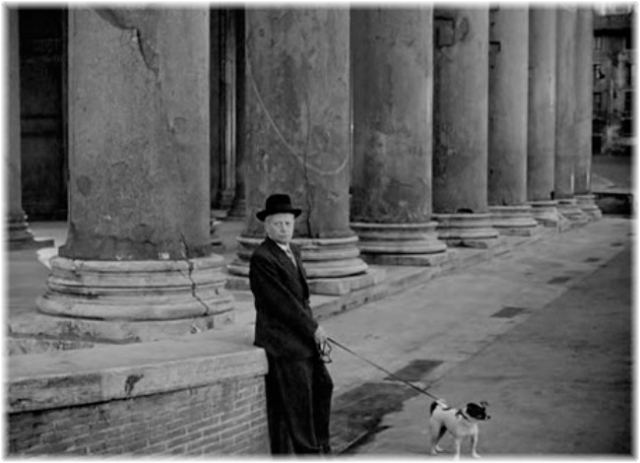
De Sica Neorealist classic is the heartbreaking story of a man and his dog

De Sica neorealist classic is the heartbreaking story of an elderly man and his faithful dog

UMBERTO D. (Vittorio De Sica, 1952)
Sunday, October 12, 7:30
Monday, October 20, 4:45
metrograph.com

You might never stop crying. Vittorio De Sica’s neorealist masterpiece Umberto D. stars Carlo Battisti (a professor whom De Sica saw one day and thought would be perfect for the lead role; it would be Battisti’s only film) as Umberto Domenico Ferrari, an elderly former bureaucrat who is too proud to sacrifice his dignity in order to pay his mean-spirited landlady (Lina Gennari), who rents out his room by the hour while he’s out walking his beloved dog, Flag, and trying to find some way to get money and food. Umberto D. is befriended by the boardinghouse maid (Maria Pia Casilio), who is pregnant with the child of one of two servicemen, neither of whom wants to have anything to do with her. As Umberto D.’s options start running out, he considers desperate measures to free himself from his loneliness and poverty. His relationship with Flag is one of the most moving in cinema history. Don’t miss this remarkable achievement, which was lovingly restored in 2002 for its fiftieth anniversary by eighty-six-year-old lighting specialist Vincenzo Verzini, who was known as Little Giotto.

Yun Jung-hee returned to the screen for the first time in sixteen years in moving Poetry

POETRY (SHI) (Lee Chang-dong, 2010)
Friday, October 17, 3:30
Saturday, October 18, noon
www.kino.com/poetry
metrograph.com

Returning to the screen for the first time in sixteen years, legendary Korean actress Yun Jung-hee is mesmerizing in Lee Chang-dong’s beautiful, bittersweet, and poetic Poetry. Yun stars as Mija, a lovely but simple woman raising her teenage grandson, Wook (Lee David), and working as a maid for Mr. Kang (Kim Hi-ra), a Viagra-taking old man debilitated from a stroke. When she is told that Wook is involved in the tragic suicide of a classmate (Han Su-young), Mija essentially goes about her business as usual, not outwardly reacting while clearly deeply troubled inside. As the complications in her life grow, she turns to a community poetry class for solace, determined to finish a poem before the memory loss that is causing her to forget certain basic words overwhelms her. Winner of the Best Screenplay award at the 2010 Cannes Film Festival, Poetry is a gorgeously understated work, a visual, emotional poem that never drifts from its slow, steady pace. Writer-director Lee (Peppermint Candy, Secret Sunshine) occasionally treads a little too close to clichéd melodrama, but he always gets back on track, sharing the moving story of an unforgettable character. Throughout the film he offers no easy answers, leaving lots of room for interpretation, like poems themselves.
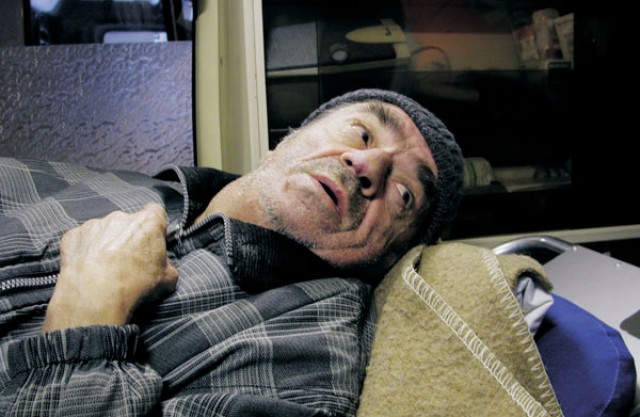
Ian Fiscuteanu brings to life the slow death of a unique character in Cristi Puiu’s very dark comedy

THE DEATH OF MR. LAZARESCU (Cristi Puiu, 2005)
Wednesday, October 22, 6:20
metrograph.com

Poor Mr. Lazarescu. He lives in a shoddy hovel of an apartment in Bucharest, where he drinks too much and gets out too little. He moves around very slowly and has trouble saying what’s on his mind, even to his three cats. His family is sick and tired of telling him to lay off the booze, so they ignore his complaints. Suffering from headaches and stomach pain, he phones for an ambulance several times, but it arrives only after a neighbor calls as well. Mr. Lazarescu then spends the rest of this very long night fading away as he is taken to hospital after hospital by the ambulance nurse, who gets involved in a seemingly endless battle with doctors to try to save him. Ian Fiscuteanu is sensationally realistic as Mr. Lazarescu; you’ll quickly forget that he’s not really a drunk, disgusting, dying old man. Luminita Gheorghiu is excellent as Mioara, the nurse who gets caught up in Mr. Lazarescu’s case. Winner of the Cannes Film Festival’s Un Certain Regard Award, cowriter-director Cristi Puiu’s very dark comedy is simply captivating; despite a slow start, it’ll pull you in with its well-choreographed scenes, documentary style, and careful camera movement. (Also look for the subtle and very specific naming of characters.) Using Éric Rohmer’s “Six Moral Tales” as inspiration, Puiu has said that The Death of Mr. Lazarescu is the first of his own “Six Stories from the Bucharest Suburbs,” this one dealing with “the love of humanity,” followed by 2010’s Aurora.
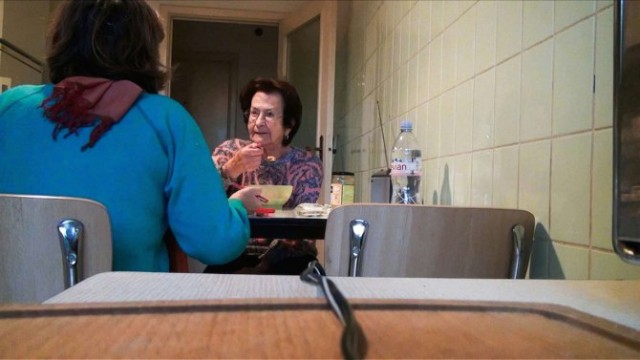
NO HOME MOVIE

Chantal Akerman creates a unique profile of her mother in deeply personal No Home Movie

NO HOME MOVIE (Chantal Akerman, 2015)
Friday, October 24, 4:45
metrograph.com
icarusfilms.com

Chantal Akerman’s No Home Movie was meant to be a kind of public eulogy for her beloved mother, Natalia (Nelly) Akerman, who died in 2014 at the age of eighty-six, shortly after Chantal had completed shooting forty hours of material with her. But it also ended up becoming, in its own way, a public eulogy for the highly influential Belgian auteur herself, as she died on October 5, 2015, at the age of sixty-five, only a few months after the film screened to widespread acclaim at several festivals (except at Locarno, where it was actually booed). Her death was reportedly a suicide, following a deep depression brought on by the loss of her mother. No Home Movie primarily consists of static shots inside Nelly’s Brussels apartment as she goes about her usual business, reading, eating, preparing to go for a walk, and taking naps. Akerman sets down either a handheld camera or a smartphone and lets her mother walk in and out of the frame; Akerman very rarely moves the camera or follows her mother around, instead keeping it near doorways and windows. She’s simply capturing the natural rhythms and pace of an old woman’s life. Occasionally the two sit down together in the kitchen and eat while discussing family history and gossip, Judaism, WWII, and the Nazis. (The elder Akerman was a Holocaust survivor who spent time in Auschwitz.) They also Skype each other as Chantal travels to film festivals and other places. “I want to show there is no distance in the world,” she tells her mother, who Skypes back, “You always have such ideas! Don’t you, sweetheart.” In another exchange, the daughter says, “You think I’m good for nothing!” to which the mother replies, “Not at all! You know all sorts of things others don’t know.”

NO HOME MOVIE

Shots of a tree fluttering in the Israeli wind enhance the peaceful calm of No Home Movie

Later they are joined by Chantal’s sister, Sylviane, as well as Nelly’s home aide. The film features long sections with no dialogue and nobody in the frame; Akerman opens the movie with a four-minute shot of a lone tree with green leaves fluttering in the wind in the foreground, the vast, empty landscape of Israel in the background, where occasionally a barely visible car turns off a far-away road. Akerman returns to Israel several times during the film, sometimes shooting out of a moving car; these sections serve as interludes about the passage of time as well as referencing her family’s Jewish past. At one point, Akerman makes potatoes for her mother that they eat in the kitchen, a direct reference to a scene in Akerman’s feminist classic, Jeanne Dielman, 23 Quai due Commerce, 1080 Bruxelles. Knowing about what happened to both mother and daughter postfilming casts a shadow over the documentary, especially when Chantal tells her mother, “I’m in a very, very good mood. . . . Let’s enjoy it; it’s not that common.” As the film nears its conclusion, there is almost total darkness, echoing the end of life. Through it all, Akerman is proud of her mother; reminiscing about kindergarten, she remembers, “And to everybody, I would say, this is my mother.” No Home Movie achieves that very same declaration, now for all the world to see and hear.
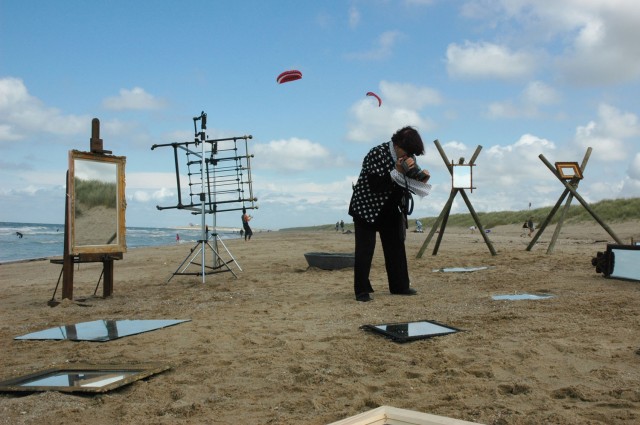
BEACHES OF AGNES

Agnès Varda takes an unusual approach to autobiography in The Beaches of Agnès

THE BEACHES OF AGNÈS (LES PLAGES D’AGNÈS) (Agnès Varda, 2008)
Friday, October 24, 2:00
Sunday, October 26, 11:00 am
metrograph.com

“The whole idea of fragmentation appeals to me,” filmmaker, photographer, and installation artist Agnès Varda says in the middle of her unusual cinematic autobiography, the César-winning documentary The Beaches of Agnès. “It corresponds so naturally to questions of memory. Is it possible to reconstitute this personality, this person Jean Vilar, who was so exceptional?” She might have been referring to her friend, the French actor and theater director, but the exceptional Belgian-French Varda might as well have been referring to herself. Later she explains, “My memories swarm around me like confused flies. I hesitate to remember all that. I don’t want to.” Fortunately for viewers, Varda (Jacquot de Nantes, The Gleaners and I) does delve into her past in the film, sharing choice tidbits from throughout her life and career, in creative and offbeat ways that are charmingly self-effacing. Using cleverly arranged film clips, re-creations, photographs, and an array of frames and mirrors, the eighty-year-old Varda discusses such colleagues as Jean-Luc Godard, Chris Marker, and Alain Resnais; shares personal details of her long relationship with Jacques Demy; visits her childhood home; rebuilds an old film set; speaks with her daughter, Rosalie Varda, and son, Mathieu Demy; talks about several of her classic films, including La Pointe Courte, Cléo from 5 to 7, and Vagabond; and, in her ever-present bangs, walks barefoot along beaches, fully aware that the camera is following her every move and reveling in it while also feigning occasional shyness. Filmmakers don’t generally write and direct documentaries about themselves, but unsurprisingly, the Nouvelle Vague legend and first woman to win an honorary Palme d’or makes The Beaches of Agnès about as artistic as it can get without becoming pretentious and laudatory.

[Mark Rifkin is a Brooklyn-born, Manhattan-based writer and editor; you can follow him on Substack here.]
EXISTENCE AS RESISTANCE: ART AND THE FIRST AMENDMENT

Abigail DeVille’s Libertas (Study in Blue) asks, “How have we fought for the proliferation of truths, not the lies that frame the history and governance of this great republic?” (photo courtesy of the artist and Art at a Time Like This)

DON’T LOOK NOW: A DEFENSE OF FREE EXPRESSION
127 Elizabeth St. between Broome & Grand Sts.
Opening reception Friday, October 10, free, 6:00
Exhibition continues Tuesday – Saturday through October 25, free, noon – 6:00 pm
artatatimelikethis.com

Founded by Anne Verhallen and Barbara Pollack as an immediate response to the pandemic lockdown, the nonprofit Art at a Time Like This is dedicated to the idea that “art can make a difference and that artists and curators can be thought-leaders, envisioning alternative futures for humanity.” Art at a Time Like This has presented nearly two dozen online and in-person exhibitions and programs since March 2020, such as “Dangerous Art, Endangered Artists,” “First Responders,” and “Restoration: Now or Never.”

The organization’s latest is “Don’t Look Now: A Defense of Free Expression,” opening October 10 at 127 Elizabeth St. The show consists of “25 Artists Exercising Their First Amendment Rights,” from Marilyn Minter’s Plush #5, Sari Nordman’s Anxiety River, and Martha Wilson’s Martha Does Donald to Yvonne Iten-Scott’s Origin, Shepard Fairey’s My Florist Is a Dick, and Clarity Haynes’s Big Birth, all of which have been censored in some way.

For example, Jean-Paul Mallozzi’s Ansiedad: I Can’t Get Off had to be partially modified in order to remain in South Florida Cultural Consortium’s “Mangroves to Masterpieces” at Florida Atlantic University, Jessica (Mehta) Doe’s 500 Years Ago was moved to a closed-off room at the University of Notre Dame, and Shey “Ri Acu” Rivera Ríos (Prayers to Nana Buruku) was to be included in the three-artist exhibition “Nothing Living Lives Alone” at Providence College in March 2024, but the exhibit was canceled by the administration, which decided that pieces by Rios (that were not in the Providence presentation) “show contempt for the Catholic faith.”

Shey Rivera Ríos, Prayers to Nana Buruku Altar, 2017 (photo © 2025 Shey Rivera Ríos)

I recently asked three of the “Don’t Look Now” participants when they became personally aware of censorship and the importance of the First Amendment; below are their responses.

Susan Silas
Honestly, I don’t remember a time when I didn’t know about censorship and the First Amendment. That may have been part and parcel of growing up in an immigrant household with Holocaust survivor parents.

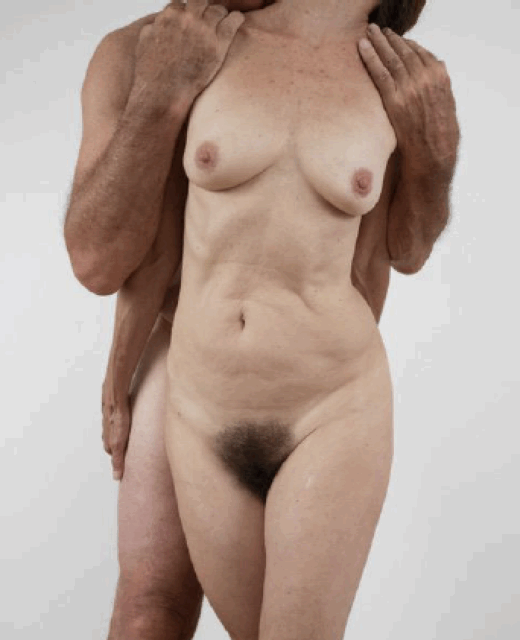
As for my own direct personal experience with Instagram and Facebook, so much of my work contains nudity, it was inevitable. I was already aware that others were being censored, and also of the arbitrary nature of that censorship based on how algorithms search. For example, I had an image from my series “love in the ruins; sex over 50” that depicted actual intercourse stay up because we were one on top of the other, so nipples weren’t exposed, while an image like the one in the exhibition, which is not dissimilar to depictions of Adam and Eve in sixteenth-century paintings, was taken down in twenty seconds for “offending community standards.”

I guess I also object to these platforms deciding who my community is. My community is not offended.

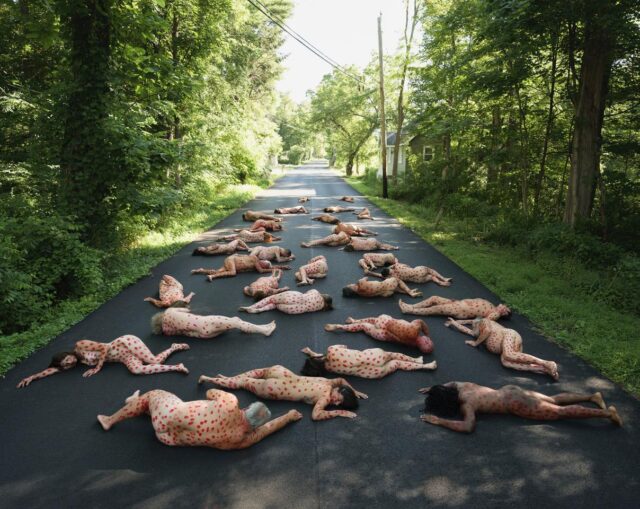
Spencer Tunick’s Remedy, taken in New Paltz, New York, was rejected by Instagram (photo © 2025 Spencer Tunick)

Spencer Tunick
My art censorship started in the mid-’90s when my friend Michael Weiner and I were arrested at Rockefeller Center. My idea was to have him pose nude draped, facedown, on top of the oversized outdoor red Christmas balls. I did get the shot, but we were held afterwards in a jail cell inside 30 Rock. Ron Kuby and William Kunstler represented us and the charges were dismissed.

It’s legal to be nude for art in New York within a time, space, and manner. We were making art before sunrise in the twilight hours on a weekend, when no one was on the street. We were exercising our (visual) First Amendment rights, plus there were no signs that explicitly stated, “Don’t climb the balls.”

This arrest was the beginning of five arrests and a future case that made its way up to the US Supreme Court, where I won and New York City mayor Rudy Giuliani was reprimanded by the federal judges.

As for the present, my work has been censored on social media since 2012, even though I am adhering to their nudity rules, which includes self-censoring frontal nudity and close-ups of buttocks. So even though I am still following their nudity rules, they still find ways to threaten deletion of my accounts and make my accounts unrecommendable. This suppression is too harsh.

In response to social media and online censorship, I helped found the website Don’t Delete Art. I am the cofounding curator; it’s a collaboration with artists and free speech organizations. My recent contribution was the idea of a “tips” page to help artists avoid suppression and deletion.

Kelly Sinnapah Mary’s The Fables of Sanbras – Cake and Conquest was part of a canceled show at the Art Museum of the Americas this year (photo © 2024 Kelly Sinnapah Mary)

Danielle SeeWalker
It’s difficult to pinpoint an exact moment or instance that I became aware of censorship and the importance of the First Amendment, but through lived experience and witnessing the silence surrounding my people’s stories it became clear that I was born into a sort of censorship. Growing up Native, I noticed early on how little of our truth was ever told — in school the narrative being taught was very different than what I was being told at home and by my elders. Our languages, our ceremonies, our ways of seeing the world were pushed aside or erased completely through boarding school and colonization. From an early age, I had the realization that what I was being taught in the mainstream world didn’t match what my family and community had lived. That silence — that absence — was/is censorship.

For my people, this isn’t something that happened long ago; it’s something we still live with. Our voices are still dismissed, our issues ignored, our history rewritten. We’ve been fighting for the right to speak, to pray, to tell our own stories since time immemorial. When my grandmother was born, she wasn’t even considered an American citizen, yet she and our ancestors have been on these lands since time immemorial. My father grew up in a time when not all Native Americans were able to legally vote. The First Amendment, to me, isn’t just about freedom of speech — it’s about the right to exist and to be heard in a country that has tried over and over again to silence us (and get rid of us).

When I think about it, I realize how powerful it is just to speak our truth. Every time a Native person shares their story, teaches their language, or corrects a false history, it’s an act of resistance. It’s reclaiming space in a world that once told us we didn’t belong. That’s what the First Amendment means to me — not just words on paper, but a promise we keep alive every time we refuse to be silent. Our existence is our resistance.

Susan Silas, Torsos, from the ongoing series “love in the ruins; sex over 50,” 2017 (photo © 2017 Susan Silas)

On October 18 at 2:00, Art at a Time Like This will host the free panel discussion “Censorship Now: Who Fears Free Expression?” with National Coalition Against Censorship’s Arts/Advocacy Program director Elizabeth Larison, Artnet contributor Brian Boucher, and former Whitney Independent Studies Program associate director Sara Nadal-Melsió, addressing the questions “What’s so scary about freedom of expression? And what do we fear will happen if we fail to respond to the latest challenges?”

[Mark Rifkin is a Brooklyn-born, Manhattan-based writer and editor; you can follow him on Substack here.]
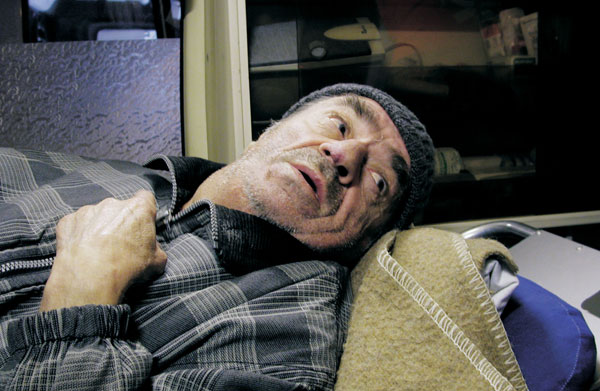
NOT SAFE AT HOME: AMONG NEIGHBORS AT THE QUAD

Among Neighbors explores horrific events that linger in a small Polish town (courtesy of 8 Above)

AMONG NEIGHBORS (Yoav Potash, 2025)
Quad Cinema
34 West 13th St. between Fifth & Sixth Aves.
Opens Friday, October 10
212-255-2243
quadcinema.com
www.amongneighbors.com

“It’s much easier to sell a pleasant history than a difficult history,” professor Dariusz Stola says in Yoav Potash’s remarkable documentary, Among Neighbors.

Ten years in the making, the film is a gripping, deeply emotional murder mystery surrounding the killing of Jews in the small town of Gniewoszów, Poland — months after WWII had concluded. In 2014, Potash was invited by Aaron Friedman Tartakovsky and his mother, Anita Friedman, to film the rededication of a Jewish cemetery in the shtetl where Anita’s father was from, but as Potash spoke with residents, he discovered long-buried, dark secrets involving violence and the whitewashing of what had occurred there.

Nine years earlier, the Friedman family had faced physical threats when they tried to visit the Gniewoszów firehouse, which was formerly the old synagogue. In 2018, the Polish government amended the Act on the Institute of National Remembrance, criminalizing any speech or action that suggested the country was complicit in the Holocaust. In 2020, Stola was forced to resign from his role at the Polin Museum of the History of Polish Jews over disagreements about what the institution could and could not display.

Potash, who wrote, directed, produced, and coedited the film and served as one of the cinematographers, meets with several longtime Polish residents, who will say only so much. Henryk and Sławomir Smolarczyk don’t feel there is anything strange about their collection of dusty Jewish tombstones from the destroyed cemetery. Janina Grzebalska recalls playing with Jewish children, attending Jewish weddings, and enjoying matzah. One unidentified woman who came to Gniewoszów for work in 1953 asks, “Is this about the Jewish issues? It was already silenced.”

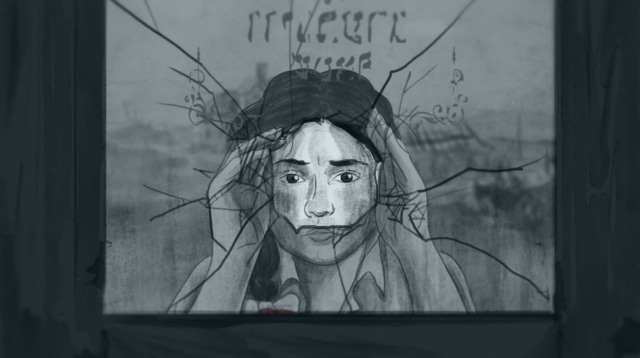
But Potash starts uncovering the truth from Pelagia Radecka, who, for the first time, reveals the story of her relationship with the Weinbergs, the Jewish family who operated a fabric shop across the street from her house and were victims of a horrific tragedy. Haunted by her memories, Radecka has been trying to find out what happened to her friend, Janek Weinberg, for seventy years. Meanwhile, the granddaughters of Gniewoszów painter Harry Lieberman put Potash in touch with Yaacov Goldstein, who was separated from his family during the Holocaust and shares his unforgettable tale of survival. Pelagia’s and Yaacov’s harrowing stories are brought to life through archival footage, photographs, home movies, and spellbinding hand-drawn black, gray, and white animation (highlighted by powerful splashes of blue and yellow) as they narrate their experiences.

“They were our neighbors,” Pelagia says, shocked by what she had witnessed.

Yaacov declares, “I am a survivor of the Holocaust. And to say that Polish people didn’t help the Germans, did not hate, and didn’t kill Jewish people — it’s against the truth!”

Potash (Crime After Crime, Food Stamped) also speaks with matzevot photographer Łukasz Baksik and mass graves investigator Aleksander Schwarz, the latter noting, “We have so many cases, you wouldn’t believe.”; Michael Schudrich, the Chief Rabbi of Poland; journalist Konstanty Gebert, who points out, “This one small town represents what happened in hundreds of small towns. The Germans come in, and it’s the end of normal relations between Jews and non-Jews.”; and historian Magda Teter, who puts it all into perspective, relating it to what is going on in America and around the world: “The assault on history and the criminalization of history in many countries today is part of a larger assault on democracy and democratic values.” Meanwhile, Polish ambassador Piotr Wilczek asserts, “There are only individual, very rare cases of antisemitism in Poland. The problem is really in many countries. So I really don’t know why Poland is singled out in such a way.”

In January 2024, Igor Golyak’s theatrical adaptation of Tadeusz Słobodzianek’s Our Class detailed the real-life 1941 pogrom in the small Polish village of Jedwabne, where Catholic children turned against their Jewish schoolmates, leading to a mass murder that was covered up for decades. In the 2021 documentary Three Minutes — A Lengthening, director Bianca Stigter does a deep dive into one hundred and eighty seconds of vacation footage taken in 1938 in the small town of Nasielsk, Poland, attempting to identify the people in the images and figure out what happened to them; of the three thousand Jews who lived in Nasielsk at the time, fewer than a hundred survived the Nazi invasion.

Meanwhile, antisemitism is on the rise yet again in America, where the current administration is erasing certain parts of our history and rewriting others, especially those concerning minorities and diversity. Immigrants are being vilified with grotesque language and shameful policies. Thus, Among Neighbors is not just about a small village in Poland; it is about respect, dignity, compassion, and the truth everywhere, at any time. When Yaacov says, “It was like we were not human beings,” it is hard not to think that he is referring to the treatment of Black and brown people in the United States. That point strikes a chord when Stola says, “They felt, in Poland, at home, that this is a safe place.”

Are there any safe places anymore?

Among Neighbors, which features an extraordinary ending that requires multiple tissues, runs October 10–16 at the Quad, with Potash participating in Q&As on October 10 at 7:20 (with filmmaker Yael Melamede), October 11 at 7:20 (with actor Simon Feil), and October 12 at 3:30 (with professor Annette Insdorf).

[Mark Rifkin is a Brooklyn-born, Manhattan-based writer and editor; you can follow him on Substack here.]
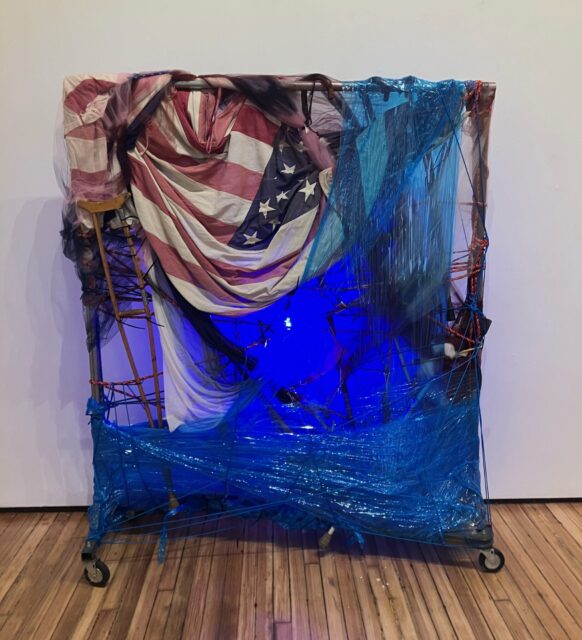
THEATER ISN’T EASY: SUBSTACK COMES TO LIFE AT THE COFFEE HOUSE

Who: Sara Farrington, Jocelyn Kuritsky, Tony Torn, James Scully
What: Live performance, talkback, and dinner
Where: The Salmagundi Library at the Coffee House Club, 47 Fifth Ave. between Eleventh & Twelfth Sts.
When: Wednesday, October 8, free with advance RSVP (a la carte dinner to follow), 6:30
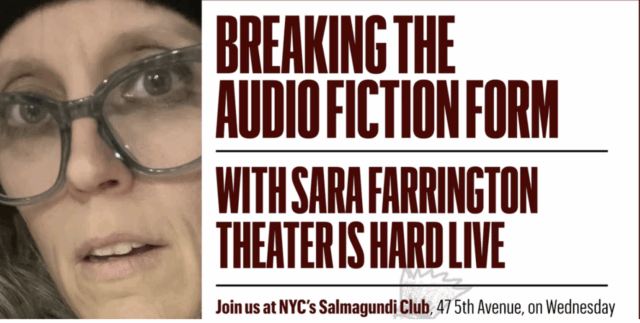
Why: Back in May, Sara Farrington came to the Coffee House Club to discuss her work during a cozy Friday lunch. The playwright and author will be back on October 8, in the Salmagundi Library, for the latest installment of “Breaking the Audio Fiction Form.” Joined by actor and creator Jocelyn Kuritsky (A Simple Herstory) and actor and director Tony Torn (Paul Swan Is Dead and Gone), Farrington will perform several pieces from her fast-growing, no-holds-barred Substack Theater Is Hard, in which she waxes poetic about independent, experimental, and unconventional theater in a way that is “half–Socratic dialogue, half-manifesto.” The performance will be followed by a brief talkback moderated by actor, writer, and director James Scully (Breaking Walls).

“Sara is a cool fit for this series because breaking the audio fiction form means just that — pushing its boundaries and blending it with other mediums,” Kuritsky told twi-ny. “Her work spans both theater — as a playwright and Substack writer — and audio, as a performer. She offers an informed perspective on the current challenges facing theater and has a unique take on how audio can, does, and could further intersect with it.”

Jocelyn Kuritsky, Sara Farrington, and Tony Torn team up for latest edition of “Breaking the Audio Fiction Form” on October 8

Farrington has collaborated with her husband, Reid, on such multimedia productions as BrandoCapote, CasablancaBox, and The Return while also writing her own plays, including A Trojan Woman, Mickey & Sage, and the forthcoming musical Dr. Uncanny Presents: Moreau ’96, about the making of the infamous 1996 horror disaster The Island of Dr. Moreau. She is also the author of The Lost Conversation: Interviews with an Enduring Avant-Garde, in which she speaks with such legends as Richard Foreman, André Gregory, David Henry Hwang, Bill T. Jones, Adrienne Kennedy, Mac Wellman, and Robert Wilson.

Admission to this first-ever live edition of Theater Is Hard is free with advance RSVP; the evening will conclude with an à la carte dinner with the participants.

[Mark Rifkin is a Brooklyn-born, Manhattan-based writer and editor; you can follow him on Substack here.]
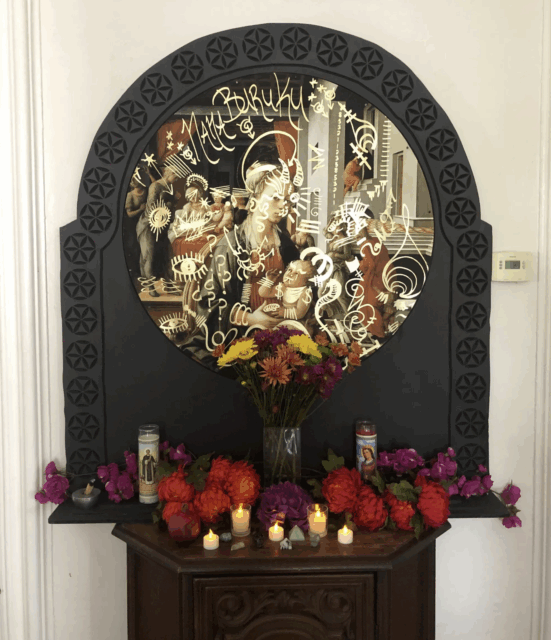
ROOFTOP MUSIC: JENNIE C. JONES AND ICE AT THE MET

Jennie C. Jones celebrates the opening of Ensemble on Met roof (photo by twi-ny/mdr)

Who: International Contemporary Ensemble, Jennie C. Jones, George Lewis
What: Live performance and discussion
Where: The Grace Rainey Rogers Auditorium, the Met Fifth Ave., 1000 Fifth Ave. at Eighty-Second St.
When: Sunday, October 5, $35-$70 (use discount code ENSEMBLE20 to save 20%), 2:00
Why: “What I hope for this work is that it ignites the sonic imagination. The pieces are not always singing, they’re not always performing, they’re not always activated. I think for me that’s also a tremendous part of the work, the way to hold space, and nuance, not always full of an outward expression but to hold a rich, interior imagination, and to hold a rich sonic imagination,” Jennie C. Jones said at the opening of Ensemble, her stunning installation on the Met’s Iris and B. Gerald Cantor Roof Garden. On view through October 19, Ensemble consists of three large-scale pieces inspired by a few of Jones’s previous works, the extraordinary skyline of the buildings surrounding the roof, and the Met’s musical instruments collection and use of travertine; one recalls a zither, another an Aeolian harp, and the third a one-string, in addition to a red path that expands in one corner.

The Roof Garden Commission rewards the viewer’s attention through close contemplation and intimate enjoyment; if you’re lucky, you might even hear the wind gently playing the strings.

On October 5 at 2:00, you’ll be able to hear the International Contemporary Ensemble (ICE) play their strings in the Met’s Grace Rainey Rogers Auditorium, as the Brooklyn-based collective performs Jones’s 2022 Oxide Score and 2024 Met Color Study, featuring Emmalie Tello on clarinet, Mike Lormand on trombone, Nuiko Wadden on harp, Clara Warnaar on percussion, Modney on violin, Kyle Armbrust on viola, and Brandon Lopez on bass. The Cincinnati-born, Hudson-based Jones will be on hand for a discussion with ICE artistic director George Lewis.

“This is one of Jennie’s things, right? The sculpture changes the sound. See, you stick your head in here, it kind of echoes,” composer, musicologist, and trombonist Lewis says in a video of him walking around Ensemble. “My first encounter with Jennie’s work was probably around 2015. She was finding all these incredible parallels between visual art and music. Jennie taught me a lot about graphic scores. You could say they’re open-ended, but she is definitely weighing in on what she feels could be a perspective. . . How do we transmit these energies to everyone around us, and how do we make these scores part of a larger listening and visual environment? Jennie engages sound as a medium and as a subject. . . . One of the great parts about this work is that it’s not telling you what or how to think or how to hear or how to feel or any of that. You have a lot of agency to decide that for yourself. And once you do, there’s discovery there.”

There’s lots to discover with Ensemble, but you’ll need to get to the Met fast, before the installation closes and the museum begins a five-year renovation of the roof.

[Mark Rifkin is a Brooklyn-born, Manhattan-based writer and editor; you can follow him on Substack here.]