this week in lectures, signings, panel discussions, workshops, and Q&As

MONTHLY ANIME: MY NEIGHBOR TOTORO / CONTEMPORARY THEATER TALK: BEHIND-THE-SCENES

Hayao Miyazaki’s My Neighbor Totoro wonderfully captures the joys and fears of being a child

MY NEIGHBOR TOTORO (TONARI NO TOTORO) (Hayao Miyazaki, 1988)
Japan Society
333 East 47th St. at First Ave.
Film: Friday, November 4, $15, 7:00
Talk: Thursday, November 10, $20, 6:30
japansociety.org
www.nausicaa.net

The Royal Shakespeare Company is currently presenting a live-action stage adaptation of Hayao Miyazaki’s beloved My Neighbor Totoro at the Barbican, where it is receiving glowing reviews. The show was written by Tom Morton-Smith and is directed by Phelim McDermott, with a score by longtime Miyazaki collaborator Joe Hisaishi and puppetry by Basil Twist. As part of its monthly anime series, Japan Society will be screening a 35mm print of the 1988 film on November 4 at 7:00, followed November 10 at 6:30 by a discussion with Twist (Symphonie Fantastique, Dogugaeshi) about the making of the show.

In many ways a precursor to Miyazaki’s masterpiece, Spirited Away, the magical multi-award-winning My Neighbor Totoro is a fantastical trip down the rabbit hole, a wondrous journey through the sheer glee and universal fears of childhood. With their mother, Yasuko, suffering from an extended illness in the hospital, Satsuki and her younger sister, Mei, move to a new house in a rural farming community with their father, anthropology professor Tatsuo Kusakabe. Kanta, a shy boy who lives nearby, tells them the house is haunted, and indeed the two girls come upon a flurry of black soot sprites scurrying about. Mei also soon discovers a family of totoros, supposedly fictional characters from her storybooks, living in the forest, protected by a giant camphor tree. When the girls fear their mother has taken a turn for the worse, Mei runs off on her own, and it is up to Satsuki to find her.

Basil Twist will be at Japan Society to share behind-the-scenes stories of the Totoro stage show

Working with art director Kazuo Oga, Miyazaki paints the film with rich, glorious skies and lush greenery, honoring the beauty and power of nature both visually as well as in the narrative. The scene in which Satsuki and Mei huddle with Totoro at a bus stop in a rainstorm is a treasure. (And just wait till you see Catbus’s glowing eyes.) The movie also celebrates the sense of freedom and adventure that comes with being a child, without helicopter parents and myriad rules suffocating them at home and school. Twist’s talk will go behind-the-scenes of the RSC production, discussing the creation of puppets based on animated characters and sharing backstage images.

9000 PAPER BALLOONS

9000 Paper Balloons tries to bridge the distance between generations

Who: Maiko Kikuchi and Spencer Lott
What: A Contemporary Puppet Theater Piece
Where: Japan Society, 333 East Forty-Seventh St. at First Ave.
When: October 28–30, $30
Why: During WWII, Japan employed Fu-Go balloon bombs, hydrogen balloons made of paper or rubberized silk that carried incendiary devices and an anti-personnel explosive, launching more than nine thousand from Honsho in 1944-45 with the express purpose of flying across the Pacific Ocean and starting forest fires on the West Coast of the United States. American puppeteer Spencer Lott and Japanese animator Maiko Kikuchi share the true tale of this little-remembered weapon in 9000 Paper Balloons, making its in-person world premiere October 28–30 at Japan Society; Lott will portray his grandfather, a navigator on a US bomber plane, while Kikuchi will play her grandfather, who fought for Japan and was a prisoner of war.

“Distance is definitely a central theme to the play, the distance between our generation and our grandfathers, the difference between America and Japan, the distance between a fighter jet and a paper balloon,” Lott said in a statement. “We know that war capitalizes on that distance, both real and perceived. War is a throughline in our play, but our central question is, How can we collapse the distance between us? We are witnessing moments in 2022 that remind us that the distance between our generation and the WWII generation may not be all that distant after all.”

The play, which was presented virtually by HERE in November 2021, is told in the form of a ghost story, with live-feed cameras, animation projections, masks, dioramas, and more than one hundred puppets, with a fascinating behind-the-scenes look at how it’s all done as the narrative unfolds; it is directed by Aya Ogawa, who was most recently at Japan Society with their intimate and personal The Nosebleed, in which they played their own father and son. The October 28 performance will be followed by a reception with the creators, and the October 29 show will conclude with an artist Q&A.

“Because of a war, one that happened eighty years ago, there is a gap between us and our grandfathers and this gap exists in so many families, this play is our desperate attempt to collapse the distance between us and our grandparents,” Kikuchi and Lott have also said. “We aren’t pretending that this puppet show is going to end conflict or AAPI violence, but in a world that is heavy with social and political strife, we think it’s a good opportunity to gather in the dark, together as a community, and share a remarkable story that is as much about ingenuity as it is war.”

MOVIE NIGHTS WITH MACHINE

Eyes of Laura Mars is part of fashionable Machine Dazzle film series at MAD

Who: Machine Dazzle
What: Movie Night with Machine
Where: The Theater at MAD, Museum of Arts & Design, 2 Columbus Circle at 58th St. & Eighth Ave.
When: October 25 & 27, December 20, January 10, $10, 7:00
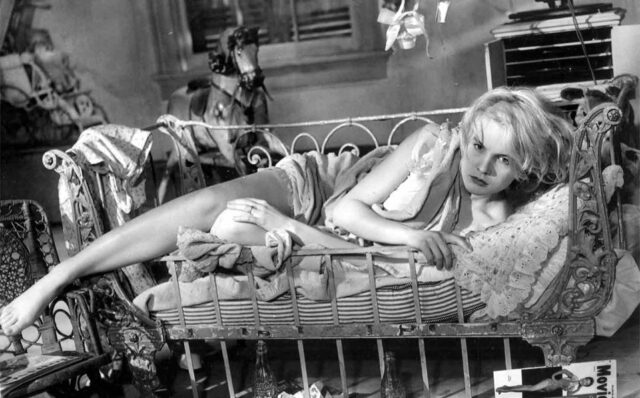
Why: Walking around the Museum of Arts and Design exhibition “Queer Maximalism x Machine Dazzle” is like wandering through a glorious movie set, with colorful costumes and artworks that tell one heckuva bizarre story; you fully expect the mannequins to suddenly come to life and enter this surreal world. The retrospective of the work of performance artist Machine Dazzle, on view through February 19, is supplemented with a film series hosted by the queer experimental theater genius, born Matthew Flower in Upper Darby, Pennsylvania, in 1972, consisting of movies that influenced him as a child of the 1970s and ’80s. It kicked off October 13 with the epic Clash of the Titans and continues October 25 with Robert Wise’s underrated Star Trek: The Motion Picture (can’t wait to hear what Machine will have to say about the Federation uniforms!) and October 27 with Irvin Kershner’s tense neo-noir thriller Eyes of Laura Mars, about a glamorous fashion photographer who is being stalked by a serial killer; the cast includes Faye Dunaway, Tommy Lee Jones, Brad Dourif, René Auberjonois, and Raúl Juliá, and one scene takes place in Columbus Circle, where the museum moved in 2008.

Machine will be on hand to introduce the screening and participate in a discussion afterward; it should be too much fun listening to him talk about the costumes and scenery, and there will be giveaways, costume contests, custom-designed step-and-repeats, photoshoots, and other cool stuff. Be sure to come back December 20 for Robert Greenwald’s Xanadu, when we can all pay tribute to the late Olivia Newton-John and celebrate Machine’s fiftieth birthday, followed January 10 by Guy Hamilton’s Agatha Christie adaptation Evil Under the Sun, featuring Peter Ustinov as Detective Hercule Poirot and also starring Maggie Smith, Jane Birkin, James Mason, Roddy McDowall, and Diana Rigg. In addition, on November 8 from 9:00 am to 1:00 pm, the museum will host “Teacher Workshop: Activism and the Art of Machine Dazzle,” comprising a curator-led tour, an art workshop, and refreshments.

DECOLONIZING MOVIES — THE UN-TARZAN SERIES: THE BATTLE OF ALGIERS

THE BATTLE OF ALGIERS

Members of the FLN hide from French paratroops in Gillo Pontecorvo’s neo-Realist classic The Battle of Algiers

THE BATTLE OF ALGIERS (Gillo Pontecorvo, 1966)
Aaron Davis Hall
160 Convent Ave.
Thursday, October 27, free with RSVP, 6:00
Series continues monthly through May 11
citycollegecenterforthearts.org

Curated by the great Dr. Jerry Carlson, longtime host of the television show City Cinematheque, City College’s free “Decolonizing Movies: Un-Tarzan Series” believes that “movies were never innocent in the colonial enterprise. Yet brave filmmakers continue to push back and create alternative decolonizing visions.” The series opened September 29 with Ousmane Sembène’s Black Girls and returns October 27 with a screening of Italian director Gillo Pontecorvo’s The Battle of Algiers.

In Pontecorvo’s gripping neo-Realist war thriller, a reporter asks French paratroop commander Lt. Col. Mathieu (Jean Martin), who has been sent to the Casbah to derail the Algerian insurgency, about an article Jean-Paul Sartre had just written for a Paris paper. “Why are the Sartres always born on the other side?” Mathieu says. “Then you like Sartre?” the reporter responds. “No, but I like him even less as a foe,” Mathieu coolly answers. In 1961, French existentialist Sartre wrote in the preface to Frantz Fanon’s Wretched of the Earth, the seminal tome on colonialism and decolonialism, “In Algeria and Angola, Europeans are massacred at sight. It is the moment of the boomerang; it is the third phase of violence; it comes back on us, it strikes us, and we do not realize any more than we did the other times that it’s we that have launched it,” referring to European colonization. “There are those among [the oppressed creatures] who assert themselves by throwing themselves barehanded against the guns; these are their heroes. Others make men of themselves by murdering Europeans, and these are shot down; brigands or martyrs, their agony exalts the terrified masses. Yes, terrified; at this fresh stage, colonial aggression turns inward in a current of terror among the natives. By this I do not only mean the fear that they experience when faced with our inexhaustible means of repression but also that which their own fury produces in them. They are cornered between our guns pointed at them and those terrifying compulsions, those desires for murder which spring from the depth of their spirits and which they do not always recognize; for at first it is not their violence, it is ours, which turns back on itself and rends them; and the first action of these oppressed creatures is to bury deep down that hidden anger which their and our moralities condemn and which is however only the last refuge of their humanity. Read Fanon: you will learn how, in the period of their helplessness, their mad impulse to murder is the expression of the natives’ collective unconscious.” Sartre’s brutally honest depiction of colonialism serves as a perfect introduction to Pontecorvo’s film, made five years later and then, unsurprisingly, banned in France. (In 1953, the Martinique-born Fanon, who fought for France in WWII, moved to Algeria, where he became a member of the National Liberation Front; French authorities expelled him from the country in 1957, but he kept working for the FLN and Algeria up to his death in 1961. For more on The Wretched of the Earth, see the documentary Concerning Violence: Nine Scenes from the Anti-Imperialistic Self-Defense.)

Terrorism and counterinsurgency take to the streets in Oscar-nominated THE BATTLE OF ALGIERS

Terrorism and counterinsurgency take to the streets in Oscar-nominated THE BATTLE OF ALGIERS

In The Battle of Algiers, Pontecorvo (Kapò, Burn!) and screenwriter Franco Solinas follow a small group of FLN rebels, focusing on the young, unpredictable Ali la Pointe (Brahim Haggiag) and the more calm and experienced commander, El-hadi Jafar (Saadi Yacef, playing a character based on himself; the story was also inspired by his book Souvenirs de la Bataille d’Alger). Told in flashback, the film takes viewers from 1954 to 1957 as Mathieu hunts down the FLN leaders while the revolutionaries stage strikes, bomb public places, and assassinate French police. Shot in a black-and-white cinema-vérité style on location by Marcello Gatti — Pontecorvo primarily was a documentarian — The Battle of Algiers is a tense, powerful work that plays out like a thrilling procedural, touching on themes that are still relevant fifty years later, including torture, cultural racism, media manipulation, terrorism, and counterterrorism. It seems so much like a documentary — the only professional actor in the cast is Martin — that it’s hardly shocking that the film has been used as a primer for the IRA, the Black Panthers, the Pentagon, and military and paramilitary organizations on both sides of the colonialism issue, although Pontecorvo is clearly on the side of the Algerian rebels. However, it does come as a surprise that the original conception was a melodrama starring Paul Newman as a Western journalist.

All these years later, The Battle of Algiers, which earned three Oscar nominations (for Best Foreign Language Film in 1967 and Best Director and Best Original Screenplay in 1969) and underwent a 4K restoration for its fiftieth anniversary, still has a torn-from-the-headlines urgency that makes it as potent as ever. “Decolonizing Movies: Un-Tarzan Series” continues November 12 with Tomás Gutiérrez Alea’s The Last Supper, December 7 with Robert M. Young’s The Ballad of Gregorio Cortez, and January 26 with Lino Brocka’s Manila in the Claws of Light.

ACTORS STUDIO BENEFIT: DOG DAY AFTERNOON WITH AL PACINO

Who: Al Pacino
What: Benefit screening and Q&A for the Actors Studio
Where: United Palace Theatre, 4140 Broadway at 175th St.
When: Thursday, October 27, $35-$1000, 7:00
Why: The Actors Studio is celebrating its seventy-fifth anniversary with a special event at United Palace Theatre on October 27 at 7:00, a screening of Sidney Lumet’s classic Brooklyn-set drama Dog Day Afternoon, followed by a conversation with the star of the film and current Actors Studio copresident, Al Pacino. “This incredible institution, founded by Elia Kazan, Cheryl Crawford, and Robert Lewis, followed by Lee Strasberg, has left an indelible mark on the world of film and theater,” the East Harlem-born Pacino said in a statement. “It’s where actors are given the freedom to take chances and explore their work and craft. Anyone can audition for the Actors Studio. I’m surprised more people don’t know that. Once an actor becomes a member of the Actors Studio, it doesn’t cost anything, it’s totally free, and membership is for life. It’s going to be a great night at the United Palace. I look forward to watching Dog Day Afternoon and engaging, live, with an audience of New Yorkers, some who will be seeing it for the first time and others who will be seeing it for the first time in years.”

The 1975 film, based on a true story, earned six Oscar nominations, including Pacino for Best Actor, and won one statuette, for Frank Pierson’s original screenplay. Pacino stars as Sonny Wortzik, who leads a bank robbery with his friends Sal (John Cazale) and Stevie (Gary Springer) for a very special reason; the cast also features Chris Sarandon, Carol Kane, Lance Henriksen, Judith Malina, Dominic Chianese, James Broderick, Penelope Allen, and Charles Durning. Tickets for the event range from $35 to $1000; the other copresidents of the Actors Studio, the home of Method acting, are Alec Baldwin and Ellen Burstyn. “There are actors all over the world [who] regardless of their circumstances, professional or personal, regardless of whatever difficulties they are facing, whatever problems or changes — there is one thing they can rely on and that is that eleven o’clock on Tuesday and Friday mornings come rain, shine, snow, or what have you there is a session in the Actors Studio. And the fact that actors can count on that, that they know that that exists, can help them get through,” longtime studio artistic director Strasberg, who played Hyman Roth in The Godfather II opposite Pacino’s Michael Corleone, explained once upon a time.

K2 FRIDAY NIGHT FREE EXHIBITION TOUR: MANDALA LAB ANNIVERSARY

The Rubin’s Mandala Lab is an immersive experience that explores anger, attachment, envy, ignorance, and pride (photo courtesy Rubin Museum of Art)

FREE EXHIBITION TOUR: MANDALA LAB ANNIVERSARY
Rubin Museum of Art
150 West 17th St. at Seventh Ave.
Friday, October 21, free, 7:15
212-620-5000
rubinmuseum.org

The Rubin Museum is celebrating the one-year anniversary of its interactive Mandala Lab with a guided tour on October 21 at 7:15 as part of its weekly free K2 Friday Night, which also includes tabla player DJ Roshni Samlal, access to all galleries, and a special cocktail menu.

In Buddhism, the mandala is a symbolic image of the universe, a painting, scroll, or sand sculpture that offers the ability to contemplate transformation and enlightenment. The Mandala Lab, subtitled “Where Emotions Can Turn to Wisdom,” consists of four quadrants of experiences that explore five afflictive emotions, or kleshas — anger, envy, pride, ignorance, and attachment — through multiple senses, each associated with a color and an element, either earth, air, fire, water, or space. The project design was inspired by the Rubin’s seventeenth-century Tibetan Sarvavid Vairochana Mandala, which contains circles and squares, the Five Wisdom Buddhas, and representations of earthly elements. “All great art helps us see each other from the inside out. But Buddhist art goes a step further,” Rubin head of programs Dawn Eshelman explains in a promotional video. “It provides a kind of visual to help us survive in uncertain times.”

In “Check Your Pride,” you place a token in a slot with such statements as “I think I am better than others” or “I feel proud of achievements I haven’t earned” while standing in front of a mirror. Palden Weinreb’s Untitled (Coalescence) gives you the chance to let go of envy by sitting on a cushion and breathing in time with a circular light sculpture that dims and glows. A touch screen allows you to share your thoughts on ignorance.

Attachment is tied to smell in an installation comprising six stations featuring videos by a half dozen visual artists accompanied by a corresponding scent. Each short video about personal memories, made by Laurie Anderson (Uncle Allen), Sanford Biggers (Joanin Temple for Mandala Lab), Tenzin Tsetan Choklay (1994), Amit Dutta (The Scent of Earth), Wang Yahui (The Smell of a Rice Field), and Apichatpong Weerasethakul (Waterfall), features a related scent created by master perfumer Christophe Laudamiel that you get to guess at the end of the two-minute film.

You can bang away your anger in a gong orchestra, for which composers and musicians Billy Cobham, Sheila E., Peter Gabriel, Dame Evelyn Glennie, Sarah Hennies, Huang Ruo, Shivamani, and Bora Yoon have chosen eight unique gongs and mallets, manufactured by Ryan Shelledy or Matt Nolan and made of brass, bronze, or silver nickel, that visitors are invited to activate, following these instructions: “1. Imagine your anger. 2. Gently strike the gong in front of you one time using the mallet to the right. 3. Raise the handle to the left to partially submerge the gong in the water. 4. Listen to the sound of your anger transform. 5. Let the sound fade, and for an added challenge, watch the water return to stillness. 6. When finished, lower the handle to return the gong back to its starting position.”

While at the Rubin, be sure to see the other exhibitions as well: “Gateway to Himalayan Art,” “The Tibetan Buddhist Shrine Room,” “Tales of Muted Spirits — Dispersed Threads — Twisted Shangri-La,” “Healing Practices: Stories from Himalayan Americans,” “Shrine Room Projects: Rohini Devasher/Palden Weinreb,” and “Masterworks: A Journey Through Himalayan Art.”