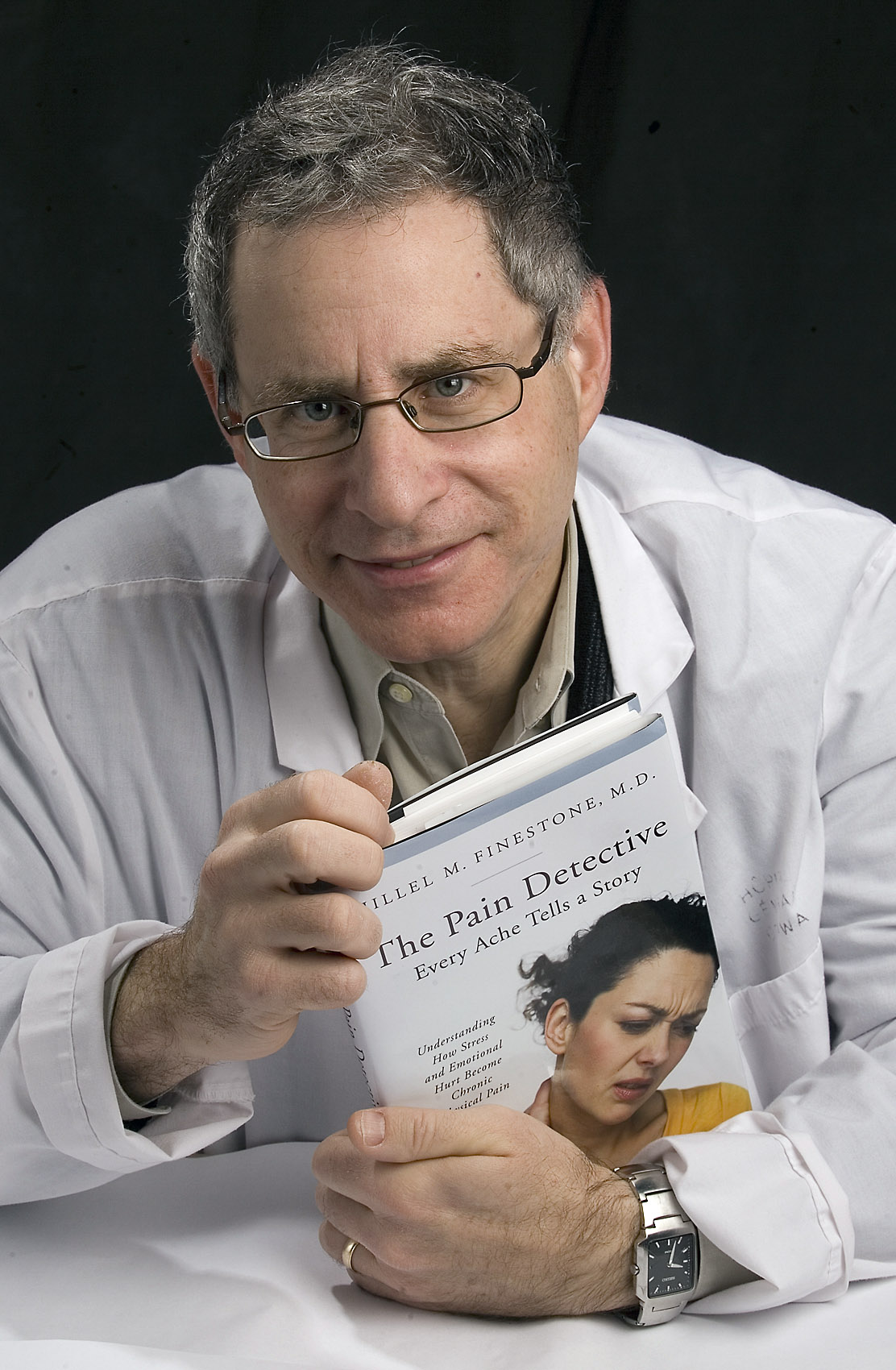
CONNECTED tells the intimate story of a father and a daughter and modern technology
CONNECTED: AN AUTOBIOGRAPHY ABOUT LOVE, DEATH & TECHNOLOGY (Tiffany Shlain, 2011)
Angelika Film Center
18 West Houston St. at Mercer St.
Opens Friday, October 14
212-995-2570
www.angelikafilmcenter.com
www.connectedthefilm.com
 After working for two years on a film about global interdependence and connectedness in the internet age, award-winning documentarian Tiffany Shlain (Yelp: With Apologies to Allen Ginsberg’s Howl, The Tribe, Less Is Moore) realized that she did not feel connected to her material. So she turned inward, deciding to instead focus her camera on her close relationship with her father, Leonard Shlain, a successful surgeon and author of such books as The Alphabet vs. the Goddess: The Conflict Between Word and Image and Art & Physics: Parallel Visions in Space, Time, and Light. In an ironic twist of fate, Dr. Shlain, whose writings examined the different functions of the left and right brain in humans, was diagnosed with brain cancer. At the same time, his daughter, after five miscarriages, was desperately trying to make one final attempt to get pregnant as her forties approached. (She already had a daughter with her husband, Ken Goldberg.) This life-and-death dichotomy lies at the heart of Tiffany Shlain’s moving, deeply personal story, exactingly told in her feature-length debut, Connected. Shlain includes scenes from her original concept, highly illustrative and scientific examinations of the human species’ growing addiction to computers and cell phones, narrated by Peter Coyote, alongside animation, archival footage, lots of Harold Lloyd clips, and home movies, holding nothing back as she shares intensely personal details about her family and herself. While the idea that technology has given humans the ability to become more connected around the world is nothing new, Shlain’s intimate exploration is affecting nonetheless. Founder of the Webby Awards, Shlain, who currently observes a technology Shabbat, turning off all electronic equipment every Saturday, has organized a series of special events at the Angelika, where Connected is scheduled to run October 14-20, with Q&As following select screenings nearly every day. Among the participants who will be looking at various aspects of technology and culture are Todd Oldham and Anna Deavere Smith (October 14, 7:15), Jennie Livingston (October 15, 4:40), Reboot, Jumpstart, Natan, and Heeb magazine (October 15, 7:15), Rachel Sklar (October 16, 7:15), Peter Crosby (October 17, 4:40), Ted Hope (October 19, 4:40), Paul Levinson (October 19, 7:15), and Benjamin Barber (October 20, 7:15).

 Makoto Shinkai, who took the anime world by storm with his 2003 hit Voices of a Distant Star, a short film made completely on his home computer, followed that up with his first feature-length work, the magical and mystical The Place Promised in Our Early Days. Set in an alternate futuristic post-WWII world, The Place Promised centers on three friends, Hiroki, Takuya, and Sayuri, who make a vow to fly Hiroke and Takuya’s plane, Bela C’ielo, into the Tower, a monolithic structure rising into the sky that symbolizes the postwar division into the Union and U.S.-Japanese forces. With war imminent, an older Takuya and Hiroki find themselves on opposing sides, with Sayuri lost in a coma dreamworld. Although the plot — especially the science aspects — gets rather complex and confusing, The Place Promised is a beautiful-looking film, both tenderly sweet and harshly depressing, presenting a rather bleak forecast of the future. But stunning visual moments such as a setting sun with an illuminated halo that forms a shining star twinkling into an abandoned factory make it all worth it. Shinkai’s film was deservedly named Best Animated Film at the Mainichi Film Awards, where it topped the much more heralded Steamboy (Katsuhiro Otomo, 2004) and Howl’s Moving Castle (Hayao Miyazaki, 2004). The career of the thirty-eight-year-old anime auteur is being celebrated at this year’s New York Comic Con / New York Anime Festival, which will include screenings of Voices of a Distant Star (October 14, Room 1A18, 12:30), The Place Promised in Our Early Days (October 14, Room 1A18, 1:15), the three-part 5 Centimeters Per Second (October 14, Room 1A18, 3:00), and his latest, Children Who Chase Lost Voices from Deep Below (October 16, IGN Theater, 11:00 am), with Shinkai on hand to introduce this New York premiere.