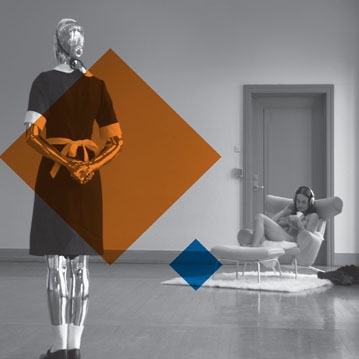
Elmgreen & Dragset’s HAPPY DAYS IN THE ART WORLD kicks off the fourth edition of the Performa biennial, which runs November 1-21 all over the city
Multiple venues in all five boroughs
November 1-21, free – $75
www.11.performa-arts.org
More than a hundred venues will be hosting cutting-edge experimental productions at Performa 11, the fourth edition of the biennial multidisciplinary arts festival being held all over the city November 1-21. Featuring art, music, dance, theater, film, architecture, and more in exciting combinations, the three-week festival consists of long-term exhibitions, special one-night stands, and other limited engagements that push the envelope of contemporary performance. Elmgreen & Dragset revisit Beckett in Happy Days in the Art World at the Skirball Center, with Joseph Fiennes and Charles Edwards. L’Encyclopédie de la parole’s Chorale turns political speeches, text messages, and movie quotes into choral works at the Performa Hub on Mott St. Rashaad Newsome holds a medieval rap joust Tournament in conjunction with his new exhibit at Marlborough Chelsea. Anthology Film Archives screens rare footage of one of Lenny Bruce’s last performances, as well as routines by Richard Pryor, Albert Brooks, and Andy Kaufman. Innovative installation artists Mika Rottenberg and Jon Kessler team up to create the chakra sauna Seven at Nicole Klagsbrun Project Space. Matthew Stone journeys into shamanism at the Hole. Mai-Thu Perret’s Love Letters in Ancient Brick at the Joyce SoHo reimagines Krazy Kat as a love-triangle dance. Dripping paint drives Jonathan VanDyke’s storefront drama With One Hand Between Us at Scaramouche. Israeli collective Public Movement choreographs public demonstrations in various parks for Positions. Daido Moriyama restages his thirty-year-old Printing Show—TKY at the Aperture Foundation. Deaf artist Christine Sun Kim will go from audio to visual with Lukas Geronimas in Feedback at Recess. Liz Glynn’s Utopia or Oblivion: Parts I and II will take place in several outdoor venues, using Buckminster Fuller’s geodesic dome as inspiration. Raphael Zarka mixes skateboarding and sculpture in Free Ride at the Performa Hub. Gerard Byrne turns the Abrons Arts Center into an interactive theater for In Repertory. Varispeed’s Perfect Lives Manhattan is an all-day performance of Robert Ashley’s opera. Performa Ha! gathers comedians and musicians at the HA! comedy club. And that’s only the first week of this outstanding collection of diverse talent and unique performances, with many of the events free.
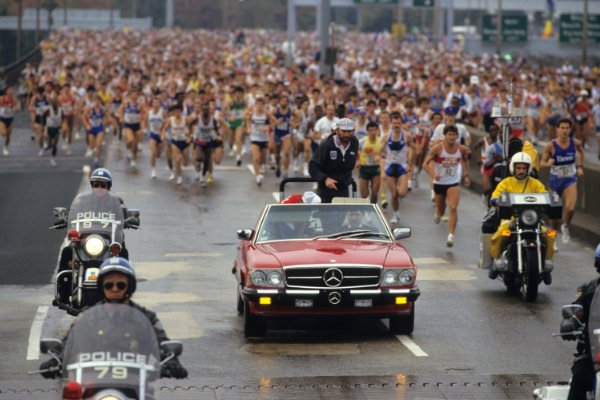
 Run for Your Life tells the remarkable story of Fischl Leibowitz, better known to the world as Fred Lebow. At the age of fourteen, Lebow left his home in Romania and eventually immigrated to the United States. In the late 1960s, he became obsessed with running, at the time a strange form of exercise practiced by very few New Yorkers. But soon Lebow was organizing events such as the Cherry Tree Marathon through the Bronx in 1969 and the Central Park Marathon, leading to the first-ever five-borough New York City Marathon in 1976, a race that many believe helped lead the city through its financial, crime-filled crisis. Through archival footage, news reports, photos, and new interviews with Lebow’s friends, family, and colleagues, a fascinating picture emerges of a driven visionary who was a masterful manipulator and negotiator, a man ahead of his time with regard to marketing and sponsorship. Among the people who share their memories of Lebow are marathoners Bill Rodgers, Frank Shorter, and Greta Waitz, former mayor Ed Koch, parks commissioners Henry Stern and Gordon Davis, past presidents and board members of the New York Road Runners Club, and his sister, who makes latkes for filmmaker Judd Ehrlich. Lebow was one of the all-time great New York characters, forever wearing a painter’s cap and sweatsuit, doing whatever was necessary to get himself and his sport to the next level. The ending is both exhilarating and heartbreaking. With the New York City Marathon scheduled for November 6, Run for Your Life, which was a highlight of the 2008 Tribeca Film Festival, will have a special screening at the Brooklyn Museum on November 3, followed by a Q&A with Ehrlich and other special guests.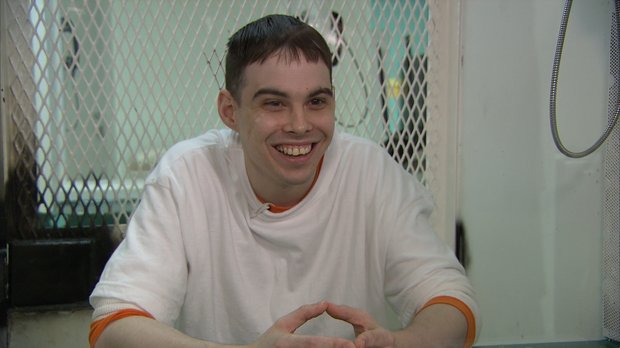
 Upon meeting convicted murderer Michael James Perry on Death Row eight days before the twenty-eight-year-old was going to be executed by the state of Texas, master filmmaker Werner Herzog tells him, “I have the feeling that destiny, in a way, has dealt you a very bad deck of cards. It does not exonerate you, and when I talk to you, it doesn’t necessarily mean that I have to like you, but I respect you, and you are a human being, and I think human beings should not be executed.” After explaining his personal view on capital punishment, Herzog then lets the rest of the compelling documentary Into the Abyss: A Tale of Death, a Tale of Life play out like a police procedural as he investigates how and why two teenage boys murdered three people in October 2001. Herzog opens the film by speaking with Death House chaplain Rev. Richard Lopez in a potter’s field graveyard, then follows that with four sections that detail the crime, the community in which it occurred, and the family members on both sides of the law affected by the grisly, senseless murders. Herzog divides the film into four primary chapters — “The Crime,” “The Dark Side of Conroe,” “Time and Emptiness,” and “A Glimmer of Hope” — as he talks with the often smiling Perry and his cohort, Jason Aaron Burkett; Lt. Damon Hall, who shares the specific aspects of the murders of Sandra Stotler, her seventeen-year-old son, Adam, and Adam’s friend Jeremy Richardson, supplemented by original crime-scene video; Charles Richardson, Jeremy’s older brother; Lisa Stotler-Balloun, Adam’s sister, who has seen more than her fair share of loss; Melyssa Thompson-Burkett, who fell in love with Burkett after he was incarcerated; Delbert Burkett, Jason’s stepfather, who is also behind bars; and Captain Fred Allen, who oversaw executions in the Huntsville prison. Herzog asks penetrating but not leading questions that get the subjects to talk openly and honestly about the crime and its aftermath and their lives in general, many of which seem trapped in a vicious cycle of violence, jail, poor education, and other endless hardships. Into the Abyss is a powerful film that, because of Herzog’s extremely sensitive handling of an extremely controversial topic, is not nearly as polemical or political as it could have been. Into the Abyss is the opening-night gala selection of “Doc NYC,” a nine-day festival of documentary films running November 2-10 at the IFC Center and NYU, screening dozens of feature-length and short nonfiction films from around the world, divided into such categories as Viewfinders, Icons, American Perspectives, Metropolis, and Midnight Rock Docs, with a special tribute to Richard Leacock and a series of panel discussions about the state of the industry.
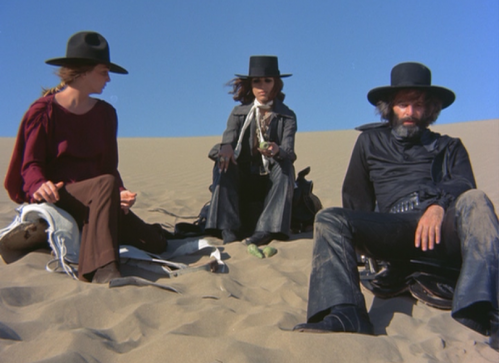
 Chilean-born Mexican filmmaker Alejandro Jodorowsky’s El Topo is a psychedelic head trip, an acid Western that will blow your mind. Jodorowsky stars as the title character, a gunslinger traveling through a deserted landscape accompanied by his naked young son, who already knows his way around a firearm. After coming upon a town that has been decimated by a nasty group of marauders working for the Colonel, El Topo seeks violent revenge, eventually taking off with a woman and leaving his boy behind as he meets four masters on his path to proving he is the best there is. But soon El Topo is praying for redemption with a community of inbred cripples trapped in a cave. El Topo is a wild and bizarre journey through religious imagery, romance, and vengeance, a surreal spaghetti Western strained through the mad mind of Jodorowsky, widely hailed as the creator of the midnight movie. The film melds Bergman with Leone, Tod Browning’s Freaks with Hiroshi Inagaki’s Samurai Trilogy, filtered through Kazuo Koike and Goseki Kojima’s Lone Wolf and Cub. It’s like nothing you’ve ever seen before and, despite your better instincts, will lure you into the cult of Jodorowsky. El Topo is screening on All Saints’ Day at Lincoln Center, introduced by Jodorowsky and followed by a conversation with outgoing Film Society program director Richard Peña; the night before, Jodorowsky will be at MoMA to introduce a screening of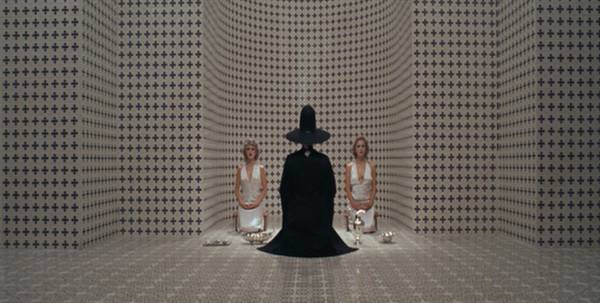
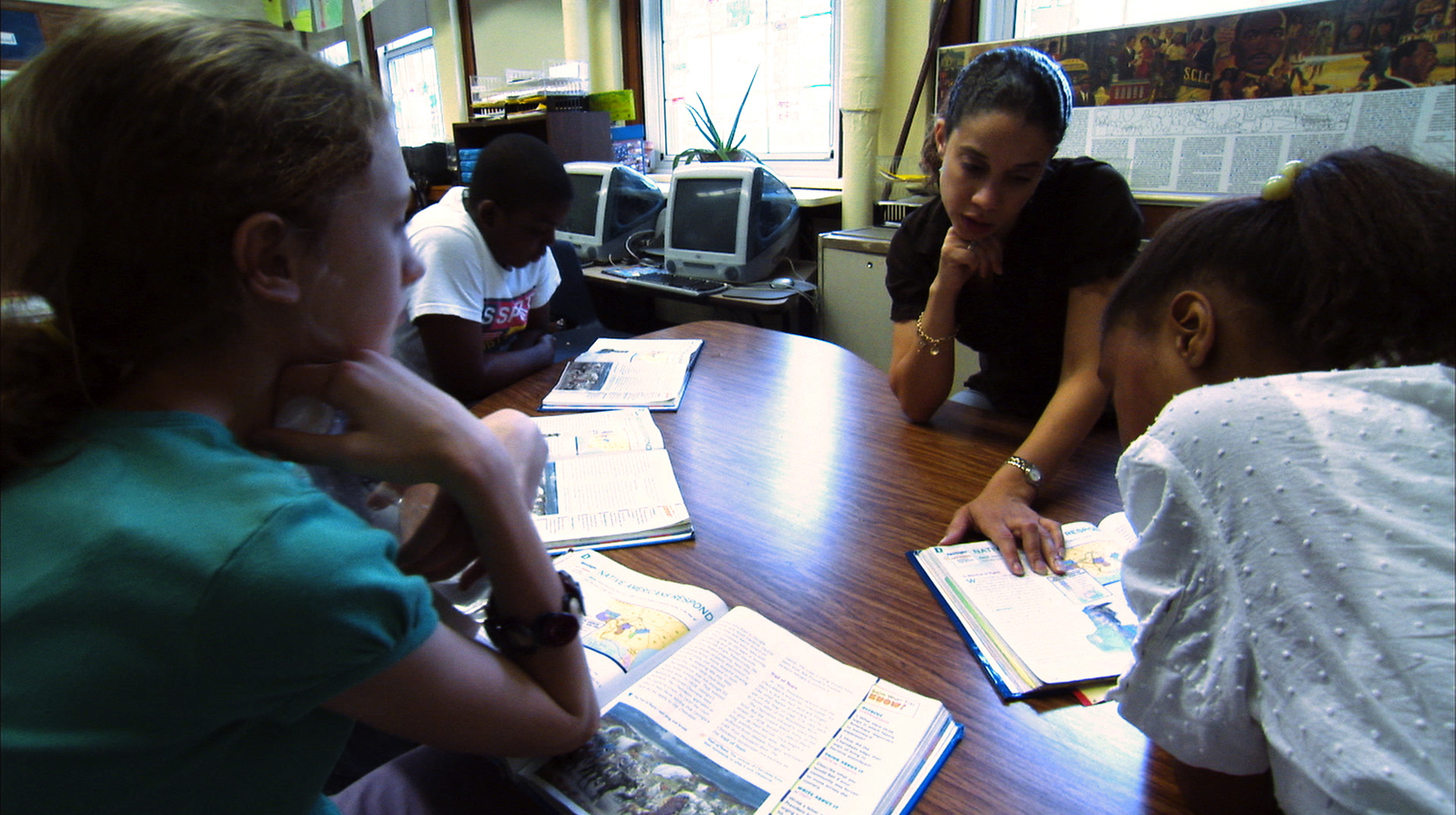
 “It’s the best job in the world, no comparison,” Jonathan Dearman says in American Teacher, Vanessa Roth’s eye-opening documentary about the sorry treatment of teachers in the United States today. Based on the book Teachers Have It Easy: The Big Sacrifices and Small Salaries of America’s Teachers (New Press, 2005) by Dave Eggers, Daniel Moulthrop, and Nínive Clements Calegari, the eighty-one-minute film looks at the surprising lack of status, salary, respect, and training afforded what is considered in other countries the most important profession by examining the cases of four current or former American teachers, dedicated men and women who are born educators but who have been deeply affected by a seriously flawed system. Texas history professor and sports coach Erik Benner sees his marriage fall apart as he works two jobs to help support his wife and two daughters. Brooklynite Jamie Fidler is following in her father’s footsteps as a teacher, but her pregnancy complicates her future in part by revealing the relatively poor health benefits. Maplewood’s Rhena Jasey is a Harvard grad with two masters degrees from Columbia who is considering leaving the kids she loves so much for a Washington Heights charter school that pays a far more substantial salary. And Dearman, a beloved San Francisco educator, turns to the family real estate business when teaching just can’t pay the bills. Part of the nonprofit Teacher Salary Project, American Teacher is at its best when it shows the teachers in the classroom and talking about what they love about their job, but when it focuses on the many negatives, it feels too much like a telethon, as if a crawl should be running across the bottom of the screen soliciting donations. The film includes numerous statistics involving turnover rates, the declining number of men in the industry, and, of course, various financial figures, dryly narrated by Matt Damon. In addition to following around the four protagonists, Roth speaks with students and their parents, superintendents, principals, professors, and other industry professionals who want to see the system changed. Interestingly, one word that never comes up is “union,” which is often at the center of any discussion about the state of education in America. Although it can pull too much at the heartstrings while stating the obvious, American Teacher is an important documentary that makes a strong case for the United States to fix this growing problem, and fast. The film is screening twice on October 30 as part of the Thalia Film Sundays series at Symphony Space, with Roth participating in a Q&A following the 6:15 show.