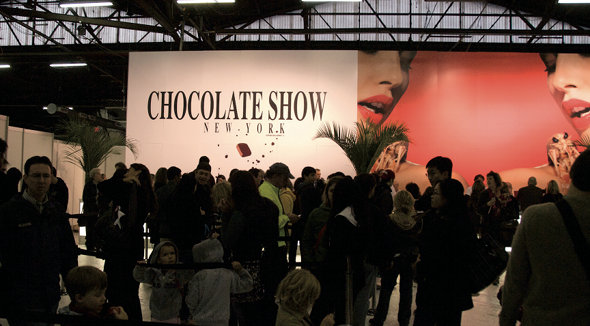
The Chocolate Show will be at the Metropolitan Pavilion through Sunday
Metropolitan Pavilion
125 West 18th St. between Sixth & Seventh Aves.
November 10-13, $30-$35
www.chocolateshow.com
If you’re like us, there’s virtually no problem that a good dose of chocolate can’t make better. Every night before we hit the sack, we partake in some high-quality chocolate, usually of the very dark variety. There will be just about every kind of variety you can think of at the fourteenth annual New York Chocolate Show, serving up delectable delights November 10-13 at the Metropolitan Pavilion. More than fifty exhibitors from around the world will be selling their wares — and, occasionally, offering free samples, so bring along a little plastic bag to take some goodies home (and so they don’t melt in your pocket). Scanning the current list, we didn’t see a lot of our favorites, although the always dependable Guittard will be there, along with Chocolate Christophe Roussel, Maison Boissier, and Vincent Guerlais from France, Jer’s Chocolates from California, and D.C.’s Divine Chocolate. More familiar names include Valrhona, Jacques Torres, François Payard, and Michel Cluizel. The four-day event also features demonstrations and workshops, book signings, a Kids Zone, and the always extravagant fashion display, which pairs master chocolatiers with clothing designers to create unique haute couture incorporating cacao, with this year’s theme based on Broadway musicals. We usually get the biggest kick out of Martin “Chocolatina” Howard’s contribution; he’ll be creating a “Playbill Dress” with 24-Hour Catwalk’s Michael Plosky.
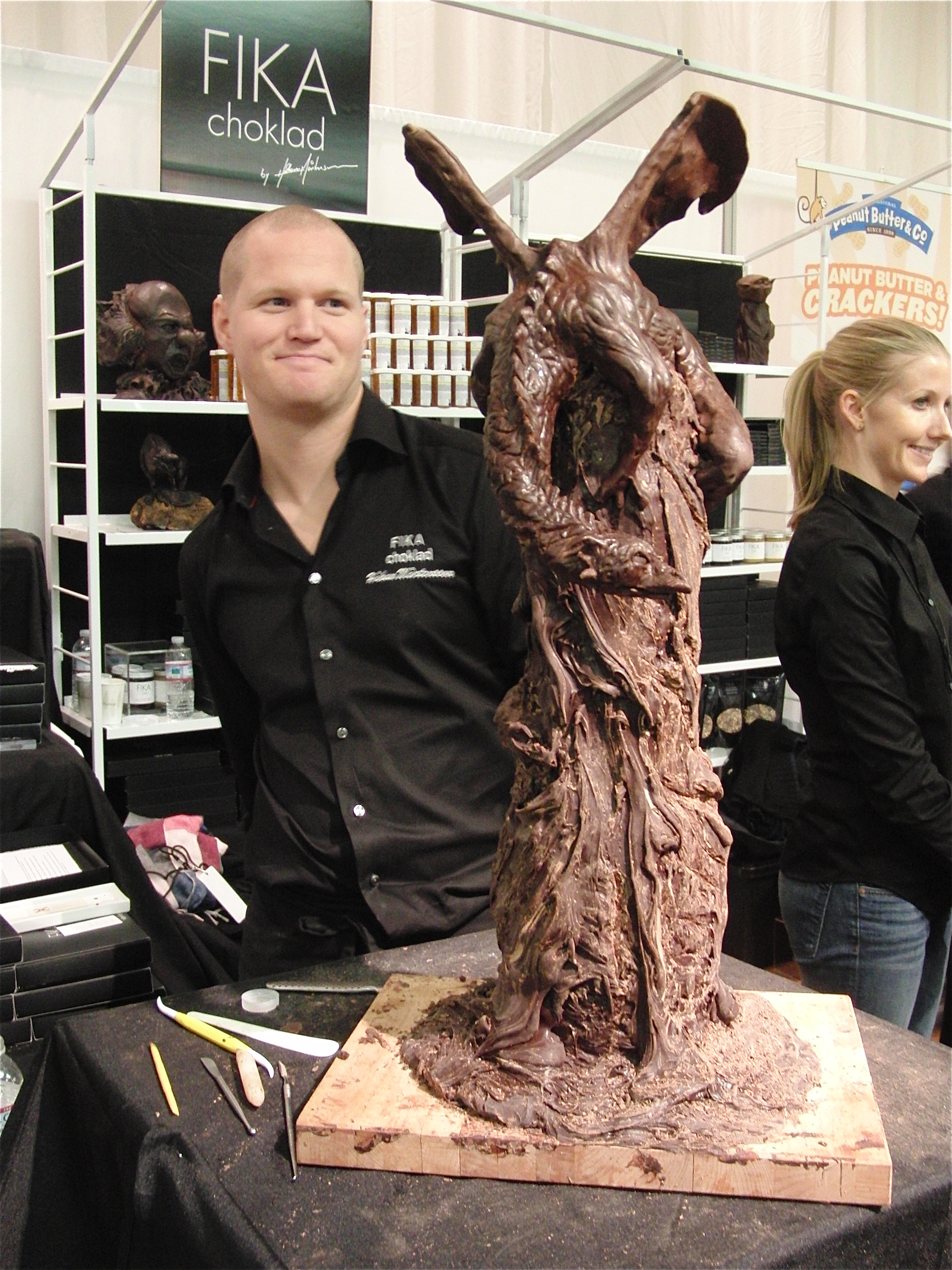
Håkan Mårtensson admires his deluxe chocolate creations for Fika (photo by twi-ny/mdr)
Update: The 2011 edition of the Chocolate Show might not have a bevy of familiar names, but it does have a lot of fresh newcomers giving away plenty of free samples and offering good deals. We suggest starting out at E. Guittard, whose large booth features multiple dishes stocked with varying degrees of dark chocolate from South American countries. (We went home with the Sur Del Lago and Ambanja Bittersweet bars.) You can then cleanse the palate with a shot of rich, historical melted chocolate from American Heritage before continuing on your cacao adventure; among the standouts are the Nib-a-Licious bar from the Grenada Chocolate Company, Håkan Mårtensson’s explosive gingerbread truffles, Liddabit Sweets’ sea salt caramels, 5th Avenue Chocolatiere’s cold cocoa covered truffles (being handed out by a third-generation youngster), Maria Luisa Rodriguez’s orange zest Jazz Brownies, Pacari’s Ecuadorian salt & nibs bar, Rogue Confections’ holiday-designed Belgian circles, ChocoBolo’s chocolate cake (formerly known as the Best Chocolate Cake in the World), Co Co. Sala’s crunch bar, and Comptoir du Cacao’s flaky pralines. But don’t miss Salt of the Earth Bakery, whose chocolate-chip cookies, made with E. Guittard chocolate and Maldon sea salt, are phenomenal, rivaled only by their well-named OMG caramel and Fleur de sel de l’Ile de Re salt brownie.
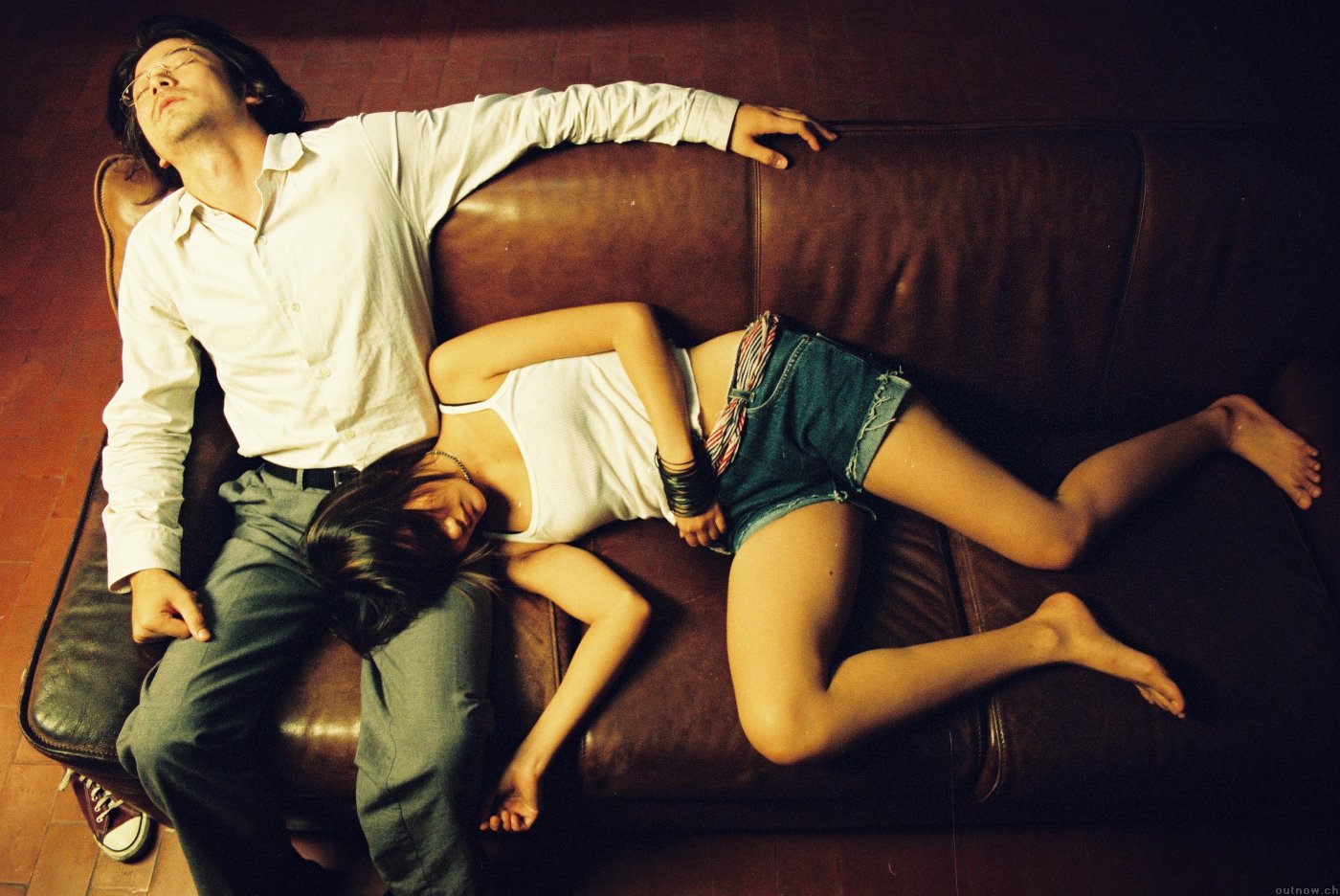
 Japanese actor Tadanobu Asano (Taboo, Ichi the Killer, Zatoichi), Australian-born Hong Kong cinematographer Christopher Doyle (Hero, In the Mood for Love, Chungking Express), and Thai cowriter-director Pen-ek Ratanuruang (6IXTYNIN9, Fun Bar Karaoke) combine their immense talents in the stunningly eloquent and marvelously offbeat black comedy Last Life in the Universe. Asano stars as Kenji, a librarian with OCD, a yakuza brother, and a propensity to consider various ways of killing himself. About to jump off a bridge, he sees a traffic accident, leading to a bizarrely touching Harold & Maude–like relationship with the young and beautiful Noi (Sinitta Boonyasak), who tends to be a little bit wild. As they try to make a simple life for themselves, danger lurks right around the corner in this nearly perfect, sadly overlooked film. Last Life in the Universe is screening at MoMA on November 12 & 18 as part of the “In Focus: Fortissimo Films” series, paying tribute to the company that has been distributing international independent releases for twenty years. The festival, which runs through November 21, opens November 10 with Taiwanese director Wei Te-sheng introducing his latest, Warriors of the Rainbow: Seediq Bale, and continues with such global favorites as Wisit Sasanatieng’s Tears of the Black Tiger, Wong Kar-wai’s Happy Together (introduced by Doyle on November 11), Zhang Yuan’s Beijing Bastards, Zhang Yang’s Shower, and the Pang brothers’ creepy horror flick The Eye.
 In a Republican debate in September, presidential hopeful Michele Bachmann called Gardasil, Merck’s HPV vaccine to prevent cervical cancer, “dangerous,” setting off a firestorm across the country and in the scientific community over the safety of childhood vaccinations in general, with groups taking to the streets and the airwaves fighting against government-mandated vaccines. Thus, Kendall Nelson and Chris Pilaro’s The Greater Good comes along at just the right time. In the ninety-minute documentary, the directors speak with individuals on all sides of the now controversial issue. They speak with the Swank, King, and Christner families, who claim that vaccinations specifically led to their children either becoming autistic, suffering strokes, or, dying. While Dr. Paul Offit declares vaccinations safe and bemoans so many people deciding not to have their children vaccinated against anything, which led to a recent outbreak of measles at Children’s Hospital of Philadelphia, Drs. John Green and Lawrence B. Palevsky come out strongly against vaccinations. And experts such as Robert W. “Dr. Bob” Sears, author of The Vaccine Book: Making the Right Decision for Your Child, and Barbara Loe Fisher, cofounder and president of the National Vaccine Information Center, are firmly in the middle, demanding that more testing be done on vaccines before they hit the market and that parents should have the choice of what vaccinations their children receive. Nelson and Pilaro supplement the film with a not-overwhelming amount of relevant data and some playful yet serious animation as they examine corporate influence on public health, the science behind the controversy, government regulation, the growing anti-vaccination movement, and the sad stories of three families dealing with harrowing personal circumstances. The Greater Good is screening November 5 at 6:45 at NYU’s Kimmel Center and November 7 at 1:30 at the IFC Center as part of the “Viewfinders” section of the Doc NYC festival, which continues through November 10, with the codirectors expected to be in attendance to discuss the film.