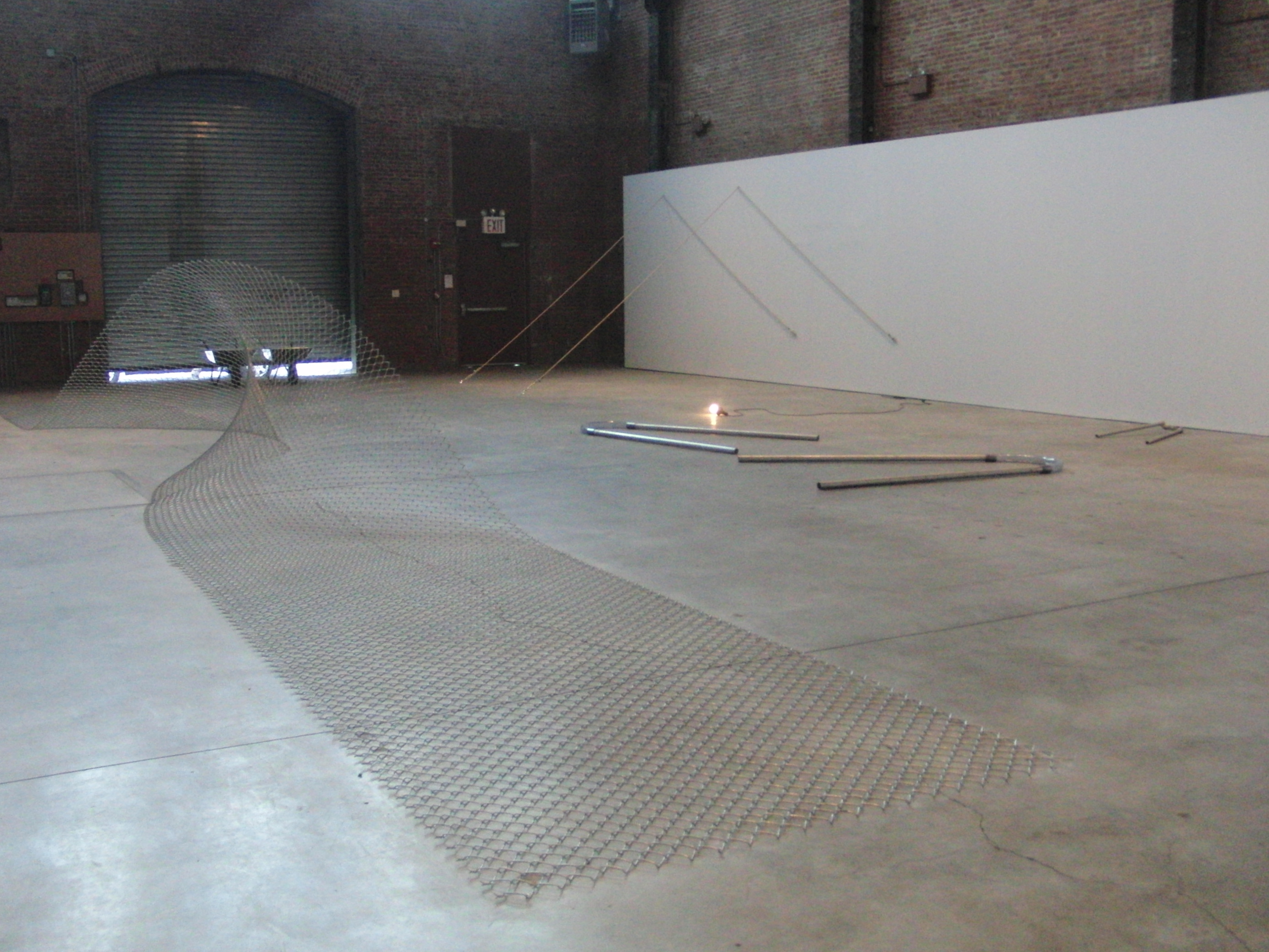
Extremely satisfying and necessary Bill Bollinger retrospective runs through July 30 at SculptureCenter (photo by twi-ny/mdr)
SculptureCenter
44-19 Purves St., Long Island City
Thursday – Monday through July 30, $5, 11:00 am – 6:00 pm
718-361-1750
sculpture-center.org
bill bollinger slideshow
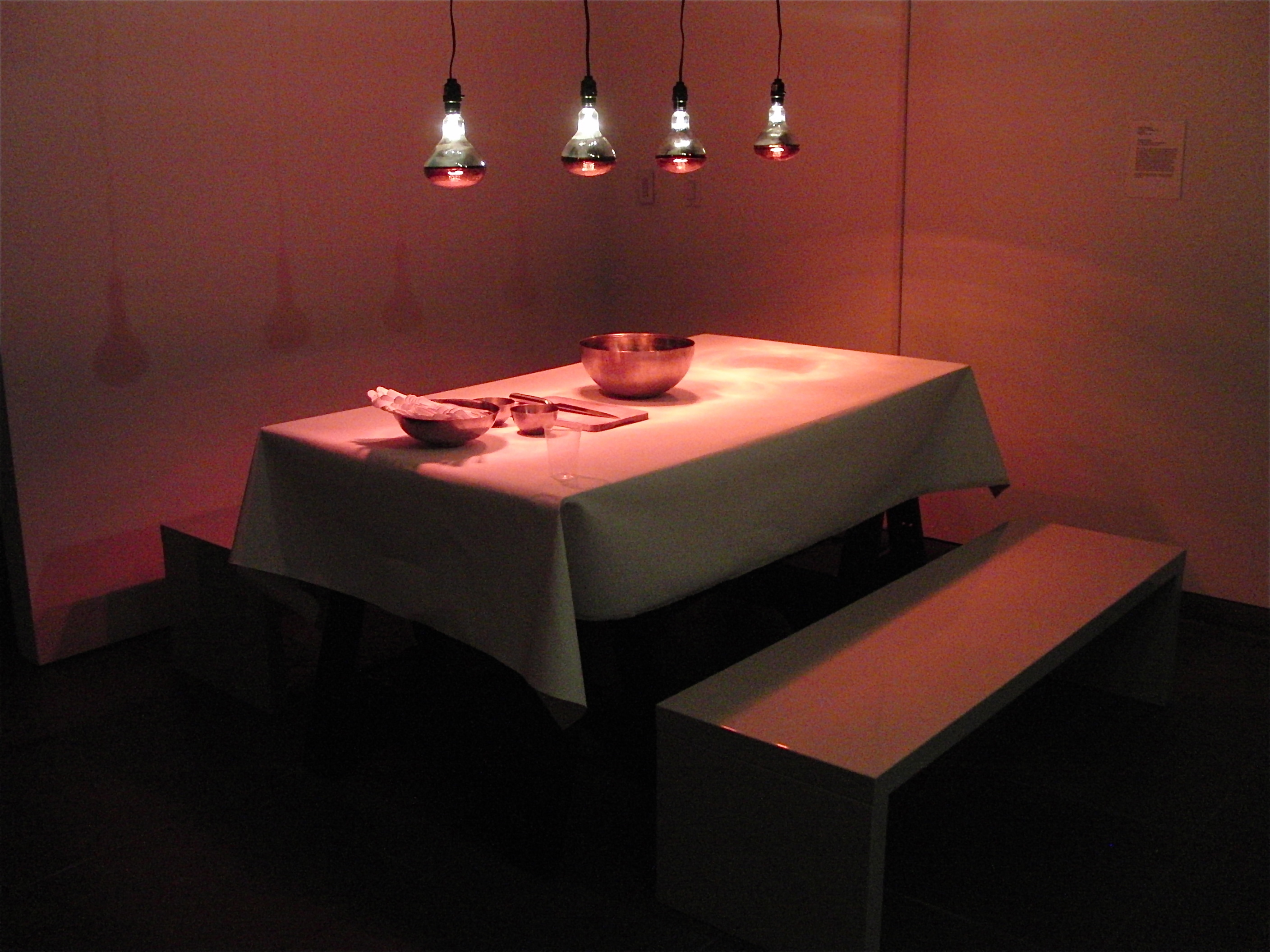
“I only do what it is necessary to do,” Brooklyn-born sculptor Bill Bollinger said in 1968. “There is no reason to use color, to polish, to bend, to weld, if it is not necessary to do so.” Bollinger, who died of alcoholism in 1988 at the age of forty-eight, is the subject of a small but fascinating retrospective at SculptureCenter in Long Island City. Concentrating on his most productive years of the late 1960s, the two-floor show consists of many works that repurpose standard industrial supplies, emphasizing space, form, and materiality. Using wheelbarrows, lightbulbs, Manila rope, plastic hoses, electric cables, aluminum pipes, and sections of Cyclone fencing, Bollinger created a conceptual oeuvre that brought together art and commodity in unique ways; indeed, sometimes you have to look twice before realizing what is part of the show and what is merely part of SculptureCenter’s former-factory home. But that is not meant to detract one iota from Bollinger’s extremely satisfying work, particularly “Cyclone Fence,” a gently, beautifully twisted chain-link fence that rises from the floor as if it’s alive, and “Graphite Piece,” in which black graphite powder has been thrown against a wall in its own room. A contemporary of such more well known artists as Richard Serra, Eva Hesse, Bruce Nauman, Dan Flavin, Carl Andre, Donald Judd, and Robert Smithson, Bollinger participated in several important and influential group shows in the late 1960s, as well as having his own solo exhibition at the Starrett-Lehigh Building in 1970, before personal problems, including a custody battle for his son that he ultimately won, sent him upstate into relative obscurity. The show is supplemented with a series of drawings upstairs as well as preparatory sketches, notes, and letters downstairs that reveal Bollinger’s detailed creative process. The retrospective also includes Bollinger’s only known film, in which he tries to balance what appears to be a telephone pole on the ground, only to knock it over once he does so, toying with the viewer’s expectations. “It is all very easy to execute, does not exist until it has been executed, ceases to exist when it has been taken down,” he once explained. “Bill Bollinger: The Retrospective” offers a much-needed, well-curated look at an important twentieth-century artist whose history had been threatening to cease to exist.

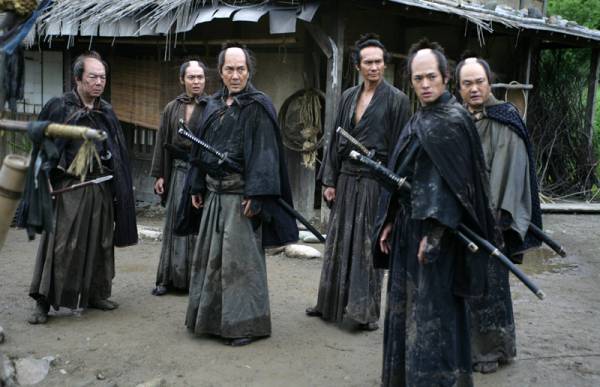
 Japanese director Takashi Miike’s first foray into the samurai epic is a nearly flawless film, perhaps his most accomplished work. Evoking such classics as Kurosawa’s Seven Samurai, Mizoguchi’s 47 Ronin, Aldrich’s The Dirty Dozen, and Eastwood’s High Plains Drifter, 13 Assassins is a thrilling tale of honor and revenge, inspired by a true story. In mid-nineteenth-century feudal Japan, during a time of peace just prior to the Meiji Restoration, Lord Naritsugu (Gorô Inagaki), the son of the former shogun and half-brother to the current one, is abusing his power, raping and killing at will, even using his servants and their families as target practice with a bow and arrow. Because of his connections, he is officially untouchable, but Sir Doi (Mikijiro Hira) secretly hires Shinzaemon Shimada (Kôji Yakusho) to gather a small team and put an end to Naritsugu’s brutal tyranny. But the lord’s protector, Hanbei (Masachika Ichimura), a former nemesis of Shinzaemon’s, has vowed to defend his master to the death, even though he despises Naritsugu’s actions. As the thirteen samurai make a plan to get to Naritsugu, they are eager to finally break out their long-unused swords and do what they were born to do. “He who values his life dies a dog’s death,” Shinzaemon proclaims, knowing that the task is virtually impossible but willing to die for a just cause. Although there are occasional flashes of extreme gore in the first part of the film, Miike keeps the audience waiting until he unleashes the gripping battle, an extended scene of blood and violence that highlights death before dishonor. Selected for the 2009 Cannes Film Festival and nominated for the Silver Lion at the 2010 Venice Film Festival, 13 Assassins is one of Miike’s best-crafted tales; nominated for ten Japanese Academy Prizes, including Best Picture, Best Director, Best Screenplay (Daisuke Tengan), Best Editing (Kenji Yamashita), Best Original Score (Koji Endo), and Best Actor (Yakusho), it won awards for cinematography (Nobuyasu Kita), lighting direction (Yoshiya Watanabe), art direction (Yuji Hayashida), and sound recording (Jun Nakamura). 13 Assassins is screening at Japan Society on July 21 at 8:20 as part of the Japan Cuts sidebar “Focus on Kôji Yakusho” and will be introduced by the actor; the July 20-21 mini-festival also includes such other Yakusho vehicles as his directorial debut, Toad’s Oil, as well as Shuichi Okita’s The Woodsman and the Rain, the New York premiere of Masato Harada’s Chronicle of My Mother, Kiyoshi Kurosawa’s Cure, and Masayuki Suo’s original Shall We Dance?
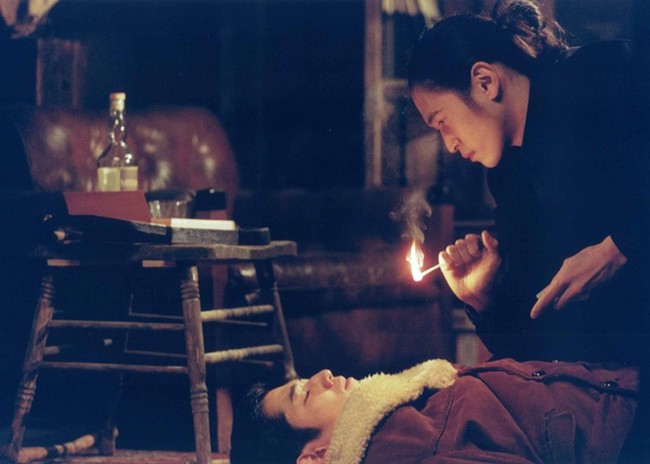
 Two years ago, Japanese auteur Toshiaki Toyoda presented