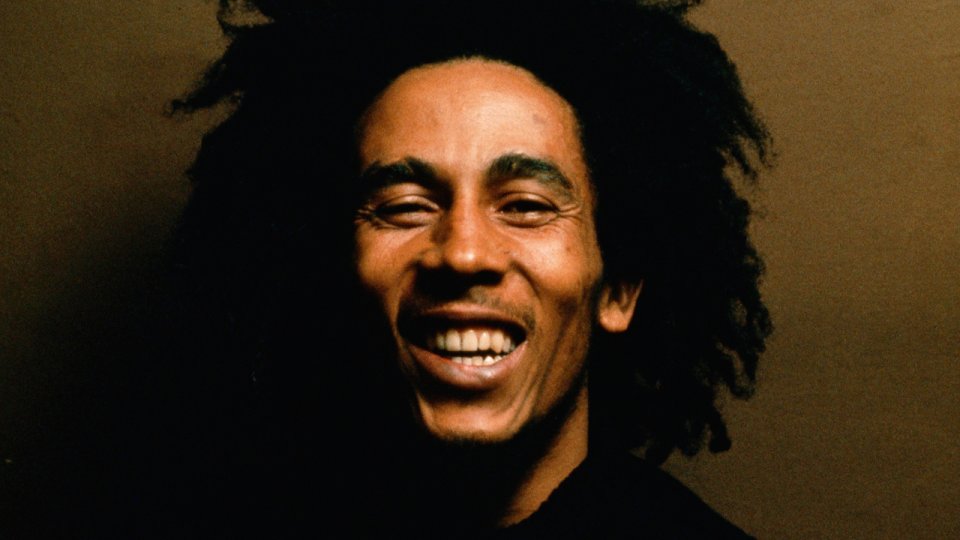
Harlem Week pays tribute to Jamaica and Bob Marley on Saturday and South Africa, Japan, and Don Cornelius on Sunday
West 135th St. and St. Nicholas Ave.
Saturday, August 18, and Sunday, August 19, free
harlemweek.com
Harlem Week offers a wide range of free programs this weekend, from health and education to sports and music and more. Saturday’s theme is “Summer in the City,” with the NY City Children’s Festival, a live broadcast of Stephen A. Smith’s ESPN radio show, a senior citizens swimming demonstration by the Harlem Honeys and Bears, the Historic College Fair & Expo, a Dancing in the Street salute to Jamaica’s fiftieth anniversary hosted by Dahved Levy, the Fabulous Fashion Flava Show, an international vendors village, Great Jazz on the Great Hill with Wycliffe Gordon, Alyson Williams, Steve Kroon, and Brianna Thomas, an Uptown Saturday Nite tribute to Harry Belafonte and Bob Marley, and an outdoor Imagenation screening of the documentary Marley. On Sunday, “Harlem: Where the World Meets the World” honors South Africa and Japan, including such seminal figures as Nelson Mandela, Miriam Makeba, Hugh Masekela, and Don Cornelius, the legend behind Soul Train. The festivities feature the Upper Manhattan Auto Show, the NY City Health Village, the Upper Manhattan Small Business Expo & Fair, Tri-State Junior Tennis Clinics, the NY City Back to School Children’s Festival, and a live concert.
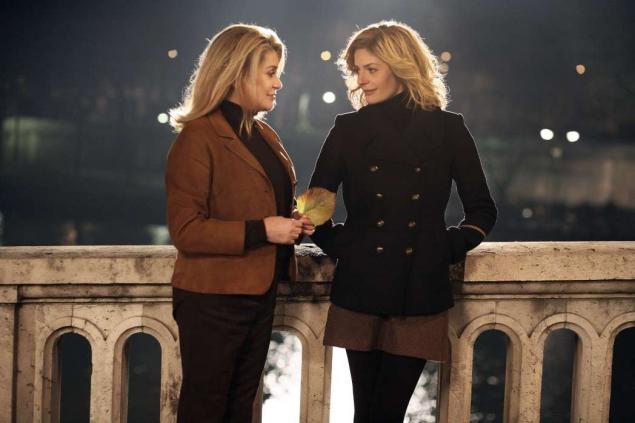
 The closing-night selection of the 2011 Cannes Film Festival, Christophe Honoré’s Beloved attempts to be a sweeping romantic epic, but it works best when it when it keeps it simple. In 1964 Paris, Madeleine (Ludivine Sagnier) decides that making a little extra money by selling her body is a better way to afford fancier things than by stealing them, until she falls for Czech doctor Jaromil (Rasha Bukvic). But after they have a child, Soviet tanks invade Prague, and Jaromil takes a lover, they separate. Over the years, as Madeleine (later played by Catherine Deneuve) tries to make a new life for her and Vera (Deneuve’s real-life daughter, Chiara Mastroianni), Jaromil (Czech director Milos Forman) keeps reappearing in their lives, but while Madeleine seems comfortable being with her former husband again, displaying a free and open sexuality, Vera seems unable to sustain a real relationship, adored by a younger teacher (Louis Garrel) while chasing after a gay American musician (Paul Schneider). A sort of mash-up of Luis Buñuel’s Belle de Jour and Jacques Demy’s The Umbrellas of Cherbourg, Beloved features characters calmly turning to song to contemplate their inner dilemmas as they walk through the streets, singing such numbers as “Heaven Knows I’m Miserable Now” (adapted from the Smiths’ original), then proceeding on. When Honoré (Love Songs, Dans Paris) keeps to the central plotlines, Beloved is an engaging, intimate look at sex, love, and family over a forty-five-year period. Unfortunately, he injects unnecessary sociopolitical elements that sidetrack the story and feel forced. At 135 minutes, the film is also at least a half hour too long. Had Honoré stopped earlier, he would have had quite a film, but instead it seems to go on interminably, passing up what could have been fine endings for additional scenes that quickly become tiresome and repetitive. Beloved does have its moments, but it sadly falls short of what it could have been. The director will be on hand at the IFC Center to discuss the film at the 6:55 screenings on Friday and Saturday night of opening weekend.
 In 1991, Bruce Weide and Pat Tucker were asked to help raise a gray wolf named Koani for a documentary about what they consider to be a largely misunderstood species. Weide and Tucker, who had started the organization
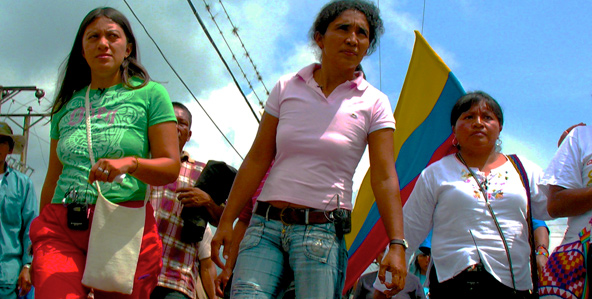
 “If we don’t open our eyes, if we are afraid of challenges, then we won’t be cultivating life,” Flor Ilva Triochez says near the start of the compelling documentary We Women Warriors, continuing, “We will be cultivating death.” From 2002 to 2009, journalist Nicole Karsin covered the ongoing bloody battle in Colombia between the army, the paramilitary, and rebel guerrillas, a violent struggle whose collateral damage includes atrocities being suffered by the more than one hundred indigenous tribes caught in the middle, their very existence being threatened by the unending drug-related violence. Karsin picked up a camera to tell the story through the eyes of three three brave women who, independent of one another, decided to do what the government and others refused to and take matters into their own hands. Karsin follows Doris Puchana, an Awá governor who risks her life by speaking out publicly about a horrific massacre; Ludis Rodriguez, a Kankuamao mother who watched her husband get murdered and was then falsely accused of having killed fifteen policemen; and Flor Ilva, who, as the first female leader of the Nasa people in three hundred years, demands that the police take down their barracks and leave her community. Eventually the three amazing women come together to share details not only of their lives but of their organizational methods, unwilling to be silenced as they seek peace for their people. Part of the sixteenth annual DocuWeeks festival at the IFC Center, We Women Warriors is an inspiring tale filled with hope in the face of seemingly insurmountable odds, as three strong women overcome personal tragedy to fight for justice and freedom. We Women Warriors runs August 10-16, with the filmmakers on hand for one of the two daily screenings. The festival continues through August 23 with such other documentaries as Eugene Martin’s The Anderson Monarchs, about an African-American girls soccer team in an at-risk Philadelphia neighborhood, Dafna Yachin’s Digital Dharma: One Man’s Mission to Save a Culture, about Mormon E. Gene Smith’s determination to preserve ancient Sanskrit and Tibetan writings, and Thomas Riedelsheimer’s Garden in the Sea, in which Spanish artist Cristina Iglesias builds an underwater sculpture in the Mexican Sea of Cortez.