The cultural revolution on the early 1970s is back in Olivier Assayas’s SOMETHING IN THE AIR
NEW YORK FILM FESTIVAL MAIN SLATE: SOMETHING IN THE AIR (APRÈS MAI) (Olivier Assayas, 2012)
Film Society of Lincoln Center
Friday, October 5, Alice Tully Hall, 9:15
Monday, October 8, Alice Tully Hall, 12 noon
Friday, October 12, Francesca Beale Theater, 6:30
Festival runs through October 14
212-875-5601
www.filmlinc.com
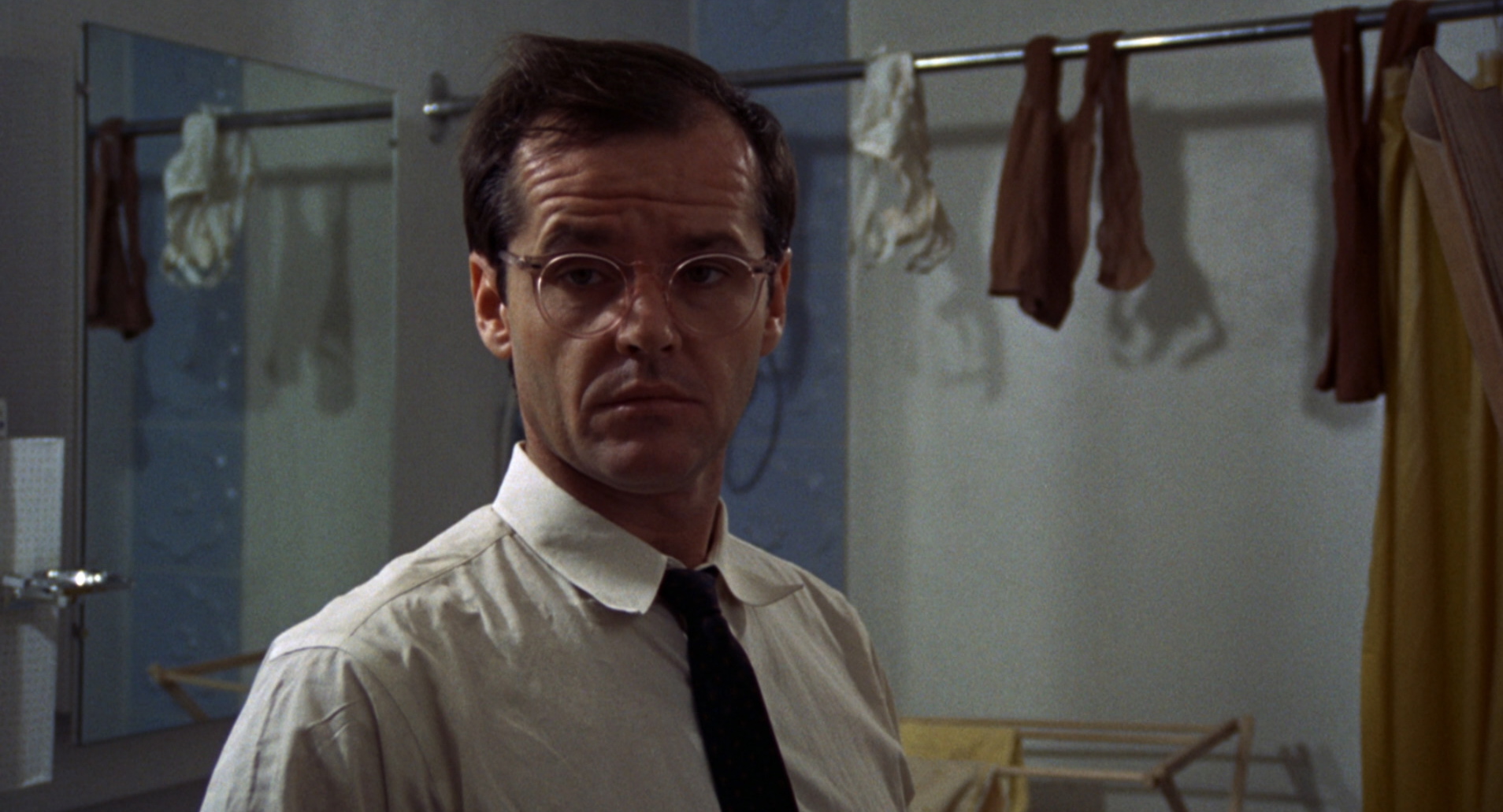
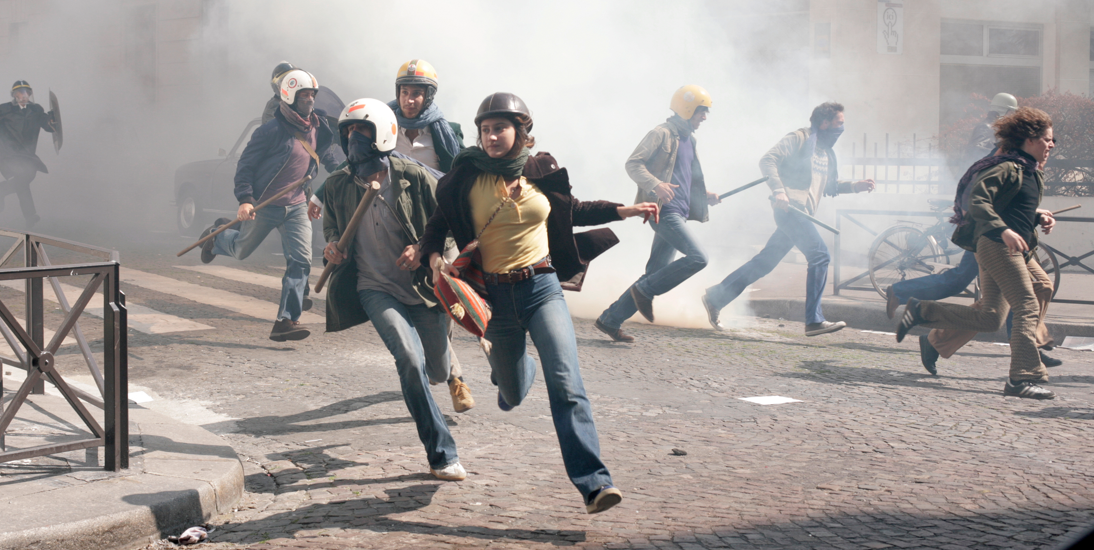
 Olivier Assayas’s autobiographical coming-of-age tale Something in the Air is a fresh, exhilarating look back at a critical period in twentieth-century French history. In this sort-of follow-up to his 1994 film about 1970s teenagers, Cold Water, which starred Virginie Ledoyen as Christine and Cyprien Fouquet as Gilles, Something in the Air features newcomer Clément Métayer as a boy named Gilles and Lola Créton (Goodbye First Love) as a girl named Christine, a pair of high school students who are part of a growing underground anarchist movement. Following a planned demonstration that is violently broken up by a special brigade police force, some of the students cover their school in spray paint and political posters, leading to a confrontation with security guards that results in the arrest of the innocent Jean-Pierre (Hugo Conzelmann), which only further emboldens the anarchists. But their seething rage slowly changes as they explore the transformative world of free love, drugs, art, music, travel, and experimental film. Assayas (Les Destinées sentimentales, Summer Hours) doesn’t turn Something in the Air — the original French title is actually Après Mai, or After May, referring to the May 1968 riots — into a personal nostalgia trip. Instead it’s an engaging and charming examination of a time when young people truly cared about something other than themselves and genuinely believed they could change the world, filled with what Assayas described as a “crazy utopian hope for the future” at a New York Film Festival press conference. The talented cast also includes Félix Armand, India Salvor Menuez, Léa Rougeron, and Carole Combes as Laure, both Gilles’s and Assayas’s muse.
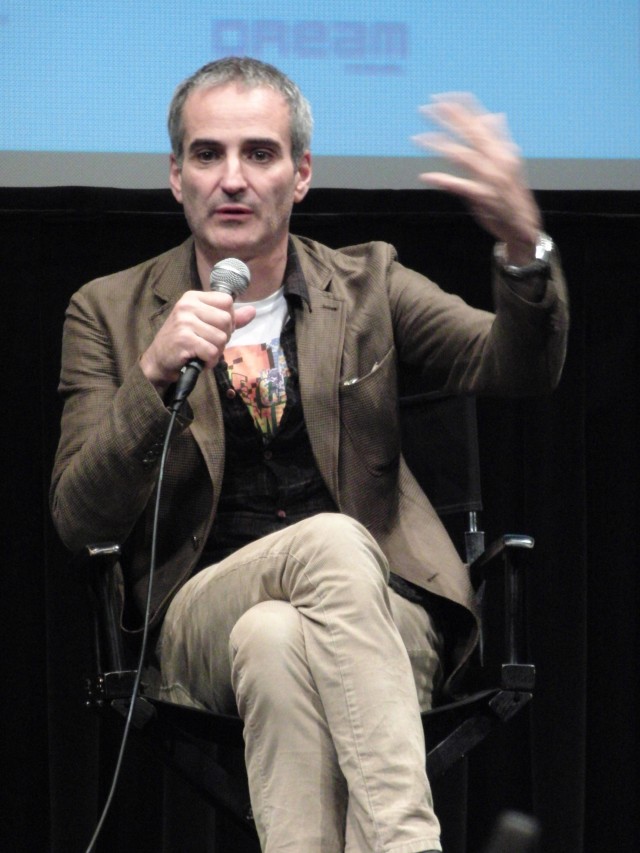
Writer-director Olivier Assayas will be on hand October 5 to talk about his latest work, SOMETHING IN THE AIR (photo by twi-ny/mdr)
Assayas fills Something in the Air with direct and indirect references to such writers, artists, philosophers, and musicians as Syd Barrett, Gregory Corso, Amazing Blondel, Blaise Pascal, Kasimir Malevitch, Max Stirner, Alighiero Boetti, Joe Hill, Soft Machine, Georges Simenon, Frans Hals, and Simon Ley (The Chairman’s New Clothes: Mao and the Cultural Revolution), not necessarily your usual batch of 1970s heroes who show up in hippie-era films. Writer-director Assayas, editors Luc Barnier and Mathilde Van de Moortel, and cinematographer Éric Gautier move effortlessly from France to Italy to England, from thrilling, fast-paced chases to intimate scenes of young love to a groovy psychedelic concert, wonderfully capturing a moment in time that is too often marginally idealized and made overly sentimental on celluloid. “We’ve got to get together sooner or later / Because the revolution’s here,” Thunderclap Newman sings in their 1969 hit “Something in the Air,” which oddly is not used in Assayas’s film, continuing, “And you know it’s right / and you know that it’s right.” Indeed, Assayas gets it right in Something in the Air, depicting a generation when revolution required a lot more than clicking a button on the internet. A critical thinker who speaks intelligently about his work, Assayas will be at the October 5 New York Film Festival screening of Something in the Air, which is also being shown October 8 and 12 before opening theatrically next spring.