
The Rubin Museum examines the pursuit of happiness with a series of cool programs through December
Rubin Museum of Art
150 West 17th St. at Seventh Ave.
September 23 – December 21, $20 – $35 (Love Songs $85, Cabaret Cinema free with $7 bar purchase)
212-620-5000
www.rmanyc.org
Rubin Museum genius programmer Tim McHenry is at it again, coming up with yet another unique and fascinating series at one of the city’s most exciting institutions. “Just how happy are you?” the man behind the perennially thrilling Brainwave festival asks. “The alleviation of suffering is central to Buddhist belief; the result is a form of happiness. The pursuit of happiness is cited as an inalienable right in the Declaration of Independence; the result is what, exactly? Are we talking about the same condition?” We all want to be happy, but happiness is different for every one of us. On September 23, Happy Talk kicks off with a series of inspired pairings, as artists from a variety of disciplines sit down with scientists, philosophers, and other big-time thinkers to discuss what inner and outer, personal and public joy is all about. That first session will feature entertainment legend Elaine Stritch with Duke Institute for Brain Sciences member P. Murali Doraiswamy and will be followed by such promising duos as performance artist Laurie Anderson and Harvard psychiatry professor Daniel Gilbert, meditation expert Sharon Salzberg and visual artist Josh Melnick, Dexter star Michael C. Hall and Cambridge research psychologist Kevin Dutton, playwright Neil Labute and singer-songwriter Aimee Mann, and award-winning actress Julianne Moore and Berkeley philosophy and psychology professor Alison Gopnik, among others. As a sidebar, the Rubin’s Friday-night Cabaret Cinema turns its attention to the theme of “Happiness is…,” with Dan Kleinman introducing Woody Allen’s Annie Hall on September 21, Molly Neuman discussing Alfred Hitchcock’s Strangers on a Train on September 28, and Lili Taylor talking about Frank Capra’s It’s a Wonderful Life on October 5; the series continues through December 21 with such other films that deal with various levels of unhappiness as Five Easy Pieces, 8½, The 400 Blows, Brief Encounter, South Pacific, and Grapes of Wrath. In addition, the Rubin will premiere Victress Hitchcock’s documentary When the Iron Bird Flies, which examines Tibetan Buddhism’s path around the world, October 19-24, with most screenings including special speakers. And finally, on December 7, Rosanne Cash will present “Love Songs,” an evening of music with a trio of happy musical couples: Cash and John Leventhal, Steve Earle and Allison Moorer, and Larry Campbell and Teresa Williams. Wanna know one of the things that makes us happy? Our regular visits to the Rubin Museum, which never fails to ignite our minds and put huge smiles on our faces.

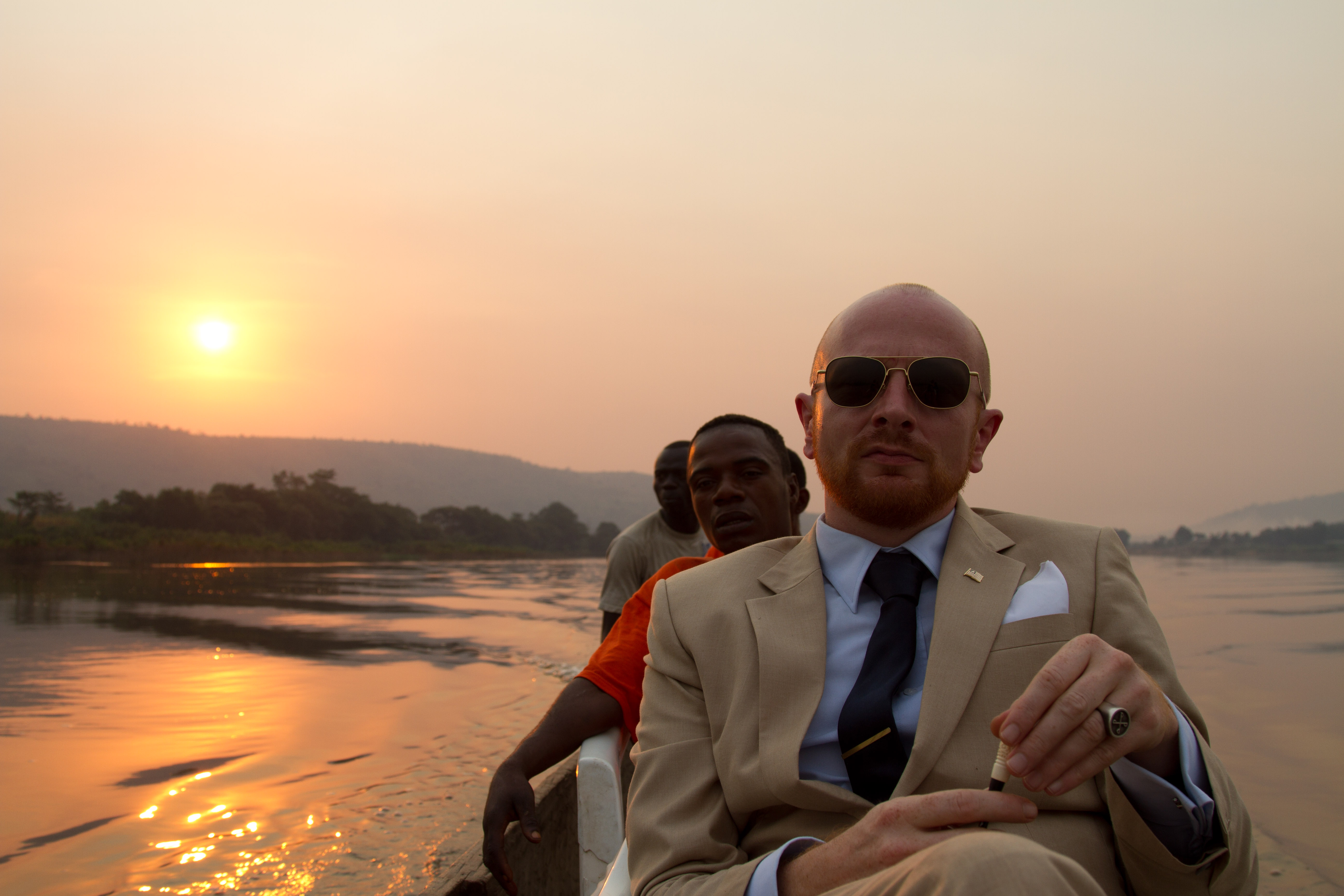
 Danish journalist Mads Brügger risked a lot more than just his career in making The Ambassador; he put his life on the line as well. “If you do it the way we will set you up to do it, you have a very high probability of success,” he is told by Colin Evans, who works for a company that can allegedly make anyone a diplomat of a diamond-rich African nation for the right price. “If you do it any other way, the best that you can hope for is to be arrested and go to jail and lose everything you’ve got. That’s the best you can hope for. The worst you can hope for is that you end up dead in a ditch in Africa.” Using his full name, Mads Johan Brügger Cortzen seeks to become a Liberian diplomat to the Central African Republic, meeting with powerful, important, and dangerous people on his fascinating journey, handing out “envelopes of happiness” filled with cash while claiming to want to build a match factory with the help of native pygmies. As Brügger’s story gets more and more ridiculous, he gains greater access, with soon only President Ellen Johnson Sirleaf’s signature necessary to achieve his absurd goal. An intriguing mix of Sacha Baron Cohen’s Borat and Ali G characters and controversial filmmaker and activist Michael Moore, Brügger, whose previous film, The Red Chapel, found him leading a bizarre experimental theater troupe into North Korea, goes about his business with a sly confidence, balancing the serious nature of the proceedings with humorous moments that threaten to reveal his ruse, but nobody seems to catch on as the money keeps flowing. (The film was financed by Lars Von Trier’s Zentropa studio.) Primarily using hidden cameras that he keeps rolling even after being told that filming is not allowed, Brügger employs his unique brand of what he calls “performative journalism,” a blend of performance art and investigative journalism that results in an outrageously entertaining film that exposes surprisingly blatant international corruption and has led to a firestorm of debate. The film opens August 29 at the IFC Center, with Brügger on hand for a Q&A following the 8:20 screenings on August 29 and 30.