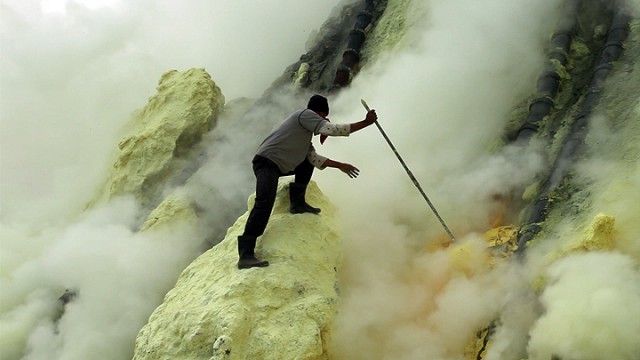
Brooklyn artist Janet Biggs will screen her latest work, A STEP ON THE SUN, at the closing night of the Armory Show, followed by a panel discussion (photo © Janet Biggs)
Armory Arts Week had been getting out of control, with upwards of a dozen different fairs taking place around the city during one crazy weekend. But now the fairs are essentially cut in half, with some scheduled for this week and the rest in May. The centerpiece is the Armory Show at Piers 92 & 94 (March 7-10, $30, run of show $60, dual Volta NY pass $40), which this year will celebrate the centennial of its namesake, the game-changing 1913 Armory Show that introduced modern art to New York. The 2013 edition is broken into two parts, with modern art at Pier 92 and contemporary art at Pier 94, along with a preview party March 6 at MoMA featuring a live performance by Solange Knowles. The Armory Show is once again partnering with Volta NY (March 7-10, $15, dual Armory Show pass $40), which moves to 82Mercer, where it will present more than one hundred solo projects from around the world, including Amy Bennett, Mark Jenkins, Chiho Akama, Patick Lo Guidice, and Regina Scully. The Fountain Art Fair (March 8-10, $10/day, $15 weekend pass) is back at the 69th Regiment Armory at Lexington and 25th St., with more than seventy-five exhibitors, including such standard-bearers as the Mighty Tanaka, McCaig + Welles, and the ever-popular Murder Lounge. There will also be a site-specific street art installation curated by Alex Emmart and Robots Will Kill and live performances by Lucas Walters, Musa and Spank Rock, Kamp!, and NSR, and DJ sets by Chances with Wolves and Nina Sky. Meanwhile, Moving Image New York (March 7-10, free) remains in its home in the Waterfront Tunnel at Eleventh Ave. and Twenty-Seventh St., where it will have monitors hanging from the ceiling and other cinematic installations showing videos by Janet Biggs, Cheryl Pope, Tommy Turner, Zhao Zhao, Kota Ezawa, Eva and Franco Mattes, and others.
The special events planned for Armory Arts Week begin on March 5 with Uptown & Museum Mile Day, featuring Harlem Armory Day at the Cathedral Church of Saint John the Divine and a Harlem Biennale “Music in the Air” walking tour led by John T. Reddick. On March 7, Bronx Day & SoHo Night is highlighted by a live spoken-word performance at the Nuyorican Poets Café, an after-hours viewing of Walter De Maria’s “The New York Earth Room” and “The Broken Kilometer,” a presentation of Saya Woolfalk’s “Chimera” at Third Streaming, and Tsipi Ben-Haim and Jessica Diamond’s “Tributes to ‘Kusama: Art Infinity-Net’” at CITYarts, with many SoHo galleries open late. Attention moves to Long Island City on March 8 with performances, workshops, and tours at No Longer Empty’s “How Much Do I Owe You?” in the Clock Tower Building and Andras Borocz live at the “So Real” group show at Radiator Gallery. Chelsea Day and Brooklyn Night on March 9 includes brunch with Tamara K.E. at Johannes Vogt Gallery, a Cut Paste and Sew dialogue with Mia Brownell, Camomile Hixon, Duron Jackson, Jingjing Linn, and Woolfak, ICP curator Christopher Phillips in conversation with Israeli artist Ilit Azoulay at Andrea Meislin, “The World’s First Tumblr Art Symposium” at 319 Scholes Gallery, a silent auction at the Rabbithole, and an installation and performance by Jonathan Schipper at the Boiler. Events conclude Sunday night in the Lower East Side / Downtown with “The Dealer’s Perspective” beginning at Allegra LaViola Gallery, the LES Gallery Stroll, and several art brunches. There will also be special films presented each night at the Armory Show, with some followed by a panel discussion, beginning March 6 at 5:00 with Matthew Day Jackson’s In Search of . . . Zombies, March 7 at 5:00 with Pavel Büchler’s High Noon compilation, March 8 at 3:00 with The Show That Shook the World: Marcel Duchamp and the 1913 Armory Show, March 9 at 5:00 with Liz Magic Laser’s The Armory Show Focus Group, and March 10 at 5:00 with Janet Biggs’s Fade to White and A Step on the Sun.
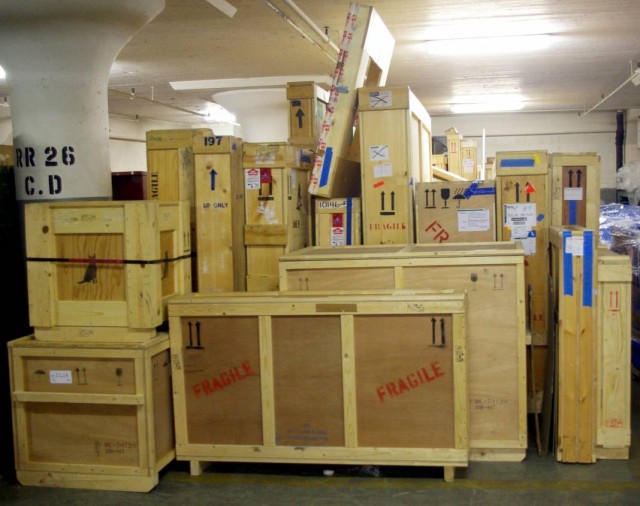
Al Hamm’s “Untitled . . . Crates” will fill the entryway to Scope
Over at the Park Avenue Armory, ADAA The Art Show (March 6-10, $25) is celebrating its twenty-fifth anniversary with more than seventy galleries participating, with such solo exhibitions as Wim Delvoye at Sperone Westwater, Mona Hatoum at Alexander and Bonin, Fred Tomaselli at James Cohan, Thomas Schütte at Peter Freeman, Robert Motherwell at Lillian Heidenberg, Robert Mapplethorpe at Sean Kelly, Sean Scully at Galerie Lelong, Louise Lawler at Metro Pictures, Eadweard Muybridge at Laurence Miller, Jean Arp at Mitchell-Innes & Nash, Kiki Smith at Pace, Damien Hirst at Van de Weghe, and Milton Avery at David Zwirner. The Collectors’ Forum consists of a pair of panel discussions entitled “Picturing the Frame: The Art World in the Next Decade,” with Jock Reynolds on Friday at 6:00 and Michael Findlay on Saturday morning at 11:00. The second annual Spring/Break Art Show (March 6-10, $5 suggested donation) will take place in classrooms at the Old School at 233 Mott St., with presentations from such artists and collectives as Jeremy Blake, Jennifer Chan, Grayson Cox, Fall on Your Sword, Ted Gahl, Beka Goedde, Matthew Hassell, Bel Linquist, Rachel Ostrow, and Printed Matter, curated by Marco Antonini, Ted Barrow, Elizabeth Clark, Simon Lee, Patrick Meagher, Aurora Pellizzi, Cecelia Stucker, Maureen Sullivan, Eve Sussman, and others, highlighted by Sussman and Lee’s curation of Car Wash Incident. The New City Art Fair (March 7-10, free) will set up in hpgrp Gallery at 529 West Twentieth St., consisting of works from eleven galleries from Japan in addition to an artists’ studio visit, the opening of a sake barrel, Japanese art food, and more. Also in Chelsea, more than fifty galleries will take part in the Independent (March 7-10, free) at 548 West Twenty-Second St., where the stairway gets crowded as art lovers make their up several floors of creatively and chaotically arranged installations that are generally more cutting edge than what can be found at the other shows. Be sure to get up to the roof, which has been specially designed by Christian Wassmann. But the fair with the best space might just be Scope (March 7-10, $15), which moves into Skylight at Moynihan Station in the 33rd St. post office, where connoisseurs will find shows by more than one hundred international galleries, along with such projects as Ron English’s “Culture Jam Supermarket,” Al Hamm’s “Untitled . . . Crates” entrance, Andrea Stanislav’s “The Vanishing Points,” David Rohn’s performance piece “Contact Walt Whitman,” and Sophie Hirsch’s recycled “Leave the Gun. Take the Cannoli.”

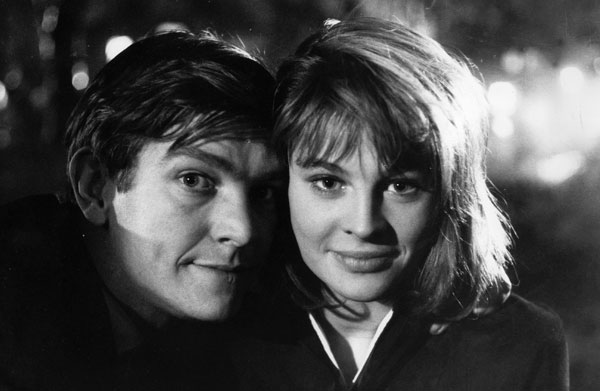
 Based on the novel by Keith Waterhouse (which he also adapted into a play with Willis Hall and which later became a musical), John Schlesinger’s Billy Liar is a prime example of the British New Wave of the 1950s and 1960s, which features work by such directors as Lindsay Anderson, Joseph Losey, Ken Russell, Nicolas Roeg, and Karel Reisz. Tom Courtenay stars as William Fisher, a ne’er-do-well ladies’ man who drudges away in a funeral home and dates (and lies to) multiple women, all the while daydreaming of being the president of the fictional country of Ambrosia. Billy lives in his own fantasy world where he can suddenly fire machine guns at people who bother him and be cheered by adoring crowds as he leads a marching band. Reminiscent of the 1947 American comedy The Secret Life of Walter Mitty, in which Danny Kaye dreams of other lives to lift him out of the doldrums, Billy Liar is also rooted in the reality of post-WWII England, represented by Billy’s father (Wilfred Pickles), who thinks his son is a no-good lazy bum. Shot in black-and-white, the film glows every time Julie Christie appears playing Liz, a modern woman who takes a rather fond liking to Billy. The film made Christie a star; Schlesinger next cast her in Darling, for which she won the Oscar for Best Actress. A 35mm print of Billy Liar is being shown March 7 at the IFC Center in the special program “Movie Night with Michel Gondry”; the director of Eternal Sunshine of the Spotless Mind, Be Kind Rewind, and The We and the I, which opens at IFC on March 8, will participate in a discussion following the screening. “John Schlesinger’s film certainly had an influence on my films, especially The Science of Sleep, just like Walter Mitty or other films intercutting layers of consciousness,” Gondry explains on the IFC website. “Only Billy Liar is one of the few to achieve that in the context of a social satire. All Billy’s visions are like explosions coming out of this very crude and bleak reality. And his personality is very unique, nailed in his lack of ambition. This is one of the films that taught me how magic can come just from editing.”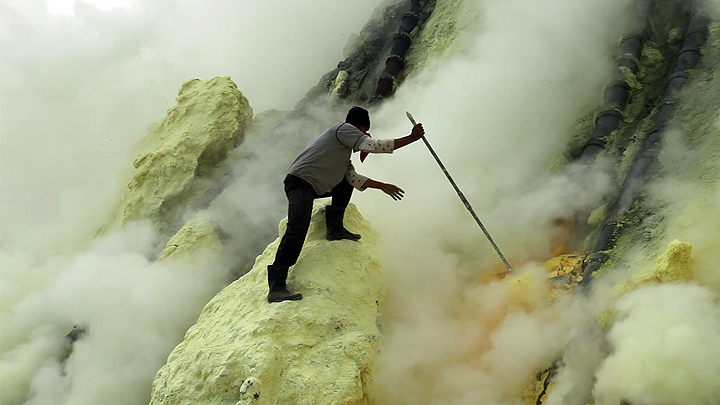

 In 2010, filmmaker and Gallatin School professor Keith Miller made a short film,