GRANITO shows the power and importance of independent documentary filmmaking
DOCUMENTARY FORTNIGHT 2013: MOMA’S INTERNATIONAL FESTIVAL OF NONFICTION FILM AND MEDIA — GRANITO: HOW TO NAIL A DICTATOR (Pamela Yates, Peter Kinoy & Paco de Onís, 2011)
MoMA Film, Museum of Modern Art
11 West 53rd St. between Fifth & Sixth Aves.
Sunday, March 3, 5:30
Festival runs February 27 – March 4
Tickets: $12, in person only, may be applied to museum admission within thirty days, same-day screenings free with museum admission, available at Film and Media Desk beginning at 9:30 am
212-708-9400
www.moma.org
www.skylightpictures.com
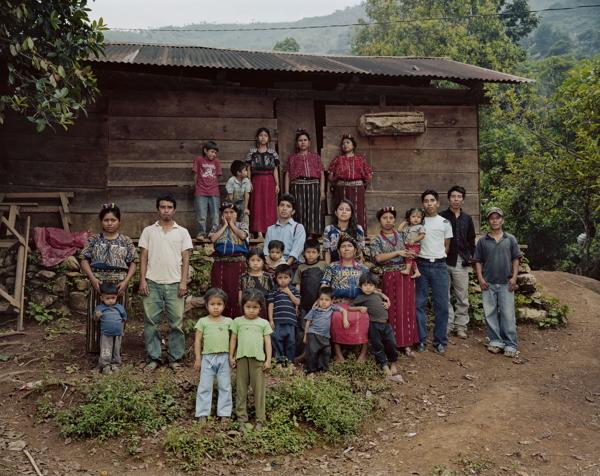
 The opening-night selection of the 2011 Human Rights Watch Film Festival, Granito: How to Nail a Dictator is an illuminating, if at times overly self-referential, examination of the power of documentary filmmaking. In 1982, Pamela Yates and Newton Thomas Sigel made When the Mountains Tremble, which told the inside story of civilian massacres of the indigenous Maya people as government forces and guerrilla revolutionaries fought in the jungles of Guatemala; one of the film’s subjects, Rigoberta Menchú, became an international figure and went on to win the Nobel Peace Prize. “When I made that film, I had no idea I was filming in the middle of a genocide,” Yates says at the beginning of Granito. A quarter-century after When the Mountains Tremble, Yates was contacted by lawyer Almudena Bernabeu, who asked Yates to comb through her reels and reels of footage to find evidence of the Guatemalan genocide and help bring charges again dictator Ríos Montt, whom Yates had met with back in 1982. In researching the case, Yates speaks with Menchú, forensic archivist Kate Doyle, journalist liaison Naomi Roht-Arriaza, forensic anthropologist Fredy Peccerelli, Spanish national court judge Santiago Pedraz, victims’ rights leader and genocide survivor Antonio Caba Caba, and Gustavo Meoño, a founding member of the Guerrilla Army of the Poor, each of whom sheds light on the proceedings from various different angles, from digging up bones in mass graves to discussing redacted documents that reveal U.S. involvement in Guatemala. Several of them are risking their lives by both continuing to fight the government and appearing on camera. Granito, which Yates directed with Peter Kinoy and Paco de Onís and was her sixth film to be shown at the Human Rights Watch festival, is a compelling look at how individuals can make a difference. The music is often overly melodramatic, and Yates does seem to like to show herself both in outtakes from her first film and in serious poses in the new film, but its ultimate point overrides those tendencies. Granito is screening at MoMA on March 3 at 5:30 as part of the “MoMA Selects: POV” section of “Documentary Fortnight 2013: MoMA’s International Festival of Nonfiction Film and Media” and will be followed by a Q&A with Yates, de Onís, and Kinoy; the POV portion, which runs February 27 to March 4, celebrates a quarter-century of the award-winning PBS program POV and also includes such films as Marion Lipschutz and Rose Rosenblatt’s The Education of Shelby Knox, Jane Wagner and Tina Di Feliciantonio’s Girls Like Us, Laura Poitras’s The Oath, David Redmon and A. Sabin’s Girl Model. “POV films and filmmakers have been at the center of a golden age of documentary filmmaking,” POV executive producer Simon Kilmurry explained in a statement. “The films in MoMA’s special program not only look back at the first twenty-five years of POV but also look forward. Collectively, they illustrate how vibrant and essential documentaries have become in exploring the human experience.”

 In 2010, filmmaker and Gallatin School professor Keith Miller made a short film,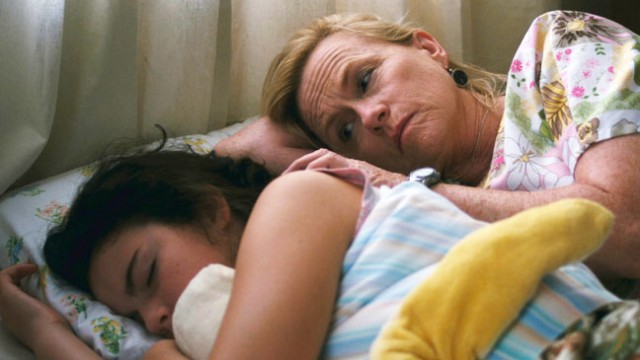
 Jenny Deller’s first feature, Future Weather, is an involving, if overly zealous, coming-of-age drama about a thirteen-year-old loner obsessed with saving the environment. Perla Haney-Jardine (Kill Bill Vol. 2, Dark Water) stars as Lauduree, a smart, independent girl whose flighty single mother, Tanya (Marin Ireland), suddenly bolts from their trailer on the outskirts of Philadelphia and takes off for the West Coast in hopes of becoming a Hollywood makeup artist. At first Lauderee tries to go it alone but eventually starts living with her grandmother, Greta (Amy Madigan), a tough woman who is considering moving to Florida with her longtime boyfriend, the well-meaning Ed (William Sadler). Jenny’s only solace comes in science club, where she and new kid Neel (Anubhav Jain) work on special nature projects with their understanding teacher, Mrs. Markovi (Lili Taylor). While Jenny grows more and more concerned with the disastrous changes that are threatening the planet, she has difficulty dealing with the many changes that are going on in her own ever-more-complicated life. Deller makes an impressive debut with Future Weather, serving as writer, director, and editor, and she produced the film with another first-timer, Kristin Fairweather. The narrative works best when it focuses on Lauderee’s relationship with her mother and grandmother and the teen’s unique individuality, but it tends to get overbearing when making its very serious points about the Earth’s impending man-made doom. However, Deller practiced what she preached, using special environmentally friendly cameras, props, and sets, natural light, and green offices and shot at such locations as the Schuykill Center for Environmental Education and the Pennypack Ecological Restoration Trust. The film will be playing the reRun Gastropub Theater from March 1 to 7, with several special events scheduled. On March 2 at 2:00, Deller, production designer Gino Fortebuono, and cinematographer Zac Mulligan will participate in the panel discussion “Collaborating on the Vision for Future Weather,” and on March 3 at 2:00, Deller, composer Erik Friedlander, and music supervisor Jackie Mulhearn will be on hand for the panel “Creating a Soundtrack.”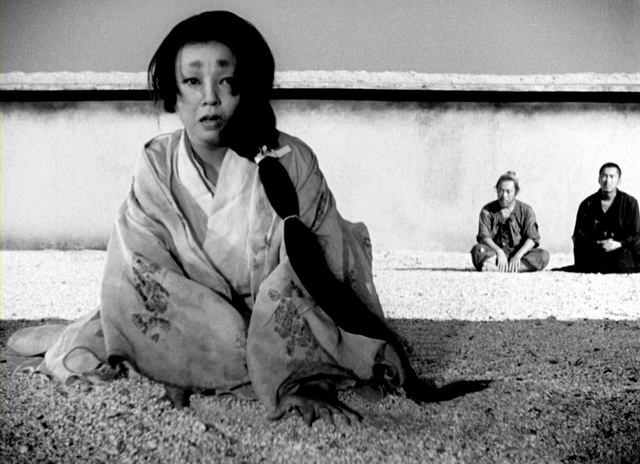
 One of the most influential films of all time, Akira Kurosawa’s 1950 masterpiece stars Toshirô Mifune as a bandit accused of the brutal rape of a samurai’s wife (Machiko Kyo) and the murder of her husband (Masayuki Mori). However, four eyewitnesses tell a tribunal four different stories, each told in flashback as if the truth, forcing the characters — and the audience — to question the reality of what they see and experience. Kurosawa veteran Takashi Shimura — the Japanese Ward Bond — plays a local woodcutter, with Minoru Chiaka as the priest. The mesmerizing work, which won an Oscar for Best Foreign Language Film, is beautifully shot by Kazuo Miyagawa; Rashomon is nothing short of unforgettable. (What is forgettable is the English-language remake, The Outrage, directed by Martin Ritt and starring Edward G. Robinson, Paul Newman, Laurence Harvey, Claire Bloom, and William Shatner.) Rashomon is screening March 1 at 9:30 as part of the Rubin Museum Cabaret Cinema series “Illusions Revealed,” consisting of films that address misperception, and will be introduced by neuroscientist John J. Sakon. The series continues with such films as Rosemary’s Baby, Cinema Paradiso, Black Moon, and Cross of Iron through April 26.