this week in lectures, signings, panel discussions, workshops, and Q&As

ROOM 237

ROOM 237

A handful of obsessed theorists share their rather unique takes on THE SHINING in fun and fascinating ROOM 237 documentary

ROOM 237 (Rodney Ascher, 2012)
IFC Center, 323 Sixth Ave. at Third St., 212-924-7771
Elinor Bunin Munroe Film Center, 144 West 65th St. between Broadway, 212-757-2280
Opens Friday, March 29
www.room237movie.com

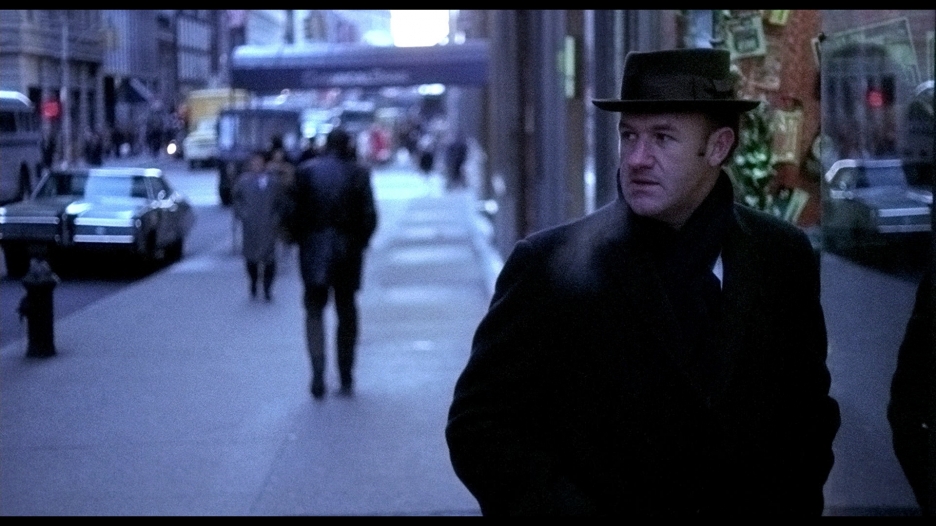
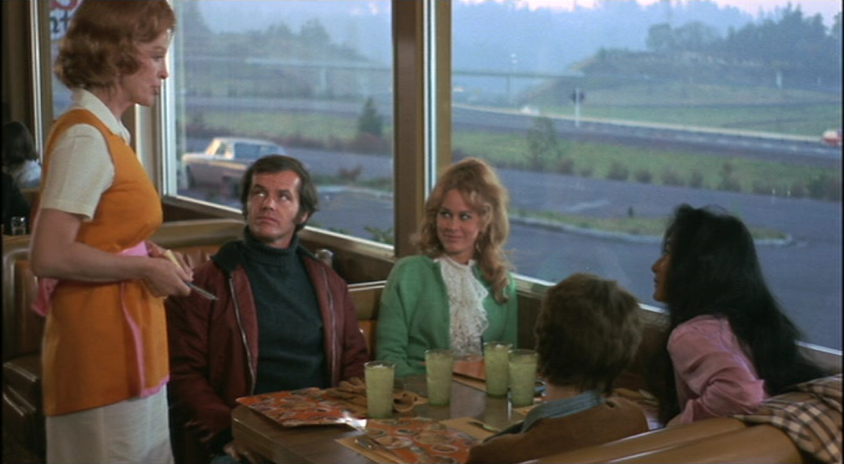
The next time you watch Stanley Kubrick’s cult classic horror flick, The Shining, you’re gonna want to put on a tinfoil hat while drinking your soda and munching on popcorn after seeing Rodney Ascher’s Room 237, an extremely entertaining study of obsession, the love of movies, and people with a little too much time on their hands. A marvelous exploration of how we watch and individually interpret movies, Room 237 allows a handful of wild theorists to deconstruct and reconstruct Kubrick’s widely examined film, based on Stephen King’s 1975 bestselling novel. From the sweeping opening helicopter shot to the final zoom on a black-and-white photograph, four men and one woman share their deeply researched insight into what virtually every moment of Kubrick’s frightening tale of a writer (Jack Nicholson) and his wife (Shelley Duvall) and son (Danny Lloyd) taking care of a Colorado mountain hotel during the off-season is really about. But these are not just plain nuts; among them is an award-winning journalist, an accomplished historian, a published playwright, and a musician and WFMU deejay. Ascher (The S from Hell) never shows the commentators, instead allowing them to verbally describe their theories while he plays the relevant clips, accompanied by brief shots from all of Kubrick’s films (Dr. Strangelove, Full Metal Jacket, Paths of Glory, A Clockwork Orange, 2001: A Space Odyssey, etc.) and other movies and television programs that cleverly relate to the storytelling. Jay Weidner believes that The Shining is Kubrick’s apology for having directed the faked Apollo 11 moon landing, Bill Blakemore thinks it’s about the genocide of the American Indians, Geoffrey Cocks is sure it’s about the Holocaust, and Juli Kearns finds it to be about the mythical Minotaur; Kearns also has generated a three-dimensional map of the Overlook Hotel to delve into the impossible spatial relationships perpetrated by Kubrick, always, she claims, with a very specific reason. Perhaps the most creative of the subjects is John Fell Ryan, who insists that the film was meant to be seen both forward and backward — at the same time. One of the “leading” Shining explorers, Kevin McLeod, aka “mstrmnd,” declined to appear in the film, but some of his views are included as well. While many of the theories will leave you scratching your head or laughing hysterically, you’re almost sure to start giving credence to a few, so beware; it’s a natural tendency of the human brain to try to detect patterns in things, and in this case the work has already been done for you. But one thing is certainly true: After watching Room 237, you’ll never be able to look at The Shining the same way again. Room 237 opens March 29 at the IFC Center and the Elinor Bunin Munroe Film Center, with Ascher and producer Tim Kirk going back and forth between the two venues on Friday and Saturday for various Q&As and introductions.

WK 360 CLOSING EVENT + ARTIST TALK + GIVEAWAY

WK 360: A MID-CAREER SURVEY DOCUMENTING 25 YEARS
Jonathan LeVine Gallery
557 West 23rd St. between Tenth & Eleventh Aves.
Saturday, March 30, free, 4:00-6:00
212-243-3822
www.jonathanlevinegallery.com
www.wkinteract.com

French-born, New York-based street artist WK Interact has been creating perpetual-motion-intensive black-and-white site-specific works for a quarter of a century, interacting with urban environments around the world. His swirling, sprawling manipulated photocopy projects, like his 2011 “Project Brave” tribute in Brooklyn to the heroes of 9/11 on the tenth anniversary of the tragedy, can be found on walls and buildings as well as in art galleries. His latest show, “WK 360: A Mid-career Survey Documenting 25 Years,” comes to a close at Jonathan LeVine’s pop-up gallery on West 23rd St. in Chelsea on Saturday, and it’s going out in a big way. Starting at 4:00, all guests will receive a free copy of the exhibition catalog. At 5:00, WK will give an artist talk, and he will also sign copies of his monograph and a 30×40-inch map (both available for purchase) of the locations of his artwork in Lower Manhattan over the years.

SANBASO, DIVINE DANCE

Solomon R. Guggenheim Museum
1071 Fifth Ave. at 89th St.
March 28-29, $30-$50
212-423-3587
www.guggenheim.org

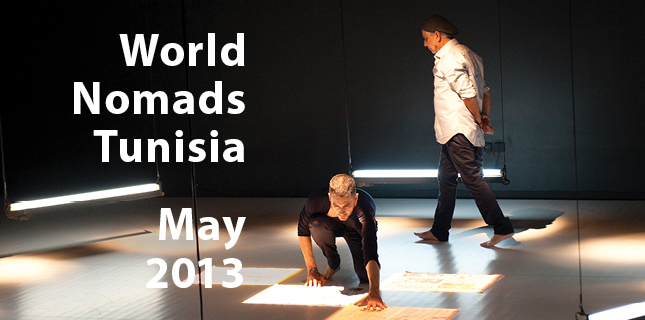
In conjunction with the major Guggenheim exhibition “Gutai: Splendid Playground,” which continues through May 8, the museum is teaming up with Japan Society to present the North American premiere of Sanbaso, divine dance, taking place in the rotunda of the Frank Lloyd Wright building March 28 at 2:00 and 8:00 and March 29 at 8:00. The ancient celebratory ritual dance will feature Kyogen actor Mansai Nomura (Onmyoji, Ran) as the title character, joined by five noh musicians and three noh chanters, with the set and costumes designed by Japanese artist Hiroshi Sugimoto based on his recent “Lightning Fields” series of photographs. “It is believed that the roots of Sanbaso lie in the myth of Amaterasu-omikami, the goddess of the sun, who hid in the heavenly rock cave Ama-no-Iwato,” Sugimoto explained in a statement. “This performance expresses how the gods descend to earth and is regarded as the most important performance piece among all the Shinto rituals. . . . The audience of this performance will witness the gods’ presence even in these jaded modern times.” This special program, a tribute to Gutai avant-garde artist Shiraga Kazuo’s Ultramodern Sanbasō, which opened the seminal “Gutai Art on Stage” presentation in 1957, is sold out, but there will be a standby line, with each person allowed to buy one ticket if any become available. In addition, on March 26, Japan Society will host a screening of Yuko Nakamura’s 2012 documentary Memories of Origin — Hiroshi Sugimoto, which follows Sugimoto around the world and includes appearances by architect Tadao Ando, artist Lee Ufan, critic and curator Akira Asada, and actor Mansai Nomura; Sugimoto will introduce the film and participate in a Q&A afterward.

Striking production of SANBASO, DIVINE DANCE lights up the Guggenheim (photo by Enid Alvarez; © 2013 Solomon R. Guggenheim Foundation, New York)

Striking production of SANBASO, DIVINE DANCE lights up the Guggenheim (photo by Enid Alvarez; © 2013 Solomon R. Guggenheim Foundation, New York)

Update: Slow and steady, performed with split-second timing, Sanbaso, divine dance is a striking piece, a highly stylized, precisely choreographed combination of music, vocalization, movement, architecture, and design, beautifully tailored to its surroundings in the Guggenheim rotunda. The mesmerizing performance begins with a noh music medley featuring drums and flute, a traditional sonic introduction that sets the mood for what follows. After the trio of musicians departs, the full cast enters, with Kazunori Takano as Senzai, Haruo Tsukizaki as Koken, and kyogen star Mansai Nomura as the title character, along with a slightly larger group of musicians and vocalists. They all proceed slowly down the spiral from the Guggenheim’s second floor, emerging from behind one of Hiroshi Sugimoto’s lightning-themed curtains and winding their way to the bare stage, which stands about three feet off the ground. As the musicians play — the earlier trio of Rokurobyoe Fujita on fue (flute), Atsushi Ueda on ko-tsuzumi (small hand drum), and Keinosuke Okura on o-tsuzumi (large hand drum) is joined by Yotaro Uzawa on ko-tsuzumi (lead hand drum), Kensaku Araki on waki-tsuzumi (second small hand drum), and a ji-utai (chorus) of Ren Naito, Hiroharu Fukata, and Shuichi Nakamura — a ritual takes place in which the senzai is presented with gold hand chimes, known as suzu, from a box held by the koken. Soon Sanbaso approaches the koken and is given a small, dark mask of an old man’s face that he puts on, then starts taking loud steps and shaking the chimes in unison with the drummers. Flashing his lightning-patterned blue robe designed by Sugimoto, he stops, jerks his head, then lifts and brings down a heavy foot, creating an echo that reverberates throughout the Guggenheim. Nomura is also wearing a tall, dark hat — similar to the one he wore in the two fantastical Onymoji films — that reflects light and the late Motonaga Sadamasa’s water tubes, which arc across the museum, in such a way that it looks like bolts of lightning are streaking down it. At times, Nomura’s foot stomps are like thunder, matching Rie Ono’s lighting that makes the bolts on Sugimoto’s curtains come alive, as if a storm has suddenly arrived. Having honored the gods, Sanbaso returns the mask and chimes to the koken, and the company prepares for the finale, after which they go back up the winding Guggenheim ramp and disappear behind the lightning curtains. It’s nearly impossible to take your eyes off Nomura, who inhabits his role like it’s part of his soul. He even adds a final flourish as he accepts the accolades of the delighted audience, which on Thursday night included Sugimoto as well as Cai Guo-Qiang, whose stunning “I Want to Believe” exhibition filled the Guggenheim five years ago.

NICK CAVE: HEARD•NY

Artist Nick Cave watches a rehearsal of “Heard•NY” (sans horse costumes) in Vanderbilt Hall (photo by twi-ny/mdr)

Artist Nick Cave watches a rehearsal of “Heard•NY” (sans horse costumes) in Vanderbilt Hall (photo by twi-ny/mdr)

Grand Central Terminal, Vanderbilt Hall
89 East 42nd St.between Lexington and Vanderbilt
March 25-31, free
Daily crossings at 11:00 and 2:00, daily tours at 3:30
www.creativetime.org
heard•ny rehearsal slideshow

Grand Central Terminal is famous for its cattle-like crowds — hence the overused cliché “It’s like Grand Central Station in here!” — but it’s about to take in a whole new kind of herd this week. Starting on Monday, March 25, and continuing through Sunday March 31, Nick Cave’s “Heard•NY” will add to all the hustle and bustle. The Missouri-born multidisciplinary artist, whose dual exhibits “Ever-After” at Jack Shainman and “For Now” at Mary Boone ran in Chelsea in the fall of 2011, is installing thirty of his life-size horse Soundsuits in Vanderbilt Hall, where they will be on view all week. But every day at 11:00 am and 2:00 pm, student dancers from the Ailey School will get inside the colorful suits and perform what are being called “Crossings,” making their through the world’s most famous train terminal in intricate movements developed by Cave and Chicago-based choreographer William Gill, with live music by harpists Shelley Burgon and Mary Lattimore and percussionists Robert Levin and Junior Wedderburn. (There will also be daily guided tours of the installation at 3:30.) The performances harken back to the days when horse-drawn carts were prevalent in the city, prior to the coming of the railways and automobiles. A collaboration between Creative Time and MTA Arts for Transit as part of Grand Central Terminal’s ongoing centennial celebration, “Heard•NY” continues Cave’s exploration of human and animal ritual behavior and social and cultural identity, using found and recycled materials to create sculpture, video, and combinations of the two. The artist will discuss his latest work in relation to masquerade, performance, and dreaming in public at a special presentation, “A Conversation with Nick Cave,” in the Metropolitan Museum of Art’s Bonnie J. Sacerdote Lecture Hall on March 29 at 6:00 (free with museum admission), with Cave, Creative Time curator Nato Thompson, and Met curator Alisa LaGamma. “A herd of horses has been unleashed in Grand Central Terminal,” Thompson poetically explains in a statement. “Grazing in Vanderbilt Hall, they move at a pace perhaps too slow for the needs of a commuter, seeming to ask us to slow down. To take a second. To look. . . . In the frantic pace of our contemporary age, in the monumental machine that is Grand Central Terminal, we are temporarily placed outside ourselves by crossing paths with Cave’s creations. We can observe these horses in the same way that we look upon our fellow travelers in the Main Concourse, sensing the texture of time and the dizzying visual seduction that is the pleasure and bewilderment of our contemporary moment.” People are always rushing through train stations, which primarily serve as weigh stations at the beginning, middle, or end of a journey, but “Heard•NY” should make everyone stop for a few minutes, take a deep breath, and enjoy the surrounding fun, taking advantage of where they are rather than hurrying to get where they are going. (Coincidentally, madman Australian musician Nick Cave is also in New York City this week, playing the Beacon Theatre March 28-30 with his longtime band, the Bad Seeds.)

THE (*) INN

THE (*) INN

Strange things are happening in the shtetl in centennial production of Peretz Hirschbein’s THE (*) INN (photo by Erik Carter)

Abrons Arts Center Playhouse
466 Grand St. at Pitt St.
Thursday – Sunday through March 30, $25
212-598-0400
www.abronsartscenter.org
www.targetmargin.org

In the foreword to the 1921 English version of Peretz Hirschbein’s Yiddish-language play The Haunted Inn, translator Isaac Goldberg explains, “So much of the drama is written with Mr. Hirschbein’s sensitivity to subdued tones; . . . here color tends to subside into nuance, and action . . . is refined into the suggestions of impulse and mood.” Target Margin Theater has wonderfully captured that nuance, impulse, and mood in its hundredth anniversary presentation of the experimental Yiddish play, which they call The (*) Inn, the asterisk meaning “empty, vacant, abandoned; usually translated as ‘Haunted.’” Directed by David Herskovits (who also handles the sound design), the play, running at Abrons Arts Center through March 30, is set in a shtetl where local farmers are preparing for an arranged wedding while also contemplating the future of a nearby shuttered inn that might just be home to spirits. The show opens with a hyper-stylized scene in which characters in overemphasized accents discuss life and love while a man and a woman playfully pass by with cutouts of farm animals, evoking amateur high school productions.

Meg MacCary and David Greenspan consider the crazy goings-on in avant-garde Yiddish theater revival (photo by Erik Carter)

Meg MacCary and David Greenspan consider the crazy goings-on in avant-garde Yiddish theater revival (photo by Erik Carter)

But things get a whole lot more adult during a wedding scene in which the bride, Meta (Rachel Claire), runs off with Itsik (Sam T. West) instead of marrying her arranged beau, Leibush (Susan Hyon), and winds up in a mysterious area, exploring both their lust and their fears. Meanwhile, Meta’s father, Bendet (Amir Darvish), begins to lose his mind as the show grows ever-more abstract, with nuance, impulse, and mood taking center stage. The (*) Inn is beautifully unconventional, offering unexpected surprise after unexpected surprise, with creative sets by Carolyn Mraz and intense lighting by Lenore Doxsee, ranging from the overly bright opening to the deep, dark conclusion. Performed by a cast that also includes Ugo Chukwo, David Greenspan, Meg MacCary, Julia Sirna-Frest, and J. H. Smith III, The (*) Inn is not your grandfather’s Yiddish theater. As dramaturg Debra Caplan writes in a program note, “When The (*) Inn first premiered in Vilna in 1913, critics and audiences had never seen anything quite like it before. One hundred years after the original production of this seminal Yiddish play, we at Target Margin are willing to bet that you’ve never seen anything quite like it either.” Target Margin Theater wins that bet, with a show that is part of its two-year “Beyond the Pale” exploration of Yiddish theater. (There will be a free panel discussion, “Yiddish Theater Lives!,” prior to the March 23 show, moderated by Caplan, as well as a discussion with Herskovits and other cast and crew members after the March 28 performance.)

NYC TEEN AUTHOR FESTIVAL

Nova Ren Suma will be celebrating the release of her second YA novel at this weekend's Teen Fair

Nova Ren Suma will be celebrating the release of her second YA novel at this weekend’s free NYC Teen Author Festival

The free NYC Teen Author Festival kicks into full swing this weekend with numerous special events featuring many of the best YA authors in the business. On Friday at 2:00 at the New York Public Library’s second-floor Margaret Liebman Berger Forum, Ted Goeglein, Gordon Korman, Lucas Klauss, and Michael Northrop will take on Susane Colasanti, E. Lockhart, Carolyn Mackler, Sarah Mlynowski, and Leila Sales in a “He Said, She Said” battle moderated by David Levithan, part of an afternoon symposium that continues at 3:00 with “Taking a Turn: YA Characters Dealing with Bad and Unexpected Choices,” with Caela Carter, Eireann Corrigan, Alissa Grosso, Terra Elan McVoy, Jacquelyn Mitchard, Elizabeth Scott, and K. M. Walton, moderated by Aaron Hartzler; at 4:10 with “That’s So Nineteenth Century,” with Sharon Cameron, Leanna Renee Hieber, Stephanie Strohm, and Suzanne Weyn, moderated by Sarah Beth Durst; and concluding at 4:40 with “Alternate World vs. Imaginary World,” with Durst, Jeff Hirsch, Emmy Laybourne, Lauren Miller, E. C. Myers, Diana Peterfreund, and Mary Thompson, moderated by Chris Shoemaker. Following that, a bunch of authors will be signing books at the Union Square B&N, from 7:00 to 8:30, including Corrigan, Elizabeth Eulberg, Hirsch, Levithan, Rainbow Rowell, and Nova Ren Suma. Saturday’s symposium in the Berger Forum begins at 1:00 with “Defying Description: Tackling the Many Facets of Identity in YA,” with Marissa Calin, Emily Danforth, Hartzler, A. S. King, and Jacqueline Woodson, moderated by Levithan, followed at 2:10 by a New Voices Spotlight featuring J. J. Howard, Kimberly Sabatini, Tiffany Schmidt, and Greg Takoudes; at 2:40 by “Under Many Influences: Shaping Identity When You’re a Teen Girl,” with Jen Calonita, Deborah Heiligman, Hilary Weisman Graham, Kody Keplinger, Amy Spalding, Katie Sise, and Kathryn Williams, moderated by Terra Elan McVoy; at 3:40 by “Born This Way: Nature, Nurture, and Paranormalcy,” with Jessica Brody, Gina Damico, Maya Gold, Alexandra Monir, Lindsay Ribar, Jeri Smith-Ready, and Jessica Spotswood, moderated by Adrienne Maria Vrettos; and at 4:20 by “The Next Big Thing,” with Jocelyn Davies, Hieber, Barry Lyga, and Maryrose Wood. From 7:00 to 8:30, there will be a Mutual Admiration Society reading at McNally Jackson on Prince St. consisting of Cameron, King, Northrop, Peterfreund, Victoria Schwab, and Suma, hosted by Levithan. And on Sunday, the weeklong festival comes to a close with nearly fifty YA authors taking part in “Our No-Foolin’ Mega-Signing” at Books of Wonder from 1:00 to 4:00, a smorgasbord of talent divided into forty-five-minute groups at 1:00, 1:45, 2:30, and 3:15.

OKTOPHONIE

oktophonie

KARLHEINZ STOCKHAUSEN & RIRKRIT TIRAVANIJA
Park Avenue Armory, Wade Thompson Drill Hall
643 Park Ave. at 67th St.
March 20-27, $40
212-933-5812
www.armoryonpark.org

Since opening its doors as an arts venue in September 2007, the Park Avenue Armory has staged some of the city’s best, and most unusual, productions, including memorable performances and installations by Ernesto Neto, the Trisha Brown Dance Company, Ann Hamilton, Ryoji Ikeda, Shen Wei Dance Arts, Tom Sachs, STREB, Peter Greenaway, and Christian Boltanski, often involving immersive, interactive environments. Its latest presentation is yet another unique, involving piece, Oktophonie, a reimagined audiovisual version of the eponymous composition by German electronic maestro Karlheinz Stockhausen (1928–2007), a sixty-nine-minute layer from Act II of Dienstag aus Licht, the Tuesday portion of Stockhausen’s twenty-nine-hour opera cycle Licht: The Seven Days of the Week. The section follows the conflict between the archangel Michael and Lucifer, with yelling and bravery, tasting and devotion; the central color is red and the planetary object is Mars. The music will be led by Dutch musician Kathinka Pasveer, who contributed voice and flute to a 1992 recording of the work and has collaborated directly with the composer. The outer-space set is designed by internationally renowned artist and Hugo Boss Prize winner Rirkrit Tiravanija, whose work often involves interaction between creator and audience, perhaps most famously with him serving food to visitors. At the armory, ticket holders are encouraged to wear white and will be sitting on cushions against a lunar surface, surrounded by a cube of speakers. “The simultaneous movements — in eight layers — of the electronic music of ‘Invasion — Explosion’ with ‘Farewell’ demonstrate how — through ‘Oktophonie’ — a new dimension of musical space composition has opened,” Stockhausen once explained. Yes, there should be quite an intersection of music and space at the armory, where Oktophonie runs March 20–27, with tickets going fast. There will be an Artist Talk on March 23 at 6:00 in the Veterans Room ($15), with Pasveer and musician Suzanne Stephens, moderated by new armory artistic director Alex Poots.