
Music journalist and playwright Marc Spitz examines his wild years in new memoir
Housing Works Bookstore Cafe
126 Crosby St. between Houston & Prince Sts.
Monday, March 18, free, 7:00
212-334-3324
www.housingworks.org
www.marcspitz.com
“I didn’t know how to be undamaged,” music journalist and playwright Marc Spitz admits near the end of his latest book, Poseur: A Memoir of Downtown New York in the ’90s (Da Capo, February 2013, $15.99). In his brutally honest autobiography, Spitz delves into his early dreams of sex, drugs, and rock and roll, a life he got to live out, experiencing dazzling highs as well as dirt-bottom lows as he partied with the best of them, from up-and-coming musicians to legendary stars. Spitz, who was born in Far Rockaway and raised in the Five Towns, wrote more than a dozen cover stories for Spin magazine, spending time with such seminal groups as the Pixies, the Strokes, the White Stripes, and Weezer. He has also penned books on Mick Jagger, David Bowie, Green Day, and the L.A. punk scene; published a pair of novels: How Soon Is Never?, in which a character is obsessed with Morrissey and the Smiths, andToo Much Too Late, about a fictional garage band named the Jane Ashers; and has written a dozen plays, including Retail Sluts, Your Face Is a Mess, The Hobo Got Too High, and “. . . Worry, Baby.” Poseur is a special treat for people who, like the author, came of age on Long Island and in Manhattan during the 1980s and ’90s, as Spitz writes about the Green Acres Mall, the Lynbrook movie theater, the Chelsea Hotel, the Kitchen, the Holiday Cocktail Lounge, Don Hill’s, the Slipper Room, and other haunts. On March 18, he will be at Housing Works, reading from Poseur and participating in a conversation with his friend and colleague Chuck Klosterman.
twi-ny: Like you, I grew up in and around the Five Towns area and couldn’t wait to start hanging out in the city. Many of my friends still live out there. What is it about Wrong Island, as you call it in the book, that makes some people want to escape and others settle in?
Marc Spitz: I should say that today, in my early forties, I have such an affection for that area, and realize how much I took the safety and comfort for granted. But as a kid, you just can’t work through the restlessness. And it feels like absolute torture to know that the city is so close. You could get there in less time than it took to watch an episode of Dynasty. It’s one thing to grow up in Ohio or Michigan and pine and plan for Manhattan, but it’s quite another to see it and smell it on a regular basis and not be able to have it for very long. Even when I would cut class and spend the day there, I was always keeping an eye on the watch and the train schedule in my head. The Five Towns just seemed so small. All five of them put together didn’t add up to St. Marks Place for me then. But again, this is someone who now Googles Bea’s Tea Room or Mother Kelly’s in the middle of the night. I think Bea’s is gone now. Have you ever had the macaroni salad from Bea’s? I don’t know what they put in it but it’s become mythical among Five Towners, the side-order equivalent of a unicorn or a mermaid, and I’ve been searching for it ever since, obsessed like Eugene Levy in Splash.
twi-ny: You’ve interviewed many of the biggest rock stars in the world, writing magazine articles and books, but with Poseur, you’re now, in essence, interviewing yourself. Was that hard to do?
Marc Spitz: Yes, I’d rather interview a hundred rock stars than, say, my mom, who I interviewed for Poseur. Or spend time with my own journals and notes and old (bad) writing. I think you have to live in the past quite literally to do a memoir, and I certainly had to drop out a bit. No more bar hopping or dating. I turned forty and just figured it was time. I was also fueled by a certain sense of cause. Like I really wanted to snatch the NYC myth away from these ’60s and ’70s folks who’ve been dining out on their NYC for far too long. Who is to say that their NYC, even with Warhol and CBGBs, was more valid than mine. They won’t get out of the way unless you push them, you know? “Yeah, great. Max’s Kansas City . . .” What about Max Fish, guy? Of course, I was totally in love and inspired by the ’60s and ’70s NYC as a kid and tried to emulate it when I first moved here in the late ’80s. Staying at the Chelsea and all. That’s fine and good when you’re a teen or in your twenties, but into your forties you kind of hunger for your own sense of historical placement, and like I said, sometimes you have to just take it. So while it was difficult and unpleasant and at times just plain sad to go there, interview wise or mind-set wise, I felt like it was necessary.
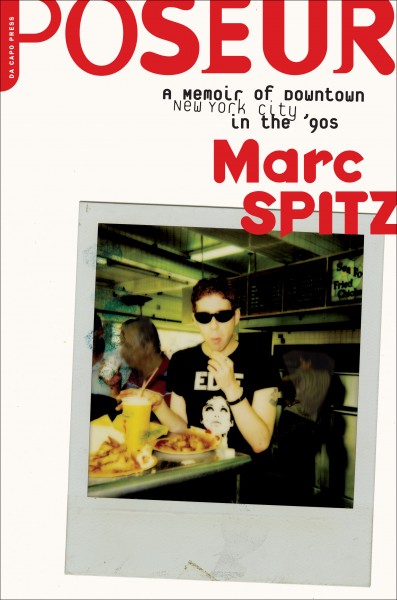
twi-ny: In Poseur, you write, “When you finish a book, it doesn’t matter if it never gets published; it doesn’t matter if it even gets read by another human being not obligated to read it, like a girlfriend or a thesis tutor. You change. You are not the same. Whether or not the book is any good doesn’t matter. You are better.” Did finishing this memoir feel any different from finishing your previous books or plays?
Marc Spitz: I only recently realized it was over. Like when it was out. The day after the book party, I was hung over and sort of a roach with the lights suddenly on scurrying blindly. Not sure where to go, but it was good. For nearly three years, I’ve had such a sense of purpose and direction, all of it, or the majority of it, anchored to this thing. And suddenly it’s just . . . on sale. You’re a ranking number on Amazon . . . and not a very high one. There’s no earthquake. No explosion. No rapture. Not even the Rapture. But in a way, while the closure is always anticlimactic, and the more personal the book, the more painful that anticlimax can feel (totally overshadowing any triumphs such as being asked to do an interview like this one), it has to happen, especially if you want to be prolific. I want to write a lot of books. I have a deadline for my next one and an idea for the one after that. And a new play. So . . . you know, you can’t linger. The feeling of it being done is no different from the feeling of the first book being done. It’s like President Bartlett says: “What’s next?” After the good, long bender anyway. . . .
twi-ny: A few months ago, a copy of Esquire arrived in my mailbox, replacing Spin, which ended its print version in the fall. You wrote for Spin for many years, including more than a dozen cover stories; how did you react to the news of the print magazine’s demise? Did it surprise you?
Marc Spitz: I made my break with Spin emotionally a long time ago, probably before I even left in 2006. It was fairly obvious where things were heading and it was not a good prognosis. So it’s like when you hear the news that a lifelong junkie finally overdoses. You’re not at all surprised but you’re still shaken for some reason. I got Car and Driver, by the way, not Esquire. I actually read Esquire. It’s tricky to talk about this because I still have old friends and coworkers who are employed by Spin and working hard on the website (even though they have not covered Poseur at all . . . despite about a hundred pages of Spin-related memories . . . but it’s not like Boston’s a big college town). Part of me hopes they keep the brand going and part of me wishes it would just bow out gracefully and not be part of some giant web conglomerate’s Ken-Taco-Hut. But I am not proprietary about Spin’s legacy. I remember people grousing about “the good old Guccione days,” which I totally missed. I was part of the new guard coming in after he sold it. It’s human nature to kvetch about such changes, especially if you’re genuinely moved by them, so I will just say . . . “badly.” And “no.”
twi-ny: Since you began writing, music journalism has changed significantly; now just about anyone can consider themselves a critic by starting a blog, writing a few words, and uploading a photo or a video. Do you think that’s been good or bad for the music industry in general and music journalism specifically?
Marc Spitz: Yeah, I was talking to my ex the other day, Lizzy Goodman, who is also a music writer and I said, “Wow, did we pick a shitty career.” And she said, “Well, you made it look like it was a good choice.” Which was both flattering and made me feel guilty. I think in order to get pieces that win awards and change lives and keep the art of rock writing going, you need to spend time and money. I toured with bands. I traveled across the country and the planet and what I filed had all that flavor. It seems like now it’s like, “Wiz Khalifa came by the office . . .” which is, you know, a hub with a bunch of laptops and it’s posted for people that night. Which is the market. You can’t argue with the market. It’s what people want. But it’s not going to spit out another Lester Bangs or Julie Burchill any time soon. It’s just information now. Photos and files and 250 blips of text. As far as the music industry, I don’t really know. I just heard that record sales are up for the first time in a decade. That can’t be all Adele, can it? Is it? It is? OK. I have to go back to my trash can now.
twi-ny: On March 18, you’ll be at Housing Works in conversation with Chuck Klosterman. In the book, you write, “Chuck was good. It would have been so much easier if he were a fraud. I decided the thing to do was to kill him.” Have you and Chuck remained friends over the years? Do you still get those kinds of jealousy fantasies?
Marc Spitz: We have remained friends. We have a drink once or twice a year, and I always enjoy his company. I read his books. He reads mine. I’ve been lucky to do this during a time when you really had a sense of your peers, whether it was Chuck or people like Chris Norris when I was at Spin or Rob Sheffield, who is both another old friend now and also a genius writer; the very best at what he does and a voice you can’t imitate. I don’t know that people filing the above-mentioned text blips have that sense of Beatles/Stones/Beach Boys late ’60s competition thing, which we all definitely felt. If someone wrote a killer feature, your next one had to just blow the doors off theirs and vice verse. Blow the bloody doors off! It looks like my career is winding down and I will never get to do a U2 cover story and Sia Michel — our then-boss gave Klosterman that one – but otherwise we’re cool. Better than cool. The Housing Works thing, by the way, was something he offered. I didn’t ask him to do it. That’s the kind of guy he his, very generous and curious and with a good perspective on his (maddening . . . just kidding) success.




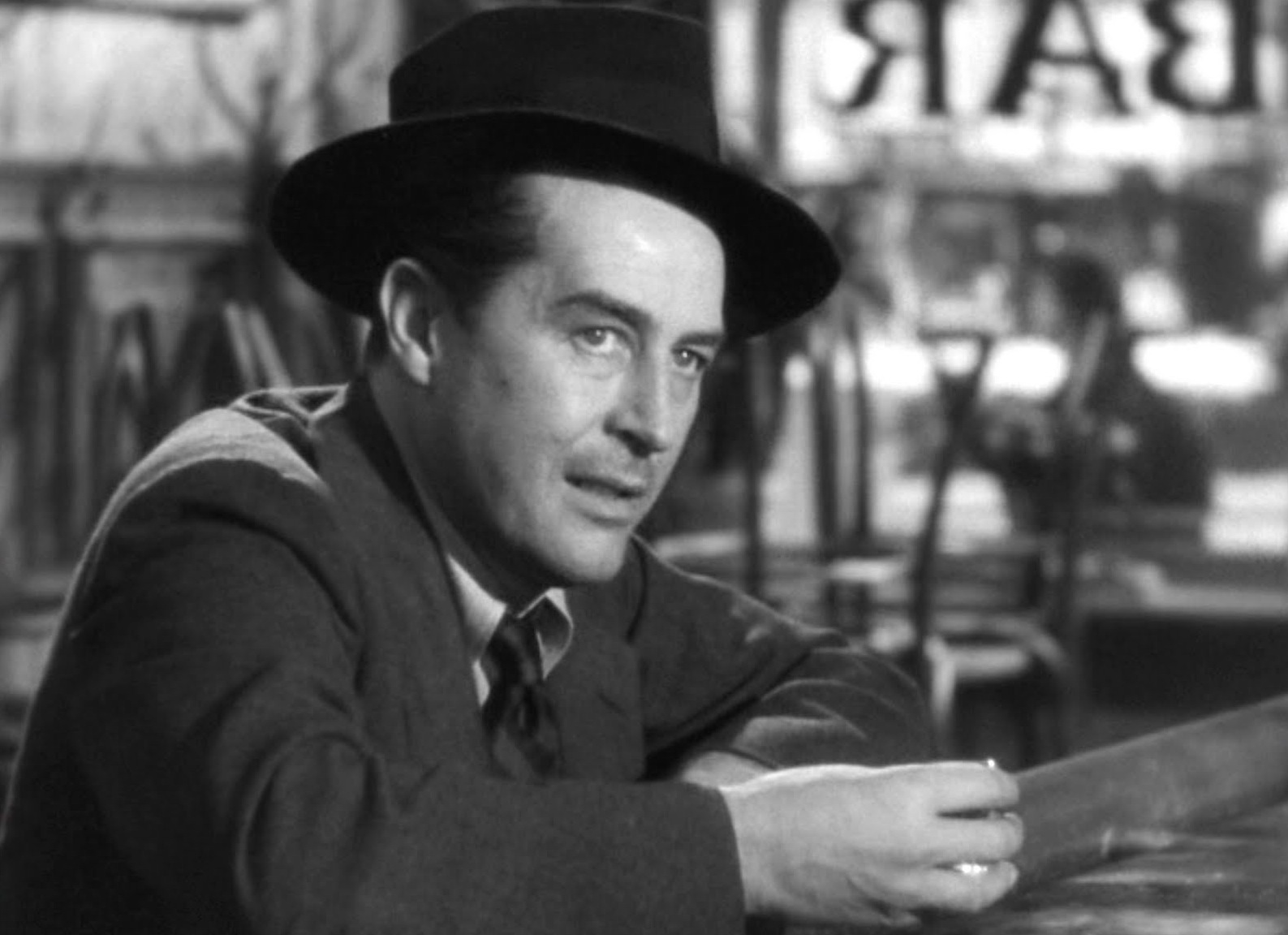
 Ray Milland won an Oscar as Best Actor for his unforgettable portrayal of Don Birnam in Billy Wilder’s The Lost Weekend, starring as a would-be writer who can see life only through the bottom of a bottle. Having just gotten sober, he is off to spend the weekend with his brother (Phillip Terry), but Don is able to slip away from his girlfriend, Helen (Jane Wyman), and his sibling and hang out mostly with Nat the bartender (Howard Da Silva) and plenty of inner demons. One of the misunderstood claims to fame of Wilder’s classic drama is that it was shot in P. J. Clarke’s on Third Ave.; although the bar in the film was based on Clarke’s, the set was re-created in Hollywood, which doesn’t take anything away from this heartbreaking tale that will not have you running to the nearest watering hole after you see it. The Lost Weekend, which won three other Academy Awards — Best Screenplay (Wilder and Charles Brackett), Best Director (Wilder), and Best Picture — is screening March 18 at 7:25 at Film Forum and will be introduced by Blake Bailey, author of the new biography Farther & Wilder: The Lost Weekends and Literary Dreams of Charles Jackson (Knopf, March 13, 2013, $30), about the author of such books as The Lost Weekend and The Fall of Valor, and will be followed by a book signing. Bailey, who has also written biographies of John Cheever and Richard Yates, is currently working on a major bio of Philip Roth; the new documentary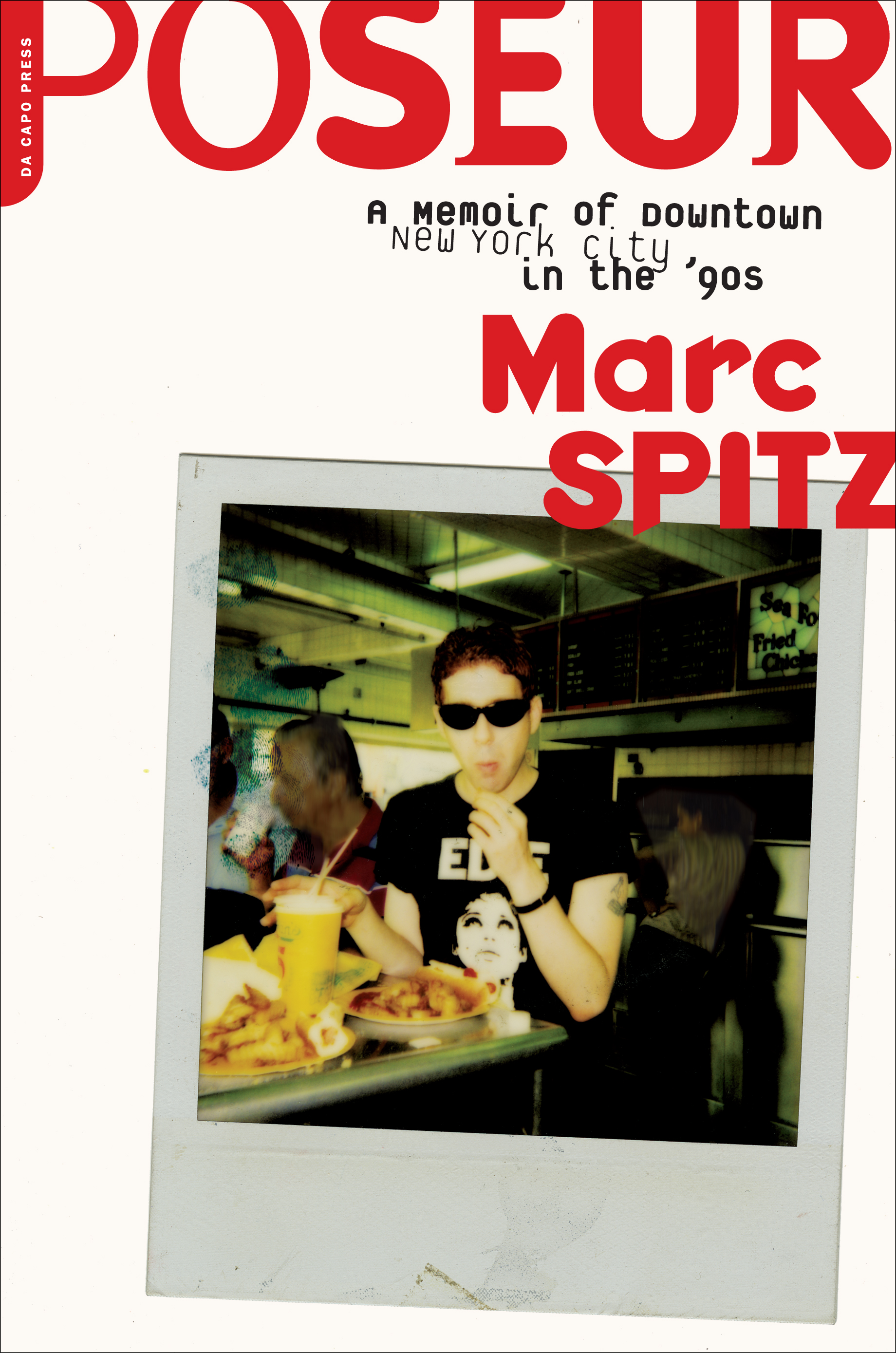
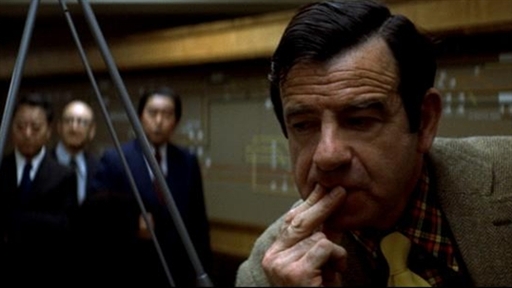
 Loosely adapted from the book by John Godey, The Taking of Pelham One Two Three wonderfully captures the cynicism of 1970s New York City. Four heavily armed and mustached men — Mr. Blue (Robert Shaw), Mr. Green (Martin Balsam), Mr. Gray (Hector Elizondo), and Mr. Brown (Earl Hindman), colorful pseudonyms that influenced Quentin Tarantino’s Reservoir Dogs — hijack an uptown 4 train, demanding one million dollars in one hour from a nearly bankrupt city or else they will kill all eighteen passengers, one at a time, minute by minute. The hapless mayor (Lee Wallace) is in bed with the flu, so Deputy Mayor Warren LaSalle (Tony Roberts) takes charge on the political end while transit detective Lt. Zachary Garber (a great Walter Matthau) and Inspector Daniels (Julius Harris) of the NYPD team up to try to figure out just how in the world the criminals expect to get away with the seemingly impossible heist. Directed by Joseph Sargent (Sybil), the film offers a nostalgic look back at a bygone era, before technology radically changed the way trains are run and police work is handled. The film also features a very funny, laconic Jerry Stiller as Lt. Rico Patrone and the beloved Kenneth McMillan as the borough commander. The film was remade as a television movie in 1998, starring Edward James Olmos, Vincent D’Onofrio, and Lorraine Bracco, and as an embarrassingly bad big-budget bomb in 2009 by Tony Scott. The Taking of Pelham One Two Three is screening March 16 at 92Y Tribeca and will be followed by a discussion with Pelham sound mixer Chris Newman and special subway-related giveaways, kicking off the eight-week Cinebeasts program “The Subway Series,” consisting of subway busking and films set in the New York City underground.