this week in lectures, signings, panel discussions, workshops, and Q&As

JAMES TURRELL

James Turrell

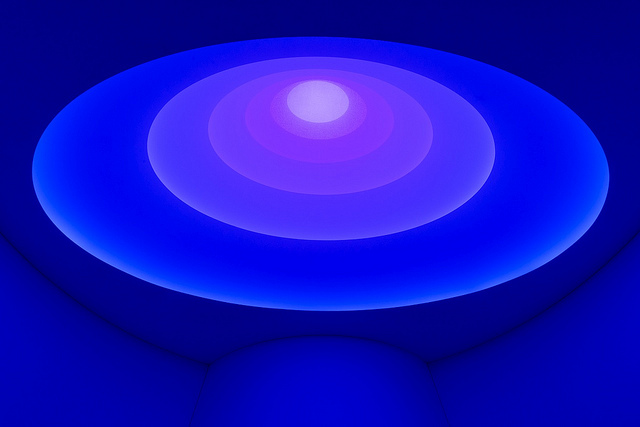
James Turrell’s “Aten Reign” bathes the Guggenheim in meditative colored light display (photo by David Heald / © Solomon R. Guggenheim Foundation, New York)

Solomon R. Guggenheim Museum
1071 Fifth Ave. at 89th St.
Friday – Wednesday through September 25, $18-$22 (pay-what-you-wish Saturday 5:45-7:45)
212-423-3587
www.guggenheim.org

During the last few years, the Guggenheim has staged several exhibitions in which the bays that line the winding interior have remained empty. In 2010, Tino Sehgal had trained men and women speak with visitors making their way to the top, with no physical art present at all. In 2011, Maurizio Cattelan’s career retrospective, “All,” consisted of an amalgamation of his works hung from the ceiling like a massive mobile, with nothing in the bays. Now James Turrell has created the site-specific “Aten Reign,” a dazzling, meditative spectacle in which five rings of light that echo the museum’s shape, beginning at the oculus at the top of the rotunda, slowly change colors in mystifying and intoxicating ways. Visitors have access only to the main floor and the first section of the spiraling ramp, with special arched benches at the bottom for more comfortable viewing, but make sure to walk around, as the display, which explores light, space, and perception, seemingly shifts form ever so slightly when seen from different positions and angles, affected by the natural daylight as well. Constructed with interlocking cones and LED fixtures, “Aten Reign” is like one of Turrell’s Skyscapes (such as his open-air “Meeting” at MoMA PS1) mixed with more subdued elements of the psychedelic Joshua Light Show while incorporating the Gazfeld effect. “I really felt to be using light as a material [is] to work or affect the medium of perception,” the L.A.-born Turrell explains in a promotional video. “For me, it’s trying to orient toward what the perception really is, rather than the object of perception, to actually, sort of, remove that. I have an art that has no image. It has no object. And even very little a place of focus, or one place to look. So, without image, without object, without specific focus, what do you have left? Well, a lot of it is this idea of seeing yourself see, understanding how we perceive.” The overall individual, hallucinatory experience grows the more you immerse yourself in its splendor, allowing it to take you to other places in your mind, body, and spirit. Take your time and let it envelop you, not worrying about anything else anywhere in the world.
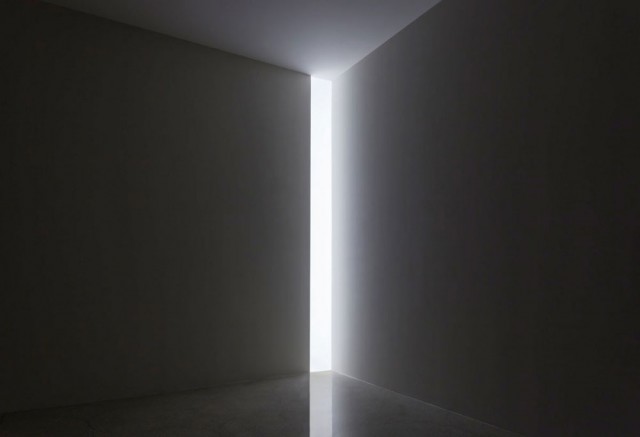
James Turrell, “Afrum I (White),” projected light, 1967 (photo by David Heald / © Solomon R. Guggenheim Foundation, New York)

James Turrell, “Afrum I (White),” projected light, 1967 (photo by David Heald / © Solomon R. Guggenheim Foundation, New York)

The show is supplemented with several rooms of other works, including a series of white-light pieces from the late 1960s that play with physical space and altered reality; “Prado (White)” appears to be a rectangular hole in the wall, “Afrum I (White)” looks like a floating cube, and the vertical “Ronin” has a special trick to it. Expect a ridiculously long line to see 1976’s “Iltar,” a mysterious wall piece that you’re not allowed to get too close to; don’t ask the guard what it actually is, because he’s not allowed to tell you. The Guggenheim is also screening a pair of short exhibition-related films, David Howe’s James Turrell, Second Meeting Art21 Exclusive and Peter Vogt and Erin Wright’s James Turrell’s Roden Crater, which examine other works by the artist; on September 20 they will be joined by Carine Asscher’s Passageways: James Turrell. Also on September 20, the afternoon symposium “James Turrell: Sensing Space” will feature presentations by Thomas Crow, Miwon Kwon, and Mark Taylor and a panel discussion moderated by exhibition co-curator Nat Trotman. Expect extended wait times for the last week of the much-talked-about show, which closes September 25, but it’s well worth it.

ART SEEN / LOCAL COLOR: CUTIE AND THE BOXER

CUTIE AND THE BOXER

Documentary tells the engaging story of a pair of Japanese artists and the life they have made for themselves in Brooklyn

CUTIE AND THE BOXER (Zachary Heinzerling, 2013)
Nitehawk Cinema
136 Metropolitan Ave. between Berry St. & Wythe Ave.
Thursday, September 19, 7:30
718-384-3980
www.nitehawkcinema.com
www.facebook.com/cutieandtheboxer

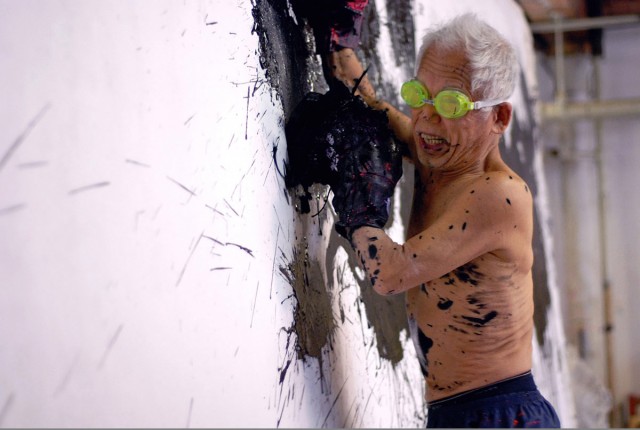
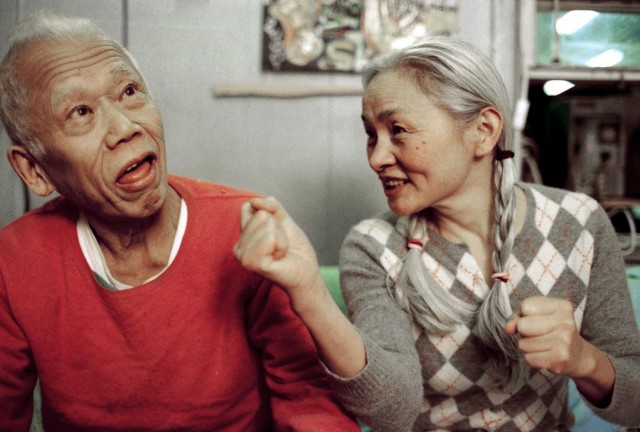
Zachary Heinzerling’s Cutie and the Boxer is a beautifully told story of love and art and the many sacrifices one must make to try to succeed in both. In 1969, controversial Japanese Neo Dada action painter and sculptor Ushio Shinohara came to New York City, looking to expand his career. According to the catalog for the recent MoMA show “Tokyo 1955-1970: A New Avant-Garde,” which featured four works by Ushio, “American art had seemed to him to be ‘marching toward the glorious prairie of the rainbow and oasis of the future, carrying all the world’s expectations of modern painting.’” Four years later, he met nineteen-year-old Noriko, who had left Japan to become an artist in New York as well. The two fell in love and have been together ever since, immersed in a fascinating relationship that Heinzerling explores over a five-year period in his splendid feature-length theatrical debut. Ushio and Noriko live in a cramped apartment and studio in DUMBO, where he puts on boxing gloves, dips them in paint, and pounds away at large, rectangular canvases and builds oversized motorcycle sculptures out of found materials. Meanwhile, Noriko, who has spent most of the last forty years taking care of her often childlike husband and staying with him through some rowdy times and battles with the bottle, is finally creating her own work, an R. Crumb-like series of drawings detailing the life of her alter ego, Cutie, and her often cruel husband, Bullie. (“Ushi” means “bull” in Japanese.) While Ushio is more forthcoming verbally in the film, mugging for the camera and speaking his mind, the pig-tailed Noriko is far more tentative, so director and cinematographer Heinzerling brings her tale to life by animating her work, her characters jumping off the page to show Cutie’s constant frustration with Bullie.

Ushio Shinohara creates one of his action paintings in CUTIE AND THE BOXER

Ushio Shinohara creates one of his action paintings in CUTIE AND THE BOXER

During the course of the too-short eighty-two-minute film — it would have been great to spend even more time with these unique and compelling figures — the audience is introduced to the couple’s forty-year-old son, who has some issues of his own; Guggenheim senior curator of Asian Art Alexandra Munroe, who stops by the studio to consider purchasing one of Ushio’s boxing paintings for the museum; and Chelsea gallery owner Ethan Cohen, who represents Ushio. But things never quite take off for Ushio, who seems to always be right on the cusp of making it. Instead, the couple struggles to pay their rent. One of the funniest, yet somehow tragic, scenes in the film involves Ushio packing up some of his sculptures — forcing them into a suitcase like clothing — and heading back to Japan to try to sell some pieces. Cutie and the Boxer is a special documentary that gets to the heart of the creative process as it applies both to art and love, focusing on two disparate people who have made a strange yet thoroughly charming life for themselves. Cutie and the Boxer is screening September 19 at 7:30 as part of two Nitehawk Cinema monthly series, “Art Seen” and “Local Color,” and will be followed by a Q&A with the director. “Art Seen” continues September 21-22 with Chris Marker’s La Jetée and Ben Rivers’s Slow Action, while “Local Color” returns October 30 with Amy Nicholson’s Zipper.

MIXER READING AND MUSIC SERIES: LUCY CORIN, ALINA SIMONE, AND RAYYA ELIAS

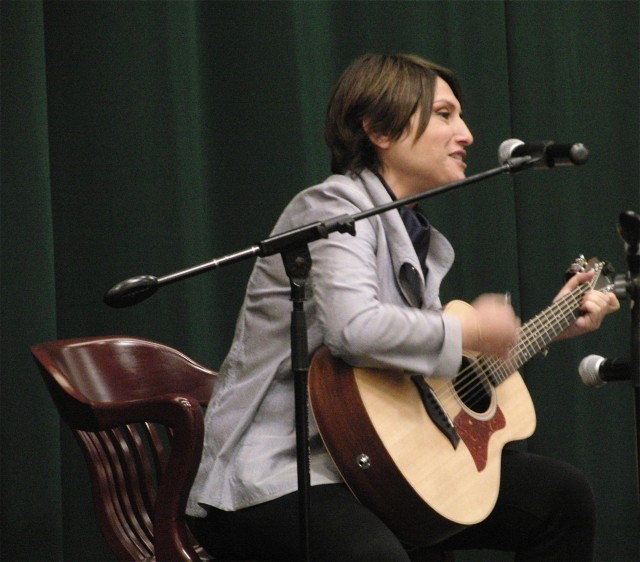
Rayya Elias will read from her memoir and play a twenty-minute set at free Mixer series at Cake Shop on September 18 (photo by twi-ny/mdr)

Rayya Elias will read from her memoir and play a twenty-minute set at free Mixer series at Cake Shop on September 18 (photo by twi-ny/mdr)

Cake Shop
152 Ludlow St.
Wednesday, September 18, free, 7:00
212-253-0036
www.cake-shop.com

Hosts Melissa Febos and Rebecca Keith have put together another eclectic collection of writers for this month’s edition of the Mixer Reading and Music Series, taking place September 18 at 7:00 at Cake Shop. Lucy Corin will be reading from her new collection, One Hundred Apocalypses and Other Apocalypses (McSweeney’s, August 2013), Alina Simone will share parts of her latest novel, Note to Self (Faber & Faber, June 2013), and Rayya Elias will be delving into her debut, Harley Loco: A Memoir of Hard Living, Hair, and Post-Punk from the Middle East to the Lower East Side (Viking, April 2013). In addition, Elias, who has been a hair stylist to the stars, a punk rocker, a homeless woman, a drug addict, and an incarcerated prisoner during her remarkable life, will be playing a twenty-minute set of songs that serve as the soundtrack to her book.

FIAF FALL FSTVL: CROSSING THE LINE

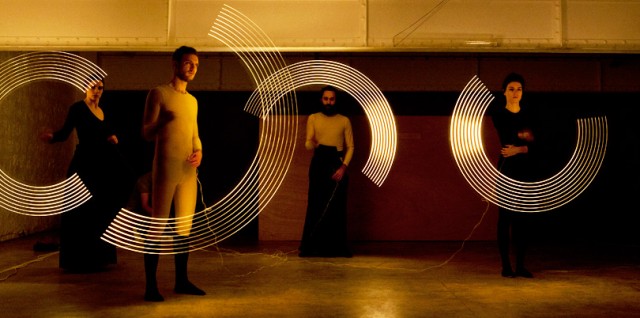
Eliane Radigue and Xavier Veilhan’s SYSTEMA OCCAM kicks off FIAF’s seventh annual Crossing the Line festival

Eliane Radigue and Xavier Veilhan’s SYSTEMA OCCAM kicks off FIAF’s seventh annual Crossing the Line festival

French Institute Alliance Française and other locations
Florence Gould Hall, 55 East 59th St. between Madison & Park Aves.
Le Skyroom and FIAF Gallery, 22 East 60th St. between Madison & Park Aves.
September 19 – October 13, free – $30
212-355-6160
www.fiaf.org

Curators Lili Chopra, Simon Dove, and Gideon Lester have once again put together an impressive, wide-ranging program for the Crossing the Line festival, now in its seventh year. Sponsored by the French Institute Alliance Française and taking place there as well as at other venues around the city, CTL features cutting-edge art, dance, music, theater, discussion, and more from an international collection of multidisciplinary performers, with many events free and nothing costing more than $30. The twenty-five-day festival begins September 19 with electronic music composer Eliane Radigue and artist Xavier Veilhan collaborating on Systema Occam (Florence Gould Hall, $30), a multimedia performance installation that is part of CTL’s “New Settings” series, a joint venture with Hermès; the fashion company will be hosting Martine Fougeron’s “Teen Tribe” photo exhibition at the Gallery at Hermès from September 20 to November 8. In Capitalism Works for Me! True/False (September 20, October 6-9, free), Steve Lambert will keep score in Times Square as people vote on whether capitalism indeed works for them. The award-winning Nature Theater of Oklahoma presents episodes 4.5 and 5 at FIAF of their massive undertaking, Life and Times (September 20-21, $30), accompanied by the FIAF Gallery show “10fps,” consisting of 1,343 hand-colored drawings (September 21 – November 2, free). For “The Library,” Fanny de Chaillé invites people to FIAF’s Haskell Library on September 24 and 26 and the NYPL’s Jefferson Market Branch on September 27 (free), where they can choose books that are actually men and women who will share their stories verbally one on one.

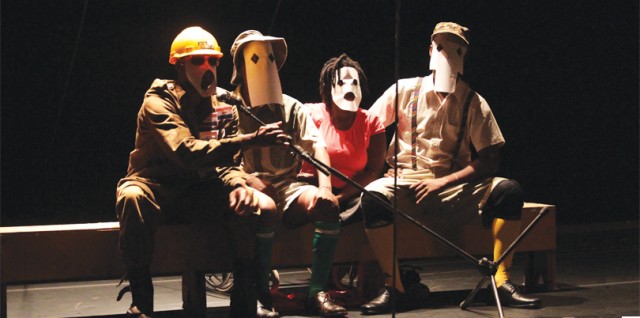
Boyzie Cekwana and Panaibra Canda look at postcolonial Africa in THE INKOMATI (DIS)CORD

Boyzie Cekwana and Panaibra Canda look at postcolonial Africa in THE INKOMATI (DIS)CORD

In The Inkomati (dis)cord (September 25-26, New York Live Arts, $20), Boyzie Cekwana and Panaibra Canda use contemporary dance to examine postcolonial Africa. De Chaillé teams up with Philippe Ramette for Passage à l’acte / Acting Out (September 26-28, Invisible Dog, $30), using absurdist human sculpture to “rationalize the irrational.” Dancer and choreographer Nora Chipaumire will perform the CTL-commissioned solo piece rite riot (October 3-5, Le Skyroom, $30), exploring African stereotypes, collaborating with writer Teju Cole and visual artist Wangechi Mutu. Pascal Rembert’s large-scale A (micro) history of world economics, danced (October 11-13, La MaMa, $20) features New Yorkers discussing how the financial crisis impacted their lives. The festival also includes works by Annie Dorsen, Ernesto Pujol and Carol Becker, Bouchra Ouizguen, Tim Etchells, and Kyle deCamp and Joshua Thorson, in addition to a series of talks and conversations.

LEIMAY: BECOMING-CORPUS

BAM Fisher, Fishman Space
321 Ashland Pl.
September 12-15, $20-$50
718-636-4100
www.bam.org
www.leimaymain.cavearts.org

In such previous performances as Furnace and A Timeless Kaidan, the Brooklyn-based LEIMAY company have combined striking lighting and visuals with Butoh-inspired movement and electronic music to create mesmerizing works that often employ nudity as they test the capacity of the human body. For its latest avant-garde piece, LEIMAY — Colombian-born dancer and choreographer Ximena Garnica and Japan-born video artist Shige Moriya, the duo behind CAVE, the New York Butoh Festival, and the Williamsburg SOAK festival — has created the immersive multimedia performance installation Becoming – Corpus, running at BAM Fisher September 12-15. Part of BAM’s Professional Development Program, Becoming – Corpus consists of a visual art installation in BAM Fisher’s Peter Jay Sharp Lobby that includes molds of Garnica’s and Moriya’s bodies and investigates their creative process, along with four dance presentations in the Fishman Space featuring Masanori Asahara, Andrew Braddock, Andrea Jones, Liz McAuliffe, Denisa Musilova, Eija Ranta, Tommy Schell, and Savina Theodoru. The show incorporates a real-time six-channel video designed by Moriya and a live electronic score by Roland Toledo and Christopher Loar with meditative movement choreographed by Garnica. The September 12 show is a benefit performance that will be followed by an opening party and a silent auction; there will also be a post-show audience roundtable on September 13, the preshow “Tracing the Art” talk with Garnica and Moriya on September 14, and a closing night toast on September 15. To see our 2012 interview with Garnica and Moriya, please go here.

PUBLIC ART FUND TALKS — IRAN DO ESPIRITO SANTO: PLAYGROUND

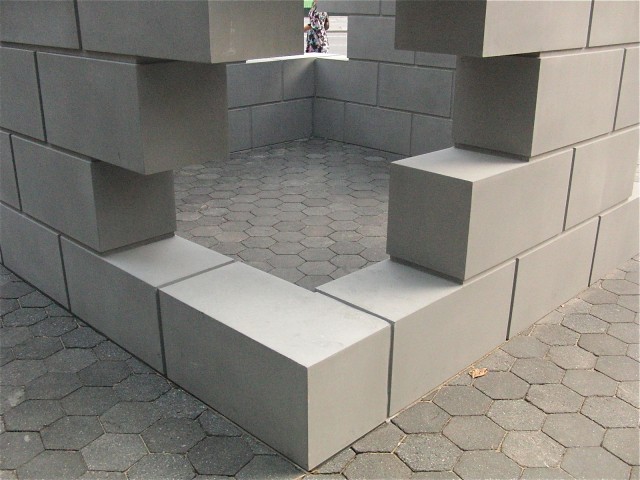
Iran do Espírito Santo’s “Playground” alters perception of light and space at entrance to Central Park (photo by twi-ny/mdr)

Iran do Espírito Santo’s “Playground” alters perception of light and space at entrance to Central Park (photo by twi-ny/mdr)

The New School, Tishman Auditorium
66 West 12th St. between University Pl. & Sixth Ave.
Wednesday, September 11, $10, 6:30
“Playground” continues through February 16 at Doris C. Freedman Plaza
212-223-7805
www.publicartfund.org
playground slideshow

For his first public installation in the United States, São Paulo-based artist Iran do Espírito Santo has created “Playground” at Doris C. Freedman Plaza at the entrance to Central Park on 60th St. & Fifth Ave. Resembling a gray Lego or Tetris construction, “Playground” also evokes such previous Public Art Fund projects as Sarah Sze’s “Corner Plot,” Sol Lewitt’s “Structures,” and Ryan Gander’s “The Happy Prince.” Appearing unfinished, the cubelike, thirteen-foot-square “Playground,” which do Espírito Santo refers to as an “idealized ruin,” has missing concrete blocks that form geometric shapes of their own and allow visitors to walk inside, offering uniquely framed views of the surrounding area, which includes trees, the Plaza Hotel, and passing taxis and horse carriages, in a seemingly changing relationship with light and space that plays with perception. Although its name brings to mind the many playgrounds in Central Park, people are not allowed to climb on it, although taking a seat on one of the blocks is encouraged. The largest piece in the Brazilian artist’s “Destroços” (“Remains”) series of architectural fragments, “Playground” will be on view through mid-February. On September 11 at 6:30, do Espírito Santo will be at the New School giving his first New York lecture, discussing the work, which is part of the Public Art Fund project “Square Pegs, Round Holes: From White Cube to Public Sphere” and continues October 2 with Mark Manders and November 13 with Allora & Calzadilla.

BLINK YOUR EYES: SEKOU SUNDIATA REVISITED

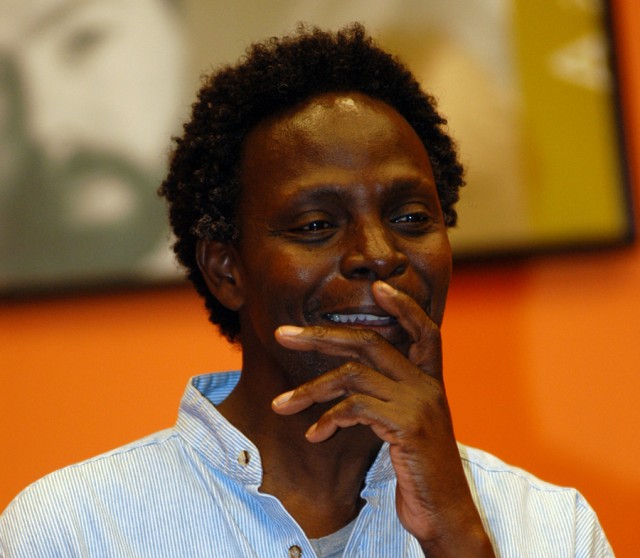
The legacy of multidisciplinary artist and social activist Sekou Sundiata is being celebrated in wide-ranging retrospective

The legacy of multidisciplinary artist and social activist Sekou Sundiata is being celebrated in wide-ranging retrospective

Multiple venues
September 10 – October 12, free – $20
www.sekousundiata.org

In his poem “Blink Your Eyes,” poet, writer, teacher, activist, playwright, musician, and performance artist Sekou Sundiata wrote, “I could wake up in the morning / without a warning / and my world could change: / blink your eyes. / All depends, all depends on the skin, / all depends on the skin you’re living in,” addressing what is now known as stop and frisk. Born Robert Franklin Feaster in Harlem in 1948, he adopted the name Sekou Sundiata while attending the Caribbean Festival of the Arts in Guyana in 1972, taking the first name from the first president of Guinea, Sékou Touré, and the last name from the founder of the Mali Empire, Sundiata Keita. Over the next thirty-five years, until his death in 2007 at the age of fifty-eight, Sundiata performed with his bands, Are & Be, the Kou, and dadahdoodahda; became the first writer-in-residence at the New School; kicked a heroin addiction; staged such theatrical productions as The Circle Unbroken Is a Hard Bop, blessing the boats, the 51st (dream) state, The Return of Elijah, the African, and The Mystery of Love, Etc.: An Anthology of Folk Tales, Stories, Poems, and Lies; received a kidney transplant; delivered keynote addresses at international conferences, including “East Coast, West Coast, Worldwide: American Artists and World Citizenship,” “An Artist’s Journey Through Transplantation and Recovery,” and “Ground Zero: One of Many Thin Places / Notes on My New Project”; and started WeDaPeoples Cabaret, all the while fighting for social justice, building local communities, and trying to make the world a better place for everyone.

In honor of what would have been his sixty-fifth birthday, MAPP International Productions has put together the wide-ranging retrospective “Blink Your Eyes: Sekou Sundiata Revisited,” a series of events around the city that continues through October. On September 10, Cave Canem presents “Oralizing: The Speed of Spoken Thought” at the Schomburg Center for Research in Black Culture ($10, 7:30), with Juliette Jones, Marvin Sewell, Val-Inc, Dael Orlandersmith, Tyehimba Jess, and Karma Mayet Johnson, reimagining Sundiata’s “blues of transcendence.” On September 13, teachers, activists, artists, musicians, and others will gather at the New School for “The America Project Methodology Remix: A Symposium for Educators, Artists, and Students” (free but advance RSVP required, 10:00 am). On September 22, Michaela Angela Davis, Bryonn Bain, Ebony Golden, and others will participate in the public dialogue “From Double Consciousness to Post‐Black: A Long‐Table Conversation on Black Identity” at the Actors Fund Arts Center (free, 2:00). On September 27, Hip-Hop Theater Festival artistic director Kamilah Forbes will stage an updated version of The Circle Unbroken Is a Hard Bop with MuMs, Carvens Lissaint, and Traci Tolmaire at the Kumble Theater for the Performing Arts ($10, 7:30). On October 3, Columbia University will host “Geographies of Incarceration: A 21st-Century Teach-In” (free, 6:00) examining the role of the artist in social transformation, led by Kendall Thomas. On October 10, Arthur Yorinks directs a radio version of the 51st (dream) state at the Jerome L. Greene Performance Space ($20, 7:00), hosted by John Schaefer and starring the original cast, with LaTanya Hall taking over Sundiata’s narrator role. On October 11-12, Harlem Stage presents “Days of Arts and Ideas,” with a panel discussion with Khalil Gibran Muhammad, Rob Fields, Shani Jamila, and Forbes at Harlem Stage Gatehouse (free, 7:30) the first day and dance and talk with Jawole Zollar and Liz Lerman at Aaron Davis Hall (free, 4:00) the second day. The “Blink Your Eyes” festival then comes to a triumphant close on October 12 with WeDaPeoples Cabaret at Aaron Davis Hall ($20, 7:00), a community celebration with Chanda Rule, Liza Jesse Peterson, Mendi Obadike, Keith Obadike, Immortal Technique, Rashida Bumbray, Frantz Jerome, Aisha Jordan, and Zora Howard, with a special look at his seminal speech “Thinking Out Loud: Democracy, Imagination, and Peeps of Color.” In his poem “Hopes Up Too High,” Sundiata wrote, “And what if we could show / that what we dream / is deeper than what we know? / Suppose if something does not live / in the world / that we long to see / then we make it ourselves / as we want it to be.” Sundiata continues to be an inspiration to so many; this retrospective offers a great way to keep that legacy vibrant and alive.