this week in lectures, signings, panel discussions, workshops, and Q&As

NEW YORK FILM FESTIVAL: THE LAST OF THE UNJUST

Claude Lanzmann and Benjamin Murmelstein discuss the Holocaust in revealing documentary

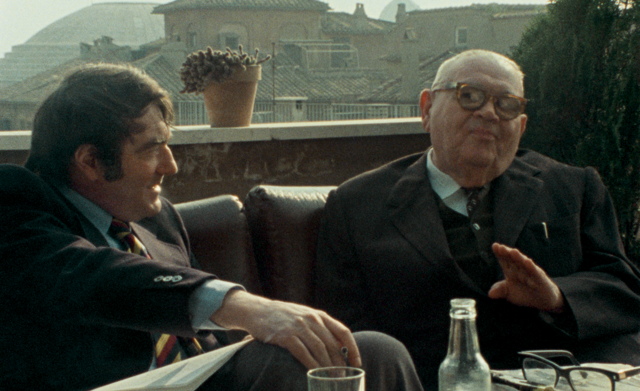
Claude Lanzmann and Benjamin Murmelstein discuss the Holocaust in revealing documentary

THE LAST OF THE UNJUST (LE DERNIER DES INJUSTES) (Claude Lanzmann, 2013)
Film Society of Lincoln Center
Alice Tully Hall, 1941 Broadway at 65th St.
Sunday, September 29, 1:00 pm
Festival runs September 27 – October 13
212-875-5601
www.filmlinc.com

For forty years, French filmmaker Claude Lanzmann has been documenting the Holocaust and the birth of the state of Israel in such provocative and powerful films as Israel, Why; Sobibor, October 14, 1943, 4 P.M.; and his nine-and-a-half-hour masterpiece, Shoah. In 1997, he made A Visitor from the Living, built around a 1979 interview with International Red Cross worker Maurice Rossel, who led a delegation inspecting the Nazis’ so-called “model ghetto” of Theresienstadt, which turned out to be a glorified concentration camp. Lanzmann returns to the Czech camp in The Last of the Unjust, an utterly fascinating 218-minute documentary consisting of a series of interviews he conducted in Rome in 1975 with Rabbi Benjamin Murmelstein, the only Jewish Elder to survive the Holocaust. For years, Murmelstein, who was appointed directly by and reported to Obersturmbannführer Adolph Eichmann, has been declared a Nazi collaborator, by writer Hannah Arendt and many others, even being arrested, imprisoned, and tried by Czech authorities. But in The Last of the Unjust, he paints a vivid portrait of everyday life in Theresienstadt, claiming he was not a collaborator but instead was doing whatever he could to improve conditions for the Jews there.
Claude Lanzmann

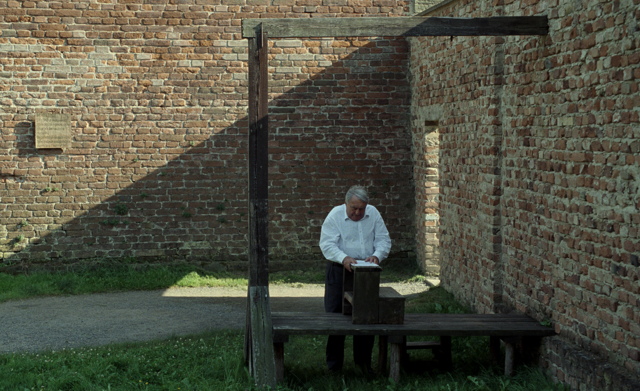
Claude Lanzmann visits Theresienstadt in film about the model ghetto’s last Jewish Elder

He poignantly describes not knowing about gas chambers and trains to Auschwitz and proudly defends his actions, referring to himself as the “last of the unjust.” Murmelstein has a spectacular memory, vividly recalling specific moments, answering all of Lanzmann’s questions with a bold honesty and correcting long-held misbeliefs concerning Theresienstadt. A cool, cigarette-smoking Lanzmann is seen in the old interviews and he also appears in new footage shot as he visits the camp and other relevant locations, geographically linking the past and the present. Between Murmelstein’s amazing storytelling ability and Lanzmann’s sharing of his personal perspective, the film never gets boring or repetitive over the course of its three-and-a-half-hour length. In the written introduction, Lanzmann states, “It took me a long time to come to the realization that I didn’t have the right to keep this to myself.” He has indeed done a great service by not keeping this to himself, making yet another poignant document of the Holocaust as seen through the eyes of a unique and thoroughly intriguing witness. An official selection of the New York Film Festival, The Last of the Unjust is screening September 29 at 1:00 at Alice Tully Hall, followed by a Q&A with the eighty-seven-year-old Lanzmann.
ATLANTIC ANTIC 2013

Atlantic Antic

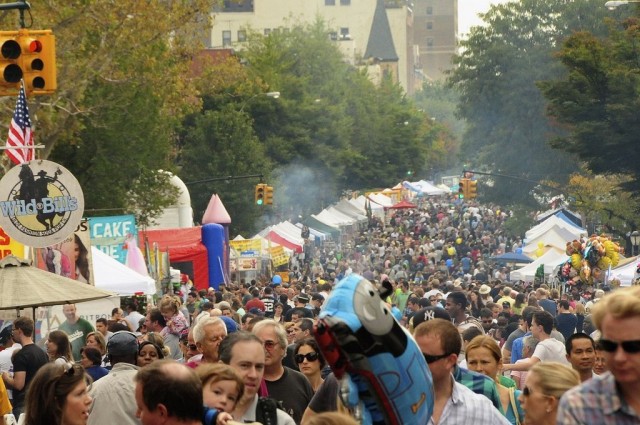
A huge crowd is expected at the annual Atlantic Antic festival, which this year honors Marty Markowitz

Atlantic Ave. between Hicks St. & Fourth Ave.
Sunday, September 29, free, 12 noon – 6:00 pm
www.atlanticave.org

The centerpiece of the thirty-eighth annual Atlantic Antic, a free festival of food, music, games, family-friendly activities, and more taking place Sunday, September 29, along Atlantic Ave., is a public farewell to outgoing borough president Marty Markowitz, who will be crowned honorary King of Brooklyn. More than a million visitors are expected for the party, which includes live performances indoors and outdoors, with the Windsor Terrors, the Black Coffee Blues Band, Strictly Belly Dancing, Les Sans Culottes, Liam the Magician, a domino tournament, Rolie Polie Guacamole, DJ Hard Hittin Harry, a book signing and reading by Melanie Hope Greenberg, teen jazz duo Octave Higher, Brandi and the Alexanders, Boricua Betty, the Get It, Junior Rivera and Son de Caney, the Dysfunctional Family Jazz Band, and many others. Among the participating establishments are the Chip Shop, the Waterfront Ale House, the Brazen Head, Pacheco & Lugo, Khamit Kinks, Last Exit, Gumbo, and Hank’s Saloon, and there will be local booths galore selling all kinds of items you won’t find at standard street fairs. And for the twentieth year, the New York Transit Museum is hosting the Bus Festival on Boerum Pl. between State St. & Atlantic Ave., featuring vintage buses, workshops, free tours, and other fun things, with admission to the museum only one dollar.

NEW YORK FILM FESTIVAL: CHILD OF GOD

Scott Haze in CHILD OF GOD

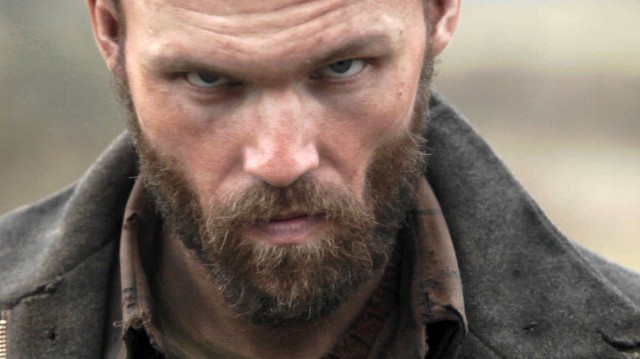
Scott Haze plays a deeply disturbed man trying to get what he believes is his in CHILD OF GOD

CHILD OF GOD (James Franco, 2013)
Film Society of Lincoln Center
Walter Reade Theater, 165 West 65th St. between Broadway & Amsterdam Ave.
Sunday, September 29, 10:15 pm
Francesca Beale Theater, 144 West 65th St. between Broadway & Amsterdam Ave.
Tuesday, October 1, 12 noon
Festival runs September 27 – October 13
212-875-5601
www.filmlinc.com

In James Franco’s faithful, brutally compelling adaptation of Cormac McCarthy’s third novel, 1973’s Child of God, Scott Haze gives a courageous, unforgettable performance as Lester Ballard, a deeply disturbed man wreaking havoc on his small rural community in Sevier County in the Tennessee mountains. “His name was Lester Ballard, child of God, much like yourself, perhaps,” a narrator intones as the film opens. But Lester is not like everyone else. He is almost more animal than man, his speech hard to understand, his face hairy and rough, his gait hurried and uneven, a reclusive soul with no ability to differentiate between right and wrong, more at home in the woods and in caves than living among other people. When he lowers his head slightly and stares right into the camera, he evokes Charles Manson filtered through Charles Bukowski, with more than a touch of Jack Nicholson in The Shining; there doesn’t seem to be an ounce of humanity in him. (McCarthy has noted that Ballard was inspired at least in part by real-life serial killer Ed Gein, who also inspired Old Leatherface in The Texas Chainsaw Massacre and Norman Bates in Psycho.) Having been kicked off his family’s land, an angered Lester sleeps in a ramshackle cabin, venturing out primarily to kill an animal for food or to seek other carnal pleasures in his own, primal way. When he sees a young couple having sex in a car, his instinct is to get rid of the boy and take the girl for himself, with no thought of the consequences.
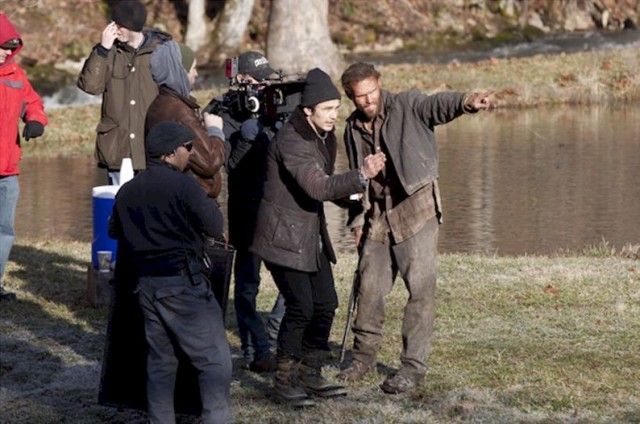

James Franco

Director and cowriter James Franco discuss a scene in adaptation of Cormac McCarthy’s CHILD OF GOD

Lester is being watched closely by the aptly named Sheriff Fate (Tim Blake Nelson) and Deputy Cotton (Jim Parrack), but there’s no predicting what he will do next, and to whom. He’s a danger to everyone he meets, yet Franco, who cowrote the script with his friend and producer Vince Jolivette, manages to make Lester a somewhat sympathetic figure, despite his horrific existence, which soon includes necrophilia. No matter how despicable his actions are, it is hard not to want him to get away with it all, as Franco builds a shocking compassion for Lester from the very first scene, when John Greer (Brian Lally), a neighbor who is determined to buy the Ballard property at auction, viciously bashes in Lester’s skull. The highly literate, ubiquitous Franco, who has also adapted William Faulkner’s As I Lay Dying and is in preproduction on The Sound and the Fury, stays true to both the spirit and the intricacies of McCarthy’s story; every scene but one was taken directly from the book, which Franco fell in love with when he read it in graduate school. Child of God is by no means an easy film to watch, and it is sure to elicit a multitude of extreme reactions, both positive and negative, reminiscent of the response to Lars von Trier’s controversial 2009 New York Film Festival selection, Antichrist. But no matter where you stand on the film itself, it’s impossible not to be blown away by Haze’s remarkably intense performance, his every word and movement absolutely thrilling to behold. Child of God, in which both Franco and Jolivette play small roles, will screen twice at the fifty-first New York Film Festival, on September 29 at the Walter Reade Theater, followed by a Q&A with Jolivette and Haze, and again on October 1 at the Francesca Beale Theater.

NEW YORK FILM FESTIVAL: A TOUCH OF SIN

A TOUCH OF SIN

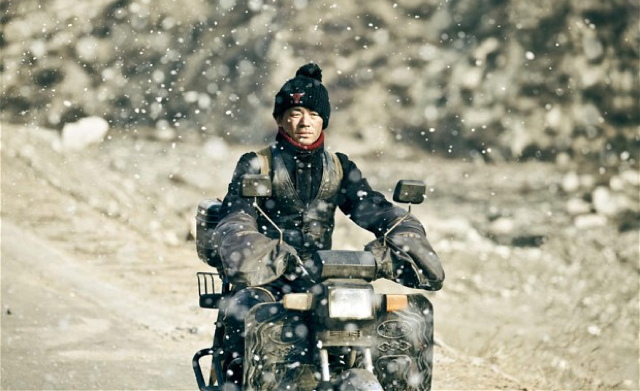
Zhao San (Wang Baoqiang) is one of four protagonists who break out into sudden acts of shocking violence in Jia Zhangke’s A TOUCH OF SIN

A TOUCH OF SIN (TIAN ZHU DING) (Jia Zhangke, 2013)
Film Society of Lincoln Center
Alice Tully Hall, 1941 Broadway at 65th St.
Saturday, September 28, 6:00
Francesca Beale Theater, 144 West 65th St. at Amsterdam Ave.
Wednesday, October 2, 8:30
Festival runs September 27 – October 13
212-875-5601
www.filmlinc.com

During his sixteen-year career, Sixth Generation Chinese filmmaker Jia Zhangke has made both narrative works (The World, Platform, Still Life) and documentaries (Useless, I Wish I Knew), with his fiction films containing elements of nonfiction and vice versa. Such is the case with his latest film, the powerful A Touch of Sin, which explores four based-on-fact outbreaks of shocking violence in four different regions of China. In Shanxi, outspoken miner Dahai (Jiang Wu) won’t stay quiet about the rampant corruption of the village elders. In Chongqing, married migrant worker and father Zhao San (Wang Baoqiang) obtains a handgun and is not afraid to use it. In Hubei, brothel receptionist Ziao Yu (Zhao Tao, Jia’s longtime muse and now wife) can no longer take the abuse and assumptions of the male clientele. And in Dongguan, young Xiao Hui (Luo Lanshan) tries to make a life for himself but is soon overwhelmed by his lack of success. Inspired by King Hu’s 1971 wuxia film A Touch of Zen, Jia also owes a debt to Max Ophüls’s 1950 bittersweet romance La Ronde, in which a character from one segment continues into the next, linking the stories. In A Touch of Sin, there is also a character connection in each successive tale, though not as overt, as Jia makes a wry, understated comment on the changing ways that people connect in modern society. In depicting these four acts of violence, Jia also exposes the widening economic gap between the rich and the poor and the social injustice that is prevalent all over contemporary China — as well as the rest of the world — leading to dissatisfied individuals fighting for their dignity in extreme ways. A gripping, frightening film that earned Jia the Best Screenplay Award at Cannes this year, A Touch of Sin is an official selection of the fifty-first New York Film Festival, screening September 28 at Alice Tully Hull and October 2 at the Francesca Beale Theater, with Jia and Zhao participating in a Q&A following the first show. (The film then opens October 4 at Lincoln Plaza and the IFC Center.)

BROOKLYN BOOK FESTIVAL 2013

brooklyn book festival

Brooklyn Borough Hall and Plaza (and other venues)
209 Joralemon St.
Sunday, September 22, free, 10:00 am – 6:00 pm
www.brooklynbookfestival.org

The eighth annual Brooklyn Book Festival arrives in the world’s best borough September 22 with more than a hundred panel discussions, readings, signings, live performances, workshops, and other special literary events. Below are our can’t-miss picks for a festival that is growing in popularity every year; among the myriad other participants are Sonia Sanchez, Hilton Als, Edwidge Danticat, Pete Hamill, Meg Wolitzer, Claire Messud, Colum McCann, Francesca Lia Block, David Levithan, William C. Rhoden, Touré, Alan Light, Katherine Applegate, Phillip Lopate, Jane Friedman, Jonathan Ames, Sapphire, Tao Lin, Francine Prose, Leonard Lopate, Nicholson Baker, Ben Katchor, Anders Nilsen, A. M. Homes, Meg Cabot, Rebecca Miller, Lemon Andersen, Quincy Troupe, Katherine Applegate, and Donald and Nina Crews.

10:00 am, “Love to Laugh? Loud and Long and Clear?,” with Jeff Smith, Sherri Winston, and Michael Buckley moderated by Eric Luper, Youth Stoop, Borough Hall Plaza / Columbus Park

11:00 am, “Who? New!,” with debut novelists A. X. Ahmad, Caleb Crain, Ursula DeYoung, Michele Forbes, and Ayana Mathis, Borough Hall Courtroom

12 noon, “The World (According to Cartoonists): Border Crossing Comics,” with Adrian Tomine, Rutu Modan, Dash Shaw, and David Prudhomme, moderated by Kent Worcester, St. Francis Auditorium

1:00, “Sin City,” with K’wan Foye, Albert “Prodigy” Johnson, Ivy Pochoda, and Miasha, moderated by S. J. Rozan, Borough Hall Courtroom

2:00, “Love, Villainy, Ethics, and Karaoke: Chuck Klosterman and Rob Sheffield in Conversation,” moderated by Ed Park, Borough Hall Plaza Main Stage

3:00, “The Secret Lives of Girls,” with Lauren Myracle, Meg Cabot, and Sharon M. Draper, moderated by Mitali Dave, Youth Stoop, Borough Hall Plaza / Columbus Park

4:00, “Art Spiegelman and Jules Feiffer in Conversation,” moderated by Benjamen Walker, St. Francis Auditorium

5:00, “Let’s Talk About (Writing) Sex,” with Sam Lipsyte, Amy Grace Loyd, and Susan Choi, moderated by Angela Ledgerwood, Borough Hall Plaza Main Stage

WHO IS JACK GOLDSTEIN?

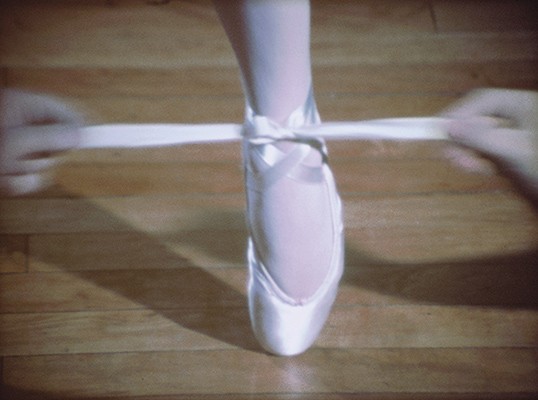
Jack Goldstein, A Ballet Shoe, 16mm film, color, silent, 1975 (Courtesy Galerie Daniel Buchholz, Berlin/Cologne and the Estate of Jack Goldstein)

Jack Goldstein, A BALLET SHOE, 16mm film, color, silent, 1975 (Courtesy Galerie Daniel Buchholz, Berlin/Cologne and the Estate of Jack Goldstein)

The Jewish Museum
1109 Fifth Ave. at 92nd St.
Sunday, September 22, $12, 12:30 – 4:30
Exhibition continues Thursday – Tuesday through September 29, $15 (free admission Saturday 11:00 am – 5:45 pm, pay-what-you-wish Thursday 5:00 – 8:00)
212-423-3200
www.thejewishmuseum.org
www.jackgoldstein-artist.com

In 1973, multimedia artist Jack Goldstein made the short film Jack, in which he, as cameraman, backs away from a man in a desolate landscape who repeatedly calls out, “Jack,” over and over and over again as he fades into the distance. It’s a critical piece in the first American museum retrospective of Goldstein’s work, “Jack Goldstein x 10,000,” which continues through September 29 at the Jewish Museum. The self-destructive Goldstein was known for disappearing during the course of his career, both in his art and in his life, and the Jewish Museum has been examining the iconoclastic figure in a series of programs that have included the exhibition walk-through “What Is Jack Goldstein?” and the panel discussions “Where Is Jack Goldstein?” and “How Is Jack Goldstein?” The museum has saved the best for last, as the final program takes place on September 22, the afternoon symposium “Who Is Jack Goldstein?,” which features a prestigious collection of artists and historians talking about Goldstein’s influence and legacy: Morgan Fisher, Robert Longo, Matt Mullican, Troy Brauntuch, Kathryn Andrews, and Paul Pfeiffer, moderated by Julia Robinson and Claire Bishop. The exhibition itself comprises many of Goldstein’s films in addition to sculpture, sound installations, paintings, and writings. The works display Goldstein’s unique mix of wit and anxiety: In the eight-minute video A Spotlight, Goldstein runs around a room trying to avoid a spotlight, while in the “Burning Window” installation, flickering candles make it seem like a fire is raging behind a window, and there’s nothing anyone can do to stop it.

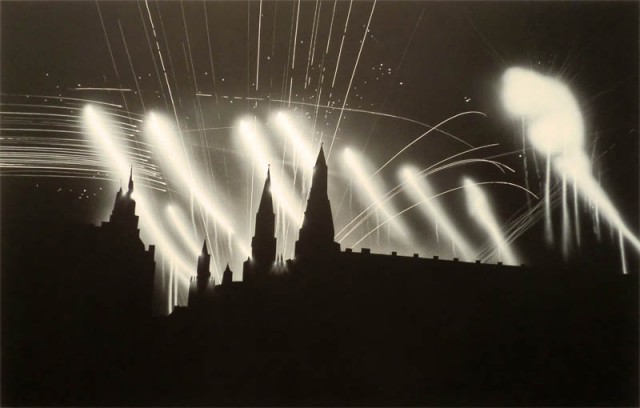
Jack Goldstein, “Untitled,” acrylic on canvas, 1981 (collection Melva Bucksbaum and Raymond J. Learsy)

Jack Goldstein, “Untitled,” acrylic on canvas, 1981 (collection Melva Bucksbaum and Raymond J. Learsy)

Goldstein strips things down to their bare elements in such shorts as Shane, in which a German shepherd barks for three minutes, and A Ballet Shoe, in which two hands tie a ballet shoe on a ballerina’s foot. A series of instructions explains how others can stage some of Goldstein’s performances and installations, once again adding to his theme of the artist’s disappearance. In the mid-to-late-1980s, Goldstein, a heroin addict who was born in Canada in 1945 and spent time in New York before moving to California, where he studied with John Baldessari and became associated with the Pictures Generation, created colorful abstract canvases using appropriated images, the works melding science, computer technology, and psychedelia. The exhibit ends with extracts from Goldstein’s writing — influenced by his penchant for reading philosophy books backward — in which he experimented with new word-processing techniques and repurposed words from other writers in order to form his own personal narrative. In a 1985 interview with the Tate’s Chris Dercon, Goldstein, who hanged himself in his backyard in 2003 at the age of fifty-eight, said, “You wake up in the morning and look at yourself and go, ‘Who is that?’ and ‘What is that?’ and ‘What do you call it?’ and ‘What’s my name?,’” later adding, “My name, it’s the name of a name. It’s not my name. . . . Imagine, if you look in the telephone book, there must be ten thousand Jack Goldsteins.” This revealing survey goes a long way toward establishing just who this Jack Goldstein is, although all of the mysteries are likely never to be solved.

AFTER TILLER

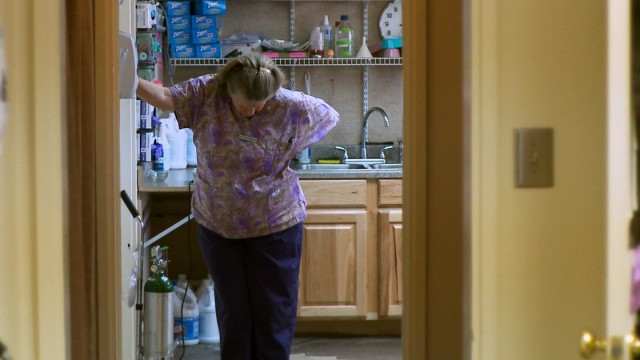
Dr. Robinson

Dr. Susan Robinson has to make difficult choices when deciding whether to perform a late abortion

AFTER TILLER (Martha Shane & Lana Wilson, 2013)
Film Forum, 209 West Houston St., 212-727-8110
Film Society of Lincoln Center, Walter Reade Theater, Elinor Bunin Munroe Film Center, 212-875-5600
Opens Friday, September 20
www.aftertillermovie.com

In After Tiller, directors and producers Martha Shane and Lana Wilson manage to humanize one of the most contentious, controversial, and complicated issues of our age: late abortion. In May 2009, Dr. George Tiller, who specialized in third-trimester abortions, was assassinated in front of his clinic in Wichita, Kansas. That left only four doctors in the United States who performed late abortions, each of whom had either trained or worked with Dr. Tiller. “It was absolutely no question in any of our minds that we were going to keep on doing his work,” one of those four doctors, Susan Robinson, says in the film. As After Tiller begins, Dr. Robinson works with Dr. Shelley Sella at Southwestern Women’s Options in Albuquerque, New Mexico, Dr. LeRoy Carhart is a former U.S. Air Force colonel who operates the Abortion & Contraception Clinic of Nebraska, and Dr. Warren Hern is director of the Boulder Abortion Clinic in Colorado. Shane and Wilson follow these four dedicated doctors who continue doing their work despite the personal danger associated with their profession, including harassment, murder, assault, and bombings. “When I walk out the door, I expect to be assassinated,” Dr. Hern says. The filmmakers show the doctors in their offices, meeting with women who are requesting late abortions for various reasons; Shane and Wilson also follow the abortion providers into their homes as they go on with their daily lives, offering an intimate portrait of these men and women who are so often called monsters but are firm in their belief that what they are doing is important and absolutely necessary, performing their jobs with care and understanding. However, Dr. Hern wonders if he should stop providing late abortions and just settle down peacefully with his new wife and adopted son, while Dr. Carhart and his wife opt to move out of Nebraska after a law change and meet resistance as they try to move their clinic to Maryland or Virginia.

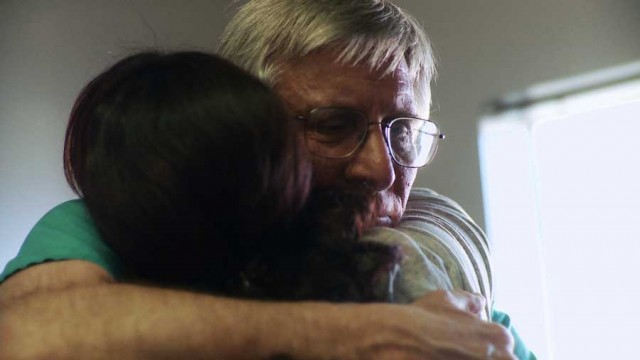
Dr. Hern

Dr. Warren Hern is one of only four doctors in America who provides late abortions

The film also reveals that deciding to perform a late abortion is often an extremely difficult choice for the doctors as well as the patients and not something the providers do automatically when a woman comes to them. One of the most compelling scenes occurs when Drs. Sella and Robinson have a heart-wrenching disagreement over whether to proceed with a late abortion for a young woman, evaluating whether her reason is valid enough and lamenting that the ability of the woman to tell her story could affect the final decision. It’s a pivotal moment that also brings into focus the concerns of the American people; while less than one percent of the abortions performed in the country occur in the third trimester, the procedure is often the centerpiece of the antiabortion movement, but even pro-choice supporters will find themselves questioning the efficacy of all late abortions. The women come to the doctors for many reasons, ranging from the health of the child to economic situations to admitting that they either didn’t know or refused to accept that they were pregnant until it was too late. “It’s guilt no matter which way you go,” one desperate patient, whose child would be born with severe disabilities and would likely die within a year, tells Dr. Sella. “Guilt if you go ahead and do what we’re doing, or bring him into this world and then he doesn’t have any quality of life.” Although Shane and Wilson include footage of protestors, news reports, and congressional hearings, After Tiller is a powerful, deeply emotional documentary about the doctors and patients who must make impossible choices and live with their decisions for the rest of their lives. The film, which raises fascinating, difficult questions for which there are no easy answers, opens September 20 at Film Forum and the Film Society of Lincoln Center. Shane (Bi the Way) and Wilson will be at Film Forum on September 20-21 at the 8:10 screenings and September 22 at 4:30 to discuss the film; they will also participate in a series of Q&As at Lincoln Center, including September 20 at 7:00 with NARAL Pro-Choice New York, September 21 at 7:00 with the New York Abortion Access Fund, September 22 at 3:00 with Nancy Northup of the Center for Reproductive Rights, and September 26 at 7:00 with Dr. Sara Miller of the Reproductive Health Access Project, in addition to a panel discussion on September 23 at 7:00 with Kassi Underwood of Exhale.