this week in lectures, signings, panel discussions, workshops, and Q&As

OZU 120 — A COMPLETE RETROSPECTIVE

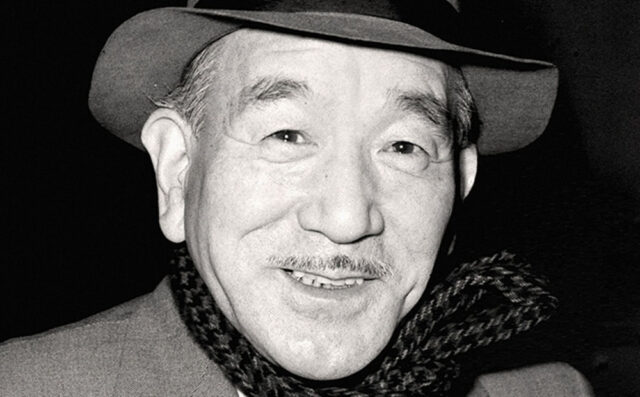
Film Forum is hosting a complete retrospective of the work of Yasujirō Ozu in honor of the 120th anniversary of his birth and 60th anniversary of his death

OZU 120: A COMPLETE RETROSPECTIVE
Film Forum
209 West Houston St.
June 9-29
212-727-8110
www.filmforum.org

While it is never a bad time to celebrate the genius of Japanese auteur Yasujirō Ozu, now seems a particularly potent moment, with partisan politics and social media tearing friends and families apart, corporations gaining more and more power and wealth, and education under attack across America. From June 9 to 29, Film Forum is hosting “Ozu 120: A Complete Retrospective,” consisting of all three dozen of his extant works, in honor of the 120th anniversary of his birth, on December 12, 1903, and the 60th anniversary of his death on his birthday in 1963. It is no coincidence that six of the films have references to family members in their titles and another dozen involve youth and the passing of time over the course of a day and the seasons of the year.

The Tokyo-born writer, cameraman, and director made poignant “common people’s dramas,” known as shomin-geki, that penetrated deeply into the relationships among husbands and wives, children and parents, and bosses and employees, presenting honest portraits with care and intelligence. Interestingly, Ozu never married and never had kids of his own. His magnificent, meditative films feature long interior takes, little action, and few camera movements, letting the story unfold at its own pace, often photographed from low camera angles that came to be called tatami shots, from the point of view of someone kneeling on a tatami mat.

On June 19, the screenings of I Was Born, But . . . and a fragment of the short film A Straightforward Boy will be accompanied by live music by pianist and composer Makia Matsumura and a performance by master benshi Ichiro Kataoka. The June 20 showing of Tokyo Twilight will be introduced by Asian-American International Film Festival programming manager Kris Montello. Keep watching this space for more reviews of films from this must-see retrospective.
LATE SPRING

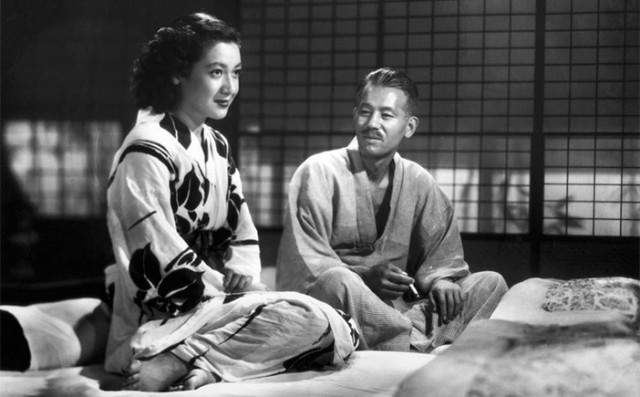
Father (Chishu Ryu) and daughter (Setsuko Hara) contemplate their future in Yasujirō Ozu masterpiece

LATE SPRING (BANSHUN) (Yasujirō Ozu, 1949)
Film Forum
June 9, 10, 11, 13, 28
filmforum.org

A masterpiece from start to finish, Yasujirō Ozu’s Late Spring marked a late spring of sorts in the Japanese auteur’s career as he moved into a new, post-WWII phase of his long exploration of Japanese family life and the middle class. Based on Kazuo Hirotsu’s novel Father and Daughter, the black-and-white film, written by Ozu with longtime collaborator Kogo Noda, tells the story of twenty-seven-year-old Noriko (Setsuko Hara), who lives at home with her widower father, Shukichi Somiya (Chishu Ryu), a university professor who has carved out a very simple existence for himself. Her aunt, Masa (Haruko Sugimura), thinks Noriko should get married, but she prefers caring for her father, who she believes would be lost without her. But when Somiya starts dropping hints that he might remarry, like his friend and colleague Jo Onodera (Masao Mishima) did — a deed that Noriko finds unbecoming and “filthy” — Noriko has to take another look at her future.

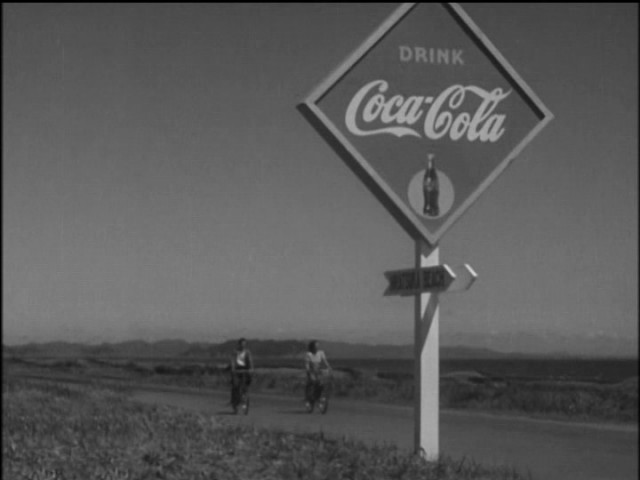
Late Spring is a monument of simplicity and economy while also being a complex, multilayered tale whose every moment offers unlimited rewards. From the placement and minimal movement of the camera to the design of the set to the carefully choreographed acting, Ozu infuses the work with meaning, examining not only the on-screen relationship between father and daughter but the intimate relationship between the film and the viewer. Ozu has a firm grasp on the state of the Japanese family as some of the characters try to hold on to old-fashioned culture and tradition while recovering from the war’s devastation and facing the modernism that is taking over.
LATE SPRING

Late Spring is part of month-long festival at Film Forum celebrating the work of director Yasujirō Ozu

Hara, who also starred as a character named Noriko in Ozu’s Early Summer and Tokyo Story, is magnificent as a young woman averse to change, forced to reconsider her supposed happy existence. And Ryu, who appeared in more than fifty Ozu films, is once again a model of restraint as the father, who only wants what is best for his daughter. Working within the censorship code of the Allied occupation and playing with narrative cinematic conventions of time and space, Ozu examines such dichotomies as marriage and divorce, the town and the city, parents and children, the changing roles of men and women in Japanese society, and the old and the young as postwar capitalism enters the picture, themes that are evident through much of his remarkable and unique oeuvre.
PASSING FANCY

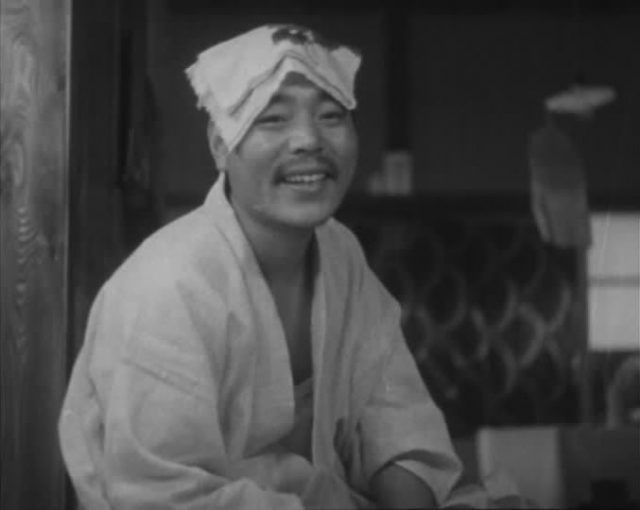
Takeshi Sakamato makes the first of many appearances as Kihachi in Yasujirō Ozu’s Passing Fancy

PASSING FANCY (DEKIGOKORO) (出来ごころ) (Yasujirō Ozu, 1933)
Film Forum
Sunday, June 11, 4:40
filmforum.org

Yasujirō Ozu might not have been keen on the latest technology — he made silent films until 1936, and his first color film was in 1958, near the end of his career — but there’s nothing old-fashioned about his mastery of camera and storytelling, as evidenced by one of his lesser-known comedy-dramas, Passing Fancy. Takeshi Sakamato stars as Kihachi, a character that would go on to appear in such other Ozu works as A Story of Floating Weeds, An Inn in Tokyo, and Record of a Tenement Gentleman. The film opens at a rōkyoku performance, where the audience is sitting on the floor on a hot day, mopping their brows and fanning themselves; Kihachi has an ever-present cloth on his head, looking clownish, a small boy with an injured eye who turns out to be his son, Tomio (Tokkankozo), sleeping by him. Foreshadowing Bresson-ian precision, Ozu and cinematographers Hideo Shigehara and Shojiro Sugimoto follow a small, lost change purse as several men inspect it, hoping to find money in it, then toss it away when it comes up empty. The scene establishes the pace and tone of the film, identifies Kihachi as the protagonist, and shows that there will be limited translated text and dialogue; in fact, Ozu never reveals what happened to Tomio’s eye. After the performance, Kihachi and his friend and coworker at the local brewery, Jiro (Den Obinata), meet a destitute young woman named Harue (Nobuko Fushimi). An intertitle explains, “Everyone years for love. Love sets our thoughts in flight.” Kihachi, a poor, single father, helps Harue get a place to stay and a job with restaurant owner Otome (Chouko Iida), hoping that Harue will become interested in him, but she instead takes a liking to the younger Jiro, who wants nothing to do with the whole situation, believing that Harue is using them.
PASSING FANCY

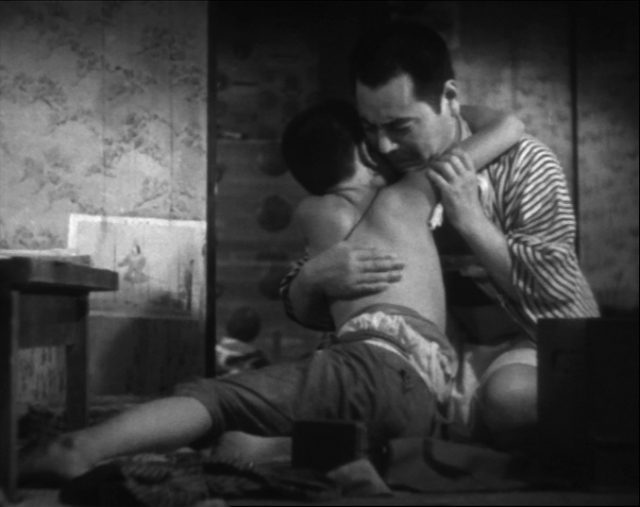
The relationship between father (Takeshi Sakamato) and son (Tokkankozo) is at the heart of Passing Fancy

Ozu follows them all through their daily trials and tribulations — with hysterical comic bits, including how Tomio wakes up Kihachi and Jiro to make sure they’re not late for work — but things take a serious turn when the boy becomes seriously ill and Kihachi cannot afford to pay for the care he requires. Winner of the 1934 Japanese Kinema Junpo Award for Best Film — Ozu also won in 1933 for I Was Born, But . . . and 1935 for A Story of Floating WeedsPassing Fancy is filled with gorgeous touches, as Ozu reveals the stark poverty in prewar Japan, focuses on class difference and illiteracy, and displays tender family relationships, all built around Kihachi’s impossible, very funny courtship of Harue and his bonding with Tomio, since love trumps all. And yes, that man on the boat is Chishū Ryū, who appeared in all but two of Ozu’s fifty-four films.
Wataru Hirayama (Shin Saburi) is a conflicted father-matchmaker in Yasujirō Ozu’s first color film, EQUINOX FLOWER

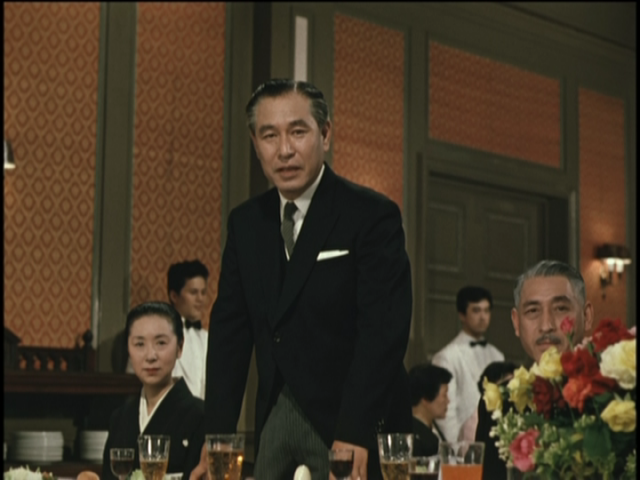
Wataru Hirayama (Shin Saburi) is a conflicted father-matchmaker in Yasujirō Ozu’s first color film, Equinox Flower

EQUINOX FLOWER (HIGANBANA) (Yasujirō Ozu, 1958)
Film Forum
June 14, 17, 18
filmforum.org

Yasujirō Ozu’s first film in color, at the studio’s request, is another engagingly told exploration of the changing relationship between parents and children, the traditional and the modern, in postwar Japan. Both funny and elegiac, Equinox Flower opens with businessman Wataru Hirayama (Shin Saburi) giving a surprisingly personal speech at a friend’s daughter’s wedding, explaining that he is envious that the newlyweds are truly in love, as opposed to his marriage, which was arranged for him and his wife, Kiyoko (Kinuyo Tanaka). Hirayama is later approached by an old middle school friend, Mikami (Ozu regular Chishu Ryu), who wants him to speak with his daughter, Fumiko (Yoshiko Kuga), who has left home to be with a man against her father’s will. Meanwhile, Yukiko (Fujiko Yamamoto), a friend of Hirayama’s elder daughter, Setsuko (Ineko Arima), is constantly being set up by her gossipy mother, Hatsu (Chieko Naniwa). Hirayama does not seem to be instantly against what Fumiko and Yukiko want for themselves, but when a young salaryman named Taniguchi (Keiji Sada) asks Hirayama for permission to marry his older daughter, Setsuko (Ineko Arima), Hirayama stands firmly against their wedding, claiming that he will decide Setsuko’s future. “Can’t I find my own happiness?” Setsuko cries out.

The widening gap between father and daughter represents the modernization Japan is experiencing, but the past is always close at hand; Ozu and longtime cowriter Kōgo Noda even have Taniguchi being transferred to Hiroshima, the scene of such tragedy and devastation. Yet there is still a lighthearted aspect to Equinox Flower, and Ozu and cinematographer Yuharu Atsuta embrace the use of color, including beautiful outdoor scenes of Hirayama and Kiyoko looking out across a river and mountain, a train station sign warning of dangerous winds, the flashing neon RCA Victor building, and laundry floating against a cloudy blue sky. The interiors are carefully designed as well, with objects of various colors arranged like still-life paintings, particularly a red teapot that shows up in numerous shots. And Kiyoko’s seemingly offhanded adjustment of a broom hanging on the wall is unforgettable. But at the center of it all is Saburi’s marvelously gentle performance as a proud man caught between the past, the present, and the future.
THE END OF SUMMER

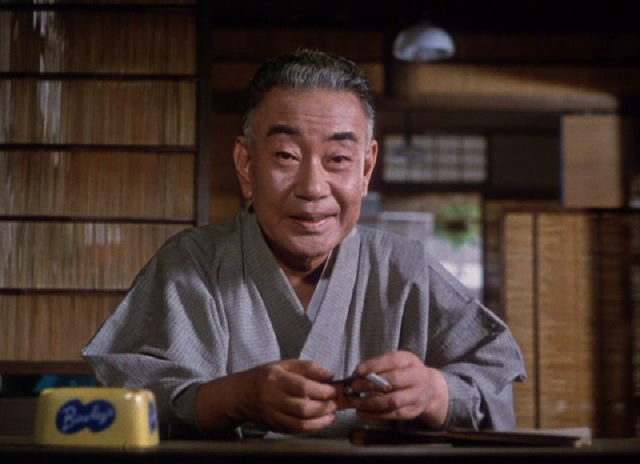
Ganjirō Nakamura is a sheer delight as the unpredictable patriarch of the Kohayagawa family in The End of Summer

THE END OF SUMMER (KOHAYAGAWA-KE NO AKI) (Yasujirō Ozu, 1961)
Film Forum
June 23, 24, 27
www.filmforum.org

Yasujirō Ozu’s next-to-last film, 1961’s The End of Summer, is a poignant examination of growing old in a changing Japan; Ozu would make only one more film, 1962’s An Autumn Afternoon, before passing away on his sixtieth birthday in December 1963. Ganjirō Nakamura is absolutely endearing as Manbei Kohayagawa, the family patriarch who heads a small sake brewery. The aging grandfather has been mysteriously disappearing for periods of time, secretly visiting his old girlfriend, Sasaki (Chieko Naniwa), and her daughter, Yuriko (Reiko Dan), who might or might not be his. In the meantime, Manbei’s brother-in-law, Kitagawa (Daisuke Katō), is trying to set up Manbei’s widowed daughter-in-law, Akiko (Setsuko Hara), with businessman Isomura Eiichirou (Hisaya Morishige), while also attempting to find a proper suitor for Manbei’s youngest daughter, Noriko (Yoko Tsukasa), a typist with strong feelings for a coworker who has moved to Sapporo. Manbei’s other daughter, Fumiko (Michiyo Aratama), is married to Hisao (Keiju Kobayashi), who works at the brewery and is concerned about Manbei’s suddenly unpredictable behavior. When Manbei suffers a heart attack, everyone is forced to look at their own lives, both personal and professional, as the single women consider their suitors and the men contemplate the future of the business, which might involve selling out to a larger company. “The Kohayagawa family is complicated indeed,” Hisao’s colleague tells him when trying to figure out who’s who, an inside joke about the complex relationships developed by Ozu and longtime cowriter Kôgo Noda in the film as well as in the casting.
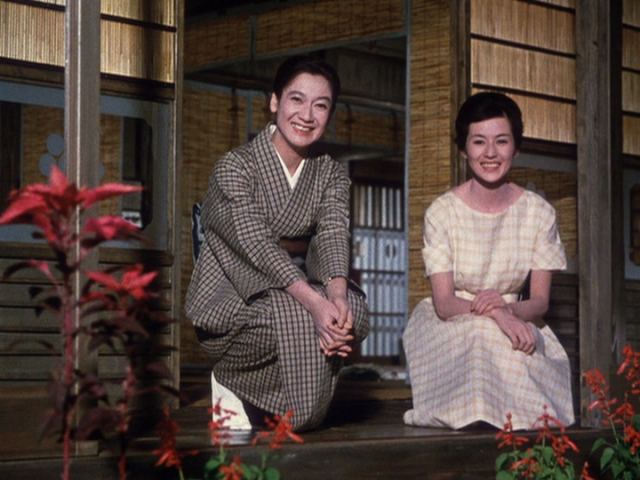
Akiko (Setsuko Hara) and Noriko (Yoko Tsukasa) represent old and new Japan in Ozu’s penultimate film

Akiko (Setsuko Hara) and Noriko (Yoko Tsukasa) represent old and new Japan in Ozu’s penultimate film

The End of Summer tells a far more serious story than Late Spring and many other Ozu films that deal with matchmaking and middle-class Japanese life, both pre- and postwar. The perpetually smiling Hara, who played unrelated women named Noriko in three previous Ozu films, once again plays a young widow named Akiko here, as she did in Late Autumn, while Tsukasa, who played Hara’s daughter in Late Autumn, now takes over the name of Noriko as Akiko’s sister. Late Autumn also featured a character named Yuriko Sasaki, played by Mariko Okada, who went on to play a woman named Akiko in Ozu’s final film, An Autumn Afternoon. Got that? Ozu’s fifth film in color, The End of Summer uses several beautiful establishing shots that incorporate flashing light and bold hues — including a neon sign that declares “New Japan” — photographed by Asakazu Nakai (Seven Samurai, Throne of Blood, Ran), as well as numerous carefully designed set pieces that place the old and the new in direct contrast, primarily when Akiko and Noriko are alone, the former in a kimono, the latter in more modern dress. But at the center of it all is Nakamura, who plays Manbei with a childlike glee, as if Ozu is equating birth and death, the beginning and the end.
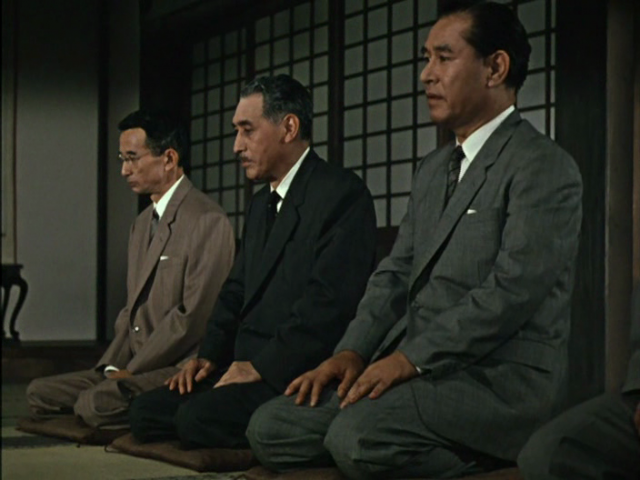
A trio of yentas in LATE AUTUMN

Nobuo Nakamura, Ryuji Kita, and Shin Saburi play a trio of matchmaking yentas in Ozu’s Late Autumn

LATE AUTUMN (AKIBIYORI) (Yasujirō Ozu, 1960)
Film Forum
June 23, 24, 28
filmforum.org

Yasujirō Ozu revisits one of his greatest triumphs, 1949’s Late Spring, in the 1960 drama Late Autumn, the Japanese auteur’s fourth color film and his third-to-last work. Whereas the black-and-white Late Spring is about a widowed father (Chishu Ryu) and his unmarried adult daughter (Setsuko Hara) contemplating their futures, Late Autumn deals with young widow Akiko Miwa (Hara again) and her daughter, Ayako (Yoku Tsukasa). At a ceremony honoring the seventh anniversary of Mr. Miwa’s death, several of his old friends gather together and are soon plotting to marry off both the younger Akiko, whom they all had crushes on, and twenty-four-year-old Ayako. The three businessmen — Soichi Mamiya (Shin Saburi), Shuzo Taguchi (Nobuo Nakamura), and Seiichiro Hirayama (Ryuji Kita) — serve as a kind of comedic Greek chorus, matchmaking and arguing like a trio of yentas, while Akiko and Ayako maintain creepy smiles as the men lay out their misguided, unwelcome plans.

Mamiya makes numerous attempts to fix Ayako up with one of his employees, Shotaru Goto (Keiji Sada), but Ayako wants none of it, preferring the freedom and independence displayed by her best friend, Yoko (Yuriko Tashiro), who represents the new generation in Japan. At the same time, their matchmaking for Akiko borders on the slapstick. Based on a story by Ton Satomi, Late Autumn, written by Ozu with longtime collaborator Kôgo Noda, is a relatively lighthearted film from the master, with sly jokes and playful references while examining a Japan that is in the midst of significant societal change in the postwar era. Kojun Saitô’s Hollywood-esque score is often bombastically melodramatic, but Yuuharu Atsuta’s cinematography keeps things well grounded with Ozu’s trademark low-angle, unmoving shots amid carefully designed interior sets.
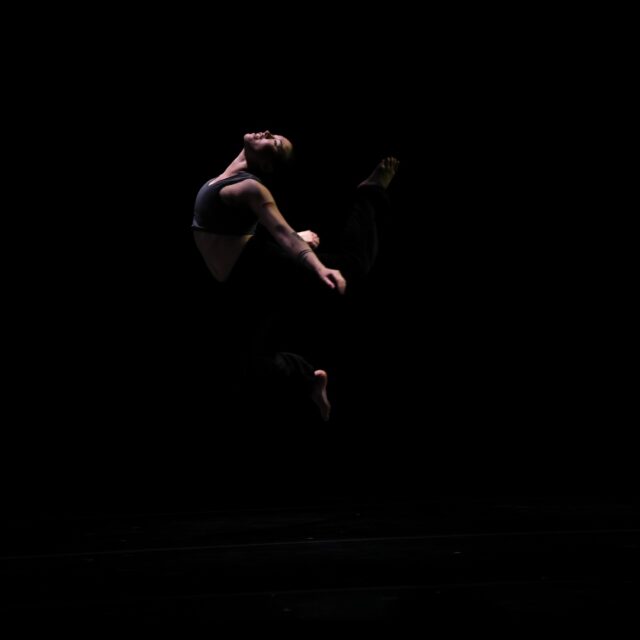

EXTINCTION RITUALS

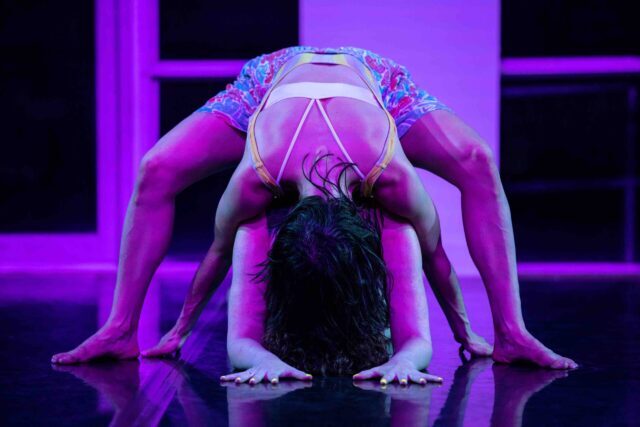
Akane Little is one of the performers in LEIMAY’s Extinction Rituals at Japan Society (photo by Takaaki Ando)

EXTINCTION RITUALS
Japan Society
333 East 47th St. at First Ave.
Friday, June 9, and Saturday, June 10, $20, 7:30
212-715-1258
www.japansociety.org
www.leimay.org

Since 2001, Colombian dancer, director, and choreographer Ximena Garnica and Japanese video and installation artist Shige Moriya have been presenting mesmerizing, meditative multimedia productions that incorporate movement, light, music, and song. In such works as Becoming – Corpus, Floating Point Waves, and Furnace, they explore the relationship between humanity and the natural environment. During the pandemic, Garnica and Moriya, cofounders of the Brooklyn-based LEIMAY Ensemble, staged Correspondences in Astor Plaza, a sculptural performance art installation in which dancers wearing only gas masks were trapped in vertical transparent chambers partly filled with sand.

On June 9 and 10 at 7:30, LEIMAY, which is the Japanese term for a moment of change or transition, brings the work-in-progress dance-opera Extinction Rituals to Japan Society. In the below promotional video, Garnica describes it as “a multiyear, multidimensional project that will result in a series of performances and visual artworks.” They recently asked an AI, “What does ‘extinction’ mean to you?” and “What does ‘ritual’ mean to you?” The AI defined extinction as the “silent demise of vibrant stories, echoes silenced forever” and ritual as “sacred dance, rhythmic harmony, timeless connection, soul’s embrace.”

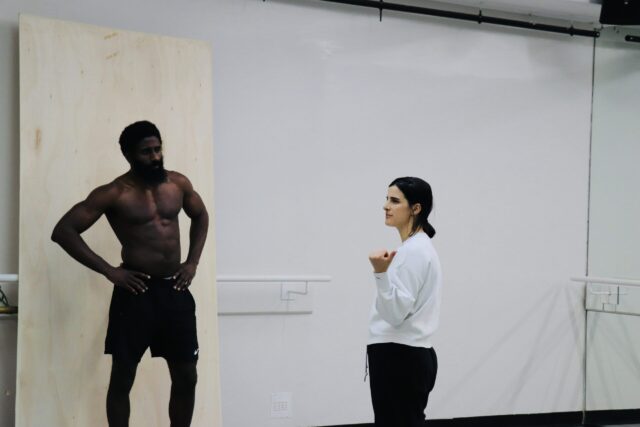
Garnica and Moriya directed, choreographed, and designed the piece, which deals with life and loss, celebration and remembrance, focusing on Japan, Colombia, and New York; it will be performed by dancers Masanori Asahara, Akane Little, Damontae Hack, Peggy Gould, and Yusuke Mori, with live music by composer and instrumentalist Kaoru Watanabe and Colombian composer and singer Carolina Oliveros. Each show will be followed by a Q&A with Garnica and Moriya; Shinnecock and Montauk elder and recovery coach Jennifer E. Cuffee-Wilson will moderate the opening-night discussion, “Extinction: Beyond Flora and Fauna.”

TRIBECA FESTIVAL: RULE OF TWO WALLS

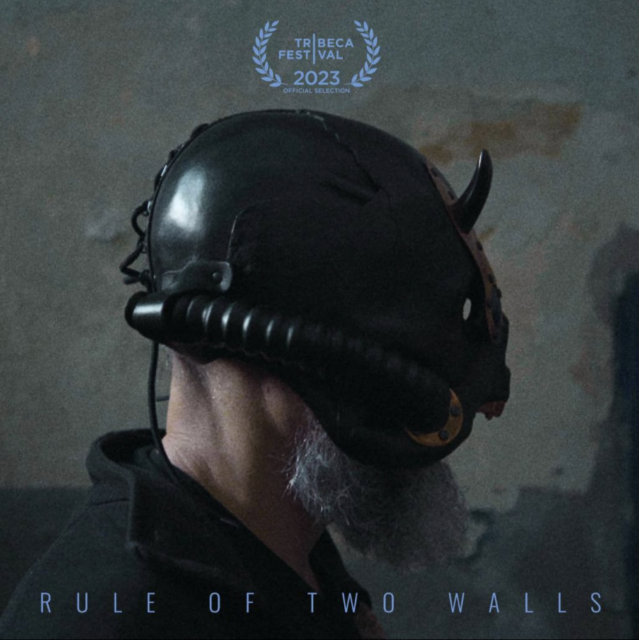
David Gutnik’s Rule of Two Walls celebrates the resilience of brave Ukrainian artists during a brutal war

RULE OF TWO WALLS (David Gutnik, 2023)
Thursday, June 8, SVA 2, 6:30
Saturday, June 10, Village East, Cinema 3, 2:45
Friday, June 16, AMC 19th St. East 6, Cinema 1, 5:15
Sunday, June 18, Village East by Angelika, 8:30
tribecafilm.com

Shortly after Russia invaded Ukraine in February 2023, the ProEnglish Theatre of Ukraine converted its black box space into a shelter for members of the theatrical profession and neighbors, began collecting food and medicine for the elderly, and continued to make art. On March 27, 2023, the Kyiv-based company teamed with Boston’s Arlekin Players Theatre to livestream a production of Harold Pinter’s The New World Order, a ten-minute play that deals with imperialism, totalitarianism, and hegemony, as a fundraiser as well as a bold statement about the resilience of the Ukrainian people and the power of art.

In April, Ukrainian American filmmaker David Gutnik went to Warsaw with his camera to interview Ukrainians who had been displaced by the war. Instead, he spent the next seven months in Ukraine, following artists who had chosen to stay. The result is the terrifying but life-affirming Rule of Two Walls, making its world premiere at the Tribeca Festival, where Gutnik screened his feature film debut, Materna, in 2020.

The film, which mixes narrative with documentary, begins with the sounds of war — guns, bombs, sirens — and a couple in bed in Lviv, just waking up, seen in shadows and silhouettes. “My gallbladder hurts,” the man, Stepan Burban, says, as if oblivious to what is happening in his country. They both laugh, and the woman, Lyana Mytsko, says, “Why would it do that? Little Stepanko, ninety-five years old.” As an air raid alarm wails outside, Lyana gets up and opens the shades, revealing windows taped with large Xs, centered by Jewish stars, to protect it from explosions. “Set some tea,” Stepan suggests. On the window, they have written in black marker, “Sad Stupid World or No?” with a drawing of the sun peeking out from behind clouds. As news reports detail attacks and deaths, Stepan walks out onto his balcony and watches men playing soccer below.

Lyana is the director of the Lviv Municipal Art Center, where artists depict the war through painting, drawing, collage, sculpture, photography, video, and installation; the exhibition they are working on is called “Shelter,” which includes the work of Diana Berg, who explains that she made her pictures of a destroyed theater “to regain some control over all this crazy shit.”

Writer, director, editor, and cinematographer (with Volodymyr Ivanov) Gutnik takes viewers through a dangerous, still-burning recently bombed area with downed electrical wires and charred bodies; a recording session where Stepan is making a new song in which he defiantly declares, “Didn’t get to love enough, to live long enough, and I’m not sorry”; a basement where men and women prepare Molotov cocktails; the studios of radical artist and “convinced materialist” Bob Basset, who poses in postapocalyptic hardcore masks, and Kinder Album, whose stylistic watercolor visions of the fighting have such titles as Russian attacks on civilian targets in Ukraine could be a war crime and Dozens of civilians were killed by metal darts from Russian artillery; a group of locals working to safeguard a tall historical monument; and artist Bohdana Davydiuk pasting political posters out on the street and explaining, “There is a war, and there is a war for truth.”

Along the way, several members of the crew share their painful personal experiences of how the war has directly impacted their families.

Named after the advice that Ukrainians should seek shelter between two walls during attacks — one to stop projectiles, the other to block shell splinters — Rule of Two Walls is a harrowing look at the bravery of Ukrainians who refuse to give up to the Russians, instead defending their home and their culture against seemingly impossible odds. With death all around them — Gutnik includes several frightening scenes of mutilated, bloody, burning bodies — a group of brave creators forges ahead, fighting the only way they know how, through their art. It’s a devastating film with a gorgeously symbolic ending.

Rule of Two Walls is screening June 8, 10, 16, and 18 in the Tribeca Festival’s Documentary Competition; the first three shows will be followed by a Q&A with Gutnik, joined on June 8 and 10 by film participants and, on June 8, by executive producer Liev Schreiber, who cofounded BlueCheck Ukraine, a nonprofit that “identifies, vets, and fast-tracks urgent financial support to Ukrainian NGOs and aid initiatives providing life-saving and other critical humanitarian work on the front lines of Russia’s war on Ukraine.” In a statement, Tony winner and Emmy nominee Schreiber said, “In David’s film, I saw the embodiment of the resilience I observed during my time in Ukraine: the profound spirit, sense of nation and history emboldened by an existential war. As an artist in my own right trying to do all that I can to help Ukraine, I responded to the film’s focus on Ukrainian artists processing the brutality of the war while using their art to fight back. This honest and intimate portrait of the first months of the war resonates deeply with me.”

Meanwhile, Arlekin Players Theatre is livestreaming The Gaaga from a converted Boston restaurant June 8-18, a site-specific phantasmagoria written and directed by Ukrainian playwright Sasha Denisova, who has been living in Poland as a refugee. “In the first days of the war, I fled from Moscow, where the police came for me. Russia bombed Kyiv and my mother, Olga Denisova, who was born under the bombing of Kyiv on July 7, 1941. She refuses to leave and awaits victory in her home. During these months, I thought about what would give hope to me and those who fled the war. A trial of Putin and his government was the biggest expectation,” Denisova said in a statement.

As Album proclaims in the film, “No war can deprive us of our cultural heritage and traditions.”

FREE TICKET ALERT: RIVER TO RIVER FESTIVAL 2023

Molly Lieber and Eleanor Smith will present Zero Station at R2R 2023 (photo courtesy LMCC)

RIVER TO RIVER FESTIVAL
Multiple downtown venues
June 9-18, free
Some events require advance RSVP beginning June 1 at noon
lmcc.net/river-to-river

The twenty-second annual River to River Festival runs June 9-18, ten days of cutting-edge art, dance, music, tours, and participatory events at such locations as the Seaport, the Clemente, Governors Island, and Battery Park City. Everything is free, although advance RSVP is recommended or required for several happenings; tickets are available beginning June 1 at noon.

This year’s festival is also a celebration of the fiftieth anniversary of the Lower Manhattan Cultural Council (LMCC), the sponsoring organization that has been a resource for independent artists since 1973; many alumni are involved in R2R 2023 to honor that milestone.

This year’s lineup includes Molly Lieber and Eleanor Smith continuing their exploration of hypersexualization, trauma, and othering in Zero Station. Antonio Ramos and the Gangbangers stage the dance-theater ceremony CEREMONIA, focusing on cultural misappropriation and reappropriation. Seventeen artists will share one-on-one encounters through a lottery in Lotto Royale. Scholar and historian Linda Jacobs will lead walking tours of Little Syria on Washington St. And Guinean musician and activist Natu Camara will close things out with a grand finale concert in Rockefeller Park.

Tickets are sure to go fast, so don’t hesitate if you want to catch any of these unique and special presentations. Below is the full schedule.

Friday, June 9
through
Friday, June 30

Exhibition: “El Camino: Stories of Migration,” by Nuevayorkinos, Fulton Market building windows at the Seaport, opening June 9 at 4:00

Saturday, June 10
and
Sunday, June 11, 11:00 am – 5:00 pm

Participatory Tape Installation: Mahicantuck, “River that flows two ways,” by Marta Blair, Belvedere Plaza, Battery Park City

Saturday, June 10
and
Sunday, June 11, 1:00 – 6:00

Performance Lottery: Lotto Royale, one-on-one encounters with luciana achugar, Lauren Bakst, Amelia Bande, Raha Behnam, mayfield brooks, Moriah Evans, Julia Gladstone, Nile Harris, Niall Jones, Jennifer Monson, Elliot Reed, Alex Rodabaugh, nibia pastrana santiago, Keioui Keijaun Thomas, ms. z tye, Mariana Valencia, and Anh Vo, RSVP required

Saturday, June 10
through
Sunday, June 18

Studio Residency and Public Program: Archive Barchive, by AUNTS, with talks, performances, toasts, and other gatherings, Studio A4, the Arts Center at Governors Island

Marta Blair invites the community to participate in River to River installation (photo courtesy Marta Blair)

Sunday, June 11, 11:00 am
Tuesday, June 13, 11:00 am
Thursday, June 15, 11:00 am
and
Saturday, June 17, 3:00

Walking Tours: Little Syria, New York: Walking Tours of Washington Street, with Linda Jacobs of the Washington Street Historical Society, Washington St. & Battery Pl., RSVP recommended

Monday, June 12, 7:30
Performance: Zero Station, by Molly Lieber and Eleanor Smith, Flamboyan Theater, the Clemente, RSVP recommended

Thursday, June 15, 7:00
Performance: CEREMONIA, by Antonio Ramos and the Gangbangers, La Plaza, the Clemente, RSVP required

Friday, June 16, 4:00
Performance: Talk to Me About Water, by Amelia Winger-Bearskin, Lower Gallery, the Arts Center at Governors Island, 110 Andes Rd., RSVP required

Friday, June 16, 7:00
Performance: duel c, by Andros Zins-Browne, Outlook Hill, Governors Island, RSVP required

Saturday, June 17, noon – 6:00
Open Residency: LMCC’s Workspace Open Studios, 101 Greenwich St., RSVP recommended

Saturday, June 17, 4:00
Poetry in the Park: al Qalam: Poetry in the Park featuring New York Arabic Orchestra, with Hani Bawardi and Rita Zihenni, the Battery Labyrinth

Saturday, June 17, 6:30
Performance: River to River 2023 Closing Concert with Natu Camara, Rockefeller Park, Battery Park City

GALLIM AT THE JOYCE

Brian “HallowDreamz” Henry and GALLIM’s Andrea Miller will present new collaboration at the Joyce (photo courtesy GALLIM)

GALLIM
The Joyce Theater
175 Eighth Ave. at 19th St.
May 31 – June 4, $51-$71
212-691-9740
www.joyce.org
www.gallim.org

Brooklyn-based GALLIM returns to the Joyce this week to celebrate its fifteenth anniversary, presenting new and repertory pieces May 31 – June 4. “After a necessary process of metamorphosis during the last three pandemic years, GALLIM emerges with a new generation of dancers, creativity, diverse perspectives, experiences, and backgrounds that inspire and enrich our work,” founding creative director and Guggenheim Fellow Andrea Miller said in a statement.

The evening begins with state, a short trio that A.I.M by Kyle Abraham debuted at the Joyce in 2018; it will be performed by India Hobbs, Vivian Pakkanen, and Emma Thesing, with music by Reggie “RIVKA” Wilkins. FROM (DESDE) is a 2019 collaboration with Juilliard for eight dancers, set to Nicolas Jaar’s ”John the Revelator” and “Killing Time.” The highlight is likely to be the world premiere of song, a collaboration with Krump master Brian “HallowDreamz” Henry that features live painting by abstract expressionist Sharone Halevy and music by RIVKA; HallowDreamz is a former gang member from Bed-Stuy and now dancer and teacher who explores survival in this solo.

Following intermission, Castles is an abridged reimagining of 2013’s Fold Here, inspired by Raymond Carver’s short story “Cathedral,” about a blind man visiting his late wife’s family in Connecticut who asks the narrator to describe cathedrals being shown on a television program they are watching; the company performs to original music by Andrzej Przybyłowski and Will Epstein and songs by Brian Eno, Paul Whiteman, and Tim Hecker. No Ordinary Love is an excerpt from 2022’s Duets for Jim, a duet performed by Chalvar Monteiro from Alvin Ailey and Issa Perez or Thesing and Marc Anthony Gutierrez, with music by Sade.

The finale is 2019’s company piece SAMA, which combines the ancient Greek word for body and the Slovenian word for by herself, with music by Jaar, Vladimir Zaldwich, and Frédéric Despierre, as the body searches for space amid the digital revolution.

“In this first full season following the pandemic, we celebrate our history and our collaborators while pursuing work that honors diversity, inclusion, equity, and access,” GALLIM executive director Erin Fogarty added. “This is the crucial path to creating meaningful art and continuing much needed conversations across generations, genres, and disciplines.”

(The June 1 performance will be followed by a Curtain Chat.)

WANGECHI MUTU: INTERTWINED AND IN CONVERSATION

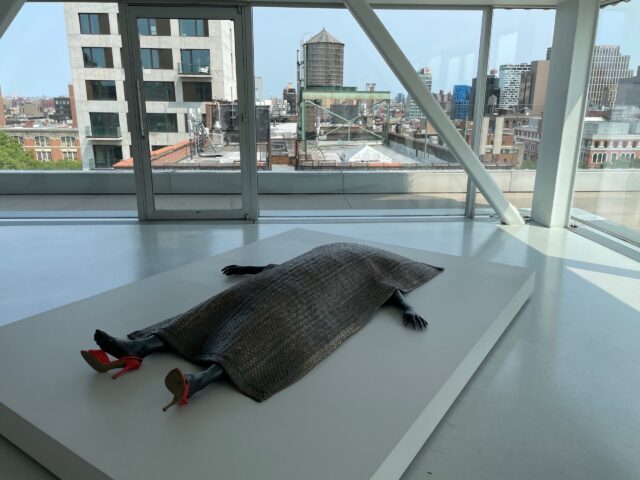
Wangechi Mutu, Shavasana I, bronze, 2019 (photo by twi-ny/mdr)

Who: Wangechi Mutu, Vivian Crockett, Margot Norton
What: Discussion about current exhibition “Wangechi Mutu: Intertwined”
Where: New Museum Theater, New Museum, 235 Bowery at Prince St.
When: Thursday, June 1, $10, 6:30 (exhibition continues through June 4, $12-$18)
Why: In the catalog for “Wangechi Mutu: Intertwined,” cocurators Vivian Crockett and Margot Norton discuss various elements of the exhibit, which is named after a 2003 watercolor with collage on paper in which two figures have human bodies and animal heads. The Nairobi-born, New York City–based multimedia artist responds, “Multitudes of stories need to be listened to and taken into consideration. I still have a lot of heartache about how schools teach and marginalize so many histories and art. I’m thinking about the association between animals and primitivity and between so-called ‘inferior’ or ‘lower’ creatures and that which is female and African. I’m a big lover of animals and nature. Why do we insult one another with the names of these incredible creatures that we share this world with? Coming from Kenya, where we still have so much natural beauty, it’s hard to express how powerful that is. You have to take into consideration how small humans are and how symbiotic our relationships with nature and with each other really are.”

On June 1 at 6:30, Mutu, whose multidisciplinary, immersive Banana Stroke at the Met was a highlight of Performa 17 in 2017, will be at the New Museum to talk more with Crockett and Norton about the exhibit, which consists of more than one hundred paintings, sculptures, collages, videos, and drawings, incorporating such elements as red soil, pulp, bells, bones, beads, shells, and glass, filling all six levels of the New Museum. Her hybrid works mix art historical references and pop culture with sociocultural themes dealing with race, femininity, myth, colonialism, immigration, Afro-futurism, and the African diaspora. The human and natural world both fight and envelop each other through an interconnectedness she depicts in fascinating visual stories.

In the seventh-floor Skyroom, the bronze sculpture Shavasana I is all by itself, a life-size figure on the ground, feet in high heels and hands extended, the rest of her form covered by a woven yoga mat; the title references śavāsana, the corpse pose that takes its name from the Sanskrit word for “dead body.” The large-scale Crocodylus sculpture features a futuristic being riding atop a crocodile that is revealing its huge, sharp teeth; the two figures meld into one at the back. In the Subterranea collage series, Mutu has placed a different character in each of its six parts, their arms outstretched amid sci-fi-esque branches, sinews, and flowers. In the thirteen-minute black-and-white video Eat Cake, a disheveled Mutu wears a long gown and sits under a tree in a forest, bending down to eat a chocolate cake, shoveling bites into her mouth with her hand, evoking Miss Havisham from Great Expectations, but here caught up in consumerism, racism, misogyny, slavery, and humanity’s destruction of land.

In the six-minute Cutting, Mutu, seen from a distance, silhouetted against the setting sun in a Texas border city shortly after 9/11, uses a machete called a panga to chop repeatedly at a log; the panga is not only a farm tool but was also wielded by Rwandan militia during the genocide there. In the animated The End of eating Everything, Santigold portrays a creature reveling in consumption and greed in a world that needs explosive renewal. On June 4, Eat Cake, The End of eating Everything, Amazing Grace, and the extraordinary My Cave Call will be screened in the New Museum Theater.

Red gouges in the wall in the shape of Kenyan lakes make it seem like the natural world is bleeding in Moth Collection, in which seventy-five feathered moth-human hybrids are arranged in chalk boxes, referencing colonization, genocide, institutional education, self-destruction, and categorization. “There’s something vast and unknowable or inexplicable about how all of us fit together,” Mutu says in the catalog. “The amount of creatures that have been killed to study and understand is also obscene. There’s this hypocrisy in trying to understand something, conserve it, and take care of it while killing thousands for experimentation.” During one installation of the piece, she hurt her elbow. She explained, “I felt like I was hurting myself in trying to express how enraged I was, which was not helping. I wanted to find a way to resolve and understand what was happening to me and other people who come to the United States and who cross borders. I felt deep sadness and became obsessed with the Rwandan genocide, which I felt had a lot to do with borders and confining or defining a people through colonization and eugenics.”

In the lobby gallery, In Two Canoe features a pair of fantastical hybrid beings sitting in a canoe that serves as a self-contained bath or fountain, their limbs extending like roots, merging with each other, the canoe, and the landscape. At the far end is For Whom the Bell Tolls, a creature made of red soil, paper pulp, and wooden bells. Below black splotches on the wall, dark gray emergency relief blankets form a silhouette of Kĩrĩnyaga, which is the name of Mount Kenya as well as a 1998 science fiction novel about an African utopia written by white American author Mike Resnick.

On June 3 at noon, the New Museum will host “Teen Summit: Beyond the Essence, More than Critical,” in which Youth Spectrum Arts members and teaching artists troizel and Eden Chinn will answer the question “What happens after we observe what occupies the space of the museum? Art isn’t simply there to be beautiful; it has a message that can inspire action.”

That certainly is true of this marvelous show.

RECANATI-KAPLAN TALKS: GRAHAM NASH

A Graham Nash self-portrait from 1972 is one of two dozens works on view at City Winery (photo courtesy City Winery / Graham Nash)

Who: Graham Nash, Anthony DeCurtis
What: Live and livestreamed conversation
Where: 92nd St. Y Center of Culture & Arts, 1395 Lexington Ave. between 91st & 92nd St., Buttenwieser Hall at the Arnhold Center and online
When: Thursday, June 1, $25 online, $35 in person, 8:30
Why: On “A Better Life,” the second song on Now, his first album of new material in seven years, two-time Rock and Roll Hall of Famer Graham Nash sings, “Let’s make it a better life, leave it for the kids / It’s a lovely place, welcome home to the human race / We can make it a better life — one we can be proud of / So that at the end of the day, I hope we hear them say / that we left them a better life.” In his most recent book, A Life in Focus: The Photography of Graham Nash (November 2021, Insight Editions, $60), the musician, visual artist, and social activist explains, “I’ve been taking photographs longer than I’ve been making music.”

Coming off three shows at City Winery in which he played songs from throughout his long and distinguished career, the eighty-one-year-old Nash will be at the 92nd St. Y on June 1 at 8:30, in conversation with Rolling Stone contributor Anthony DeCurtis. Now contains such other tracks as “Right Now,” “Golden Idols,” and “I Watched It All Come Down”; meanwhile, two dozen of his pictures are on view through July 11 at City Winery in the exhibition “Graham Nash: Enduring Images,” including photos of Columbus Circle, David Crosby, Balboa Park, Johnny Cash, Jerry Garcia, Joni Mitchell, Neil Young, and an old house in Santa Cruz. At the 92nd St. Y talk, which can be attended in person or online, Nash will also perform some songs from the new record, demonstrating once again how he’s made this life better for all of us.