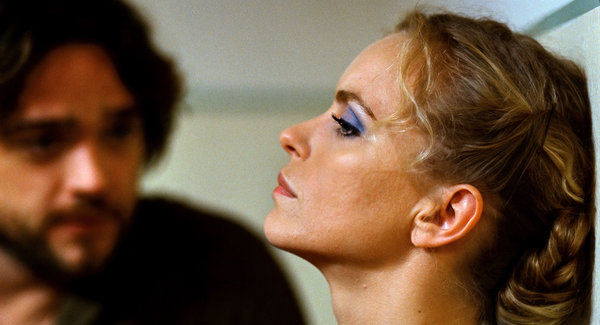
Andre (Ronald Zehrfeld) and Barbara (Nina Hoss) try to retain their humanity under difficult conditions in 1980 East Germany
BARBARA (Christian Petzold, 2012)
MoMA Film, Museum of Modern Art
11 West 53rd St. between Fifth & Sixth Aves.
Saturday, November 23, 7:30, and Friday, December 6, 7:00
Series runs November 20 – December 6
Tickets: $12, in person only, may be applied to museum admission within thirty days, same-day screenings free with museum admission, available at Film and Media Desk beginning at 9:30 am
212-708-9400
www.moma.org
www.adoptfilms.net
 Christian Petzold’s Barbara is a gripping, eerily slow-paced psychological thriller that explores fear, paranoia, and responsibility. Nina Hoss, in her fifth film with writer-director Petzold, gives a subtly powerful performance as Barbara Wolff, an East German doctor who has been shipped off by the government to a country hospital run by Andre (Ronald Zehrfeld). It is 1980, and Barbara has done something to get on the GDR watch list, causing her to be under near-constant surveillance. She carefully looks around everywhere she goes, wondering if the woman on the bus, the man out for a smoke, or the person on the pay phone is working for the Stasi. She is most suspicious of Andre as he attempts to get close to her, asking her personal questions and trying to spend more and more time with her. Meanwhile, Barbara has secret meetings with various people, including her West German lover, Jörg (Mark Waschke), who wants to get her out of the east. But as much as Barbara wants to live a free and open life, she is also a dedicated doctor who has become attached to two patients: Stella (Jasna Fritzi Bauer), a pregnant woman who does not want to be sent back to a labor camp, and Mario (Jannik Schümann), who has suffered a potentially fatal head injury following a suicide attempt.

Barbara (Nina Hoss) has to watch her every move in powerful cold war drama
Petzold (Something to Remind Me, Wolfsburg, Yella), inspired by the likes of Claude Chabrol, To Have and Have Not, and The French Connection, drapes Barbara in a compulsive feeling of paranoia and dread, creating a blanketing atmosphere of mystery and imminent danger in which one wrong move can result in capture, imprisonment, or worse. Wrapped in a cloak of suspicion, Barbara evokes for the viewer what living in 1980 East Germany might have been like. The complex relationship between Barbara and Andre is handled with great skill by Petzold, balancing their individual needs with their responsibilities to their profession and the state. Germany’s official submission for the 2012 Best Foreign Language Film, Barbara is a tense tale that examines the cold war in unique and fascinating ways. Barbara is screening on November 23 at 7:30 and December 6 at 7:00 as part of the MoMA series “The Berlin School: Films from the Berliner Schule,” with Petzold and Hoss on hand to introduce the November 23 show. The series continues through December 6 with such other works by directors associated with the Berlin School as Thomas Arslan’s Brothers and Sisters and Gold, Ulrich Köhler’s Sleeping Sickness, and Christoph Hochhäusler’s The City Below.
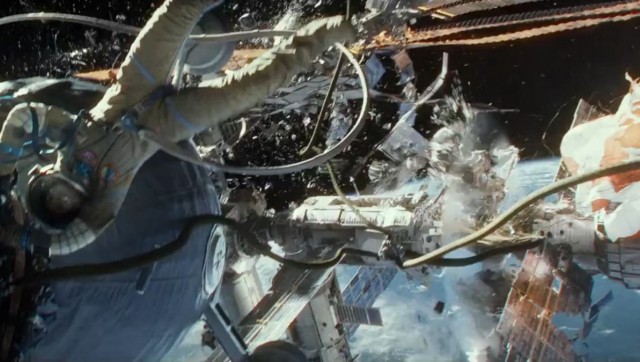
 Alfonso Cuarón’s Gravity is a breathtaking thriller that instantly enters the pantheon of such classic space fare as 2001: A Space Odyssey, Alien, and The Right Stuff. While medical engineer Dr. Ryan Stone (Sandra Bullock) is fixing a computer glitch outside the shuttle Explorer, veteran astronaut and wisecracker Matt Kowalski (George Clooney), on his final mission before retirement, is playing around with a new jetpack and Shariff (voiced by Paul Sharma) is having fun going on a brief spacewalk. But disaster strikes when debris from a destroyed Russian satellite suddenly comes their way, killing Shariff and the rest of the crew and crippling the shuttle, leaving Stone and Kowalski on their own in deep space, their communication with Mission Control in Houston (voiced by Ed Harris, in a nod to his participation in Apollo 13 and The Right Stuff) gone as well. Kowalski is cool and calm, listening to country music as he tries to come up with a plan that will get them to the International Space Station, but the inexperienced Stone is running out of oxygen fast as she tumbles through the emptiness, Earth in the background, so close yet so far. Written by Cuarón (Y Tu Mamá También, Children of Men) with his son Jonás, Gravity is spectacularly photographed by Emmanuel Lubezki, the master behind numerous works by Cuarón and Terrence Malick (The New World, The Tree of Life), among others. Lubezki and his team even created a new LED light box to increase the film’s realism, which is nothing less than awe-inspiring and mind-bending as it takes place in real time. Despite the vastness of space, Gravity often feels claustrophobic, particularly as Stone struggles to get a breath or attempts to operate a foreign module.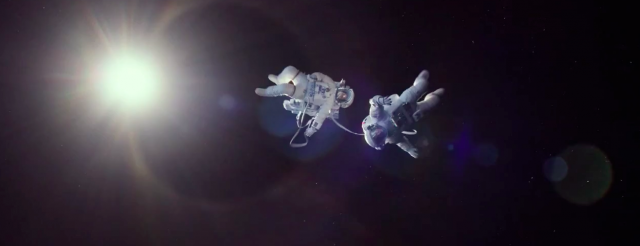


 We used to think that Aki Kaurismäki’s
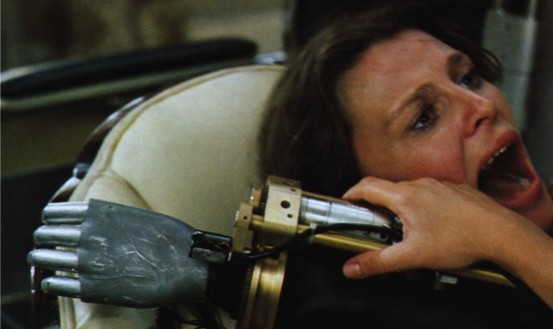
 Based on the novel by Dean R. Koontz, Donald Cammell’s creepy, claustrophobic 1977 futuristic thriller Demon Seed offers a very different look at motherhood. The film stars a surprisingly game Julie Christie as Susan Harris, a frustrated housewife whose husband, Alex (Fritz Weaver), is the leader of a team that has built a master computer known as Proteus (voiced by Robert Vaughn). When Alex goes off for several months to further Proteus’s already impressive attributes, the supercomputer starts developing a mind of its own, locking Susan in the house and deciding she must give birth to its child. Cammell, who codirected Performance with Nicolas Roeg, fills Demon Seed with trippy, psychedelic visuals and cool technological flourishes, along with an electronic score by Ian Underwood and Lee Ritenour supplementing Jerry Fielding’s central musical themes. The film delves into suburban paranoia with Toffler-esque flare and an Orwellian fear of artificial intelligence. The film harkens back to Stanley Kubrick’s 2001: A Space Odyssey and Joseph Sargent’s Colossus: The Forbin Project while influencing such future films as John Badham’s WarGames, which also names its supercomputer “Joshua” and casts Weaver look-alike John Wood as computer creator Dr. Stephen Falken. Demon Seed is screening with Ron Hays’s 1981 Earth, Wind & Fire video Let’s Groove on November 15 at 7:00, kicking off the Museum of the Moving Image series “Computer Age: Early Computer Movies, 1952-1987,” which continues through November 17 with such other computer-prescient films as Steven Lisberger’s Tron and Nick Castle’s The Last Starfighter, several shorts programs (including one featuring works by Larry Cuba, John Whitney, and John Whitney Jr.), and a conversation with computer artist Lillian Schwartz.