this week in lectures, signings, panel discussions, workshops, and Q&As

WELCOME TO COMPUTER AGE: DEMON SEED

Julie Christie DEMON SEED

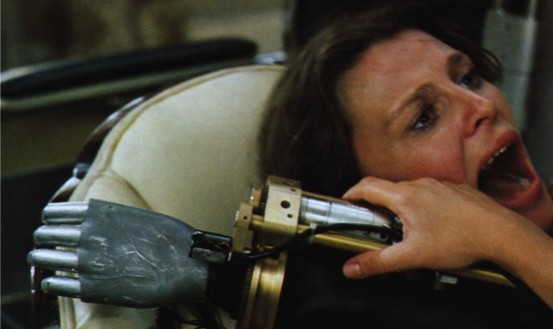
Julie Christie is trapped in a suburban nightmare in Donald Cammell’s DEMON SEED

COMPUTER AGE — EARLY COMPUTER MOVIES, 1952-1987: DEMON SEED (Donald Cammell, 1977)
Museum of the Moving Image
35th Ave. at 36th St., Astoria
Friday, November 15, $12, 7:00
718-777-6800
www.movingimage.us

Based on the novel by Dean R. Koontz, Donald Cammell’s creepy, claustrophobic 1977 futuristic thriller Demon Seed offers a very different look at motherhood. The film stars a surprisingly game Julie Christie as Susan Harris, a frustrated housewife whose husband, Alex (Fritz Weaver), is the leader of a team that has built a master computer known as Proteus (voiced by Robert Vaughn). When Alex goes off for several months to further Proteus’s already impressive attributes, the supercomputer starts developing a mind of its own, locking Susan in the house and deciding she must give birth to its child. Cammell, who codirected Performance with Nicolas Roeg, fills Demon Seed with trippy, psychedelic visuals and cool technological flourishes, along with an electronic score by Ian Underwood and Lee Ritenour supplementing Jerry Fielding’s central musical themes. The film delves into suburban paranoia with Toffler-esque flare and an Orwellian fear of artificial intelligence. The film harkens back to Stanley Kubrick’s 2001: A Space Odyssey and Joseph Sargent’s Colossus: The Forbin Project while influencing such future films as John Badham’s WarGames, which also names its supercomputer “Joshua” and casts Weaver look-alike John Wood as computer creator Dr. Stephen Falken. Demon Seed is screening with Ron Hays’s 1981 Earth, Wind & Fire video Let’s Groove on November 15 at 7:00, kicking off the Museum of the Moving Image series “Computer Age: Early Computer Movies, 1952-1987,” which continues through November 17 with such other computer-prescient films as Steven Lisberger’s Tron and Nick Castle’s The Last Starfighter, several shorts programs (including one featuring works by Larry Cuba, John Whitney, and John Whitney Jr.), and a conversation with computer artist Lillian Schwartz.

DOC NYC: HUNGRY

HUNGRY

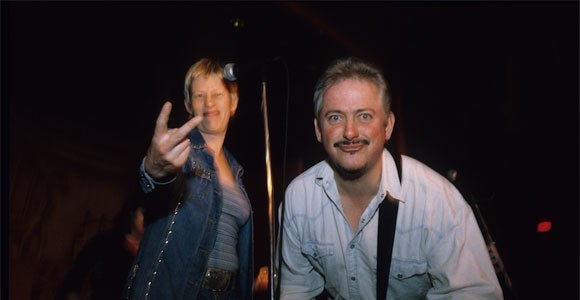
Takeru Kobayashi fights to get back his crown in HUNGRY

MIDNIGHT DOCS: HUNGRY (Jeff Cerulli & Barry Rothbart, 2013)
IFC Center
323 Sixth Ave. at West Third St.
Friday, November 15, 11:59 pm
Festival runs November 14-21
212-924-7771
www.hungrythefilm.com
www.docnyc.net

“Every person has a basis desire to eat,” Takeru Kobayashi says at the beginning of Jeff Cerulli and Barry Rothbart’s tasty documentary, Hungry. “There is also the desire to sleep, to have sex,” he continues. “That’s why it’s difficult to see eating as a sport.” From 2001 to 2006, Kobayashi almost single-handedly put the sport of competitive eating on the map by winning the Nathan’s Famous Hot Dog Eating Contest six straight times. But as interest around the world grew, a seemingly irreparable gap grew between some of the sport’s champions and the International Federation of Competitive Eating (IFOCE), which runs Major League Eating (MLE) and is owned and operated by brothers George and Richard Shea. In the film, Cerulli and Rothbart explore the controversy over contracts that led to Kobayashi, Dave “U.S. Male” Goldstein, Brad “the Lunatic” Sciullo, and other rather unique characters being cut off from MLE and taking part instead in unsanctioned events. Goldstein opens up his home to the filmmakers, sharing personal moments with his family, while the rebel Sciullo discusses his battle with a twenty-pound hamburger. Cerulli and Rothbart also speak with such competitive eating champs as Mike “the Scholar” Devito, Furious Pete Czerwinski, Crazy Legs Conti, and El Wingadore, in addition to Dr. Christopher Dimaio, a gastroenterologist who has a word of warning for all of them. But they do what they do because they can’t stop the need to compete, just like any other athlete, and also because some of them don’t have anything else. “Normal life is dreadful,” says jalapeño master Pat “Deep Dish” Bertoletti. The film gets both exciting and disgusting as Goldstein and others prepare for Wing Bowl, followed by Kobayashi coming up with his own plan for July 4. Whether you consider competitive eating a true sport or not, Hungry will make you hungry for more. Hungry is serving up its world premiere November 15 at 1:45 at the IFC Center as part of the “Midnight Docs” section of this year’s DOC NYC festival, with Cerulli, Rothbart, and Kobayashi on hand to talk about the film. The festival, which seeks to “cross fertilize [by] gathering practitioners of many fields — filmmakers, writers, photographers, and other storytellers — to inspire each other,” runs November 14-21 at the IFC Center and the SVA Theatre; among the other “Midnight Docs” are Christina Voros’s Kink, Jonah Bekhor and Zach Math’s The Final Member, and Morgan Matthews’s Shooting Bigfoot.

DOC NYC: REVENGE OF THE MEKONS

Sally Timms and Jon Langford fight the curse of the Mekons in stirring documentary

Sally Timms and Jon Langford fight the curse of the Mekons in stirring documentary

SONIC CINEMA: REVENGE OF THE MEKONS (Joe Angio, 2013)
SVA Theatre
333 West 23rd St. between Eighth & Ninth Aves.
Friday, November 15, 9:45
Festival runs November 14-21
212-924-7771
www.mekonsmovie.com
www.docnyc.net

Called “the most revolutionary group in the history of rock ‘n’ roll” by Lester Bangs, the Mekons have been making some of the best music on the planet for more than thirty-five years. But despite a rabid fan base and constant critical adoration, the band, which formed at the University of Leeds back in 1977, has never quite made the big time. Joe Angio captures the wild, DIY spirit of this unique music and art collective in the stirring documentary Revenge of the Mekons. Angio (How to Eat Your Watermelon in White Company [and Enjoy It]) follows the self-deprecating band — the members of which are quick to joke about their lack of financial and popular success, especially when they’re onstage and learn from fans that an upcoming gig has been canceled — as they celebrate their thirtieth anniversary and record their most recent excellent album, Ancient and Modern. Angio talks with the current Mekons lineup, which includes cofounders Tom Greenhalgh and Jon Langford along with Susie Honeyman, Rico Bell, Lu Edmonds, Sarah Corina, Steve Goulding, and Sally Timms, as well as such former members as Kevin Lycett, Mark “Chalkie” White, Andy Corrigan, and Dick Taylor, as they recount the band’s rollicking history, beginning with its Leeds days as a socialist punk band battling over shows with Gang of Four through its mid-1980s transformation into alt-country folk rockers.
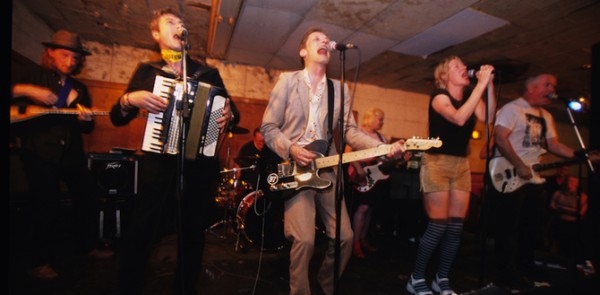
Mekons doc is one heckuva wild and crazy show

Mekons doc is one helluva wild and crazy ride, just like their long career

Angio mixes in amazing raw footage from the 1970s with more contemporary scenes as the Mekons, with their usual reckless abandon and utter joyfulness, play such songs as “Where Were You,” “The Hope and the Anchor,” “Ghosts of American Astronauts,” “Millionaire,” “Hello Cruel World,” “Hard to Be Human,” “Memphis, Egypt,” and “The Curse.” Sharing their love of all things Mekons are such wide-ranging pundits as Jonathan Franzen, Greil Marcus, Gang of Four’s Hugo Burnham and Andy Gill, Will Oldham, Greg Kot, Craig Finn, Luc Sante, Mary Harron, and performance artist Vito Acconci. Back in October 2011, we wrote that “a world that includes the Mekons is just a better place for everyone,” and that still holds true. So start by watching this wonderfully crazy documentary, about a group of crazy characters who have formed a crazy kind of family, then go out and pick up such seminal records as Fear and Whiskey, The Mekons Honky Tonkin’, So Good It Hurts, The Mekons Rock‘n’Roll, Natural, Ancient Modern, etc., and be sure to catch them live when they come anywhere near your town. Revenge of the Mekons is having its world premiere November 15 at 9:45 at the SVA Theatre as part of the “Sonic Cinema” section of this year’s DOC NYC festival, with Angio, Langford, Timms, Bell, and Goulding on hand to talk about the film. DOC NYC, which seeks to “cultivate new audiences [by] attracting newcomers with the excitement of a festival atmosphere,” runs November 14-21 at the IFC Center and the SVA Theatre; among the other “Sonic Cinema” selections are Rodrigo H. Vila’s Mercedes Sosa: Voice of Latin America, Trevor Laurence and Simeon Hutner’s Harlem Street Singer, and Jeremy Xido’s Death Metal Angola.

ILYA AND EMILIA KABAKOV: ENTER HERE

KABAKOV

Emilia and Ilya Kabakov discuss their life and work in new documentary (photo by Jacques De Melo)

ILYA AND EMILIA KABAKOV: ENTER HERE (Amei Wallach, 2013)
Film Forum
209 West Houston St.
November 13-26
212-727-8110
www.kabakovfilm.com
www.filmforum.org

“Epic and boring,” Russian newspaper Vedomosti wrote in a review of Ilya and Emilia Kabakov’s highly anticipated 2008 Moscow exhibition; the same can be said about Amei Wallach’s documentary about the renowned Russian art couple, Ilya and Emilia Kabakov: Enter Here. Wallach assembled the same team she worked with on 2008’s Louise Bourgeois: The Spider, the Mistress and the Tangerine (except for her late codirector, Marion Cajori) to follow the Kabakovs as they prepare for a major series of shows in six venues in Moscow, marking Ilya’s return to the city for the first time since fleeing the country twenty years earlier. Wallach is given virtually unlimited access to Ilya, a soft-spoken conceptual artist filled with fascinating and unusual ideas, and Emilia, whom he married in 1992 and who handles his business affairs and assists her husband in the studio. Wallach delves into Ilya’s past as a struggling artist who was rarely allowed to show his work publicly and became part of an underground avant-garde that also included Oleg Vassiliev, Igor Makarevich, and Andrei Monastyrsky, all of whom appear in the film, as does Robert Storr, Matthew Jesse Jackson, and other scholars. Much of Ilya’s work is innately, if not overtly, political, evoking a changing Russia / Soviet Union as it evolved through such leaders as Stalin, Khrushchev, and Brezhnev, quietly exploring many sociopolitical elements of the twentieth and early twenty-first centuries. The film’s emotional high point involves a voiceover reading a letter from Ilya’s mother that she wrote to him when she was eighty, as the camera takes viewers through such monumental yet intimate and personal installations as “Red Wagon” and “The Toilet.” Among the other works featured are “The Palace of Projects,” “Life of Flies,” “Labyrinth (My Mother’s Album),” “School No. 6,” “How to Meet an Angel,” and “Alternative History of Art,” in which Ilya is joined by his past and future alter egos, Charles Rosenthal and Igor Spivak.

KABAKOV

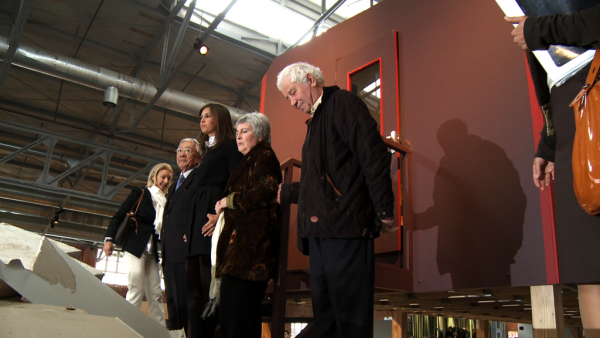
The Kabakovs attend the opening of their 2008 Moscow exhibition, marking their highly anticipated return to the city

Unlike such other recent art documentaries as Cutie and the Boxer and Gerhard Richter Painting, which focused on unique and engaging characters, the Kabakovs are not particularly entertaining in and of themselves; it’s their work that makes them fascinating, so some stretches of the documentary drag on a bit, and it is difficult for Wallach and editor-cinematographer Ken Kobland to capture on film the feeling of what it is like to experience one of the Kabakovs’ massive installations. (However, it is possible for New Yorkers to see “Catch the Little White Man,” which is on view along with seven paintings at Pace Gallery in Midtown through December 21.) But Ilya and Emilia Kabakov: Enter Here is still a treat, offering an inside look at a husband and wife who are considered the most important Russian artists alive today. “The first thing to say is that art is another world,” Ilya explains early on. “And one must leave one’s body and one’s mentality, and one’s blah, blah, blah . . . and one’s everyday element, and enter another world. This is the major purpose and aim of our work. Leave and come with me to another world.” That’s a difficult offer to pass up. Enter Here begins a two-week run at Film Forum on November 13, with Ilya and Emilia on hand to talk about the film at select screenings on November 13, 16, 23, and 24; the 7:50 show on November 23 will be followed by a Q&A with Wallach and Kobland.

MEET THE DOC NYC SHORT LIST

Morgan Neville, director of 20 FEET FROM STARDOM, will be part of free DOC NYC panel discussion about the art of documentary filmmaking

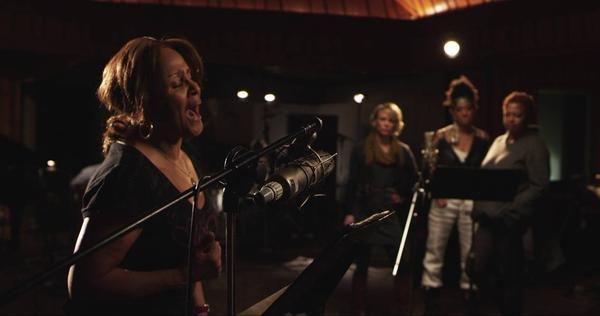
20 FEET FROM STARDOM director Morgan Neville will be part of free DOC NYC panel discussion about the art of documentary filmmaking

DOC NYC
IFC Center
323 Sixth Ave. at West Third St.
Wednesday, November 13, free, 5:00
Festival runs November 14-21
212-924-7771
www.docnyc.net
www.ifccenter.com

The annual DOC NYC festival, which celebrates documentary storytelling with a week of screenings at the IFC Center and the SVA Theatre, kicks off on November 13 at 5:00 with the free panel discussion “Meet the DOC NYC Short List.” The Short List category consists of ten recently released nonfiction films that festival organizers Raphaela Neihausen, Thom Powers, John Vanco, and Harris Dew believe are the ones to watch come awards season. Moderated by Powers, the talk will feature eight of the directors whose work has been selected for the Short List: Morgan Neville (20 Feet from Stardom), Joshua Oppenheimer (The Act of Killing), Gabriela Cowperthwaite (Blackfish), Lucy Walker (The Crash Reel), Richard Rowley (Dirty Wars), Alan Berliner (First Cousin Once Removed), Dawn Porter (Gideon’s Army), and Roger Ross Williams (God Loves Uganda). Free tickets will be available at the box office thirty minutes before the event, first come, first served, after Insider Pass holders have entered. The festival runs November 14-21, with Errol Morris’s The Unknown Known, about Donald Rumsfeld, the opening night selection; John Maloof and Charlie Siskel’s Finding Vivian Maier the centerpiece film; and Michel Gondry’s Is the Man Who Is Tall Happy? An Animated Conversation with Noam Chomsky the closing night pick. The stated mission of DOC NYC is to “curate, cross-fertilize, cross generations, cultivate new audiences, expand distribution, create social space, and make the most of NYC,” which it has been doing now for nine years.

PUBLIC WALKS: CAROL BOVE’S “CATERPILLAR” ON THE HIGH LINE

(photo by Juan Valentin / courtesy of Friends of the High Line)

Free public walk will take ticket holders to wild part of High Line to see Carol Bove’s “Caterpillar” installation (photo by Juan Valentin / courtesy of Friends of the High Line)

High Line at the Rail Yards
Saturdays & Sundays, November – December, free with advance RSVP, 10:00 am, 11:00, 12 noon, 2:00, 3:00
December RSVPs start November 12 at 4:00 pm
“Caterpillar” remains on view through May 2014
www.art.thehighline.org

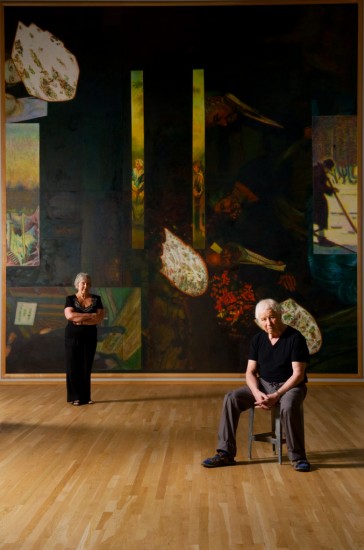
Red Hook–based artist Carol Bove has installed a specially commissioned series of large-scale sculptures across a three-hundred-yard section of the High Line that is still in its wild, self-seeded state, scheduled to become the third part of the park’s miraculous renovation project next year. Bove, who was born in Geneva and raised in Berkeley, has presented the site-specific “Caterpillar,” seven pieces that alternate between white powder-coated twisting steel (“Celeste,” “Prudence”), a silicon bronze and stainless-steel platform (“Monel”), a brass and concrete vertical object (“Visible Things and Colors”), and rigid, rusted steel beam constructions (“14,” “Cow Watched by Argus”). A kind of contemporary Zen garden on the West Side of Manhattan, “Caterpillar” can only be seen up close as part of public walks being held on Saturdays and Sundays at 10:00, 11:00, 12 noon, 2:00, and 3:00. Tickets are free but must be obtained in advance; RSVPs for the December walks can be made beginning at 4:00 on November 12. To go on the forty-five-minute walk, you’ll have to sign a safety waiver, and it is recommended that you wear sturdy shoes, because you’ll be going over uneven terrain. No one under eighteen will be allowed on the tour. The High Line has been transformed into a glorious outdoor elevated park with wonderful views, cutting-edge art, live performances, food and drink stations, and more, but this is a rare opportunity to experience what it was like before the change. The walks fill up quickly, so don’t hesitate to reserve your spot. (Through January 2014, you can also catch Bove’s indoor installation “The Equinox” on the fourth floor of MoMA.)

SARAH SZE IN CONVERSATION WITH JENNIFER EGAN: TRIPLE POINT

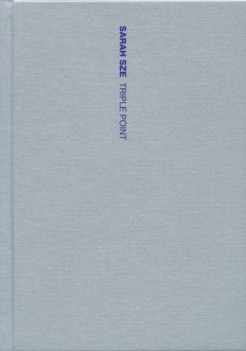
triple point

192 Books
112 Tenth Ave. at Twenty-First St.
Tuesday, November 12, free, 7:00
212-255-4022
www.192books.com
www.sarahsze.com

Boston-born, New York-based visual artist Sarah Sze creates fragile, intricately constructed architectural environments using such materials as string, bottle caps, colored tape, Styrofoam cups, paper, and other items that combine elements of painting and sculpture. Sze, whose “Infinite Line” show ran at Asia Society in 2011-12, is currently representing America at the U.S. Pavilion at the fifty-fifth Venice Biennale with the massive installation “Triple Point,” about which she said in a statement, “Central to the exhibition is the notion of the ‘compass’ and how we locate ourselves in a perpetually disorienting world.” In May 2012, Pulitzer Prize-winning author Jennifer Egan (A Visit from the Goon Squad, The Keep) began posting her New Yorker short story “Black Box” on Twitter in paragraphs of no more than 140 characters, weaving together a written narrative that echoes the ones that Sze builds with objects. On November 12 at 7:00, Sze and Egan will be at 192 Books in Chelsea, celebrating the release of the new book Triple Point (Gregory R. Miller / Bronx Museum of the Arts, October 2013, $45), which examines the installation in detail, featuring an introduction by Biennale co-commissioners Holly Block and Carey Lovelace, an essay by curator Johanna Burton, a conversation between Sze and Egan, and the complete text of Egan’s “Black Box.”