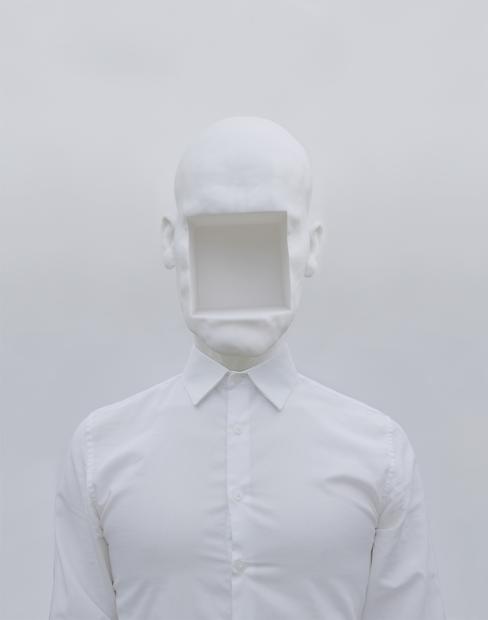
Jonny Briggs, “Filling the Void,” C-print, 2013 (photo courtesy Julie Meneret Contemporary Art)
BRIGGS & HAMILTON
Julie Meneret Contemporary Art
133 Orchard St.
Wednesday, February 26, free, 6:00
Briggs exhibition continues Wednesday – Sunday through March 30
212-477-5269
www.juliemeneret.com
www.jonnybriggs.com
British photographer Jonny Briggs will be making his U.S. debut this week with the solo show “Monstrares,” running February 26 through March 30 at Julie Meneret Contemporary Art, a new gallery that opened this past fall on Orchard St. on the Lower East Side. In his work, Briggs, the 2011 winner of the Saatchi Gallery and Channel 4’s New Sensations Prize, explores his memories of childhood and family, brought to life in carefully staged installations using latex molds in photographs that are not digitally manipulated. “In search of lost parts of my childhood I try to think outside the reality I was socialised into and create new ones with my parents and self,” he explains in his artist statement. “I look back to my younger self and attempt to recapture childhood nature through my assuming adult eyes.” His work evokes that of Bernardí Roig, Ron Mueck, Will Ryman, and even a hint of Cindy Sherman, while the title is a sly combination of the Latin word for “show” or “display” and the English word “monster.” The opening-night party on February 26 will feature special guest Saskia Hamilton, who will read poems she wrote that were inspired by Briggs and his photography. Hamilton, who is the title subject of the Ben Folds and Nick Hornby song “Saskia Hamilton” (“I’ve only ever seen her name on the spine / But that’s enough I wanna make her mine”), has previously published such poetry books as Divide These and As for Dream; her latest, Corridor, is due in May from Graywolf Press.
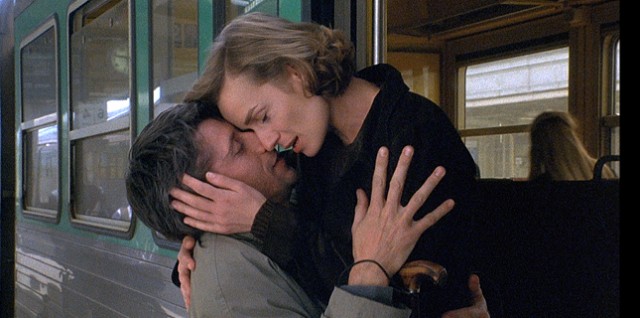
 “The mask reveals more than the face,” Germain-Roland Desmot (Antoine de Caunes) says in French New Wave auteur Claude Chabrol’s 1999 thriller A Color of Lies, which is actually an investigation into the concept of truth. In seaside Breton, a ten-year-old girl has been found in the woods, raped and murdered. New police inspector Lesage (Valeria Bruni Tedeschi) believes the culprit is painter and art teacher René Sterne (Jacques Gamblin), the last person known to see the girl alive, but he is staunchly defended by his caring wife, Vivianne (Sandrine Bonnaire), who is striking up a close friendship with Desmot, a self-obsessed local celebrity who writes books and appears on television shows. When a second death is linked to René, Lesage thinks she’s got her man, but the truth is not so easy to uncover in this ever-more complex mélange. Cowritten by Chabrol (Les Cousins, Les Biches) and Odile Barski and shot in an ominous 1970s atmosphere by Eduardo Serra (The Girl with a Pearl Earring, Blood Diamond) that explodes with bursts of deep blues and reds, The Color of Lies is a dark mystery about love, art, obsession, and truth, centered by Bonnaire’s (Vagabond, Monsieur Hire) radiant performance as a dedicated woman facing a critical moment of doubt. Gamblin (Laissez-passer) is effective as René, a cynical, unpredictable man who walks with a cane; on the surface, it is easy to assume he is guilty of anything anyone accuses him of, but his wife’s love adds sympathy and hope that he is not the murderer. The Color of Lies is filled with tricky plot twists emanating from the trompe-l’oeil painting style employed by René in his work, and by Chabrol throughout the film, creating a false reality, like masks that people wear to try to hide the truth behind them. A digitally remastered version of The Color of Lies is screening February 25 at 4:00 & 7:30 as part of the FIAF CinéSalon series “Remastered & Restored: Treasures of French Cinema”; the later screening was supposed to be presented by costar Gamblin, who had to cancel, so a new presenter will be announced. Both shows will be followed by a wine reception. The three-month festival continues with such other recently restored French films as Claire Denis’s Chocolat (introduced by Mahen Bonetti), Jean-Pierre Melville’s Two Men in Manhattan (introduced by Phillip Lopate), and Henri-Georges Clouzot’s The Truth.
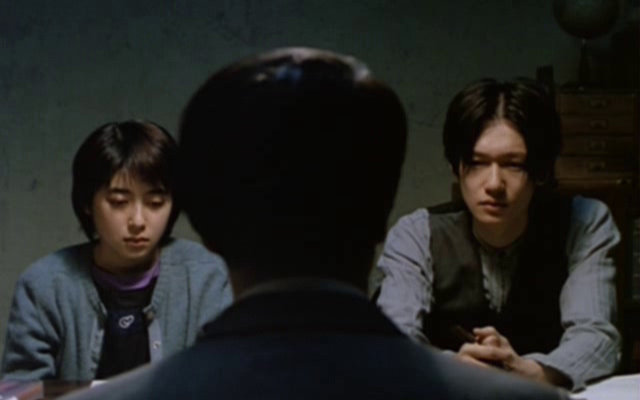
 Japan Society’s five-film, five-month, five-director tribute to writer, critic, scholar, curator, and filmmaker Donald Richie, who died on February 19, 2013, at the age of eighty-eight, comes to a close on the one-year anniversary of his passing in appropriate fashion, with a screening of Hirokazu Kore-eda’s second narrative feature, After Life, Kore-eda’s eminently thoughtful film about two of his recurring themes: death and memory. Every Monday, the deceased arrive at a way station where they have three days to decide on a single memory they can bring with them into heaven. Once chosen, the memory is re-created on film, and the person goes on to the next step of his or her journey, to be replaced by a new batch of souls. The way station is staffed by guides, including Takashi Mochizuki (Arata), Shiori Satonaka (Erika Oda), and Satoru Kawashima (Susumu Terajima), whose job it is to interview the new arrivals and help them select a memory and then bring it to life on-screen. Some want to take with them an idyllic moment from childhood, others a remembrance of a lost love, but a few are either unable to or refuse to come up with one, which challenges the staff. Twenty-one-year-old Yūsuke Iseya declares, “I have no intention of choosing. None,” while seventy-year-old Ichiro Watanabe (Taketoshi Naito) is having difficulty deciding on the exact moment, reevaluating and reflecting on the life he led. (Ichiro’s wife is played by Kyōko Kagawa, who has also appeared in films by Yasujiro Ozu, Akira Kurosawa, and Kenji Mizoguchi, three seminal directors whose work was previously shown in the Japan Society series.) As the week continues, the guides look back on their lives as well, sharing intimate details, one of which leads to an emotional finale.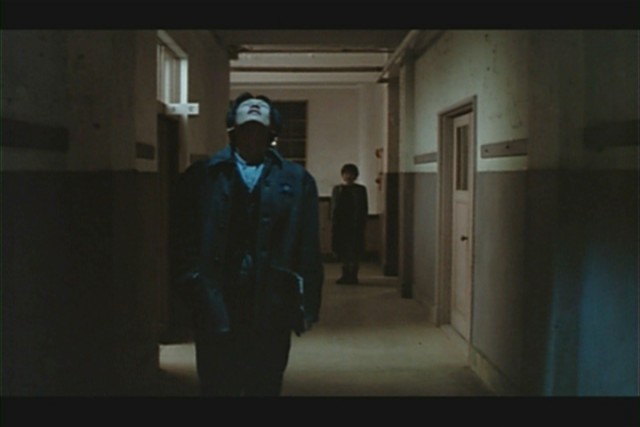
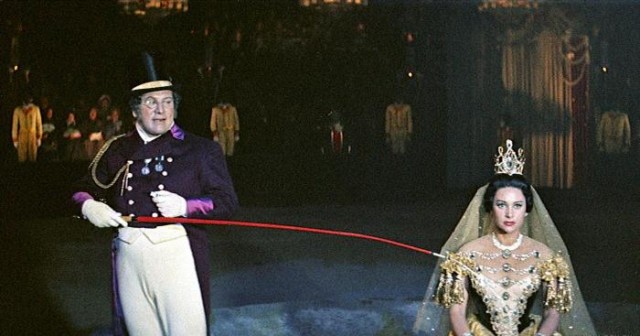
 “And now, the moment you’ve all been waiting for!” announces the monocled, whip-snapping Mammoth Circus ringmaster (Peter Ustinov) as Max Ophüls’s 1955 CinemaScope masterpiece, Lola Montès, begins. “The most sensational act of the century!” he continues, the camera following him in a breathtaking tracking shot as he introduces “a creature a hundred times more wild than any beast in our menagerie! A monster of cruelty . . . with the eyes of an angel!” Then, with much fanfare, Lola Montès (Martine Carol) arrives like a queen — albeit a circus queen — as the ringmaster tells the audience that they (we) are about to witness “the whole truth of the extraordinary life of Lola Montès.” What follows is not necessarily the true tale of the famed courtesan and entertainer who gained more notoriety for her scandalous love affairs and hourglass body than for her abilities as an actress and dancer. Lola’s story is told in a series of flashbacks showing her with Franz Liszt (Will Quadflieg), Lt. Thomas James (Ivan Desny), conductor Claudio Pirotto (Claude Pinoteau), a young student (Oskar Werner), and, most critically, King Ludwig I of Bavaria (a dashing Anton Walbrook). The episodes reveal her to be both loved and reviled as she struggles to succeed in her career, which ends up taking second place to the men in her life. Ophüls barely shows the cigar-loving Lola performing, instead letting the camera slowly dance around her, often depicting her through window frames, screens, and curtains as if she is a caged animal, all leading to a dangerous grand finale.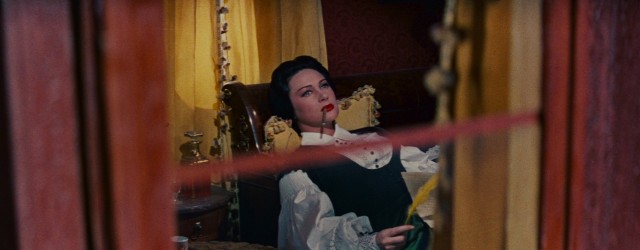


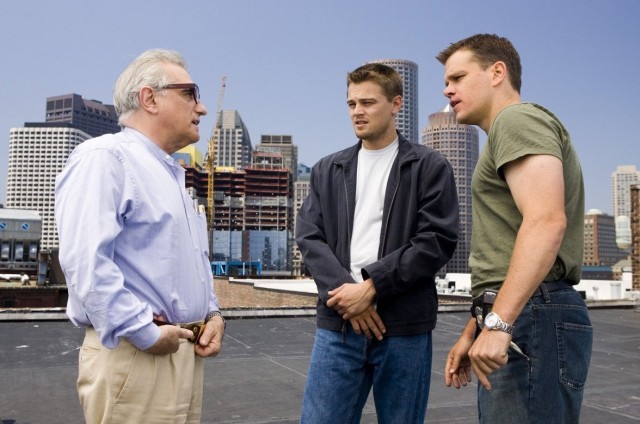
 Based on Andrew Lau and Alan Mak’s awesome Infernal Affairs (2002), Martin Scorsese’s relatively faithful remake, The Departed, moves the relentless action and intrigue from Hong Kong to the mean streets of Boston, where it is hard to tell cop from criminal. Just out of the academy, Colin Sullivan (Matt Damon) rises quickly to detective in the Special Investigations Unit, but he’s actually in cahoots with master crime lord Frank Costello (Jack Nicholson). Meanwhile, Billy Costigan (an excellent Leonardo DiCaprio), training to become a cop, is sent deep undercover (including a prison stint) to infiltrate Costello’s gang, with only Captain Queenan (Martin Sheen) and Sergeant Dignam (a very funny and foul-mouthed Mark Wahlberg) aware of the secret mission. Sullivan and Costigan are like opposite sides of the same persona; in between them stands Costello — and Madolyn (Vera Farmiga), a psychiatrist who is in a relationship with one and is doctor to the other. As both the cops and the criminals search desperately for their respective rats, no one can trust each other, leading to lots of blood and a spectacular finale. Nicholson has a field day as the aging gangster, chewing up mounds of scenery in his first film with Scorsese, who returned to peak form with his best work since 1990’s Goodfellas. The film was nominated for five Oscars, winning four, for Best Director, Best Film Editing (Thelma Schoonmaker), Best Adapted Screenplay (William Monahan), and Best Picture, while Wahlberg was nominated for Best Supporting Actor.