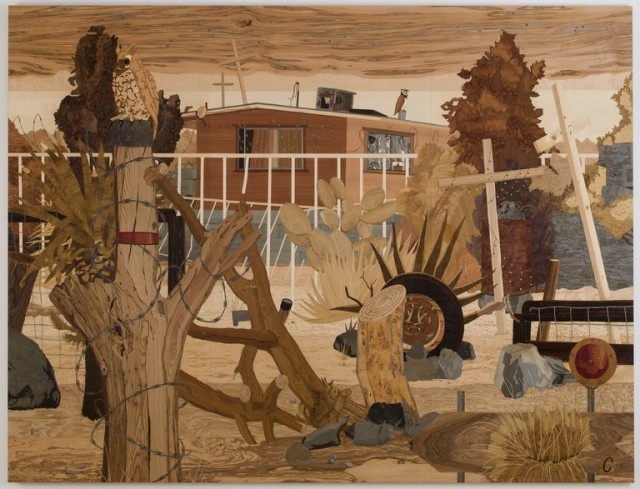
Alison Elizabeth Taylor, “Security House,” wood veneer and shellac, 2008-10 (Gift of the Contemporary Art Acquisition Committee; © Alison Elizabeth Taylor)
Brooklyn Museum
200 Eastern Parkway at Washington St.
Saturday, March 1, free, 5:00 – 11:00 (some events require free tickets distributed in advance at the Visitor Center)
212-864-5400
http://www.brooklynmuseum.org
In 1982, the United States recognized the first official Women’s History Week, comprising seven days in March; five years later, the third month of the year became Women’s History Month, passed by a congressional vote of 100 to 9. The Brooklyn Museum will be celebrating Women’s History Month on March 1 in their free First Saturdays programs by examining women and art, music, publishing, poetry, and more. The evening will include an artist talk by Alison Elizabeth Taylor, an arts workshop demonstrating how Taylor uses wood in her pieces, Tatyana Fazlalizadeh discussing her anti–street harassment project “Stop Telling Women to Smile,” pop-up gallery talks in English and Spanish on specific works by women, the interactive performance “Sublime” by the South Asian Women’s Creative Collective, a martial arts workshop with ABADÁ-Capoeira, a talk by Toni Blackman about hip-hop and activism, live music by Zuzuka Poderosa, TECLA, and Venus X with live animation by Niky Roehreke, pop-up spoken-word poetry, a live performance combining music and spoken-word by Alixa Garcia and Naima Penniman of Climbing PoeTree, and a book club talk by members of the Feminist Press. In addition, the galleries will be open late, giving visitors plenty of opportunity to check out “Wangechi Mutu: A Fantastic Journey,” “Twice Militant: Lorraine Hansberry’s Letters to ‘The Ladder,’” “Divine Felines: Cats of Ancient Egypt,” “Life, Death, and Transformation in the Americas,” “Connecting Cultures: A World in Brooklyn,” and other exhibits.
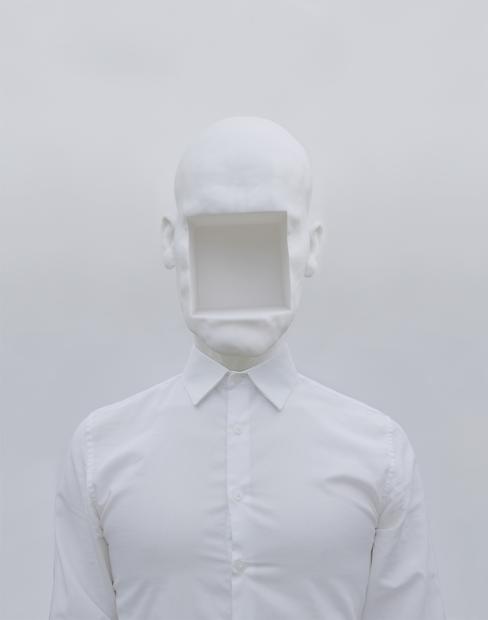
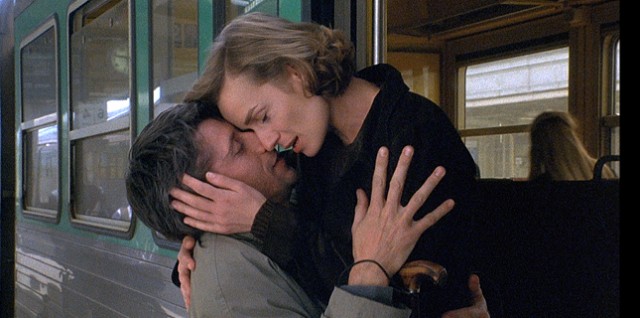
 “The mask reveals more than the face,” Germain-Roland Desmot (Antoine de Caunes) says in French New Wave auteur Claude Chabrol’s 1999 thriller A Color of Lies, which is actually an investigation into the concept of truth. In seaside Breton, a ten-year-old girl has been found in the woods, raped and murdered. New police inspector Lesage (Valeria Bruni Tedeschi) believes the culprit is painter and art teacher René Sterne (Jacques Gamblin), the last person known to see the girl alive, but he is staunchly defended by his caring wife, Vivianne (Sandrine Bonnaire), who is striking up a close friendship with Desmot, a self-obsessed local celebrity who writes books and appears on television shows. When a second death is linked to René, Lesage thinks she’s got her man, but the truth is not so easy to uncover in this ever-more complex mélange. Cowritten by Chabrol (Les Cousins, Les Biches) and Odile Barski and shot in an ominous 1970s atmosphere by Eduardo Serra (The Girl with a Pearl Earring, Blood Diamond) that explodes with bursts of deep blues and reds, The Color of Lies is a dark mystery about love, art, obsession, and truth, centered by Bonnaire’s (Vagabond, Monsieur Hire) radiant performance as a dedicated woman facing a critical moment of doubt. Gamblin (Laissez-passer) is effective as René, a cynical, unpredictable man who walks with a cane; on the surface, it is easy to assume he is guilty of anything anyone accuses him of, but his wife’s love adds sympathy and hope that he is not the murderer. The Color of Lies is filled with tricky plot twists emanating from the trompe-l’oeil painting style employed by René in his work, and by Chabrol throughout the film, creating a false reality, like masks that people wear to try to hide the truth behind them. A digitally remastered version of The Color of Lies is screening February 25 at 4:00 & 7:30 as part of the FIAF CinéSalon series “Remastered & Restored: Treasures of French Cinema”; the later screening was supposed to be presented by costar Gamblin, who had to cancel, so a new presenter will be announced. Both shows will be followed by a wine reception. The three-month festival continues with such other recently restored French films as Claire Denis’s Chocolat (introduced by Mahen Bonetti), Jean-Pierre Melville’s Two Men in Manhattan (introduced by Phillip Lopate), and Henri-Georges Clouzot’s The Truth.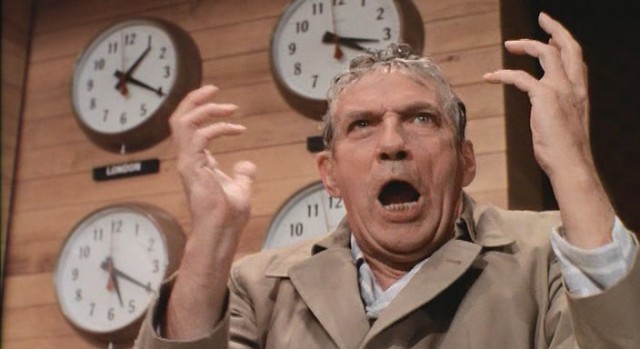
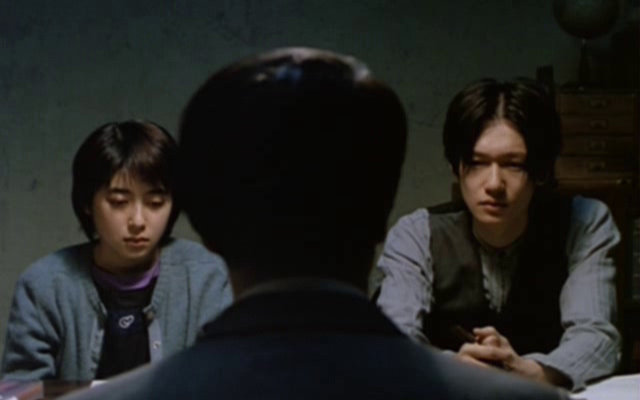
 Japan Society’s five-film, five-month, five-director tribute to writer, critic, scholar, curator, and filmmaker Donald Richie, who died on February 19, 2013, at the age of eighty-eight, comes to a close on the one-year anniversary of his passing in appropriate fashion, with a screening of Hirokazu Kore-eda’s second narrative feature, After Life, Kore-eda’s eminently thoughtful film about two of his recurring themes: death and memory. Every Monday, the deceased arrive at a way station where they have three days to decide on a single memory they can bring with them into heaven. Once chosen, the memory is re-created on film, and the person goes on to the next step of his or her journey, to be replaced by a new batch of souls. The way station is staffed by guides, including Takashi Mochizuki (Arata), Shiori Satonaka (Erika Oda), and Satoru Kawashima (Susumu Terajima), whose job it is to interview the new arrivals and help them select a memory and then bring it to life on-screen. Some want to take with them an idyllic moment from childhood, others a remembrance of a lost love, but a few are either unable to or refuse to come up with one, which challenges the staff. Twenty-one-year-old Yūsuke Iseya declares, “I have no intention of choosing. None,” while seventy-year-old Ichiro Watanabe (Taketoshi Naito) is having difficulty deciding on the exact moment, reevaluating and reflecting on the life he led. (Ichiro’s wife is played by Kyōko Kagawa, who has also appeared in films by Yasujiro Ozu, Akira Kurosawa, and Kenji Mizoguchi, three seminal directors whose work was previously shown in the Japan Society series.) As the week continues, the guides look back on their lives as well, sharing intimate details, one of which leads to an emotional finale.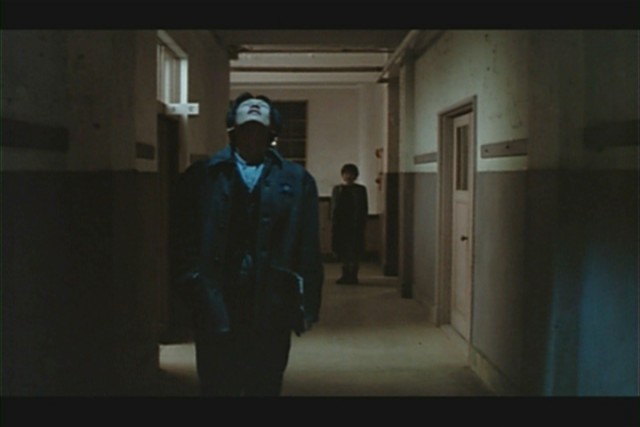
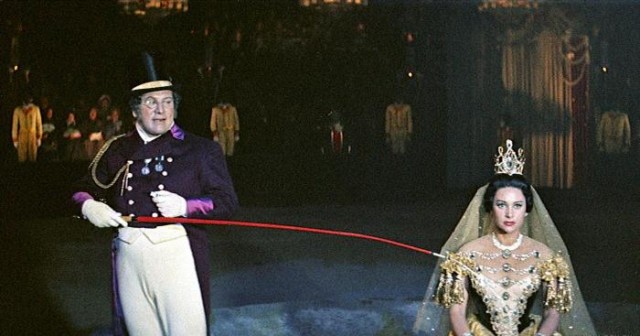
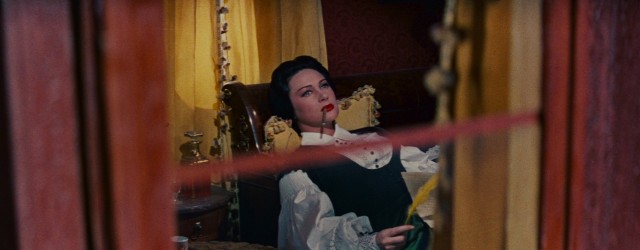
 “And now, the moment you’ve all been waiting for!” announces the monocled, whip-snapping Mammoth Circus ringmaster (Peter Ustinov) as Max Ophüls’s 1955 CinemaScope masterpiece, Lola Montès, begins. “The most sensational act of the century!” he continues, the camera following him in a breathtaking tracking shot as he introduces “a creature a hundred times more wild than any beast in our menagerie! A monster of cruelty . . . with the eyes of an angel!” Then, with much fanfare, Lola Montès (Martine Carol) arrives like a queen — albeit a circus queen — as the ringmaster tells the audience that they (we) are about to witness “the whole truth of the extraordinary life of Lola Montès.” What follows is not necessarily the true tale of the famed courtesan and entertainer who gained more notoriety for her scandalous love affairs and hourglass body than for her abilities as an actress and dancer. Lola’s story is told in a series of flashbacks showing her with Franz Liszt (Will Quadflieg), Lt. Thomas James (Ivan Desny), conductor Claudio Pirotto (Claude Pinoteau), a young student (Oskar Werner), and, most critically, King Ludwig I of Bavaria (a dashing Anton Walbrook). The episodes reveal her to be both loved and reviled as she struggles to succeed in her career, which ends up taking second place to the men in her life. Ophüls barely shows the cigar-loving Lola performing, instead letting the camera slowly dance around her, often depicting her through window frames, screens, and curtains as if she is a caged animal, all leading to a dangerous grand finale.