this week in lectures, signings, panel discussions, workshops, and Q&As

BEAUTIFUL BINOCHE

Quad series celebrating Juliette Binoche runs August 4-10 (artwork by Brianna Ashby)

BEAUTIFUL BINOCHE
Quad Cinema
34 West 13th St. between Fifth & Sixth Aves.
August 4-10
quadcinema.com

In preparation for the August 11 opening of her latest feature, Emmanuel Carrère’s Between Two Worlds, the Quad is taking a look back at the career of award-winning French actress Juliette Binoche with eight of her most well known works. “Beautiful Binoche” kicks off August 3 with Philip Kaufman’s 1988 adaptation of recently deceased Czech author Milan Kundera’s The Unbearable Lightness of Being, which had been thought to have been impossible to film. The nearly three-hour story of a love triangle set in the Czech Republic in the late 1960s is screening August 4 at 3:30 and 7:00; the first show will be introduced by Columbia professor and author Annette Insdorf, the second by producer Paul Zaentz.

Insdorf will also introduce the 5:00 screening on August 6 of Krzysztof Kieślowski’s 1993 Three Colours: Blue, about tragedy and liberty, the first of a trilogy, while Zaentz will be back August 6 at 7:00 to introduce Anthony Minghella’s 1996 The English Patient, for which Binoche won a Best Supporting Actress Oscar for her portrayal of a French-Canadian combat nurse during WWII. Louis Malle’s 1992 Damage, in which Binoche stars as a political femme fatale involved with a Member of Parliament played by Jeremy Irons, screens twice on Saturday, while Claire Denis’s 2017 Let the Sunshine In, loosely adapted from Roland Barthes’s A Lover’s Discourse: Fragments, is being shown twice on August 10, with the 5:00 screening introduced by Jourdain Searles.

Binoche, who has appeared in more than seventy films since her 1983 debut, has perhaps worked with more of the world’s greatest directors than any other living performer, an astounding array of international creators that also includes André Téchiné, Jean-Luc Godard, Leos Carax, Lasse Hallström, John Boorman, Abel Ferrara, Amos Gitai, Hou Hsiao-hsien, David Cronenberg, Sylvie Testud, Hirokazu Kore-eda, and Christophe Honoré. Below is a look at the three other films that are part of the Quad series, which runs August 4-10 and concludes with a sneak preview of Between Two Worlds.

Daniel Autieul and Juliette BInoche star in MIchael Hanekes

Daniel Autieul and Juliette Binoche star in Michael Haneke’s Caché

CACHÉ (HIDDEN) (Michael Haneke, 2005)
Monday, August 7, 5:00 & 7:30
quadcinema.com
sonyclassics.com/cache

Michael Haneke was named Best Director at Cannes for Caché, a slow-moving yet gripping psychological drama about a seemingly happy French family whose lives are about to be torn apart. The film stars Daniel Auteil as Georges, the host of a literary public television talk show, and Juliette Binoche as his wife, Anne, a book editor. One day a mysterious videotape is left for them, showing a continuous shot of their house. More tapes follow, wrapped in childish drawings of a boy with blood coming out of his mouth. Fearing for the safety of their son, Pierrot (Lester Makedonsky), they go to the police, who say they cannot do anything until an actual crime has been committed. As the tapes reveal more information and invite more danger, Georges’s secrets and lies threaten the future of his marriage.

Caché is a tense, involving thriller that is both uncomfortable and captivating to watch. Haneke zooms in closely on the relationship between Georges and Anne, keeping all other characters in the background; in fact, there is no musical score or even any incidental music to enhance the searing emotions coming from Auteil and Binoche. Winner of numerous year-end critics awards for Best Foreign Language Film, Caché is screening August 5 at the Quad. Oh, and be sure to pay close attention to the long final shot for just one more crucial twist that many people in the audience will miss.

William Shimell and Juliette Binoche both play annoying characters you will not want to hang out with in Certified Copy

CERTIFIED COPY (COPIE CONFORME) (Abbas Kiarostami, 2010)
Tuesday, August 8, 5:00 & 7:00
quadcinema.com
www.ifcfilms.com

Writer, director, poet, photographer, editor, graphic designer, and painter Abbas Kiarostami was one of Iran’s leading filmmakers for nearly forty years before his death in 2016, compiling a resume that includes such important international films as Under the Olive Trees (1994), Taste of Cherry (1997), and The Wind Will Carry Us (1999). Certified Copy was his first feature made outside of his home country, a dreadfully boring and annoying art-infused romantic comedy set in Italy. Juliette Binoche was named Best Actress at Cannes for her starring role as an unnamed single mother and antiques dealer who is obsessed with English author James Miller’s (British opera star William Shimell) book on the history and meaning of art replicas, titled Certified Copy. Inexplicably, the two strangers are soon on a bizarre sort-of date, driving through Tuscany and becoming involved in a series of vignettes about love and marriage, literature and art, and other topics.

Both characters are seriously flawed and emotionally unstable in ways that make them unattractive to watch, especially in obvious set-ups that either go nowhere or exactly where you think they’re going. While Julie Delpy and Ethan Hawke made the somewhat similar Before Sunrise and Before Sunset, in which two strangers from different countries spend a day together (but mostly by themselves), the sexual tension and excitement always building, Certified Copy is more reminiscent of Hans Canova’s ridiculous Conversations with Other Women, in which Aaron Eckhart and Helena Bonham Carter play wedding guests with a past whom viewers can’t wait to just shut up and get off the screen. Don’t let the supposed adult dialogue of the overrated Certified Copy fool you into thinking it’s an intelligent, mature look at believable relationships; instead, it feels like a staid copy of other, better films you think you’ve seen but can’t remember — and won’t care. Certified Copy is screening on August 8 at the Quad; the 7:00 show will be introduced by film critic Simon Abrams, who likely appreciates it more than I do.

CLOUDS OF SILS MARIA

Juliette Binoche and Kristen Stewart mix fact and fiction in Olivier Assayas’s Clouds of Sils Maria

CLOUDS OF SILS MARIA (Olivier Assayas, 2014)
Wednesday, August 9, 5:00 & 7:30
quadcinema.com
www.ifcfilms.com

The related concepts of time and reality wind through Olivier Assayas’s beautifully poetic, melancholy Clouds of Sils Maria, much like actual snakelike clouds slither through the twisting Maloja Pass in the Swiss Alps, as life imitates art and vice versa. Juliette Binoche stars as Maria Enders, a famous French actress who is on her way to Zurich to accept an award for her mentor, playwright Wilhelm Melchior, who eschews such mundane ceremonies. But while en route, Maria and her personal assistant, the extremely attentive and capable Valentine (Kristen Stewart), learn that Wilhelm has suddenly and unexpectedly passed away, and Maria considers turning back, especially when she later finds out that Henryk Wald (Hanns Zischler), an old nemesis, will be there to pay homage to Wilhelm as well, but she decides to go ahead after all. At a cocktail party, Maria meets with hot director Klaus Diesterweg (Lars Eidinger), who is preparing a new stage production of Wilhelm and Maria’s first big hit, The Maloja Snake, but this time Maria would play Helena, an older woman obsessed with ambitious eighteen-year-old Sigrid, the role she originally performed twenty years earlier, to great acclaim. Klaus is planning to cast Lindsay Lohan–like troublemaking star and walking tabloid headline Jo-Ann Ellis (Chloë Grace Moretz) as Sigrid, which does not thrill Maria as her past and present meld together in an almost dreamlike narrative punctuated by the music of Handel and cinematographer Yorick Le Saux’s gorgeous shots of vast mountain landscapes.

CLOUDS OF SILS MARIA

Valentine (Kristen Stewart) and Maria (Juliette Binoche) go in search of the Maloja Snake in the Swiss Alps

Clouds of Sils Maria resonates on many levels, both inside and outside of the main plot and the film itself. Assayas (Irma Vep, Demonlover) cowrote André Téchiné’s 1983 film, Rendez-Vous, which was Binoche’s breakthrough; Assayas and Binoche wouldn’t work together again until his 2008 film Summer Hours, similar to the relationship between Wilhelm and Maria. Meanwhile, the story of the play-within-the-film is echoed by the relationship between Maria and Valentine, who are having trouble separating the personal from the professional. It is often difficult to know when the two women are practicing lines and when they are talking about their “real” lives. Binoche is simply extraordinary as Maria, a distressed and anxious woman who is suddenly facing getting older somewhat sooner than expected, while Stewart became the first American woman to win a French César, for Best Supporting Actress, for her sensitive portrayal of Valentine, a strong-willed young woman who might or might not be holding something back. The scenes between the two are riveting as they venture in and out of the reality of the film, their onscreen chemistry building and building till it’s at last ready to ignite. Art, life, cinema, theater, fiction, and reality all come together in Clouds of Sils Maria, as Maria, Assayas, and Binoche take stock of where they’ve been, where they are, and where they’re going.

LINCOLN CENTER SUMMER FOR THE CITY: THE BESSIE AWARDS

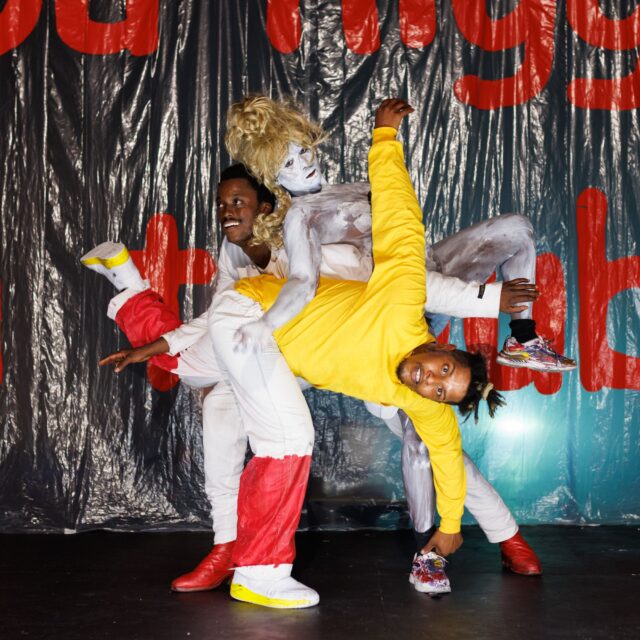
The Illustrious Blacks wil host the 2023 Bessie Awards outside at Lincoln Center (photo by Gregory Kramer)

THE BESSIE AWARDS
Damrosch Park, Lincoln Center for the Performing Arts
Friday, August 4, free (Fast Track RSVP available), 7:30
www.lincolncenter.org
bessies.org

In 1984, Dance Theater Workshop executive director David R. White founded the Bessie Awards, named after dance teacher Bessie Schönberg and given to outstanding work in the field of independent dance. Among the winners in the inaugural year were Trisha Brown, Pina Bausch, Yoshiko Chuma and the School of Hard Knocks, Mark Morris, Anne Bogart, and Eiko & Koma, a lofty group of creators. This year’s ceremony will take place August 4 at 7:30 at Lincoln Center’s Damrosch Park as part of the Summer for the City program, with free admission to all; it’s a fantastic opportunity to join in the celebration of movement while seeing some of the best contemporary performers and choreographers.

Pina Bausch’s Água (1995/2023) is up for Outstanding Revival at the 2023 Bessies (photo by Julieta Cervantes)

The thirty-ninth annual event will be hosted by the Illustrious Blacks (Manchildblack x Monstah Black) and feature performances by Dance Theatre of Harlem (in honor of Lifetime Achievement in Dance recipient Virginia Johnson), Princess Lockerooo’s Fabulous Waack Dancers, Earl Mosley’s Diversity of Dance, Ladies of Hip-Hop Collective (in honor of Service to the Field of Dance honoree Michele Byrd-McPhee), and students from AbunDance Academy of the Arts. Presenters include Mireicy Aquino, George Faison, Jhailyn Farcon, Dionne Figgins, Erin Fogerty, Tiffany Geigel, Dyane Harvey Salaam, Karisma Jay, Gian Marco Riccardo Lo Forte, Fredrick Earl Mosley, Abdel Salaam, Paz Tanjuaquio, and Ms Vee; this year’s jury panel consists of Ayodele Casel, Kyle Marshall, and luciana achugar.

Awards will be given out in the following categories: Outstanding Choreographer / Creator, Outstanding “Breakout” Choreographer, Outstanding Performer, Outstanding Revival, Outstanding Sound Design / Music Composition, and Outstanding Visual Design, for works presented at such venues as the Joyce, Gibney, the Shed, BAM, Danspace Project, Movement Research at the Judson Church, Performance Space New York, City Center, Arts on Site, and New York Live Arts (formerly Dance Theater Workshop). Nominees include Pina Bausch & Tanztheater Wuppertal, Camille A. Brown & Dancers, marion spencer, Vanessa Anspaugh, Sidra Bell, Rennie Harris, Deborah Hay, Shamel Pitts, and Niall Jones.

Following the ceremony, there will be a special Bessies Silent Disco After-Party with DJ Sabine Blazin on Josie Robertson Plaza, where a giant disco ball dangles over the Revson Fountain.

LIVE FROM THE GREENE SPACE: THE REVOLVING DOOR

Who: Jessie Eisenberg, Daphne Rubin-Vega, Chad Coleman, David Strathairn
What: Live dramatic reading and discussion from Theater of War Productions
Where: The Greene Space, 44 Charlton St.
When: Monday, July 31, free with RSVP, 7:00
Why: In his May 22 New Yorker article “The Revolving Door,” titled “The System That Failed Jordan Neely” online, Adam Iscoe uses the incident between Jordan Neely and Daniel Penny to examine mental health issues, homelessness, and law enforcement in New York City. On May 1, the thirty-year-old Black Neely died after being put into a chokehold for several minutes by twenty-four-year-old White former marine Daniel Penny on a northbound F train. Iscoe writes, “The N.Y.P.D. questioned Penny, then released him. (His lawyers say that he was acting in self-defense.) ‘We don’t know exactly what happened here,’ Mayor Eric Adams said, afterward. ‘We cannot just blanketly say what a passenger should or should not do in a situation like that.’ Kathy Hochul, the governor of New York, said, ‘There’s consequences for behavior.’ Was she talking about Neely, or the man who killed him?”

On July 31, the Greene Space will kick off its new series, “Theater of War Productions: Live from the Greene Space,” with a dramatic reading of Iscoe’s article, featuring the all-star cast of Jessie Eisenberg, Daphne Rubin-Vega, Chad Coleman, and David Strathairn. That will be followed by an in-depth guided community discussion with paramedics, psychiatric nurses, case workers, law enforcement, transit workers, the unhoused, those who serve them, and concerned citizens. There is limited in-person seating for the free event at the Greene Space, but everyone is invited to watch the program over Zoom.

Since 2009, Theater of War has been presenting dramatic readings and discussions, pairing classical and modern works with hot-button topics, including Sophocles’s Oedipus, the King with the pandemic and the climate crisis, William Shakespeare’s King Lear with caregiving and death, Aeschylus’s Prometheus Bound with incarceration, Eugene O’Neill’s Long Day’s Journey into Night with addiction and substance abuse, and Sophocles’s Antigone with racialized police violence. The organization, founded by Bryan Doerries, was active during the pandemic, hosting dozens of programs with such participants as Bill Murray, Oscar Isaac, Taylor Schilling, John Turturro, Samira Wiley, Ato Blankson-Wood, Frances McDormand, Keith David, Jeffrey Wright, Kathryn Erbe, and Frankie Faison.

“In and out. Around and around. One institution to the next: 7-Eleven, Kirby Forensic, Atlantic Armory, Manhattan Psychiatric, Maimonides, Lincoln, Kings County, Bellevue,” Iscoe writes. “Tonight, there are more than seventy thousand people without beds of their own sleeping in homeless shelters and temporary-housing programs and other places, too. Some shelters have kitchens that serve freshly stewed chicken thighs and homemade strawberry pie; others serve chicken that is undercooked and mealy apples for dessert. Many shelter beds are seven inches off the ground and bolted to the floor. For the mentally ill, there are forty-nine hundred beds in mental-health shelters, but more than forty-nine hundred people want to sleep in them. And so tonight mentally ill men and women are sleeping in large intake shelters, on the street, in the trains. Tomorrow, they will wake up and go about their day.”

NORTH CIRCULAR

North Circular tells the story of a Dublin road through music and its wide-ranging residents

NORTH CIRCULAR (Luke McManus, 2022)
DCTV Firehouse Cinema
87 Lafayette St.
Opens Friday, July 28
212-966-4510
firehouse.dctvny.org

“All the time I said I’d move away / I’m thinkin’, ‘Gemma, were you going insane?’” Gemma Dunleavy sings to a packed club audience over the closing credits of Luke McManus’s gorgeous, elegiac documentary musical, North Circular, opening July 28 at DCTV Firehouse Cinema.

Shot in stark, emotionally resonant black-and-white that forges a timeless atmosphere, the film takes viewers across all of Dublin’s North Circular Road, from Phoenix Park to Dublin Port, as locals talk about their lives, play music, and rail against gentrification while defending their communities.

“I think the North Circular bears the marks of its history: the marks of power and of privilege . . . Pain and poverty . . . unravelling of lives,” one man says. “The pageantry of empire, but also the reality of its military violence.”

Kids hang out on a stoop on North Circular Road in documentary musical

A slow-moving, often still camera focuses on animals, monuments, cricketers, birds, kids on stoops, construction, a pet shop, a waterfall, a cemetery. It follows a group trying to save the Cobblestone pub. It shows fans of the Bohemian Football Club, known as Bohs, preparing for a match against their archrivals, the Shamrock Rovers, at Dalymount Park. The camera lingers on images — dark passages, fireworks, unique architecture, a helicopter flying over a stadium, a man walking his ferret, the sun, the moon and clouds — making everything and everybody equal. Not a single person in the film is identified, by name, occupation, or otherwise.

A former inmate stands outside Mountjoy Prison and admits, “Not knowing what was going to happen when you went in, and actually not knowing what was going to happen when you came out, because you walked that road, whatever direction you went in. . . . The road took me in a different direction, so to speak. Because the last time I got out I walked out onto the North Circular Road and I took a different route. I took the route of looking for help.”

Along the way, people sing traditional ballads and new dirges in pubs and on the street, including Annie Hughes (“The Blackbird of Avondale”), John Francis Flynn (“The Lag’s Song”), Julie Kavanagh (“Siúil a Rún”), Séan Ó Túama (“An Cualann”), Jerry O’Reilly (“Van Diemen’s Land”), Eoghan O Ceannabháin (“Dark Horse on the Wind”), Ian Lynch (“Banks of the Nile”), and Dunleavy (“Up de Flats”), using guitar, banjo, drums, pennywhistle, and bagpipes.

“I think the hardest thing about the pipes sometimes is listening to them, you know?” a military bagpiper says, worrying that the younger generation is not turning to the instrument. (You can find out more about the music in the film here.)

In his directorial debut, McManus, who has lived just off North Circular Road for twenty years, beautifully weaves together music, dialogue, and imagery; the emotive score features incidental music by Kevin Murphy and Thomas Haugh of Seti the First, in addition to the vocal quartet Landless, that maintains the even-keeled pace.

The documentary was edited by John Murphy with a heart-wrenching, mesmerizing attention to detail; nothing is random. McManus, who cites
Gianfranco Rosi’s Sacro GRA and Zed Nelson’s The Street as inspiration, refers to the film as a “documentary musical,” explaining in a director’s note, “The use of music as a specific technique of storytelling is both an aesthetic and an editorial decision — to make a documentary that combines the musical and the factual film in a way that isn’t simply a documentary about music but is more a documentary
musical.”

North Circular is a paean to what was, what is, and what might be, in Dublin and, essentially, in tight-knit neighborhoods everywhere, particularly when it comes to class, colonialism, and gentrification. “There are people who have lived their whole lives on the road, and it is their world,” one man says. “But there are also people for whom it’s a place of transience. The flow of people is fundamental to the area.” Because in the end, it’s the people who make a place a home.

(There will be five performance Q&As with McManus, Hughes, Maeve O’Boyle, John Riordan, Donal Foreman, John Lee, and the Cobblestone’s Meabh Mulligan opening weekend at DCTV Firehouse Cinema, featuring discussion and music.)

NEW YORK CITY POETRY FESTIVAL 2023

(photo by twi-ny/mdr)

You can relax with a wide range of poetry at annual festival on Governors Island (photo by twi-ny/mdr)

NEW YORK CITY POETRY FESTIVAL 2023
Governors Island
Colonels Row
July 29-30, free with RSVP (donation suggested), 11:00 am – 6:00 pm
newyorkcitypoetryfestival.com
new york city poetry festival slideshow

Hosted by the Poetry Society of New York, the twelfth annual New York City Poetry Festival returns to Governors Island this weekend, honoring Gotham’s literary heritage with stages named after such iconic landmarks as the Algonquin, the White Horse, and Chumley’s. Poets from dozens of publishing houses, university presses, and nonprofit organizations read their works, in addition to the Ring of Daisies open mic and other places where poetry just pops up. There should be lots of booths, with food and drink.

Walking across the big Colonels Row field, you can listen as one poem from one location morphs into one from another and then one from another in a kind of audio rainbow of words and expression. The 2023 headliners are Danez Smith, Franny Choi, Saeed Jones, and torrin a. greathouse. The festival also comes with a content warning, which reads in part: “We at the Poetry Society of New York want to acknowledge that the content of this festival may potentially cover triggering and graphic topics ranging from mental illness to imagery of painful human experiences. We have asked our readers to give content warnings before their readings. . . . We aim to create a safe space for both our readers and our attendees, so please be mindful that you may encounter themes that are uncomfortable to engage with.” The lineup should be posted here any time now.

JAPAN CUTS: FESTIVAL OF NEW JAPANESE FILM 2023

Under the Turquoise Sky is centerpiece of 2023 Japan Cuts fest

JAPAN CUTS: FESTIVAL OF NEW JAPANESE FILM
Japan Society
333 East 47th St. at First Ave.
July 26 – August 6
212-715-1258
www.japansociety.org

Always one of the best fests of the year, Japan Society’s Japan Cuts is back for its sixteenth iteration, consisting of two dozen features and fifteen shorts from across genres, including sci-fi/fantasy, romance, action-adventure, animation, comedy, mystery, thriller, and family drama. The Festival of New Japanese Film opens July 26 with Takehiko Inoue’s The First Slam Dunk, based on his 1990s manga about the Shohoku High School basketball team. The centerpiece is the US premiere of KENTARO’s Under the Turquoise Sky, a road movie set in Mongolia. The festival closes August 6 with the US premiere of Ryuhei Kitamura’s The Three Sisters of Tenmasou Inn, a supernatural drama set in a way station.

Japan Cuts pays tribute to the late composer Ryuichi Sakamoto with a special screening of Elizabeth Lennard’s 1985 documentary Tokyo Melody: A Film about Ryuichi Sakamoto, introduced by Akiko Yano, one of the pianist’s ex-wives, and will be followed by a Q&A with the director. The Next Generation sidebar comprises a half dozen flicks by emerging filmmakers, from actor Hiroki Kono’s debut, J005311, and Yusuke Morii’s Amiko to Ryohei Sasatani’s award-winning, 1960s-set Sanka: Nomads of the Mountain and Yuho Ishibashi’s When Morning Comes, I Feel Empty (followed by a Q&A with the director). Below is a look at several of this year’s selections, with more to be added as the festival continues.

Yuta Shimotsu’s Best Wishes to All weaves between past and present focusing on a frightening recipe for happiness

BEST WISHES TO ALL (みなに幸あれ) (MINA NI KO ARE) (Yuta Shimotsu, 2023)
Thursday, July 27, 9:00
japansociety.org

“Are you happy?” an elderly woman asks her grown granddaughter in Yuta Shimotsu’s creepy existential horror film, Best Wishes to All, making its North American premiere July 27 in Japan Society’s Japan Cuts festival. When a young Tokyo nursing student (Kotone Furukawa) returns to her grandparents’ farm in the Chikuho region, she is greeted by a surprise behind one of the doors. Or maybe it’s not really such a shocker, especially when her parents and little brother arrive and try to tell her what they claim she knew all along but refuses to face. Meanwhile, she rekindles a friendship with an old friend who is decidedly against what her family is doing.

Released earlier this year, Chie Hayakawa’s Plan 75 was a fictional, though frighteningly believable, tale about a government program in which Japanese citizens, upon reaching seventy-five years of age, could receive cash and free cremation in exchange for being euthanized in order to prevent further population growth. In Best Wishes to All, Shimotsu offers a bizarre twist on the idea of life, death, and happiness, involving — well, it wouldn’t be fair to say any more about that. But suffice to say it isn’t pretty. “I’m sorry that young people are sacrificed for old folks like me,” an old woman says to the befuddled nurse. And her grandmother scolds, “I bet you believe the world is good, right? You know nothing about the world.”

Written by Rumi Kakuta based on a story by Shimotsu, Best Wishes to All evokes such films as Takashi Miike’s The Happiness of the Katakuris and Gozu and Takashi Shimizu’s Ju-On series, the latter of which makes sense, as Shimizu is an executive producer on the film. Shimotsu and cinematographer Ryuto Iwabuchi weave between the past and the present as the secret is slowly revealed, but don’t try to think too hard about it, as it doesn’t make a whole lotta sense. Furukawa (Wheel of Fortune and Fantasy) is appealing as the nurse, and the rest of the cast ably do their part playing characters who have no names, adding to the mystery and confusion.

A trio of new friends try to save humanity in From the End of the World

FROM THE END OF THE WORLD (世界の終わりから) (SEKAI NO OWARI KARA) (Kazuaki Kiriya, 2023)
Saturday, August 5, 9:30
japansociety.org

Kazuaki Kiriya’s fourth film in twenty years, From the End of the World — following 2004’s Casshern, 2009’s Goemon, and 2015’s Last Knights — is a rousing thriller, if not quite the epic it aims to be. It’s 2030, and seventeen-year-old Hana Shimon (Aoi Itô) has just lost her beloved grandmother who raised her after her parents were killed in an accident. Instead of sending her to a children’s home, Shogo Ezaki (Katsuya Maiguma) and Reiko Saeki (Aya Asahina), who may or may not be some kind of government agents, lets her stay in her home if she tells them about the dreams she’s been having. Hana often slips into terrifying black-and-white nightmares involving death and destruction, where she is joined by a young girl named Yuki (Mio Masuda) and an unidentifiable creature.

She soon finds out from an old woman with spectacular hair (Mari Natsuki) that the world will be ending in two weeks and that Hana is the only one with the power to prevent disaster. “What’s your impression of the word destiny?” the woman asks Hana. At school, Hana is befriended by Takeru (Jiei Wakabayashi), bullied by Sora (Ai Tominaga), and taught by a teacher played by director Shunji Iwai; she is also pursued by Chief Cabinet Secretary Satoshi Koreeda (Katsunori Takahashi), who has other plans for her. As the clock keeps ticking, a time capsule serves as a critical plot point as past and present merge toward an uncertain future.

Evoking elements of Stranger Things as well as both Takashi Miike (The Great Yokai War) and Hayao Miyazaki (Spirited Away, My Neighbor Totoro), From the End of the World — which Kiriya says will be his final directorial effort — looks fantastic, courtesy of cinematographer Chigi Kanbe, with gorgeous production design throughout as Hana travels through history. Itô (Missing, Gangoose) captures the fear and trepidation experienced by teenagers, whether having to turn in homework, battle a bully, or, well, save the Earth.

“Humans aren’t looking for salvation,” a hooded figure tells Hana. She might not have asked to be in this position, but does she have a choice?

LINCOLN CENTER SUMMER FOR THE CITY: THIRD ANNUAL BAAND TOGETHER DANCE FESTIVAL

Who: Ballet Hispánico (BH), Alvin Ailey American Dance Theater (AAADT), American Ballet Theatre (ABT), New York City Ballet (NYCB), Dance Theatre of Harlem (DTH)
What: Free dance festival
Where: Damrosch Park, Lincoln Center for the Performing Arts
When: July 25-29, free, workshops 5:00, performances 7:30 [ed note: The July 28 workshop and performance have been canceled due to extreme heat]
Why: The third annual BAAND Together Dance Festival once again brings together Ballet Hispánico, Alvin Ailey American Dance Theater, American Ballet Theatre, New York City Ballet, and Dance Theatre of Harlem for five nights of free contemporary dance performances on the Damrosch Park stage as part of Lincoln Center’s Summer for the City programming.

Dancers rehearse Pas de O’Farill for BAAND Festival at Lincoln Center this week (photo by Lawrence Sumulong)

From July 25 to 29 at 7:30, the troupes will present one work apiece: BH’s Línea Recta by Annabelle Lopez Ochoa (a unique take on flamenco, set to music by guitarist Eric Vaarzon Morel), ABT’s Other Dances by Jerome Robbins (choreographed for Natalia Makarova and Mikhail Baryshnikov, set to works by Frédéric Chopin), DTH’s Nyman String Quartet No. 2 by Robert Garland (a mix of styles and cultures), the world premiere of the BH/NYCB collaborative duet Pas de O’Farill by Pedro Ruiz (a tribute to Arturo O’Farill), an excerpt from AAADT’s Dancing Spirit by Ronald K. Brown (a tribute to Judith Jamison, with music by Duke Ellington, Wynton Marsalis, and War), and NYCB’s The Times Are Racing by Justin Peck (a sneaker ballet set to songs from Dan Deacon’s 2012 album, America). In addition, each show will be preceded by a workshop at 5:00 led by members of one of the five companies.

“The BAAND Together Dance Festival is a testament to the vibrancy and diversity of the New York City dance community,” the five artistic directors said in a group statement. “We are thrilled to be returning with a spectacular program that features the city’s most internationally revered repertory companies. This year’s program highlights the innovative visions that have made New York City our nation’s dance capital.”