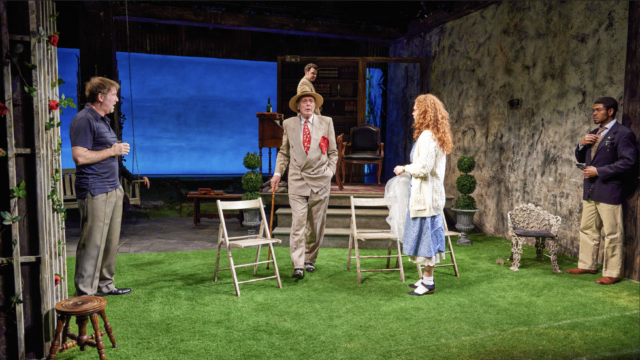
this week in lectures, signings, panel discussions, workshops, and Q&As

WORKS & PROCESS: PHOTOGRAPHING NEW YORK CITY BALLET WITH PAUL KOLNIK AND WENDY WHELAN

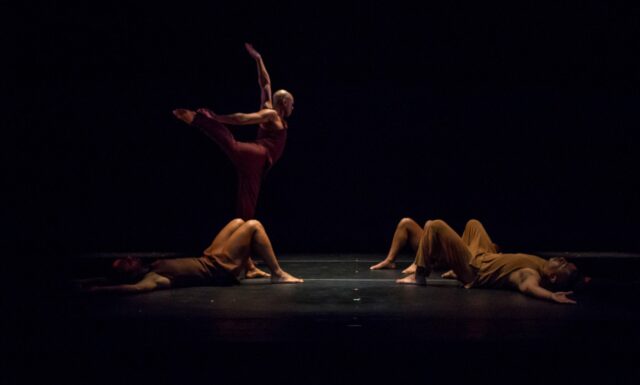
Wendy Whelan and Gonzalo Garcia in Opus 19/The Dreamer, New York City Ballet, 5/7/10 (photo © 2010 Paul Kolnik)

Who: Paul Kolnik, Wendy Whelan, Linda Murray
What: Works & Process illustrated conversation
Where: Bruno Walter Auditorium, the New York Public Library for the Performing Arts, 40 Lincoln Center Plaza
When: Thursday, September 7, free with advance RSVP, 6:00
Why: Chicago native Paul Kolnik saw his first ballet in 1971, at the age of twenty-three, and soon moved to New York City, where he worked as an assistant to New York City Ballet staff photographer Martha Swope before taking his own pictures of the company, under the leadership of cofounding artistic director George Balanchine. In celebration of the seventy-fifth anniversary of NYCB, Kolnik will sit down for a special Works & Process discussion on September 7 at 6:00 in the Bruno Walter Auditorium with NYCB associate artistic director Wendy Whelan and moderator Linda Murray, NYPL curator of the Jerome Robbins Dance Division. Kolnik, who has also extensively photographed Broadway shows and Alvin Ailey American Dance Theater, has had his work published in such books as New York City Ballet Workout, Dancing to America, The Producers, and Beacon and Call: A Cisterian Monastic Pilgrimage. Admission is free with advance RSVP.

[Mark Rifkin is a Brooklyn-born, Manhattan-based writer and editor; you can follow him on Substack here.]
BARBARA G. MENSCH: A FALLING-OFF PLACE

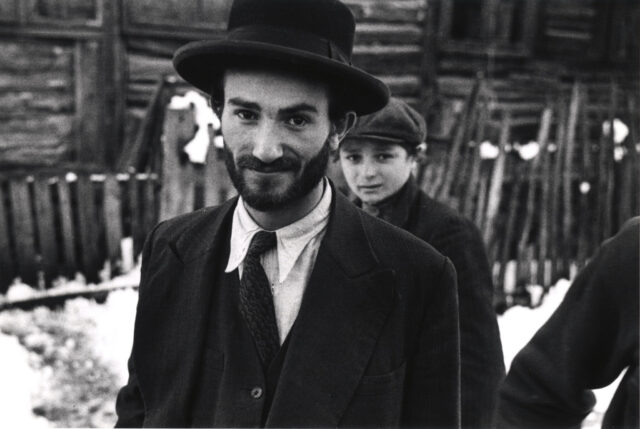
Barbara Mensch’s “The Nobility of Work” is a site-specific installation in the Tin Building (photo © Barbara Mensch)

A FALLING-OFF PLACE: THE TRANSFORMATION OF LOWER MANHATTAN
The powerHouse Arena, POWERHOUSE @ the Archway
28 Adams St. at Water St. @ the Archway
Wednesday, September 6, $7.18 includes $5 gift certificate, $47.73 includes copy of book, 7:00
Untapped Cities tour: Saturday, October 7, free with insider membership, 1:00
powerhousearena.com
menschphoto.com

“There is no longer any scent of what was. Thankfully, though, there is Barbara G. Mensch, whose images are like the conjuring rain,” journalist and author Dan Barry writes in the foreword to Barbara Mensch’s latest photography book, A Falling-Off Place (Fordham University Press, September 5, $39.95). “She is the Brooklyn Bridge of the New York imagination, linking the now and the then. She sees the incremental turns in the city’s inexorable evolution, the obliteration of the past by gentrification, the irreversible dominion of profit over preservation.”

The Brooklyn-born Mensch initially took up drawing and worked as an illustrator at Ms. magazine after graduating from Hunter College. She soon found that photography was her calling, documenting a changing New York City. She has spent nearly fifty years using a Polaroid SX70, a Rolleiflex, and now an iPhone, focusing primarily on Lower Manhattan. During the pandemic, she looked through her archive of unlabeled boxes of photos and gathered together black-and-white shots of the Fulton Fish Market, Chinatown, Peck Slip, and the Bowery, of demolition and decay, of a different era. She added shots of 9/11 and Hurricane Sandy to construct a powerful narrative.

“They became my personal visual timeline,” she writes in the introduction to the book, a follow-up to 2007’s South Street and 2018’s In the Shadow of Genius: The Brooklyn Bridge and Its Creators. “What did the passages of decades reveal to me? What dynamics were at play in my images of the same streets that I walked repeatedly for years? What fell off as the old was swept away by the new?”

“Vinny, an unloader, Fulton Fish Market, 1982” (photo © Barbara Mensch)

A Falling-Off Place is divided into three chronological sections: “the 1980s: making a living on the waterfront,” “the 1990s: setting the stage for a real estate boom / fires, floods, and neglect,” and “the new millennium: managing change / anxiety, optimism, and the uncertainty of historic preservation.” There are photos of the old Paris Bar, a dilapidated section of the FDR Drive, the Beekman Dock icehouse, and Pier 17 being torn down, along with portraits of such characters as Mikey the Watchman, Mombo, Vinny, and Bobby G., supplemented with quotes from Jane Jacobs, fishmongers, a retired boxer, and Robert Moses.

Many of the photos can also be seen in Mensch’s site-specific permanent installation, “The Nobility of Work,” in the restored and rehabilitated Tin Building on South St., which was originally built in 1907 on the space where the Fulton Fish Market began in 1835. The market moved to Hunts Point in the Bronx in 2005; the new Tin Building, which is celebrating its one-year anniversary in September, was commissioned by the Howard Hughes Corporation and features a 53,000-square-foot high-end food court and marketplace run by chef Jean-Georges Vongerichten.

On September 6, Mensch will be at the powerHouse Arena, in conversation with culinary documentarian Daniel Milder (Chef’s Table, Street Food Asia); she will also be leading an Untapped Cities tour on October 7. Below she discusses living downtown, being a woman in what was a man’s world, upcoming projects, and more.

twi-ny: When you first began photographing at the Fulton Fish Market, the men there were suspicious that you might be a government plant. What was that like?

barbara mensch: Well, what can I say? When I first began taking photos in the early 1980s, it was horrible. I would be taking photos and lo and behold, sharp (and I mean very sharp) pieces of ice would repeatedly be hurled at me. The fishmongers would use ice to preserve the seafood as it was stored in crates, and later in the early hours of the morning in coolers. I remember that the sharp pieces of ice could really hurt if thrown with tremendous velocity. Also, in the beginning there were many threats to my life, which were at the time palpable. Although the origins of this project were challenging, where I photographed the Fulton Market and the East River waterfront below the Brooklyn Bridge, I was intrigued and kept going forward.

As a side note, I was always very competitive with men and wanted to prove my worth. As a result, in the male-dominated world of the waterfront, the challenge was provoking. In order to create this project, a sense of gradual time had to be taken into consideration. Convincing men, who were hardened and determined to make a living within a certain number of hours in the harshest of conditions and had no room for me or my pictures. Working in this environment was a daunting task that was only achieved with a gradual, mutual feeling of trust. That came with years of interaction.

twi-ny: You have a permanent, site-specific exhibition at the Tin Building; how did that come about?

bm: After the Howard Hughes Corporation, which operates the new Tin Building, considered several different major artists for the space, they determined that I had the best understanding of the area and the strongest commitment in my pictures to the historical record.

twi-ny: The photos there and in your new book are both quintessentially New York and at the same time universal. Which photographers inspired you? Do you seek that dichotomy when you peer through the lens?

bm: My influences as an artist are vast and consequential. Although I am a photographer and have worked hard to perfect the art of printing and creating images, there are truly so many “heroes” that I have come to know over the years and try to follow their practices. One of my mentors was my friend Bruce Davidson, a legendary photographer who influenced me with his extraordinary wisdom into the creative process.

And I have also been influenced by countless other artists, primarily filmmakers, including Ingmar Bergman, Luchino Visconti, Roberto Rossellini, and more. Each artist, in his or her masterful way, chose to depict humanity in a raw and gritty reality. Rudy Burkhardt also comes to mind as a painter, photographer, and filmmaker whose images evoke a sense of New York as it passed into a new era. Many of these artists continue to resonate with me.

twi-ny: It’s hard to believe some of those pictures go back only forty years; things now seem so different from then. I can’t get the 1999 photograph of a security guard on Schermerhorn Row out of my head; it looks like it’s from a 1940s British noir. What kind of image instantly catches your eye?

bm: To answer your question, I always shoot “reflexively.” When I saw the security guard walking back and forth, blanketed in smoke and fog, I believe my unconscious was at work. Cinematic art has deeply influenced my work, so Frank Capra’s film Lost Horizon and Michael Powell’s captivating films where mystery is created in light and shadow impacted me greatly and often influence my work.

twi-ny: At the end of the book, instead of you being interviewed, you interview someone who tracked you down because of your photographs. What made you want to reverse the tables?

bm: Well, just to be clear, she found me. I thought that interviewing an individual who had some inside perspective on mob activities during the Giuliani investigations against organized crime during the 1980s would be provocative.

twi-ny: It certainly is that. In that interview, the two of you discuss gentrification and land grabs as well as Rudy. At one point, your subject says, “Men’s egos and thirst for power drove us off a cliff. That is the real ‘falling-off place.’” Do you see us ever climbing back from that? You spend much more time photographing deconstruction than reconstruction. Are you worried about the future character of the city itself?

bm: Photographing “deconstruction” for me was unconscious. I was merely trying to capture the beauty inherent in many of the images that I made of the places that we lost.

“Proud Lower East Side boy on a dumpster of shoes, 1982” (photo © Barbara Mensch)

twi-ny: You’ve lived downtown for forty years. How have the myriad changes affected your daily life in the neighborhood, outside of your work?

bm: Well, New York is . . . New York! It is the quintessential experience of life in a great metropolis. As one walks down the street, we have a blending of cultures, of aspirations, and of course the “zeal” in which new commerce replaces the old.

twi-ny: Can we ever have another Fulton Fish Market in New York the way it was, with the same kind of fishmongers and overall feeling, or has the time for that passed?

bm: Unfortunately, I think that time has passed. Sorry if I sound cynical.

twi-ny: You’re a lifelong New Yorker. Your previous book was about the Brooklyn Bridge. So many people leave New York; what are some of the things that keep you here, besides your photography?

bm: Honestly, I love my loft, which is situated in the shadow of the Brooklyn Bridge. I have gained so much inspiration by exploring the bridge’s origins. But as it has been said, “All things must pass.” That means I, too, think about the future and wonder what’s next. Looking out at the Brooklyn Bridge, however, keeps me forever engaged.

twi-ny: You are so inextricably tied to New York City. When you travel, what kinds of places do you like to go to? Do you take color photos like a tourist, or is it always a busman’s holiday?

bm: If you are a serious artist, every place you go on the globe warrants an intense “staring contest” between you and your vast subject matter. I find stories everywhere I go. The problem is finding the time to put them all together. Art and photography are a serious business, and each project one does merits intense thought and consideration, and of course the consequences of making it available to the public.

Recently I have been making trips to South America, to Colombia. It is a country struggling to emerge from years of violence and corruption. I traveled to Chocó province on the Pacific, where rainforests and jungles remain uninhabited and many of the locals are among the poorest in the country.

I have embraced the iPhone, and once I am away from New York, shooting in color seems natural!

[Mark Rifkin is a Brooklyn-born, Manhattan-based writer and editor who used to live near the Fulton Fish Market and shares a birthday with the Brooklyn Bridge; you can follow him on Substack here.]

HOW TO GET INSIDE THE MIND OF JOHN WILSON

The end of How To with John Wilson is being celebrated with several special film programs

JOHN WILSON SELECTS
Anthology Film Archives
32 Second Ave. at Second St.
August 19-29
212-505-5181
www.anthologyfilmarchives.org

No one captures the minute foibles of everyday life in New York City like John Wilson does. On his HBO series How To with John Wilson, which concludes its third and, sadly, final season on September 1, New York City native and documentarian Wilson incorporates a treasure trove of background shots he and his team have collected over the years into new interviews with New Yorkers as he tackles such subjects as “How To Make Small Talk,” “How To Put Up Scaffolding,” “How To Find a Spot,” “How To Throw Out Your Batteries,” and “How To Find a Public Restroom.” In each episode, the ever cool, calm, collected, and wonderfully deadpan Wilson veers off on fascinating and hilarious tangents that are quintessentially New York.

In honor of the end of the series, Anthology Film Archives invited him to curate “John Wilson Selects,” which runs August 19–29 and kicks off with “John Wilson & Crew,” a collection of short works made by many of his collaborators. “When I started to put together the team for How To, I wanted to hire camera people and editors whose vision I really admired. This program showcases original work by a handful of crew members on the show who are all amazing artists in their own right,” Wilson said in a statement.

The evening consists of Nathan Truesdell’s When the LAPD Blows Up Your Neighborhood, Nellie Kluz’s The Sunken Smile and DD, Chris Maggio’s Even a Broken Clock Is Right Twice a Day, Leia Jospé’s No Delay and Let Me Luv U, Britni West’s Tired Moonlight, LJ Frezza’s Nothing and Is It Us?, Jess Pinkham’s PanoptiJohn, and Wilson’s My Morning with Magic Mike. Wilson and several crew members will be on hand for a discussion on August 19.

William H. Whyte documentary is a major influence on John Wilson

The festival continues with works by filmmakers who have inspired and influenced Wilson, beginning with Mark Lewis’s Animalicious, which Wilson pairs with his own Looner, a college film he made about balloon fetishists in Binghamton. Bruce Brown’s On Any Sunday is the follow-up to the surfing classic The Endless Summer. Les Blank, Vikram Jayanti, and Chris Simon’s Innocents Abroad tracks American tourists on a bus tour in Europe. Bronx native George Kuchar’s Weather Diary 4 has a unique soundtrack; it’s being shown with Kuchar’s Low Light Life and Award. Mark Benjamin and Marc Levin’s The Last Party is a political film in which, Wilson says, “Robert Downey Jr. is insufferable . . . but it still manages to be one of the most beautiful documentaries I’ve ever seen.” Wilson calls Tony Montana and Mark Brian Smith’s Overnight “a cautionary tale about creative hubris.”

And William H. Whyte’s The Social Life of Small Urban Spaces might have the most impact on Wilson, who says about it, “William Whyte is a legendary people watcher who likes to study the subtle ways public space is used. I think about this film constantly whenever I’m out shooting. It all feels very scientific but he has a little fun describing human behavior, like when he identifies the ‘girl watchers’ hanging out in a midtown plaza. My favorite part is when he studies the way that people use chairs.”

HOW TO NEW YORK
Rooftop Films
Gansevoort Plaza, 38 Gansevoort St. at Ninth Ave.
Wednesday, August 30, free with RSVP, 7:15
rooftopfilms.com

Rooftop Films is celebrating How To with a special evening in Gansevoort Plaza on August 30, beginning with live music at 7:15, followed by screenings of five shorts at 8:00 and a Q&A. The films begin with an advance preview of the final episode of the series, How To Track Your Package, about Wilson trying to locate a stolen delivery. In Joe Bonacci’s Cat Stickers Trilogy, someone is affixing cat stickers to walls and objects throughout an apartment complex. Alex Mallis and Travis Wood’s Dollar Pizza Documentary is about the prevalence of the ninety-nine-cent slice (which has gone up to $1.50 at some joints). Mike Donahue’s Troy finds a couple who are harassed by a neighbor’s loud sex. And in Jarreau Carrillo’s The Vacation, an overworked Black man wants to do more than just go to the beach with his friends on the last day of summer.

[Mark Rifkin is a Brooklyn-born, Manhattan-based writer and editor; you can follow him on Substack here.]
CHARLES BUKOWSKI MEMORIAL READING

Who: Kat Georges, Peter Carlaftes, Jennifer Blowdryer, Puma Perl, Michael Puzzo, Danny Shot, Richard Vetere, George Wallace, more
What: Annual tribute to Charles Bukowski
Where: The Bitter End, 147 Bleecker St. between Thompson & La Guardia
When: Wednesday, August 16, $10, 6:00
Why: “What sort of cultural hangover keeps Charles Bukowski in print and popular more than twenty years after his death?” S. A. Griffin asks in his Three Rooms Press essay “Charles Bukowski: Dean of Another Academy.” “In light of the fact that a good portion of what has been published since his passing in 1994 may not be the man’s best work, along with some heavy editing at times, why does Charles Bukowski remain relevant well into the 21st century?” The sixteenth annual Charles Bukowski Memorial Reading takes place August 16 at 6:00 at the Bitter End in Greenwich Village in honor of what would have been the 103rd birthday of the author of such books as Pulp, Factotum, Post Office, On Cats, and Love Is a Dog from Hell, with tribute readings by musician and storyteller Jennifer Blowdryer, poets S. A. Griffin, Puma Perl, Danny Shot, and George Wallace, and playwrights Richard Vetere and Michael Puzzo, hosted by Kat Georges and Peter Carlaftes of Three Rooms Press. Bukowski, who died in 1994 at the age of seventy-three, will be celebrated through poetry, oral history, rare videos, and live performances, with a special look at what he might have thought about ChatGPT, dating apps, legalized marijuana, and other contemporary issues. As a bonus, books, CDs, DVDs, and other prizes will be given away.

ALEXA MEADE: WONDERLAND DREAMS

Alexa Meade paints Hailee Kaleem Wright, Eden Espinosa, and Brian Stokes Mitchell at Wonderland Dreams (photo by twi-ny/mdr)

WONDERLAND DREAMS
529 Fifth Ave. between Forty-Third & Forty-Fourth Sts.
Wednesday – Monday through September 10, $33.50-$44.50
www.wonderlanddreams.com
online slideshow

If you’re looking for that elusive rabbit hole to bring respite to your harried life — and we’re not talking about the proverbial rabbit hole but something more akin to the real deal — then you can’t go wrong with Wonderland Dreams.

Washington, DC–born installation artist Alexa Meade has transformed a 26,000-square-foot midtown space into an immersive version of Lewis Carroll’s classic nineteenth-century novels, Alice’s Adventures in Wonderland and Through the Looking-Glass. Thankfully, it’s nothing like the overhyped shows in which works by such artists as Vincent van Gogh, Claude Monet, and Gustav Klimt “come to life,” morphing in projections on the floor, walls, ceilings, and mirrored sculptures.

Everyone is invited to paint their own acrylic flowers at Wonderland Dreams (photo by twi-ny/mdr)

For Wonderland Dreams, Meade and her team hand-painted every inch of the space; as you walk, crawl, or glide through the many rooms, you’ll encounter fanciful chairs and couches, giant mushrooms and flowers, tiny houses, an inviting keyhole, a large chess set and playing cards, a hedge maze, a carousel horse, a swirling tea party, out-of-sync clocks, empty picture frames, and photographs and portraits of celebrities whose bodies Meade has painted on. Everything can be touched, handled, and ridden on; essentially, it’s a gigantic playhouse for kids and adults. Be sure to pick up 3D glasses to enhance your experience in several cool rooms, and stop by the café and the gift shop for bonus surprises, even if you’re not seeking to eat, drink, or buy anything.

In July, I attended Broadway Night, during which stars Eden Espinosa (Wicked, Rent), two-time Tony winner Brian Stokes Mitchell (Man of La Mancha, Kiss Me, Kate), and Hailee Kaleem Wright (Six, Paradise Square) donned black-and-white jumpsuits and then, standing in a full-length empty frame, were painted all over by Meade, who is currently the artist-in-residence at the Perimeter Institute for Theoretical Physics in Waterloo, Ontario; the actors held the palette as Meade covered every bit of their skin, including their faces, necks, hands, and wrists. They then posed in the frame, individually and together, as if the paintings were, well, coming to life. The next Broadway Night is August 21, with guests to be announced; the Grand Finale closing party is set for September 9.

Every room holds a different surprise in Wonderland Dreams (photo by twi-ny/mdr)

There are various places where visitors are encouraged to put on masks, hats, coats, and other props for further immersion into the world of Alice, the Mad Hatter, the Cheshire Cat, the Red Queen, the White Rabbit, the Caterpillar, and Tweedledum and Tweedledee. In the back is a studio where you can paint an acrylic flower and add it to the wall. There’s also the family-friendly Mad Hatter’s Adventure on Saturday and Sunday mornings at ten.

“If I had a world of my own, everything would be nonsense,” Alice says in the first book.

As Meade reveals in Wonderland Dreams, there’s nothing wrong with that.

[Mark Rifkin is a Brooklyn-born, Manhattan-based writer and editor; you can follow him on Substack here.]
BATTERY DANCE FESTIVAL 2023

Battery Dance will perform The Wind in the Olive Grove at annual outdoor summer festival

BATTERY DANCE FESTIVAL
Rockefeller Park, Battery Park City
75 River Terr., North Esplanade
August 12-18, free with advance RSVP, 7:00
batterydance.org

The forty-second annual Battery Dance Festival goes hybrid this summer, with live presentations of works from more than forty companies from around the country and the globe, including numerous New York City and world premieres and US debuts. Free performances take place August 12-18 at 7:00 at Rockefeller Park in Battery Park City — a move from its previous home in Robert Wagner Jr. Park — and will be livestreamed as well.

“When Super Storm Sandy flooded lower Manhattan, Battery Park City Authority reached out a helping hand, providing a beautiful site for the Battery Dance Festival which we’ve all enjoyed every summer since 2013,” Battery Dance founding artistic director Jonathan Hollander said in a statement. “With the prospect of rising seas in the future, BPCA is enacting a proactive resiliency plan, lifting Wagner Park up to twelve feet, making it inaccessible this summer. But fear not! BPCA has invited us to move to Rockefeller Park this summer, where we’ll benefit from the large lawn and riverfront views as we bask in the glow of performances by local and international companies.”

As always, the Battery Dance Festival offers dance fans the chance to see multiple disciplines all in a single evening, for free, with a wide range of pieces from international troupes that explore original movement and celebrate unique culture while often taking on contemporary issues and sharing personal stories. Among this year’s special programs are “Young Voices in Dance” on August 12, “India Independence Day” on August 15, and “Tribute to Turn of the 20th Century American Modern Dance Pioneers” on August 17, honoring Isadora Duncan and Jennifer Muller, who passed away in March at the age of seventy-eight.

In addition, $1 community workshops are being held every morning at 10:30 at Battery Dance Studios (380 Broadway #5), led by festival choreographers, artistic directors, and company members; advance registration is required. Below is the full dance schedule.

Saturday, August 12: Young Voices in Dance
The Bowery Mission, Dancing to Connect
Marley Poku-Kankam, All Four
Aliyah Banerjee & Shashank Iswara, Taraana
Dareon Blowe, How Do Five Parts Construct a Whole?
Mateo Vidals, There Is Always Something Happening
Luke Biddinger, La Vie en Rose
Cameron Kay, Interface
Samanvita Kasthuri, Krtaghna
Micah Sell, Outline
Queensborough Community College, Discovering
Willem Sadler, Soullessly Flying
Tulia Marshall, A fraction of a true self
Joanne Hwang, Static State of Perfection

Sunday, August 13
Battery Dance, A Certain Mood
Reuel Rogers, Power
Keturah Stephen, A Yearning Desire
Circumstances, ON POINT
Nu-World Contemporary Danse Theatre, The Called and the Chosen
Trainor Dance Inc., Courante
IMGE Dance, (no)man

Monday, August 14
SOLE Defined, SOLE Defined LIVE
Teatr Nowszy, Close (excerpt)
Erv Works Dance, Veiled from the Womb
Jiemin Yang, Here We Root (excerpt)
Teodora Velescu and Lari Giorgescu, Special People
Circumstances, ON POINT
Fanike! African Dance Troupe, UPLIFTED!

Tuesday, August 15: India Independence Day
Rudrakshya Foundation, Kali Krishna
Durgesh Gangani, The Legacy
Amarnath Ghosh, Maragatha Manimaya

Wednesday, August 16
Julian Donahue Dance, Displacement
Citadel + Compagnie, Soudain l’hiver dernier
Tabanka Dance Ensemble, Progress
Teatr Nowszy, Close (excerpt)
Teodora Velescu and Lari Giorgescu, Special People
Jerron Herman, Lax
Carolyn Dorfman Dance, NOW
Dancers Unlimited, Edible Tales (excerpts), Soul Food & Kanaloa

Dances by Isadora will honor Isadora Duncan at Battery Dance Festival (photo by Melanie Futorian)

Thursday, August 17: Tribute to Turn of the 20th Century American Modern Dance Pioneers
Dances by Isadora, Isadora Duncan: Under a New Sky
Time Lapse Dance, American Elm and Piece for a Northern Sky
Denishawn, Denishawn (excerpts)
In memoriam: Jennifer Muller (1944-2023), Jennifer Muller/The Works, Miserere Nobis

Friday, August 18
Adriana Ogle & Toru Sakuragi, Softly as in a Morning Glow
Amanda Treiber, Wind-Up
Bruce Wood Dance, In My Your Head
Citadel + Compagnie, Soudain l’hiver dernier
Boca Tuya, Like Those Playground Kids at Midnight
Tabanka Dance Ensemble, Progress
Reuel Rogers, Power
Battery Dance, The Wind in the Olive Grove

[Mark Rifkin is a Brooklyn-born, Manhattan-based writer and editor; you can follow him on Substack here.]
HARLEM WEEK: A GREAT DAY IN HARLEM AND MORE

Who: Uptown Dance Academy, the Gospel Caravan, IMPACT Repertory Theatre, Mama Foundation’s Sing Harlem! Choir, Bishop Hezekiah Walker & Choir, Ray Chew & the Harlem Music Festival All-Star Band featuring Nona Hendryx, more
What: Annual Harlem Week celebration
Where: U.S. Grant National Memorial Park, West 122nd St. at Riverside Dr.
When: Sunday, August 13, free, noon – 7:00 pm (festival runs August 9-16)
Why: One of the centerpieces of Harlem Week is “A Great Day in Harlem,” which takes place Sunday, August 13, as part of this annual summer festival. There will be an international village with booths selling food, clothing, jewelry, and more, as well as live music and dance divided into “Artz, Rootz & Rhythm,” “The Gospel Caravan,” “The Fashion Flava Fashion Show,” and “The Concert Under the Stars.” Among the performers are the Uptown Dance Academy, the Gospel Caravan, IMPACT Repertory Theatre, the Sing Harlem! Choir, and Bishop Hezekiah Walker & Choir. In addition, Ray Chew & the Harlem Music Festival All-Star Band, featuring Nona Hendryx, will perform a tribute to the one and only Tina Turner, who died in May at the age of eighty-three; Harry Belafonte, Tony Bennett, Miriam Makeba, and Tito Puente will also be honored.

The theme of the forty-ninth annual Harlem Week is “Be the Change: Hope. Joy. Love.”; it runs August 9-16 with such other free events as the panel discussion “Climate & Environmental Justice in Harlem: Storms, Heat & Wildfires,” A Harlem SummerStage concert, Senior Citizens Day, the Uptown Night Market, the Percy Sutton Harlem 5K Run & Walk & Children’s Run, “Choose Healthy Life Service of Renewal and Healing,” Great Jazz on the Great Hill in Central Park with Wycliffe Gordon and Bobby Sanabria, Imagenation Outdoor Film Festival screenings of Beat Street with DJ Spivey and Max Roach: The Drum Also Waltzes, a Youth Conference & Hackathon, Economic Development Day, an Arts & Culture Broadway Summit, Harlem on My Mind Conversations, a Jobs & Career Fair, and more. “We continue to build a stronger, more united Harlem, radiating hope, joy, and love throughout our beloved city,” Harlem Week chairman Lloyd Williams said in a statement.

[Mark Rifkin is a Brooklyn-born, Manhattan-based writer and editor; you can follow him on Substack here.]