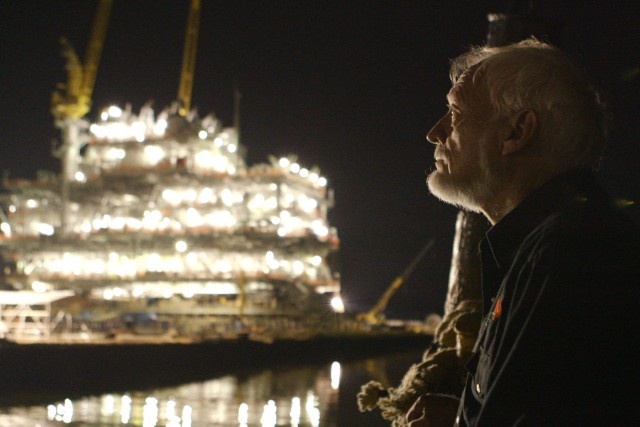
Tugboat captain Latham Smith participated in the massive cleanup needed after explosion of the Deepwater Horizon oil rig in the Gulf of Mexico
THE GREAT INVISIBLE (Margaret Brown, 2014)
Village East Cinema
181-189 Second Ave. at 12th St.
Opens Wednesday, October 29
212-529-6799
www.villageeastcinema.com
www.takepart.com
 Shortly after the fatal Deepwater Horizon oil rig explosion on April 20, 2010, dumped more than two hundred million gallons of BP oil into the Gulf of Mexico, Alabama native and award-winning documentarian Margaret Brown (The Order of Myths, Be Here to Love Me: A Film about Townes Van Zandt) returned to the Gulf Coast, where she was raised, in order to make a very personal film about the disaster. But she ended up with so much more in The Great Invisible, a powerful, infuriating exploration of the tragedy and its lingering effects on the environment and local communities in Alabama, Louisiana, and Texas. Showing that the calamity is far from over, Brown speaks with survivor Douglas Brown, the chief mechanic on the rig who talks poignantly about what happened, sharing footage he took of the rig prior to the explosion; survivor Stephen Stone, a roustabout on the rig who now suffers from PTSD; attorney Keith Jones, whose son, Gordon, was one of the eleven workers killed in the explosion, and is now leading the fight to get justice for the victims in court; Latham Smith, a tugboat captain who was called in to help with the cleanup; oil and gas industry veteran Bob Cavnar, author of Disaster on the Horizon: High Stakes, High Risks, and the Story Behind the Deepwater Well Blowout; Roosevelt Harris, who volunteers for the Hemley Road Church of Christ Mobile Food Pantry, delivering food and emotional support to families whose livelihoods have been impacted by the disaster; a group of oil industry executives chatting among themselves; and Kenneth Feinberg, the dispute resolution specialist in charge of administering the BP Deepwater Horizon Disaster Victim Compensation Fund, which has not exactly made much of a difference. BP refused to participate in the film.
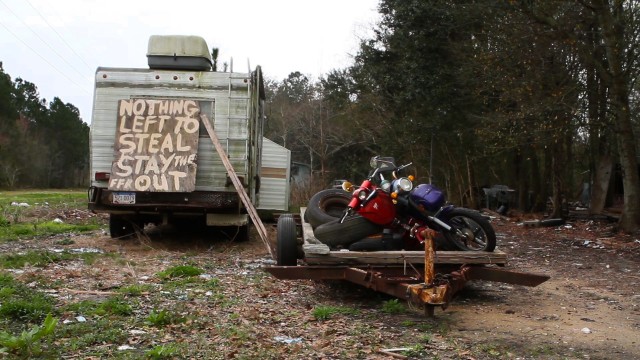
Residents of Hardluck City are facing a bleak future in THE GREAT INVISIBLE
Brown supplements the film with devastating footage of the oil spill itself, maps that detail the breadth of the disaster, clips from congressional hearings that have gone nowhere, and news reports that have gotten fewer and fewer more than four years after the explosion. “Generally, it takes some kind of a traumatic event to change people’s behavior,” Cavnar says. “I’d hoped that the Deepwater Horizon was going to raise everybody’s consciousness, but it didn’t. And that’s the tragedy.” Winner of the Grand Jury prize at the SXSW Film Festival, The Great Invisible is the kind of documentary that you hope will raise people’s consciousness, especially that of the oil industry itself and the government, but, as the film shows, that appears to be highly unlikely as wealthy corporations once again trump regular citizens. The Great Invisible opens October 29 at the Village East; Brown will participate in Q&As after screenings on October 29 & 30 at 7:40 and November 1 at 2:00.
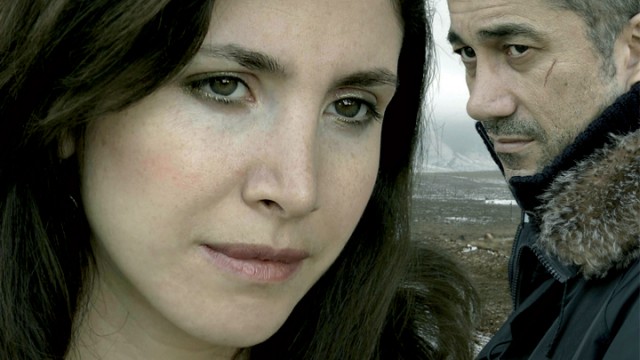
 Winner of the FIPRESCI Prize at the Cannes Film Festival and a selection of the New York Film Festival, Climates is a beautifully elegiac look at a desperate relationship set in modern-day Turkey. The film opens with Isa (writer-director Nuri Bilge Ceylan) and Bahar (Ebru Ceylan, Nuri’s real-life wife) visiting desert ruins. As he walks among ancient pillars, taking photos, she watches him from a distance; the silence is deafening. Later, on a beach, they agree to part ways; while he heads back into the arms of Serap (Nazan Kesal), a friend’s lover, she takes a job on a faraway television program, set in the bitter cold and snow. But Isa still can’t get the younger Bahar out of his mind. Climates features long scenes of little dialogue, with cinematographer Gökhan Tiryaki alternating extreme close-ups with gorgeous, nearly empty landscapes, shot in HD digital video, with a haunting piano-based score. Ceylan’s follow-up to Distant, which won the 2003 Jury Grand Prix at Cannes, Climates is a wrenching, challenging tale that will leave audiences emotionally exhausted. Climates is being shown at MoMA on October 30 at 7:30 and November 5 at 4:00 as part of the “Filmmaker in Focus” look at Ceylan, who will introduce the the October 30 screening with actor Mehmet Eryilmaz. The week-long festival runs October 29 to November 5 and also includes Ceylan’s latest film, Kis uykusu (Winter Sleep), in addition to 2011’s Bir Zamanlar Anadolu’da (Once Upon a Time in Anatolia), 2008’s Üç maymun (Three Monkeys), 2002s Uzak (Distant), 1999’s Mayis sikintisi (Clouds of May), and 1997’s Kasaba (The Small Town).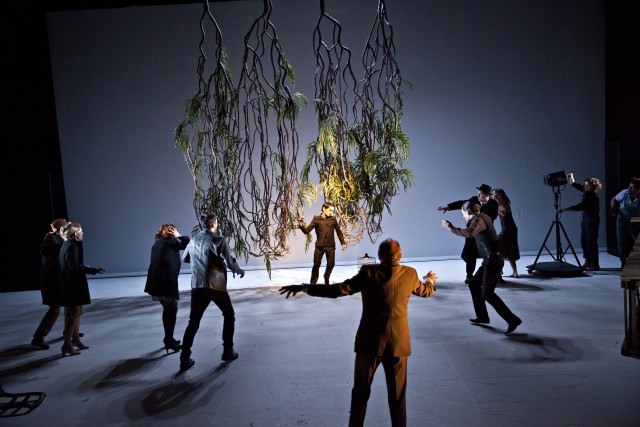
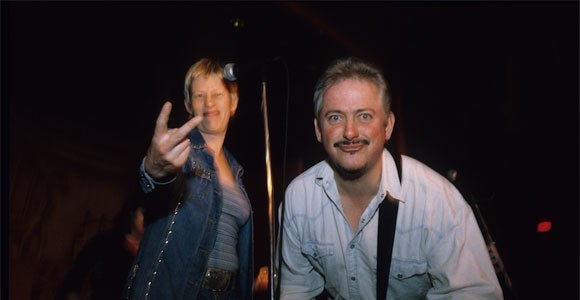
 Called “the most revolutionary group in the history of rock ‘n’ roll” by Lester Bangs,