this week in lectures, signings, panel discussions, workshops, and Q&As

COMMITTED: SHOCK CORRIDOR

SHOCK CORRIDOR

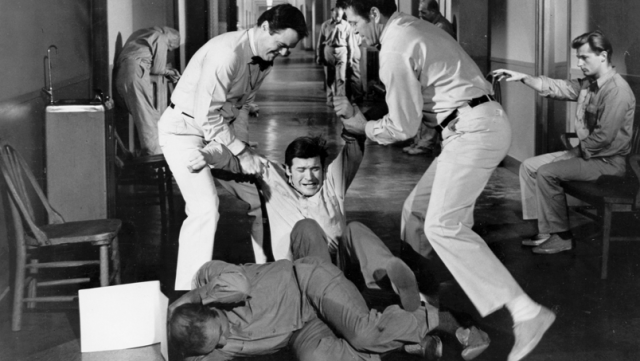
Reporter Johnny Barrett (Peter Breck) gets into more trouble than he bargained for in Samuel Fuller’s SHOCK CORRIDOR

ONE NITE ONLY: SHOCK CORRIDOR (Samuel Fuller, 1963)
Nitehawk Cinema
136 Metropolitan Ave. between Berry St. & Wythe Ave.
Wednesday, March 4, $15, 7:30
Series runs March 4-29
718-384-3980
www.nitehawkcinema.com

On the surface, Samuel Fuller’s Shock Corridor is about a reporter’s unyielding determination to win a Pulitzer by playing a unique game of Clue: He gets his girlfriend and his publisher to help commit him to an insane asylum so he can get a big scoop by answering the question “Who killed Sloan with a knife in the kitchen?” But the tense psychological drama is actually about so much more, a treatise on the state of mid-twentieth-century America as well as the nature of storytelling itself. A former crime reporter, Fuller was inspired by Nellie Bly’s Ten Days in a Mad-House when making Shock Corridor, but his film is not so much an expose on the treatment of the mentally ill as an investigation into such prevalent societal ills as racism, war, communism, nuclear annihilation, and, er, nymphomania. Desperate for a big story, Johnny Barrett (Peter Breck) gets a lesson in how to act insane from Dr. Fong (Philip Ahn); they’ve decided that Johnny’s “ailment” will be incest, and he must pretend that he is in love with his sister, a role that will be taken by his girlfriend, Cathy (Constance Towers), a burlesque performer who is uncomfortable with the whole plan. The only other person who knows of the scheme is Johnny’s editor, old-time newspaperman Swanee (Bill Zuckert). Once locked inside the mental hospital, Johnny seeks out the three witnesses to Sloan’s slaying: Stuart (James Best), who thinks he’s a Confederate general still fighting the Civil War; Trent (Hari Rhodes), a black man who believes he’s a white supremacist; and Boden (Gene Evans), a scientist who has reverted to being a child because of the misuse of nuclear power. Keeping a close watch on everything are two attendants, the amiable Wilkes (Chuck Roberson) and the mean-spirited Lloyd (John Craig), along with Dr. Cristo (John Matthews), who has a thing for electric shock therapy. As Johnny keeps getting closer to the truth, however, the cost might be his own sanity.
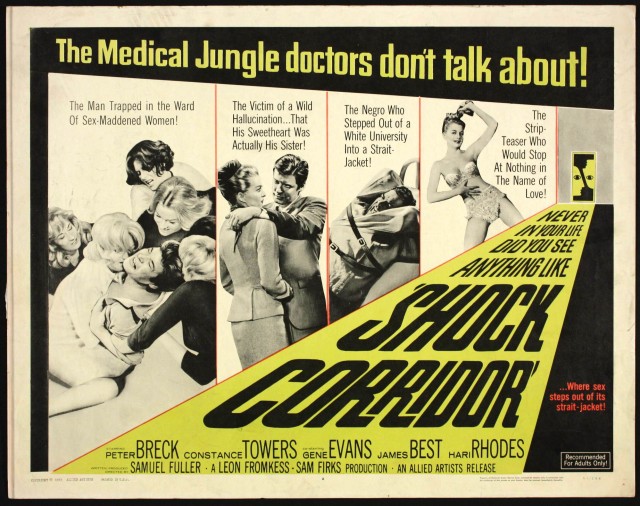
shock corridor 2

The multiple levels of the characterizations in Shock Corridor are best represented by a patient played by Larry Tucker who thinks he is Pagliacci, a fictional character in the Leoncavallo opera who is portrayed by a tenor named Canio. Like Pagliacci, Fuller’s Shock Corridor is built around stories within stories (within stories) and actors playing characters pretending to be someone else. The film, which evokes The Snake Pit while presaging Miloš Forman’s One Flew Over the Cuckoo’s Nest, including an important use of gum, is shot by Stanley Cortez in noirish black-and-white, but Fuller adds several full-color dream sequences taken from footage he photographed for other projects, further blurring the lines between fiction and reality within the context of this original drama. As with so many of Fuller’s works, the film is highly influential, although more beloved and known by fellow filmmakers than mainstream audiences. And it does no favors for the treatment of the mentally ill, either on the doctor or patient side of things. But it’s all worth it for the amazing rain scene that will blow your mind. Shock Corridor is screening in a 35mm print on March 4 at 7:30, kicking off Nitehawk Cinema’s March Brunch “Committed” series, with a special guest to be announced. Yes, 7:30 pm is an odd time to have brunch, but maybe the programmer had temporarily lost his marbles. The series continues on March weekends — at the more normal brunch times of either 11:30 or 12 noon — with Alfred Hitchcock’s Spellbound, One Flew Over the Cuckoo’s Nest, Joseph L. Mankiewicz’s Suddenly, Last Summer, Robert Wiene’s The Cabinet of Dr. Caligari, and James Mangold’s Girl, Interrupted.
THE STOOP SERIES — DIGITAL CITY: GOOGLE MAP HACKERS

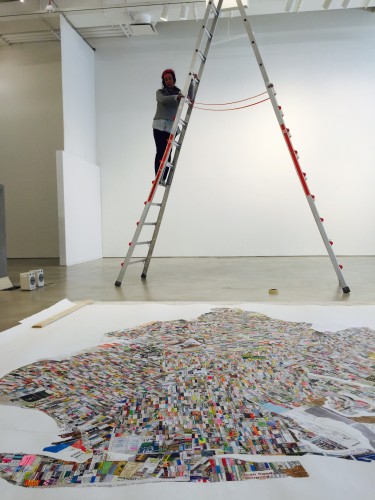
Jennifer Maravillas, whose ongoing “71 Square Miles” project is part of “Mapping Brooklyn” exhibition, will be at BRIC for Stoop Series talk on March 3

Artist Jennifer Maravillas, whose ongoing “71 Square Miles” project is part of “Mapping Brooklyn” exhibition, will be at BRIC for Stoop Series discussion on March 3 (photo courtesy Jennifer Maravillas)

Who: Justin Blinder, Brian House, and Jennifer Maravillas
What: “The Stoop Series”
Where: BRIC House, 647 Fulton St., 718-683-5600
When: Tuesday, March 3, free, 7:00
Why: In conjunction with the new exhibition “Mapping Brooklyn,” a joint venture between BRIC and the Brooklyn Historical Society, exhibition artists Justin Blinder and Jennifer Maravillas and media artist Brian House will discuss the use of technology in their work, with a particular focus on Google Maps, as part of “The Stoop Series.” The exhibit, which also includes contributions from Aaron Beebe, Joyce Kozloff, Nick Vaughan and Jake Margolin, and others, continues through May 3 at BRIC and September 6 at BHS. In addition, on March 14 and April 11, Chloë Bass will perform live as part of her “Mental Map” interactive installation; on March 28, Katarina Jerinic will lead “Visit to Erratic Monuments,” a walking tour between BRIC and BHS; and on April 2, BHS will host “Tales from the Vault! Wish You Were Here,” which looks at historical Brooklyn maps and tourism guides.

WIM WENDERS: PARIS, TEXAS

PARIS, TEXAS

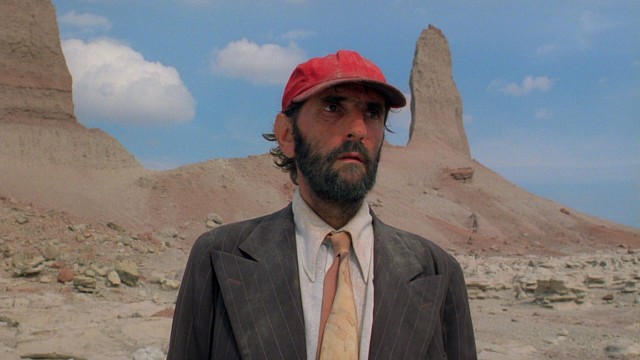
Harry Dean Stanton gives a staggering performance as a lost soul in PARIS, TEXAS

PARIS, TEXAS (Wim Wenders, 1984)
MoMA Film, Museum of Modern Art
11 West 53rd St. between Fifth & Sixth Aves.
Monday, March 2, 3:45, and Wednesday, March 11, 6:15
Series runs March 2-17
Tickets: $12, in person only, may be applied to museum admission within thirty days, same-day screenings free with museum admission, available at Film and Media Desk beginning at 9:30 am
212-708-9400
www.moma.org

Winner of both the Palme d’Or and the Critics Prize at the 1984 Cannes Film Festival, Wim Wenders’s Paris, Texas is a stirring and provocative road movie about the dissolution of the American family and the death of the American dream. Written by Sam Shepard and adapted by L. M. Kit Carson, the two-and-a-half-hour film opens with a haggard man (Harry Dean Stanton) wandering through a vast, deserted landscape. A close-up of him in his red hat, seen against blue skies and white clouds, evokes the American flag. (Later shots show him looking up at a flag flapping in the breeze, as well as a graffiti depiction of the Statue of Liberty.) After he collapses in a bar in the middle of nowhere, he is soon discovered to be Travis Henderson, a husband and father who has been missing for four years. His brother, Walt (Dean Stockwell), a successful L.A. billboard designer, comes to take him home, but Travis, remaining silent, keeps walking away. He eventually reveals that he is trying to get to Paris, Texas, where he has purchased a plot of land in the desert, but he avoids discussing his past and why he walked out on his wife, Jane (Nastassja Kinski), and son, Hunter (Hunter Carson, the son of L. M. Kit Carson and Karen Black), who is being raised by Walt and his wife, Anne (Aurore Clément). An odd man who is afraid of flying, has a penchant for arranging shoes, and falls asleep at key moments, Travis sets out with Hunter to find Jane and make something out of his lost life.
PARIS, TEXAS

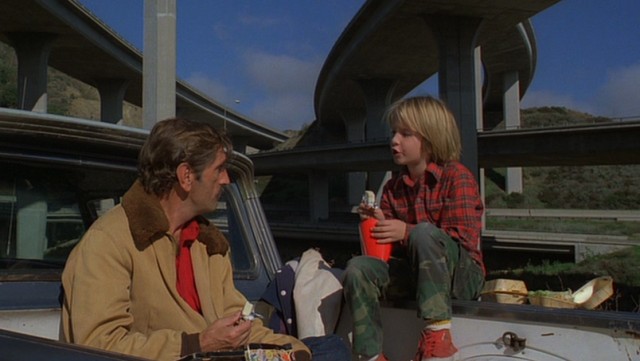
Travis (Harry Dean Stanton) and Hunter (Hunter Carson) bond while searching for Jane in Wim Wenders road movie

Longtime character actor Stanton (Repo Man, Wise Blood) is brilliant as Travis, his long, craggy face and sad, puppy-dog eyes conveying his troubled soul and buried emotions, his slow, careful gait awash in loneliness and desperation. The scenes between Travis and Jane are a master class in acting and storytelling; Stanton and Kinski (Tess, Cat People) will break your heart over and over again as they face the hardest of truths. Wenders and regular cinematographer Robby Müller use a one-way mirror to absolutely stunning effect in these scenes about what is hidden and what is revealed in a relationship. Wenders had previously made the Road Movie Trilogy of Alice in the Cities, The Wrong Move, and Kings of the Road, which also dealt with difficult family issues, but Paris, Texas takes things to another level. Ry Cooder’s gorgeous slide-guitar soundtrack is like a requiem for the American dream, now a wasteland of emptiness. (Cooder would later make Buena Vista Social Club with Wenders. Another interesting connection is that Wenders’s assistant director was Allison Anders, who would go on to write and direct the indie hit Gas Food Lodging.) A uniquely told family drama, Paris, Texas is rich with deft touches and subtle details, all encapsulated in the final shot. (Don’t miss what it says on that highway billboard.) Paris, Texas is screening in a new digital restoration at MoMA on March 2 at 3:45 and March 11 at 6:15 as part of a two-plus-week Wenders retrospective in advance of the release of his latest film, the Oscar-nominated documentary The Salt of the Earth; the director will be on hand to introduce the March 2 screening. The series continues through March 17 with such other Wenders works as The American Friend, Wings of Desire, Until the End of the World, Tokyo-Ga, The Goalie’s Anxiety at the Penalty Kick, and other well-known gems and rare early shorts, with Wenders at the museum for Q&As and introductions at all screenings through March 7.

CULTUREMART 2015

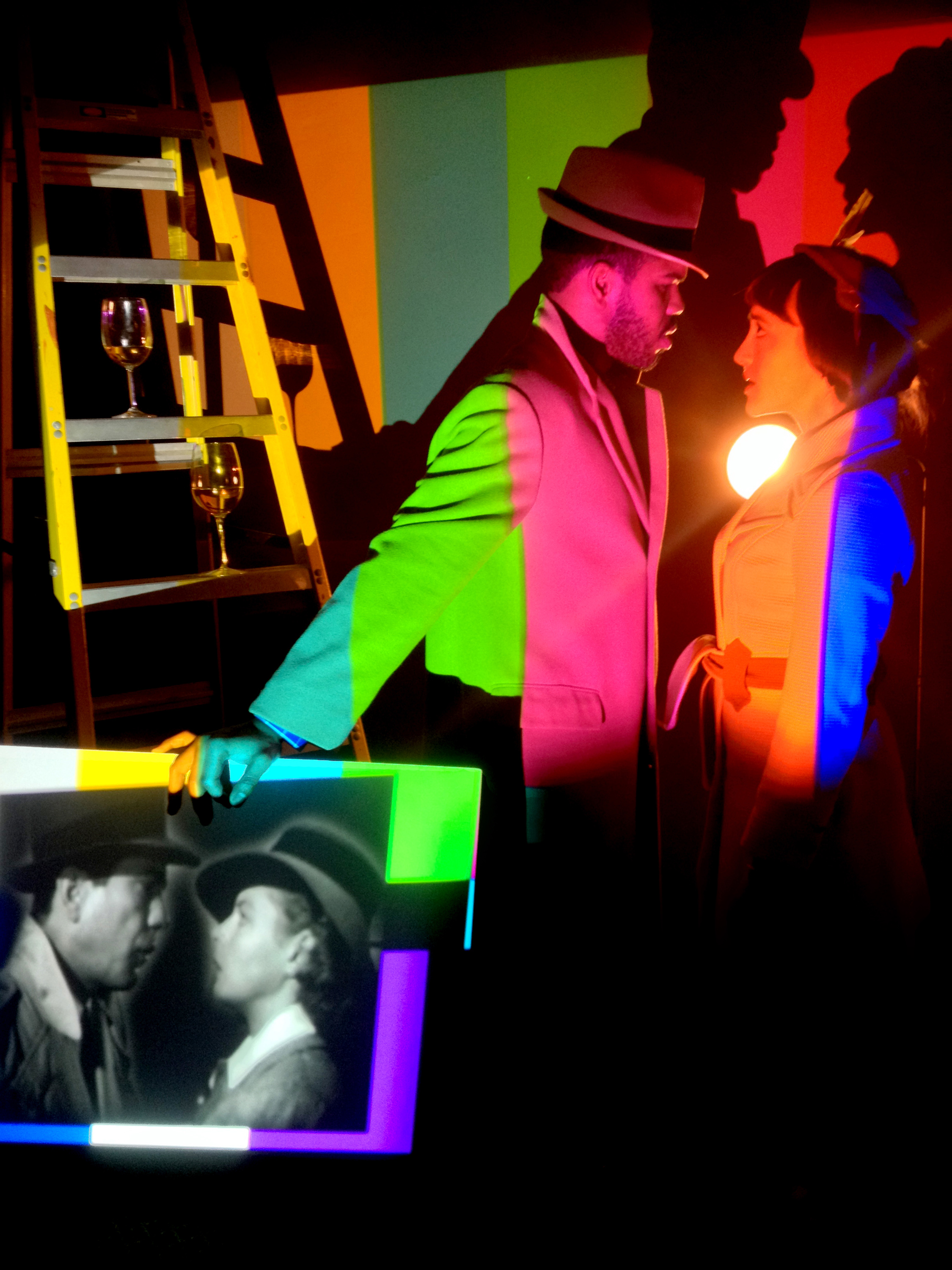
(photo by Sara and Reid Farrington)

Sara and Reid Farrington go behind the scenes of the making of a classic in CASABLANCABOX (photo by Sara and Reid Farrington)

HERE
145 Sixth Ave. at Dominick St.
March 4-14, $15
212-352-3101
www.here.org

HERE’s annual winter performance festival, now in its fourteenth year, highlights cutting-edge works-in-progress from a wide-ranging group of artists who are either current or former participants in the HERE Artist Residency Program (HARP), which commissions hybrid presentations in order “to not only grow innovative artistic work, but also [to] give artists the awareness and skills — in areas such as audience relations, budgeting, grantwriting, and touring — they need to continue to grow their careers.” This year features a dozen multidisciplinary workshop performances, beginning March 4-5 with sound designer Christina Campanella and composer Jim Dawson’s Lighthouse 40° N, 73° W, a continuous geographic audio installation in which the audience listens in on headphones to a twenty-five-minute loop, and Sara and Reid Farrington’s CasablancaBox, in which the husband-and-wife duo combine live actors and film clips that go behind the scenes of the making of the 1942 movie; Farrington has previously reimagined such films as The Passion of Joan of Arc, Rope, and multiple versions of A Christmas Carol in his unique, mesmerizing style. On March 6-7 at 7:00, Paul Pinto’s Thomas Paine in Violence explores the American patriot during the last days of his life and the start of his afterlife, with music performed by vocalist Joan La Barbara and the ensemble Ne(x)tworks. On March 7-8 at 8:30, Sean Donovan and Sebastián Calderón Bentin turn to Alain Renais’s Last Year at Marienbad and Luis Buñuel’s The Exterminating Angel for Abbadon, in which a social gathering delves into the nature of class structure; Abbadon is on a shared bill with Amanda Szeglowski/cakeface’s Stairway to Stardom, a piece of dance theater that takes its inspiration from the public access amateur talent television show of the same name.

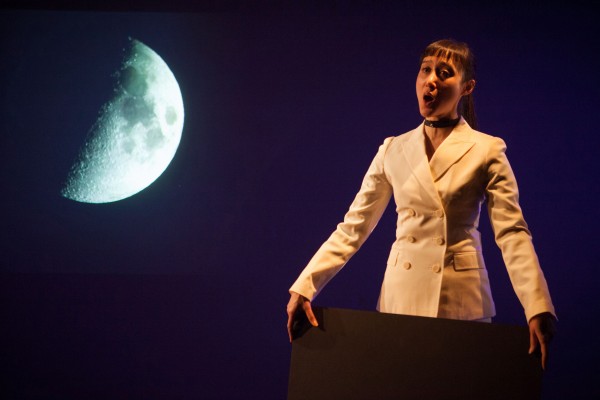
Hai-Ting Chinn’s SCIENCE FAIR takes viewers on a multimedia operatic journey (photo by Benjamin Heller)

Hai-Ting Chinn’s SCIENCE FAIR takes viewers on a multimedia operatic journey (photo by Benjamin Heller)

On March 9-10, you can see a double feature of Hai-Ting Chinn’s multimedia opera, Science Fair, with music by Matthew Schickele and live piano by Erika Switzer, and The Emperor and the Queen’s Parisian Weekend, with music by Kamala Sankaram and a libretto by Pete McCabe, directed by HERE cofounder Tim Maner. March 10-11 pairs Matt Marks and Paul Peers’s Mata Hari, an opera-theater piece about the last days of the renowned WWI spy, with Nick Brooke’s Psychic Driving, which immerses the audience in surveillance and CIA brainwashing. From March 12 to 14, Jessica Scott’s Ship of Fools uses music, puppets, and movement to examine particular women throughout history while looking at who is in control of the future; it’s on a shared bill with Robin Frohardt’s Fitzcardboardaldo, a cinematic cardboard tribute to Werner Herzog’s Fitzcarraldo, along with The Corrugation of Dreams, an homage to Les Blank’s Burden of Dreams, about the making of the Herzog film. CULTUREMART concludes March 13-14 with HERE artistic director Kristin Marting and Robert Lyons’s Idiot, an exploration of Dostoevsky protagonist Prince Myshkin using text, video, and dance. The festival also includes a trio of post-performance talks, “Continue the Conversation,” with “Soundscapes” on March 6 after the 7:00 Lighthouse show, “Variants of Video Integration” on March 8 following the 8:30 show, and “Playing with Operatic Form” on March 10 after the 8:30 show. Tickets for all productions are $15 except for Lighthouse 40° N, 73° W, for which admission is $5; a $60 OFF-OFFten Club membership allows you to see all shows for $5 each and also comes with four tickets to be used anytime during the season in addition to four glasses of wine from the café.

SHEN WEI: AN EVENING OF CONVERSATION AND PERFORMANCE

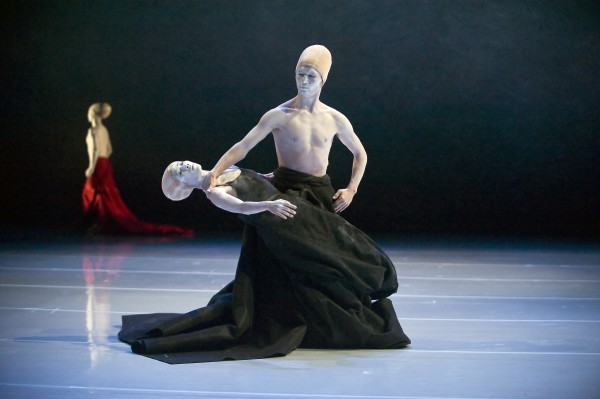
Excerpts from FOLDING will be part of special program with Shen Wei at New-York Historical Society on March 3 (photo by Stephanie Berger)

New-York Historical Society
The Robert H. Smith Auditorium
170 Central Park West
Tuesday, March 3, $38, 7:00
212-485-9268
www.shenweidancearts.org
www.nyhistory.org

“I have always been fascinated about the idea of Qi — the subtle energy that permeates everything in life and links all its elements together. This idea constantly makes me curious about how human beings and the material world are universally related and bonded to each other,” Hunan-born, New York-based multidisciplinary artist Shen Wei says about his latest photography exhibit, “Invisible Atlas,” continuing at Flowers Gallery in Chelsea through February 28. Shen Wei is curious indeed; since his founding of Shen Wei Dance Arts in 2000, he has guided his troupe in performances in such unusual locations as the Park Avenue Armory (in and around Ernesto Neto’s “Anthropodino” installation), the Metropolitan Museum of Art’s Charles Engelhard Court, the Prospect Park Bandshell, and the Guggenheim Rotunda. On March 3, Shen Wei will be at the New-York Historical Society in conjunction with the exhibition “Chinese American: Exclusion/Inclusion,” beginning his company’s fifteenth anniversary season by participating in a discussion with dance critic and historian Suzanne Carbonneau; the two also spoke this past November as part of Paul Taylor’s American Modern Dance festival, which includes Shen Wei’s Rite of Spring and comes to Lincoln Center later in March. The talk at the New-York Historical Society will feature video clips, selections of the MacArthur Genius’s photography, and live performances of excerpts from Folding, Rite of Spring, and the new Untitled 12-1 as the guest of honor recounts stories from his life and career.

THE ICEMAN COMETH

(photo by Richard Termine)

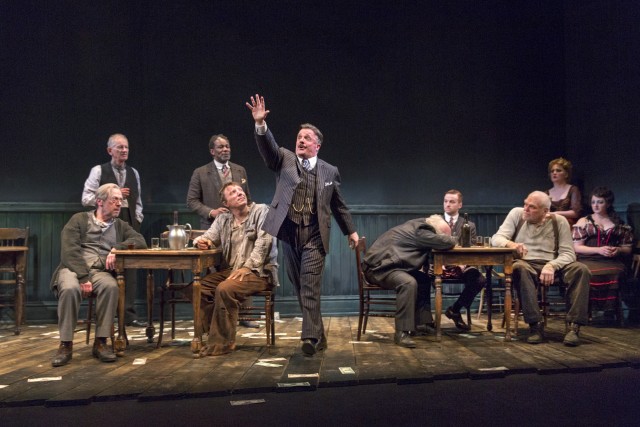
Theodore “Hickey” Hickman (Nathan Lane) dispenses a whole lot more than just free drinks in THE ICEMAN COMETH (photo by Richard Termine)

Brooklyn Academy of Music
BAM Harvey Theater
651 Fulton St. between Ashland & Rockwell Pl.
Through March 15, $35-$180
BAM Talk with Brian Denney and Nathan Lane, moderated by Linda Winer, $25, 7:30
718-636-4100
www.bam.org

You’d be hard-pressed to find a sorrier collection of forgotten men, real or fictitious, than the group of pathetic drunks populating Eugene O’Neill’s great American tragedy, The Iceman Cometh, now enjoying a stirring four-hour, forty-five-minute revival at BAM (if the word “enjoy” can be used in describing this staggering work in any way). Written in 1939 but not produced until after WWII, in 1946, the play opens with most of a ragtag bunch of bums asleep on tables in Harry Hope’s (Stephen Ouimette) Last Chance Saloon and rooming house on the Bowery, awaiting the annual arrival of Theodore “Hickey” Hickman (Nathan Lane), a traveling salesman who comes to the bar once a year to celebrate Harry’s birthday by buying drinks for everyone. While the other poor souls are passed out, former anarchist Larry Slade (Brian Dennehy), pouring himself another shot of whiskey, tells bartender Rocky Pioggi (Salvatore Inzerillo), “I’ll be glad to pay up — tomorrow. And I know my fellow inmates will promise the same. They’ve all a touching credulity concerning tomorrows. It’ll be a great day for them, tomorrow — the Feast of All Fools, with brass bands playing! Their ships will come in, loaded to the gunwales with cancelled regrets and promises fulfilled and clean slates and new leases!” A moment later, Rocky, who speaks in a tough dem and doze New Yorkese, says to Larry, “De old Foolosopher, like Hickey calls yuh, ain’t yuh? I s’pose you don’t fall for no pipe dream?” To which Larry explains, “I don’t, no. Mine are all dead and buried behind me. What’s before me is the comforting fact that death is a fine long sleep, and I’m damned tired, and it can’t come too soon for me.”

That mood of hopelessness sets the tone of the play, with Larry the leading “Foolosopher” of men whose pipe dreams have long since turned into nightmares, with nothing to look forward to except the next, preferably free, drink. Slowly but surely, the others awake, wondering where Hickey is. “I was dreamin’ Hickey come in de door, crackin’ one of dem drummer’s jokes, wavin’ a big bankroll and we was all goin’ be drunk for two weeks. Wake up and no luck,” gambler Joe Mott (John Douglas Thompson) opines. Also arising are Hope, circus man Ed Mosher (Larry Neumann Jr.), Harvard Law alum Willie Oban (John Hoogenakker), former Boer Commando General Piet Wetjoen (John Judd), former British Infantry Captain Cecil Lewis (John Reeger), former anarchist editor Hugo Kalmar (Lee Wilkof), young former anarchist Don Parritt (Patrick Andrews), and former war correspondent James Cameron, better known as “Jimmy Tomorrow” (James Harms). But these men — along with day bartender Chuck Morello (Marc Grapey), his prostitute girlfriend, Cora (Kate Arrington), and two streetwalkers who work for Chuck, Margie (Lee Stark) and Pearl (Tara Sissom) — have long ago run out of tomorrows. So they spend their days and nights slowly drinking themselves to death, some hanging on to those pipe dreams, waiting for Hickey like Vladimir and Estragon will do a few years later in Samuel Beckett’s Waiting for Godot, except in this case, Godot/Hickey shows up, waving a wad of bills and waking everyone up — but it turns out to be not nearly as satisfying as they were anticipating.

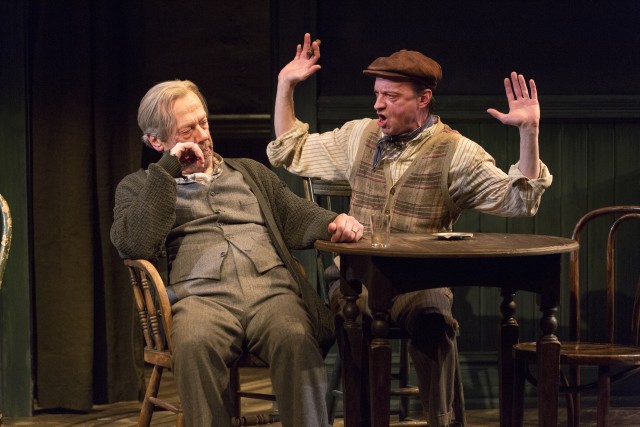
Harry Hope (Stephen Ouimette) and Ed Mosher (Larry Neumann Jr.)  are holding on to their pipe dreams in THE ICEMAN COMETH (photo by Richard Termine)

Harry Hope (Stephen Ouimette) and Ed Mosher (Larry Neumann Jr.) try to hold on to their pipe dreams in a downtrodden Bowery bar (photo by Richard Termine)

Dressed in a sharp suit and wearing an even more impressive smile, Hickey bursts in at the end of act one, but he is not quite the good-time guy they have all come to know. Instead, Hickey is no longer drinking, and he has arrived with a message for each and every one of his minions, determined to tell them the truth about their sad lives. He is like a boisterous Bill W., the traveling stock speculator who founded Alcoholics Anonymous. He’s going to buy them all drinks but make them pay in other ways, forcing them to look at what they’ve become. “If anyone wants to get drunk, if that’s the only way they can be happy, and feel at peace with themselves, why the hell shouldn’t they? They have my full and entire sympathy,” Hickey tells Harry. “I know all about that game from soup to nuts. I’m the guy that wrote the book. The only reason I’ve quit is — well, I finally had the guts to face myself and throw overboard the damned lying pipe dream that’d been making me miserable, and do what I had to do for the happiness of all concerned — and then all at once I found I was at peace with myself and I didn’t need booze any more. That’s all there was to it.” Of course, that’s not all there is to it, as is revealed during the next three acts.

(photo by Richard Termine)

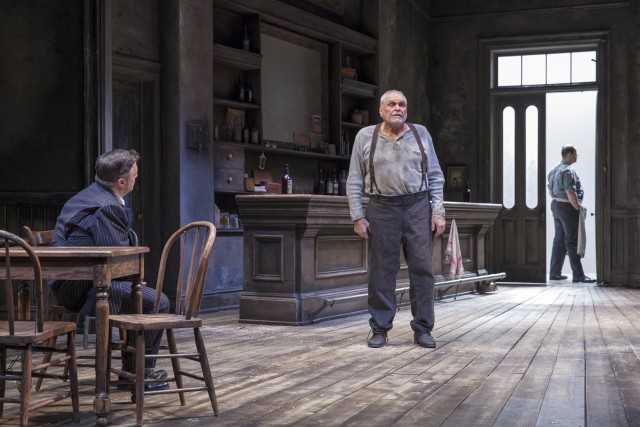
Larry Slade (Brian Dennehy) is determined to drink himself to death in Eugene O’Neill’s classic American tragedy (photo by Richard Termine)

In 1990, Chicago’s Goodman Theatre staged a revival of The Iceman Cometh, directed by Robert Falls and starring Dennehy as Hickey. More than twenty years later, Dennehy told longtime collaborator Falls that he wanted to play Larry in a new production. Upon hearing that, Lane contacted Falls, explaining that he had always dreamed of playing Hickey. The show was a huge success in Chicago in 2012, and it is now a huge success at BAM, where it fits in wonderfully with the Harvey’s artfully distressed shabby chic interior. The Harvey doesn’t usually use a curtain, but it does so for The Iceman Cometh, revealing a different set for each act, designed by Kevin Depinet (inspired by John Conklin); there is actually an audible gasp when the third act begins in the main bar area, shown in an unusual narrow perspective leading to a doorway that offers a kind of freedom — and real life — that no one in the play seems to want. Natasha Katz’s lighting design often keeps things in the dark, echoing the lost dreams of these miserable characters. This nearly five-hour production, with three full intermissions, might be epic in scope, but it is beautifully paced by Falls, never dragging, instead moving with a sometimes exhilarating gait.

Dennehy (Love Letters, Death of a Salesman) fully captures the heartbreaking duality that exists inside Larry, a clearly intelligent man who has given up his reason for being, someone who could make a difference in the life of all those around him — especially Don, who is seeking him out as a father figure — but he has instead buried himself in the bottle. Lane (It’s Only a Play, The Nance) shines as Hickey, bringing an exuberance to the role that occasionally goes over the top, particularly in the final monologue, not quite hitting its darker quality, but he and Dennehy have a beguiling camaraderie together in these iconic roles. (The play premiered on Broadway in 1946 and has been revived on the Great White Way in 1973, 1985, and 1999; over the years, Hickey has been portrayed by James Barton, James Earl Jones, Dennehy, Lee Marvin, Kevin Spacey, and, most famously, Jason Robards onstage and on film, while Slade has been played by Robert Ryan, James Cromwell, Conrad Bain, Tim Pigott-Smith, and Patrick Stewart.) The Iceman Cometh has never been an easy show to put on or to sit through; don’t be surprised when you see a handful of people exiting the theater and hailing cabs at each intermission. But it’s their loss, as this is a staggering production that looks deeply into the heart of America with a raw honesty that compels audiences to look deep into their own hearts as well.

FIXATION: PANDORA’S BOX

PANDORA’S BOX

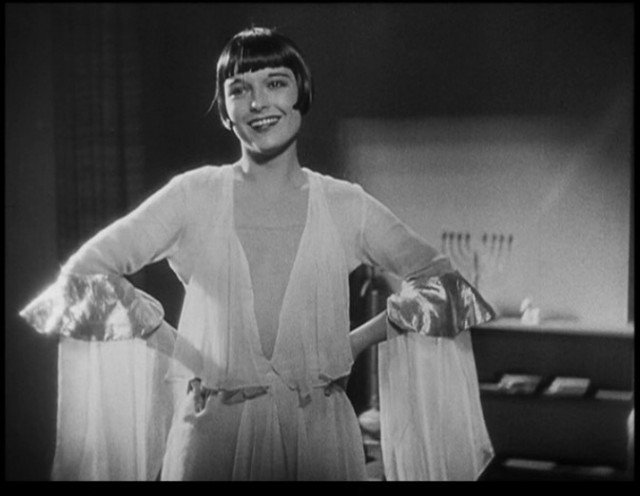
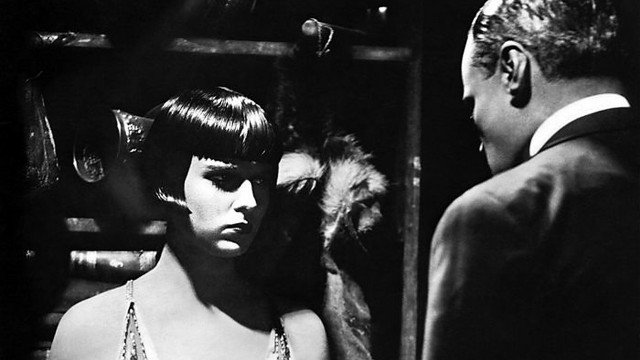
Louise Brooks sets hearts and minds afire in G. W. Pabst’s PANDORA’S BOX

CABARET CINEMA: PANDORA’S BOX (DIE BÜCHSE DER PANDORA) (G. W. Pabst, 1929)
Rubin Museum of Art
150 West 17th St. at Seventh Ave.
Friday, February 20, $10, 9:30
212-620-5000
www.rmanyc.org


Upadana, or attachment is one of the three Buddhist poisons, along with aversion and ignorance. The Rubin Museum’s latest Brainwave series, “The Attachment Trap,” featuring film screenings and discussions and intimate talks that pair scientists with performers, explores the notion of the attachment trap, which it describes as “a metaphor for a core Buddhist principle: by holding tightly to external sources of happiness, we prevent ourselves from being truly free.” Running through April, the series includes Jake Gyllenhaal and neuroscientist Moran Cerf talking about “The Actor’s Dream,” writer Kevin Sessums and neuroscientist Carl Hart examining “I Left It on the Mountain,” and game designer Eric Zimmerman and neuroscientist John Krakauer attempting to answer the question “Is Life a Game?” Another key component of the Brainwave festival is the Friday-night film program, this year titled “Fixation,” consisting of movies that deal with attachment, which can also be interpreted as desire or greed. The series began, appropriately enough, with Brian De Palma’s Obsession and continues February 20 with G. W. Pabst’s 1929 silent Weimar classic, Pandora’s Box. Based on plays by Frank Wedekind, Pandora’s Box stars Kansas-born Louise Brooks as Lulu, a good-time girl who loves drinking, dancing, and the attention of men. Lulu, in a trend-setting hair bob and bangs, seemingly just can’t say no, whether it’s as the mistress of married newspaper publisher Dr. Ludwig Schön (Fritz Kortner) or her aging first patron, the father-figure Schigolch (Carl Goetz). Schön’s grown son, Alwa (Francis Lederer), and Countess Augusta Geschwitz (Alice Roberts) also have taken quite a fancy to Lulu. Even after Dr. Schön gets engaged to the well-connected socialite Charlotte Marie Adelaide von Zarnikow (Daisy D’ora), he can’t stay away from Lulu, despite knowing the harm that could bring to his reputation and his future. He helps finance and publicize a variety show that Lulu joins through trapeze artist Rodrigo Quast (Krafft-Raschig), a friend of Schigolch’s. But when Dr. Schön brings his fiancée to see the revue, jealousy takes center stage, and things starting going downhill for Lulu in myriad ways, including murder, blackmail, prison, and sex slavery.

PANDORA’S BOX

Lulu (Louise Brooks) and Dr. Ludwig Schön (Fritz Kortner) share a dangerous love in PANDORA’S BOX

Brooks, a former Ziegfeld dancer who also starred in Pabst’s Diary of a Lost Girl, is riveting as Lulu, a role that almost went to Marlene Dietrich, who ended up playing the lascivious Lola in Josef von Sternberg’s The Blue Angel instead, a film with similar themes. Brooks practically floats through Pandora’s Box, as nearly every character puts her up on a pedestal, desiring her in one way or another — most often, of course, sexually. But she is no mere beautiful angel whose life spirals out of control because of others, nor is she a devious devil out to destroy all in her path; however, she does make her bed and is ultimately forced to lie in it, as most clearly evidenced by her outrageously sly smile upon getting caught in flagrante backstage with Dr. Schön by his fiancée. (The revue scene is a staggering tour de force of acting and directing, with Sigfried Arno as the haggard stage manager, providing necessary comic relief.) The relationship between Dr. Schön and Lulu is reminiscent of the ill-fated romance between Charles Foster Kane (Orson Welles) and Susan Alexander (Dorothy Comingore) in Welles’s Citizen Kane, which might not be mere coincidence, as Kane coscreenwriter Herman Mankiewicz escorted an eighteen-year-old Brooks to see No, No Nanette on Broadway in 1925 and, after he became alcoholically incapacitated, Brooks ghost-wrote his New York Times review, a scene that also worked its way into Kane. More than eighty-five years after its release, Pandora’s Box is still a racy, surprising cautionary tale well ahead of its time, centered by a legendary performance by Brooks, one that is easy to get attached to; Brooks made her last onscreen appearance in the 1938 John Wayne Western Overland Stage Raiders and, after trying her hand at a number of more menial jobs, became a successful film writer, with her works collected in the well-received 1982 book Lulu in Hollywood. The 9:30 Cabaret Cinema screening of Pandora’s Box at the Rubin will be introduced by documentarian Lana Wilson (After Tiller); tickets are $10, but admission to the museum is free starting at 6:00, so get there early to check out such current exhibits as “Witness at a Crossroads: Photographer Marc Riboud in Asia” and “The All-Knowing Buddha: A Secret Guide.”