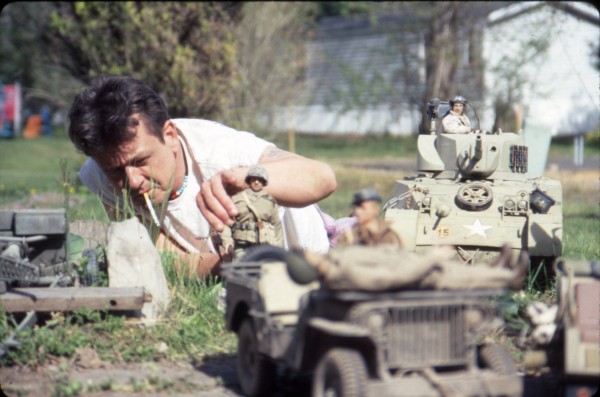
Mark Hogancamp tries to rebuild his life in a carefully constructed alternate reality using dolls
MARWENCOL (Jeff Malmberg, 2010)
IFC Center
323 Sixth Ave. at Third St.
Tuesday, November 10, 8:00
Series continues through November 24
212-924-7771
www.ifccenter.com
www.marwencol.com
 Named Best Documentary at numerous film festivals across the country, Marwencol offers a surprising look inside the creative process and the fine line that exists between art and reality. On April 8, 2000, Mark Hogancamp was nearly beaten to death outside a bar in his hometown of Kingston, New York. He spent nine days in a coma and more than a month in the hospital before being released, suffering severe brain damage that has left his memory a blur. To help put his life back together, he began using toys and dolls — Barbies, celebrity replicas, army men — to re-create his personal journey. He makes dolls of his friends and relatives, the people he works with, and others, constructing an alternate WWII-era universe he calls Marwencol, complete with numerous buildings and plenty of Nazis. He captures the detailed story in photographs that are not only fascinating to look at but that also help him figure out who he was and who he can be. This miniature three-dimensional world is reminiscent of the two-dimensional one carefully fashioned by outsider artist Henry Darger in his fifteen-thousand-page manuscript, The Story of the Vivian Girls, in What is known as the Realms of the Unreal, of the Glandeco-Angelinnian War Storm, Caused by the Child Slave Rebellion, which also features an alternate reality involving military battles set amid stunning artwork. Director, producer, and editor Jeff Malmberg makes no judgments about Hogancamp, and asks the same of the audience. In his first full-length film, Malmberg shares the compelling story of a deeply troubled, flawed man suddenly forced to begin again, using art and creativity to bring himself back to life. He speaks with Hogancamp’s mother, his old roommate, the prosecutor who handled his case, and others who are first seen proudly holding the doll Hogancamp made of them. And Malmberg doesn’t turn away from the more frightening aspects of Hogancamp’s daily existence. Marwencol is an unforgettable portrait of lost identity and the long road to redemption. The film is screening November 10 at 8:00 as part of the IFC Center series “Stranger Than Fiction” and will be followed by a Q&A and book signing with Hogancamp and producer Chris Shellen, who collaborated on the new book Welcome to Marwencol (November 3, Princeton Architectural Press, $29.95).

 To use George Roundy’s favorite adjective, Shampoo, is “great.” In this ’70s classic, Warren Beatty, who cowrote the screenplay with Robert Towne, stars as George, a Beverly Hills hairdresser who gives his wealthy clients more than just a cut-and-blow-dry. The film takes place primarily on November 4, 1968, as Nixon is battling Humphrey for the presidency, and George can’t keep it in his pants, running back and forth between Felicia (Lee Grant), Jackie (Julie Christie), and Lorna (Carrie Fisher) while trying to open his own shop, with help from business tycoon Lester (Jack Warden) — Felicia’s husband, Jackie’s lover, and Lorna’s father. The clothing is magnificent, as, of course, are the hairstyles. Ashby’s biting comedy wonderfully captures the sexual awakening of the 1970s in all its glory — and in all its vapidity. Horror fans should keep an eye out for Lester’s friend Sid Roth, who is played by gimmickmeister William Castle. Ashby, who died in 1988 at the age of fifty-nine, made only eleven narrative films and two concert documentaries in his too-brief life and career. Shampoo is screening in a new 4K digital restoration November 6 & 9 in the MoMA series “To Save and Project: The 13th MoMA International Festival of Film Preservation,” with the first show introduced by Sony Pictures executive Grover Crisp. The series, which celebrates newly preserved and restored films, runs November 4-25 and includes a wide variety of works, from the original theatrical version of Herk Harvey’s Carnival of Souls and William K. Howard’s Don’t Bet on Women to Otto Rippert’s silent Homunculus and the director’s cut of Helma Sanders-Brahms’s Deutschland blieche Mutter, in addition to “The Unknown Orson Welles,” including scenes from The Other Side of the Wind and The Dreamers introduced by Welles’s longtime partner, Oja Kodar, and Munich Filmmuseum director Stefan Droessler.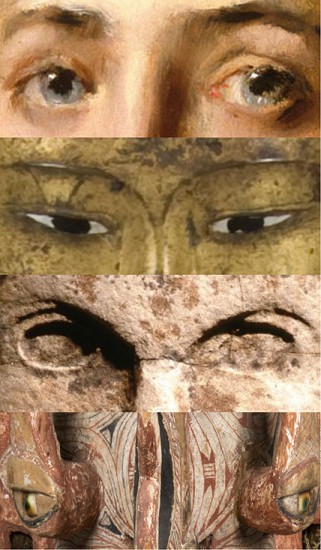

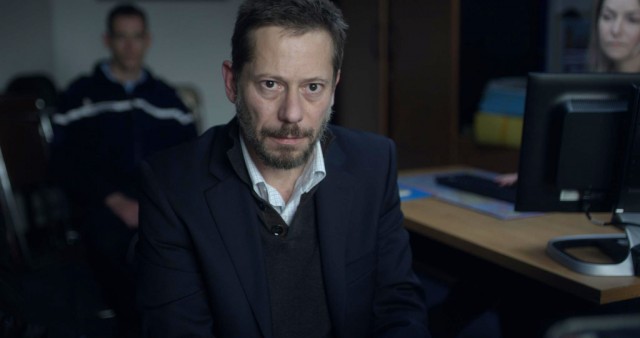
 Real-life partners Mathieu Amalric and Stéphanie Cléau strip Georges Simenon’s short 1955 novel The Blue Room to its bare essentials — and we do mean bare — in their intimate, claustrophobic modern noir adaptation, which kicks off FIAF’s six-week tribute to Amalric, consisting of the eight-film CinéSalon series “Mathieu Amalric: Renaissance Man” and the special two-night theatrical presentation
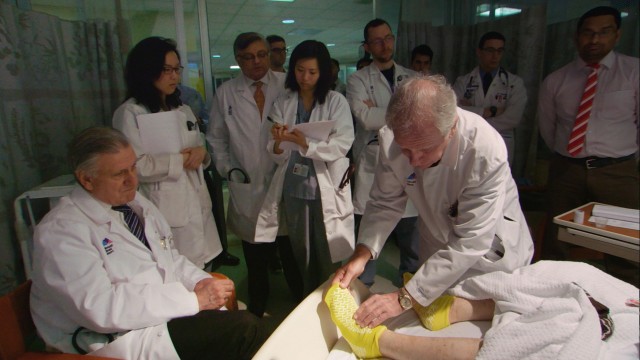
 Over the last several decades, the U.S. health care system has grown increasingly impersonal because of technological advancement, the pharmaceutical boom, and the privatization of public hospitals. But two old-time doctors at Mount Sinai Heart are keeping the human touch alive, and not just for nostalgia’s sake. Muffie Meyer’s sweet-natured, important documentary, Making Rounds, follows Dr. Valentin Fuster, the director of Mount Sinai Heart, and Dr. Herschel Sklaroff, clinical professor of medicine, cardiology, as they lead residents from room to room in the Cardiac Care Unit at New York City’s Mount Sinai Hospital, diagnosing patients with a refreshing lack of reliance on technology. “We both have the philosophy that the number one objective in medicine is the patient,” Dr. Fuster explains. “We both believe that most of what you learn about a particular patient is at the bedside, not with machines.” Dr. Sklaroff adds, “Dr. Fuster and I make rounds the old-fashioned way. The first thing that we do is go to the patient and hold his hand. With that touch you establish rapport instantly. We were trained to go to the bedside and talk to the patients, and take the perfect history, do the perfect physical, from which one ought to be able to make a diagnosis or come close to a diagnosis, maybe ninety percent of the time.” They display a warm, caring bedside manner as they talk, touch, listen, and teach, examining a sixty-seven-year-old woman with coronary heart disease, a twenty-two-year-old single mother who needs a heart transplant, and a fifty-one-year-old man with cardiomyopathy who resists treatment.