NFL hero Steve Gleason takes a new look at life after being diagnosed with ALS
GLEASON (Clay Tweel, 2016)
Landmark Sunshine Cinema, 143 East Houston St. between First & Second Aves., 212-330-8182
AMC Loews Lincoln Square 13, 1998 Broadway at 68th St.
Opens Thursday, July 28
gleasonmovie.com
 “It’s not gonna be easy but it’s gonna be awesome,” Steve Gleason promises his unborn child in the extraordinary documentary Gleason, a heartbreaking yet uplifting tale about dedication, family, and never giving up. On September 26, 2006, scrappy New Orleans safety and special teams stalwart Gleason became an all-time inspirational Saints hero when, on Monday Night Football, he blocked Atlanta Falcon Michael Koenen’s punt less than a minute and a half into the Saints’ first home game in the Superdome following the devastation wrought by Hurricane Katrina the previous summer. The play, which resulted in a touchdown when the ball was recovered by Curtis DeLoatch in the end zone, has been memorialized with a statue titled “Rebirth” in front of the stadium. But Gleason became a different kind of hero five years later when the undrafted free agent was diagnosed with amyotrophic lateral sclerosis (ALS), better known as Lou Gehrig’s disease, a generally fatal neuromuscular disease. Right after that, the Washington State native, who at the age of thirty-four was given three to five years to live, found out that his wife, artist and free spirit Michel Varisco, was pregnant with their first child, a boy. Determined to pass on as much of a legacy as he could to his unborn baby, Gleason began a vlog, a series of deeply personal five-minute videos in which he spoke openly and honestly about how they would never have the traditional father-son relationship but he wanted the boy to know that he was loved and cherished. But that is only the beginning of an incredible story that is poignantly told in Gleason.
Directed and edited by Clay Tweel (Make Believe, Print the Legend), the film features powerful clips from Gleason’s video journal; intimate footage shot by Ty Minton-Small and David Lee, who lived with Gleason, Varisco, and their son, Rivers, for two years; and interviews with family members and friends as Gleason’s physical conditions worsens but his heart and will grow stronger. “People will say, ‘Oh, it’s such a sad, tragic story,’ Gleason explains in the film. “It is sad, and so they’re right, but it’s not all sad. I think there is more in my future than in my past.” Gleason, with Michel’s father, Paul Varisco, form Team Gleason, a grass-roots nonprofit organization dedicated to helping people with ALS have a better quality of life, taking them on adventure vacations and giving them access to cutting-edge technology that increases their ability to communicate as the disease destroys their speech and movement. Among Steve’s famous friends and supporters are Saints quarterback Drew Brees and his wife, Brittany, and Pearl Jam guitarist Mike McCready and singer Eddie Vedder. Steve and Michel hold nothing back, sharing their deepest fears and insecurities while his condition deteriorates. As he tries to get the most out of his limited time with Rivers, Gleason also reexamines his troubled relationship with his father, Mike, a born-again Christian who is often at odds with his son. The real superstar of the film, however, is the brave and courageous Michel, who devotes her life to her husband and son despite increasing difficulties. In a statement about the film, Michel said, “I hope people who need a good laugh or a heavy cry can get that from this film. I hope people who need to be reminded to love their kids or their friends can get that from this movie. I hope people with ALS who want to use this film to show others what their lives really are like can get that from this movie. I hope people who have strained relationships with their parents will want to work on those relationships after they watch this movie. I hope people who have wanted to do something great in life will go ahead and do it after seeing this movie. People have told me that they have gotten all of these things from watching Gleason. And I think that’s pretty awesome.” Gleason, which is not always easy to watch, achieves all that and more, and indeed, that’s pretty awesome. The Sundance hit opens July 28 at Loews Lincoln Square and the Landmark Sunshine, with Tweel and Michel Varisco participating in a Q&A after the 4:45 screening at Landmark on July 30.
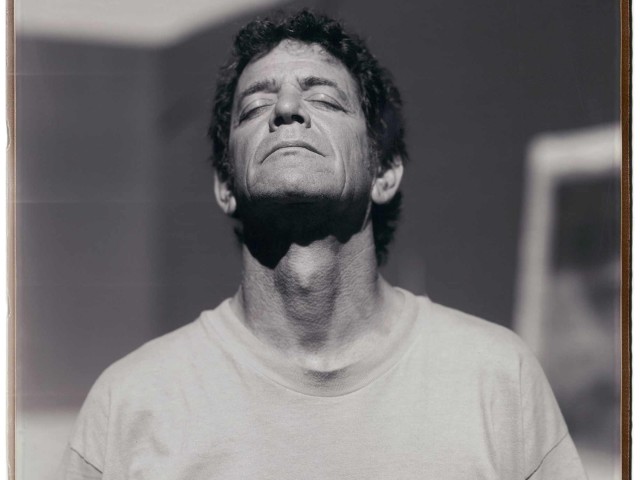
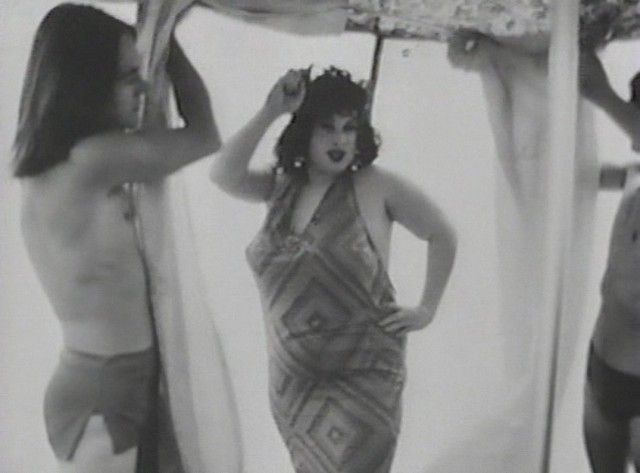
 John Waters will be at IFC Center on August 5 for two special screenings of a newly restored version of one of the Baltimore-born auteur’s craziest early works, Multiple Maniacs, made when the King of Bad Taste, serving as writer, director, producer, cinematographer, and editor, was only twenty-four. The extremely low budget romp begins with barker Mr. David (David Lochary) inviting people into “Lady Divine’s Cavalcade of Perversions,” proclaiming, “This is the show you want. . . . the sleaziest show on earth. Not actors, not paid imposters, but real, actual filth who have been carefully screened in order to present to you the most flagrant violation of natural law known to man.” Of course, that serves as the perfect introduction to the cinematic world of Waters, one dominated by the celebration of sexual proclivities, fetish, salaciousness, indecency, violence, and marginalized weirdos living on the fringes of society. Lady Divine, played by Divine, turns out to be a cheat, the freak show just a set-up for a robbery. Soon Divine is jealous of David’s relationship with Bonnie (Mary Vivian Pearce), hanging out with her topless daughter, Cookie (Cookie Mueller), and being led into a church by the Infant of Prague (Michael Renner Jr.), where she’s brought to sexual ecstasy by Mink (Mink Stole). There’s also rape, murder, Jesus (George Figgs), the Virgin Mary (Edith Massey), and the famed Lobstura. Shot in lurid black-and-white, Multiple Maniacs is a divine freak show all its own, an underground classic that redefined just what a movie could be, a crude, disturbing tale that you can’t turn away from. Waters will participate in a Q&A following the 7:20 show and will introduce the 9:40 show; more screenings of this restored version, from Janus Films, will be announced on August 1 at 6:00 pm.