this week in lectures, signings, panel discussions, workshops, and Q&As

ROWDY GIRL

Renee King-Sonnen fights for animal rights and veganism in Rowdy Girl

ROWDY GIRL (Jason Goldman, 2023)
DCTV Firehouse Cinema
87 Lafayette St.
May 31 – June 6
212-966-4510
firehouse.dctvny.org
rowdygirlsanctuary.org

“Because we used to be cattle ranchers, we are the bridge, and we have to be able to have our feet in both worlds to be able to be a funnel and channel for the light to save not just cows, which I adore and love, but the planet, all species,” Renee King-Sonnen says in Rowdy Girl. “If we are not here to do that, then what are we doing?”

Jason Goldman’s debut feature-length documentary introduces audiences to King-Sonnen and her husband, Tommy Sonnen, who run Rowdy Girl Veganic Farm and Rowdy Girl Sanctuary, a nonprofit charity that rescues farm animals that had been raised for meat and incorporates them into their vegan lifestyle. Through their Rancher Advocacy Program, they help others convert their farms to grow crops veganically.

Goldman and cinematographers Bridget McQuillan, Dmitri Borysevicz, and Caleb Kuntz follow King-Sonnen as she speaks to and nurtures Sealy the turkey, Lulu and Penny the pigs, Tom Tom the goat, Trixie and Dixie the donkeys, Lemuria the horse, and Rowdy Girl the cow. A Texas rancher nearly breaks down in tears when he watches King-Sonnen welcome newborn calf Buster, who he helped deliver and then witnessed the animal’s mother reject and leave him to die.

King-Sonnen is a fierce activist for humane treatment of all animals; every shirt and hat she wears boasts anti-factory-farming and pro-vegan slogans, much like the farm’s social media presence. “There’s a door inside our consciousness that we dare not go through, because if we do, we will see that all these animals are just like us,” she tells the Texas rancher.

She meets with Valerie Peña and Jose Bustos about their pig, sixth-generation cattle ranchers Cindy and Richard Traylor about converting their farm, and Jennifer and Rodney Barrett about transforming their chicken ranch into “the first exotic automated mushroom farm in America.” In addition, King-Sonnen hosts a small gathering where she talks about how she is a product of rape, that her father horribly abused her mother, and that she is in recovery; her sobriety happened around the same time she went vegan, fighting against violence and the mistreatment of animals.

Just as King-Sonnen does, the film itself has a clear message. “I was originally drawn to Renee’s story when I learned that she was not only rescuing animals but rescuing ranchers,” Goldman notes in his director’s statement. “That idea crystalized in my mind, that her method of activism was disarming, displayed vulnerability, and was authentically holistic. I could see how she embodies the core philosophy of animal liberation: that animals are sentient beings who have their own interests, desires, and complex emotional lives. My intent with this film was to showcase the deep compassion, understanding, and unusual methods that are required of activists to help people open their hearts and minds to the cruel nature of animal agriculture.”

Rowdy Girl, which was executive produced by New York City native and longtime vegan Moby, opens May 31 at DCTV Firehouse Cinema; Goldman and King-Sonnen will be on hand for Q&As following the 7:00 show on Friday, the 7:30 screening ons Saturday, and the 4:30 show on Sunday.

[Mark Rifkin is a Brooklyn-born, Manhattan-based writer and editor; you can follow him on Substack here.]

TICKET GIVEAWAY: DANGEROUS ART / ENDANGERED ARTISTS

DANGEROUS ART / ENDANGERED ARTISTS
BRIC
647 Fulton St. at Rockwell Pl., Brooklyn
Friday, June 7, and Saturday, June 8, $30 per day, $50 for both days
artatatimelikethis.com
artistsatriskconnection.org

“Our goal is dialogue, not divisiveness,” Art at a Time Like This (ATLT) cofounders Anne Verhallen and Barbara Pollack say about their latest event, a two-day summit featuring panel discussions, live performances, illustrated lectures, and more.

“Dangerous Art/Endangered Artists” takes place June 7–8 at BRIC in Brooklyn, hosted by ATLT and Artists at Risk Connection (ARC). ATLT started on March 17, 2020, as an online community focusing on art as a direct response to what was happening in the world, from the pandemic lockdown to racial injustice. ARC began in 2017, helping international artists and cultural professionals of all disciplines connect to such resources as emergency funds, legal assistance, temporary relocation programs, and fellowships.

Among the summit participants are Iranian artist Shirin Neshat, American journalist and author Nikole Hannah-Jones, Cuban American interdisciplinary artist, writer, and curator Coco Fusco, Kenyan rapper Henry Ohanga aka Octopizzo, Native American artist and activist Demian DinéYazhi’, Pakistani American artist Shahzia Sikander, and Vietnamese singer and sound artist Mai Khôi. “I was born in Vietnam, where freedom of expression and artistic freedom have always been suppressed,” Mai Khôi, who recently performed her autobiographical show Bad Activist at Joe’s Pub, said in a statement. “I have had to become an activist to protect my right to be an artist because the artist inside me doesn’t want to be killed by the censorship system.”

TICKET GIVEAWAY: “Dangerous Art / Endangered Artists” takes place June 7-8 at BRIC in Brooklyn; tickets are $30 for one day and $50 for both, but twi-ny has two pairs to give away for free. Just send your name and favorite sociopolitical artist to contest@twi-ny.com by Monday, June 3, at 3:00 pm to be eligible. All entrants must be twenty-one years of age or older, and all information will be kept confidential; two winners will be selected at random.

Here is the full schedule (times and participants subject to change):

Summit Day 1: Challenges Facing Artists in Authoritarian Regimes

Opening Remarks, with Anne Verhallen, cofounder and codirector, ATLT, 5:00

Keynote Speaker: Shirin Neshat in conversation with ARC artistic director Julie Trebault, 5:05

Performance: Henry Ohanga aka Octopizzo, 6:00

Artists at the Forefront of Social Movements, with Dread Scott and Samia Halaby, moderated by ATLT cofounder and codirector Barbara Pollack, 6:15

Resiliency in Exile: Rania Mamoun and Mai Khôi, moderated by Ethiopian American writer Dinaw Mengestu, 7:15

Closing Remarks: ARC artistic director Julie Trebault, 7:50

Reception, 8:15

Summit Day 2

Registration + Coffee, 10:30

Here and Now: Censorship as a Political Tool in the United States, with Nikole Hannah-Jones and Aruna D’Souza, 11:00

Global Censorship: What It Looks Like, Who Does It, How to Combat It, with Coco Fusco, Omaid Sharifi, Khaled Jarrar, and Henry Ohanga AKA Octopizzio, moderated by Mari Spirito, 12:15

Is Censorship Discriminatory?, with Lorena Wolffer, Demian Diné Yazhi, and Shahzia Sikander, moderated by Jasmine Wahi, 3:30

Performance: Mai Khôi, 5:15

DanceAfrica 2024: CAMEROON

Who: DanceAfrica Spirit Walkers, Women of the Calabash, the Billie’s Youth Arts Academy Dance Ensemble, Siren — Protectors of the Rainforest, DJ YB, more
What: DanceAfrica Festival 2024
Where: BAM Howard Gilman Opera House, BAM Rose Cinemas, 30 Lafayette Ave.
When: May 24-27, many events free, Gilman dances $22-$95, film screenings $16
Why: The coming of summer means the arrival of one of the best festivals of every year, BAM’s DanceAfrica. The forty-seventh annual iteration focuses on Cameroon, with four companies performing “The Origin of Communities / A Calabash of Cultures” in BAM’s Howard Gilman Opera House: DanceAfrica Spirit Walkers, Women of the Calabash, the Billie’s Youth Arts Academy Dance Ensemble, and Siren — Protectors of the Rainforest, highlighting movement and music from the Central African nation. Curated by artistic director Abdel R. Salaam, the festival also includes the DanceAfrica Bazaar with more than 150 vendors, dance workshops and master classes in Brooklyn Bridge Park and the Mark Morris Dance Center, Salifou Lindou’s art installation La course 2, the Council of Elders Roundtable: Legacy & Preservation, and a late night dance party with DJ YB.

This year’s FilmAfrica screenings and cinema conversations range from Jean-Pierre Dikongué Pipa’s 1975 Muna Moto and Mohamed Challouf’s The Many Moods of Muna Moto to Jean-Marie Téno’s Colonial Misunderstanding, Jean-Pierre Bekolo’s 2005 Les Saignantes (The Bloodettes), and Gordon Main’s 2023 London Recruits, all followed by Q&As with the directors.

“This year’s DanceAfrica is a journey into the heart of Cameroon, driven by a quest to explore the ancient roots of African culture and answer profound questions about humanity’s earliest origins,” Salaam said in his mission statement. “How timeless is Africa, and was it the land of the most ancient beings? What were the origins of humanity, thought, consciousness, art, culture, creativity, and civilization?”

[Mark Rifkin is a Brooklyn-born, Manhattan-based writer and editor; you can follow him on Substack here.]
AMEI WALLACH: TALKING TAKING VENICE

Taking Venice examines 1964 biennale art scandal involving Robert Rauschenberg and the State Department

Who: Amei Wallach, Robert Storr
What: Postscreening Q&As for Taking Venice
Where: IFC Center, 323 Sixth Ave. at West Third St.
When: Friday, May 17, 7:15, and Saturday, May 18, 7:15
Why: “I grew up during the Cold War when the world seemed as dangerous as it does today. But it also seemed to be filled with possibility, with the actions of people who dreamed big and took big chances,” Amei Wallach says in the director’s statement for her latest documentary, Taking Venice. “This was especially true of artists, always looking to build something new. I became an art critic, then an author, and now a filmmaker. My goal is to make films about art that leap out of the art world and into a reckoning with what’s relevant in our lives through the stories that they tell. . . . Taking Venice builds on a tradition of telling the story of America then through the eyes of now because I want it to reflect how much the world and art have changed. I want there to be moments that sting with what we have lost, and moments that encapsulate what we have gained.”

In 2008, Wallach and codirector Marion Cajori made Louise Bourgeois: The Spider, the Mistress and the Tangerine, a fascinating exploration of the extraordinary French artist. Five years later, Wallach gave us Ilya and Emilia Kabakov: Enter Here, a compelling look at the renowned Russian art couple.

Wallach is now back with her third film, Taking Venice, which invites viewers inside the controversy surrounding the 1964 Venice Biennale, where several forces might have teamed up in order to ensure that American artist Robert Rauschenberg would win the Golden Lion. The scandal involved art curators Alice Denney and Alan Solomon, art dealer Leo Castelli, and, perhaps, the US government, which saw Rauschenberg’s uniquely American pop art as a way to help fight communism. Among the people Wallach speaks with are artists Christo, Simone Leigh, Mark Bradford, Shirin Neshat, and Carolee Schneeman; authors Louis Menand and Calvin Tompkins; museum directors Valerie Hillings and Philip Rylands; 2007 Venice Biennale director Robert Storr; and Denney, who died this past November at the age of 101. Even Rauschenberg chimes in: “I had moments where I thought everything would be much better if I hadn’t been so lucky,” he says in an archival clip.

Taking Venice opens May 17 at IFC Center; Wallach will be on hand for Q&As following the 7:15 screenings on May 17 and 18, the latter joined by Storr.

[Mark Rifkin is a Brooklyn-born, Manhattan-based writer and editor; you can follow him on Substack here.]
AN AMERICAN SOLDIER

The company of An American Soldier rehearses for New York City premiere (photo by HanJie Chow)

AN AMERICAN SOLDIER
Perelman Performing Arts Center (PAC NYC)
251 Fulton St.
May 12-19, $54-$183
pacnyc.org

PAC NYC continues its wide-ranging inaugural season with the New York premiere of An American Soldier, an opera that tells the true story of what happened to Asian American army private Danny Chen in 2011 during the war in Afghanistan. The harrowing story of hate and harassment features a libretto by Tony and Grammy winner David Henry Hwang (M. Butterfly, Soft Power), with music by Huang Ruo (M. Butterfly, Book of Mountains and Seas); the two-hour work, which debuted as a one-act in 2014 and was expanded in 2018, is directed by Obie winner Chay Yew (Cambodian Rock Band, Sweatshop Overlord), with choreography by Ann Yee (Sunday in the Park with George, Caroline, or Change).

Tenor Brian Vu stars as the Chinatown-born Pvt. Chen, with mezzo-soprano Nina Yoshida Nelsen as his mother, soprano Hannah Cho as his high school friend Josephine Young, and baritone Alex DeSocio as Sgt. Aaron Marcum, his main tormentor. The cast also includes Christian Simmons, Ben Brady, Joshua Sanders, James C. Harris, Shelén Hughes, and Cierra Byrd in multiple roles. The thirty-five-piece orchestra will be conducted by Carolyn Kuan.

A coproduction with Boston Lyric Opera and American Composers Orchestra, An American Soldier features sets by Daniel Ostling, costumes by Linda Cho, lighting by Jeanette Yew, sound by David Bullard, and projections by Nicholas Hussong. There will be only five performances May 12-19, and tickets are going fast. The May 16 show will be followed by a panel discussion with Hwang, Kuan, and Ruo, moderated by Ken Smith, and the May 18 presentation will be followed by a talk with Chen family spokesperson Banny Chen, civil rights lawyer Elizabeth OuYang, Hwang, and Ruo, moderated by CeFaan Kim.

[Mark Rifkin is a Brooklyn-born, Manhattan-based writer and editor; you can follow him on Substack here.]
THE HARLEM RENAISSANCE AND TRANSATLANTIC MODERNISM: A CREATIVE CONVENING

Who: Jordan Casteel, Joy Bivins, Rhea L. Combs, Thelma Golden, Tayari Jones, Christopher McBride, Tayari Jones, NSangou Njikam, Denise Murrell, more
What: All-day symposium with lectures, conversations, and performances
Where: The Grace Rainey Rogers Auditorium, the Met Fifth Ave., 1000 Fifth Ave. at Eighty-Second St.
When: Saturday, April 27, free with RSVP, 10:00 am – 6:00 pm
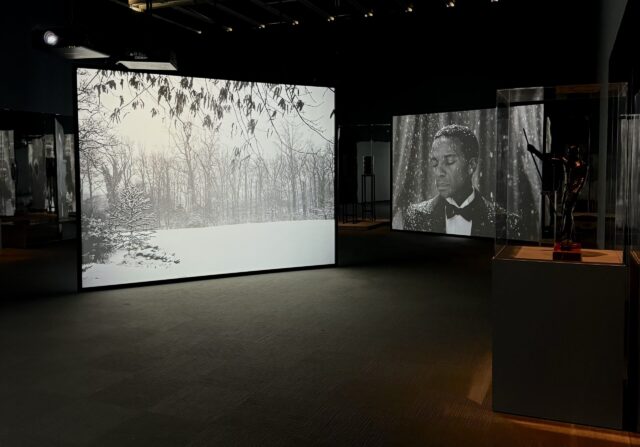
Why: The exhibit of the year thus far is the Met’s “The Harlem Renaissance and Transatlantic Modernism,” an eye-opening collection of more than 160 paintings, sculptures, photographs, films, and ephemera from the “New Negro” movement in Harlem between the 1920s and 1940s. Featuring works by Horace Pippin, Charles Alston, Aaron Douglas, Jacob Lawrence, William H. Johnson, Winold Reiss, Augusta Savage, Hale Woodruff, James Van Der Zee, and others — alongside pieces by Henri Matisse, Edvard Munch, Chaim Soutine, Pablo Picasso, and more to provide context — the show is divided into such sections as “The Thinkers,” “Everyday Life in the New Black Cities,” “Portraiture and the Modern Black Subject,” “Debate and Synthesis: African and Western Aesthetics,” “A Language of Artistic Freedom,” “Cultural Philosophy and History Painting,” “European Modernism and the International African Diaspora,” “Luminaries,” “Nightlife,” “Family and Society,” and “Artist and Activist.”

On April 27, the Met will host “The Harlem Renaissance and Transatlantic Modernism: A Creative Convening,” a free, all-day symposium consisting of live performances, lectures, and conversations with an outstanding lineup of artists, authors, educators, curators, museum directors, and other experts. The full schedule is below.

“Art must discover and reveal the beauty which prejudice and caricature have obscured and overlaid,” Alain Locke, who is featured prominently in the exhibition, explained in The New Negro in 1925. “All vital art discovers beauty and opens our eyes to beauty that previously we could not see.”

The revelation of the show is the little-known Archibald J. Motley Jr., a painter of extraordinary quality who immerses visitors in his dramatic scenes bursting with life; among his striking canvases on view are Jockey Club, Dans la rue, Blues, Cocktails, and Black Belt. He even gets his own section, “The New Negro Artist Abroad: Motley in Paris.”

Archibald J. Motley Jr., Black Belt, oil on canvas, 1934 (Hampton University Museum / courtesy the Chicago History Museum. © Valerie Gerrard Browne)

“We younger Negro artists who create now intend to express our individual dark-skinned selves without fear or shame. If white people are pleased we are glad. If they are not, it doesn’t matter. We know we are beautiful. And ugly too,” Langston Hughes wrote in 1926. “If colored people are pleased we are glad. If they are not, their displeasure doesn’t matter either. We build our temples for tomorrow, strong as we know how, and we stand on top of the mountain, free within ourselves.”

Be sure not to miss the final room, which contains Romare Bearden’s monumental 1971 six-panel Harlem tribute The Block, its own temple for tomorrow.

Saturday, April 27
Opening Performance: The National Jazz Museum in Harlem House Band led by Christopher McBride, 10:00

Welcome and Introduction, with Max Hollein, Heidi Holder, and Denise Murrell, 10:35

Keynote, by Isabel Wilkerson, 10:45

Session I
Presentations: Harlem as Nexus, with Emilie Boone, Rhea L. Combs, Ego Ahaiwe Sowinski, and Richard J. Powell, 11:30

Session II
Conversation: Legacies of Harlem on My Mind, with Bridget R. Cooks and Lowery Stokes Sims (virtually), moderated by Denise Murrell, 2:00

Conversation: Visioning the Future — The Collections of Historically Black Colleges and Universities, with Kathryn E. Coney, Jamaal Sheats, Danille Taylor, and Vanessa Thaxton-Ward, moderated by Joy Bivins, 3:00

Session III
Conversation: New Renaissance — Harlem Today, with Jordan Casteel, Anna Glass, and Sade Lythcott, moderated by Thelma Golden, 4:30

Reading, by NSangou Njikam, 5:30

Closing Remarks, by Denise Murrell, 5:45

UNCROPPED

Photojournalist James Hamilton is the subject of fascinating documentary (photo by Jody Caravaglia)

UNCROPPED (D. W. Young, 2023)
IFC Center
323 Sixth Ave. at West Third St.
Opens Thursday, April 25
212-924-7771
www.ifccenter.com
www.uncroppedfilm.com

The centerpiece of this year’s fourteenth annual DOC NYC festival was the world premiere of D. W. Young’s warm and lovely Uncropped, now opening theatrically April 25 at IFC Center. The film is as gentle and unassuming as its subject, photographer James Hamilton, who should be a household name. But fame and fortune are clearly not the point for Hamilton, who grew up in Westport, Connecticut, and didn’t own his own camera until he was twenty. He’s lived in the same cramped Greenwich Village apartment since 1966 and has little online presence, especially when compared to several other photographers named James Hamilton.

However, he will take part in several IFC Q&As this week, with Young, journalist Kathy Dobie, and moderator Joe Conason on Thursday at 6:45, with Young and moderator Amy Taubin on April 26 at 6:50, and with Young, Sylvia Plachy, and moderator Jeffrey Henson-Scales at the 6:50 screening on April 27.

“James’s work is refreshingly devoid of ego,” Sonic Youth cofounder Thurston Moore says in the film, letting out a laugh. “Let’s put it that way.”

The soft-spoken, easygoing Hamilton notes, “My whole career was all about having fun.”

And what fun it’s been.

Patti Smith and Tom Verlaine are among the many famous and not-so-famous people photographed by James Hamilton (photo by James Hamilton)

Hamilton got his start by forging a press pass to gain entry to the Texas International Pop Festival in 1969 and used the shots to get a staff job at Crawdaddy magazine. He later took pictures for the Herald, Harper’s Bazaar, the Village Voice, New York magazine, the London Times, and the New York Observer. He photographed rock stars and fashion icons; joined with print journalists to cover local, national, and international news events, including wars; shot unique behind-the-scene footage on such film sets as Wes Anderson’s The Royal Tenenbaums, Bill Paxton’s Frailty, and George A. Romero’s Knightriders; and captured life on the streets of New York City and elsewhere.

Among the people Young talks to are journalists Conason, Dobie, Alexandra Jacobs, Michael Daly, Thulani Davis, Richard Goldstein, and Mark Jacobson, editors Eva Prinz and Susan Vermazen, and photographers Plachy and David Lee. Young, who also edited the film and produced it with Judith Mizrachy, cuts in hundreds of Hamilton’s photos, which run the gamut from celebrities, politicians, and musicians to business leaders, kids playing, and brutal war scenes, accompanied by a jazzy score by David Ullmann, performed by Ullmann, Vincent Sperrazza, and others.

Hamilton, who has never been a fan of being interviewed, sits down and chats with Plachy, who shares fabulous stories of their time at the Voice; journalist and close friend Jacobson, who Hamilton took pictures for on numerous adventures; Conason, who discusses their transition from the Voice to the Observer; Dobie, who gets personal; and Prinz and Moore together. “We never crop James Hamilton’s photographs,” Prinz points out, raving about his remarkable eye for composition.

Uncropped also serves as an insightful document of more than fifty years of New York City journalism, tracing the beginnings of underground coverage to today’s online culture where professional, highly qualified, experienced writers and photographers are having trouble getting published and paid. But through it all, Hamilton has persevered.

in his previous film, The Booksellers, Young focused on bibliophiles who treasure physical books as works of art even as the internet changes people’s relationships with books and how they read and purchase them. One of the experts Young meets with is Nancy Bass Wyden, owner of the Strand, an independent bookstore founded in 1927 and still hanging on against Amazon, B&N, and other chains and conglomerates.

Near the end of Uncropped, Young shows Hamilton and Dobie perusing the outdoor stacks of cheap books at the Strand, dinosaurs still relishing the perhaps-soon-to-be-gone days of print but always in search of more fun.

[Mark Rifkin is a Brooklyn-born, Manhattan-based writer and editor; you can follow him on Substack here.]