this week in lectures, signings, panel discussions, workshops, and Q&As

MY FIRST FILM FEST: WHERE THE WILD THINGS ARE

WHERE THE WILD THINGS ARE

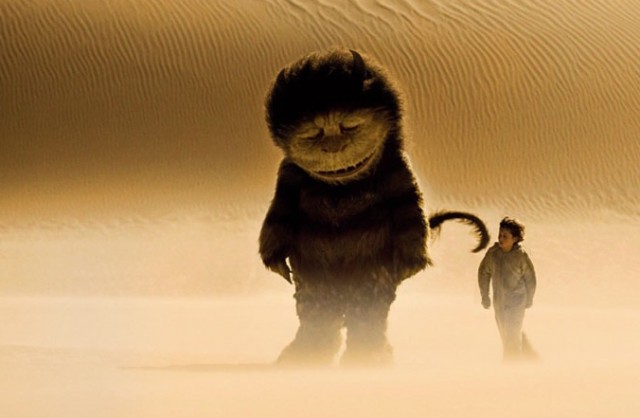
Carol (voiced by James Gandolfini) and Max (Max Records) discuss life in Spike Jonze’s inventive live-action version of WHERE THE WILD THINGS ARE

WHERE THE WILD THINGS ARE (Spike Jonze, 2009)
Film Society of Lincoln Center, Walter Reade Theater
165 West 65th St. at Amsterdam Ave.
Sunday, November 6, 9:00
Series runs November 3-8
212-875-5601
www.filmlinc.org

The endlessly inventive Spike Jonze (Being John Malkovich, Adaptation.) has done the seemingly impossible, expanding Maurice Sendak’s classic 1963 children’s book, Where the Wild Things Are, into a fun and fantastical feature-length film. Written by Jonze and Dave Eggers (A Heartbreaking Work of Staggering Genius), the movie uses the ten sentences of the book and Sendak’s magical characters and transforms them into a world of wonder. Acting out after his sister’s friends crush his igloo and his divorced mother (Catherine Keener) ignores him in favor of a new boyfriend (Mark Ruffalo), nine-year-old Max (Max Records) runs away and sails across the ocean, landing on a faraway island where seven giant monsters live. In search of a leader, they name Max king, but he gets more than he bargained for as the ruler of the cynical Judith (voiced by Catherine O’Hara), the dumpy Ira (Forest Whitaker), the independent KW (Lauren Ambrose), the mysterious Bull (Michael Berry Jr.), the sad sack Alexander (Paul Dano), the dependable Douglas (Chris Cooper), and, most importantly, the manic-depressive Carol (James Gandolfini).
WHERE THE WILD THINGS ARE

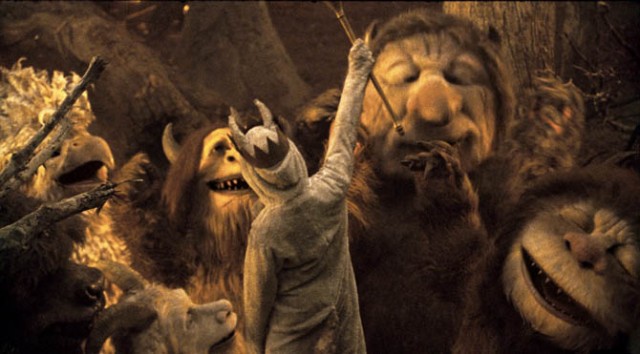
Max becomes king of the forest in cinematic adaptation of Maurice Sendak’s classic bedtime story

Each character represents a different part of Max, a developing emotion that he must learn to deal with as he grows up. He is immediately drawn to Carol, whom he first sees destroying the group’s small, makeshift homes, echoing Max’s feelings about his own family situation. Max’s relationship with Carol — himself in the midst of a breakup with KW — is the heart of the story, as Carol goes from one extreme to another, at one point bouncing around the forest with sheer glee, then snuggling up with everyone in a warming group sleep, and finally turning into a dangerous ogre. As Jonze has pointed out, Wild Things, which received the full blessing of Sendak, is not necessarily a movie for children but about childhood. It beautifully captures a child’s innate sense of adventure and imagination while also showing that choices come with consequences. Fans of the book will be amazed at how well Jonze depicts the Wild Things themselves, which come alive as if they just jumped right out of the pages of the book; actors (not the voice-over artists) are in the costumes, their faces digitally manipulated by CGI effects, but they feel as real as they did when your mother first read you the enchanting story while tucking you in your bed. Where the Wild Things Are is screening November 6 at 9:00 at the Walter Reade Theater as part of the inaugural Film Society of Lincoln Center series “My First Film Fest,” which consists of thirteen films that form a first film festival for young moviegoers, from Hayao Miyazaki’s My Neighbor Totoro and Nausicaä of the Valley of the Wind to Charlie Chaplin’s Modern Times and Claude Nuridsany and Marie Pérennou’s Microcosmos, in addition to Yared Zeleke’s Lamb, followed by a Q&A with Zeleke; the New York premiere of Émilie Deleuze’s Miss Impossible, followed by a Q&A with Deleuze; the North American premiere of Hubert Viel’s Girls in the Middle Ages; and a sneak preview of Mike Mitchell and Walt Dohrn’s Trolls. Although the intent is to have kids “remember their first film festival,” several of the screenings take place at six o’clock and later, which might not be appropriate for younger children, the intended audience for most of these tales.
POETIC AND POLITICAL — THE CINEMA OF RABAH AMEUR-ZAÏMECHE: ADHEN

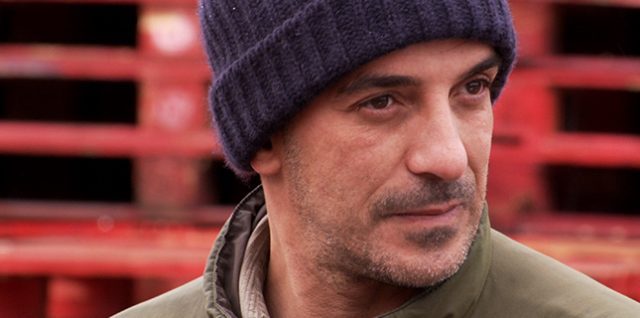
Rabah Ameur-Zaïmeche will be at FIAF on November 1 to screen and discuss ADHEN, which he directed, cowrote, and stars in

Rabah Ameur-Zaïmeche will be at FIAF on November 1 to screen and discuss ADHEN, which he directed, cowrote, and stars in

CINÉSALON: ADHEN (DERNIER MAQUIS) (Rabah Ameur-Zaïmeche, 2008)
French Institute Alliance Française, Florence Gould Hall
55 East 59th St. between Madison & Park Aves.
Tuesday, November 1, $13, 4:00 & 7:30
Series continues Tuesdays through December 13
212-355-6100
www.fiaf.org

FIAF celebrates the career of French-Algerian indie writer, director, actor, and producer Rabah Ameur-Zaïmeche in its November-December CinéSalon program “Poetic and Political: The Cinema of Rabah Ameur-Zaïmeche.” The seven-week series will include all five of his films, realistic meditations on immigration, family, history, religion, and rebellion made between 2001 and 2015. The festival begins November 1 with 2008’s gentle and patient slice-of-life drama, Adhen. Christian Milia-Darmezin stars as Titi, a new Muslim convert who works at a small French company that repairs shipping pallets. Titi is teased by some of his fellow workers (Serpentine Kebe, Abel Jafri, Mamadou Koita, Sylvain Roume as Giant, Salim Ameur-Zaïmeche as Bashir) because he is not circumcised, so the not-very-bright Titi takes scissors to himself, landing him in the hospital. Meanwhile, the boss, Mao (Rabah Ameur-Zaïmeche), sets up a mosque for his employees, believing it will be good for morale, although he threatens to cut their bonuses if they don’t attend prayers every Friday. Growing worker unrest over low pay and long hours increases when Mao doesn’t let them participate in the selection of the Iman (Larbi Zekkour) and the mechanics start talking about unionizing.

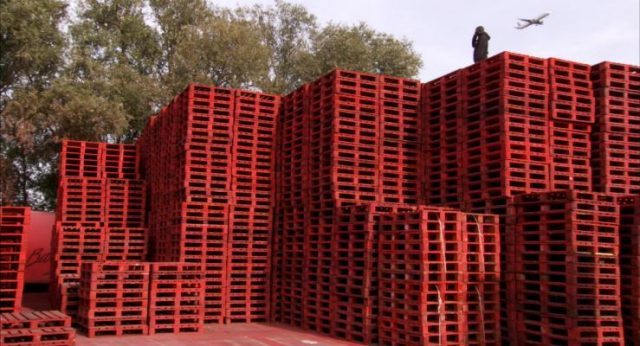
A muezzin (Serpentine Kebe) calls fellow workers to prayer in ADHEN

A muezzin (Serpentine Kebe) calls fellow workers to prayer in Rabah Ameur-Zaïmeche’s ADHEN

Adhen is beautifully shot by cinematographer Irina Lubtchansky, who lets her camera linger at the end of scenes, moving away from the characters and slowly turning up from the stacks and stacks of red pallets to a lightly cloudy bright blue sky or from a conversation about raises to trees blowing in the wind on the shore of a flowing river. The pallets are piled so high they are like physical barriers to the workers’ success, except when the muezzin (Kebe) climbs to the top and calls everyone to prayer, as if religion is the only answer to their problems. Later, when Giant encounters a trapped animal he thinks is a huge rat, the parallel between the frightened creature and the employees is palpable. Ameur-Zaïmeche, who cowrote the script with Louise Thermes, even gets away with such overt metaphors as a boss named Mao dealing with red pallets that transport commercial goods. He maintains a slow, easygoing pace throughout, regardless of where the emotions of the characters and story lead, from funny and proud to angry and resentful. Winner of the Special Jury Prize at the Dubai International Film Festival, Adhen is screening November 1 at 4:00 and 7:30; the later show will be followed by a Q&A with Ameur-Zaïmeche, moderated by Algerian-born French author and NYU visiting professor Zahia Rahmani. “Poetic and Political: The Cinema of Rabah Ameur-Zaïmeche” continues Tuesday nights through December 13 with Ameur-Zaïmeche’s Wesh Wesh, Back Home (Bled Number One), Smugglers’ Songs, and Story of Judas in addition to an election-night Director’s Choice screening of Stanley Kubrick’s Dr. Strangelove or: How I Learned to Stop Worrying and Love the Bomb, followed by a reception with live election results.

FESTIVAL ALBERTINE

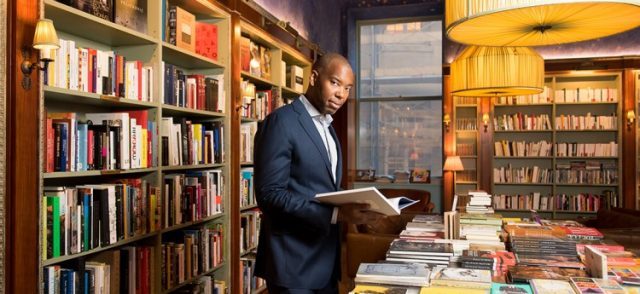
Ta-Nehisi Coates is the curator of third annual Festival Albertine

National Book Award winner Ta-Nehisi Coates is curator of third annual free Festival Albertine

Albertine Books
972 Fifth Ave. between 78th & 79th Sts.
November 2-6, free
www.albertine.com

The third annual Festival Albertine, a sociocultural exploration of identity in the United States and France, will take place November 2-6, featuring more than two dozen artists, writers, choreographers, lawyers, sociologists, and curators participating in seven free events at Albertine, a project of the Cultural Services of the French Embassy in the Payne Whitney mansion on Fifth Ave. at Seventy-Ninth St. This year’s festival, with a focus on changing labels, immigration, and the politics of race, is curated by Ta-Nehisi Coates, a writer for the Atlantic who won the National Book Award for what might very well be the most important nonfiction work of the last decade, Between the World and Me. Referencing James Baldwin’s 1972 memoir, No Name in the Street — Baldwin, like Coates, lived in both New York and Paris — Coates explained in a statement, “Baldwin was drawing a not-so-subtle comparison with his own identity as a black American. He was also doing something more — asserting the labels we use to ascribe identity are situational. The words ‘black,’ ‘Arab,’ ‘Muslim,’ ‘American,’ and ‘French’ are not bone-deep and immutable but categories that have no meaning outside of history and events. There is something both sanguine and challenging in Baldwin’s view. It proposes that conflicts between cultures are not inevitable but the result of policies and decisions. But it also puts responsibility on people, themselves, to make the requisite changes in policy.” Coates also points out the role the arts can play in politics, particularly during this fierce campaign season, explaining, “Art shapes the imagination and outlines the sense of what is possible. It is art that attacks and interrogates our labels and chosen names, and reduces us to our common humanity.” Among the wide range of participants are Kehinde Wiley, Jacqueline Woodson, Benjamin Millepied, Darryl Pinckney, Thelma Golden, David Simon, Catherine Meurisse, Rabah Ameur-Zaïmeche, Scholastique Mukasonga, Chris Jackson, Denis Darzacq, and Zahia Rahmani. Admission is free, with no RSVP necessary. If you can’t make it to a specific discussion, you can livestream it here.

Wednesday, November 2
“When Will France Have Its Barack Obama?,” with Jelani Cobb, Iris Deroeux, Pap Ndiaye, and Benjamin Stora, moderated by Ta-Nehisi Coates, 7:30

Thursday, November 3
“From the Margins to the Mainstream: High Art vs. Low Art in France and the U.S.,” with Kelly Sue Deconnick, D’ de Kabal, Catherine Meurisse, and David Simon, moderated by Ta-Nehisi Coates, 7:30

Friday, November 4
“Blacklisted: From Hollywood to Paris,” with Rabah Ameur-Zaïmeche, Claire Diao, and Nina Shaw, moderated by Kamilah Forbes, 7:30

Saturday, November 5
“Europe and America in the Black Literary Imagination,” with Laurent Dubois, Scholastique Mukasonga, Maboula Soumahoro, and Darryl Pinckney, moderated by Chris Jackson, 5:00

“Art, Race & Representation,” with Denis Darzacq, Kehinde Wiley, Thomas Lax, and Nacira Guénif-Souilamas, moderated by Thelma Golden, 7:30

Sunday, November 6
“Every Name in the Street,” with Raphaël Confiant, Zahia Rahmani, Claudia Rankine, and Jacqueline Woodson, moderated by Adam Shatz, 3:00

“Race, Equity, and Otherness in Ballet and Society,” with Virginia Johnson and Benjamin Millepied, moderated by Jennifer Homans, 5:30

CORNELIA PARKER: TRANSITIONAL OBJECT (PSYCHOBARN)

(photo by twi-ny/mdr)

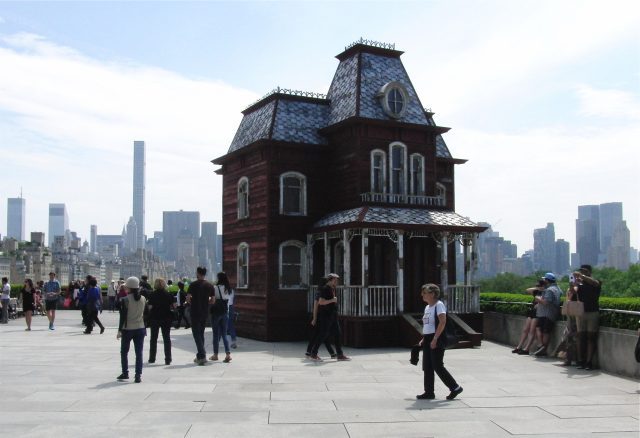
Cornelia Parker has added “Transitional Object (PsychoBarn)” to New York City skyline on Met roof (photo by twi-ny/mdr)

THE ROOF GARDEN COMMISSION
Metropolitan Museum of Art, Iris and B. Gerald Cantor Roof Garden
1000 Fifth Ave. at 82nd St.
Daily through October 31, recommended admission $12-$25
MetFridays: Friday, October 28, 6:30
212-535-7710
www.metmuseum.org
rooftop slideshow

Don’t let Halloween pass by without a visit to the Metropolitan Museum of Art. In her Guardian nomination for 2016 Visionary, British artist Cornelia Parker hinted at her upcoming Met Roof Garden commission, saying, “I always think of New York as Europe on steroids, so I’m celebrating American culture, but through European eyes. I’ll make something that adds to the view.” Her site-specific installation went up in April, and it will remain as a temporary addition to the view of the New York City skyline visible from the roof through, appropriately enough, Halloween. “Transitional Object (PsychoBarn)” is a multilayered construction that melds fiction with reality, a soothing work that is just the right amount of twisted. Using materials obtained from a dismantled Dutch red barn in Schoharie in Upstate New York, Parker has re-created the facade of the creepy Victorian house from Alfred Hitchcock’s Psycho, where Norman Bates (Anthony Perkins) lived with his mother. The Psycho house, which itself was just a facade on a Hollywood studio set, was inspired by Edward Hopper’s “House by the Railroad,” so Parker, who was raised on a farm in rural Cheshire, where there were black barns, is referencing American pop culture, art history, and her own personal story. She’s also combining a kind of good and evil duality; barn raisings, for example, are a joyous community event, while the Psycho house evokes gloom and doom, murder and madness.

(photo by twi-ny/mdr)

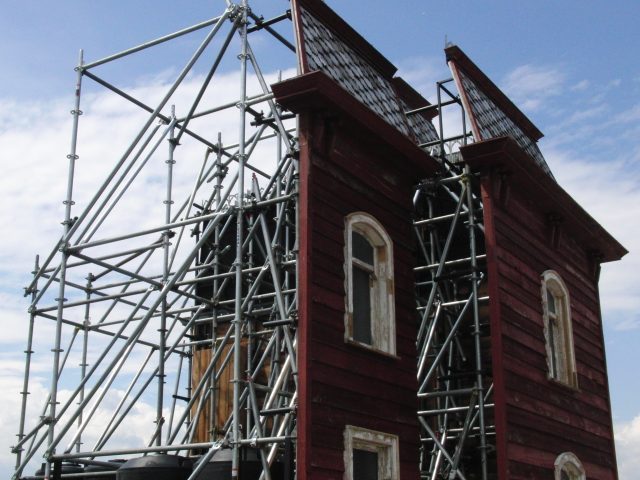
Cornelia Parker opens back of installation to reveal inner psyche of structure (photo by twi-ny/mdr)

As if revealing the twenty-eight-foot-tall work’s inner psyche, Parker keeps the back open so visitors can see the scaffolding and heavy water tanks that keep the facade from collapsing, which relates to her new artist book, Verso, in which she explores the front and back of button holes. “Transitional Object” is named for the medical term for a security blanket, an item that brings children comfort as they grow up and spend less time with their mother — except maybe for Norman Bates, who created a rather unique transitional object for himself. The structure blends in well with the city skyline, which features many a building that just might be haunted, while also offering fun-house-style reflections in the Met’s mirrored wall by the rooftop bar. Parker, who has previously placed Tilda Swinton in a glass case at the Serpentine Gallery for “The Maybe” and blew up a garden shed for “Cold Dark Matter: An Exploded View,” will be at the Met on October 28 at 6:30 to talk about the project as part of the MetFridays presentation “Artists on Artworks — Cornelia Parker,” which is free with museum admission and is first-come, first-served; stickers will be handed out twenty minutes before the event. For more Halloween joy, MetLiveArts is screening the Peanuts holiday classic It’s the Great Pumpkin, Charlie Brown on October 29 at 11:00 am and 1:00 pm, with live music by Rob Schwimmer and his ensemble, followed by costume parades.

BEYOND THE INGÉNUE: ADIEU PHILIPPINE

ADIEU PHILIPPINE

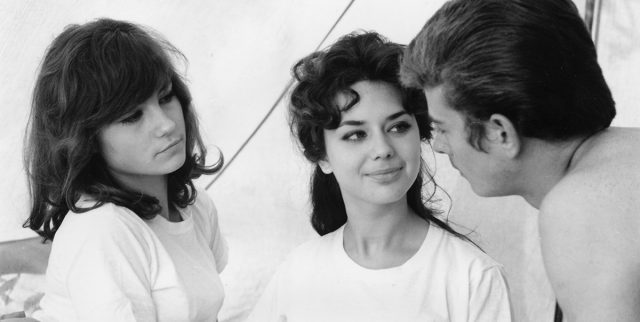
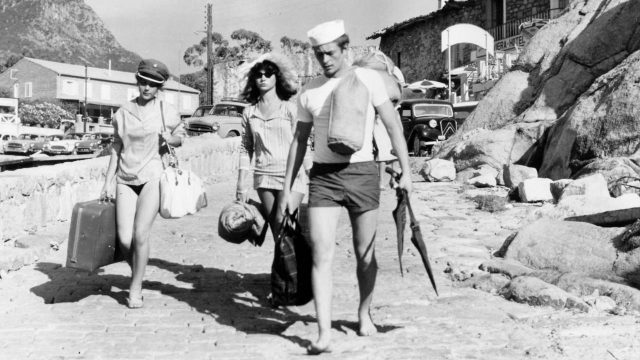
Liliane (Yveline Céry), Juliette (Stefania Sabatini), and Michel (Jean-Claude Aimini) have some wild adventures in ADIEU PHILIPPINE

CINÉSALON: ADIEU PHILIPPINE (Jacques Rozier, 1962)
French Institute Alliance Française, Florence Gould Hall
55 East 59th St. between Madison & Park Aves.
Tuesday, October 25, $14, 4:00 & 7:30
212-355-6100
www.fiaf.org

FIAF’s two-month CinéSalon series “Beyond the Ingénue” comes to a close October 25 with one of the lesser-known French New Wave classics, Jacques Rozier’s shamefully seldom screened Adieu Philippine. Rozier’s first film is a freewheeling adventure as Michel (Jean-Claude Aimini), a young man working in a television studio, cavorts with a pair of eighteen-year-old best friends, Juliette (Stefania Sabatini) and Liliane (Yveline Céry), while waiting to be called up to serve in the Algerian War. Rozier opens the film by taking viewers into the studio, where they are shooting a lively jazz performance by French violinist Maxim Saury and his band, the bouncy rhythm meeting the behind-the-scenes chaos. Pretending to be more important than he really is, Michel invites Juliette and Liliane to come in, and soon the trio is hitting cafés and nightclubs, camping on the beach, and trying to hook up with would-be filmmaker Pachala (Vittorio Caprioli). But what started out as fun gets somewhat more serious as jealousy creeps in and the war intervenes.


ADIEU PHILIPPINE

A trio of young French dreamers fight ennui and prepare for war in Jacques Rozier’s seldom-screened ADIEU PHILIPPINE

Adieu Philippine is an exhilarating tale of teenage freedom, of youth taking advantage of all life has to offer no matter one’s circumstance, fighting off ennui with a mad desire to just have fun. Rozier, who wrote the screenplay with Michèle O’Glor, allowed the cast of mostly nonprofessional actors to improvise and dubbed in dialogue later, resulting in less-than-stellar syncing that took two years in postproduction but thankfully gets lost in all the wild abandon. In his debut feature, cinematographer René Mathelin (Pardon Mon Affaire, The Tall Blond Man with One Black Shoe) shoots guerrilla-style in black-and-white, a kind of cinéma vérité in which passersby and people in the background often look at the camera, wondering what is going on. Adieu Philippine shares a soul and spirit with the early work of such auteurs as Jean-Luc Godard (1960’s Breathless), a friend and supporter of Rozier’s; American-born French photographer and documentarian William Klein (1958’s Who Are You, Polly Maggoo?), and François Truffaut, whose similarly themed Jules et Jim was also released in 1962, but Adieu Philippine has a charm all its own. Rozier, who turns ninety on November 10, would make only a handful of other features, including 1985’s Maine-Ocean and 2001’s Martingale. A new 35mm print of Adieu Philippine is being shown at FIAF on October 25 at 4:00 and 7:30; the later screening will be introduced by New York Review of Books editor Madeleine Schwartz.

TARA DEAL READING AND BOOK SIGNING

tara-deal

Who: Tara Deal
What: Reading and book signing
Where: Sideshow Gallery, 319 Bedford Ave., Brooklyn
When: Tuesday, October 25, free with advance RSVP (info@causeycontemporary.com) by October 23, 6:30
Why: New York City-based writer Tara Deal will be at Williamsburg’s Sideshow Gallery on October 25 for a reading and signing of her latest book, That Night Alive. Winner of the 2016 Novella Prize from Miami University Press, the novella mixes fiction and memoir, poetry and prose as a crypto-reporter goes back in time, from her last day alive on earth. Deal, who was born in Georgia and raised in South Carolina, has previously written the novella Palms Are Not Trees After All, and her short stories and poems can be found in numerous publications. In conjunction with Causey Contemporary, the gallery is currently showing “Persons of Interest,” featuring new portraits by painter, printmaker, costume designer, and voodoo doll maker Carri Skoczek, who explains in her artist statement, “My work has been an exploration in expressing female sexuality and allure as a vehicle of power.”

CHINATOWN IS NOT FOR SALE

Liz Moy Chinatown Gallery Map, 2016

Liz Moy’s 2016 “Chinatown Gallery Map” reveals a changing community

Who: Peter Kwong, Liz Moy, Margaret Lee, Juan Puntes, Betty Yu, Julien Terrell
What: Town hall discussion about gentrification and the arts in Chinatown
Where: Artists Space Books & Talks, 55 Walker St.
When: Saturday, October 22, free, 7:00
Why: A group of gallery owners and local activists will be gathering on October 22 at Artist Space on Walker St. for the special panel discussion “Chinatown Is Not for Sale,” in which they will delve into the following issue: “There are currently over one hundred galleries occupying Chinatown, Two Bridges, and the Lower East Side. Can a neighborhood be both a holdout to gentrification and the new art enclave??” Sponsored by Artists Space, Chinatown Art Brigade, and Decolonize This Place, the town hall discussion features Peter Kwong, Liz Moy, Margaret Lee, Juan Puntes, Betty Yu, and moderator Julien Terrell examining the changes downtown, most of which have taken place in the last three years as rents rise and art galleries, luxury housing, and hotels move in. The event is the second in Chinatown Art Brigade’s series of public conversations that began in July with “Chinatown: New York’s Newest Gallery Scene?”