this week in lectures, signings, panel discussions, workshops, and Q&As

THE DEATH OF THE LAST BLACK MAN IN THE WHOLE ENTIRE WORLD AKA THE NEGRO BOOK OF THE DEAD

Who gived birth tuh this. I wonder,” Black Man with Watermelon (Daniel J. Watts) says in searing Suzan-Lori Parks play at the Signature (photo © 2016 Joan Marcus)

“Who gived birth tuh this. I wonder,” Black Man with Watermelon (Daniel J. Watts) says in searing Suzan-Lori Parks play at the Signature (photo © 2016 Joan Marcus)

The Pershing Square Signature Center
The Alice Griffin Jewel Box Theatre
480 West 42nd St. between Tenth & Eleventh Aves.
Tuesday – Sunday through December 18, $30 through December 4, $35-$65 after
212-244-7529
www.signaturetheatre.org

As the audience enters the Alice Griffin Jewel Box Theatre to see the Signature revival of Suzan-Lori Parks’s The Death of the Last Black Man in the Whole Entire World AKA the Negro Book of the Dead, a man in overalls is onstage, sitting in a chair, his bare feet on the gravel, arms dangling at his side, his head, face covered by a hat, slumped over, as if dead. Behind him is a long, diagonal tree branch and an electric chair on a cantilevered porch. Most of the people who filter in take a quick look at the stage before continuing ongoing conversations, paging through the Playbill, or checking their cell phones. Meanwhile, the dead man just sits there, mostly unnoticed, the lengthy title of the play projected in large block letters on the back wall. It’s an apt metaphor for the show itself, first presented in 1990 at BACA Downtown in Brooklyn and now extremely relevant again amid the Black Lives Matter movement and the shooting of so many unarmed black men, women, and children by police. The searing eighty-minute production begins with an overture in which nine spirit characters, each representing a different African American archetype/stereotype, slowly enter Riccardo Hernandez’s set, carrying a watermelon with them. During the overture, they introduce themselves by speaking their signature lines, which also serve as their names: Lots of Grease and Lots of Pork (Jamar Williams), Queen-Then-Pharaoh Hatshepsut (Amelia Workman), And Bigger and Bigger and Bigger (Reynaldo Piniella), Prunes and Prisms (Mirirai Sithole), Ham (Patrena Murray), Voice on Thuh Tee V (William DeMeritt), Old Man River Jordan (Julian Rozzell), Yes and Greens Black-Eyed Peas Cornbread (Nike Kadri), and Before Columbus (David Ryan Smith). Then Black Woman with Fried Drumstick (Roslyn Ruff) sits in the rocking chair next to the dead man, Black Man with Watermelon (Daniel J. Watts), and says, “Yesterday today next summer tomorrow just uh moment uhgoh in 1317 dieded thuh last black man in thuh whole entire world. Uh! Oh. Dont be uhlarmed. Do not be afeared. It was painless. Uh painless passin. . . . Why dieded he huh? Where he gonna go now that he done dieded? Where he gonna go tuh wash his hands?” Moving around Riccardo Hernandez’s set in highly stylized motion choreographed by Raja Feather Kelly and in representative costumes by Montana Blanco, the characters talk in a poetic and rhythmic language about the world being flat, the “saint mines,” the civil rights movement, dragons, and freedom over the course of four acts called panels — “Thuh Holy Ghost,” “First Chorus,” “Thuh Lonesome 3Some,” and “Second Chorus” — that unfold in a nonlinear and repetitive manner. “The black man bursts into flames. The black man bursts into blames. Whose fault is it?” asks Black Man with Watermelon, who dies over and over again. “Figuring out the truth put them in their place and they scurried out to put us in ours,” Before Columbus says.

(photo © 2016 Joan Marcus)

THE DEATH OF THE LAST BLACK MAN IN THE WHOLE ENTIRE WORLD . . . features a cast of familiar black archetypes (photo © 2016 Joan Marcus)

Pulitzer Prize winner Parks (Topdog/Underdog, Father Comes Home from the Wars [Parts 1, 2 & 3]) sets the play “here,” in “the present,” and it’s frightening how that could fit from the discovery of America to today and beyond, particularly given the current state of the country, so mired in systemic racism. When Black Man with Watermelon says, again and again, “Cant breathe,” and gasps, it is impossible not to think of Eric Garner, but those lines were written more than twenty-five years ago. Director Lileana Blain-Cruz (War, Red Speedo) maintains a mesmerizing rhythmic flow to the abstract narrative, which was inspired by the Stations of the Cross and free jazz. The cast is outstanding, portraying stock characters who are far more complex than mere stereotypes and reach deep into black history. For example, And Bigger and Bigger and Bigger is an expansion of Bigger Thomas from Richard Wright’s Native Son, Queen-Then-Pharaoh Hatshepsut is based on the second Egyptian female pharaoh, and Ham is a conglomeration of the son of Noah and the old minstrel song “Hambone, Hambone, Have You Heard?” Front and center are Watts (Hamilton, The Color Purple) and August Wilson veteran Ruff (Fences, Familiar), who embody the desperation blacks have suffered for centuries. Yes and Greens Black-Eyed Peas Cornbread demands, “You should write it down because if you dont write it down then they will come along and tell the future that we did not exist. You should write it down and you should hide it under a rock. You should write down the past and you should write down the present and in what in the future you should write it down.” And that’s precisely what Parks has done although, unfortunately, it appears to be a story with no end. (Blanco will discuss her costume design before the November 16 performance, the shows on November 17, 22, and 29 will be followed by a talkback with members of the cast and creative team, and there will be a cocktail hour before the December 1 show. Parks’s Signature residency continues in April 2017 with Venus followed by The Red Letter Plays: In the Blood and Fucking A in the 2017-18 season.)

JEWISH COMIC CON

jewish-comic-con

Congregation Kol Israel
603 St. Johns Pl. at Franklin Ave.
Sunday, November 13, Bagel one-day pass $15, 9:00 am – 6:30 pm, Challah preview pass (includes Saturday night), $20
jewishcomiccon.org

Many of the greatest comic book artists are Jewish, so it was only a matter of time before someone started Jewish Comic Con, making its debut Sunday, November 13, preceded by a preview night November 12 (with a live auction and a dramatic reading by Jeff Newelt aka JahFurry of work by Harvey Pekar). The con announces that it is “celebrating our comic book legacy,” and what a legacy it is. Started by Fred Polaniecki and Fabrice Sapolsky, the event takes place in Congregation Kol Israel, the oldest continuously running Orthodox synagogue in Brooklyn. All proceeds will go to restoring and preserving the historic landmark, which was built in 1924. Among the guests are Dean Haspiel, Josh Neufeld, Danny Fingeroth, Ariel Schrag, Arie Kaplan, Gareb Shamus, Joshua H. Stulman, Jordan Gorfinkel, and Will Torres. Advance passes are sold out, but limited tickets will be available at the door on a first-come, first-served basis. There will be kosher food for purchase, and, since this is a working shul, the morning service will be held at 8:00 and the afternoon service at 4:00. Although you are encouraged to come in costume, it is a synagogue, so the organizers ask that you be respectful and tone down the sex and violence. Below are the special programs.

Heroes & Faith, with Darren Vincenzo, Rabbi Cary Friedman, and others, moderated by Jordan Gorfinkel, 9:00 am

Eisner, Kirby, Siegel, Etc.: The Jewish Roots of Comics, with Julian Voloj and others, moderated by Arie Kaplan and/or Danny Fingeroth, 10:00

Spotlight on Mort Gerberg, with Mort Gerberg, moderated by Danny Fingeroth, 11:00 am

Breaking into Comics the Chutzpah Way!, with Danny Fingeroth, Dean Haspiel, and Fabrice Sapolsky, moderated by Arie Kaplan, 12 noon

The Mezuzah on the Batcave Door: Jewish Elements of Batman, with Jordan Gorfinkel and Sholly Fisch, moderated by Arie Kaplan and/or Danny Fingeroth, 1:30

Indie Voices: Past, Present & Future, with Ariel Schrag, Dean Haspiel, and Josh Neufeld, moderated by Arie Kaplan and/or Danny Fingeroth, 2:30

Jewish Heroes & Villains, with Greg Pak and Fabrice Sapolsky, moderated by Arie Kaplan and/or Danny Fingeroth, 4:30

Cartoonists Against the Holocaust, with Craig Yoe and Rafael Medoff, illustrated panel discussion and Q&A, 5:30

DOC NYC: OFF THE RAILS

OFF THE RAILS

Transit junkie Darius McCollum is profiled in new documentary OFF THE RAILS which has NYC premiere at DOC NYC fest on November 12 before opening at Metrograph on November 18

OFF THE RAILS (Adam Irving, 2016)
SVA Theatre
333 West 23rd St. between Eighth & Ninth Aves.
Saturday, November 12, $16-$18, 9:30
Opens November 18 at Metrograph
www.docnyc.net
www.offtherailsmovie.com

Ever since he was a child, Darius McCollum has been obsessed with mass transit. But McCollum, who was born in Brooklyn and raised in Queens, is not just another train buff. He has spent the last thirty-five years in and out of jail, imprisoned for operating trains and buses in the metropolitan area. His surprising story is told in Adam Irving’s debut feature documentary, Off the Rails. “Over the years, I have operated trains in the New York City subway system, Metro-North, the Long Island Rail Road, New Jersey Transit, and yet, I have never ever been an employee of any of these agencies,” McCollum says at the beginning of the film while putting on an MTA uniform like it was official military dress. “I feel like I’m proud, I feel I’m worthy of something, I feel like I’m a part of something,” he said about being decked out in MTA garb. McCollum doesn’t simply take the trains and buses on joyrides but follows all MTA rules and procedures, which he knows inside out. “For Darius, it was for the joy of driving the train safely. All of his crimes were victimless, there were no crashes, he would safely make all of the stops, make the announcements,” says Jude Domski, who wrote the play Boy Steals Train about McCollum. Through first-person accounts, family photos, home movies, archival footage, reenactments, and animation, McCollum is revealed to be a sweet-natured mama’s boy who has Asperger’s syndrome. “I’m really good with trains, but I can’t seem to figure out people,” he says. “And it’s hard for me to tell what someone is thinking or feeling. I get confused in social situations. I have trouble making friends.” A large but gentle man, McCollum understands the consequences of his actions but is unable to prevent himself from hopping on board and taking over when the opportunity arises. Comparing himself to Superman, McCollum explains, “His weakness is Kryptonite; my weakness is the third rail.”

OFF THE RAILS

Transit junkie Darius McCollum contemplates his future in Adam Irving’s OFF THE RAILS

Among those pointing out that McCollum has never been properly treated for his mental illness are Michael John Carley of the GRASP Asperger’s organization, psychoanalyst Michael Garfinkle, PhD, therapist Howard Irving, PhD, forensic social worker Rey Cusicanqui, and autism employment specialist Marcia Scheiner. While former assistant DA Michael Dougherty defends the city’s continued prosecution of McCollum, his new attorney, Sally Butler — who took over after McCollum’s longtime lawyer, Stephen Jackson, was indicted for fraud — has become a champion for McCollum, determined to see that justice is done and trying to get him the treatment he so obviously needs. Named Best Documentary at five film festivals, Off the Rails is a warm, intimate documentary, lovingly directed by Irving, who photographed the film, produced it with Glen Zipper, and wrote and edited it with Tchavdar Georgiev. Domski describes McCollum as “charming, affable, friendly, extremely gregarious,” and the same can be said for the film. One of the most touching parts comes when McCollum and his mother, Liz, read letters they have written to each other over the years, during long periods when they were unable to see each other in person. McCollum might be known in the press as the Public Transit Bandit, Train in the Neck, Transit Kook, and Train Thief, but Irving shows a different side of him, and maybe a different side of us in the process. Copresented by Rooftop Films, Off the Rails is screening November 12 at 9:30 at the SVA Theatre as part of the DOC NYC festival, with Irving on hand to discuss the film. It will then play November 18-24 at Metrograph, with journalist Sarah Wallace, who has interviewed McCollum, moderating a Q&A with Irving after the 7:30 show opening night. DOC NYC runs November 10-17 at IFC Center, the SVA Theatre, and Cinépolis Chelsea, consisting of more than two hundred films, workshops, panel discussions, and other events, the largest nonfiction festival in the world.

THE WATERMELON WOMAN

THE WATERMELON WOMAN

Cheryl Dunye wrote, directed, edited, and stars in THE WATERMELON WOMAN

THE WATERMELON WOMAN (Cheryl Dunye, 1996)
Metrograph
7 Ludlow St. between Canal & Hester Sts.
Opens Thursday, November 10
212-660-0312
metrograph.com

“The idea came from the real lack of information about the lesbian and film history of African American women. Since it wasn’t happening, I invented it,” Cheryl Dunye says about her 1996 debut, The Watermelon Woman, which has undergone a twentieth-anniversary 2K HD restoration that opens at Metrograph on November 10. In the film, the first feature by a black lesbian, Dunye plays herself, a twenty-five-year-old black lesbian working at a video store with her goofy best friend, Tamara (Valerie Walker). Searching for a topic to make a movie on, Cheryl becomes obsessed with an actress who played a mammy in Plantation Memories and other 1930s films. The actress was listed in the credits as the Watermelon Woman; Cheryl decides to find out more about her, going on a journey in and around her hometown of Philadelphia, discovering more and more about the actress, also known as Fae Richards, and the battle black lesbians had to fight in the early-to-mid-twentieth century. In the meantime, Cheryl begins a relationship with Diana (Guinevere Turner), a privileged white woman who has just moved into the area, mimicking what Cheryl has found out about Richards, who had an affair with white director Martha Page.

THE WATERMELON WOMAN

Diana (Guinevere Turner) and Cheryl Dunye (as herself) stars a relationship in THE WATERMELON WOMAN

The Watermelon Woman suffers from amateurish filmmaking techniques (Michelle Crenshaw was the cinematographer, while Dunye served as editor in addition to writer, director, and star), but its central issue is a compelling one, and Dunye is engaging as her onscreen alter ego. Richards (Lisa Marie Bronson) and Page (producer Alexandra Juhasz) are seen only in photographs and archival footage shot by white lesbian artist Zoe Leonard (her photography assistant was Kimberly Peirce, who went on to make Boys Don’t Cry), while Doug McKeown (The Deadly Spawn) directed the scenes from fake movies Plantation Memories and Soul of Deceit. (The photographs became an art project of its own, touring museums around the world.) The film features numerous cameos by writers, musicians, and activists, including Camille Paglia as herself, V. S. Brodie as a karaoke singer, Sarah Schulman as the CLIT archivist, David Rakoff as a librarian, and Toshi Reagon as a street singer. The Watermelon Woman is a heartfelt tribute to black lesbians by a black lesbian who is restoring one woman’s true identity as a microcosm for all black women who have had theirs taken away. The film also became part of an attempt by certain congressmen to defund the National Endowment for the Arts, which supplied a $31,500 grant to Dunye; Michigan Republican Peter Hoekstra, head of the House Education and Workforce Committee’s Subcommittee on Oversight and Investigations, singled the film out as offensive. The Watermelon Woman is also a reminder of what research was like pre-Google, a mere twenty years ago. Dunye has gone on to make such films as Stranger Inside, Black Is Blue, Mommy Is Coming, and My Baby’s Daddy, continuing her exploration of multiracial, gay, and trans culture. The Watermelon Woman opens November 10 at Metrograph; the 7:00 show that night will be introduced by Dunye, who will also take part in a postscreening Q&A. Juhasz will moderate a discussion on 1990s music and fashion with author and activist Jeffrey Marsh and DJ Bill Coleman following the 9:00 show on November 11, and Juhasz will be back for an introduction and Q&A at the 5:15 show on November 15.

TONY BENNETT IN CONVERSATION WITH SCOTT SIMON

just-getting-started

Who: Tony Bennett, Scott Simon
What: Author event
When: Monday, November 14, free, 7:00
Where: Barnes & Noble Union Square, 33 East Seventeenth St. at Union Square North, 212-253-0810
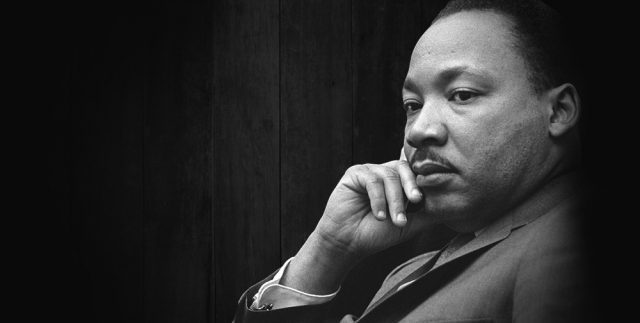
Why: Anthony Dominick Benedetto from Astoria, better known as Tony Bennett, may have turned ninety in August, but according to the title of his latest book, he’s Just Getting Started (HarperCollins, November 15, $27.99). In this follow-up to 2012’s Life Is a Gift, the ever-positive painter and crooner pays tribute to a wide range of people who have had an impact on him, including Fred Astaire, Judy Garland, Cole Porter, Amy Winehouse, Dr. Martin Luther King, Jr., Lady Gaga, and Charlie Chaplin. On November 14, Bennett will be at the Union Square Barnes & Noble, in conversation with his cowriter, NPR host Scott Simon, author of such memoirs as Home and Away and Unforgettable: A Son, a Mother, and the Lessons of a Lifetime and the novel Pretty Birds. Wristbands will be given out beginning at 9:00 am for the 7:00 pm event, for those who purchase the book at that store; Mr. Benedetto will not be personalizing books, posing for photos, or signing any memorabilia. But just to be in the same room as that voice and smile. . . .

DOC NYC: THY FATHER’S CHAIR

THY FATHER’S CHAIR

A cleaning crew has its work cut out for it in Alex Lora and Antonio Tibaldi’s THY FATHER’S CHAIR

THY FATHER’S CHAIR (Alex Lora & Antonio Tibaldi, 2015)
Cinépolis Chelsea
260 West Twenty-Third St. at Eighth Ave.
Sunday, November 13, $16-$18, 5:15
212-691-5519
www.docnyc.net

Directors Antonio Tibaldi and Alex Lora put the viewer right in the middle of twin brothers Abraham and Schrag’s desperately crowded and traumatic situation in the compulsively watchable observational documentary Thy Father’s Chair. After their parents died, the slovenly, unmarried Jewish scholars just plain stopped cleaning up after themselves, allowing newspapers, magazines, food, garbage, kitty litter, and myriad other items to pile up around them. They were not collectors hoarding valuable possessions or personal mementos; they were simply unable to organize anything or throw stuff away in their Brooklyn apartment. Only when their upstairs tenant stopped paying rent in protest, demanding they clean their place — the tenants had to deal not only with bad odors from the brothers’ apartment but with vermin as well — do they seek out assistance, hiring an Israeli man named Hanan of Home Clean Home to come and make their apartment safe and livable again. But it’s no easy task, as Abraham watches Hanan and his hazmat-suited team very carefully, continually trying to talk them out of tossing away certain items HCH insists must go; meanwhile, Schrag just moans on and on as he downs bottles of wine. (One of the only ways to tell the identical twins apart is by the wine stains on Schrag’s white shirt.) “What the hell! Nobody’s helping me,” Abraham cries out. “We are here to help you!” Hanan says. “You’re not going to help me. You’re going to tell me what to do,” Abraham replies. Later, Abraham tells Hanan, “What is it, a punishment?” Hanan responds, “It’s not punishment. I’m trying to help you; you’re not working with me.” Abraham just can’t bear to get rid of what is clearly mostly junk and garbage, including vastly outdated electronic equipment and canned food. The only item that the brothers search for that is indeed worth keeping is their megillah scroll, but that is the exception. Abraham also agonizes over his father’s favorite chair, not wanting Hanan to take it yet debating whether he is even worthy enough to sit in it. “The Torah wants everything to be clean, but unfortunately we veered from it,” he concedes. The brothers actually do understand what is going on, that their hoarding is patently absurd and dangerous, but they are powerless to stop it.

THY FATHER’S CHAIR

Documentary focuses on Brooklyn twin brothers who have serious hoarding problem

Director and cinematographer Tibaldi and director and editor Lora cast no judgment on the two men; the filmmakers work, much like the Maysles brothers did, like flies on the wall, recording the crazy things going on in this railroad apartment in Midwood for eight days. Complicating matters, Tibaldi couldn’t always get the kinds of shots he wanted, as he was physically limited as to where he could stand because of the mounds of filth. There’s no back story; we find out almost nothing about who Abraham and Schrag are and what they have done with their lives, what their hopes and dreams might have been, other than what little they reveal of themselves onscreen, which is dominated by an overwhelming fear of things being taken away from them. There are also no talking heads offering expert opinions or psychological evaluations about the brothers and their situation. Both melancholic and absurdly funny, the twins’ predicament is sort of what would happen if the Beale women of Grey Gardens had mated with Homer Lusk Collyer and Langley Wakeman Collyer, the famous hoarding brothers who died less than two weeks apart in their Harlem brownstone, no longer able to survive their suffocating surroundings. Bjarke Kolerus and Simon Don Eriksen’s gentle music also doesn’t comment on the ridiculousness of it all, instead treating it with understanding. “I feel sorry and sad to see you sad,” Hannan tells Abraham, who replies, “I feel bad about the stuff that’s being thrown out, but it has to be done,” trying to convince himself that it’s all going to be okay. The Father’s Chair, which is dedicated to Chantal Akerman, is screening November 13 at 5:15 at Cinépolis Chelsea, with Lora and Tibaldi participating in a Q&A afterward. DOC NYC runs November 10-17 at IFC Center, the SVA Theatre, and Cinépolis Chelsea, consisting of more than two hundred films, workshops, panel discussions, and other events, the largest nonfiction festival in the world.

DOC NYC: CITY OF JOY

CITY OF JOY

Madeleine Gavin’s CITY OF JOY reveals how a small group of dedicated activists help turn tragedy into empowerment in the Eastern Democratic Republic of Congo

CITY OF JOY (Madeleine Gavin, 2016)
SVA Theatre
333 West 23rd St. between Eighth & Ninth Aves.
Friday, November 11, $16-$18, 7:00
www.docnyc.net
www.impactpartnersfilm.com

Madeleine Gavin’s debut feature, City of Joy, is as heartbreaking as it is uplifting, as shocking as it is life affirming. Ever since the two Congo civil wars of the 1990s, rape has been used as a horrific military tactic in the country; hundreds of thousands of women and children have been and continue to be attacked repeatedly by members of militias who are attempting to gain access to the country’s rich mineral resources, including coltan, tin, tungsten, and gold, which are much sought after by global corporations. In 2007, gynecologist/obstetrician Dr. Denis Mukwege, activist Christine Schuler-Deschryver, and playwright Eve Ensler cofounded the City of Joy, a securely walled and guarded safe space in Bukavu in the Eastern Democratic Republic of Congo where survivors of rape and sexual violence come to get their life back, learning to reclaim control of their bodies and their minds. “My sisters, you will change the suffering you’ve endured into power,” Schuler-Deschryver declared at the official opening in 2011. Elegantly photographed by Taylor Krauss and Lisa Rinzler, highlighting the spectacular beauty of the area and the bright, colorful outfits worn by the women, the film focuses on several of the survivors’ horrific tales and how they are overcoming their fears. Ensler, author of The Vagina Monologues and Necessary Targets, explains, “The magnitude of the stories were beyond anything I had ever heard in my life.” Indeed, the women’s accounts are extremely difficult to listen to, but that’s part of the healing process for everyone. “When all women are free, that’s when you stop talking,” Ensler tells them, encouraging them to say the word “vagina” and to become more familiar with a part of their anatomy they should not fear. “I went to bed with no worries. We were at peace. No reason to be afraid. But one day everything changed, and I ended up in a place I never thought I’d be,” Jane Mukunila says of her brutal torture. Her transition is a centerpiece of the film.

Survivors come together to turn tragedy into hope in CITY OF JOY

Survivors come together to turn tragedy into hope in CITY OF JOY

“City of Joy was established as a center for survivors of rape and gender violence in the DRC,” program manager Mama Bachu Bahati reads from the organization’s mission statement. “The goal is to transform these women into leaders.” Risking their own personal safety, Dr. Mukwege, Schuler-Deschryver, Mama Bachu Bahati, self-defense instructors Duncan Bomba and Winnie Anyango, and others seek to empower these women to build strong new communities as they graduate from the program and reenter the world. “I think this love, this desire to fight for others, even when things for you have been completely destroyed, I believe that is the story of the struggle of the Congolese woman,” says the doctor, who has treated more than forty thousand women at Panzi Hospital. Gavin also edited the film, which boasts an outstanding soundtrack, with a score by Tomandandy and songs by Lokua Kanza, Geoffrey Oryema, and Papa Wemba to more fully immerse viewers in Congolese culture. Exhilarating and terrifying, City of Joy is a brutally honest and intensely important film, one that demands that nations such as the United States take action and put an end to the use of rape as a military weapon. The film is having its world premiere at DOC NYC on November 11 at 7:00 at the SVA Theatre, with Gavin, Ensler, Dr. Mukwege, Mukunila, and Schuler-Deschryver participating in an extended conversation afterward. DOC NYC runs November 10-17 at IFC Center, the SVA Theatre, and Cinépolis Chelsea, consisting of more than two hundred films, workshops, panel discussions, and other events, the largest nonfiction festival in the world.