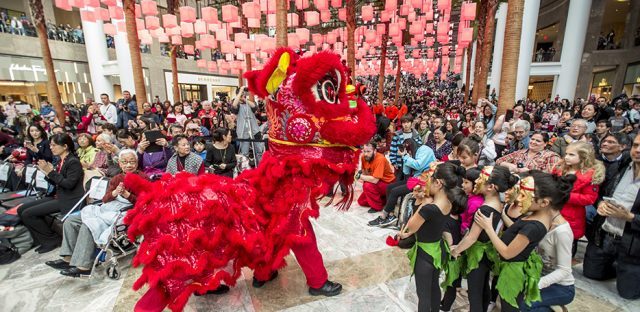
The Year of the Rooster will be celebrated at Brookfield Place and other locations across town over next several weeks
Sara D. Roosevelt Park and other locations
East Houston St. between Forsythe & Chrystie Sts.
January 28 – February 17
www.betterchinatown.com
www.explorechinatown.com
Gōng xǐ fā cái! New York City is ready to celebrate the Year of the Rooster, or, more specifically, the Fire Rooster, this month with special events all over town. People born in the Year of the Rooster are trustworthy, responsible at work, talkative, loyal, thoughtful, and popular. Below are some of the highlights happening here in the five boroughs during the next several weeks of Chinese New Year.
Saturday, January 28
New Year’s Day Firecracker Ceremony & Cultural Festival, Sara D. Roosevelt Park, Grand Street at Chrystie St., free, 11:00 am – 3:30 pm
Chinese New Year Temple Bazaar, with live performances, martial arts, food, arts & crafts, and more, Flushing Town Hall, 137-35 Northern Blvd., $3-$5, 11:00 am and 2:00 pm
Sunday, January 29
Lunar New Year Celebration: Madison St. to Madison Ave., with the New York Eastern Chamber Orchestra conducted by Fei Fang, FJ Music, juggler Lina Liu, Chinese marionette puppet show, martial arts performance by American Tai Chi and Health Qigong Center, face painting, calligraphy, themed photo booth, and more, beginning at Harman store at 527 Madison Ave., free, 11:00 am – 3:00 pm
Lunar New Year Celebration, with live performance and brush and ink painting workshop sponsored by the New York Chinese Cultural Center, Staten Island Children’s Museum, 1000 Richmond Terr., $8, 2:00 – 4:00
Tuesday, January 31
Chinese New Year Celebration, with the New York Philharmonic performing works by Li Huanzhi, Adam, Saint-Saëns, Chen Qigang, Huang Zi (arranged by Bao Yuankai), Puccini, Li Qingzhu, and Ravel, David Geffen Hall, 10 Lincoln Center Plaza, $35-$110, 7:30
Friday, February 3
Pauline Benton and the Red Gate Exhibition Opening Reception, Flushing Town Hall, $5 suggested donation, 5:00
Saturday, February 4
Lunar New Year Celebration, with family-friendly arts and crafts, Queens Botanical Garden, 43-50 Main St., free, 1:00
Chinese New Year Celebration, with family workshops, dumpling making, storytelling, lion dance, live music, more, workshops $5-$20, party and performance $10-$20, China Institute, 40 Rector St., 1:00 – 7:00
Sunday, February 5
Eighteenth annual New York City Lunar New Year Parade & Festival, with cultural booths in the park and a parade with floats, antique cars, live performances, and much more from China, Korea, Japan, Vietnam, Taiwan, Malaysia, Singapore, and other nations, Chinatown, Sara D. Roosevelt Park, and Columbus Park, free, 1:00
Rooster Shadow Puppet Workshop, Flushing Town Hall, $8-$10 (free for teens with ID), 1:00
Lunar New Year Festival: Year of the Rooster, with live performances by Sesame Street puppeteers, Chinese opera by Qian Yi, lion parade, Balinese music by Gamelan Dharma Swara, the China Youth Orchestra, traditional music by Mingmei Yip, Vietnamese drums, drawing, paper folding, button making, tea gatherings, comics workshop, hand-pulled noodle demonstration with Chef Zhang, storytelling, collection chats, and more, Metropolitan Museum of Art, 1000 Fifth Ave. at 82nd St., free with suggested museum admission, 11:00 am – 5:00 pm
Saturday, February 11
Lunar New Year Family Festival, with folk arts, live dance, food sampling, storytelling, a gallery hunt, a Nian monster mash-up, and more, Museum of Chinese in America, 215 Centre St., $12, 11:00 am – 4:00 pm
Lunar New Year 4715: Year of the Rooster Celebration, with costume contest, riddles, martial arts, live music and dance, rice balls contest, paper lantern arts and crafts, games, more, P.S.310, 942 62nd St., free, 11:00 am – 2:30
Year of the Rooster Celebration, with lion dancers, lion parade, live music and dance, martial arts demonstrations, theatrical players, and more, New York Chinese Cultural Center at Arts Brookfield, 230 Vesey St., free, 1:30 – 3:30
Saturday, February 11, and Sunday, February 12
Lunar New Year: Year of the Rooster, with puppet shows, scavenger hunt, calligraphy workshop, fortune cookies, and more, Prospect Park Zoo, 450 Flatbush Ave., $6-$8, 11:00 am – 4:00 pm
Friday, February 17
Lunar New Year Shadow Puppet Slam, hosted by Kuang-Yu Fong and Stephen Kaplin, adults only, Flushing Town Hall, $13, 7:00
 Zachary Heinzerling’s Emmy-winning
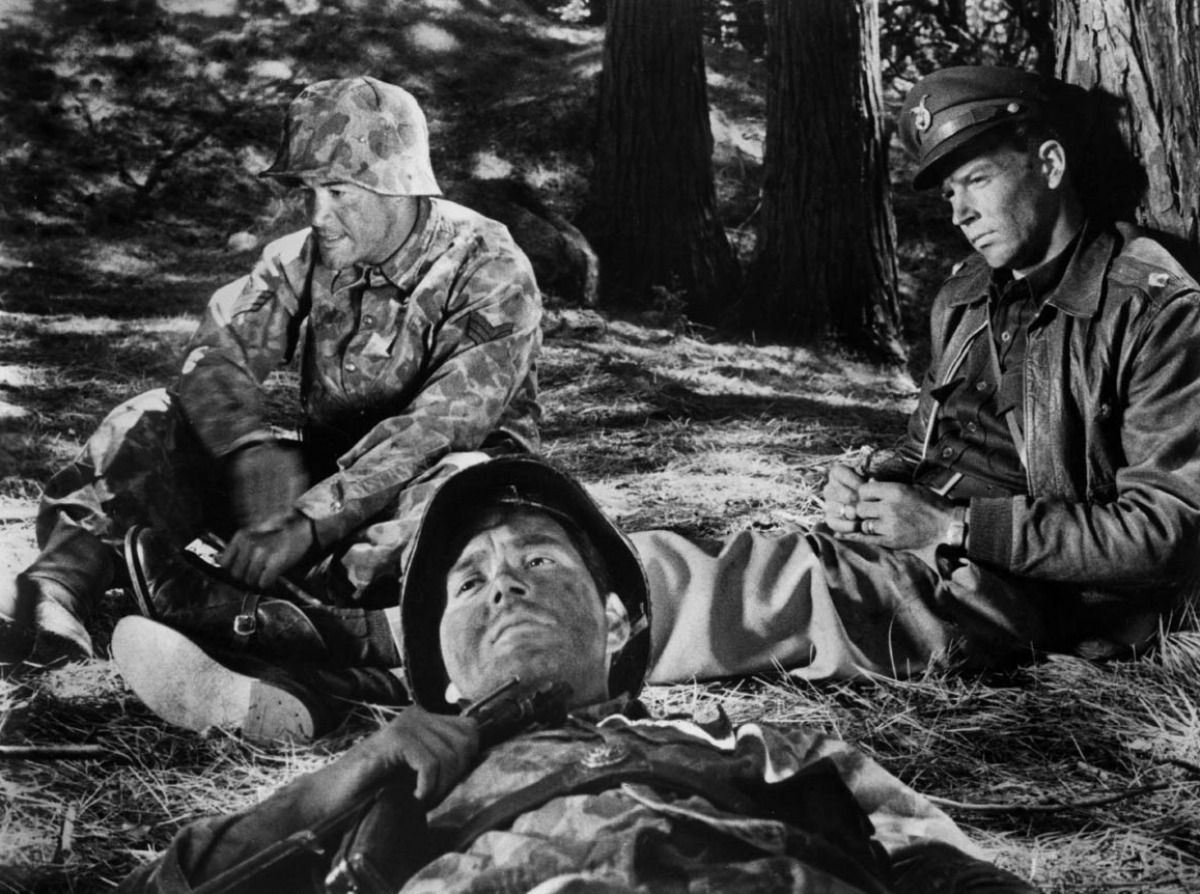
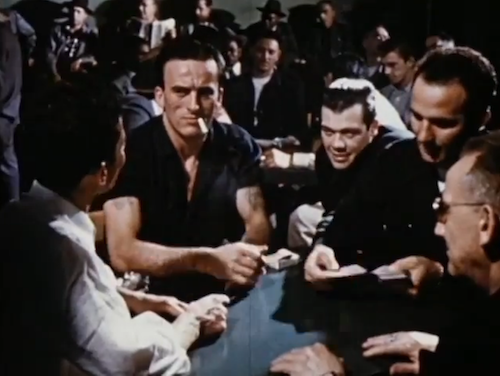
 IFC Center is celebrating the January 27 theatrical release of Alex Infascelli’s documentary S Is for Stanley, about longtime Stanley Kubrick aide Emilio D’Alessandro, with a two-week festival that includes every one of the Bronx-born ex-pat’s feature works, nearly all of which are being projected in DCP, along with a pair in 35mm. Kubrick’s 1953 seldom-seen psychological war drama, Fear and Desire, will be shown on January 30, along with the auteur’s half-hour industrial short The Seafarers. His first full-length film, made when he was twenty-four, Fear and Desire is a curious tale about four soldiers (Steve Coit, Kenneth Harp, Paul Mazursky, and Frank Silvera) trapped six miles behind enemy lines. When they are spotted by a local woman (Virginia Leith), they decide to capture her and tie her up, but leaving Sidney (Mazursky) behind to keep an eye on her turns out to be a bad idea. Meanwhile, they discover a nearby house that has been occupied by the enemy and argue over whether to attack or retreat. Written by Howard Sackler, who was a high school classmate of Kubrick’s in the Bronx and would later win the Pulitzer Prize for The Great White Hope, and directed, edited, and photographed by the man who would go on to make such war epics as Paths of Glory, Full Metal Jacket, and Dr. Strangelove, or How I Learned to Stop Worrying and Love the Bomb, Fear and Desire features stilted dialogue, much of which is spoken off-camera and feels like it was dubbed in later. Many of the cuts are jumpy and much of the framing amateurish. Kubrick was ultimately disappointed with the film and wanted it pulled from circulation; instead it was preserved by Eastman House in 1989 and restored twenty years later, which is good news for film lovers, as it is fascinating to watch Kubrick learning as the film continues. His exploration of the psyche of the American soldier is the heart and soul of this compelling black-and-white war drama that is worth seeing for more than just historical reasons. “There is a war in this forest. Not a war that has been fought, nor one that will be, but any war,” narrator David Allen explains at the beginning of the film. “And the enemies who struggle here do not exist unless we call them into being. This forest then, and all that happens now, is outside history. Only the unchanging shapes of fear and doubt and death are from our world. These soldiers that you see keep our language and our time but have no other country but the mind.”