The wild life and times of sugar scion Bunker Spreckels is explored in new documentary
BUNKER77 (Takuji Masuda, 2016)
Wednesday, November 16, IFC Center, 323 Sixth Ave. at West Third St., 2:45
Thursday, November 17, Cinépolis Chelsea, 260 West Twenty-Third St. at Eighth Ave., 7:45
www.docnyc.net
bunker77film.com
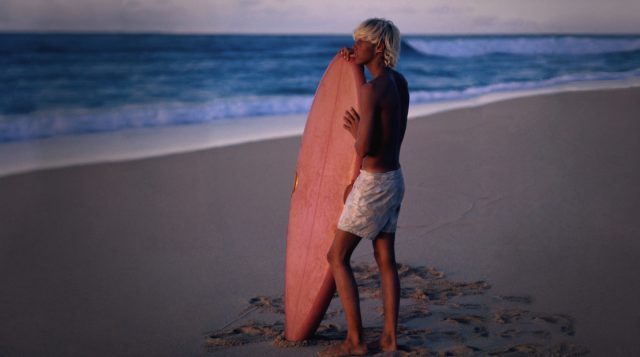
 Former Japanese national surfing champion Takuji Masuda documents the wild life and times of sugar scion Bunker Spreckels in the bumpy, oddly titled Bunker77, which is having its New York City premiere November 16 and 17 at the DOC NYC festival. Born in Los Angeles in 1949, Spreckels is described in the film by friends and relatives as “radical,” “original,” “unique,” “dangerous,” and “fun,” a blond beach bum and party lover who rode waves around the world with his specially made short boards. “That was his international persona: the hunter, the surfer, the playboy, the jet-setter, the martial artist, all in one,” skateboard legend Tony Alva says of his friend and mentor. Spreckels’s grandfather, Adolph B. Spreckels, ran the Spreckels Sugar Company and, with his wife, Alma, helped develop the cities of San Francisco and San Diego. After Spreckels’s parents, Adolph B. Spreckels II and former actress Kay Williams, divorced, his mother married Clark Gable, who helped raise Bunker and his sister, Joan, for five years. Bunker always did things his own way, but his life spiraled out of control once he turned twenty-one and gained access to his multimillion-dollar trust fund, caught up in a storm of drugs, alcohol and women. He tried to become a rock star and a screen idol while skateboarding and surfing in California, Hawai’i, Australia, and South Africa. His story is told by such surfing legends as Laird Hamilton, Vinny Bryan, Bill Hamilton, Rory Russell, Nat Young, Herbie Fletcher, Spyder Wills, and Wayne Bartholomew; childhood friends Curtis Allen (son of cowboy movie star Rex Allen) and Ira Opper; Surfer magazine photographer Art Brewer, associate editor Kurt Ledterman, chief editor Drew Kampion, and publisher Steve Pezman; longtime girlfriend Ellie Silva; and journalist C. R. Steyck III, whose extensive interview with Spreckels near the end of his life is sprinkled throughout the documentary. Masuda also includes home movies, photographs, relevant clips from Gable films, and scenes from 2005’s Lords of Dogtown, in which Johnny Knoxville plays Topper Burks, who is based on Spreckels, and 1961’s Blue Hawaii, in which Elvis Presley plays a character eerily similar to Bunker. “You can definitely have too much fun with too much money,” Bartholomew says, while Steyck adds, “He was a dangerous man, mainly dangerous to himself.”
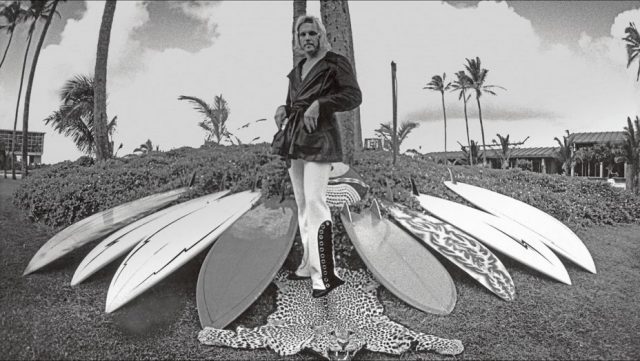
Bunker Spreckels struts his stuff in Takuji Masuda’s BUNKER77
In the works since 2008, Bunker77 features terrific footage, but it’s also scattershot and often confusing, especially when it comes to Bunker’s real name, his desire to be in Kenneth Anger’s Lucifer Rising, and the making of his own hallucinogenic epic, End of Summer. Writer, director, and producer Masuda gets some big-time power behind him — the executive producers of the film are Oscar-nominated actor Ed Norton, Red Hot Chili Peppers leader Anthony Kiedis, Sundance programmer Trevor Groth, and Emmy and Oscar winner Stephen Gaghan, while the coproducers are Joan Spreckels, Brewer, Steyck, and John Gable, the son of Kay and Clark — but the film feels rather thrown together. The different elements don’t form a cohesive visual whole, loosely constructed from too many disparate sources. (There’s even brief animation.) In fact, although surf photographer Dave Homcy is credited as cinematographer, there is additional cinematography by eleven others, and six editors are listed in the credits. Still, there is plenty of awesome surfing footage, and the story of Spreckels’s rise and fall is bizarrely fascinating. Bunker77 is screening November 16 at 2:45 at IFC Center and November 17 at 7:45 at Cinépolis Chelsea, with Masuda on hand to discuss the film.
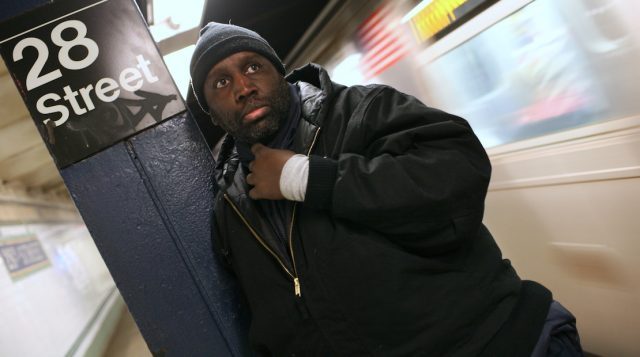
 Ever since he was a child, Darius McCollum has been obsessed with mass transit. But McCollum, who was born in Brooklyn and raised in Queens, is not just another train buff. He has spent the last thirty-five years in and out of jail, imprisoned for operating trains and buses in the metropolitan area. His surprising story is told in Adam Irving’s debut feature documentary, Off the Rails. “Over the years, I have operated trains in the New York City subway system, Metro-North, the Long Island Rail Road, New Jersey Transit, and yet, I have never ever been an employee of any of these agencies,” McCollum says at the beginning of the film while putting on an MTA uniform like it was official military dress. “I feel like I’m proud, I feel I’m worthy of something, I feel like I’m a part of something,” he said about being decked out in MTA garb. McCollum doesn’t simply take the trains and buses on joyrides but follows all MTA rules and procedures, which he knows inside out. “For Darius, it was for the joy of driving the train safely. All of his crimes were victimless, there were no crashes, he would safely make all of the stops, make the announcements,” says Jude Domski, who wrote the play Boy Steals Train about McCollum. Through first-person accounts, family photos, home movies, archival footage, reenactments, and animation, McCollum is revealed to be a sweet-natured mama’s boy who has Asperger’s syndrome. “I’m really good with trains, but I can’t seem to figure out people,” he says. “And it’s hard for me to tell what someone is thinking or feeling. I get confused in social situations. I have trouble making friends.” A large but gentle man, McCollum understands the consequences of his actions but is unable to prevent himself from hopping on board and taking over when the opportunity arises. Comparing himself to Superman, McCollum explains, “His weakness is Kryptonite; my weakness is the third rail.”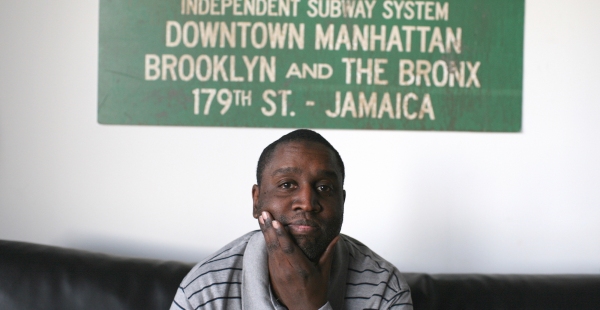
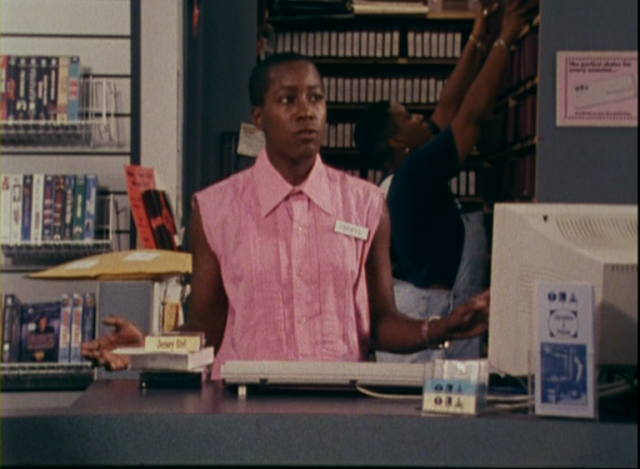
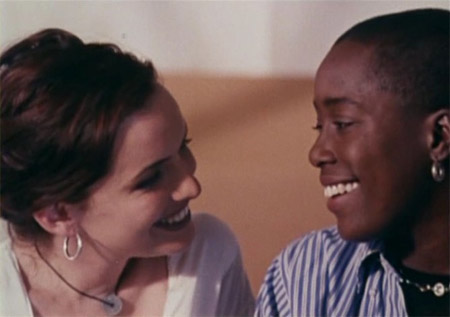
 “The idea came from the real lack of information about the lesbian and film history of African American women. Since it wasn’t happening, I invented it,” Cheryl Dunye says about her 1996 debut, The Watermelon Woman, which has undergone a twentieth-anniversary 2K HD restoration that opens at Metrograph on November 10. In the film, the first feature by a black lesbian, Dunye plays herself, a twenty-five-year-old black lesbian working at a video store with her goofy best friend, Tamara (Valerie Walker). Searching for a topic to make a movie on, Cheryl becomes obsessed with an actress who played a mammy in Plantation Memories and other 1930s films. The actress was listed in the credits as the Watermelon Woman; Cheryl decides to find out more about her, going on a journey in and around her hometown of Philadelphia, discovering more and more about the actress, also known as Fae Richards, and the battle black lesbians had to fight in the early-to-mid-twentieth century. In the meantime, Cheryl begins a relationship with Diana (Guinevere Turner), a privileged white woman who has just moved into the area, mimicking what Cheryl has found out about Richards, who had an affair with white director Martha Page.