this week in lectures, signings, panel discussions, workshops, and Q&As

SCREENING + LIVE EVENT: ELLE WITH ISABELLE HUPPERT IN PERSON

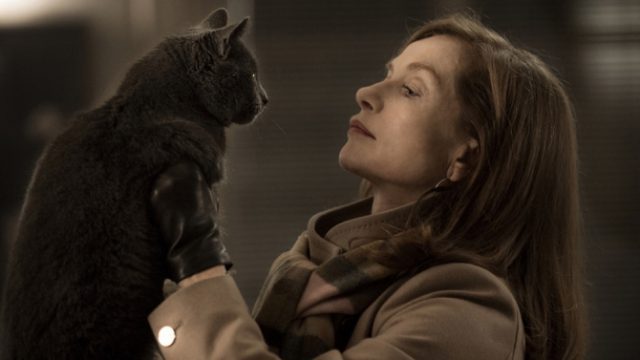
The purr-fectly delightful Isabelle Huppert will discuss ELLE at a special screening and Q&A at the Museum of the Moving Image on January 4

The purr-fectly delightful Isabelle Huppert will discuss ELLE at special screening and Q&A at the Museum of the Moving Image on January 4

Who: Isabelle Huppert
What: Elle with Isabelle Huppert in person
Where: Museum of the Moving Image, 35th Ave. at 36th St., Astoria, 718-777-6800
When: Wednesday, January 4, $25, 7:00
Why: French superstar Isabelle Huppert has been garnering worldwide acclaim for her latest film, Elle, directed by Paul Verhoeven, whose previous works include RoboCop, Basic Instinct, Showgirls, and Black Book. On January 4 at 7:00, the sixty-three-year-old Huppert, who has made more than 120 films, from The Lacemaker, Loulou, and Coup de Torchon to La Cérémonie, The Piano Teacher, and Heaven’s Gate, will be at the Museum of the Moving Image for a Q&A and special screening of Elle, a disturbing tour de force showcasing Huppert’s mesmerizing performance as either victim or monster. Feminists and film theorists might fight about this one for years; the rest of us can just marvel at Huppert, unable to take our eyes off her for a second.

PIPILOTTI RIST: PIXEL FOREST

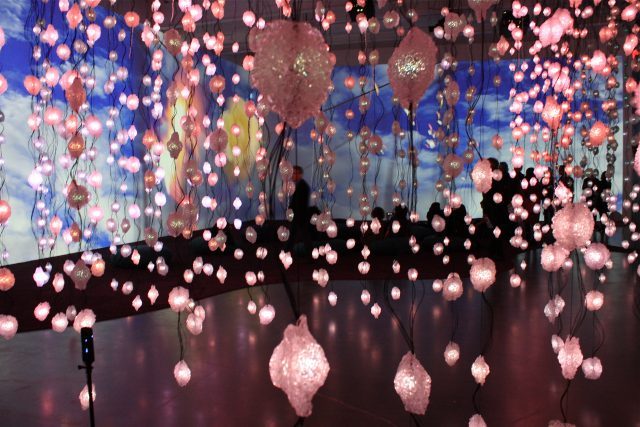
“Pipilotti Rist: Pixel Forest” is a (photo by twi-ny/mdr)

Immersive “Pipilotti Rist: Pixel Forest” is most popular exhibition in history of New Museum (photo by twi-ny/mdr)

New Museum of Contemporary Art
235 Bowery at Prince St.
Tuesday through Sunday through January 15/22 (closed January 1-2), $12-$18
212-219-1222
www.newmuseum.org

There’s a very good reason why “Pipilotti Rist: Pixel Forest” has become the most popular exhibit in the history of the New Museum: It’s a splendidly curated, warm and embracing show that invites viewers into a magical world in which nature and humanity are one. The Swiss artist has been trapped under the floor of MoMA PS1’s lobby for decades, her tiny video calling up to passersby from the floorboards in “Selfless in the Bath of Lava,” and she mesmerized MoMA visitors with the Marron Atrium immersive multimedia work “Pour Your Body Out (7354 Cubic Meters)” in 2008, but her first comprehensive U.S. survey is so much bigger, taking up three floors of the downtown institution, each one offering its own charms. Rist doesn’t just design installations; she welcomes you into delightful environments where you can relax, kick off your shoes, and get lost in a display of pure beauty. “In the generous, lush, expansive, and fecund universe created by Pipilotti Rist, we are all but small, organic specks in a massive, corporeal cosmos — ever-connected, always reproducing, endlessly social and intriguing as we move through space and time, colliding with other molecular debris,” Juliana Engberg writes in her catalog essay “A Bee Flew in the Window. . . .”

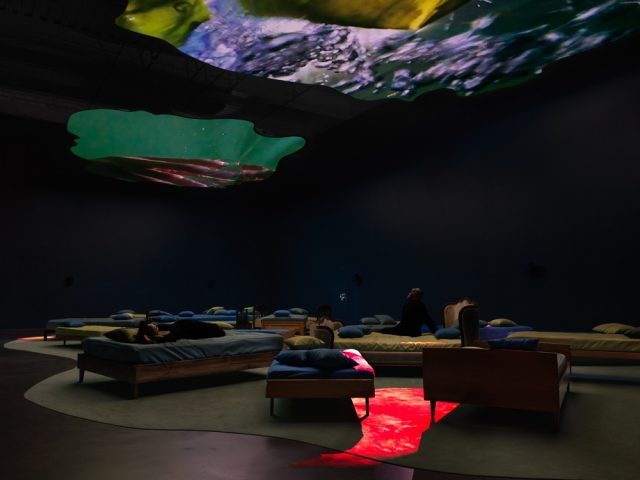
Pipilotti Rist’s “4th Floor to Mildness” offers a relaxing multimedia journey at the New Museum (photo by Maris Hutchinson / EPW Studio)

Pipilotti Rist’s “4th Floor to Mildness” offers a relaxing multimedia journey at the New Museum (photo by Maris Hutchinson / EPW Studio)

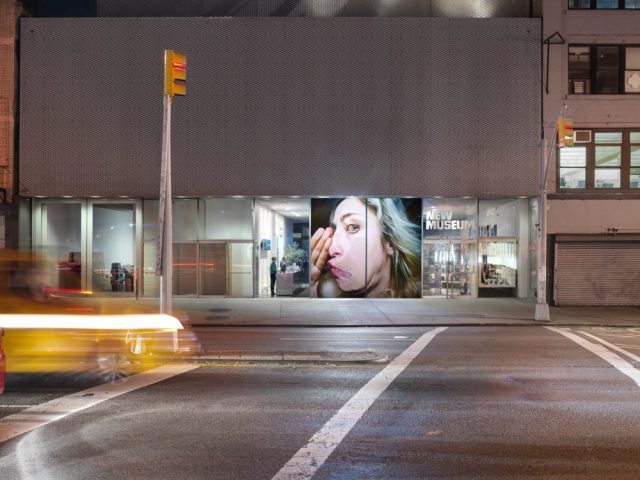
Curated by Massimiliano Gioni, Margot Norton, and Helga Christoffersen, “Pipilotti Rist: Pixel Forest” begins with “Open My Glade (Flatten),” a single-channel video of dreamy colors and Rist pressing up against the New Museum’s front window, as if in a kind of fishbowl that cannot contain her. In the lobby, “Nichts (Nothing)” is a mechanical contraption that emits large soap bubbles filled with smoke, floating through the air until popping on the floor, what Rist calls “peace bombs.” On the second floor, a long, narrow corridor contains several of Rist’s early single-channel videos, set up so only one person can watch each one at a time, as if a personal peepshow, comprising cutting-edge experimental works that play with technology while redefining female identity, including “I’m Not the Girl Who Misses Much,” “(Absolutions) Pipilotti’s Mistakes,” and “You Called Me Jacky,” while “Sexy Sad I” follows a nude man in the woods and “When My Mother’s Brother Was Born It Smelled Like Wild Pear Blossoms in Front of the Brown-burnt Sill” shows a live birth. Those private viewings serve as an introduction to the larger works experienced by groups. In the two-channel “Ever Is Over All,” on the left side a woman marches down a street, gleefully smashing in car windows with a flower stick, being followed by a female police officer, while on the right the camera scans a field of the same flowers. (Yes, Beyoncé took a page from Rist in her “Lemonade” video.) The two-channel cater-corner “Sip My Ocean” is a kaleidoscopic underwater journey set to Rist and Anders Guggisberg singing Chris Isaak’s “Wicked Game.” Nearby, “The Patience” can be seen on a boulder. “Administrating Eternity” forms pathways of moving mirrors and curtains. And in “Suburb Brain,” a miniature model of a suburban home, with life going on inside, sits in front of a two-channel installation, one side projected onto a wall of whitewashed everyday objects.

(photo by Maris Hutchinson / EPW Studio)

Pipilotti Rist’s “Open My Glade (Flatten)” can be seen at the New Museum and in Times Square (photo by Maris Hutchinson / EPW Studio)

On the third floor, visitors make their way through “Pixel Forest,” three thousand hanging LED lights that change color with the music and images surrounding them, each light representing one pixel, to get to “Worry Will Vanish Horizon,” where viewers relax on cushiony duvets while watching a two-channel video of natural surroundings, hands, eyes, and more. “Mercy Garden” also offers respite, while “Massachusetts Chandelier” is a light covered in underpants. As you venture to the fourth floor, be sure not to step on another iteration of “Selfless in the Bath of Lava,” which resides on the floor of the landing, now showing Rist trapped in a cell phone. The fourth floor consists of “Your Space Time Capsule,” a room in a wooden transport crate, and “4th Floor to Mildness,” a large area that offers visitors single and double beds where they get comfortable while watching two videos projected onto amorphous screens on the ceiling as mirrors reflect the light onto the viewer, resulting in a dreamlike trip into mysterious worlds. It’s a rapturous show that confirms Rist’s description of her art as the “glorification of the wonder of evolution,” as she takes visitors on a psychedelic journey into the body and the mind, into life above and below the sea, merging the natural world and technology, sound and image, into private and shared experiences that are especially hypnotic in these dark times. On January 7 at 10:00 am, the museum will host the workshop “First Saturdays for Families: Crafting Eternity”; on January 12 at 3:30, curator and writer Laura McLean-Ferris will give an Outside the Box gallery talk; and on January 19 at 7:00, there will be a conversation between Rist and New Museum artistic director Gioni. The full exhibition continues through January 15, with the second and third floors open until January 22; in addition, Times Square Arts’ Midnight Moment will feature a new version of “Open My Glade (Flatten)” every night in January at 11:57 across multiple billboards.

CURATORS’ CHOICE: NO HOME MOVIE

NO HOME MOVIE

Chantal Akerman creates a unique profile of her mother in deeply personal NO HOME MOVIE

NO HOME MOVIE (Chantal Akerman, 2015)
Museum of the Moving Image
35th Ave. at 36th St., Astoria
Sunday, January 1, 2:00
December 30 – January 8
718-777-6800
www.movingimage.us
icarusfilms.com

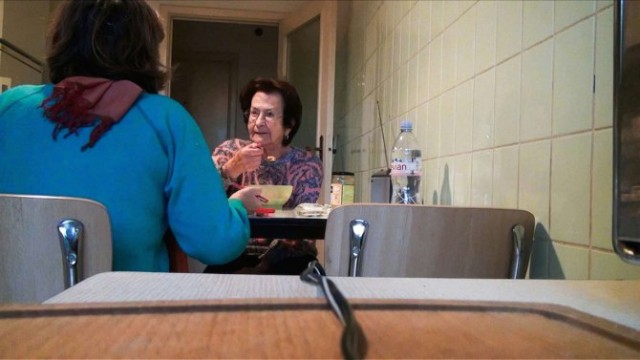
Chantal Akerman’s No Home Movie was meant to be a kind of public eulogy for her beloved mother, Natalia (Nelly) Akerman, who died in 2014 at the age of eighty-six, shortly after Chantal had completed shooting forty hours of material with her. But it also ended up becoming, in its own way, a public eulogy for the highly influential Belgian auteur herself, as she died on October 5, 2015, at the age of sixty-five, only a few months after the film screened to widespread acclaim at several festivals (except at Locarno, where it was actually booed). Her death was reportedly a suicide, following a deep depression brought on by the loss of her mother. No Home Movie primarily consists of static shots inside Nelly’s Brussels apartment as she goes about her usual business, reading, eating, preparing to go for a walk, and taking naps. Akerman sets down either a handheld camera or a smartphone and lets her mother walk in and out of the frame; Akerman very rarely moves the camera or follows her mother around, instead keeping it near doorways and windows. She’s simply capturing the natural rhythms and pace of an old woman’s life. Occasionally the two sit down together in the kitchen and eat while discussing family history and gossip, Judaism, WWII, and the Nazis. (The elder Akerman was a Holocaust survivor who spent time in Auschwitz.) They also Skype each other as Chantal travels to film festivals and other places. “I want to show there is no distance in the world,” she tells her mother, who Skypes back, “You always have such ideas! Don’t you, sweetheart.” In another exchange, the daughter says, “You think I’m good for nothing!” to which the mother replies, “Not at all! You know all sorts of things others don’t know.”

NO HOME MOVIE

Shots of a tree fluttering in the Israeli wind enhance the peaceful calm of NO HOME MOVIE

Later they are joined by Chantal’s sister, Sylviane, as well as Nelly’s home aide. The film features long sections with no dialogue and nobody in the frame; Akerman opens the movie with a four-minute shot of a lone tree with green leaves fluttering in the wind in the foreground, the vast, empty landscape of Israel in the background, where occasionally a barely visible car turns off a far-away road. Akerman returns to Israel several times during the film, sometimes shooting out of a moving car; these sections serve as interludes about the passage of time as well as referencing her family’s Jewish past. At one point, Akerman makes potatoes for her mother that they eat in the kitchen, a direct reference to a scene in Akerman’s feminist classic, Jeanne Dielman, 23 Quai due Commerce, 1080 Bruxelles. Knowing about what happened to both mother and daughter postfilming casts a shadow over the documentary, especially when Chantal tells her mother, “I’m in a very, very good mood. . . . Let’s enjoy it; it’s not that common.” As the film nears its conclusion, there is almost total darkness, echoing the end of life. Through it all, Akerman is proud of her mother; reminiscing about kindergarten, she remembers, “And to everybody, I would say, this is my mother.” No Home Movie achieves that very same declaration, now for all the world to see and hear. No Home Movie is screening January 1 at 2:00 in the Museum of the Moving Image eclectic 2016 wrap-up “Curators’ Choice,” which runs December 30 through January 8, consisting of ten films chosen by chief curator David Schwartz and associate film curator Eric Hynes that might have slipped past your radar, including Richard Linklater’s Everybody Wants Some!!, Vitaly Mansky’s Under the Sun, Yorgos Lanthimos’s The Lobster, Anna Rose Holmer’s The Fits, followed by a Q&A with Holmer, Ezra Edelman’s 467-minute O.J.: Made in America, followed by a Q&A with Edelman and producer Caroline Waterlow, and Kirsten Johnson’s Cameraperson, followed by a Q&A with Johnson and editor Nels Bangerter.

PATERSON

PATERSON

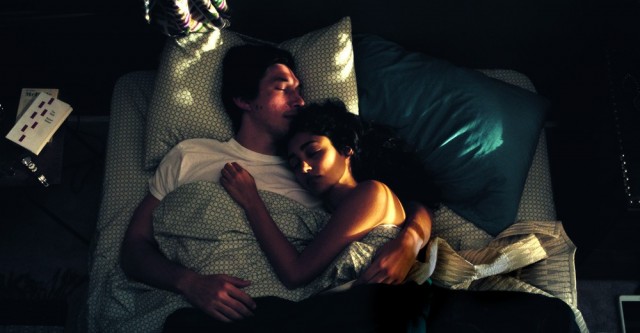
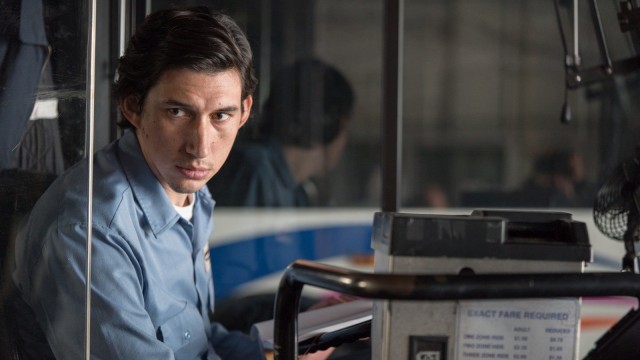
Adam Driver and Golshifteh Farahani star as a happy New Jersey couple in Jim Jarmusch’s PATERSON

PATERSON (Jim Jarmusch, 2016)
Landmark Sunshine Cinema
143 East Houston St. between First & Second Aves.
Opens Tuesday, December 27
212-330-8182
www.landmarktheatres.com
www.bleeckerstreetmedia.com

Jim Jarmusch’s Paterson is a beautifully poetic, deceptively simple wonder about the beauty, poetry, and wonderful simplicity of life, an ode to the little things that make every day special and unique. Adam Driver stars as Paterson, a New Jersey Transit bus driver and poet who lives in Paterson with his girlfriend, Laura (Golshifteh Farahani), who spends much of her time decorating their small, quaint house, painting black and white circles and lines on curtains, couches, dishes, walls, and even her clothing, continually creating works of art out of nearly everything she comes into contact with. The film takes place over an ordinary week for the sweet-natured couple, who are very much in love, each allowing the other the freedom to explore who they are and offering their complete support. Every morning, Paterson wakes up around 6:12, as the sunlight streaks over their sleeping bodies. He checks his Casio wristwatch to confirm the time — he doesn’t use an alarm clock, nor does he own a cell phone or a computer — then snuggles closer with Laura for a few extra minutes. He eats Cheerios out of a bowl painted by Laura with circles that match the shape of the cereal. He studies a matchbook, which becomes the starting point for his next poem. Lunchbox in hand, he walks to the Market St. garage and gets on board the 23 bus. He writes a few lines of poetry, listens to fellow bus driver Donny’s (Rizwan Manji) daily complaints, then heads out on his route through his hometown, picking up pieces of some very funny passenger conversations. For lunch he sits on a bench overlooking the Paterson Great Falls and composes more mostly non-rhyming lines in his “Secret Notebook,” which he will not show anyone but Laura. At quitting time, he walks home, checks the mail, fixes the tilted mailbox, sees what new art Laura has created, and takes their English bulldog, Marvin (Nellie, who won the Palm Dog at Cannes and passed away two weeks after shooting concluded), for a walk after dark, stopping for a beer and chatting with bar owner Doc (Barry Shabaka Henley). He then goes back home, ready to do it all over again the next day. But Paterson is no bored working-class suburbanite living out a dreary routine; he finds something new and special in every moment, from his job to his relationship to his nightly trips to the bar. Every day is different from the one before, Jarmusch celebrating those variations that make life such a joy.

Adam Driver

Adam Driver plays a poetic New Jersey Transit bus driver named Paterson in PATERSON

Set to a subtle electronic score by Sqürl, Jarmusch and Carter Logan’s band, Paterson is a gorgeous film, lovingly photographed by Frederick Elmes, who captured a very different kind of town in David Lynch’s Blue Velvet, and edited to the sweet rhythm of a basic existence by Affonso Gonçalves. Paterson’s poems were written by award-winning poet Ron Padgett, who, like Jarmusch, studied with Kenneth Koch; the works, which unfold day by day, include the previously published “Love Poem” (a tribute to Ohio Blue Tip Matches and love), “Glow,” “Pumpkin,” and “Poem” as well as three written specifically for the film, “Another One,” “The Run,” and “The Line.” The words appear on the screen in a font based on Driver’s handwriting as he narrates them in voiceover. (Among the other poets referenced in the film are Frank O’Hara, Wallace Stevens, Petrarch, and Emily Dickinson.) The film is also very much about duality and pairs, which Jarmusch has said in interviews was not always intentional. Adam Driver, who served in the Marines, plays a driver and former Marine named Paterson who lives and works in Paterson. He is constantly seeing twins, from two brothers named Sam and Dave (Trevor and Troy Parham) to two young girls on his bus to two older men on a bench. While Paterson and Laura seem meant to be together, their happiness infectious, he looks on every night as Everett (William Jackson Harper) desperately pleads with Marie (Chasten Harmon) to take him back. At the bar, Paterson often speaks to Doc about the pictures on the wall of fame, photos about such native sons as Uncle Floyd and his brother, Jimmy Vivino, as well as local superstar Lou Costello, part of one of the most popular comedy duos ever with Bud Abbott, who was born in Asbury Park (and thus does not qualify for the wall). Paterson’s favorite poet is lifelong New Jersey-ite William Carlos Williams, who Laura playfully refers to as Carlos Williams Carlos. (In making the film, Jarmusch was inspired by one of Williams’s most popular phrases, “No ideas but in things.”) And when Paterson’s not encountering twins, he’s bumping into random poets (Sterling Jerins, Method Man, Masatoshi Nagase) during his walks. Paterson is a poetic marvel all its own, a dazzling film about love and harmony, about finding creativity in every aspect of life, led by marvelous performances by Driver and Farahani and written and directed by a master of cinematic restraint. Paterson opens December 27 at the Landmark Sunshine, with Jarmusch participating in a Q&A following the 7:15 show on December 30.

HOLIDAY MUSIC, COMEDY, AND THEATER

Ronnie Spector will celebrate the best Christmas ever at City Winery

Ronnie Spector will celebrate the best Christmas ever at City Winery

New York City has tons of special programs during the holiday season, some well known and annual traditions, others more cutting edge and unique. Below is only a handful of seasonal recommendations, several of which are likely not to be on most people’s radar. Keep checking this space as more Christmas and Hanukkah celebrations are added.

Wednesday, December 14
Ingrid Michaelson’s 10th Annual Holiday Hop, with Sugar and the Hi Lows, Bowery Ballroom, 6 Delancey St., $40, 9:00

Kevin Geeks Out About Holiday Specials, with Kevin Maher, Erin Farrell, Wendy Mays, Paul Murphy, and Steve Flack, Nitehawk Cinema, 136 Metropolitan Ave. between Berry St. & Wythe Ave.$16, 9:30

Thursday, December 15
The Menorah: From the Bible to Modern Israel, with Steven Fine, Met Fifth Ave., Bonnie J. Sacerdote Lecture Hall, Uris Center for Education, 1000 Fifth Ave. at 82nd St., free with museum admission, 3:00

The Oh Hellos Present: The Oh Hellos Christmas Extravaganza, with Tyler and Maggie Heath, Music Hall of Williamsburg, 66 North Sixth St., $20-$22, 9:00

Thursday, December 15
through
Saturday, December 17

The 37th Annual Winter Solstice Celebration, with the Paul Winter Consort (soprano saxophonist Paul Winter, cellist Eugene Friesen, double-reed player Paul McCandless, keyboardist Paul Sullivan, bassist Eliot Wadopian, drummer Jamey Haddad, organist Tim Brumfield, Procol Harum singer Gary Brooker, and Forces of Nature Dance Theatre, Cathedral Church of St. John the Divine, 1047 Amsterdam Ave. at 112th St., $35-$95

Friday, December 16, 23
Holiday Music in Gilbert Court, A Renaissance Christmas with My Lord Chamberlain’s Consort, Morgan Library, 225 Madison Ave. at 36th St., free with museum admission, 6:30

Saturday, December 17
Brandenburgers Holiday Concert, with the Brooklyn Brandenburgers performing music by Bach, Corelli, Dvorak, Glickman, Ostyn, and Piazzolla, Old Stone House, 336 Third St. in Washington Park, $10, 2:00 & 7:00

Karen Luschar Sings “Mistletoe and Holly,” New York Public Library for the Performing Arts, Bruno Walter Auditorium, 40 Lincoln Center Plaza, free, 2:30

Saturday, December 17
Friday, December 23
Monday, December 26

A Darlene Love Christmas: Love for the Holidays, B. B. King Blues Club & Grill, 237 West 42nd St., $45-$82.50

Sunday, December 18
Latkepalooza!, with food, music, and family-friendly activities, Museum of Jewish Heritage, Edmond J. Safra Plaza, 36 Battery Pl., $10, 10:00 am

Hanukkah Family Day, Jewish Museum, Scheuer Auditorium, 1109 Fifth Ave. at 92nd St., free with museum admission, 12 noon – 4:00 pm

Karina Posborg is one of many filmmakers screening their Yule Log shorts at BRIC

Karina Posborg is one of many filmmakers screening their Yule Log shorts at BRIC

Monday, December 19
Yule Log 2.016, fifty short films, the Stoop at BRIC Arts | Media House, 647 Fulton St., free, 1:00 – 6:00

Harmony for Peace Holiday Peace Concert, Carnegie Hall, Stern Auditorium / Perelman Stage, 881 Seventh Ave. between 56th & 57th Sts., $21-$100, 8:00

Tuesday, December 20
MetLiveArts: The Little Match Girl Passion, directed by Rachel Chavkin and starring Ekmeles, Met Breuer lobby, 945 Madison Ave. at 75th St., $65, 7:00

Tuesday, December 20
and
Wednesday, December 21

Ronnie Spector’s Best Christmas Party Ever!, City Winery, 155 Varick St. between Spring & Vandam Sts., $55-$75, 8:00

Thursday, December 22
and
Friday, December 23

Yule Shul vs. Nutcracker: Rated R — A Love Show Holiday Extravaganza, (le) poisson rouge, 158 Bleecker St. between Thompson & Sullivan Sts., $15-$35, 8:00

christmas-for-the-jews

Thursday, December 22
through
Saturday, December 24

Merry Hanukkah with Judy Gold, Carolines on Broadway, 1626 Broadway between 49th & 50th Sts., $32.75

Saturday, December 24
A Very Jewish Christmas, with Modi, Gotham Comedy Club, 208 West 23rd St. between Seventh & 8th Aves., $25, 7:00 & 9:00

Sunday, December 25
Christmas for the Jews, with Joel Chasnoff, Dan Naturman, Cory Kahaney, and more, City Winery, 155 Varick St. between Spring & Vandam Sts., $25, 8:00

Friday, December 30
Kwanzaa 2016: Songs for the Soul, with Ruben Studdard, Dr. Linda H. Humes, and students from the Celia Cruz Bronx High School of Music, American Museum of Natural History, Milstein Hall of Ocean Life, Central Park West at 79th St., free with museum admission, 12 noon & 3:00
KERRY JAMES MARSHALL: MASTRY

4.  Kerry James Marshall.  American, b orn Birmingham, Alabama 1955 Untitled (Studio) 2014 Acrylic on PVC panels 83 5/16 × 119 1/4 in . (211.6 × 302.9 cm) The Metropolitan Museum of Art Purchase, The Jacques and Natasha Gelman Foundation Gift, Acquisitions Fund and The  Metropolitan Museum of  Art Multicultural Audience Development Initiative Gift, 2015 © Kerry James Marshall.

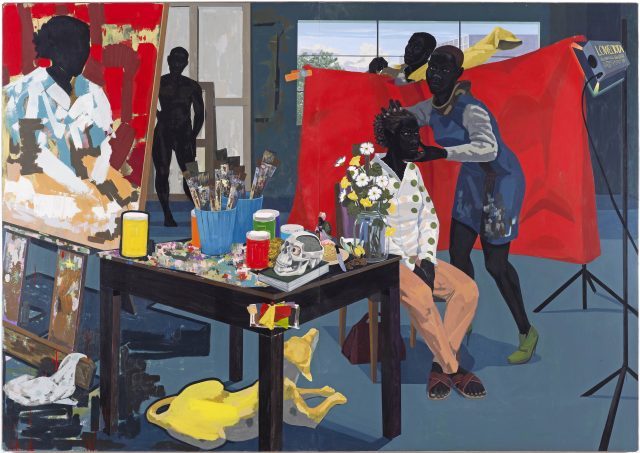
Kerry James Marshall, “Untitled (Studio),” acrylic on PVC panels, 2014 (the Metropolitan Museum of Art Purchase, the Jacques and Natasha Gelman Foundation Gift, Acquisitions Fund and the Metropolitan Museum of Art Multicultural Audience Development Initiative Gift, 2015 © Kerry James Marshall)

The Met Breuer, third and fourth floors
945 Madison Ave. at 75th St.
Tuesday – Sunday through January 29, suggested admission $12-$25
212-731-1675
www.metmuseum.org

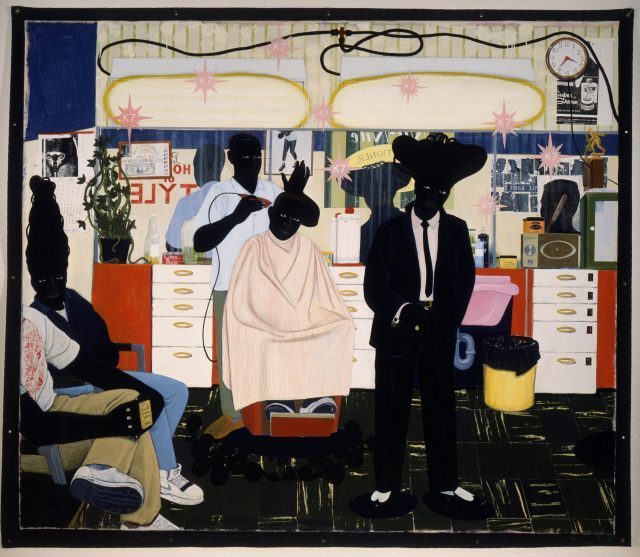
The Met Breuer’s exciting inaugural year continues with the timely and revelatory “Kerry James Marshall: Mastry,” a beautifully curated retrospective that arrives as the country remains split over the Black Lives Matter movement and shortly after the gutting of the Civil Rights Voting Act. Marshall, who was born in Birmingham, Alabama, in 1955, moved to Los Angeles when he was seven, and has lived and worked in Chicago for more than twenty-five years, investigates sociocultural mores through an art-historical lens in his work, which primarily consists of dramatic large-scale canvases that often echo classic paintings from the Western canon. Initially inspired by Ralph Ellison’s Invisible Man, Marshall peoples his paintings with men, women, and children of such a deep, dark, rich black that they sometimes almost disappear. The show begins on the third floor with a pair of powerful side-by-side acrylic-and-collage 1993 works that set the stage for the rest of the exhibition. “De Style” depicts a scene in a barbershop, a traditional gathering place for African Americans, evoking an Old Master painting while also referencing the Dutch art movement known as De Stijl, which focused on the fusion of form and function. Four men, so dark that their eyes are nearly disembodied from their faces, look directly at the viewer. Marshall fills the shop with intricate details and geometric splashes of color, from rectangular blues and reds to a yellow trashcan and a pink sink, but it’s the black that grabs the viewer’s attention. Next to “De Style” is “The Lost Boys,” which pays tribute to two black children who were killed by guns. The canvas features a blue-leafed tree wrapped in yellow police tape, a red background, a haloed orange votive figure, and, between the two boys, the word “Power.” At the press preview, Marshall, a graduate of the Otis Art Institute in Los Angeles, highlighted a quote from University of Chicago professor W. J. T. Mitchell’s What Do Pictures Want?, “a phrase that really defines what it means for me to be an artist: ‘Images don’t only express our desires, they teach us how to desire in the first place.’” He continued, “And for me, that seems to encapsulate fully everything that I experienced in my first encounter with images that brought me to this place, and because I understand something about the power of images, and things you see actually matter, and the more things you see that are different from each other, the more it matters. And when you come to the museum, if you only saw images that were out of the European tradition, and you never saw images that came from another perspective or that pictured other people, and not just incidentally or every now and then but in substantial and critical mass, then there’s always going to be something missing, something missing that I think really cripples our ability to imagine the world in the fullness of its possibility.” Starting the exhibit with “De Style” and “The Lost Boys” immediately places you within Marshall’s world, one that you don’t usually see in museums.

2.  Kerry James Marshall.  American, born Birmingham, Alabama 1955 De Style 1993 Acrylic and collage on canvas 8 ft. 8 in. × 10 ft. 2 in. (264.2 × 309.9 cm) Los Angeles County Museum of Art © Kerry James Marshall

Kerry James Marshall, “De Style,” acrylic and collage on canvas, 1993 (Los Angeles County Museum of Art, © Kerry James Marshall)

Marshall is an exquisitely talented, technically adroit artist, with a compelling sense of color and perspective, creating affecting narrative works with simple yet bold stories to tell. The canvases might reference Rembrandt, Boucher, Fragonard, Holbein, Hopper, Stella, Newman, and various genres throughout the centuries, but they are so much more than that. In “Beauty Examined,” a dead woman is on a slab; her body is all the same dark black except for her left arm, from which the skin has been removed, revealing muscles and bones alongside which Marshall writes, “Beauty is only skin deep.” In “Slow Dance,” a black couple sways romantically to the Originals’ “Baby I’m for Real,” the musical notes floating in the background of an otherwise naturalistic domestic scene. “School of Beauty, School of Culture” is a companion piece to “De Style,” this time set in a women’s hair salon, where, in the front, a young child is looking at the twisted anamorphic head of Walt Disney’s Sleeping Beauty floating like an ever-present Caucasian ghost. The five spectacular large-scale paintings that make up the Garden Project, which depict ordinary life in public housing developments, envelop visitors in their celebration of the everyday while threats are never far away. People are most familiar with photographs of Harriet Tubman that show her as an old, stern woman, but Marshall humanizes her in “Still Life with Wedding Portrait,” depicting her as a younger, sexually attractive woman standing in front of her husband; the painting within the painting is being handled by four gloved hands, three white, one black. And in “Portrait of Nat Turner with the Head of His Master,” the leader of the 1831 slave rebellion in Virginia stands in the foreground holding an ax, his ghostly master lying behind him in bed, his head separated from the res of his body.

Kerry James Marshall, “A Portrait of the Artist as a Shadow of His Former Self,” egg tempera on paper, 1980 (Steven and Deborah Lebowitz)

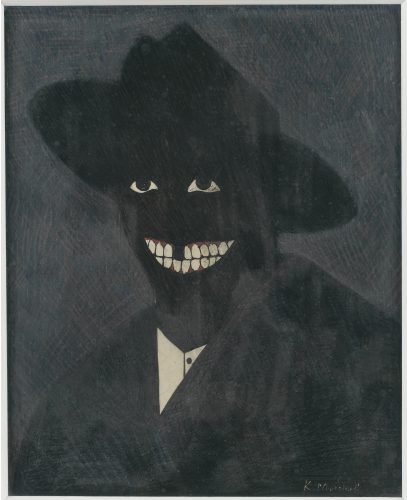
Kerry James Marshall, “A Portrait of the Artist as a Shadow of His Former Self,” egg tempera on paper, 1980 (Collection of Steven and Deborah Lebowitz, © Kerry James Marshall; photo: Matthew Fried, © MCA Chicago)

In Invisible Man, Ellison wrote, “I am invisible, understand, simply because people refuse to see me.” Marshall takes that thought to bear in much of his work, including such pieces as “A Portrait of the Artist as a Shadow of His Former Self,” which is dominated by a man with a Cheshire-cat-like smile with a missing front tooth; “Two Invisible Men (The Lost Portraits),” consisting of two portraits, one completely white, the other showing the artist smiling, his eyes glowing in the darkness; “Untitled (Studio),” a dazzling tour de force that is one of the five hundred works that make up the new book The Metropolitan Museum of Art: Masterpiece Paintings; and “Black Artist (Studio View),” a blue-tinted inkjet print of the artist working on the Hopper-inspired “7 am Sunday Morning,” only the sleeve of his white shirt at first visible, a representation of how photography was optimized for white skin tones. Other works to watch out for are “Voyager,” the comic-book-like “Rhythm Mastr,” “Past Times,” and the photography installation “Art of Hanging Pictures,” which again emphasizes the kinds of subjects and scenes not usually on display in museums unless attached to a specific political or social theme. The exhibition is supplemented by “Kerry James Marshall Selects,” more than three dozen works chosen by Marshall from the Met’s collection, including paintings by Jean Auguste Dominique Ingres, Albrecht Dürer, Jacob Lawrence, Georges Seurat, Frank Stella, Paul Cadmus, Ad Reinhardt, Paolo Veronese, Horace Pippin, Walker Evans, and Tsukioka Yoshitoshi, lending further insight into Marshall’s taste and inspirations. You can find out even more about Marshall at three special events being held in conjunction with the exhibition, which runs through January 29. On December 15 at 6:30, “An Evening with Kerry James Marshall” takes place at the Met Fifth Ave., in the Grace Rainey Rogers Auditorium, with Marshall discussing his career with journalist William C. Rhoden; although it is sold out, it will be live-streamed on the Met’s Facebook page. On January 27, the MetFridays program “Art School — The Studio” features artist-led drawing sessions and curator talks from 6:30 to 8:30 at the Met Fifth Ave. and the Met Breuer; and on January 28, the all-day symposium “Kerry James Marshall — A Creative Convening” brings together Marshall, Black Girls Code founder Kimberly Bryant, Olympic gold medalist Michelle Carter, director and cinematographer Arthur Jafa, physicist Hank Thomas, vocalist and composer Imani Uzuri, exhibition cocurators Helen Molesworth and Ian Alteveer, and others for an examination of Marshall’s work and putting it in context in today’s society.

ICONS & INNOVATORS: NORMAN LEAR

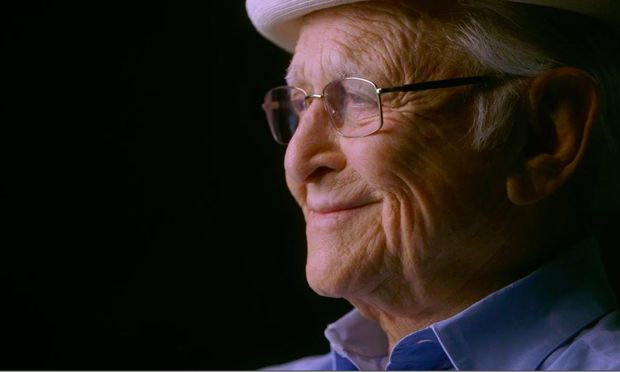
Norman Lear, seen above in documentary NORMAN LEAR: ANOTHER VERSION OF YOU, will be at the Greene Space to discuss his life and career

Norman Lear, seen above in documentary NORMAN LEAR: ANOTHER VERSION OF YOU, will be at the Greene Space on December 17 to discuss his life and career

Who: Norman Lear, Susan Fales-Hill, Heidi Ewing, Rachel Grady
What: Conversation with Norman Lear
When: Saturday, December 17, $25, 6:00
Where: The Greene Space at WNYC, 44 Charlton St. at Varick St.
Why: “In my ninety-plus years I’ve lived a multitude of lives,” Norman Lear writes in his new memoir, Even This I Get to Experience. “I had a front-row seat at the birth of television; wrote, produced, created, or developed more than a hundred shows; had nine on the air at the same time; finished one season with three of the top four and another with five of the top nine; hosted Saturday Night Live; wrote, directed, produced, executive-produced, or financed more than a dozen major films; before normalization, led an entourage of Hollywood writers and producers on a three-week tour of China; founded several cause-oriented national organizations, including the 300,000-member liberal advocacy group People for the American Way; was told by the New York Times that I changed the face of television; was labeled the ‘No. 1 enemy of the American family’ by Jerry Falwell; was warned by Pat Robertson that my arms were ‘too short to box with God’; made it onto Richard Nixon’s ‘Enemies List’; was presented with the National Medal of the Arts by President Clinton; purchased an original copy of the Declaration of Independence and toured it for ten years in all fifty states; was ranked by Entertainment Weekly fortieth among the ‘100 Greatest Entertainers of the Century’ (twenty-nine places ahead of the Sex Pistols); ran the Olympic torch in the 2002 Winter Olympics; blew a fortune in a series of bad investments in failing businesses; and reached a point where I was informed we might even have to sell our home.” That’s quite a legacy for the ninety-four-year-old New Haven native, built around such innovative television programs as All in the Family, Good Times, The Jeffersons, Sanford and Son, Maude, Fernwood 2Night, One Day at a Time, and Marry Hartman, Mary Hartman but one that goes much further than that. On December 17, Lear will sit down with author and television writer Susan Fales-Hill (Always Wear Joy, A Different World) for the next installment of her “Icons & Innovators” series at the Greene Space for a conversation exploring Lear’s extensive life and career. They will be joined by filmmakers Heidi Ewing and Rachel Grady (Jesus Camp, 12th & Delaware), directors of the recently released documentary Norman Lear: Another Version of You, which opened the 2016 Sundance Film Festival. It should be a fascinating, wide-ranging talk, especially given the political situation in the country today.