
Bobbi Jene Smith and Keir GoGwilt team up for A STUDY ON EFFORT at Invisible Dog Center as part of COIL festival
The always exciting winter performance festival season gets under way right after New Year’s, with a slew of popular programs occurring all over town and in multiple boroughs. PS122’s COIL 2017 festival, the last under artistic director Vallejo Gantner, consists of fourteen events, with a dozen performances, a sewing bee, and the Red + White Party. The Public Theater’s fourteenth annual Under the Radar fest includes twenty-one programs, centering on experimental music, theater, and dance, along with postshow discussions and the Incoming festival within a festival. The NYC Winter Jazzfest will celebrate the centennial of Thelonius Monk’s birth while also concentrating on social justice. Focusing on “socially and aesthetically marginal and subversive artists tearing at the boundaries of form and wrestling with the realities of identity,” American Realness was founded in 2010 by Thomas Benjamin Snapp Pryor and Abrons Arts Center in 2010, directly modeled after the Public Theater’s Under the Radar festival; the eighth annual event comprises more than two dozen performances, readings, workshops, discussions, installations, and a party. The fifth annual Prototype festival, which presents cutting-edge opera-theater and music-theater, hosts seven productions, an anniversary party, panel discussions and talkbacks, and the Out of Bounds series of free performances in public spaces. Below are a handful of recommendations for each of the above January festivals.
COIL
Multiple venues
January 3-22
www.ps122.org/coil-2017
January 3, 4-7, 10-15
CVRTAIN, by Yehuda Duenyas, immersive virtual reality experience, 151 Gallery, 132 West 18th St., $10
January 5-8
Custodians of Beauty, by Pavel Zuštiak/Palissimo, dance-theater piece exploring beauty, La MaMa, the Downstairs, 66 East Fourth St., $20
January 7-10
Basketball, by Molly Lieber and Eleanor Smith, dance exploring past shames, Howard Gilman Performance Space, Baryshnikov Arts Center, 450 West 37th St., $20
January 8
Umyuangvigkaq: PS122 Long Table and Durational Sewing Bee, by Emily Johnson/Catalyst, featuring breakfast, “This Is Lenapehoking: Countering Perceived Invisibility,” “Indigenizing the Future: The Continuance of Aesthetic, Invention, Ceremony,” “My Dad Gives Blueberries to Caribou He Hunts: Indigenous Process and Research as Ceremony,” and “Radical Love: Indigenous Artists and Our Allies,” Ace Hotel New York, 20 West 29th St., free with advance RSVP, 11:30 am – 6:00 pm
January 12-14
A Study on Effort, by dancer and choreographer Bobbi Jene Smith in collaboration with violinist Keir GoGwilt, Invisible Dog Art Center, 51 Bergen St., $20
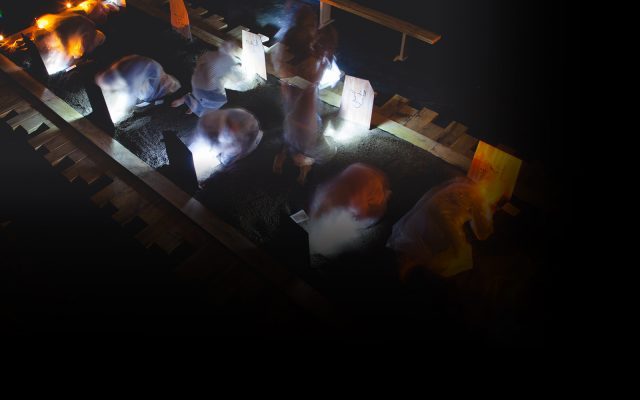
Tania El Khoury’s GARDENS SPEAK give voice back to dead Syrian activists and protesters (photo by Jesse Hunniford)
UNDER THE RADAR
Public Theater and other venues
425 Lafayette St. by Astor Pl.
January 4-15
publictheater.org
January 4, 6, 10
Erin Markey: Boner Killer, words and music by Erin Markey, directed by Ellie Heyman, starring Markey and Emily Bate, Joe’s Pub at the Public Theater, $25
January 6-9
Gardens Speak, interactive sound installation about ten deceased Syrian activists, by Tania El Khoury, NYU Tisch School of the Arts Abe Burrows Theatre, 721 Broadway, $25
January 9
Incoming! They, Themselves and Schmerm, written and performed by Becca Blackwell, directed and developed by Ellie Heyman, the Robert Moss Theater at Playwrights Downtown, 440 Lafayette St., $25, 5:00 & 8:30
January 11, 12, 14, 15
Latin Standards, written and performed by Marga Gomez, directed by David Schwizer, Martinson Hall, the Public Theater, $25
January 12-15
Time of Women by Belarus Free Theatre, about a trio of women (Maryia Sazonava as Iryna Khalip, Maryna Yurevich as Natalya Radina, Yana Rusakevich as Nasta Palazhanka) fighting for a free and democratic Belarus, written by Nicolai Khalezin and Natiala Kaliada and directed by Khalezin, NYU Tisch School of the Arts Shop Theatre, 721 Broadway, $25
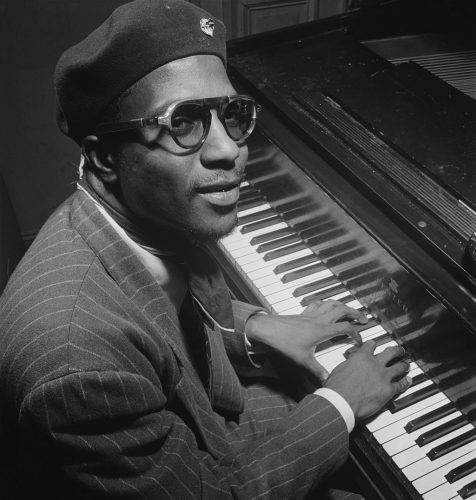
NYC Winter Jazzfest will celebrate one hundredth birthday of Thelonius Monk (photo by William P. Gottlieb)
NYC WINTER JAZZFEST
Multiple venues
January 5-10
www.winterjazzfest.com
January 6, 7
NYC Winter Jazzfest Marathon, multiple venues, $45-$55 per day, $80-$90 for both
Sunday, January 8
Thelonious Monk Makes a Hundred, panel discussion, the New School, Fifth Floor Theater, 55 West Thirteenth St., 3:00
Thelonius Monk 100th Birthday Improv Show, with Kris Davis, David Virelles, Shabaka Hutchings, Sam Newsome, Marc Ribot, Charlie Burnham, Erik Friedlander, Linda Oh, Trevor Dunn, Hamid Drake, Andrew Cyrille, and Deva Mahal playing Solo Monk, Littlefield, 622 Degraw St., $20-$25, 8:00
Tuesday, January 10
Charlie Haden’s Liberation Music Orchestra: A Concert for Social Justice, with special guest Geri Allen and arrangements by Carla Bley, Le Poisson Rouge, 158 Bleecker St., $30-$40, Social and Environmental Justice panel at 6:00, show at 8:00
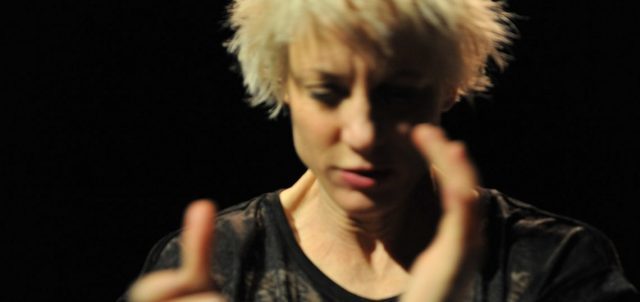
Meg Stuart will present an evening of solo works as part of American Realness festival (photo by Giannina Urmeneta Ottiker)
AMERICAN REALNESS
Abrons Arts Center and other venues
466 Grand St. at Pitt St.
January 5-12
americanrealness.com
January 5-7
An Evening of Solo Works by Meg Stuart, including XXX for Arlene and Colleagues and Signs of Affection, Abrons Arts Center, Playhouse, $20
January 6, 7
Étroits sont les Vaisseaux, by Kimberly Bartosik / daela, duet for Joanna Kotze and Lance Gries, inspired by Anselm Kiefer’s large-scale sculpture, Gibney Dance, Agnes Varis Performing Arts Center, 280 Broadway, $15
January 6, 7, 10
Twenty Looks or Paris Is Burning at the Judson Church (s), solo by Trajan Harrell, first work in series, Abrons Arts Center, Playhouse, $20
January 7, 8, 9, 10
Adult Documentary by Juliana F. May, piece for five dancers about trauma and form, Abrons Arts Center, Experimental Theater, $20
January 8
In the Works: Dance in Process Resident Artists & Guests, with performances by Melinda Ring, Anna Sperber, Michelle Boulé, Jaamil Olawale Kosoko, Larissa Velez-Jackson, Gibney Dance Company, Antonio Ramos, Katie Workum, Bjorn Safsten, Yanira Castro, iele paloumpis, Gibney Dance Choreographic Center, 890 Broadway, free, 10:00 am – 4:00 pm
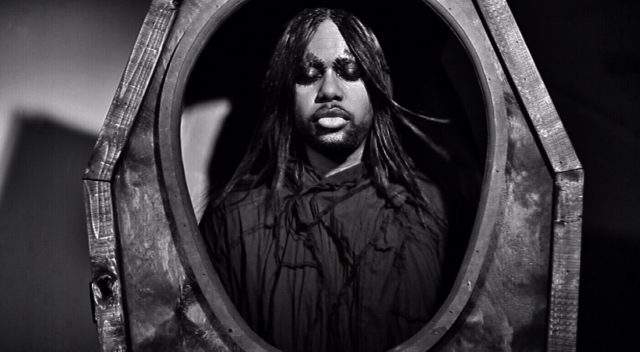
FUNERAL DOOM SPIRITUAL will have its New York premiere at National Sawdust as part of Prototype festival (photo by M. Lamar)
PROTOTYPE
Multiple venues
January 5-15, $25 unless otherwise noted
www.prototypefestival.org
January 5
Out of Bounds: Amirtha Kidambi, inspired by Nina Simone’s performance at the Harlem Cultural Festival in 1969, 60 Wall St. Atrium, free, 1:00
January 5-14
Mata Hari, composed by Matt Marks, directed and with libretto by Paul Peers, conducted by David Bloom, and starring Tina Mitchell, HERE, 145 Sixth Ave., $30
January 6
Out of Bounds: Leah Coloff, inspired by Patti Smith’s Kimberly and a set at CBGB’s, 60 Wall St. Atrium, free, 1:30
January 6, 7, 9
Breaking the Waves, New York City premiere of opera based on Lars Von Trier film, composed by Missy Mazzoli, directed by James Darrah, conducted by Julian Wachner, with libretto by Royce Vavrek, and starring Bess McNeill and Jan Nyman, NYU Skirball Center, 566 LaGuardia Pl., $30-$75, 7:30
January 13, 14
Funeral Doom Spiritual, multimedia concert by composers M. Lamar and Hunter Hunt-Hendrix and librettists Lamar and Tucker Culbertson, with Lamar on piano and vocals, string arrangements by Hunt-Hendrix, and additional arrangements by James Ilgenfritz & the Anagram Strings, National Sawdust, 80 North Sixth St., $30, 7:00 & 10:00
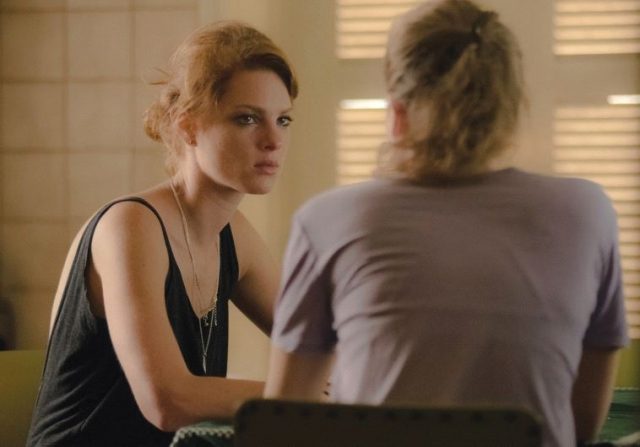
 The 2017 New York Jewish Film Festival opens with the tender, emotionally wrenching Moon in the 12th House, the debut feature by Dorit Hakim, who won the 1998 Silver Lion for Best Short Film for her eleven-minute Small Change. Hakim, a journalist and filmmaker who was born in Tel Aviv, lived for several years with her husband, Israeli hi-tech success Shlomo Kramer, in Silicon Valley, then moved back to her homeland. For her first full-length work, she reaches deep into her Israeli youth to tell the story of two sisters separated by tragedy when they were girls. Now adults, the vain Mira (Yuval Scharf) works in a glitzy Tel Aviv nightclub, where she does drugs and sleeps with her selfish, mean-spirited boss, Doron (Gal Toren). Her younger sister, twenty-one-year-old Lenny (Yaara Pelzig), has chosen to remain in the family home in the country, taking care of their ailing father (Avraham Horovitz), who is in an assisted living facility after a stroke. Lenny, who goes for a precious swim every day to temporarily escape her overwhelming responsibilities, is also watching her neighbor’s teenage son, Ben (Gefen Barkai), while his artist mother is away. Long estranged, the sisters are reunited when a desperate Mira suddenly shows up on Lenny’s doorstep, but as much as Mira might need her, Lenny is not yet ready to accept her back in her life. “It’s not as easy for me as it is for you,” Mira says, not understanding the sacrifices that Lenny has made, part of the reason why they are estranged.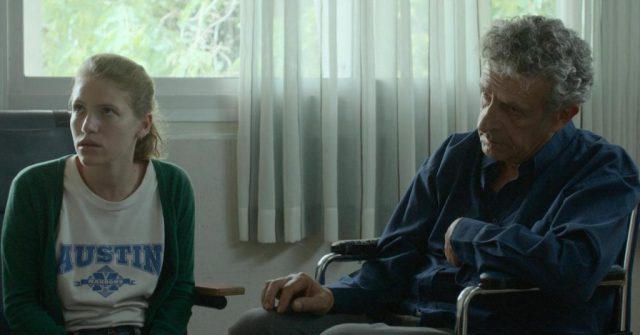
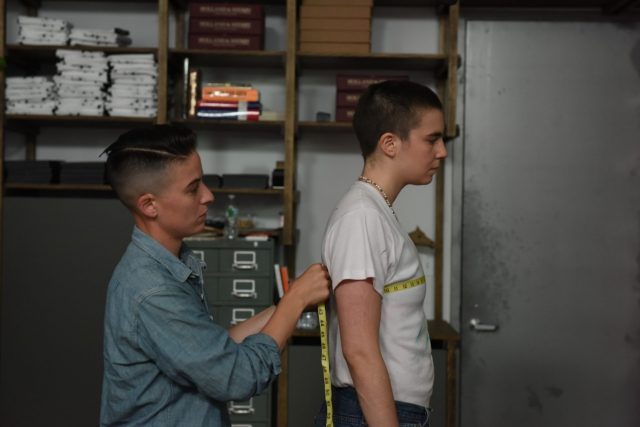
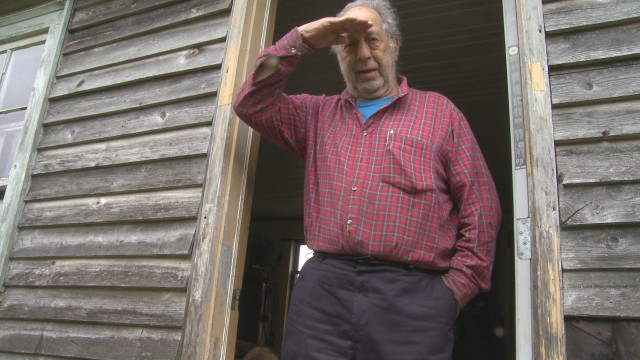
 “I hate these fucking interviews,” innovative, influential, ornery, and iconoclastic photographer and filmmaker Robert Frank says while preparing to be interviewed in 1984; the scene is shown in Laura Israel’s new documentary, Don’t Blink — Robert Frank. “I’d like to walk out of the fucking frame,” he adds, then does just that. But in Don’t Blink, Frank finds himself walking once more into the frame as Israel, his longtime film editor, attempts to get him to open up about his life and career. Born in Zurich in 1924, Frank immigrated to the United States in 1947, became a fashion photographer, and had his artistic breakthrough in 1958 with the publication of the controversial photo book The Americans, which captured people unawares from all over the country, using no captions, just image, to get his point across. (In 2009,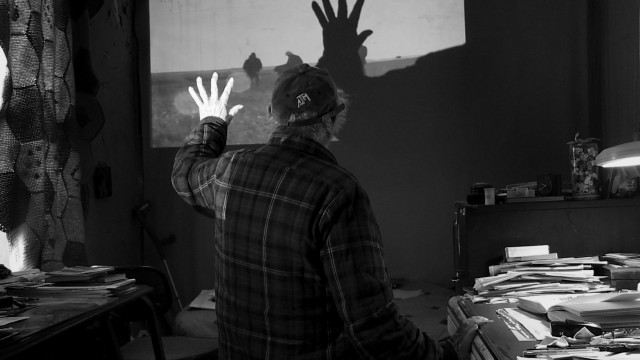

 Carlos Reygadas’s Silent Light is a gentle, deeply felt, gorgeously shot work of intense calm and beauty. The film opens with a stunning sunrise and ends with a glorious sunset; in between is scene after scene of sublime beauty and simplicity, as Reygadas uses natural sound and light, a cast of mostly nonprofessional actors, and no incidental music to tell his story, allowing it to proceed naturally. In a Mennonite farming community in northern Mexico where Plautdietsch is the primary language, Johan (Cornelio Wall Fehr) is torn between his wife, Esther (Miriam Toews), and his lover, Marianne (Maria Pankratz). While he loves Esther, he finds a physical and spiritual bond with Marianne that he does not feel with his wife and their large extended family. Although it pains Johan deeply to betray Esther, he is unable to decide between the two women, even after tragedy strikes. Every single shot of the spare, unusual film, which tied for the Jury Prize at the 2007 Cannes Film Festival (with Vincent Paronnaud and Marjane Satrapi’s Persepolis), is meticulously composed by Reygadas (Japon,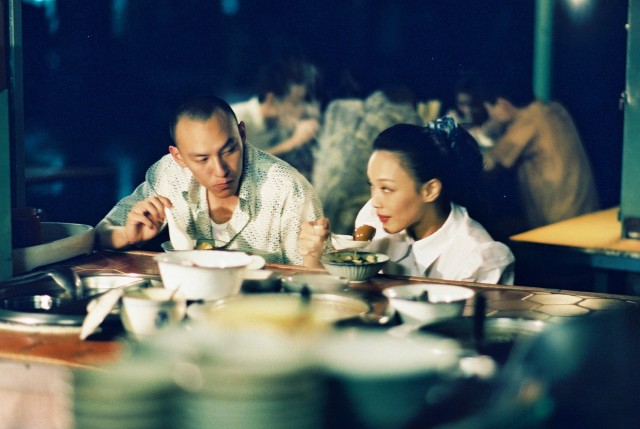
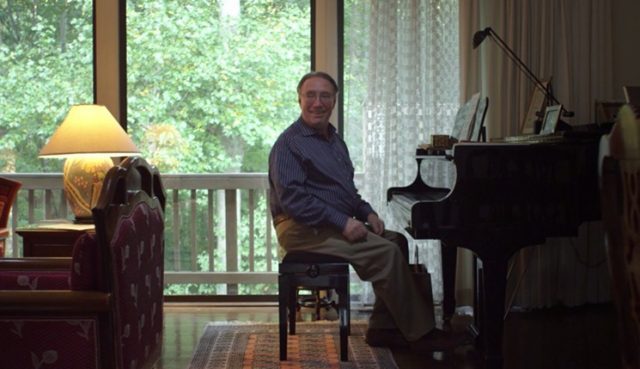
 There’s an odd element that runs through Eve Marson’s documentary Dr. Feelgood: Dealer or Healer? In nearly every new interview with film subject Dr. William Hurwitz, whose treatment of chronic pain included prescribing sometimes tens of thousands of opioids over a twelve-to-eighteen-month period for a single patient, the physician has a sly smile, as if this is all a kind of joke, or that he doesn’t understand what all the fuss is about. “One of the best reasons to go into medical practice is to help people. When somebody comes to you and they feel their life is constrained by pain, the ability to relieve that pain gives enormous satisfaction,” he explains at the beginning of the film. And he is still very satisfied, despite the death of at least two of his patients, time in prison, and the loss of his medical license. The film points out that one in three Americans suffer from chronic pain and that more than 200 million prescriptions for opioid painkillers are written each year. Marson shows viewers several sides of the controversial topic, in interviews with Dr. Hurwitz’s daughter, Gabriela; his ex-wife, Nilse Quercia; his former nurse, Ann Wierbinski; his former receptionist, Georgia Tsourounis; his defense attorney, Lawrence Robbins; patients Molly Shaw, Bret McCarter, and Jane Tanner; pain-treatment expert Dr. Anna Lembke; FBI agent Aaron Weeter; retired Fairfax County police officer Ken Pedigo; New York Times journalist John Tierney; Paul Nye and Michaelina Woodson, who believe Dr. Hurwitz’s treatment killed their spouses; and retired physician Dr. Hal Talley, who points out, “We have never come up with a test that tells you whether somebody is in pain or not.”