this week in lectures, signings, panel discussions, workshops, and Q&As

LUNAR NEW YEAR 4715: THE YEAR OF THE ROOSTER

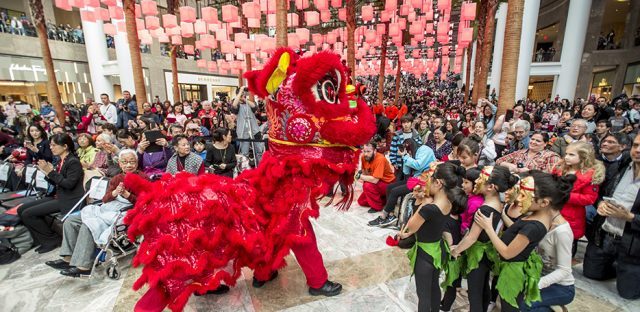
The Year of the Rooster will be celebrated at Brookfield Place and other locations over the next several weeks

The Year of the Rooster will be celebrated at Brookfield Place and other locations across town over next several weeks

Sara D. Roosevelt Park and other locations
East Houston St. between Forsythe & Chrystie Sts.
January 28 – February 17
www.betterchinatown.com
www.explorechinatown.com

Gōng xǐ fā cái! New York City is ready to celebrate the Year of the Rooster, or, more specifically, the Fire Rooster, this month with special events all over town. People born in the Year of the Rooster are trustworthy, responsible at work, talkative, loyal, thoughtful, and popular. Below are some of the highlights happening here in the five boroughs during the next several weeks of Chinese New Year.

Saturday, January 28
New Year’s Day Firecracker Ceremony & Cultural Festival, Sara D. Roosevelt Park, Grand Street at Chrystie St., free, 11:00 am – 3:30 pm

Chinese New Year Temple Bazaar, with live performances, martial arts, food, arts & crafts, and more, Flushing Town Hall, 137-35 Northern Blvd., $3-$5, 11:00 am and 2:00 pm

Sunday, January 29
Lunar New Year Celebration: Madison St. to Madison Ave., with the New York Eastern Chamber Orchestra conducted by Fei Fang, FJ Music, juggler Lina Liu, Chinese marionette puppet show, martial arts performance by American Tai Chi and Health Qigong Center, face painting, calligraphy, themed photo booth, and more, beginning at Harman store at 527 Madison Ave., free, 11:00 am – 3:00 pm

Lunar New Year Celebration, with live performance and brush and ink painting workshop sponsored by the New York Chinese Cultural Center, Staten Island Children’s Museum, 1000 Richmond Terr., $8, 2:00 – 4:00

Tuesday, January 31
Chinese New Year Celebration, with the New York Philharmonic performing works by Li Huanzhi, Adam, Saint-Saëns, Chen Qigang, Huang Zi (arranged by Bao Yuankai), Puccini, Li Qingzhu, and Ravel, David Geffen Hall, 10 Lincoln Center Plaza, $35-$110, 7:30

Friday, February 3
Pauline Benton and the Red Gate Exhibition Opening Reception, Flushing Town Hall, $5 suggested donation, 5:00

Saturday, February 4
Lunar New Year Celebration, with family-friendly arts and crafts, Queens Botanical Garden, 43-50 Main St., free, 1:00

Chinese New Year Celebration, with family workshops, dumpling making, storytelling, lion dance, live music, more, workshops $5-$20, party and performance $10-$20, China Institute, 40 Rector St., 1:00 – 7:00

Sunday, February 5
Eighteenth annual New York City Lunar New Year Parade & Festival, with cultural booths in the park and a parade with floats, antique cars, live performances, and much more from China, Korea, Japan, Vietnam, Taiwan, Malaysia, Singapore, and other nations, Chinatown, Sara D. Roosevelt Park, and Columbus Park, free, 1:00

Rooster Shadow Puppet Workshop, Flushing Town Hall, $8-$10 (free for teens with ID), 1:00

Lunar New Year Festival: Year of the Rooster, with live performances by Sesame Street puppeteers, Chinese opera by Qian Yi, lion parade, Balinese music by Gamelan Dharma Swara, the China Youth Orchestra, traditional music by Mingmei Yip, Vietnamese drums, drawing, paper folding, button making, tea gatherings, comics workshop, hand-pulled noodle demonstration with Chef Zhang, storytelling, collection chats, and more, Metropolitan Museum of Art, 1000 Fifth Ave. at 82nd St., free with suggested museum admission, 11:00 am – 5:00 pm

Saturday, February 11
Lunar New Year Family Festival, with folk arts, live dance, food sampling, storytelling, a gallery hunt, a Nian monster mash-up, and more, Museum of Chinese in America, 215 Centre St., $12, 11:00 am – 4:00 pm

Lunar New Year 4715: Year of the Rooster Celebration, with costume contest, riddles, martial arts, live music and dance, rice balls contest, paper lantern arts and crafts, games, more, P.S.310, 942 62nd St., free, 11:00 am – 2:30

Year of the Rooster Celebration, with lion dancers, lion parade, live music and dance, martial arts demonstrations, theatrical players, and more, New York Chinese Cultural Center at Arts Brookfield, 230 Vesey St., free, 1:30 – 3:30

Saturday, February 11, and Sunday, February 12
Lunar New Year: Year of the Rooster, with puppet shows, scavenger hunt, calligraphy workshop, fortune cookies, and more, Prospect Park Zoo, 450 Flatbush Ave., $6-$8, 11:00 am – 4:00 pm

Friday, February 17
Lunar New Year Shadow Puppet Slam, hosted by Kuang-Yu Fong and Stephen Kaplin, adults only, Flushing Town Hall, $13, 7:00

FILM SCREENING AND ARTIST TALK: CUTIE AND THE BOXER

CUTIE AND THE BOXER

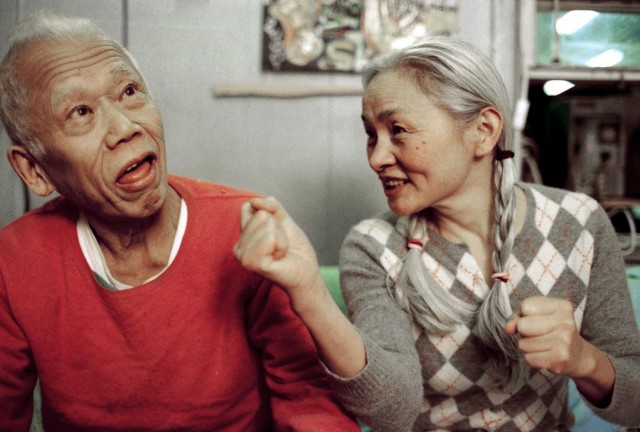
Documentary tells the engaging story of a pair of Japanese artists and the life they have made for themselves in Brooklyn

CUTIE AND THE BOXER (Zachary Heinzerling, 2013)
Japan Society
333 East 47th St. at First Ave.
Friday, January 27, $15, 7:00
212-715-1258
www.japansociety.org
www.facebook.com/cutieandtheboxer

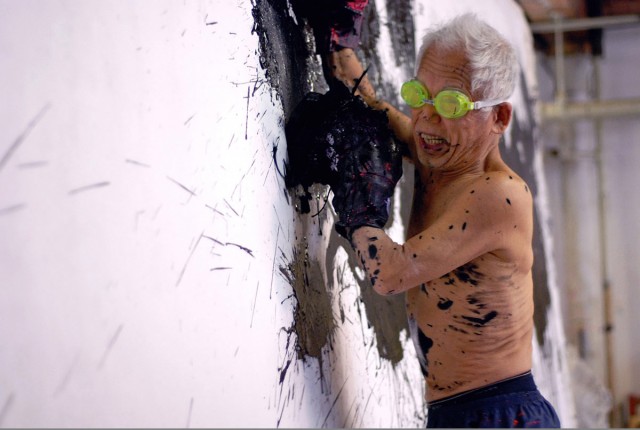
Zachary Heinzerling’s Emmy-winning Cutie and the Boxer is a beautifully told story of love and art and the many sacrifices one must make to try to succeed in both. In 1969, controversial Japanese Neo Dada action painter and sculptor Ushio Shinohara came to New York City, looking to expand his career. According to the catalog for the recent MoMA show “Tokyo 1955-1970: A New Avant-Garde,” which featured four works by Ushio, “American art had seemed to him to be ‘marching toward the glorious prairie of the rainbow and oasis of the future, carrying all the world’s expectations of modern painting.’” Four years later, he met nineteen-year-old Noriko, who had left Japan to become an artist in New York as well. The two fell in love and have been together ever since, immersed in a fascinating relationship that Heinzerling explores over a five-year period in his splendid feature-length theatrical debut. Ushio and Noriko live in a cramped apartment and studio in DUMBO, where he puts on boxing gloves, dips them in paint, and pounds away at large, rectangular canvases and builds oversized motorcycle sculptures out of found materials. Meanwhile, Noriko, who has spent most of the last forty years taking care of her often childlike husband and staying with him through some rowdy times and battles with the bottle, is finally creating her own work, an R. Crumb-like series of drawings detailing the life of her alter ego, Cutie, and her often cruel husband, Bullie. (“Ushi” means “bull” in Japanese.) While Ushio is more forthcoming verbally in the film, mugging for the camera and speaking his mind, the pig-tailed Noriko is far more tentative, so director and cinematographer Heinzerling brings her tale to life by animating her work, her characters jumping off the page to show Cutie’s constant frustration with Bullie.

Ushio Shinohara creates one of his action paintings in CUTIE AND THE BOXER

Ushio Shinohara creates one of his action paintings in Emmy-winning CUTIE AND THE BOXER

During the course of the too-short eighty-two-minute film — it would have been great to spend even more time with these unique and compelling figures — the audience is introduced to the couple’s forty-year-old son, who has some issues of his own; Guggenheim senior curator of Asian Art Alexandra Munroe, who stops by the studio to consider purchasing one of Ushio’s boxing paintings for the museum; and Chelsea gallery owner Ethan Cohen, who represents Ushio. But things never quite take off for Ushio, who seems to always be right on the cusp of making it. Instead, the couple struggles to pay their rent. One of the funniest, yet somehow tragic, scenes in the film involves Ushio packing up some of his sculptures — forcing them into a suitcase like clothing — and heading back to Japan to try to sell some pieces. Cutie and the Boxer is a special documentary that gets to the heart of the creative process as it applies both to art and love, focusing on two disparate people who have made a strange yet thoroughly charming life for themselves. Cutie and the Boxer is screening January 27 at 7:00 at Japan Society and will be followed by a discussion and Q&A with Ushio and Noriko in the gallery, where Ushio’s “Tokyo Bazooka” was on display in 1982 and where the couple was part of the memorable “Making a Home” exhibition in 2007.

STANLEY KUBRICK: FEAR AND DESIRE / THE SEAFARERS

Stanley Kubrick’s first feature-length film, FEAR AND DESIRE, is screening at IFC retrospective with bonus treat

FEAR AND DESIRE (Stanley Kubrick, 1953) / THE SEAFARERS (Stanley Kubrick, 1953)
IFC Center
323 Sixth Ave. at West Third St.
Monday, January 30, 12:20 & 7:30
Series runs through February 2
212-924-7771
www.ifccenter.com

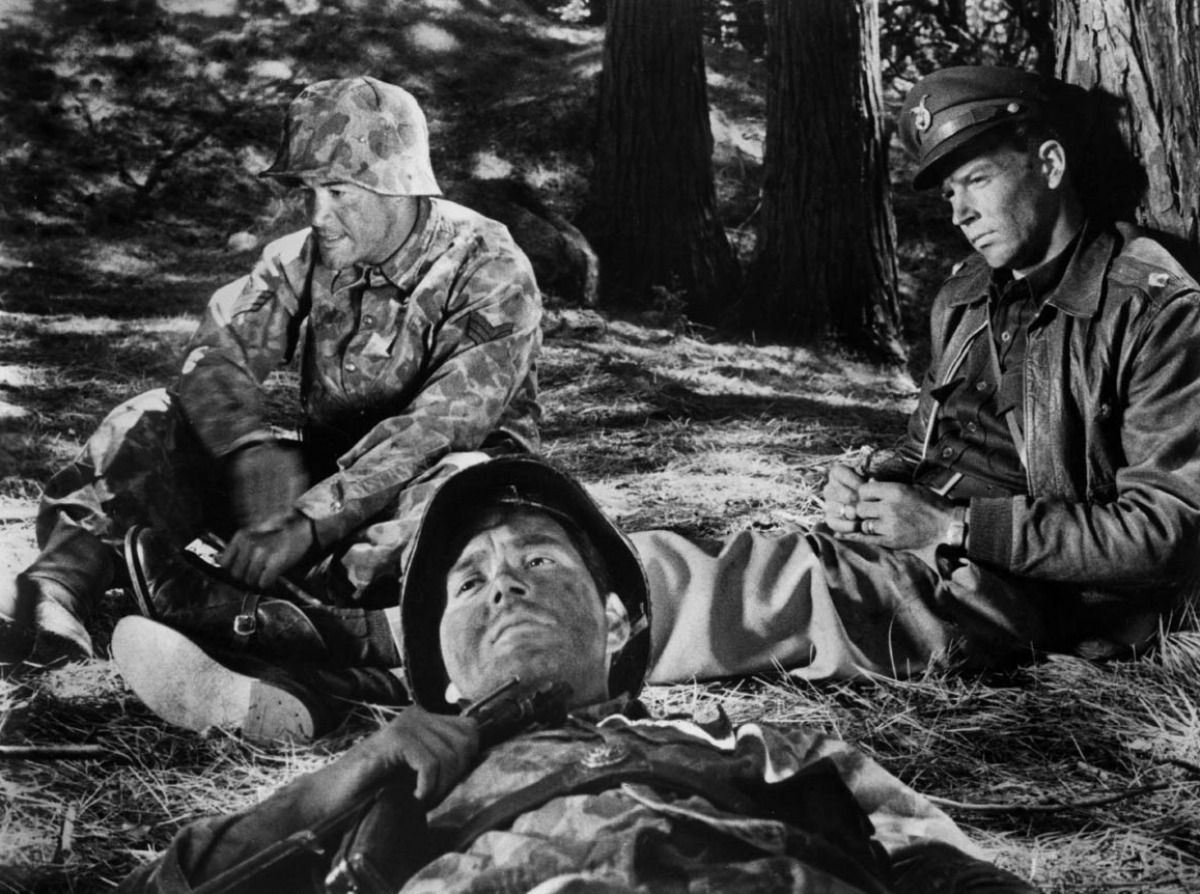
IFC Center is celebrating the January 27 theatrical release of Alex Infascelli’s documentary S Is for Stanley, about longtime Stanley Kubrick aide Emilio D’Alessandro, with a two-week festival that includes every one of the Bronx-born ex-pat’s feature works, nearly all of which are being projected in DCP, along with a pair in 35mm. Kubrick’s 1953 seldom-seen psychological war drama, Fear and Desire, will be shown on January 30, along with the auteur’s half-hour industrial short The Seafarers. His first full-length film, made when he was twenty-four, Fear and Desire is a curious tale about four soldiers (Steve Coit, Kenneth Harp, Paul Mazursky, and Frank Silvera) trapped six miles behind enemy lines. When they are spotted by a local woman (Virginia Leith), they decide to capture her and tie her up, but leaving Sidney (Mazursky) behind to keep an eye on her turns out to be a bad idea. Meanwhile, they discover a nearby house that has been occupied by the enemy and argue over whether to attack or retreat. Written by Howard Sackler, who was a high school classmate of Kubrick’s in the Bronx and would later win the Pulitzer Prize for The Great White Hope, and directed, edited, and photographed by the man who would go on to make such war epics as Paths of Glory, Full Metal Jacket, and Dr. Strangelove, or How I Learned to Stop Worrying and Love the Bomb, Fear and Desire features stilted dialogue, much of which is spoken off-camera and feels like it was dubbed in later. Many of the cuts are jumpy and much of the framing amateurish. Kubrick was ultimately disappointed with the film and wanted it pulled from circulation; instead it was preserved by Eastman House in 1989 and restored twenty years later, which is good news for film lovers, as it is fascinating to watch Kubrick learning as the film continues. His exploration of the psyche of the American soldier is the heart and soul of this compelling black-and-white war drama that is worth seeing for more than just historical reasons. “There is a war in this forest. Not a war that has been fought, nor one that will be, but any war,” narrator David Allen explains at the beginning of the film. “And the enemies who struggle here do not exist unless we call them into being. This forest then, and all that happens now, is outside history. Only the unchanging shapes of fear and doubt and death are from our world. These soldiers that you see keep our language and our time but have no other country but the mind.”
THE SEAFARERS

Stanley Kubrick cut his teeth making such promotional films as THE SEAFARERS

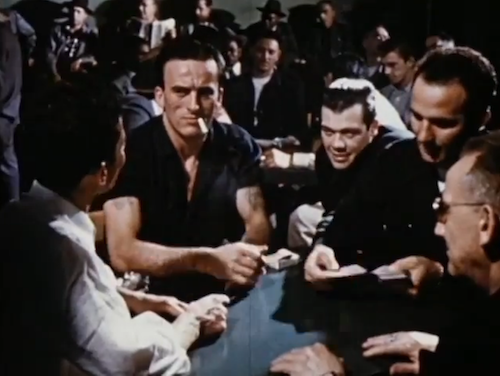
Fear and Desire lays the groundwork for much of what is to follow in Kubrick’s remarkable career; however, the same can’t be said for The Seafarers, a promotional short he directed and photographed in 1953 for the Seafarers International Union, aka the SIU, which is still in existence. “This is a story simple but dramatic, a story about the men who crew our ships, the seafarers,” television newsman Don Hollenbeck, who narrates the film, says in an onscreen preface. The straightforward script, written by Will Chasan, discusses how the union works, detailing responsibilities, benefits, job security, procedures, and more as Kubrick’s camera roams a hiring hall, a food station, various ports, a card game, the Seafarers Log printing press, and a barbershop with a nudie calendar, all set to a splendidly clichéd, lilting musical score. Kubrick also takes viewers inside an actual meeting, where secretary-treasurer Paul Hall gives a speech; Hall went on to become the SIU’s second president and in 1967 was honored with the naming of the Paul Hall Center for Maritime Training and Education in Maryland. Kubrick’s first color film, The Seafarers doesn’t lend a whole lot of insight into his methods, but it is a treat that will satisfy completists. Kubrick was also going to make The Halifax Story, about the 1949 Canadian Seamen’s Union strike, but that project never reached fruition. The IFC Center series continues through February 2 with all of Kubrick’s feature films in addition to Steven Spielberg’s A.I. Artificial Intelligence, based on a treatment by Kubrick. S Is for Stanley director Infascelli will be on hand for Q&As following screenings of his Italian documentary on Friday at 8:00 and Saturday at 7:15.

BROADWAYCON 2017

(photo by Chad Batka)

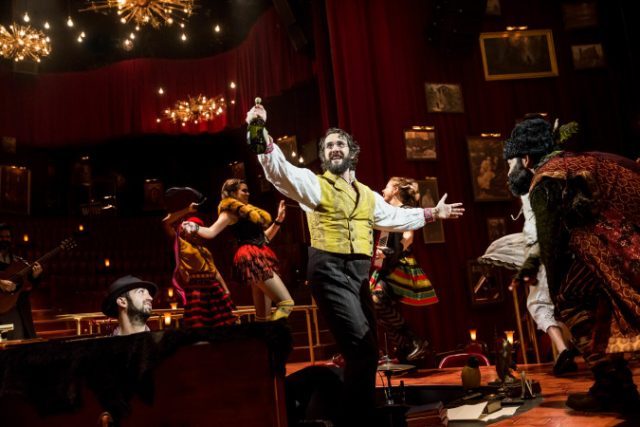
Josh Groban and other members of the creative team of NATASHA, PIERRE AND THE GREAT COMET OF 1812 will be at second annual BroadwayCon on July 27 (photo by Chad Batka)

Jacob K. Javits Convention Center
655 West 34th St. (11th Ave. between 34th & 39th Sts.)
January 27-29, $250 General Pass, $65-$95 Day Pass
www.broadwaycon.com
www.javitscenter.com

BroadwayCon takes a major step up in its second year, moving from the New York Hilton to the Javits Center this weekend. The founders and presenters, which include Melissa Anelli, Anthony Rapp, Playbill, and Mischief Management, are discussing performance and payment details with Actors’ Equity, but whatever they decide, there is still an impressive roster of events. Gold passes ($600) are sold out, but you can still get a General Pass ($250) or single-day tickets ($65-$95) to see cast and crew members and/or participate in fan meetups for such shows as Annie, Kinky Boots, Wicked, In Transit, Hamilton, Les Misérables, Ragtime, Natasha, Pierre and the Great Comet of 1812, and many others in addition to autograph and/or photobooth sessions with Kelli O’Hara, Rebecca Luker and Danny Burstein, Michael Cerveris and Judy Kuhn, Carolee Carmello, Jane Houdyshell and Reed Birney, Chita Rivera, Jeremy Jordan, Donna Murphy, Alison Fraser, Mary Testa, and Chip Zien, Rapp, and many more. Below are only some of the highlights.

Friday, January 27
The Art of Perseverance with Melissa Errico, Programming Room A, 11:00 am

Cabaret and the Next Generation of Artists, with Shoshana Feinstein, Joe Iconis, Jay Armstrong Johnson, Julia Mattison, and Benjamin Rauhala, moderated by Jennifer Ashley Tepper, Programming Room E, 2:00

Women in the World of Sondheim, with Katie Welsh, Emily Whitaker, and Stacy Wolf, Programming Room A, 2:30

Chandeliers and Caviar: Natasha, Pierre and the Great Comet of 1812, with Brittain Ashford, Gelsey Bell, Nicholas Belton, Denée Benton, Nick Choksi, Amber Gray, Josh Groban, Dave Malloy, Grace McLean, Michael Paulson, Paul Pinto, and Lucas Steele, MainStage, 5:00

Annie Forty-Year Reunion, with Jennifer Ashley Tepper, Steve Boockvor, Shelley Bruce, Martin Charnin, Mary Jane Houdina, Andrea McArdle, Thomas Meehan, and Charles Strouse, MainStage, 8:00 PM

Saturday, January 28
Everybody Say Yeah: Three Years at Kinky Boots, with Killian Donnelly, Todrick Hall, Julie James, Taylor Louderman, and Jerry Mitchell, MainStage, 11:00 am

Madam Secretary Panel, with Sebastian Arcelus, Erich Bergen, Keith Carradine, Tim Daly, Željko Ivanek, Patina Miller, and Bebe Neuwirth, moderated by Anthony Rapp, MainStage, 1:00

William Ivey Long: A Lifetime in Theatre, Programming Room C, 3:00

Shaina Taub Performance, Marketplace Stage, 3:30

Joel Grey Q&A, MainStage, 4:00

Sunday, January 29
Born to Boogie: Broadway’s Choreographers, with Lorin Latarro and Spencer Liff, Programming Room C, 10:00 am

Raising Broadway Babies: Working Moms on Broadway, with Carmen Ruby Floyd, Blair Goldberg, and Erin Quill, moderated by Vasthy Mompoint, Programming Room C, 11:00 am

This Is A Bronx Tale Panel, with Richard H. Blake, Nick Cordero, Ariana DeBose, Chazz Palminteri, Glenn Slater, and Bobby Conte Thornton, MainStage, 12 noon

Judy Kuhn Q&A, with Judy Kuhn and moderator Ilana Levine, Marketplace Stage, 5:00

Geek Out — Freak Out: Our Favorite Songs, with Andrew Keenan-Bolger and Leigh Silverman, moderated by Mark Blankenship, Programming Room D, 5:00

MEMORIAL FOR FRITZ WEAVER

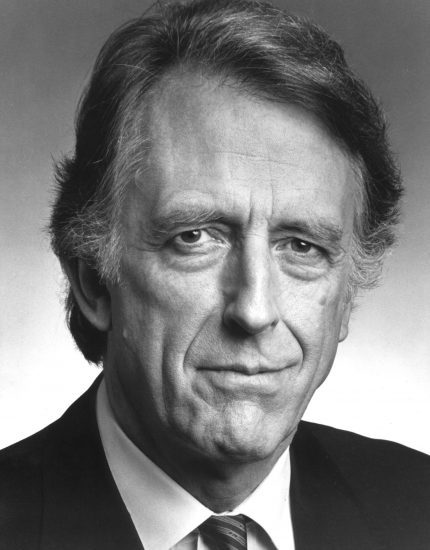
Fritz Weaver

The life and career of Tony-winning, Emmy-nominated, Theatre Hall of Fame inductee Fritz Weaver will be honored at Symphony Space on January 23

Symphony Space, Peter Jay Sharpe Theatre
2537 Broadway at 95th St.
Monday, January 23, free, 6:30
212-864-5400
www.symphonyspace.org

One of the very first actors I felt a real bond with was Fritz William Weaver, the Pittsburgh-born star of stage, screen, and television who passed away in November at the age of ninety. On January 23 at 6:30, a very informal memorial service will be held at Symphony Space, the Upper West Side institution where he was a regular participant in the “Selected Shorts” series and the annual “Bloomsday” reading of James Joyce’s Ulysses. Speakers will include Sherrill Milnes, Jay O. Sanders, Barbara Barrie, Peter Maloney, Harold Holzer, and several family members. I first saw Weaver in such films as The Day of the Dolphin, Marathon Man, and Black Sunday before being blown away by his Emmy-nominated performance in 1978’s Holocaust, which, following on the heels of 1977’s Roots, helped redefine what a miniseries could be. In 1979, I was breathless with anticipation at seeing Weaver on Broadway in Arthur Miller’s The Price, in which Weaver portrayed Walter Franz. I even stuck around to have him sign the program. Comfortable with being the star or as a character actor, in a Shakespeare play or strange films (Demon Seed, The Maltese Bippy), the Tony winner (Child’s Play) and Theatre Hall of Fame inductee appeared in more than one hundred movies and television shows, from Rawhide, The Fugitive, and Gunsmoke to The X-Files, Star Trek: Deep Space Nine, and Murder, She Wrote. He also starred in two of the best Twilight Zone episodes, Third from the Sun and The Obsolete Man. The late Isaiah Sheffer, one of the founders of Symphony Space, referred to Weaver as “Symphony Space’s leading man,” so it is only fitting that the celebration will occur there, where he also made his last public appearance.

TWI-NY TALK: CULADASA (DR. JOHN YATES)

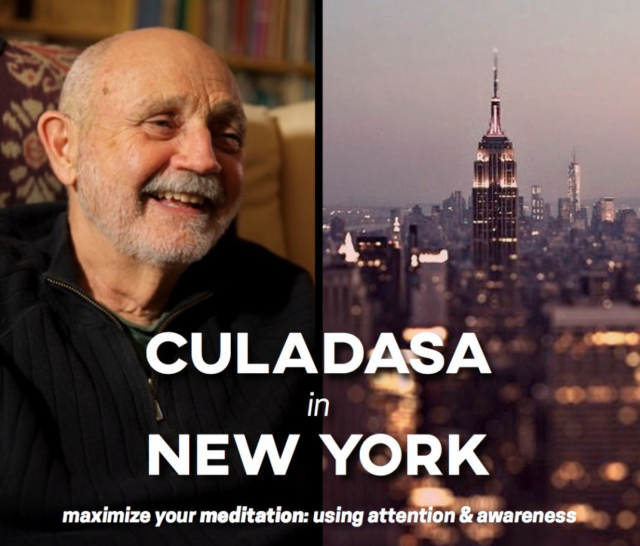
Culadasa in New York

LIGHT ON MEDITATION — THE SCIENCE OF MEDITATIVE SUCCESS
Tibet House
22 West Fifteenth St. between Fifth & Sixth Aves.
Wednesday, January 25, free with advance RSVP, 7:00
212-807-0563
tibethouse.us
themindilluminated.com

MASTER CULADASA: LIGHT ON MEDITATION
The Three Jewels
61 Fourth Ave. between Ninth & Tenth Sts.
Saturday, January 28, $45 suggested admission, 2:00
212-475-6650
mindbodyonline.com
culadasa.com

THE MIND ILLUMINATED BOOK LAUNCH: MAXIMIZE YOUR MEDITATION — A ROADMAP TO MEDITATIVE SUCCESS
The Path at Primary
26 Broadway, eighth floor
Tuesday, January 31, $24, 7:00
www.thepath.com
www.simonandschuster.com

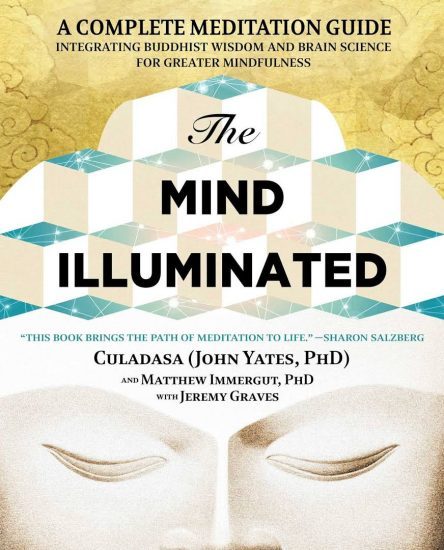
The combination of Buddhism and neuroscience is a heady one, as it were, and there’s no dearth of investigators and writers helping us understand our brain and our mind. Writers on the subject, from the Dalai Lama to Mingyur Rinpoche to B. Alan Wallace to Robert Thurman, have talked about the overlap between discoveries about consciousness in neuroscience and millennia-old Buddhist teachings on consciousness, the self, and reality. One of the latest authors working with these insights, John Yates, PhD (aka Culadasa), will be in New York City this month presenting his fascinating five-hundred-plus-page work, The Mind Illuminated: A Complete Meditation Guide Integrating Buddhist Wisdom and Brain Science for Greater Mindfulness (Simon & Schuster, January 2017, $25.99), written with Matthew Immergut, PhD, and Jeremy Graves. Dr. Yates, the director of the Dharma Treasure Buddhist Sangha in Tucson, studied deeply and intensively with both Theravadin and Tibetan Buddhist teachers and is a former professor of neuroscience. Prior to coming to New York City for three special events on January 25 (discussion, Q&A, and book signing at Tibet House), 28 (lecture, Q&A, and signing at the Three Jewels), and 31 (meditation and meal at the Path), he was happy to answer questions from a longtime twi-ny editor and meditator about his work and long-awaited first book.

twi-ny: The Mind Illuminated presents meditation as an everyday, evidence-based training activity for the mind that really works. If a reader sits down and practices with the first instructions in your book for six months, what results could they expect?

Culadasa: There is some variation, of course, but if a meditator diligently follows the instruction in a daily practice, they should achieve at least Stage Four — stable, continuous attention on the meditation object without episodes of forgetting or mind wandering. At this stage, our meditator can do something very few people can ever do: They can keep their attention focused on a chosen object, regardless of the intrinsic interest of the object, for very long periods of up to an hour. But even more importantly, they can simultaneously sustain a broad, open awareness of everything around them and of what is going on in their own mind as well. This allows them to begin observing and investigating their mind, which is a rich and wonderful experience. Some meditators will achieve higher stages: five, six, perhaps even seven. This is especially true of those who have been meditating according to some other method for a long time.

the mind illuminated

twi-ny: Now that the book is complete and published, out in the world, do you see your own teaching practice developing around it? What’s next?

Culadasa: Now that the book is available to a wider audience, I am finding a lot of people and organizations asking for my time. Due to my age and health, it’s simply impossible for me to respond to these requests. So over the last three years, I have been intensively training a brilliant group of people who will have a deep understanding of everything in the book and more. They will take over from me, so no, I don’t see myself building my teaching around it. I’ll be doing that initially, as I am now, but the baton will soon be passed to a younger generation.

As for myself, I am currently working on another book, one that I consider potentially even more important than The Mind Illuminated. I am hoping to present the Dharma to the world in terms that are understandable and acceptable to people everywhere, regardless of their religious affiliations or lack thereof. It is a book that I hope will transform the attitudes of people toward each other, and the dominant global culture, in time for us to save ourselves from ourselves.

twi-ny: As a meditation student and teacher myself, I appreciate the secular, neuroscience-based approach because it makes meditation available to so many who won’t try older styles of meditation training due to aversion to Eastern religion or “woo-woo.” But like many others, I’m skeptical that meditation training divorced from ethical training can actually be transformative. And ethics, whether religion-based or secular, is a very loaded subject. How would you explain your approach to this in the book?

Culadasa: You are absolutely right. Meditation divorced from the practice of virtue is quite limited in value and can only very rarely be transformative. But the West, and global culture in general, is fascinated by technology. Meditation is a kind of technology, so it’s a great way of getting people interested in the Dharma, and can make them aware of how much more it has to offer than just stress reduction, increased productivity, and better relationships. The practice of virtue in the Buddha’s teaching goes far beyond ethics. It is a powerful method in itself, contributing enormously to the arising of Insight and to the Awakening we all seek. The Eightfold Path has three parts: Wisdom, Virtue, and Meditation. They mutually support each other, and no one or even two of them can ever stand for long by itself. That is part of the reason I am working on my new book. It will provide the other two legs of the tripod.

CABARET CINEMA — PERCEPTION: VERTIGO

VERTIGO

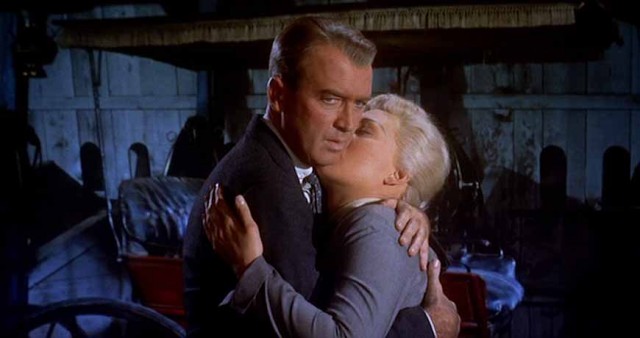
James Stewart and Kim Novak get caught up in a murder mystery in VERTIGO

VERTIGO (Alfred Hitchcock, 1958)
Rubin Museum of Art
150 West 17th St. at Seventh Ave.
Friday, January 20, $10, 9:30
Series continues Friday nights through April 28
212-620-5000
rubinmuseum.org

The Rubin Museum Cabaret Cinema series “Perception” continues January 20 with Alfred Hitchcock’s 1958 mind-altering, fetishistic psychological thriller, Vertigo. Based on Boileau-Narcejac’s 1954 novel, D’entre les morts, the film delves deep into the nature of fear and obsession. Jimmy Stewart stars as John “Scottie” Ferguson, a police detective who retires after his acrophobia leads to the death of a fellow cop. An old college classmate, wealthy businessman Gavin Elster (Tom Holmore), asks Scottie to look into his wife’s odd behavior; Elster believes that Madeleine (Kim Novak) is being inhabited by the spirit of Carlotta Valdes, her great-grandmother, a woman who committed suicide in her mid-twenties, the same age that Madeleine is now. Scottie follows Madeleine as she goes to Carlotta’s grave, visits a portrait of her in a local museum, and jumps into San Francisco Bay. Scottie rescues her, brings her to his house, and starts falling in love with her. But on a visit to Mission San Juan Bautista, tragedy strikes when Scottie can’t get to the top of the tower because of his vertigo. After a stint in a sanatorium, he wanders the streets of San Francisco where he and Madeleine had fallen in love, as if hoping to see a ghost — and when he indeed finds a woman who reminds him of Madeleine, a young woman named Judy Barton (Novak), he can’t help but try to turn her into his lost love, with tragedy waiting in the wings once again.

VERTIGO

Scottie experiences quite a nightmare in Alfred Hitchcock classic

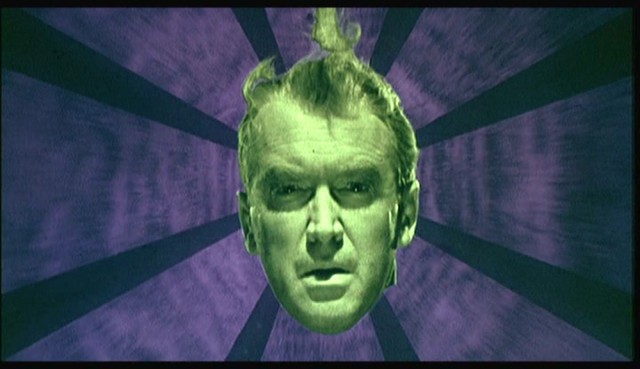
Vertigo is a twisted tale of sexual obsession, much of it filmed in San Francisco, making the City by the Bay a character all its own as Scottie travels down Lombard St., takes Madeleine to Muir Woods, stops by Ernie’s, and saves Madeleine under the Golden Gate Bridge. The color scheme is almost shocking, with bright, bold blues, reds, and especially greens dominating scenes. Hitchcock, of course, famously had a thing for blondes, so it’s hard not to think of Stewart as his surrogate when Scottie insists that Judy dye her hair blonde. Color is also central to Scottie’s psychedelic nightmare (designed by artist John Ferren), a Spirographic journey through his mind and down into a grave. Cinematographer Robert Burks’s use of the dolly zoom, in which the camera moves on a dolly in the opposite direction of the zoom, keeps viewers sitting on the edge of their seats, adding to the fierce tension, along with Bernard Herrmann’s frightening score. Despite their age difference, there is pure magic between Stewart, forty-nine, and Novak, twenty-four. (Stewart and Novak next made Bell, Book, and Candle as part of the deal to let Novak work for Paramount while under contract to Columbia.) The production was fraught with problems: The screenplay went through Maxwell Anderson, Alec Coppel, and finally Samuel A. Taylor; shooting was delayed by Hitchcock’s health and vacations taken by Stewart and Novak; a pregnant Vera Miles was replaced by Novak; Muir Matheson conducted the score in Europe, instead of Herrmann in Hollywood, because of a musicians’ strike; associate producer Herbert Coleman reshot one scene using the wrong lens; Hitchcock had to have a bell tower built atop Mission San Juan Bautista after a fire destroyed its steeple; and the studio fought for a lame alternate ending (which was filmed). Perhaps all those difficulties, in the end, helped make Vertigo the classic it is today, gaining in stature over the decades, from mixed reviews when it opened to a controversial restoration in 1996 to being named the best film of all time in Sight & Sound’s 2012 poll to a recent digital restoration.

Vertigo is screening January 20 at 9:30 at the Rubin as part of “Perception,” which asks the questions “Can the truth truly be trusted? Is it objective or rather tinted by our experience and memories?” The series, part of the museum’s always innovative Brainwave programming, continues through April 28 with such other mind-bending films as Spike Jonze’s Her, Michel Gondry’s Eternal Sunshine of the Spotless Mind, and the Wachowskis’ The Matrix, with all shows introduced by a scientific expert. Brainwave, meanwhile, features such talks as David Nichtern, Ethan Nichtern, and Samantha Boardman discussing “Can there be such a thing as mindful politics?” on February 1, Walter Murch and Heather Berlin answering the question “How is movie magic made?” on February 4, and Khentrul Thokmeth Rinpoche and Gaëlle Desbordes wondering, “Can meditation change the world?” on March 12.