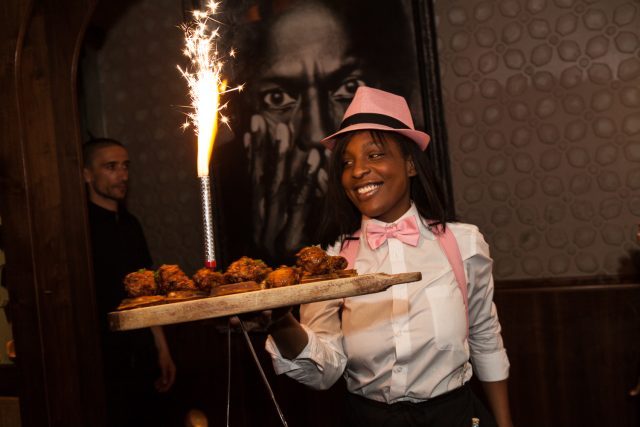
Ginny’s Supper Club is one of dozens of eateries participating in third annual Harlem EatUp! Festival
A CELEBRATION OF CULTURE AND SPIRIT
Multiple locations in Harlem
May 15-21, free – $1,500
harlemeatup.com
The third annual Harlem EatUp! Festival takes place May 15-21, with dozens of chefs, restaurants, culinary organizations, mixmasters, and artists participating in tastings, walking tours, dinners, concerts, and more celebrating Harlem culture. Below is only a handful of the nineteen special events happening across the borough.
Tuesday, May 16
Homage to Billie Holiday, with Alvin Ailey Dance Theater, Rickie Lee Jones, Lizz Wright, Bettye LaVette, Deva Mahal, Ruthie Foster, William Bell, Southside Johnny, Rachael Price, members of Antibalas, and others, hosted by Bevy Smith, the Apollo Theater, $40 – $1,500, 8:00
Wednesday, May 17
Dine In Harlem: Ginny’s Supper Club, with food prepared by Michael Anthony and Marcus Samuelsson and live music from Nate Lucas and the Rakiem Walker Project, $125, 7:00
Friday, May 19
The Harlem EatUp! Annual Luminary Awards Dinner Honoring Jonelle Procope of the Apollo Theater, with food prepared by Roger Mooking and Alex Becker and live music by the Rakiem Walker Project, hosted by Marcus Samuelsson, Ginny’s Supper Club, $230, 6:30
Saturday, May 20
The Harlem Stroll: Ultimate Grand Tasting, featuring dishes from more than two dozen Harlem restaurants, including BLVD Bistro, Charles Country Pan Fried Chicken, Harlem Chocolate Factory, Harlem Pizza Co., Melba’s Restaurant, Madison Street Bakehouse, Red Rooster Harlem, Settepani, Sisters Caribbean, and Zoma, with Bordeaux wine classes and live music from the Rakiem Walker Project, Morningside Park, $85-$110, 12:30 – 5:30
Saturday, May 20
and
Sunday, May 21
The EatUp! Main Stage, Morningside Park, with Marcus Samuelsson, Karl Franz Williams, Brian Washington Palmer, Donatella Arpaia, Darryl Burnette, Roger Mooking, Lorenzo Boni, Raymond Mohan & Leticia “Skai” Young, Daniel Holzman, Johnny Mambo & Friends, Vy Higgensen’s Choir from Harlem, Lorenzo Laroc, the Rakiem Walker Project, Pierre Thiam, DJ Stormin Norman, and New Beginnings Drum & Bugle Corps, free, 12:30 – 5:30
The Harlem Stroll Marketplace, with more than two dozen food vendors, a kids’ zone, demonstrations, live performances, and more, Morningside Park, free, 12:30 – 5:30
Sunday, May 21
The Harlem Stroll: Ultimate Grand Tasting, featuring dishes from more than two dozen Harlem restaurants, including Sexy Taco Dirty Cash, Chaiwali, Shake Shack, Safari Restaurant, SpaHa Soul, Solomon & Kuff Rum Hall, Mere Viola’s Sweet Delight, Lady Lexis Sweets, LoLo’s Seafood Shack, and Harlem Tavern, with Bordeaux wine classes and live music from the Rakiem Walker Project, Morningside Park, $85-$110, 12:30 – 5:30
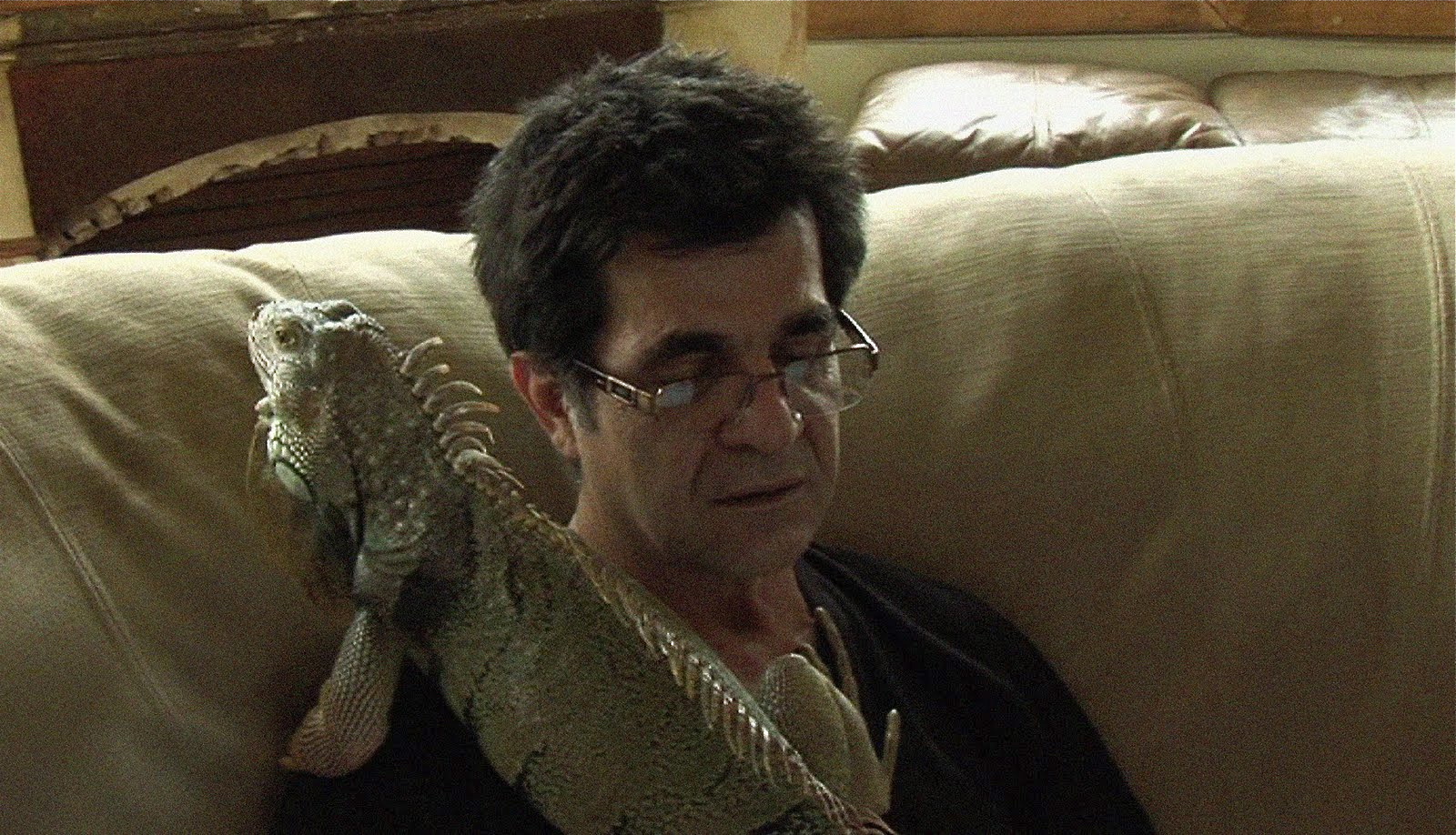
 “You call this a film?” Jafar Panahi asks rhetorically about halfway through the revealing documentary This Is Not a Film. After several arrests beginning in July 2009 for supporting the opposition party, the highly influential and respected Iranian filmmaker (Crimson Gold, Offside) was convicted in December 2010 for “assembly and colluding with the intention to commit crimes against the country’s national security and propaganda against the Islamic Republic.” Although facing a six-year prison sentence and twenty-year ban on making or writing any kind of movie, Panahi is a born storyteller, so he can’t stop himself, no matter the risks. Under house arrest, Panahi has his friend, fellow director Mojtaba Mirtahmasb (Lady of the Roses), film him with a handheld DV camera over ten days as Panahi plans out his next movie, speaks with his lawyer, lets his pet iguana climb over him, and is asked to watch a neighbor’s dog, taking viewers “behind the scenes of Iranian filmmakers not making films.” Panahi even pulls out his iPhone to take additional video, photographing New Year’s fireworks that sound suspiciously like a military attack. Panahi is calm throughout, never panicking (although he clearly does not want to take care of the barking dog) and not complaining about his situation, which becomes especially poignant as he watches news reports on the earthquake and tsunami disaster in Japan.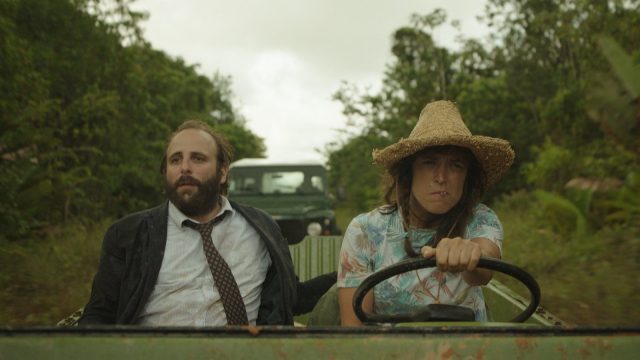
 “Vines . . . are like internships,” Ulrich (Pascal Tagnati) tells Marc Châtaigne (Vincent Macaigne) in Antonin Peretjatko’s madcap colonialist farce, Struggle for Life. “Don’t drop one till you got another.” Nothing ever goes right for middle-aged schlemiel Châtaigne, who has been assigned by Rosio (Jean-Luc Bideau) of the Ministry of Standards to oversee the construction of an indoor ski resort in the jungles of Guiana; Guia-Snow, Rosio explains, will show South America that France can export a coveted resource, cold weather. Châtaigne’s contact in Guiana is lunatic bureaucrat Galgaric (Mathieu Amalric), who assigns him a driver named Tarzan (Vimala Pons), a grown woman who is interning with the Department of Forestry and Water and is in charge of renovating gardens. Soon Châtaigne and Tarzan are lost in the jungle, encountering a variety of oddballs, including Christian Duplex (Pascal Légitimus), Georges (Thomas De Pourquery), and Damien (Rodolphe Pauly), each of whom is somehow involved in either tearing down or saving the Amazon. Meanwhile, Châtaigne is being hunted by strange and skillful tax minister Maître Friquelin (Fred Tousch). They also meet up with dangerous insects and animals, cannibals, and parking meters. Jerry Lewis’s The Patsy meets Woody Allen’s Bananas in this hit-or-miss satire of French colonialism and government programs, in which interns are given a tremendous amount of power and responsibility, with director-cowriter Peretjatko (La Fille du 14 juillet) leaving no sight gag unturned. Yes, a lot of them are just plain stupid, but a whole bunch are just plain funny as well.
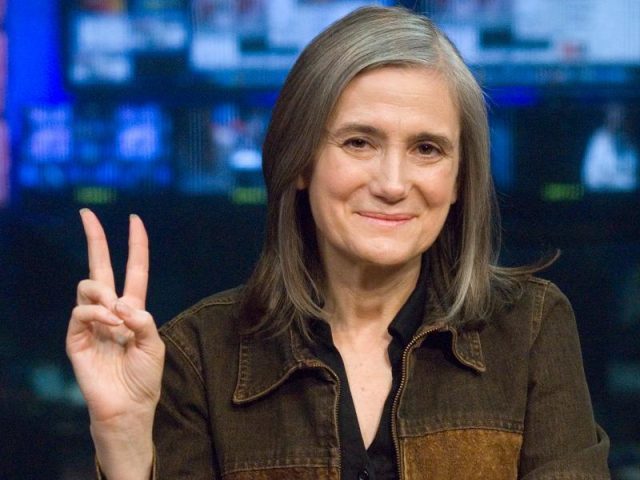
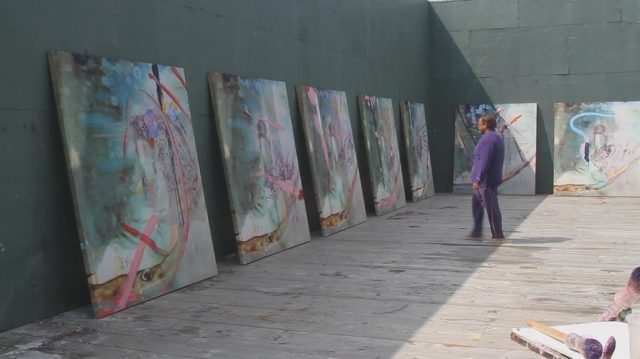
 It’s very possible that superstar artist Julian Schnabel is one of the greatest guys in the world, beloved by friends, family, colleagues, and anyone else who comes into contact with him. I met him once briefly and he was very funny and charming. In Italian writer-director Pappi Corsicato’s Julian Schnabel: A Private Portrait, praise upon praise is heaped on Schnabel, a marvelously talented painter, sculptor, and filmmaker, with nary a glib or less-than-glowing word anywhere to be seen or heard. A longtime friend of Schnabel’s, Corsicato followed the artist for two years and was given full access to his personal archives, resulting in a bevy of fab footage and home movies and photos, from Schnabel as a baby to his surfing days to his family life with his kids and grandchildren. Daughters Lola and Stella rave about him, as do sons Vito, Cy, and Olmo, sister Andrea Fassler, friend Carol McFadden, and ex-wives Jacqueline Beaurang Schnabel and Olatz Schnabel. Also glorying in all things Julian are actors Willem Dafoe, Al Pacino, Mathieu Amalric, and Emmanuelle Seigner, artist Jeff Koons, musicians Bono and Laurie Anderson, gallerist Mary Boone, art collector Peter Brant, French novelist and screenwriter Jean-Claude Carrière, and the late writer-director Héctor Babenco, who all gush about Schnabel’s ingenuity. (Dick Cavett, Takashi Murakami, Christopher Walken, and Francesco Clemente did not make the final cut.)