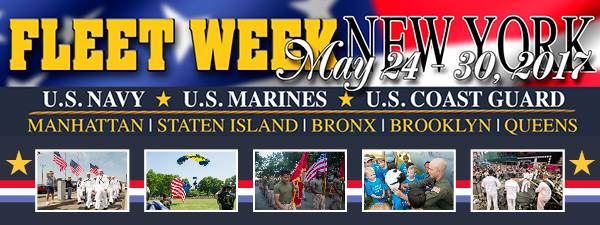
Intrepid Sea, Air & Space Museum and other locations in all five boroughs
Pier 86, 12th Ave. & 46th St.
May 24–29, pier activities free unless otherwise noted
www.intrepidmuseum.org/fleetweek
militarynews.com/app/fleetweeknewyork
The U.S. Navy, Marine Corps, and Coast Guard will be pouring into New York City for Fleet Week, which takes place May 24-29 at the Intrepid and other locations. The annual celebration, which began in 1982, leads into Memorial Day weekend, reminding everyone that the holiday is not just about barbecues and beaches. Below are only some of the highlights; all pier events are free and open to the public. Admission to the museum is $17-$33 but free for all U.S. military and veterans.
Wednesday, May 24
Parade of Ships, New York Harbor, 8:15 am – 1:00 pm
Fort Wadsworth Fleet Week and National Park Centennial Celebration, Fort Wadsworth Overlook, Staten Island, 9:00 – 11:30 am
U.S. Navy Divers, New York Aquarium, 10:00 am – 3:00 pm
Thursday, May 25
U.S. Coast Guard Silent Drill Team Performance, Metropolitan Museum of Art, 11:00 am
U.S. Coast Guard Silent Drill Team Performance, 9/11 Memorial Plaza, 1:00
Thursday, May 25
and
Friday, May 26
Public Tours of Visiting Ship Research Vessel Neil Armstrong, end of pier 86, 10:00 am – 12:30 pm
Thursday, May 25
Friday, May 26
and
Saturday, May 27
U.S. Navy Dive Tank in Times Square, plaza between 43rd & 44th Sts., 10:00 am – 5:00 pm
Thursday, May 25
through
Monday, May 29
General Public Ship Tours, Brooklyn Cruise Terminal, Homeport Pier in Staten Island, Pier 92 in Manhattan, 8:00 am – 5:00 pm
Friday, May 26
Movie on the Flight Deck: Top Gun (Tony Scott, 1986), introduced by former NASA astronaut and T-38 pilot Gregory C. Johnson, 7:00
Navy Band Concert, with Navy Band Northeast Rhode Island Sound, Military Island, Times Square, 8:00
Friday, May 26
through
Monday, May 29
Giant Leaps Planetarium Show, Intrepid, Hangar 3, Rotunda, 12:15 – 3:15
Saturday, May 27
Marine Day, with a formation run, military static displays, demonstrations, and a performance by the USMC Battle Color Detachment, 8:00 am – 4:00 pm
Broadway Showcase: Cats, Kinky Boots, School of Rock, Ernest Shackleton Loves Me, The Imbible: A Spirited History of Drinking, and Natasha, Pierre & the Great Comet of 1812, emceed by The Play That Goes Wrong, Pier 86, Main Stage, 12 noon
U.S. Coast Guard Search & Rescue Demo, Homeport Pier, Staten Island, 12 noon
CAMMO Voices of Service, Pier 86, Main Stage, 1:30 & 4:30
American Military Spouses Choir, Pier 86, Main Stage, 3:30 & 5:00
Navy Band Concert, with Navy Band Northeast Rhode Island Sound, Military Island, Times Square, 6:00
Battle of the Big Bands, with Harlem Renaissance Orchestra, Glenn Crytzer Orchestra with guest vocalist Hannah Gill, Gunhild Carling with the Swingadelic Big Band, Jason Prover and the Sneak Thievery Orchestra, swing dancing lessons, the Bathtub Ginnys, the Intrepid Swing Dance Brigade, contests, MC Dandy Wellington, DJ VaVa Voom and Odysseus Bailer, Flight Deck, $55-$95, 7:00 pm – 1:00 am
U.S. Marine Corps Battle Color Detachment Performance, Father Duffy Square, Times Square, 8:00
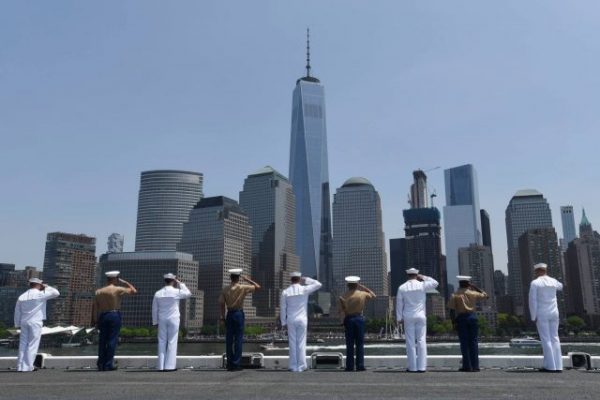
Fleet Week will feature celebrations, commemorations, and memorials May 24-30 in all five boroughs (photo courtesy Fleet Week New York)
Saturday, May 27
and
Sunday, May 28
Activities, displays, demonstrations, tours, and more, including “Dive into Density,” U.S. Coast Guard Silent Drill Team, SeaPerch Pool Demonstrations, antique military vehicles, “Signal Flags,” CEC/Seabee Historical Foundation’s STEM activity, U.S. Army Corps of Engineers North Atlantic Division, “Catch a Cable,” 10:00 am – 6:00 pm
Saturday, May 27
Sunday, May 28
and
Monday, May 29
Explosive Ordnance Disposal Navy Divers, New York Aquarium, Coney Island, $11.95 – $14.95
Meet the Author: Julia Maki, My Mom Hunts Submarines, Hangar 2, Stage, 11:00 am, 12 noon, 1:00
Sunday, May 28
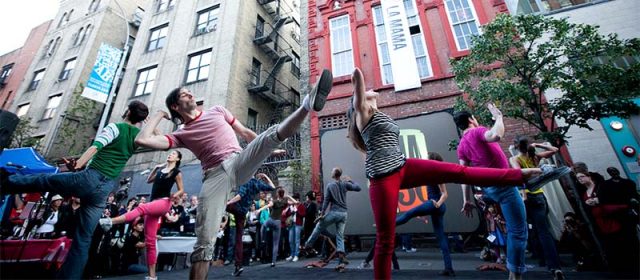
Performance by Tap Life, Pier 86, Main Stage, 12:30
Performance by America’s Sweethearts, Pier 86, Main Stage, 1:00 & 3:00
Performance by Deployed: A New Musical, Pier 86, Main Stage, 1:30 & 4:30
Performance by the 78th Army Band, Pier 86, Main Stage, 2:00
Performance by Exit 12 Dance Company, Pier 86, Main Stage, 3:30
Navy Band Concert, with Navy Band Northeast Rhode Island Sound, Military Island, Times Square, 4:00
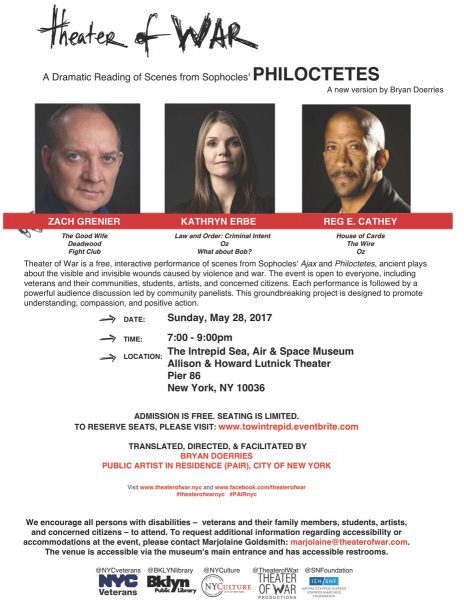
Theater of War, with Zach Grenier, Kathryn Erbe, and Reg E. Cathey, Allison & Howard Lutnick Theater, free with RSVP, 7:00
Monday, May 29
Soldiers’ and Sailors’ Memorial Day Observance, commemorating the seventy-fifth anniversary of the Battle of Midway, Soldiers’ and Sailors’ Monument, Riverside Dr. & 89th St., 10:00 am
Activities, displays, demonstrations, tours, and more, including Minus 5 Ice Sculpting Experience, CEC/Seabee Historical Foundation’s STEM activity, FDNY Fire Safety Experience, Dina Parise Racing 3,000HP Fallen Heroes Cadillac and Porta Tree display, Veterans Vision Project and Arizona State University, U.S. Air Force Auxiliary, Veteran Artist Program, Hudson Valley Paws for a Cause, Intrepid former crew members, “Dive into Density,” SeaPerch Pool Demonstrations, “Signal Flags,” “Catch a Cable,” “What Floats Your Boat?,” Pier 86, 10:00 am – 6:00 pm
Memorial Day Ceremony, Pier 86, 11:00 am
Search & Rescue Demonstration by the U.S. Coast Guard, end of Pier 86, 2:00
Bubble Garden by the Gazillion Bubble Show, Pier 86, 2:00 – 6:00

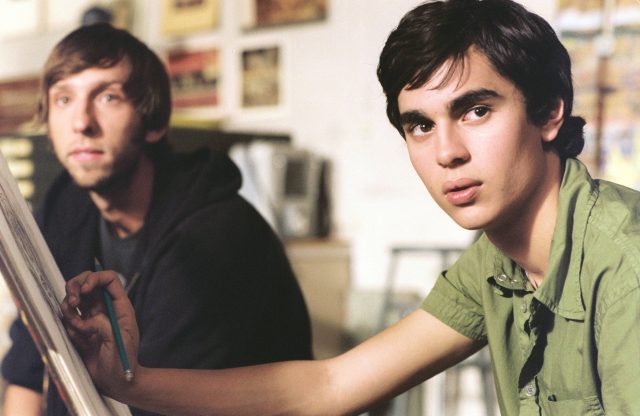
 Director Terry Zwigoff, who has claimed to “not be interested in comics too much” and who made the fab 1995 documentary Crumb, about comic book artist R. Crumb, reteamed with comics legend Daniel Clowes for the outrageously entertaining Art School Confidential, inspired by a four-page black-and-white strip Clowes wrote in a 1991 edition of his comic book Eightball. (The two previously worked together in 2001 on the outstanding Ghost World, earning them an Oscar nomination for Best Adapted Screenplay.) Clowes has expanded Art School Confidential into a very funny satire/murder mystery set in a New York City art school based somewhat on Pratt in Brooklyn (though the film was shot in Southern California). Max Minghella (The Social Network, The Handmaid’s Tale) stars as Jerome Platz, an art student from the suburbs who dreams of becoming the next Picasso. Used to being beat up by bullies, he is desperately looking to fit in somewhere, and he might just find his place in Strathmore art school, along with Beat Girl, Kiss-Ass, Army Jacket, Vegan, Filthy-Haired Girl, Preppy Girl, Nympho, and other stereotypes, as well as the art teacher claiming to be preparing for his own exhibition (John Malkovich, also one of the film’s producers). Jerome is befriended by Bardo (Joel David Moore), a disillusioned student who can’t figure out yet which stereotype Jerome is. Bardo introduces Jerome to Jimmy (Jim Broadbent), a drunken, failed artist who represents many a Strathmore student’s future. Jerome falls hard for Audrey (Sophia Myles), a part-time model who is also being courted by the ridiculously straitlaced and seemingly talentless, though celebrated, Jonah (Matt Keeslar). And one of Jerome’s roommates, the hyperactive Vince (Ethan Suplee), is making a movie about the Strathmore Strangler, who has claimed several victims and is still on the loose. Art School Confidential gets just about everything right (save for two brief appearances of the boom mic), turning clichés inside out in hysterical ways. You don’t have to be a comic-book fan geek to love this film, which is screening May 20 at 4:00 as part of Metrograph’s weekend tribute to Zwigoff, who will be on hand to discuss the work. The series also includes Ghost World, Louie Bluie, Crumb, and the New York premiere of the director’s cut of Bad Santa, with Zwigoff at Metrograph for all screenings.