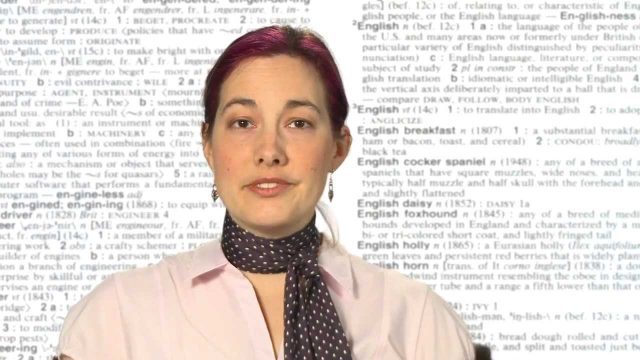
Word nerd Kory Stamper will be at the Upper East Side B&N on March 28 to launch her new book
Barnes & Noble
2289 Broadway at 82nd St.
Tuesday, March 28, free, 7:00
212-362-8835
barnesandnoble.com
korystamper.wordpress.com
We’ve been Kory Stamper groupies ever since we happened upon one of her “Ask the Editor” videos on YouTube nearly seven years ago. Since 2010, Merriam-Webster associate editor Emily Brewster, editor-at-large Peter Sokolowski, and associate editor Stamper have been making short videos delving into the etymology and usage of words and phrases, from the serial comma and “It is I vs. It is me” to weird plurals and “lay vs. lie.” In introducing her “harm·less drudg·ery | defining the words that define us” webiste in December 2011, Stamper, explained, “We might as well start this blog with a confession: I never planned on being a lexicographer.” Stamper has now written her first book, Word by Word: The Secret Life of Dictionaries (March 14, Penguin Random House, $26.95), in which she goes behind the scenes of how dictionaries are put together, making the most of her playful sense of humor. “Language is one of the few common experiences humanity has,” she writes in the preface. “Not all of us can walk; not all of us can sing; not all of us like pickles. But we all have an inborn desire to communicate why we can’t walk or sing or stomach pickles. To do that, we use our language, a vast index of words and their meanings we’ve acquired, like linguistic hoarders, throughout our lives.” Among the book’s chapters are “Hrafnkell: On Falling in Love,” “Irregardless: On Wrong Words,” “Bitch: On Bad Words,” and “Nuclear: On Pronunciation.” Describing her initial meeting with M-W director of defining Steve Perrault, who would become her boss, she remembers, “Apparently, neither of us enjoyed job interviews. I, however, was the only one perspiring lavishly. ‘So tell me,’ he ventured, ‘why you are interested in lexicography.’ I took a deep breath and clamped my jaw shut so I did not start blabbing. This was a complicated answer.” On March 28, you can join the ever-growing number of word nerds as they throng the Upper West Side B&N to venture even further (farther?) down the hallowed halls of M-W and hear from one of its superstars, there to share her inside info and regale all with her morphological magic.
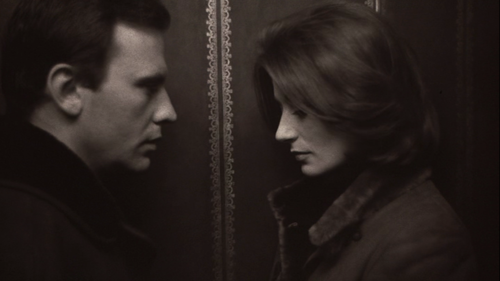
 Winner of both the Oscar for Best Foreign Language Film and the Palme d’Or at Cannes, Claude Lelouch’s A Man and a Woman is one of the most popular, and most unusual, romantic love stories ever put on film. FIAF is celebrating the work’s fiftieth anniversary by screening a newly restored version on March 28 as part of the
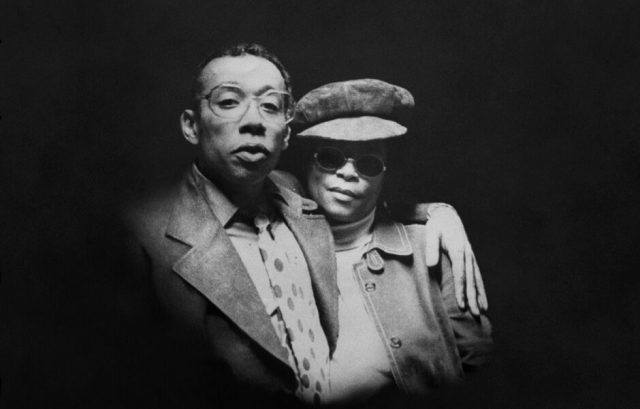
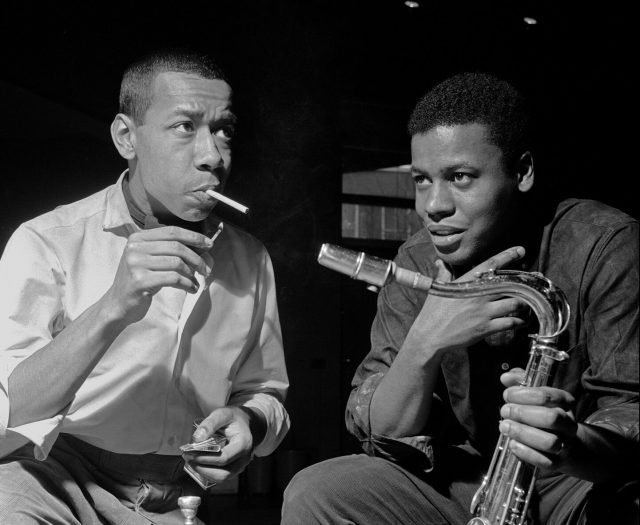
 On February 19, 1972, during a massive blizzard, thirty-three-year-old jazz trumpeter extraordinaire Lee Morgan was shot to death by his common-law wife, Helen, in Slugs’ Saloon on the Lower East Side. Swedish director, writer, and producer Kasper Collin takes viewers behind the scenes of the tragedy in the sensational documentary I Called Him Morgan. The Philadelphia-born Morgan was a young prodigy, studying with Clifford Brown, playing with Dizzy Gillespie’s orchestra when he was eighteen, and joining Art Blakey’s Jazz Messengers at twenty. Preferring the term “black classical music” to “jazz,” Morgan was caught up in a lifestyle of fast cars and drugs, ultimately hitting rock bottom until he was rescued by Helen Moore, thirteen years his elder, a farm girl from North Carolina who loved throwing parties in her adopted hometown of New York City and was a beloved fixture in the jazz community. Collin amasses an impressive roster of jazz greats who share their insights, including saxophonists Wayne Shorter, Bennie Maupin, and Billy Harper, drummers Albert “Tootie” Heath and Charli Persip, and bassists Larry Ridley, Jymie Merritt, and Paul West, along with Morgan neighbor Ron St. Clair, Helen’s son Al Harrison, and Morgan’s very close friend, Judith Johnson, many of whom are going on the record for the first time. “There was never no doubt in anybody’s mind: Lee was gonna be a star, Persip remembers. “They cared about each other. They loved each other,” Maupin says about Lee and Helen. There are also rare audio clips from an interview British writer and photographer Val Wilmer conducted with Morgan in October 1971 in Lee and Helen’s Bronx apartment. The film is anchored by a remarkable interview Helen gave writer, teacher, and jazz radio announcer Larry Reni Thomas in February 1996, a month before she died. “I will not sit here and tell you that I was so nice, because I was not,” she tells Thomas, speaking often in broken phrases. “One of the . . . will cut you. I was sharp. Yeah . . . I had to be. And I looked out for me.” It all culminates in a spellbinding, detailed account of the murder itself, told by numerous eyewitnesses with “Stagger Lee”-like swagger.